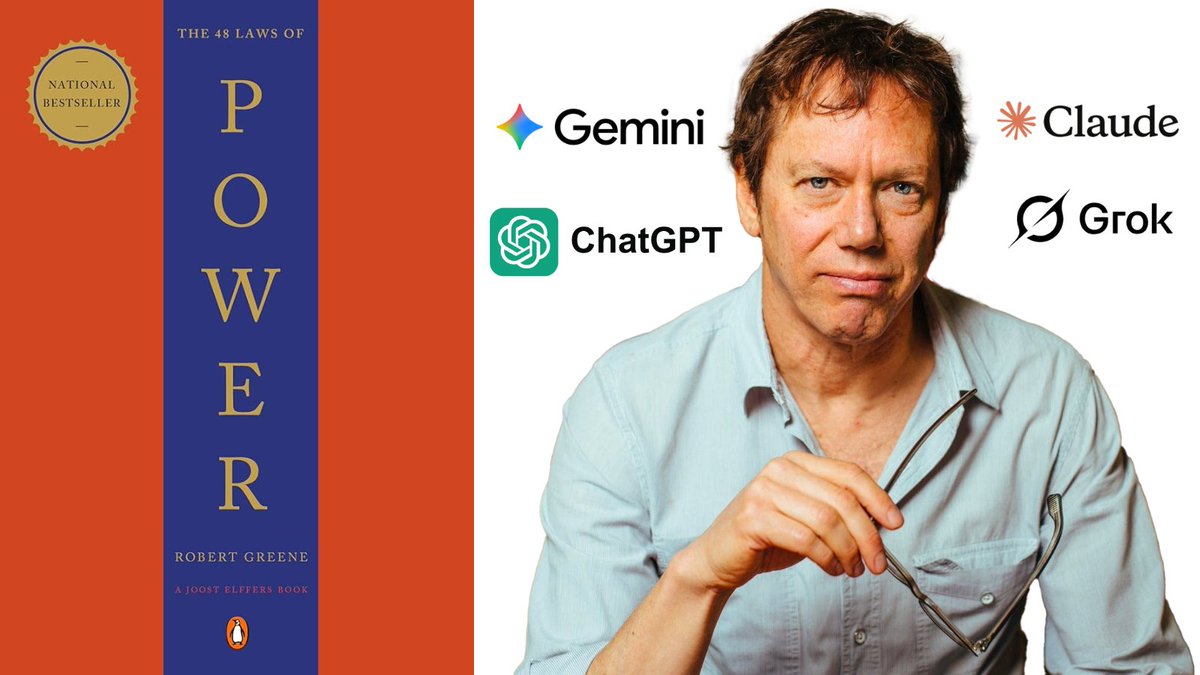
Not all LLMs are built the same.
Here’s the ultimate cheat sheet:
→ GPT = content & comms
→ Gemini = vision + audio
→ Mistral = speed & edge
→ DeepSeek = math + logic
How to master each (fast): 👇
Here’s the ultimate cheat sheet:
→ GPT = content & comms
→ Gemini = vision + audio
→ Mistral = speed & edge
→ DeepSeek = math + logic
How to master each (fast): 👇
1. BERT - The Reader
Made by Google (2018), BERT reads text in both directions.
It understands context deeply, making it great for:
→ Search engines
→ Sentiment analysis
→ Question answering
It’s the foundation of “understanding” in AI.
Made by Google (2018), BERT reads text in both directions.
It understands context deeply, making it great for:
→ Search engines
→ Sentiment analysis
→ Question answering
It’s the foundation of “understanding” in AI.
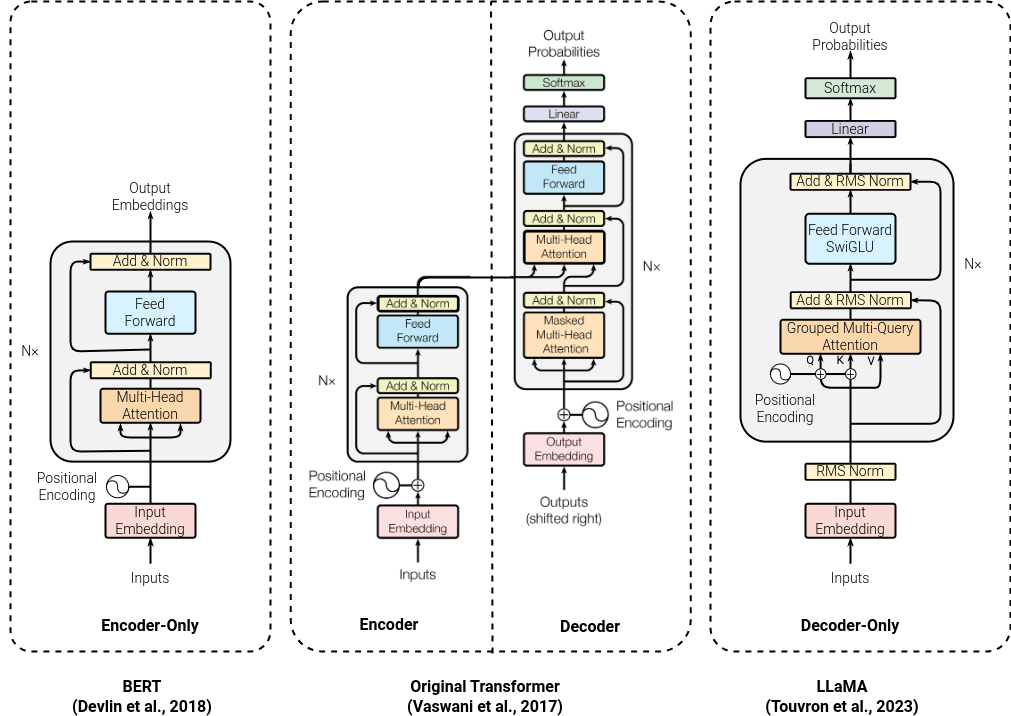
2. GPT - The Writer
Created by OpenAI, GPT predicts the next word in a sentence.
It’s decoder-only and excels at:
→ Generating fluent text
→ Storytelling
→ Prompt-based creativity
Think: ChatGPT, but trained at massive scale.
Created by OpenAI, GPT predicts the next word in a sentence.
It’s decoder-only and excels at:
→ Generating fluent text
→ Storytelling
→ Prompt-based creativity
Think: ChatGPT, but trained at massive scale.
3. LLaMA - The Open Challenger
Meta’s open-source alternative to GPT.
Uses clever tricks (SwiGLU, RoPE) to rival models 10x its size.
→ Smaller, cheaper, surprisingly strong
→ Fueled massive community development
The underdog with real bite.
Meta’s open-source alternative to GPT.
Uses clever tricks (SwiGLU, RoPE) to rival models 10x its size.
→ Smaller, cheaper, surprisingly strong
→ Fueled massive community development
The underdog with real bite.
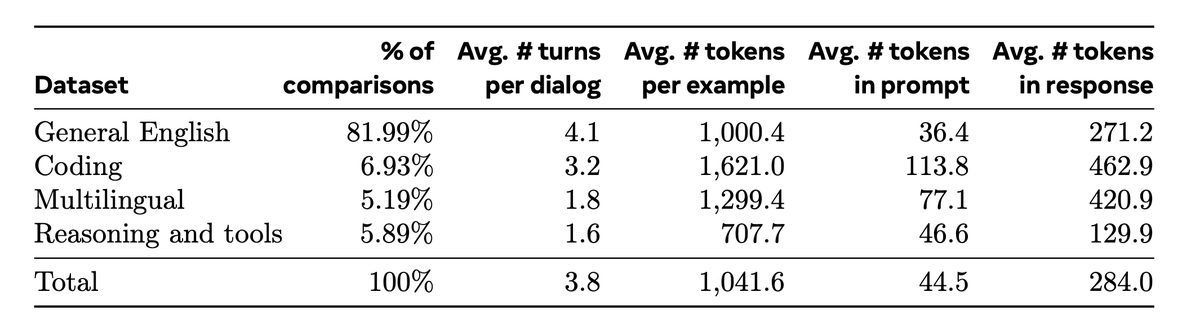
4. PaLM - The Few-Shot Master
Built by Google, PaLM is huge (540B) and optimized for:
→ Few-shot tasks
→ Reasoning
→ Multilingual performance
It powers Bard and Workspace AI. Smart, scalable, and serious.
Built by Google, PaLM is huge (540B) and optimized for:
→ Few-shot tasks
→ Reasoning
→ Multilingual performance
It powers Bard and Workspace AI. Smart, scalable, and serious.
5. Gemini - The Multimodal Beast
The evolution of PaLM.
Gemini understands text, images, code, and audio all in one model.
→ Massive context windows
→ Sparse expert layers
→ Enterprise-ready and phone-capable
This is Google's bet on the AI future.
The evolution of PaLM.
Gemini understands text, images, code, and audio all in one model.
→ Massive context windows
→ Sparse expert layers
→ Enterprise-ready and phone-capable
This is Google's bet on the AI future.
6. Mistral - The Efficient Rebel
Small but mighty.
Mistral 7B beats much larger models using:
→ Grouped-query attention
→ Sliding windows
→ Sparse MoE in Mixtral
Open, fast, and crushing benchmarks with fewer parameters.
Small but mighty.
Mistral 7B beats much larger models using:
→ Grouped-query attention
→ Sliding windows
→ Sparse MoE in Mixtral
Open, fast, and crushing benchmarks with fewer parameters.
7. DeepSeek - The Reasoning Genius
From China’s High-Flyer AI.
Uses a Mixture-of-Experts (MoE) setup with 670B total params.
Only ~37B active per response = low cost, high IQ.
Excels at logic, math, multilingual tasks.
Like GPT-4’s smarter cousin.
From China’s High-Flyer AI.
Uses a Mixture-of-Experts (MoE) setup with 670B total params.
Only ~37B active per response = low cost, high IQ.
Excels at logic, math, multilingual tasks.
Like GPT-4’s smarter cousin.
LLMs aren’t one-size-fits-all.
Know what you’re building and choose the right model:
→ Reader? BERT
→ Writer? GPT
→ Open? LLaMA
→ Cheap + fast? Mistral
→ Multimodal? Gemini
→ Few-shot? PaLM
→ Reasoning? DeepSeek
Know what you’re building and choose the right model:
→ Reader? BERT
→ Writer? GPT
→ Open? LLaMA
→ Cheap + fast? Mistral
→ Multimodal? Gemini
→ Few-shot? PaLM
→ Reasoning? DeepSeek
90% of customers expect instant replies.
Most businesses? Still responding days later.
Meet Droxy AI: Your 24/7 AI employee:
• Handles calls, chats, comments
• Speaks 95+ languages
• Feels human
• Costs $20/mo
Start automating:
👉 droxy.ai
Most businesses? Still responding days later.
Meet Droxy AI: Your 24/7 AI employee:
• Handles calls, chats, comments
• Speaks 95+ languages
• Feels human
• Costs $20/mo
Start automating:
👉 droxy.ai
I hope you've found this thread helpful.
Follow me @alxnderhughes for more.
Like/Repost the quote below if you can:
Follow me @alxnderhughes for more.
Like/Repost the quote below if you can:
https://twitter.com/1927203051263184896/status/1946146329279029412
• • •
Missing some Tweet in this thread? You can try to
force a refresh