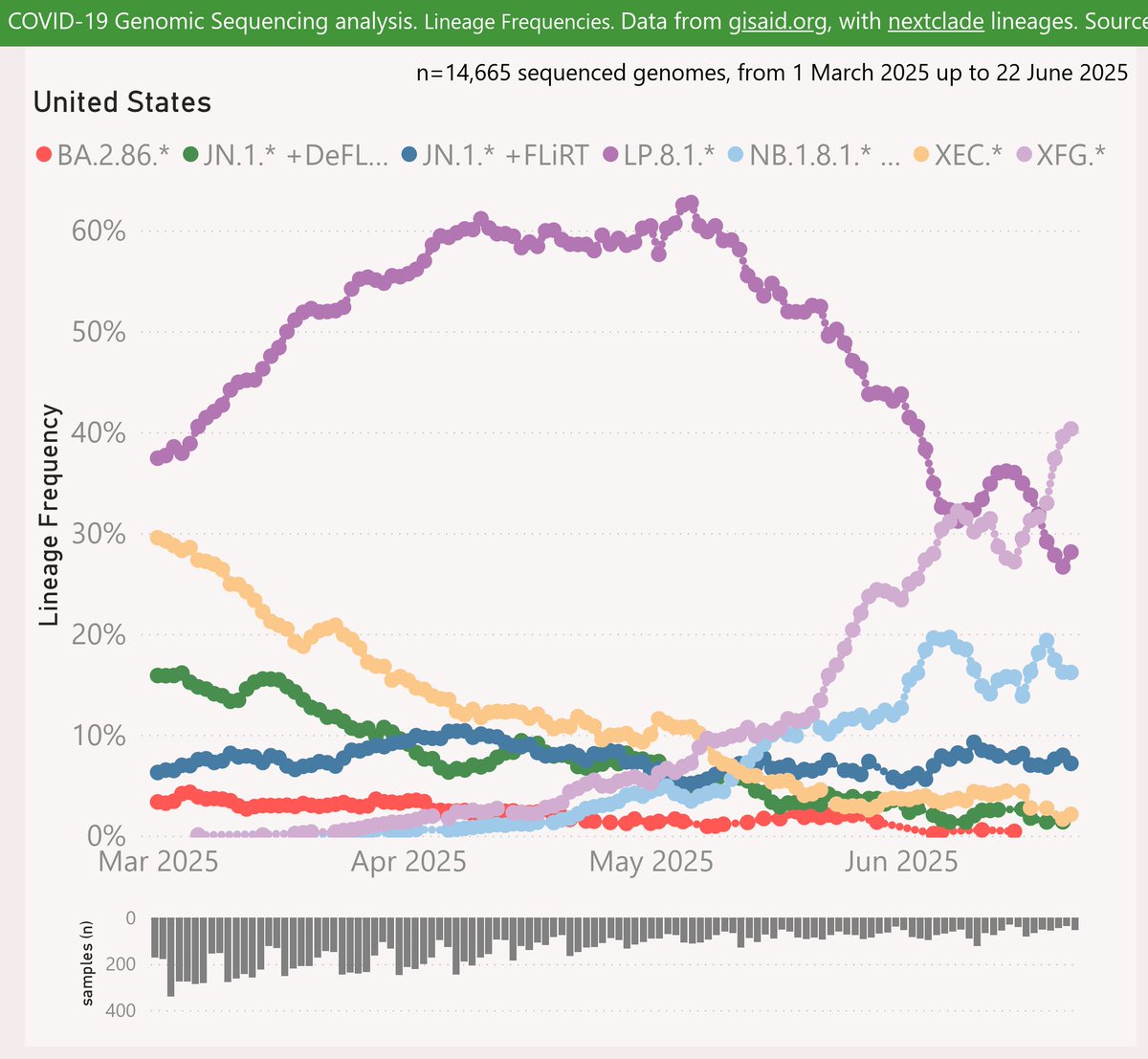
Here's the latest variant picture for the United States, to late June.
The XFG.* "Stratus" variant grew to dominant at 40%, with LP.8.1.* at 28%.
Growth of the NB.1.8.1 "Nimbus" variant is slower, at 16%.
#COVID19 #USA #XFG #Stratus #NB_1_8_1 #Nimbus
🧵
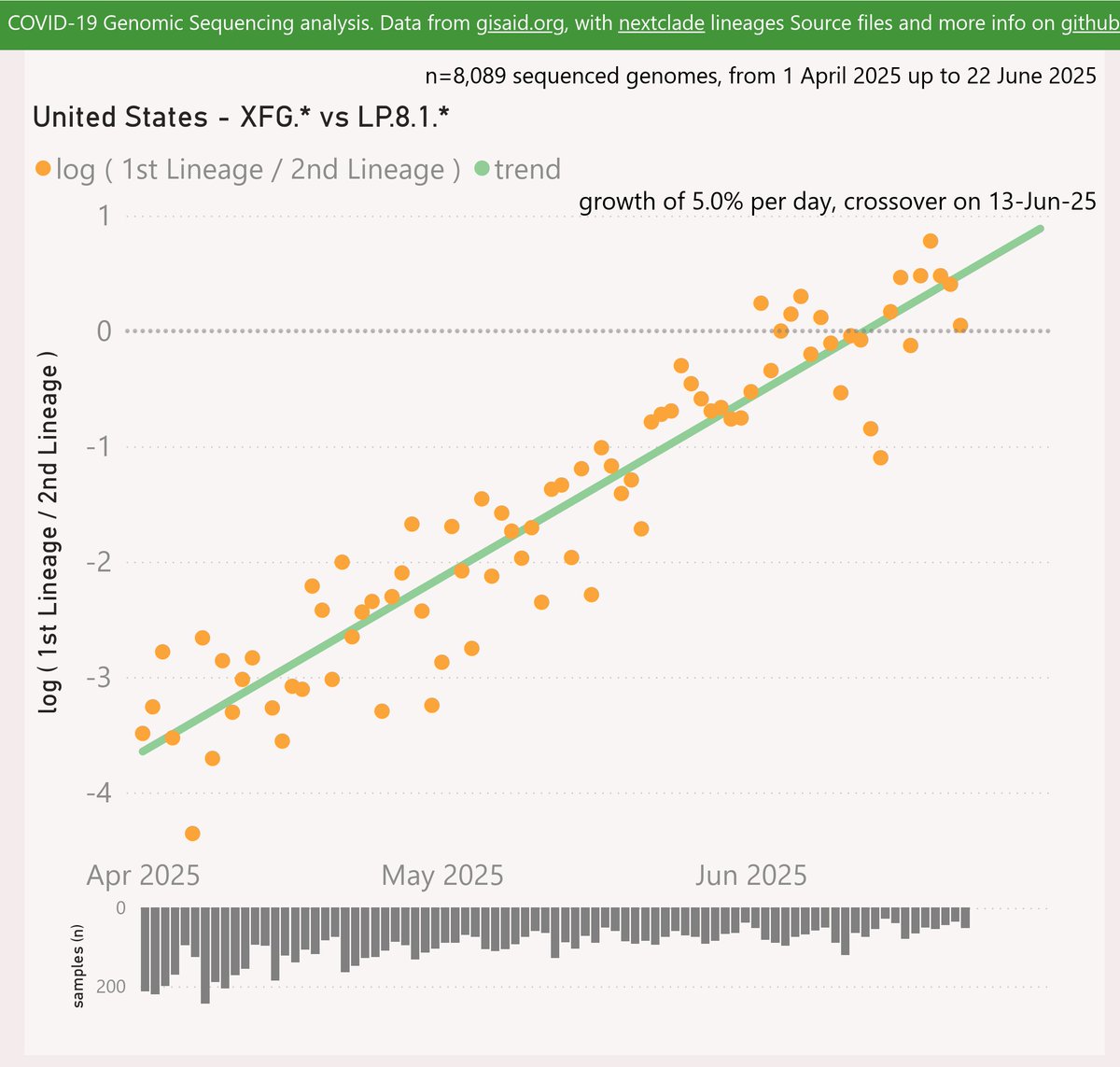
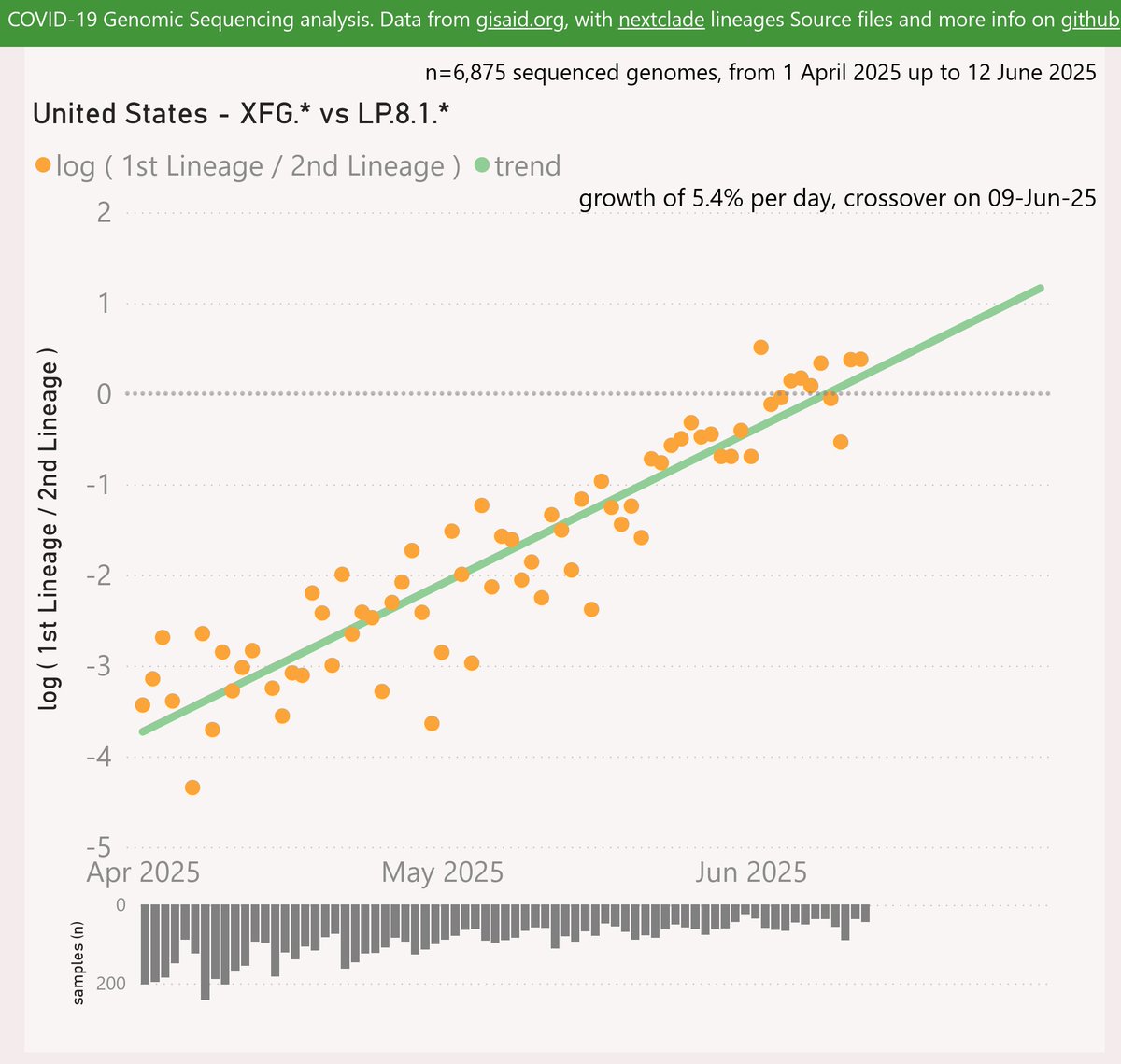
For the US, the XFG.* "Stratus" variant shows a strong growth advantage of 5% per day (35% per week) over LP.8.1.*, with a crossover in mid-June.
🧵
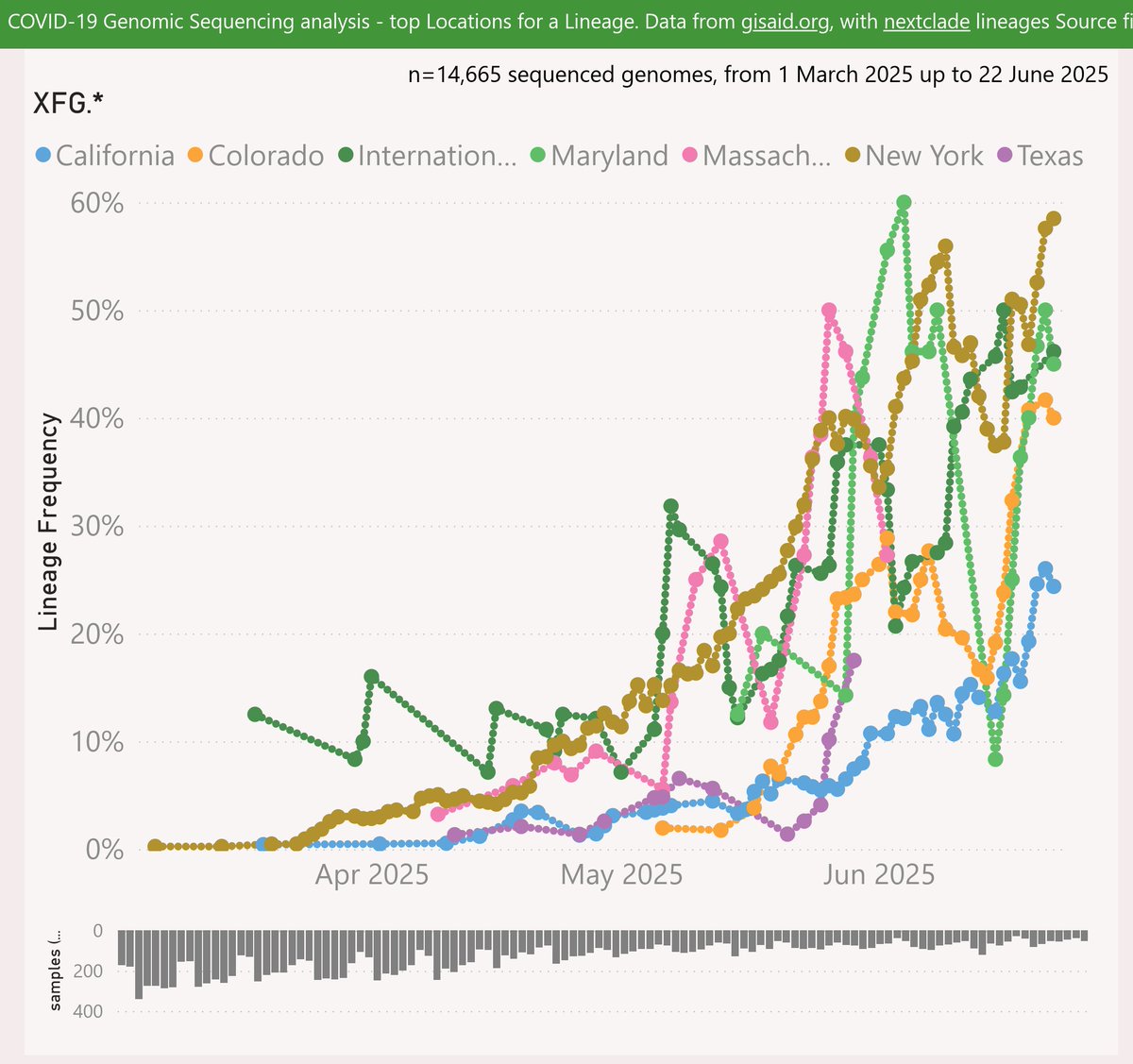
Here are the leading US states reporting XFG.* "Stratus". New York state leads at 59%. It has also been quite common among the International Traveller samples at 46%.
🧵
For the US, the NB.1.8.1 "Nimbus" variant showed a matching growth advantage of 5% per day (35% per week) over LP.8.1.*, which predicts a crossover in late June (the data routinely lags).
🧵
Here are the leading US states reporting NB.1.8.1 "Nimbus". Connecticut leads at 56%. It has also been quite common among the International Traveller samples at 29%.
🧵
Sample data is lagging and patchy recently, apart from California, New York, Colorado and Maryland.
🧵
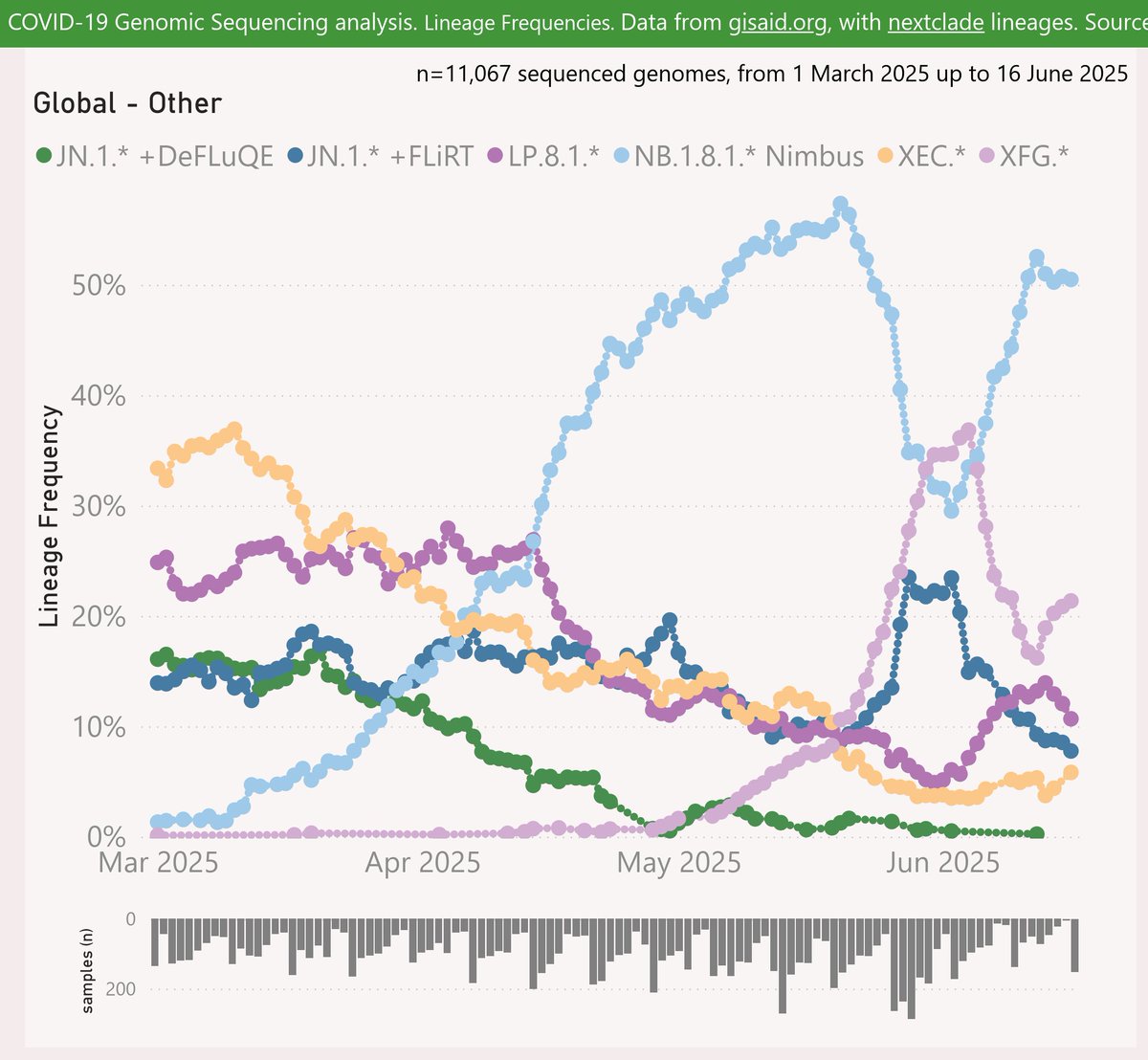
The volatility is due to the ragged timing of submissions from various countries.
This perspective excludes all the high-volume countries and regions that I routinely report on: Australia, NZ, Europe, Canada and the US. The remaining countries are aggregated into this report.
🧵
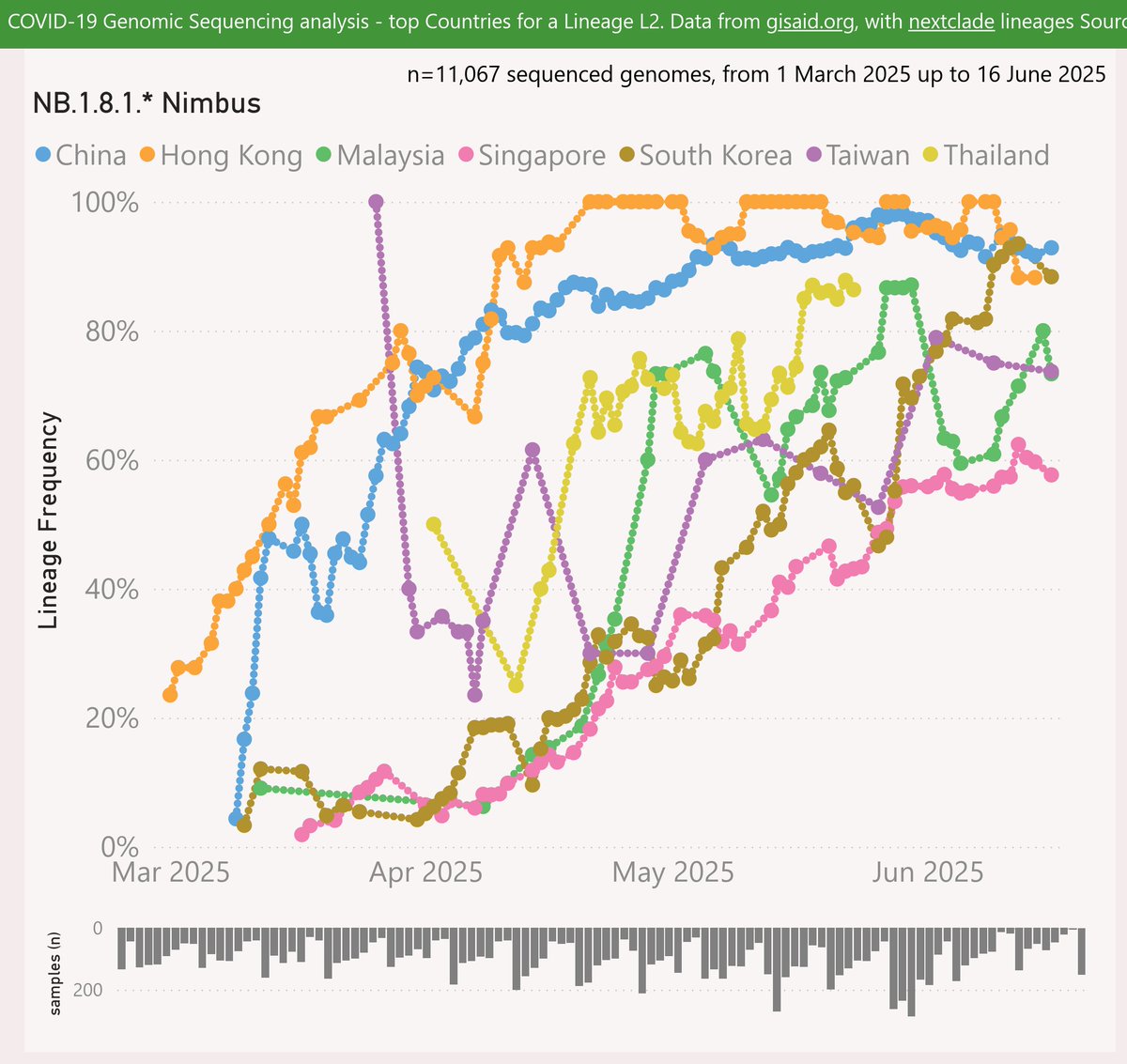
Here are the leading countries reporting the NB.1.8.1 "Nimbus" variant.
🧵
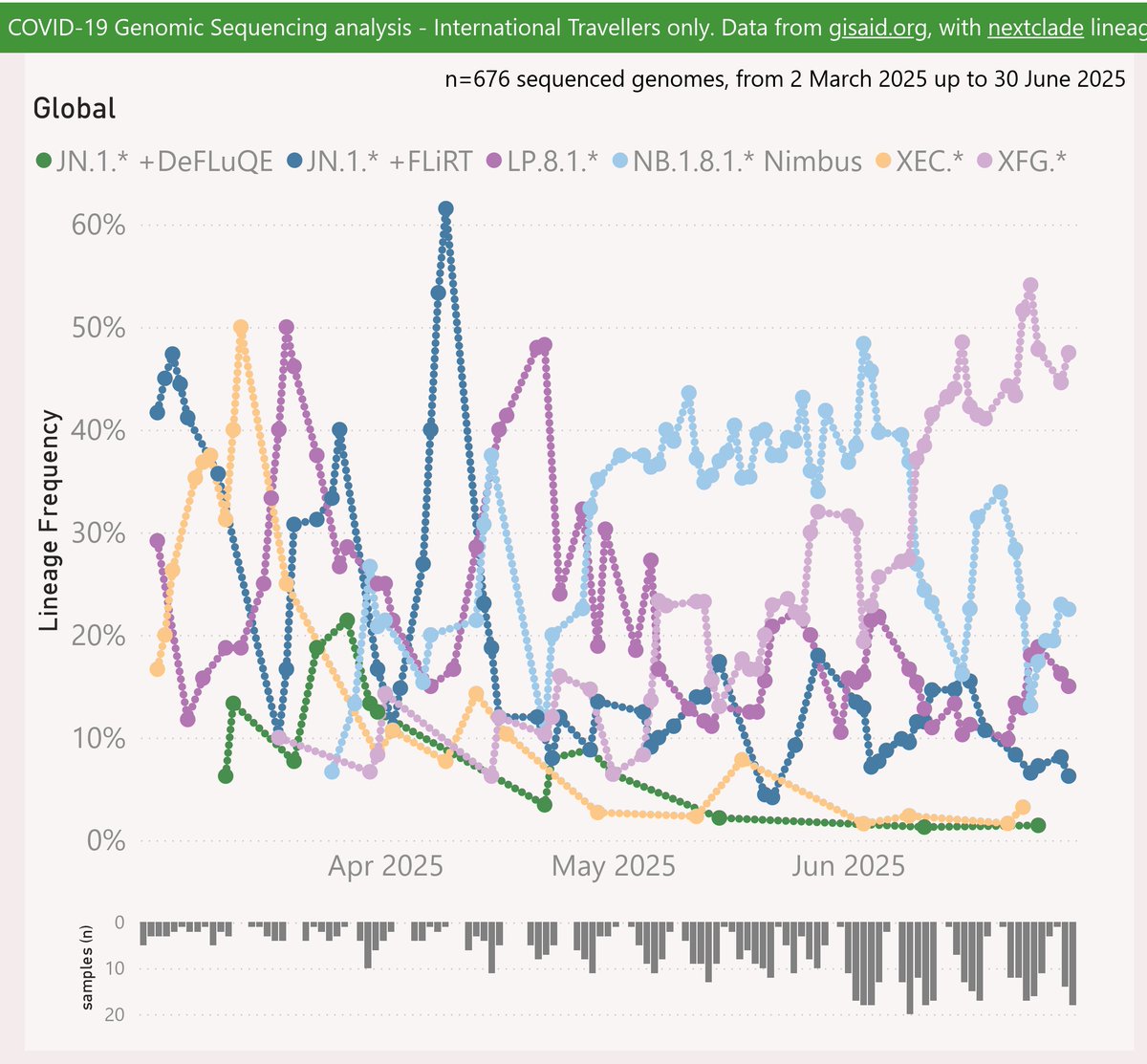
Here are the trends across all the International Traveller samples. From that perspective, XFG.* "Stratus" is dominant at 48%.
This dataset (mostly arrivals in the US and Japan) is arguably more random, as it is not skewed by sequencing volumes.
🧵
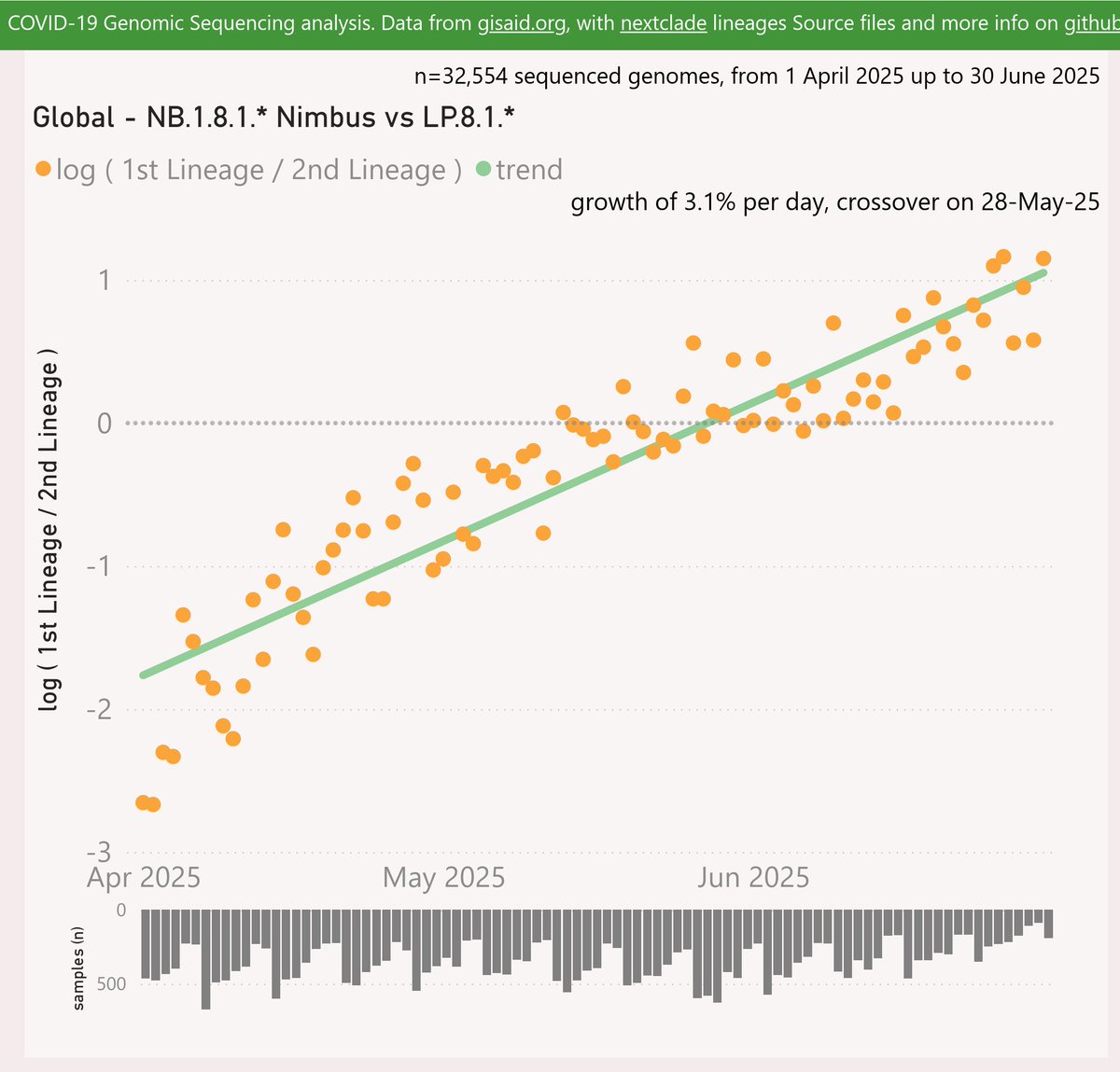
Globally, the NB.1.8.1 "Nimbus" variant is showing a steady growth advantage of 3.1% per day (22% per week) over the LP.8.1.* variant, with a crossover in late May.
🧵
The volatility is due to the ragged timing of submissions from various countries.
This perspective excludes all the high-volume countries and regions that I routinely report on: Australia, NZ, Europe, Canada and the US. The remaining countries are aggregated into this report.
🧵
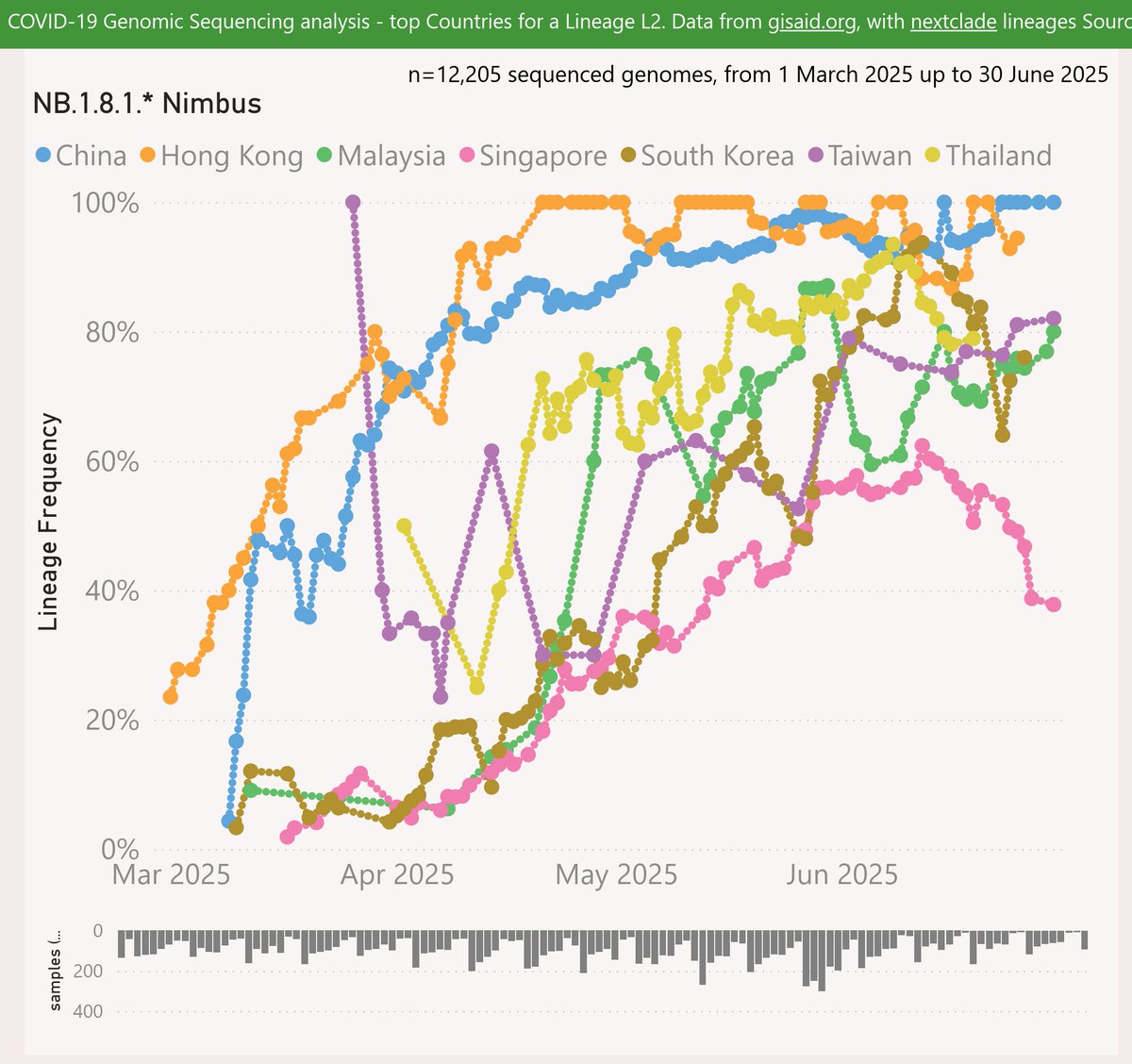
Here are the leading countries reporting the NB.1.8.1 "Nimbus" variant.
🧵
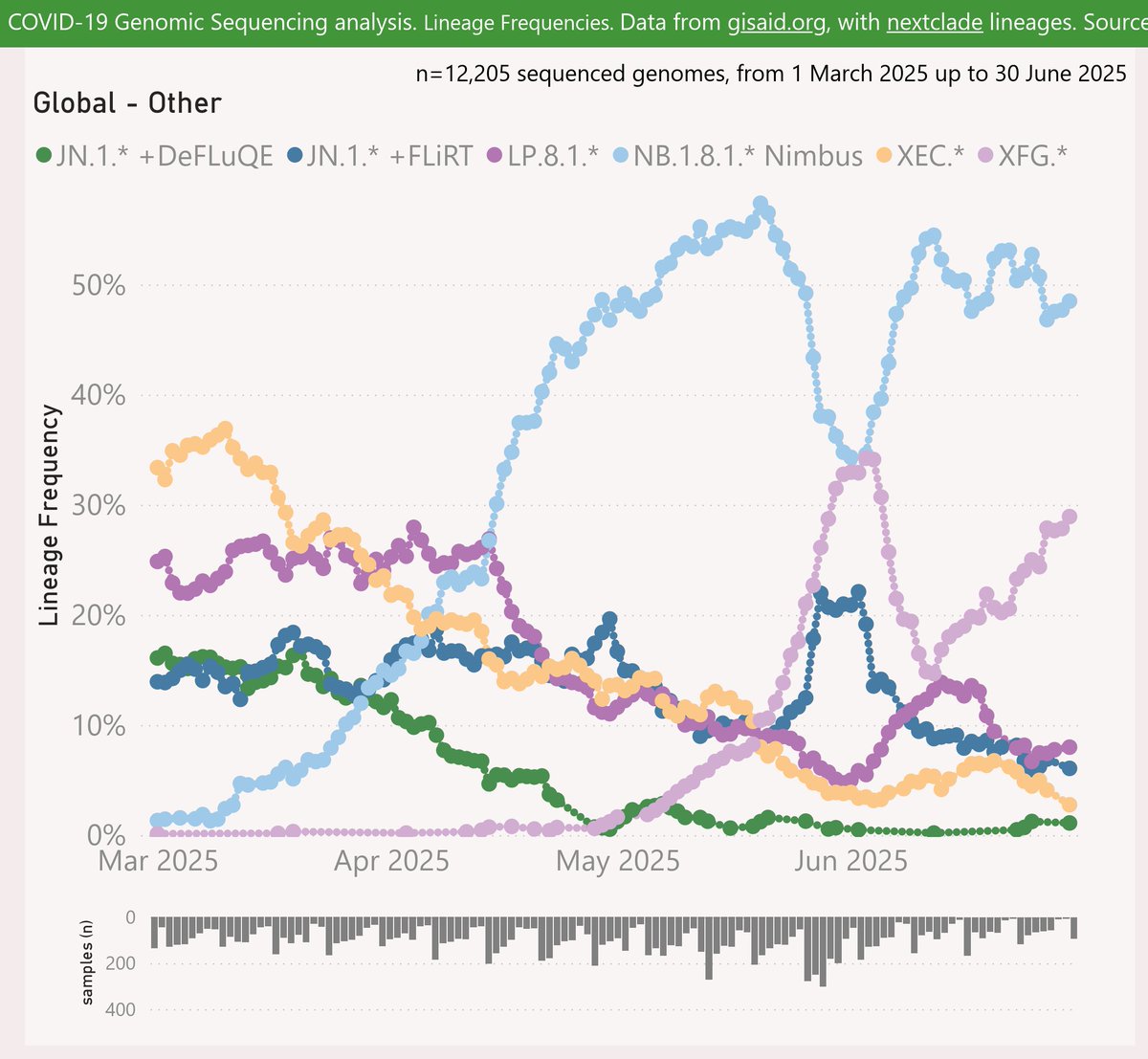
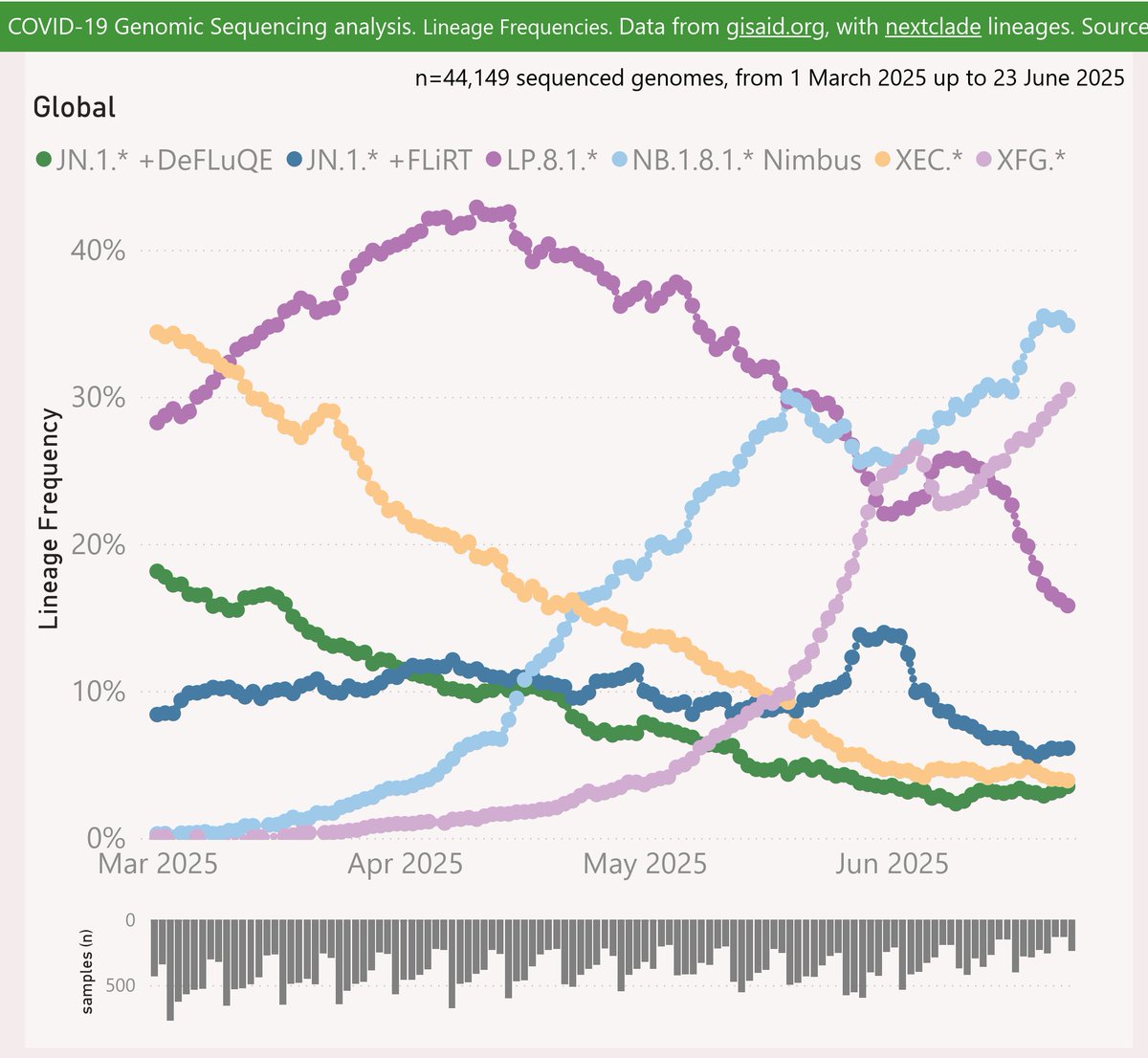
Here's the latest variant picture with a global scope, to late June.
The NB.1.8.1 "Nimbus" and XFG.* "Stratus" variants are battling for dominance in an unclear picture. So far they have each been succeeding in different countries.
#COVID19 #Global #Nimbus #Stratus
🧵
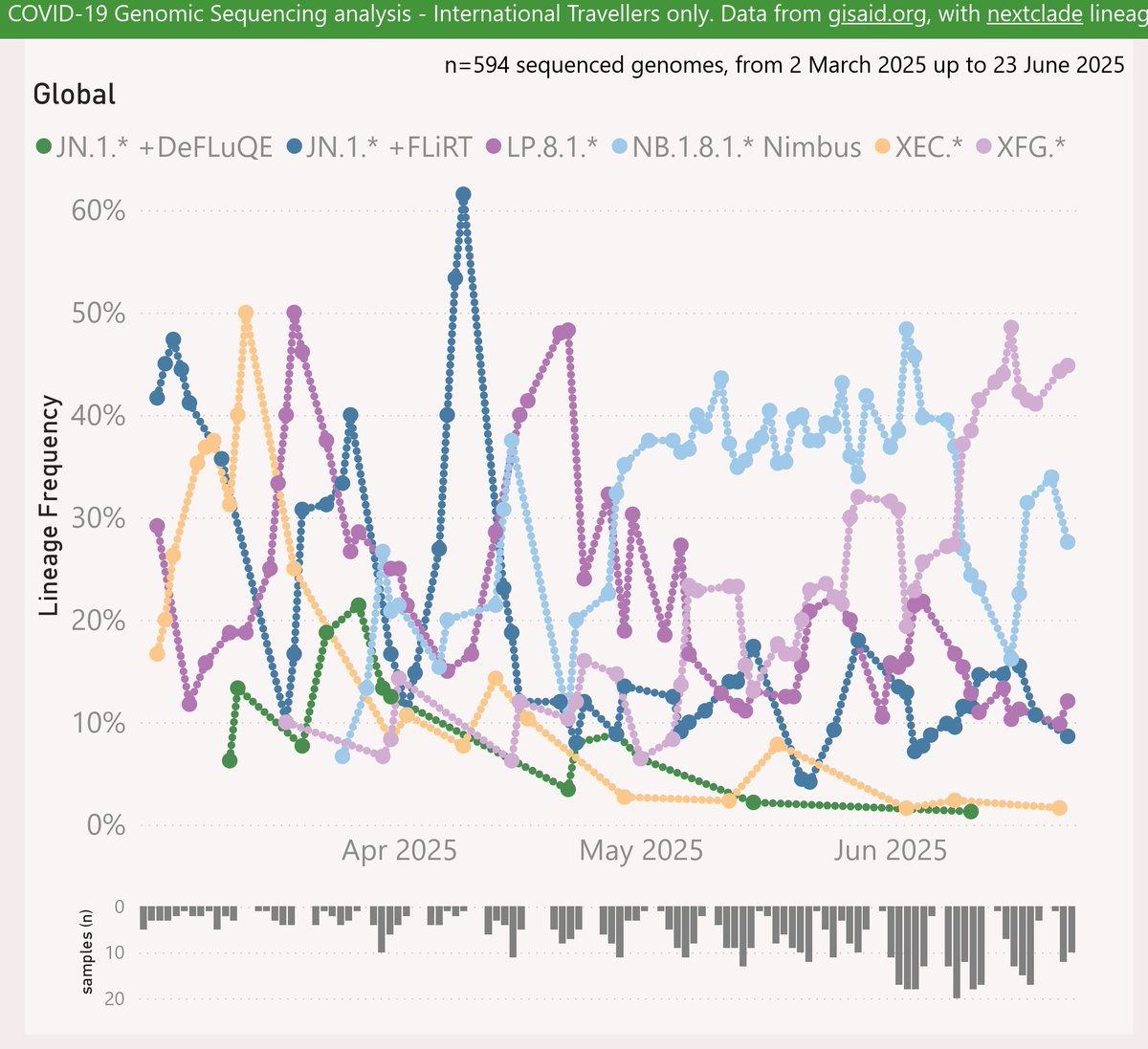
Here are the trends across all the International Traveller samples. From that perspective, XFG.* "Stratus" is dominant at 45%.
This dataset (mostly arrivals in the US and Japan) is arguably more random, as it is not skewed by sequencing volumes.
🧵
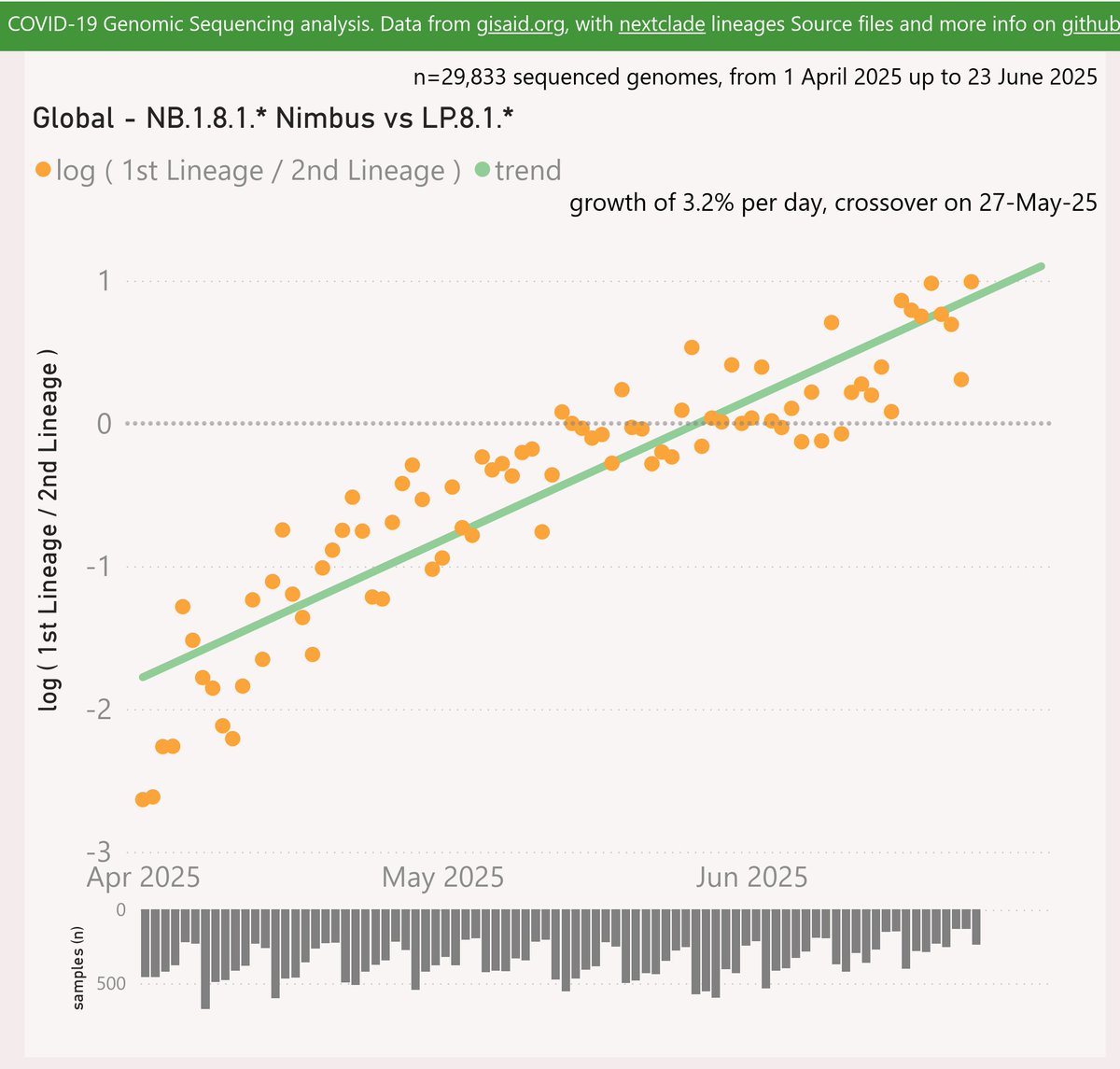
Globally, the NB.1.8.1 "Nimbus" variant is showing a steady growth advantage of 3.2% per day (22% per week) over the LP.8.1.* variant, with a crossover in late May.
🧵
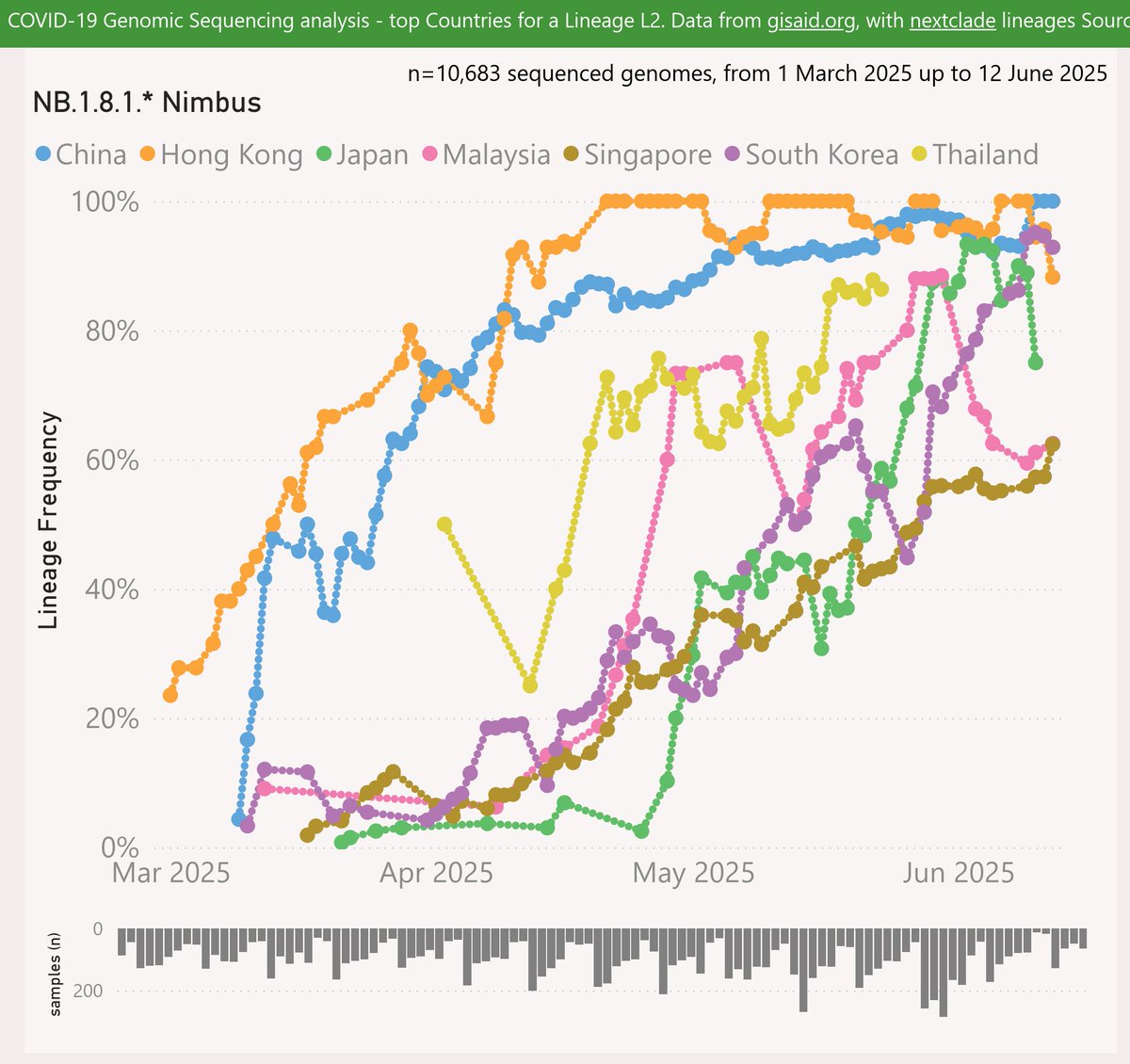
The volatility is due to the ragged timing of submissions from various countries.
This perspective excludes all the high-volume countries and regions that I routinely report on: Australia, NZ, Europe, Canada and the US. The remaining countries are aggregated into this report.
🧵
South Korea has joined Hong Kong, China and Japan in reporting a "clean sweep" of the NB.1.8.1 "Nimbus" variant. Thailand looks set to follow suit, but the frequency fell in Malaysia.
🧵
Here's the latest variant picture for the United States, to mid-June.
The XFG.* "Stratus" variant looks less dominant as more data has been shared, down to 33%, with LP.8.1.* at 31%.
The NB.1.8.1 "Nimbus" variant finished at 14%.
#COVID19 #USA #XFG #Stratus
🧵
For the US, the XFG.* "Stratus" variant shows a strong growth advantage of 5.4% per day (38% per week) over LP.8.1.*, with a crossover in early June.
🧵
XFG.* "Stratus" has mainly been reported from New York state and Maryland at 40-60%. It has also been quite common among the International Traveller samples at 44%.
🧵