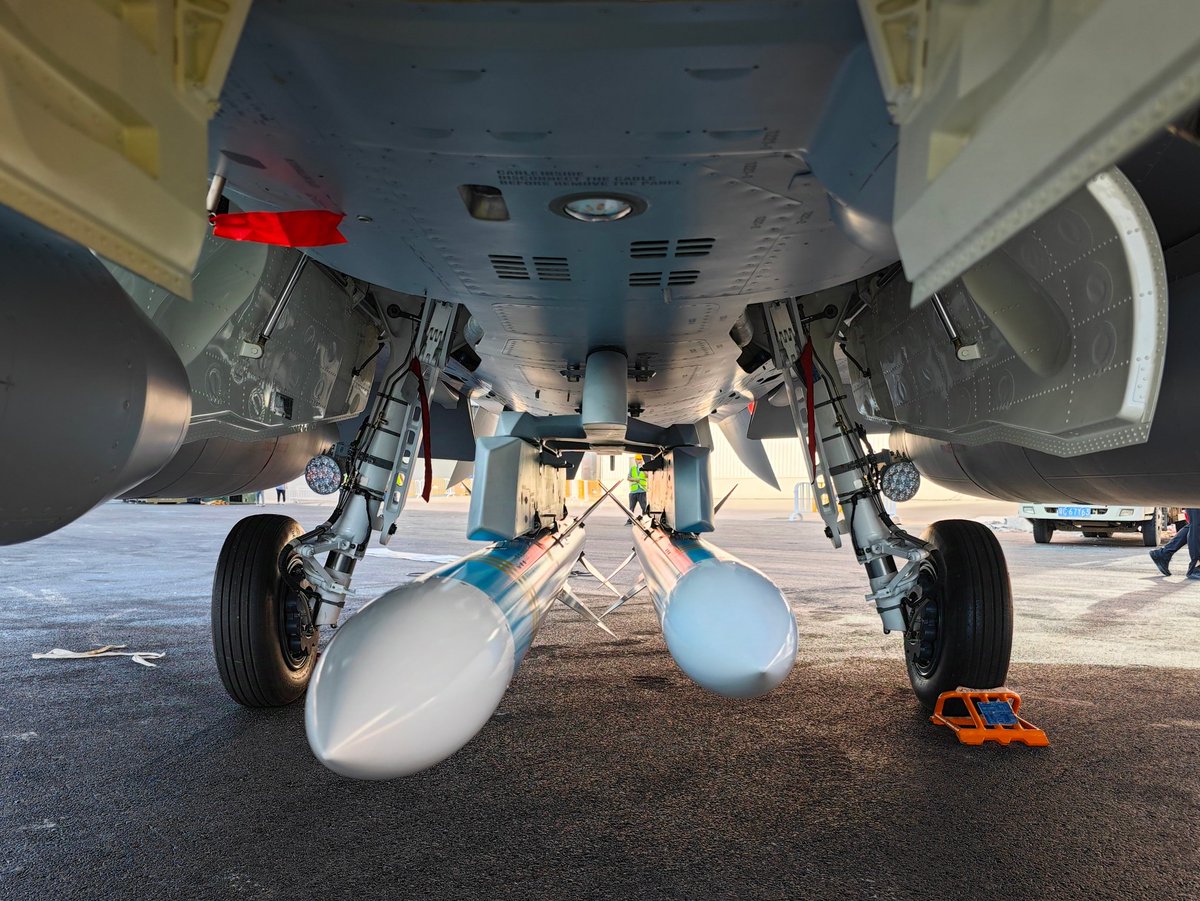
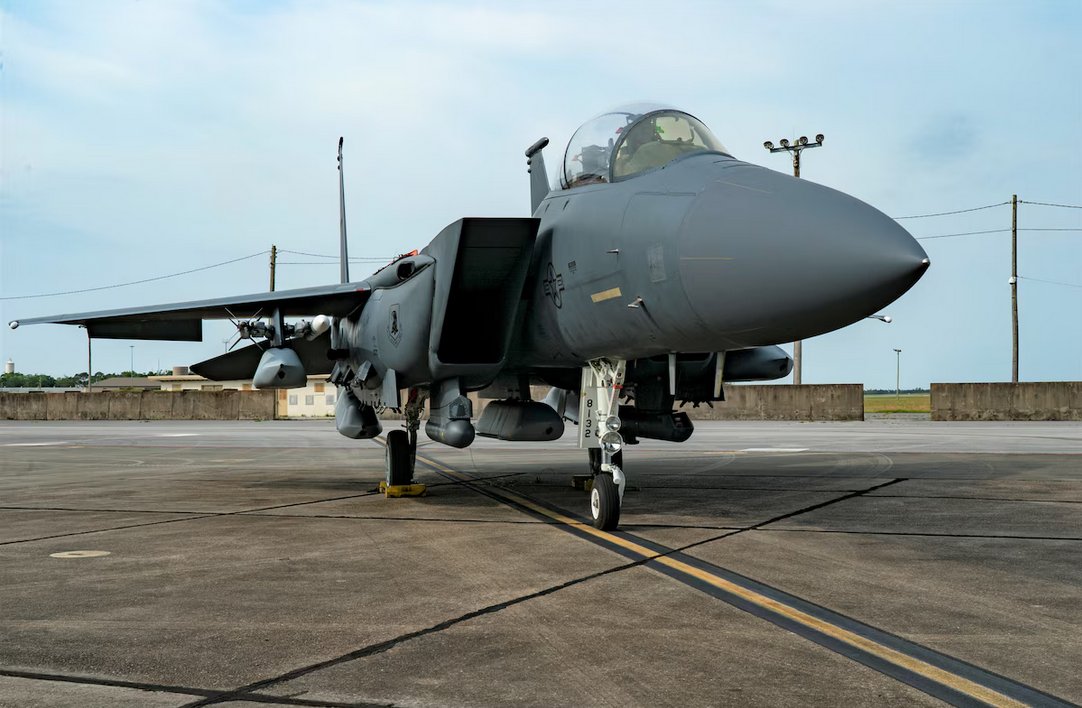
🧵🇺🇸🇮🇱🇮🇷🇾🇪🇯🇴 @TheAviationist has released very interesting images of USAF F-15E aircraft from the 366th Fighter Wing returning to the continental United States by way of RAF Mildenhall. These F-15E fighters were deployed to the CENTCOM area of responsibility, during which they are understood to have been based at Jordan's Muwaffaq as-Salti Air Base. The images indicate the large-scale expenditure of various munitions during this nine-month-long deployment. This includes AGR-20 (APKWS) semi-active laser homing guided rockets, presumably in an air-to-air role against the likes of Iranian Shahed-136 propeller-driven strike drones and similar. Moreover, the images indicate that just 11x USAF F-15E aircraft from the 366th Fighter Wing launched no fewer than 44x AGM-158 JASSM family air-launched cruise missiles during this deployment.
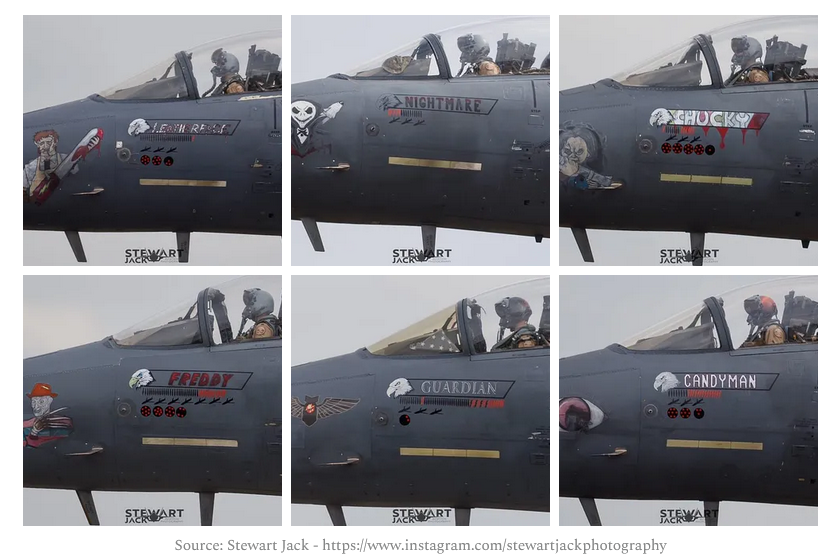
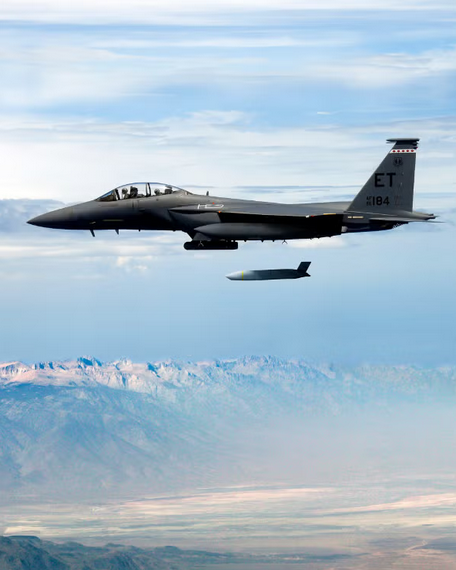
This set of six images indicates the employment of 22x AGM-158 JASSM air-launched land-attack cruise missiles.
See the following three links:
theaviationist.com/2025/07/18/f-1…
theaviationist.com/2025/07/20/fin…
instagram.com/stewartjackpho…
See the following three links:
theaviationist.com/2025/07/18/f-1…
theaviationist.com/2025/07/20/fin…
instagram.com/stewartjackpho…
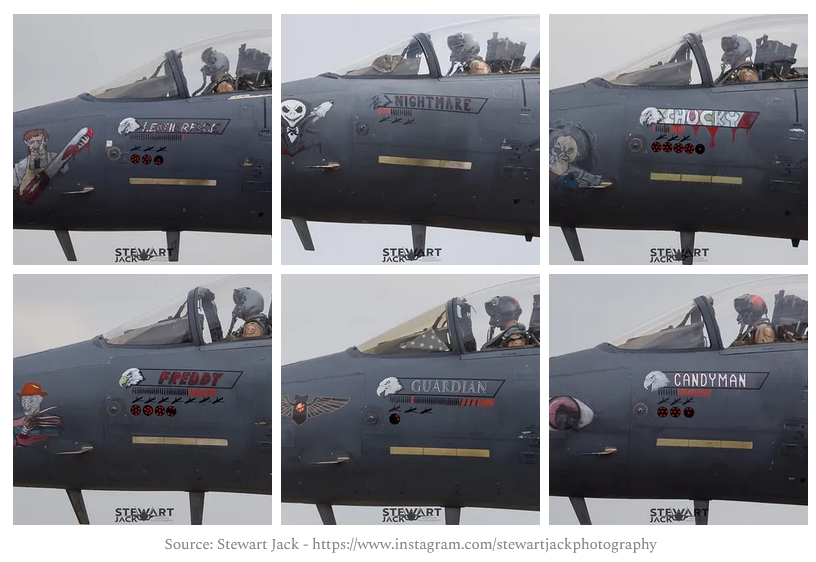
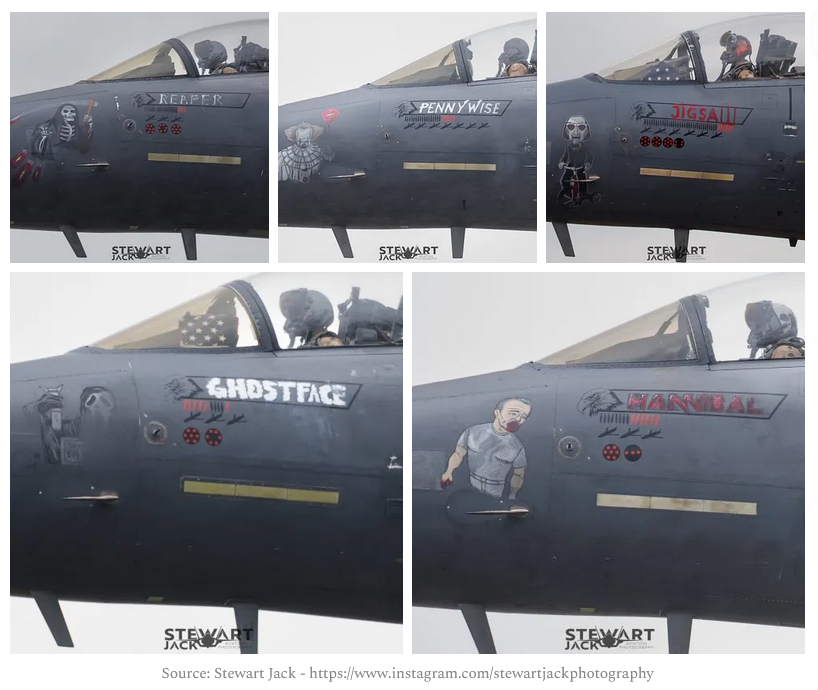
This set of five images also indicates the employment of 22x AGM-158 JASSM air-launched land-attack cruise missiles.
See the following three links:
theaviationist.com/2025/07/18/f-1…
theaviationist.com/2025/07/20/fin…
instagram.com/stewartjackpho…
See the following three links:
theaviationist.com/2025/07/18/f-1…
theaviationist.com/2025/07/20/fin…
instagram.com/stewartjackpho…
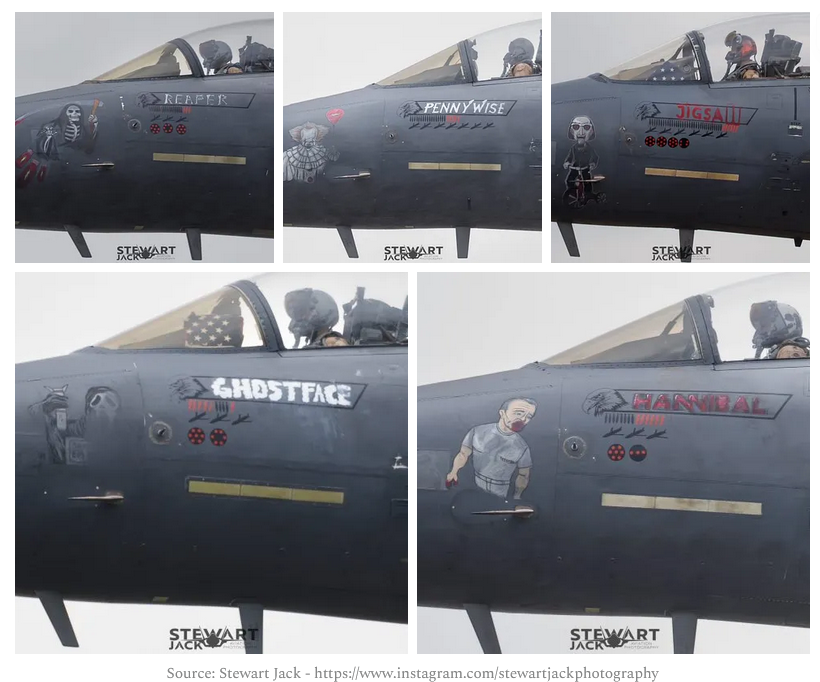
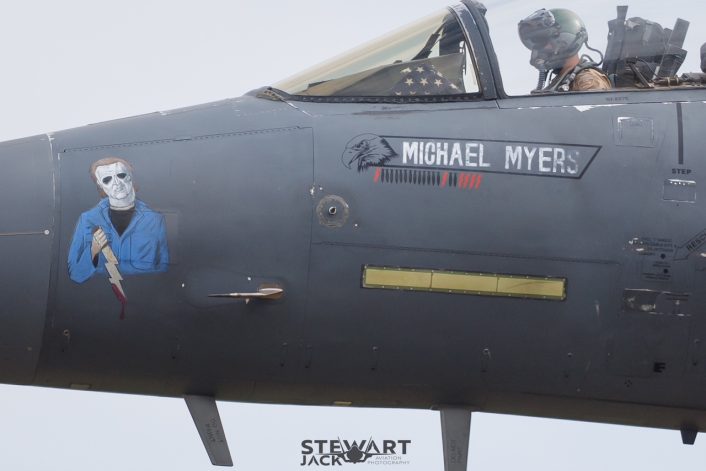
While these 11x forward-deployed F-15E strike fighters of the USAF's 366th Fighter Wing appear to have launched no fewer than 44x AGM-158 JASSM family air-launched cruise missiles, not all the forward-deployed F-15E airframes were involved in AGM-158 JASSM launches.
These F-15E strike fighters arrived in Jordan after Iran's Operation True Promise II on 1 October, which notably only entailed the employment of ballistic missiles and not (also) cruise missiles and strike drones, as was the case with Iran's 13 April 2024 Operation True Promise I
While Israel retaliated against Iran with Operation Days of Repentance on 26 October 2024, the U.S. is understood to have not been involved in the Israeli strikes against Iran in that single-day operation. Hence, there was no scope for the employment of AGM-158 JASSM at the time.
Since the release of these images of F-15E with markings from the 366th Fighter Wing returning to the continental United States, there has been some speculation that these aircraft were involved in Operation Midnight Hammer, which is to say the United States' targeting of Iranian nuclear facilities (and presumably nearby Iranian air defence capabilities) on 22 June 2025.
The employment of AGM-158 JASSM in Operation Midnight is plausible and cannot be ruled out. One of the images released by @TheAviationist, however, suggests that these AGM-158 JASSM expenditures could not have only taken place on 22 June 2025.

Assuming that the AGM-158 JASSM air-launched land-attack cruise missiles were *only* employed on 22 June 2025 against Iran (Operation Midnight Hammer), then F-15E 87-182 “Pennywise” must be a very special and specially-modified F-15E airframe capable of carrying 7x AGM-158 JASSM.
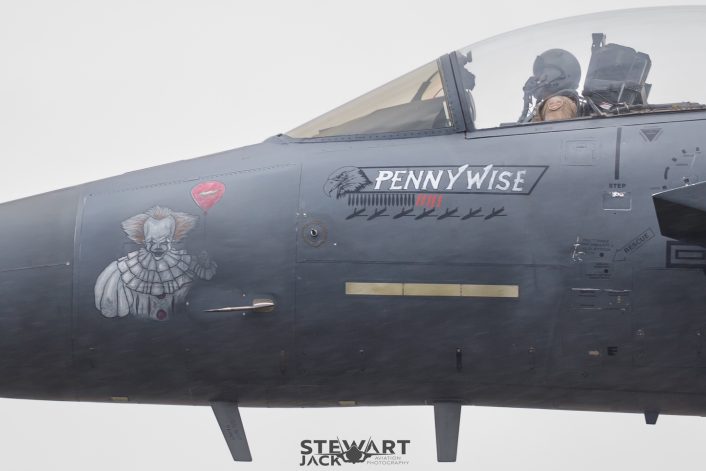
There is a basic problem here: the F-15E was previously limited to carrying just 2x AGM-158 JASSM per sortie. Is it plausible for this F-15E to have taken off from Jordan, launched AGM-158 JASSMs toward Iran, landed to rearm, then taken off to launch additional AGM-158 JASSMs?
It is plausible in principle, but the AGM-158 JASSM is a subsonic cruise missile design—it has a similar time to target as all the other aircraft in the strike package, including the subsonic B-2 bombers (even supersonic capable fighter aircraft almost always remain subsonic).
It is plausible in principle, but the AGM-158 JASSM is a subsonic cruise missile design—it has a similar time to target as all the other aircraft in the strike package, including the subsonic B-2 bombers (even supersonic capable fighter aircraft almost always remain subsonic)
In May 2021, the USAF disclosed Project Strike Rodeo, an experimental attempt aimed at allowing each F-15E strike fighter to carry no fewer than 5x AGM-158 JASSM. In so doing, a formation of F-15Es could deliver a "bomber's worth" of cruise missiles.
53rdwing.af.mil/News/Article/2…
53rdwing.af.mil/News/Article/2…


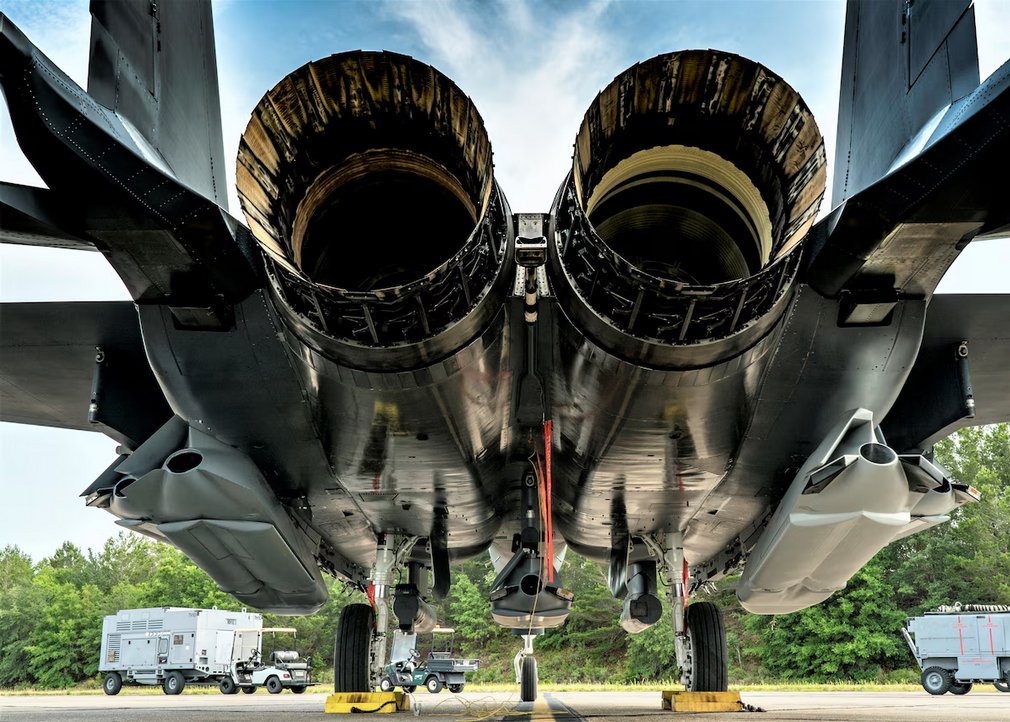
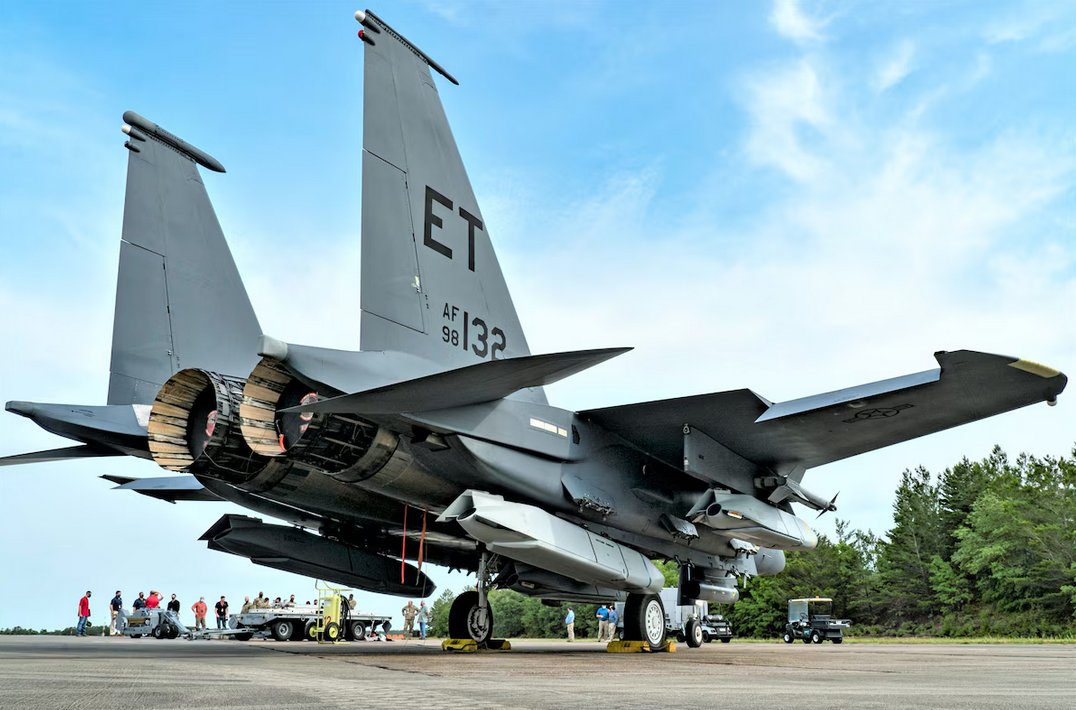
The end results of Project Strike Rodeo are unclear to me—please leave a comment if you know more/can say more than what was disclosed in that 2021 USAF press release. Returning to the main topic, F-15E 87-182 “Pennywise” is unlikely to have launched 7x AGM-158 on 22 June 2025.
Is there an alternative explanation? Yes. From March to May 2025, the U.S. undertook Operation Rough Rider against Ansarallah in Yemen. While public reporting suggested that the US Navy was primarily involved in air-to-ground missions (prior to the deployment of USAF bombers)
on 4 April 2025, CNN reporting indicated that the U.S. had already employed AGM-158 JASSM family air-launched attack cruise missiles against Ansarallah in Yemen. cnn.com/2025/04/04/pol…
This was a surprising development at the time because the Gulf Arab states appeared to have no interest in actively participating in Operation Rough Riders against Ansarallah. Moreover, the USN had only declared an objective to integrate the AGM-158 JASSM
https://x.com/shahpas/status/1908247234291834927
on its carrier-borne F/A-18E/F fighter aircraft in 2022. FY2025 budget documents also suggested that integration of the AGM-158 JASSM family on the F/A-18E/F may not have been completed.
https://x.com/shahpas/status/1908247236087005551
Perhaps the U.S. Navy's F/A-18E/F (also) launched some number of AGM-158 JASSM against Ansarallah following an emergency/expedited integration effort. What is clear from the images released by @TheAviationist of USAF 366th Fighter Wing returning to the continental U.S. is that
a single USAF F-15E launched 7x JASSM during the October 2024-July 2025 deployment to Muwaffaq Salti Air Base in Jordan. All things considered, that specific USAF F-15E likely launched at least some of those AGM-158 JASSM against Ansarallah as part of Operation Rough Rider.
In other words, it looks like USAF F-15E forward-deployed to Jordan with the primary objective of intercepting Iranian strike drones and cruise missiles en route to Israel (and similar Iranian-supplied strike drones and cruise missiles launched by Iran's non-state allies in Iraq)
were involved in Operation Rough Rider against Ansarallah in Yemen, which—if true—was not previously public knowledge. The F-15Es presumably took off from Muwaffaq Salti Air Base and transited over the Gulf of Aqaba to launch AGM-158 JASSM over the Red Sea.
Note that it is approximately 1550 km from the Straits of Tiran to northern Yemen (assuming flight paths that avoid Saudi airspace). To conclude, the USAF appears to have employed at least 44x AGM-158 JASSM family air-launched cruise missiles in the Oct 2024-July 2025 timeframe.
It is possible, even likely, that some, if not all, of 44x AGM-158 JASSM seemingly launched by just 11x F-15E strike fighters from the 366th Fighter Wing that were forward-deployed in Jordan were launched against Ansarallah in Yemen—and perhaps also against Iran in June 2025.
@threadreaderapp unroll
• • •
Missing some Tweet in this thread? You can try to
force a refresh