And not just average people who have other jobs, but the very people whose job it is to gather intelligence and make sense of it, like Isa Yusibov mentioned:
The basic error in the West is that they attribute rationality to Kremlin leaders.
They're wrong. Kremlin leaders can perfectly _MIMIC_ rational thought, but that's not the same.
Their lead ideology is imperialism and their modus operandi is sabotage, bluff and opportunism.
2/
Behind their imperialism is a sense of cultural superiority based on 'greatness', the country is great, so if over time they were able to dominate it all, they themselves must necessarily be great as well.
Do Russians themselves believe this?
3/
They don't.
But it's their 'civil religion' as anthropologists call this. They may be atheist, nihilists, Russian Orthodox... but in public life they're culturally superior or just plainly superior or 'perfect' even if they know this isn't true.
How is this reconciled?
4/

And that is where lying as part of public reality comes in.
They somehow know Russian superiority isn't true, but lying about it is culturally allowed - even prescribed. And forced by law. Speaking the truth gets you in the Gulag. Thus, lying is intrinsic to Russian culture. 5/
That - in a nutshell - is the correct way to look at Russia.
So, if at any moment the Kremlin sees an opportunity to attack NATO even while this plan is rationally a really bad idea, they still will do so if it follows from - or fits with - Russian ideology of greatness.
6/6
• • •
Missing some Tweet in this thread? You can try to
force a refresh

Let's look at a few changes in Russia's situation over the past few weeks:
1. Trump will send Tomahawks. There are about 750 about to be scrapped, so it's safe to assume that this is the stock we're talking about. Trump wants a veto on certain targets.
1/
2. Kazachstan has now closed the border for sanctioned tech and military parts. Long lines at the border. Lots of cargo is getting confiscated.
Other Central Asian countries and Turkey should follow suit.
It seems China is getting a bit nervous too.
2/
3. There are reports from the Russian military that the stream of contract soldiers is drying up now. They don't trust that the army will comply with what they promise. And rightfully so, because it's all lies. They promise you anything to get meat for assault groups.
3/
Since the beginning of the war, Russia has been borrowing Rubles from Russian banks in exchange for Government bonds in Rubles. Banks are forced into buying these paper promises (no collateral).
1. It means that savings and pensions are being converted into worthless paper.
2. It also means that Putin's war chest is empty. Officially it is claimed there is still money in the national welfare fund, but this may not be true.
3. By september Putin already surpassed the level of 2024. Het already borrowed the equivalent of €34 bn.
2/
4. Borrowing is steeper every year (i.e. higher sums & starting earlier).
5. You can also see that Putin can extract only a certain volume every year from the Russian banks. The line goes flat in december.
3/
Contrary to the information that Americans are being fed by Russia, Europe doesn't lack an army. Adding things up, the US Army has 452689 active duty personnel, adding the National Guard and reservists, you get 954875 uniformed personnel, yet Europe has twice as many soldiers.
1/
And the European army is well equipped. Lots of US gear too.
Before the war in Ukraine it could be argued that there wasn't enough ammunition for more than a few weeks of intensive fighting, but ammo production has geared up. Besides the US had exactly the same problem.
2/
What if Russia would have attacked a NATO country in Europe? NATO would probably have given the Russian army a knock-out blow. And very quickly too. That was the strategy all along.
What is the truth about the story of 'the US paying for Europe's defence'?
Why does the US have a higher defence expenditure than other NATO countries?
How is that story being used politically?
1/
1. Historically, the US basically didn't want European countries (outside of the UK and France) to be independent military powers: they had support roles to the US army.
2/
2. In Trump's FSB-written talking points, Europe is being depicted as the minor military force in Europe and the US delivering the bulk. Reality is: Europe has 2.1 million well equipped soldiers, the US only 80.000 (less nowadays).
3/
Putin's Russia is not after any rational advantage of a military land grab in Ukraine. If we expect rationality, in the sense of a positive cost->profit outcome like 'realists' assume, we won't find any. Instead, private and domestic reasons may explain the Kremlin's choices.
1/
We should instead consider: 1. Putin's private motives 2. Paranoia from the KGB kitchen 3. Stories (for the home front) in which Russia is threatened 4. Perceived cultural/racist superiority on which Russian imperialism floats.
2/
More on 1: Putin's private motives.
Putin started this war amidst a wave of social discontent, part of which centered around corruption and self-enrichment of Putin's elite. We remember Navalny exposing Putin's palace and that video being widely downloaded.
3/
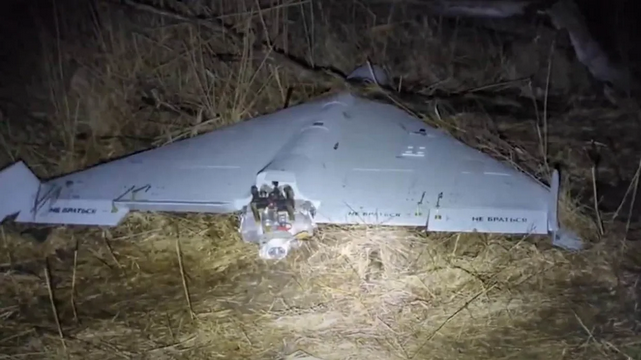
People are very much interested in how cheaply Ukraine is able to kill Shaheds.
Everyone sees that Ukraine kills them in high numbers.
Does taking them out cost more than it costs Russia to make them?
1/
The answer is no. Ukraine destroys the Shaheds at a fraction of Russia's cost to build one.
Let's break it down:
Russia produces the simplest Shaheds for around 15.000 USD.
Ukraine shoots down 80% of them with plain air defence machine guns.
At what cost?
2/
Ukraine shoots Shaheds down with air defense machine guns (very effectively and very cheaply). 12.7 mm (.50) rounds as bought by governments are well under 1 USD. A few bursts = a few hundred dollars.