We accidentally created the most depressed generation in history.
Not with screens or social media.
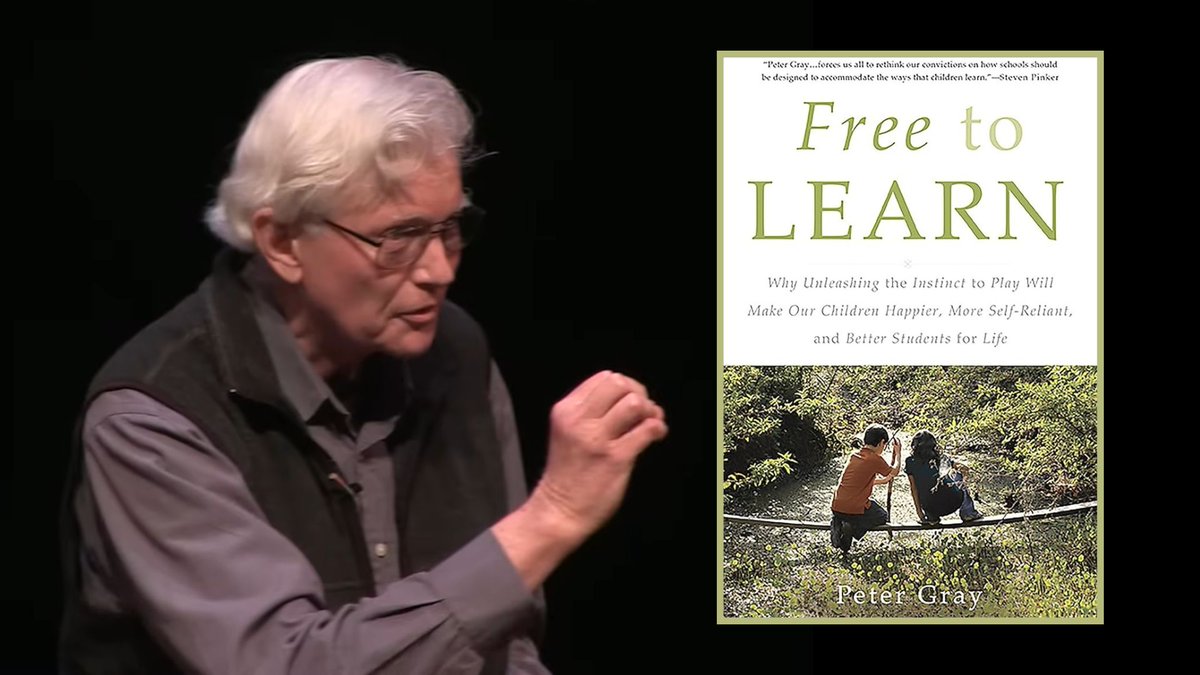
In his TED talk, Psychologist Peter Gray reveals what really caused this... and what we can do before it's too late...
Here's his plan to save the next generation:
Not with screens or social media.
In his TED talk, Psychologist Peter Gray reveals what really caused this... and what we can do before it's too late...
Here's his plan to save the next generation:
For 99% of human history, kids spent their days playing freely with other children.
No adults watching. No structure. Just pure exploration.
Hunter-gatherer kids played from dawn to dusk starting at age 4.
That’s how humans are meant to grow up...
No adults watching. No structure. Just pure exploration.
Hunter-gatherer kids played from dawn to dusk starting at age 4.
That’s how humans are meant to grow up...
But starting around 1960, we began quietly taking that freedom away.
Not all at once, but hour by hour.
Recess shrank. Homework crept in.
And childhood became something else entirely.
Not all at once, but hour by hour.
Recess shrank. Homework crept in.
And childhood became something else entirely.
Peter Gray calls it the "erosion of play."
Not just any play—free play:
The kind where kids make the rules, take the risks, and solve their own problems.
What he found explains everything...
Not just any play—free play:
The kind where kids make the rules, take the risks, and solve their own problems.
What he found explains everything...
In the 1950s, kids had 2 full hours of outdoor play during school.
30 minutes in the morning. 30 in the afternoon. A full hour at lunch.
They climbed trees, had snowball fights, even played with knives.
No adults hovered. No one called it dangerous. It was just normal.
Today?
30 minutes in the morning. 30 in the afternoon. A full hour at lunch.
They climbed trees, had snowball fights, even played with knives.
No adults hovered. No one called it dangerous. It was just normal.
Today?
Kids get 15 minutes of recess, if they’re lucky.
And after school?
Hip-hop dance, Filming, Basketball, and so on...
Every hour scheduled. Every minute supervised.
Now, here's why it matters so much:
And after school?
Hip-hop dance, Filming, Basketball, and so on...
Every hour scheduled. Every minute supervised.
Now, here's why it matters so much:
Play is the only time kids are truly in charge of their own lives.
It's where they learn the world isn't actually that scary.
Where they figure out how to solve their own problems.
We took away the one thing that teaches them they're capable.
It's where they learn the world isn't actually that scary.
Where they figure out how to solve their own problems.
We took away the one thing that teaches them they're capable.
College panic started it all.
Parents believed only elite colleges guarantee success.
So childhood became one long college application.
Every activity chosen to impress admissions, not for joy.
And what happened to kids' mental health?
Parents believed only elite colleges guarantee success.
So childhood became one long college application.
Every activity chosen to impress admissions, not for joy.
And what happened to kids' mental health?
Depression rates skyrocketed 8-fold. Suicide rates jumped 6x higher.
Anxiety is the new normal.
Kids who don't play can't handle emotions.
They never learn to resolve conflicts alone.
They don't develop resilience and grow up needing adults for everything.
Gray’s solution?
Anxiety is the new normal.
Kids who don't play can't handle emotions.
They never learn to resolve conflicts alone.
They don't develop resilience and grow up needing adults for everything.
Gray’s solution?
Let kids play. Really play.
Not soccer practice. Not piano lessons. Not STEM camp.
Kids playing games. Arguing over rules. Getting dirty. Taking risks.
And figuring things out without adult intervention.
Just like every generation did—until now.
Not soccer practice. Not piano lessons. Not STEM camp.
Kids playing games. Arguing over rules. Getting dirty. Taking risks.
And figuring things out without adult intervention.
Just like every generation did—until now.
Because when kids play without adults, they learn what we can’t teach them:
How to handle rejection.
How to settle arguments.
How to entertain themselves.
How to feel fear—and move through it.
The facts are clear. The answer is obvious.
How to handle rejection.
How to settle arguments.
How to entertain themselves.
How to feel fear—and move through it.
The facts are clear. The answer is obvious.
So how do we fix it?
Peter Gray lays out the path clearly:
Not with more therapy, apps, or programs—
but by rebuilding the environment that once made resilience natural.
Peter Gray lays out the path clearly:
Not with more therapy, apps, or programs—
but by rebuilding the environment that once made resilience natural.
1. Rebuild neighbourhood trust.
When parents know their neighbors, they feel safe letting kids play outside.
And kids regain access to what makes play possible: Other kids.
When parents know their neighbors, they feel safe letting kids play outside.
And kids regain access to what makes play possible: Other kids.
2. Create real places to play.
We’ve taken away sidewalks and public space.
Gray suggests:
• Opening school gyms after hours
• Staffing parks with non-interfering supervisors
• Blocking off streets for play hours
• Building adventure playgrounds like those in Europe
We’ve taken away sidewalks and public space.
Gray suggests:
• Opening school gyms after hours
• Staffing parks with non-interfering supervisors
• Blocking off streets for play hours
• Building adventure playgrounds like those in Europe
3. Push back on "more school."
Gray puts it simply:
“Our children don’t need more school.
Maybe they need better school.
But what they really need is more time to play.”
Gray puts it simply:
“Our children don’t need more school.
Maybe they need better school.
But what they really need is more time to play.”
The solution isn’t complicated. It just requires courage.
To stop scheduling every hour
To trust children again
To let them grow through what generations before them always had:
Freedom. Friendship. And PLAY.
To stop scheduling every hour
To trust children again
To let them grow through what generations before them always had:
Freedom. Friendship. And PLAY.
Thanks for reading!
If you found this valuable:
→ Follow me @MarkAWoodland for more on leadership and strategy
→ Or visit markwoodland.com.au to join my newsletter
Repost for your community.🔄 x.com/336417708/stat…
If you found this valuable:
→ Follow me @MarkAWoodland for more on leadership and strategy
→ Or visit markwoodland.com.au to join my newsletter
Repost for your community.🔄 x.com/336417708/stat…
Video/Image Credits:
IG: rebuildtoday
instagram.com/reel/DKzMporSy…
The decline of play | Peter Gray | TEDxNavesink
youtube.com/watch?v=Bg-GEz…
We Took Play Out of Schools and Now Kids Are Miserable – Peter Gray
youtube.com/watch?v=-psP7K…
IG: rebuildtoday
instagram.com/reel/DKzMporSy…
The decline of play | Peter Gray | TEDxNavesink
youtube.com/watch?v=Bg-GEz…
We Took Play Out of Schools and Now Kids Are Miserable – Peter Gray
youtube.com/watch?v=-psP7K…
• • •
Missing some Tweet in this thread? You can try to
force a refresh