Al Haddrell Profile picture
Jul 24 18 tweets 6 min read Read on X
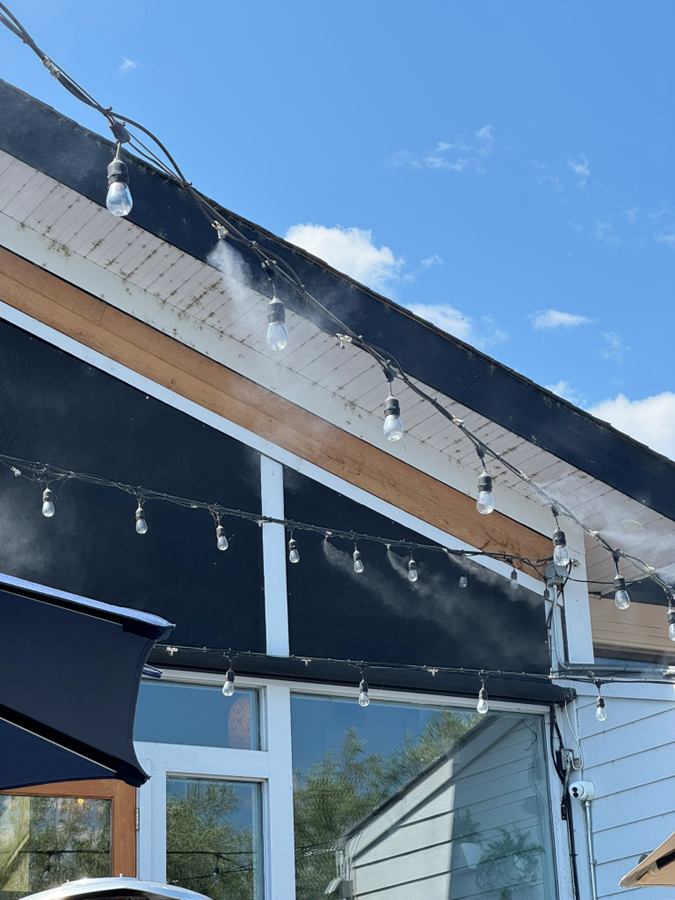
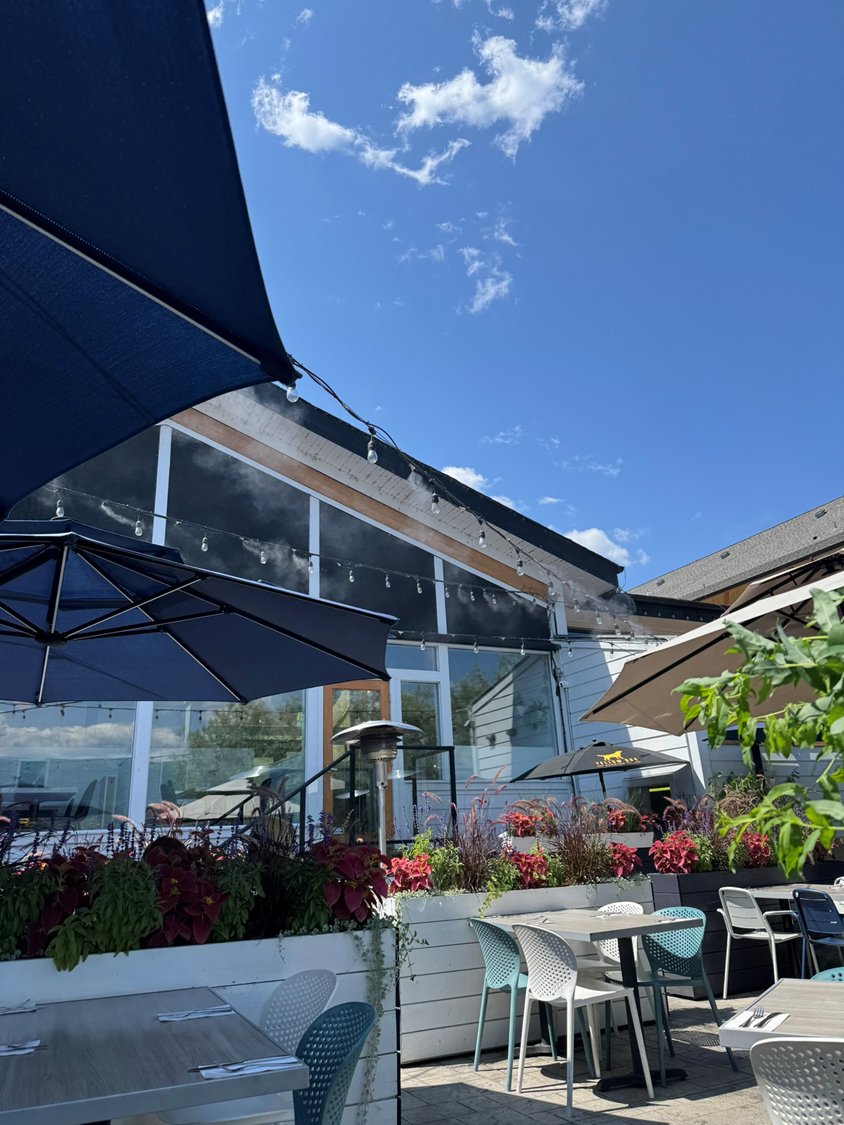
I was at a restaurant in my hometown (Shaughnessy's Cove in Summerland, BC) and noticed the outdoor air conditioning system.

Whether they know it or not, they are using aerosol science to cool the air. I figured I’d put together a thread to explain how these work. Image
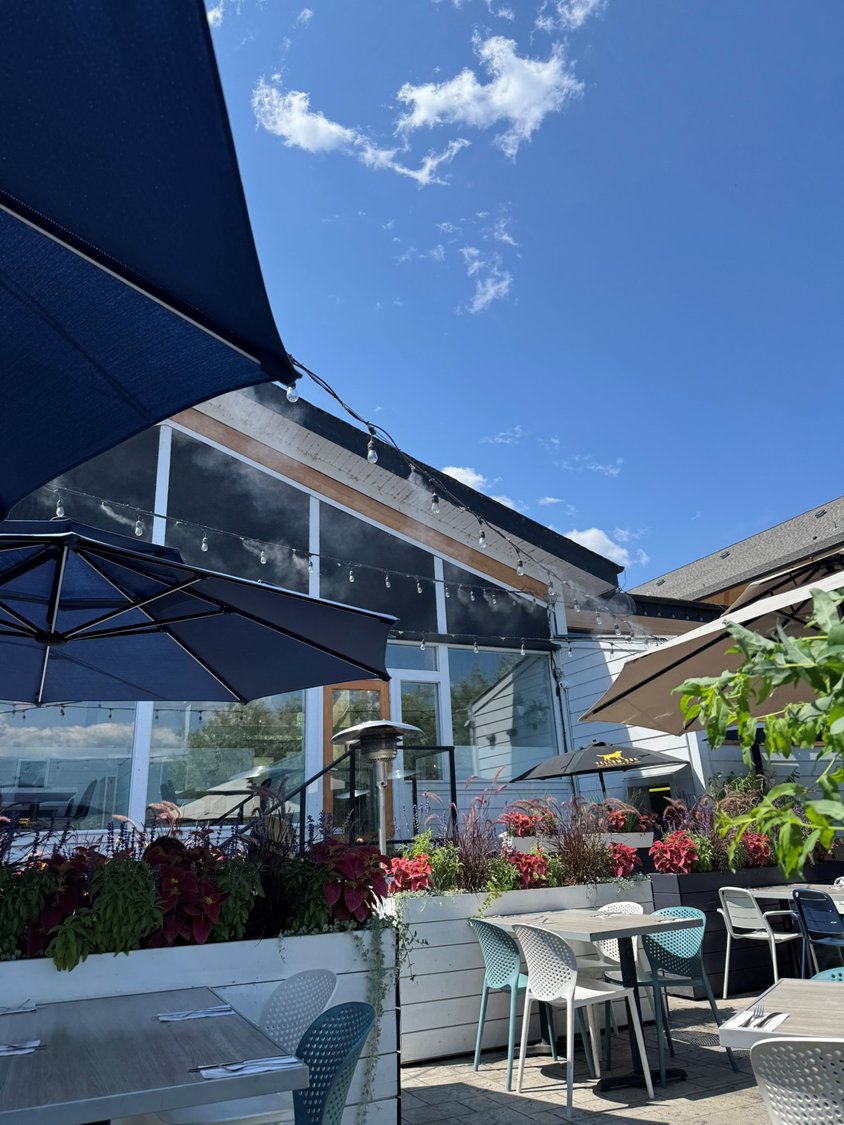
So, what is actually happening?

By spraying a mist, the outdoor eating area is cooled. Now, the area isn’t cooled because water is being sprayed all over the surfaces, akin to spraying a hose of water everywhere. Something more interesting is happening. Image
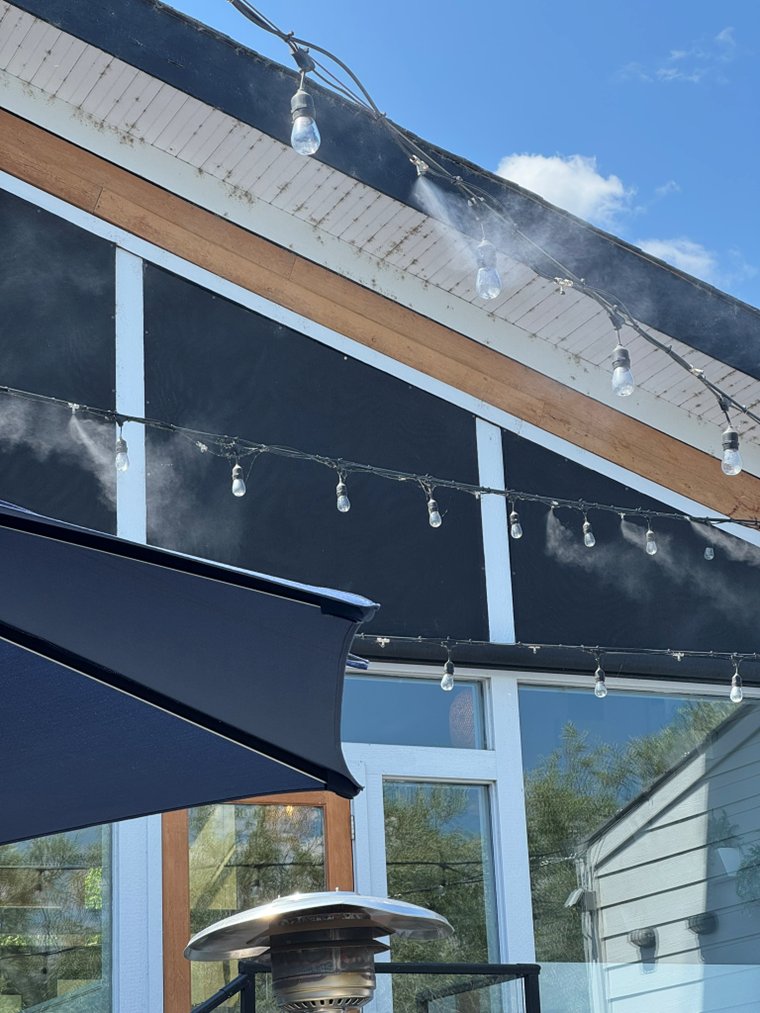
Mist is sprayed from a hose. Now, mist is simply a large population of individual aerosol droplets. The composition of each droplet is pure (or at least nearly pure) water. The size distribution of the aerosol will range from 50 to <1 microns. Image
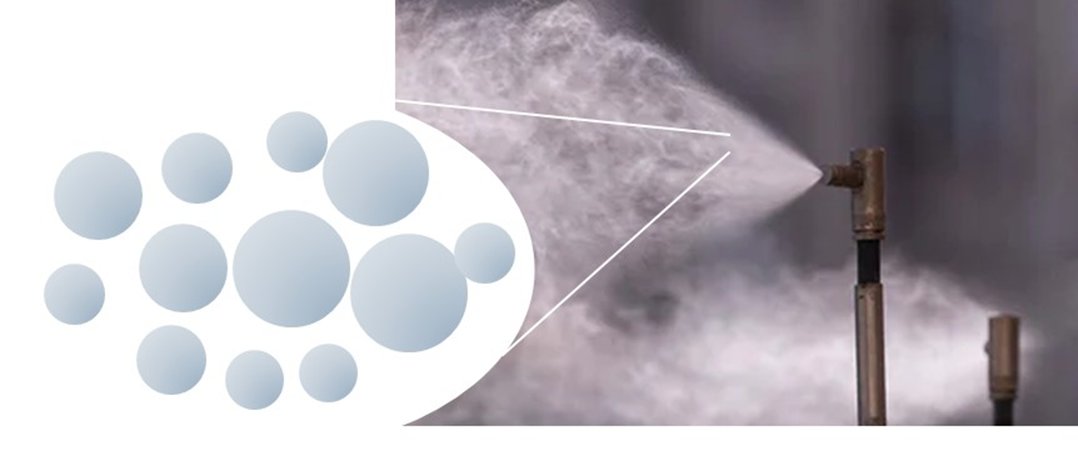
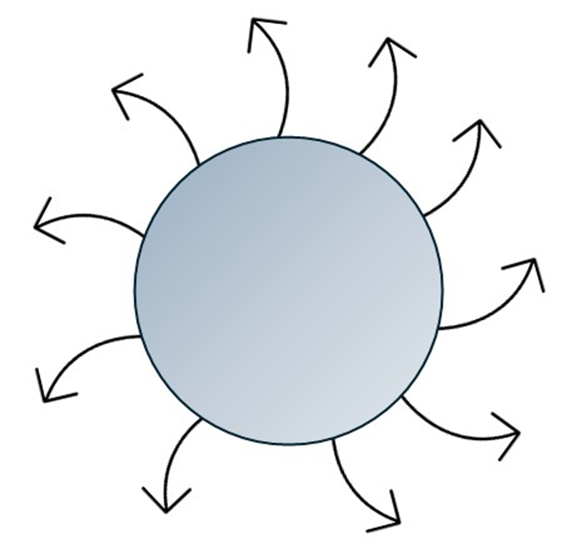
Once pure water is aerosolized, the droplet that is formed will begin to evaporate. All of the water will evaporate until the droplet is gone, where all of the water has converted to vapor.

This is why you won’t get soaked by the spray. Image

The rate that the water droplet evaporates is largely dependent on:
-Droplet size
-Relative humidity
-Temperature Image

At the same relative humidity and temperature, smaller droplets will change size much faster. Shown here is the size of water droplets evaporating into 80% humidity and 20C. Image
Effect of Temperature:

In cooler air, water droplets evaporate more slowly. Image
Effect of Relative Humidity:

The drier the air, the faster the aerosol droplet will evaporate. Image
None of the previous 3 slides may be all that surprising. And the bigger question is, what does this have to do with how mist cools an outdoor space?

The answer, as It turns out, is “everything”.
What matters is what happensINSIDE each droplet. Image
Context: The body uses sweat to regulate its temperature. As the water in the sweat evaporates from the skin, the surface of the skin is cooled.
Energy is required to convert water from a liquid to a gas. Termed the “energy of vaporization”, this is the energy that is taken up by the water during evaporation.

en.wikipedia.org/wiki/Latent_he…
Temperature is a measure of energy. As energy is transferred from the liquid water to water vapour, the temperature of the surface of the skin is cooled. Image
An identical dynamic occurs in an evaporating mist. As each water droplet evaporates, the temperature of the aerosol droplet gets much cooler.

But how much? Image
Shown here is the temperature of a 10 micronwater droplet evaporating into different relative humidities. In dry air, the droplet will reach temperatures well below freezing. Image
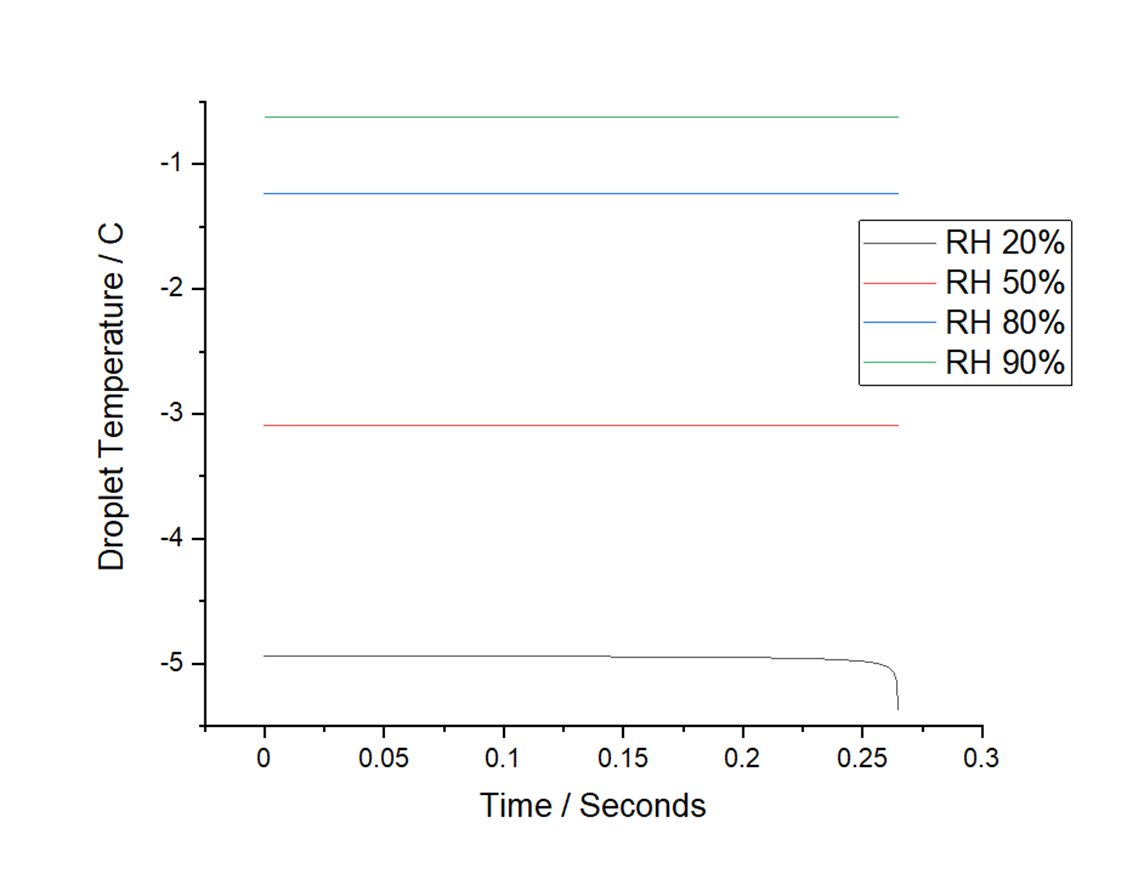
Fun Fact/Aside: Pure water droplets do not freeze at 0 C. Pure water droplets can reach as low as -37C before forming an ice crystal.

en.wikipedia.org/wiki/Supercool…
Alright, so the reason why these misting systems work so well is that the aerosol is incredibly cold. This cold mist in turn will lower the temperature of the surrounding air, leading to a comfortable environment. Image
I hope you found that interesting. At the very least, you have a couple fun facts you can use on the patio this summer.

If you have any questions, please let me know.

• • •

Missing some Tweet in this thread? You can try to force a refresh

 

Keep Current with Al Haddrell

Al Haddrell Profile picture

Stay in touch and get notified when new unrolls are available from this author!

Read all threads

This Thread may be Removed Anytime!

PDF

Twitter may remove this content at anytime! Save it as PDF for later use!

Try unrolling a thread yourself!

how to unroll video
  1. Follow @ThreadReaderApp to mention us!

  2. From a Twitter thread mention us with a keyword "unroll"
@threadreaderapp unroll

Practice here first or read more on our help page!

More from @ukhadds

Jun 30
There is no safe level of exposure to Asbestos. For this reason, it has been banned in >60 countries across the globe.

And yet, there is an effort in the US to bring it back. In this article, I discuss why this is happening, and what it all means.

theconversation.com/the-uss-asbest…
This article is a byproduct of a previous thread I wrote about the dangers of asbestos. In it, I explain what to your body after you inhale it. In short, it doesn’t go anywhere, and causes harm for years.

In the article, I discuss the history of asbestos use, how long it took for people to understand how much harm it was causing. I also dicuss how industry spent decades covering those findings up. We are still, to this day, dealing with the consequences of their actions.
Read 6 tweets
Jun 21
Since there is talk about bringing back ASBESTOS (this is somehow true), I thought it would be useful to describe just some what happens to you when you breath this stuff into your lungs.

In short, it’s terrible.

A 🧵 Image
What is asbestos?

Asbestos is a group of naturally occurring fibrous minerals. There are 6 types: Chrysotile, Amosite, Crocidolite, Tremolite, Actinolite and Anthophyllite.

They have some useful properties (including heat resistance, strength, durability and well insulating) Image
Because of these physical properties, humans have been using asbestos for thousands of years for a variety of purposes. In the 20th century, it began to be used as a building material.

In the 1970s, the health risks associated with asbestos exposure began to be recognized. Image
Read 19 tweets
Jun 6
We just had an article published in ACS Central Science on the how the pH of exhaled aerosol evolves over time

As we’ve previously reported, respiratory aerosol pH (high pH!) is a driver of SARS-CoV-2 decay. Meaning, understanding the pH dynamics is important for estimating risk Image
This paper is a step in the direction of improving our undertanding of exhaled aerosol pH.

Alright, so here’s a link to the article:

pubs.acs.org/doi/full/10.10…
Apologies up front, this thread is a bit of a long one. There’s a lot of background/context to get through to appreciate why this work has been published in such a high impact journal.

In short controversy.

Enjoy the ride. Image
Read 42 tweets
May 26
Martha asked an interesting question, so I thought I’d try to answer it.

Essentially, the question is how long to wait before one is 95% certain that the room is Covid free, given a certain set of conditions.
Disclaimer at the top: I am not a modeler, I am an experimentalist (that occasionally publishes simple models).

The data used to make these estimates are from experimental studies. The absolute values will not be exact, but the general trends and scales will be accurate.
Let’s go through these conditions one at a time.

First is the ACH. ACH describes the rate in which the air (and aerosol) in a room is removed over time. Shown below is the relationship between ACH and the time taken for 99% of the air in a room to be replaced with fresh air: Image
Read 21 tweets
May 25
The article claiming that SARS-CoV-2 remains infectious in the air for 16 hours has been making the rounds on social media again.

I thought I would take this opportunity to discuss it, what it shows, what it doesn’t, and why I think it shouldn’t be taken seriously.

A 🧵
First off, here’s the article:

wwwnc.cdc.gov/eid/article/26…
The article is short, with only two figures. The key one being Figure 2. In it, the authors claim to show the virus surviving for 16 hours in the air. Image
Read 32 tweets
May 19
We just had an important paper published that compares different technologies used to measure aerosolised microbes.

This resulted from a collaboration between multiple research teams in the USA and the UK. Image
Here’s a link to the article:

tandfonline.com/doi/full/10.10…
Background: Studying how long and why microbes lose viability while in the air is critical in estimating risk, and in designing effective mitigation strategies.

These measurements are extremely challenging. I discussed them in an explainer video:

Read 20 tweets

Did Thread Reader help you today?

Support us! We are indie developers!


This site is made by just two indie developers on a laptop doing marketing, support and development! Read more about the story.

Become a Premium Member ($3/month or $30/year) and get exclusive features!

Become Premium

Don't want to be a Premium member but still want to support us?

Make a small donation by buying us coffee ($5) or help with server cost ($10)

Donate via Paypal

Or Donate anonymously using crypto!

Ethereum

0xfe58350B80634f60Fa6Dc149a72b4DFbc17D341E copy

Bitcoin

3ATGMxNzCUFzxpMCHL5sWSt4DVtS8UqXpi copy

Thank you for your support!

Follow Us!

:(