If you thought the Vioxx scandal was bad, wait until you hear what’s happening with anxiety meds.
Vioxx was a pain med that was marketed as “safe”... until it triggered heart attacks in over 100,000 people.
Guess what?
Those anxiety meds that are marketed as “safe” are quietly killing up to 12,000 people a year.
They don't actually treat anxiety—they just mask the symptoms while inflicting harmful side effects on the people that take them.
Break the cycle.
Here’s how you can address the root cause of your anxiety without reaching for dangerous pills.
🧵 THREAD
Vioxx was a pain med that was marketed as “safe”... until it triggered heart attacks in over 100,000 people.
Guess what?
Those anxiety meds that are marketed as “safe” are quietly killing up to 12,000 people a year.
They don't actually treat anxiety—they just mask the symptoms while inflicting harmful side effects on the people that take them.
Break the cycle.
Here’s how you can address the root cause of your anxiety without reaching for dangerous pills.
🧵 THREAD

The information in this thread comes from the work of medical researcher @MidwesternDoc. For all the sources and details, read the full 10,000+ word report below.
midwesterndoctor.com/p/what-they-do…
midwesterndoctor.com/p/what-they-do…
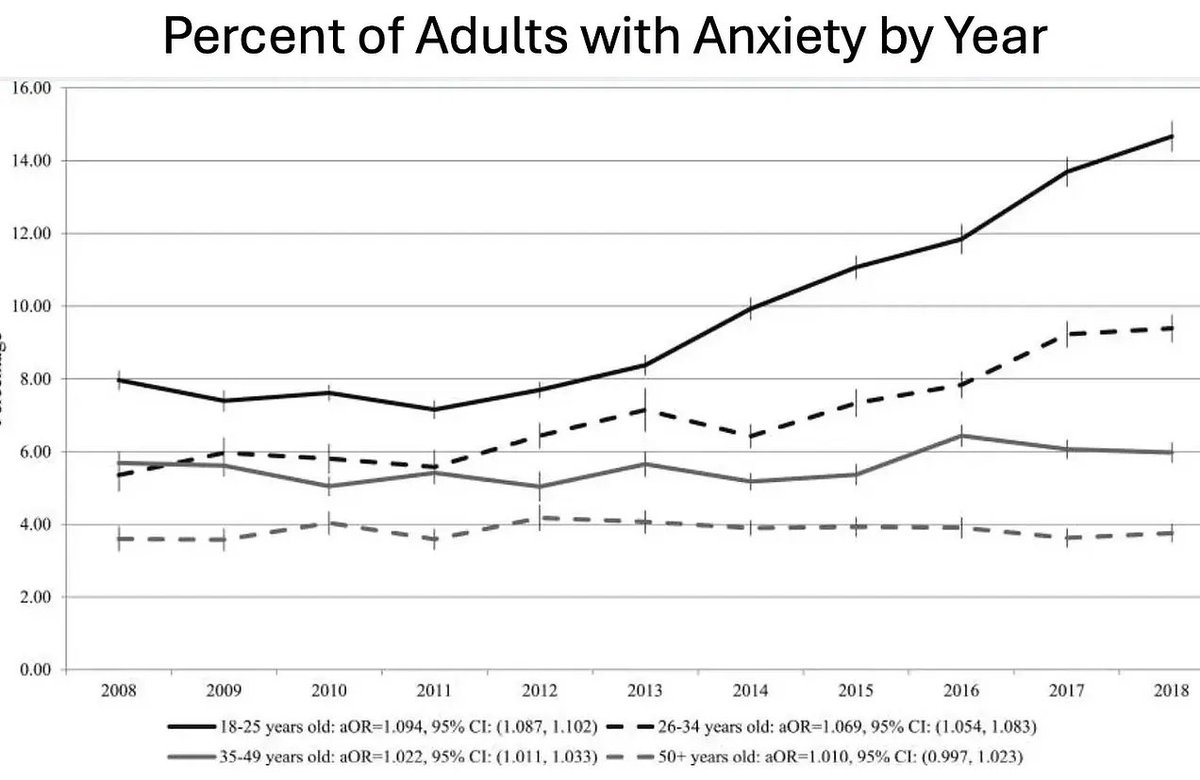
Anxiety is now one of the most common mental health issues in the US.
In fact, anxiety affects over half of young adults today, with 43% experiencing panic attacks.
A staggering 54% say their anxiety worsened in 2023, and 26% were diagnosed with a new mental health condition due to COVID.
Many are turning to medications that don’t actually help and with side effects they just don’t understand.
Despite the routine use of medications, the anxiety problem keeps getting worse.
In fact, anxiety affects over half of young adults today, with 43% experiencing panic attacks.
A staggering 54% say their anxiety worsened in 2023, and 26% were diagnosed with a new mental health condition due to COVID.
Many are turning to medications that don’t actually help and with side effects they just don’t understand.
Despite the routine use of medications, the anxiety problem keeps getting worse.

Between 2001 and 2004, 19% of adults in the US had an anxiety disorder. And by 2007, Americans spent a shocking $36.8 billion on anxiety and mood disorder treatments.
Yet, the rates of anxiety continue to skyrocket—especially among younger generations who report worsening symptoms each year.
Something’s not working, and it might not be what you think.
Yet, the rates of anxiety continue to skyrocket—especially among younger generations who report worsening symptoms each year.
Something’s not working, and it might not be what you think.
So, what’s the real issue? Why is this happening?
The system is designed to perpetuate anxiety, not cure it.
Big Pharma profits from it. So instead of solving the problem, they’re creating a market where dependence on drugs becomes the preferred solution.
These medications don’t address the root causes of anxiety and other mental health problems—they just mask the symptoms with their pills.
And it’s making things worse. A lot worse.
The system is designed to perpetuate anxiety, not cure it.
Big Pharma profits from it. So instead of solving the problem, they’re creating a market where dependence on drugs becomes the preferred solution.
These medications don’t address the root causes of anxiety and other mental health problems—they just mask the symptoms with their pills.
And it’s making things worse. A lot worse.

@MidwesternDoc If you’re a parent of a teen or young adult, you need to read the full write up from @MidwesternDoc.
midwesterndoctor.com/p/what-they-do…
midwesterndoctor.com/p/what-they-do…
The drugs commonly used to treat anxiety—like benzodiazepines—work by manipulating the brain’s GABA system (a neurotransmitter that helps calm the brain).
But this comes at a heavy cost.
Benzodiazepines are some of the most addictive and harmful drugs on the market.
They’ve been linked to addiction, cognitive impairment, memory loss, and in many cases, fatal overdoses.
They don’t directly activate GABA receptors—they enhance GABA’s effects. That’s why they’re so addictive.
And when people start to build up a tolerance, they need more and more just to feel like a normal person again. Yikes.
They’re far more dangerous than we’ve been told.
And they certainly shouldn’t be handed out to young people at the rate they are now.
But this comes at a heavy cost.
Benzodiazepines are some of the most addictive and harmful drugs on the market.
They’ve been linked to addiction, cognitive impairment, memory loss, and in many cases, fatal overdoses.
They don’t directly activate GABA receptors—they enhance GABA’s effects. That’s why they’re so addictive.
And when people start to build up a tolerance, they need more and more just to feel like a normal person again. Yikes.
They’re far more dangerous than we’ve been told.
And they certainly shouldn’t be handed out to young people at the rate they are now.
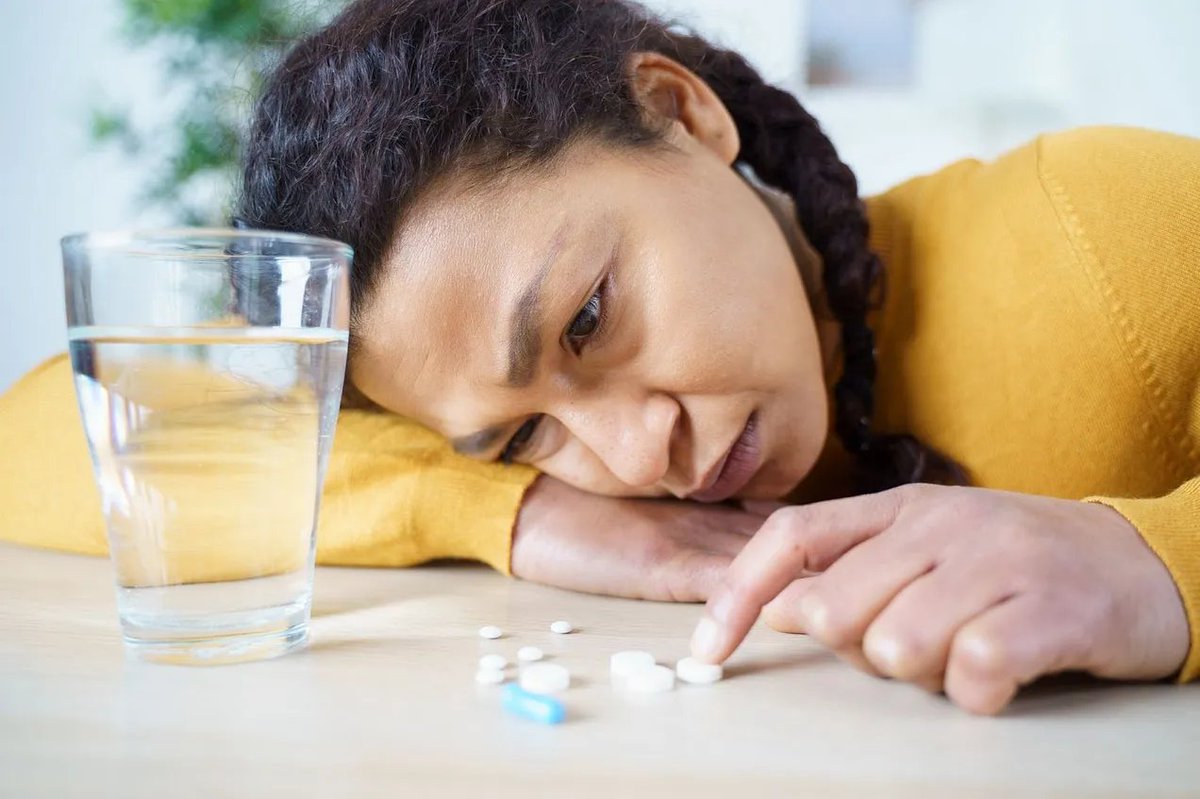
Let’s talk numbers.
Benzodiazepine overdoses have spiked by a staggering 917% from 1999 to 2021. Over 12,000 deaths in 2021 alone were attributed to the drug.
Yet, the prescription rate continues to rise. Benzodiazepines now top prescription lists.
Why is no one talking about this very deadly and undeniable trend? Why are we still funneling kids to professionals who write scripts for these drugs without so much as a second thought?
Benzodiazepine overdoses have spiked by a staggering 917% from 1999 to 2021. Over 12,000 deaths in 2021 alone were attributed to the drug.
Yet, the prescription rate continues to rise. Benzodiazepines now top prescription lists.
Why is no one talking about this very deadly and undeniable trend? Why are we still funneling kids to professionals who write scripts for these drugs without so much as a second thought?

How did we get here?
These drugs were aggressively marketed with misleading campaigns, painting them as a breakthrough treatment.
The pharmaceutical industry convinced doctors and the public that anxiety needed to be medicated immediately. And it worked.
But now the consequences couldn’t be more clear.
These drugs were aggressively marketed with misleading campaigns, painting them as a breakthrough treatment.
The pharmaceutical industry convinced doctors and the public that anxiety needed to be medicated immediately. And it worked.
But now the consequences couldn’t be more clear.

While many doctors are now at least aware of the dangers, benzodiazepines are still widely prescribed. Despite growing evidence of their harms, these drugs are seen as the easy fix.
However, long-term use exacerbates the problem—creating more anxiety, addiction, and physical harm.
Anxiety medications like benzodiazepines don’t just mask symptoms—they worsen them over time.
As the body adapts to the drug, patients develop tolerance, needing more and more to achieve the same effect.
However, long-term use exacerbates the problem—creating more anxiety, addiction, and physical harm.
Anxiety medications like benzodiazepines don’t just mask symptoms—they worsen them over time.
As the body adapts to the drug, patients develop tolerance, needing more and more to achieve the same effect.

Side effects of long term use include cognitive decline, memory issues, and even a higher risk of dementia.
But there’s more: patients can experience debilitating withdrawal symptoms.
Anxiety, insomnia, panic attacks, and even seizures often follow.
For some, these symptoms persist for months or even years, leaving them worse off than before.
And sometimes these withdrawal symptoms can be fatal.
But there’s more: patients can experience debilitating withdrawal symptoms.
Anxiety, insomnia, panic attacks, and even seizures often follow.
For some, these symptoms persist for months or even years, leaving them worse off than before.
And sometimes these withdrawal symptoms can be fatal.
Here’s the shocking truth:
The medical system has allowed this crisis to grow because it’s profitable.
Patients get trapped in a cycle of dependency on medications that never actually heal them, just keep them coming back for more.
And the pharmaceutical industry absolutely loves it.
The medical system has allowed this crisis to grow because it’s profitable.
Patients get trapped in a cycle of dependency on medications that never actually heal them, just keep them coming back for more.
And the pharmaceutical industry absolutely loves it.

@MidwesternDoc What if the cure for anxiety isn’t a pill? Dive into @MidwesternDoc’s full 10,000+ word report below.
midwesterndoctor.com/p/what-they-do…
midwesterndoctor.com/p/what-they-do…
Meanwhile, alternative therapies like Cognitive Behavioral Therapy (CBT) or lifestyle changes have been shown to work better when it comes to managing anxiety.
All without the harmful side effects.
So why aren’t these methods like this promoted more widely? Why don’t doctors get to the root cause of anxiety?
Because they don’t come with a massive price tag for Big Pharma. They actually help heal which means the loss of a potential lifelong customer.
All without the harmful side effects.
So why aren’t these methods like this promoted more widely? Why don’t doctors get to the root cause of anxiety?
Because they don’t come with a massive price tag for Big Pharma. They actually help heal which means the loss of a potential lifelong customer.
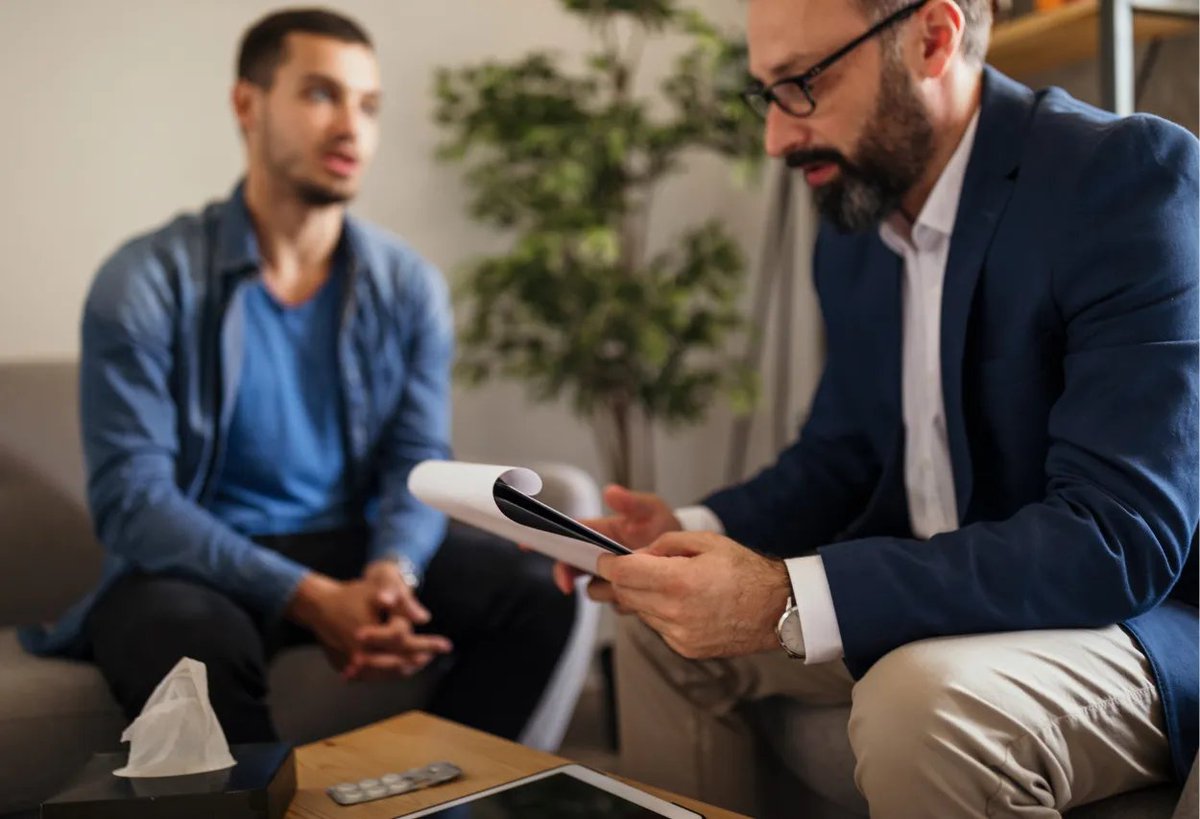
Anxiety is very real. The truth is, it’s a complex issue.
Anxiety is influenced by mental, emotional, and even physiological factors. It’s not just about popping a pill.
From societal pressures and emotional stress to imbalances in our autonomic nervous system, the root causes of anxiety are far more nuanced and even the best pill in the world couldn’t address it all.
And the over-reliance on medication is one of the reasons anxiety keeps getting worse.
Anxiety is influenced by mental, emotional, and even physiological factors. It’s not just about popping a pill.
From societal pressures and emotional stress to imbalances in our autonomic nervous system, the root causes of anxiety are far more nuanced and even the best pill in the world couldn’t address it all.
And the over-reliance on medication is one of the reasons anxiety keeps getting worse.

@MidwesternDoc For a breakdown on the various types of anxiety and how they respond to drugs, as well as the different causes of anxiety, check out the full report from @MidwesternDoc.
midwesterndoctor.com/p/what-they-do…
midwesterndoctor.com/p/what-they-do…
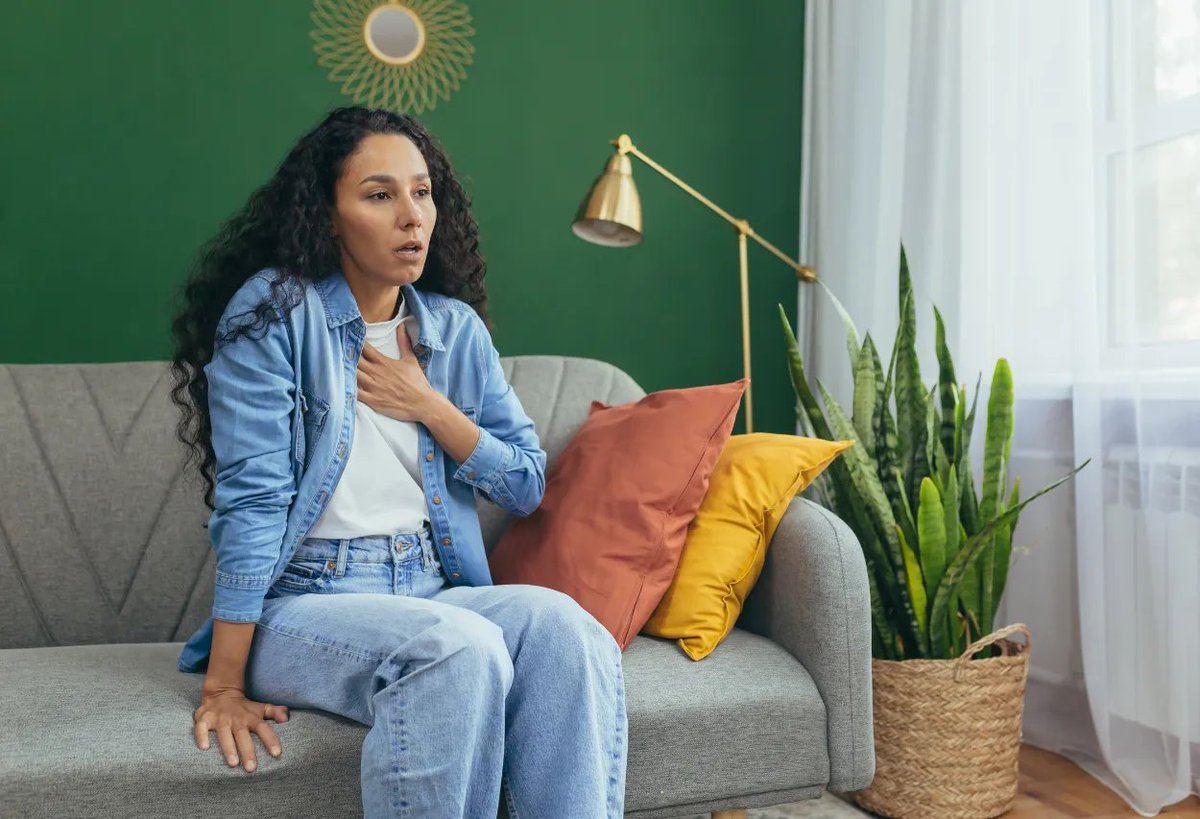
A significant factor in anxiety is an imbalance in the autonomic nervous system.
The sympathetic (fight-or-flight) system becomes overactive, and the parasympathetic (rest-and-digest) system is underactive.
This imbalance leads to constant stress responses—anxiety becomes the body’s default setting.
The sympathetic (fight-or-flight) system becomes overactive, and the parasympathetic (rest-and-digest) system is underactive.
This imbalance leads to constant stress responses—anxiety becomes the body’s default setting.
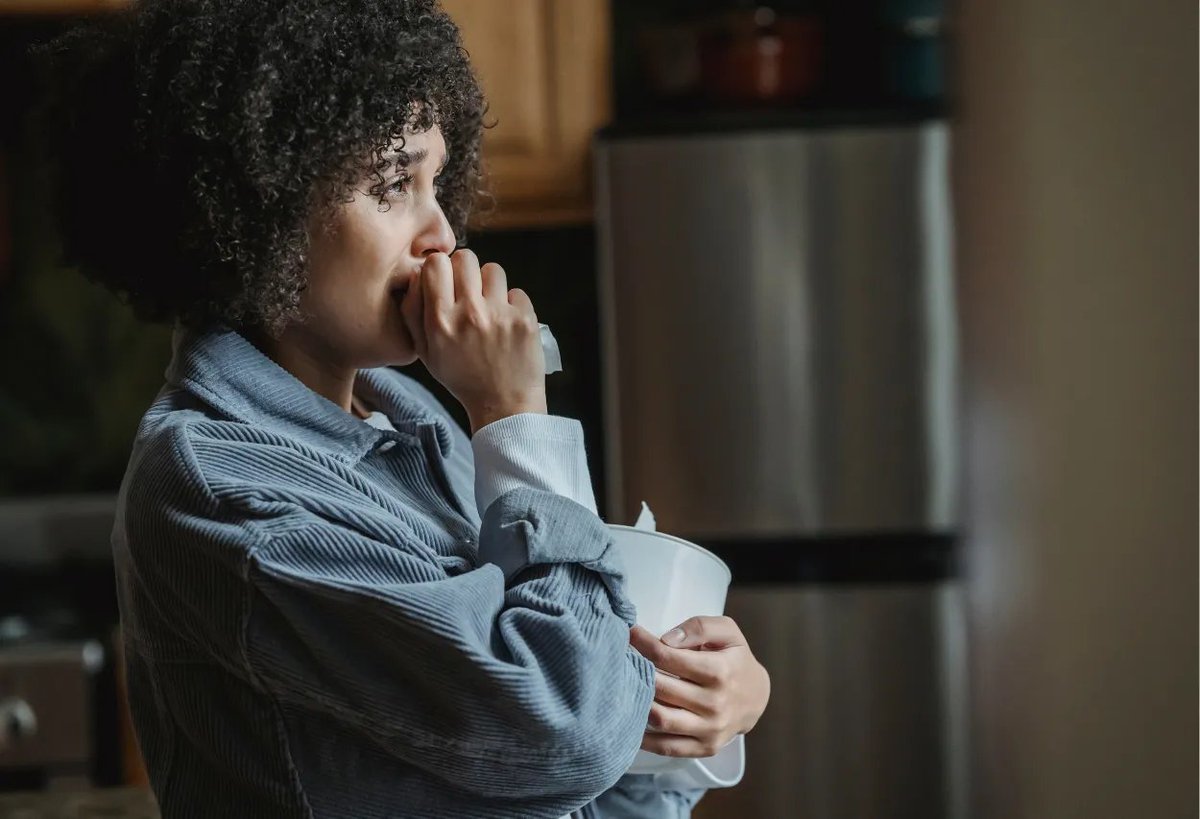
Low blood sugar, which triggers a sympathetic response, is another common but overlooked cause of anxiety.
A body unable to regulate blood sugar properly often leads to feelings of nervousness, agitation, and even panic attacks.
But instead of focusing on these underlying causes, patients are often handed a prescription for drugs like benzodiazepines.
We need to address the real triggers, not just suppress the symptoms.
A body unable to regulate blood sugar properly often leads to feelings of nervousness, agitation, and even panic attacks.
But instead of focusing on these underlying causes, patients are often handed a prescription for drugs like benzodiazepines.
We need to address the real triggers, not just suppress the symptoms.
Even your environment can cause anxiety.
Wi-Fi and EMF exposure, artificial lights, and a lack of natural sunlight have all been linked to increased stress levels.
Studies suggest a significant improvement in anxiety symptoms when people spend more time in nature and less in artificial environments.
Wi-Fi and EMF exposure, artificial lights, and a lack of natural sunlight have all been linked to increased stress levels.
Studies suggest a significant improvement in anxiety symptoms when people spend more time in nature and less in artificial environments.

A nutrient imbalance is one of the most overlooked factors of anxiety.
For some people, anxiety is linked to a metabolic disorder, where they lack the proper nutrients to balance their biochemistry.
For them, treating anxiety naturally with the right supplements could make a world of difference.
Fix the nutrient imbalance, fix the anxiety.
For some people, anxiety is linked to a metabolic disorder, where they lack the proper nutrients to balance their biochemistry.
For them, treating anxiety naturally with the right supplements could make a world of difference.
Fix the nutrient imbalance, fix the anxiety.

If you think anxiety is just about “feeling anxious,” think again.
It’s a complex condition that can stem from brain damage, thyroid issues, heart disease, and even past vaccine injuries.
Unfortunately, these underlying causes are rarely explored when anxiety is diagnosed and treated.
It’s a complex condition that can stem from brain damage, thyroid issues, heart disease, and even past vaccine injuries.
Unfortunately, these underlying causes are rarely explored when anxiety is diagnosed and treated.

The mental health industry continues to push medication as the first-line solution. But that’s the easy answer, not the right one.
Many people who are prescribed anxiety medications never truly learn how to cope with anxiety.
Instead of addressing emotional intelligence and natural coping mechanisms, they become reliant on pills that only treat symptoms. For life.
We need to focus on real solutions like therapy, lifestyle changes, and addressing the environmental factors contributing to anxiety.
Many people who are prescribed anxiety medications never truly learn how to cope with anxiety.
Instead of addressing emotional intelligence and natural coping mechanisms, they become reliant on pills that only treat symptoms. For life.
We need to focus on real solutions like therapy, lifestyle changes, and addressing the environmental factors contributing to anxiety.

Anxiety isn’t just a “mental” issue; it’s physical, emotional, and environmental.
If we really want to solve the anxiety epidemic, we need to stop relying on the quick fixes from Big Pharma and start addressing the root causes of the problem.
The real solution to anxiety is not more pills.
It’s time to take a holistic approach: therapy, lifestyle changes, better sleep, and reducing the toxic influences of technology.
We must reclaim control of our mental health—before Big Pharma does it for us.
If we really want to solve the anxiety epidemic, we need to stop relying on the quick fixes from Big Pharma and start addressing the root causes of the problem.
The real solution to anxiety is not more pills.
It’s time to take a holistic approach: therapy, lifestyle changes, better sleep, and reducing the toxic influences of technology.
We must reclaim control of our mental health—before Big Pharma does it for us.

@MidwesternDoc Thanks for reading! This information was based on a report originally published by @MidwesternDoc.
Key details were streamlined and editorialized for clarity and impact. Read the original report here.
midwesterndoctor.com/p/what-they-do…
Key details were streamlined and editorialized for clarity and impact. Read the original report here.
midwesterndoctor.com/p/what-they-do…
@MidwesternDoc For a deeper dive into what modern medicine has overlooked—or intentionally buried—check out these other eye-opening reports by @MidwesternDoc:
The Most Powerful Lung Treatment You’ve Probably Never Heard Of
midwesterndoctor.com/p/dmso-heals-t…
The Most Powerful Lung Treatment You’ve Probably Never Heard Of
midwesterndoctor.com/p/dmso-heals-t…
@MidwesternDoc What Happens When You Compare Vaccinated vs. Unvaccinated Kids?
midwesterndoctor.com/p/how-much-dam…
midwesterndoctor.com/p/how-much-dam…
@MidwesternDoc What’s The Healthiest Water To Drink?
midwesterndoctor.com/p/whats-the-he…
midwesterndoctor.com/p/whats-the-he…
@MidwesternDoc While you’re at it, give @MidwesternDoc a follow.
No one brings more research, clinical insight, or historical context when it comes to exposing the health myths we’ve all been fed.
This is easily one of the most valuable accounts you’ll ever follow.
--> @MidwesternDoc
No one brings more research, clinical insight, or historical context when it comes to exposing the health myths we’ve all been fed.
This is easily one of the most valuable accounts you’ll ever follow.
--> @MidwesternDoc
• • •
Missing some Tweet in this thread? You can try to
force a refresh