This is a bad jobs report. 73,000 jobs would have been worrisome to begin with, but deeply negative revisions to the previous two-months wiped out much of the recent gains. 2025 looks a lot worse the further we get into it.
There's a lot to cover, let's dig in. /1
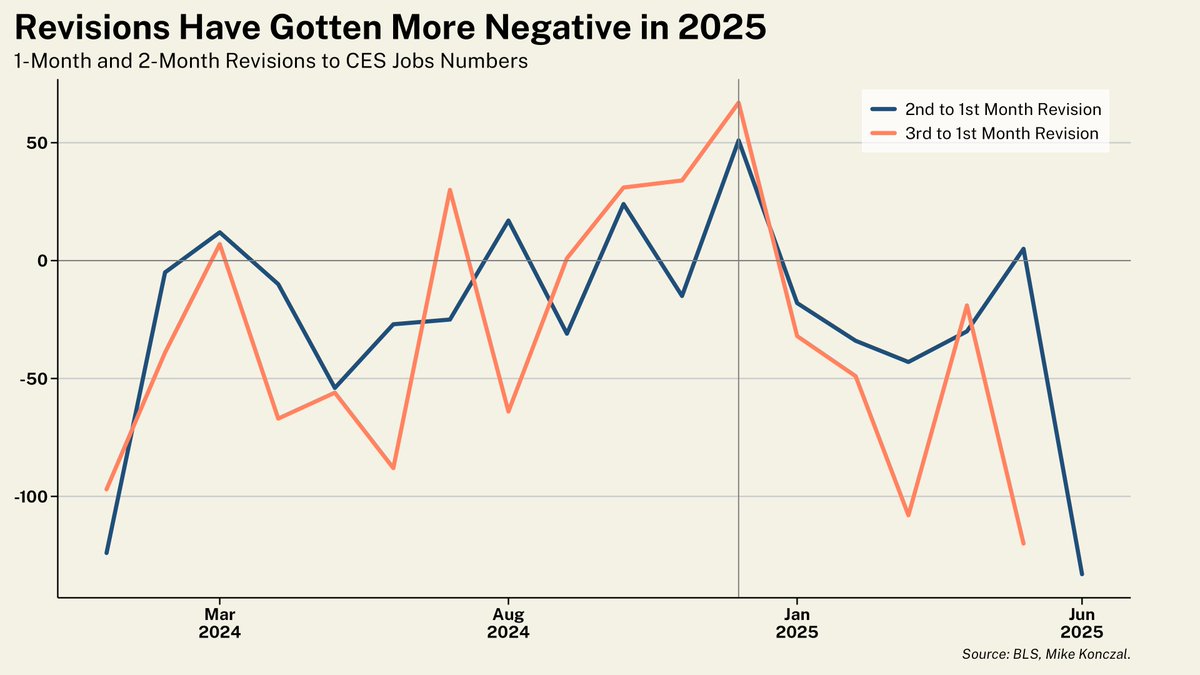
First: revisions. Negative revisions naturally occur at the end of recoveries/economic turning points from complexities of estimating business births, deaths, and seasonal adjusts.
While it was negative in early 2024 alongside strong jobs growth, it is collapsing now in 2025. /2
Middle column here is just May and June incorporating the revision, where private education and health services account for 170% of all private sector job growth.
Manufacturing jobs are being lost at a comparable clip to Federal jobs, -11/-12 in July and -13/-18 previously. /3
Sorry to be a messy b who loves drama, but let's remember last fall when then Senator Marco attacked the "fake jobs numbers" and implicitly the BLS itself for revisions that were significantly less negative and less scary than we're experiencing now. /4
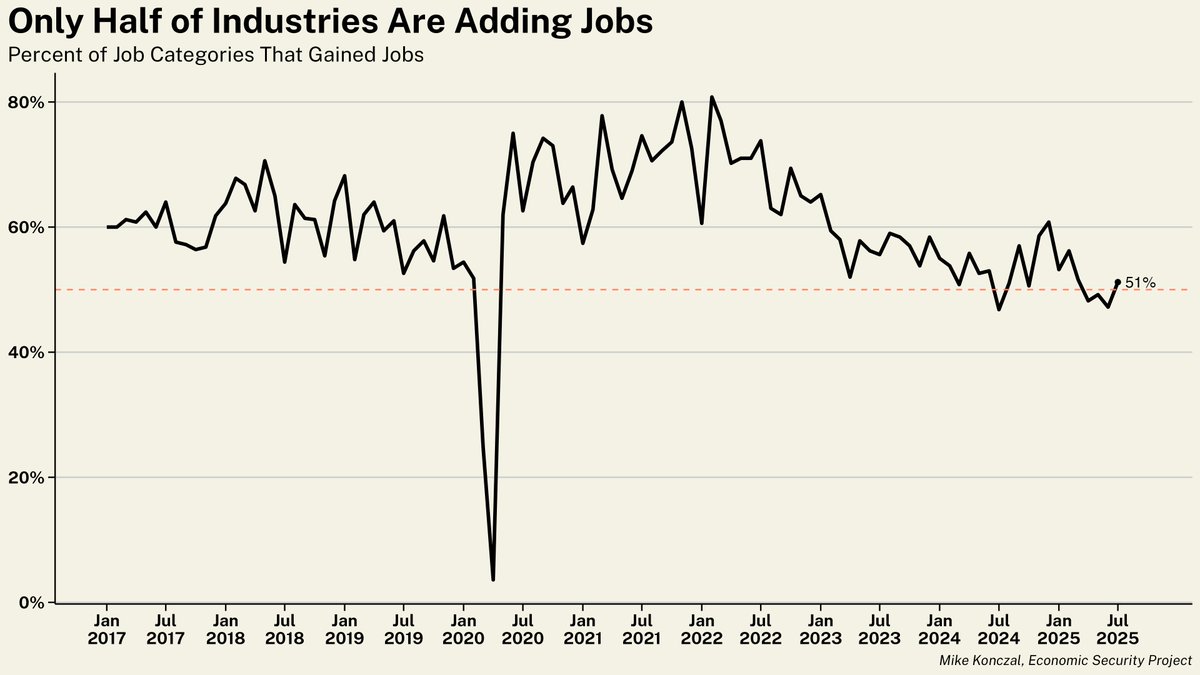
One potential reason for both the low job growth and (speculative) more negative revisions is that job growth has become more concentrated in fewer industries in 2025.
Here's percent of all subindustries adding jobs. It's been around 50%, a worrying number, for a while now. /5
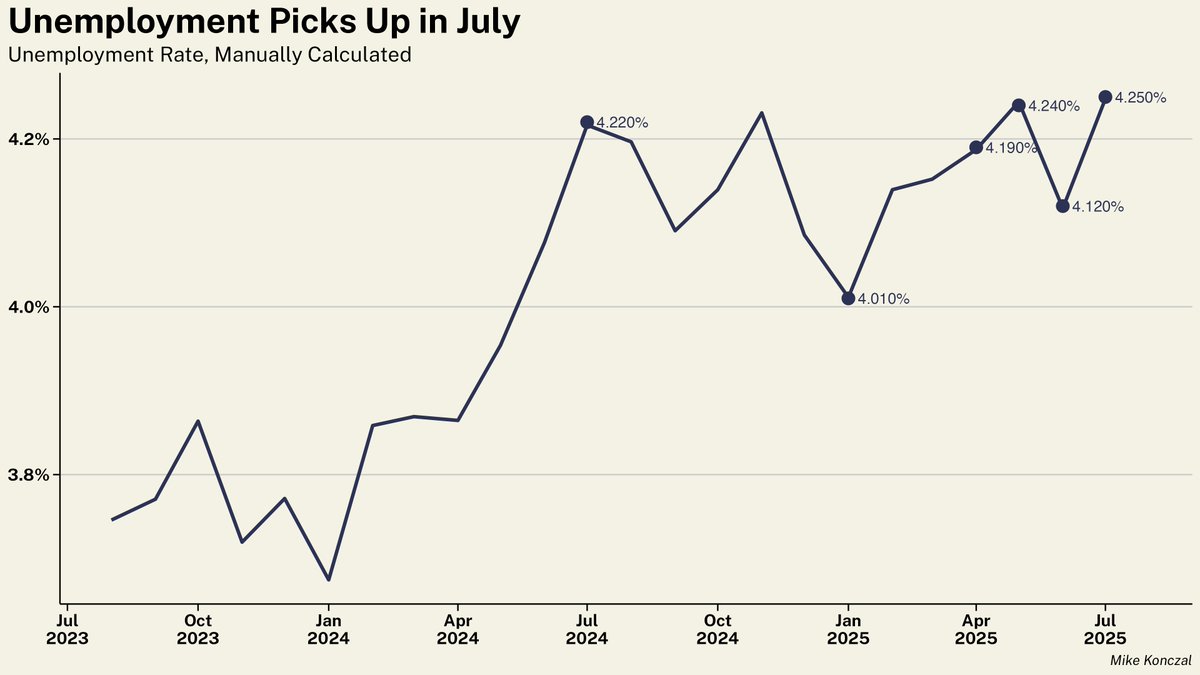
So here's the debate: why isn't the unemployment rate increasing? Though some pickup since January, about 0.25%, it's not that much.
Some will say that, without immigration, the labor force doesn't expand much. And while there's truth there, something else may be up. /6
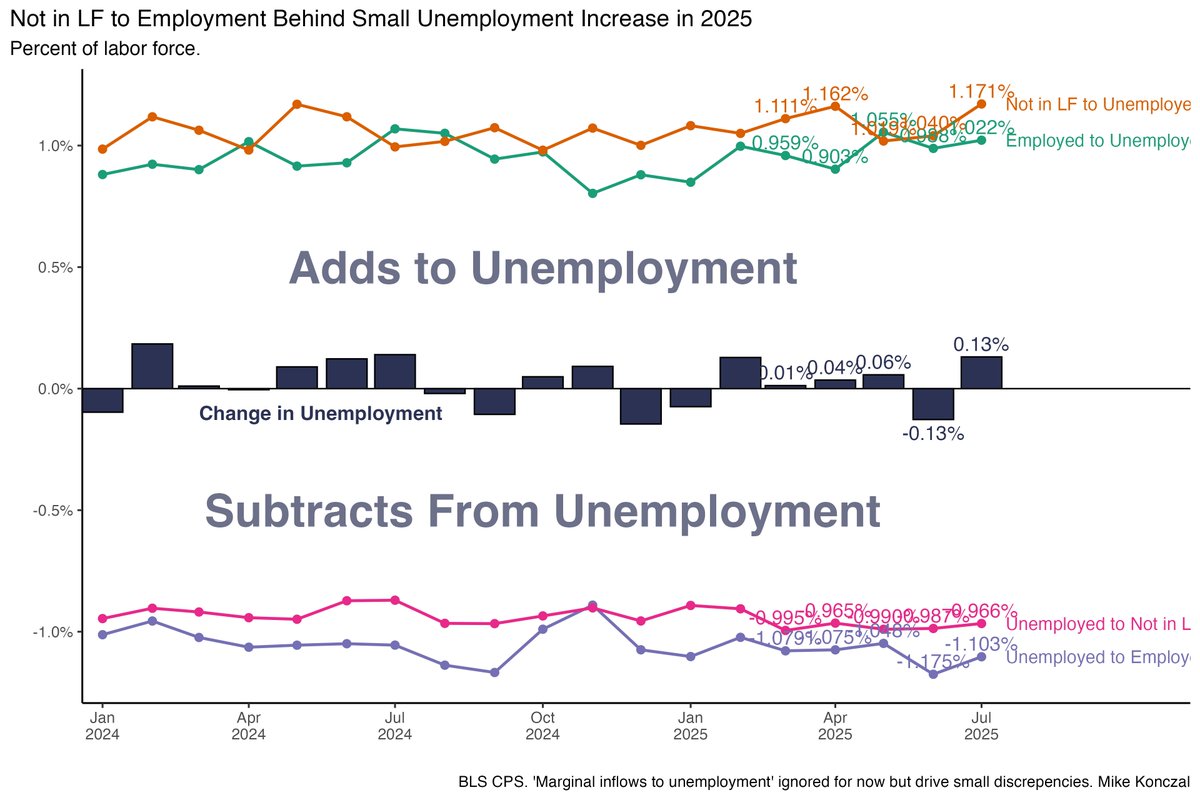
Here's the unemployment rate broken down into its components. Job leavers has been subtracting from unemployment in 2025.
Likely: people are afraid to quit their jobs under Trump due to weak hiring, which mechanically covers up the increasing new entrants who can't find jobs. /7
If you made it this far, treat yourself to this bad boy, which I'm not going to bother to explain.
NLF -> U flow is the highest percent in a long while; there was some encouragement last month on the flows but this month looks notably worse. /8
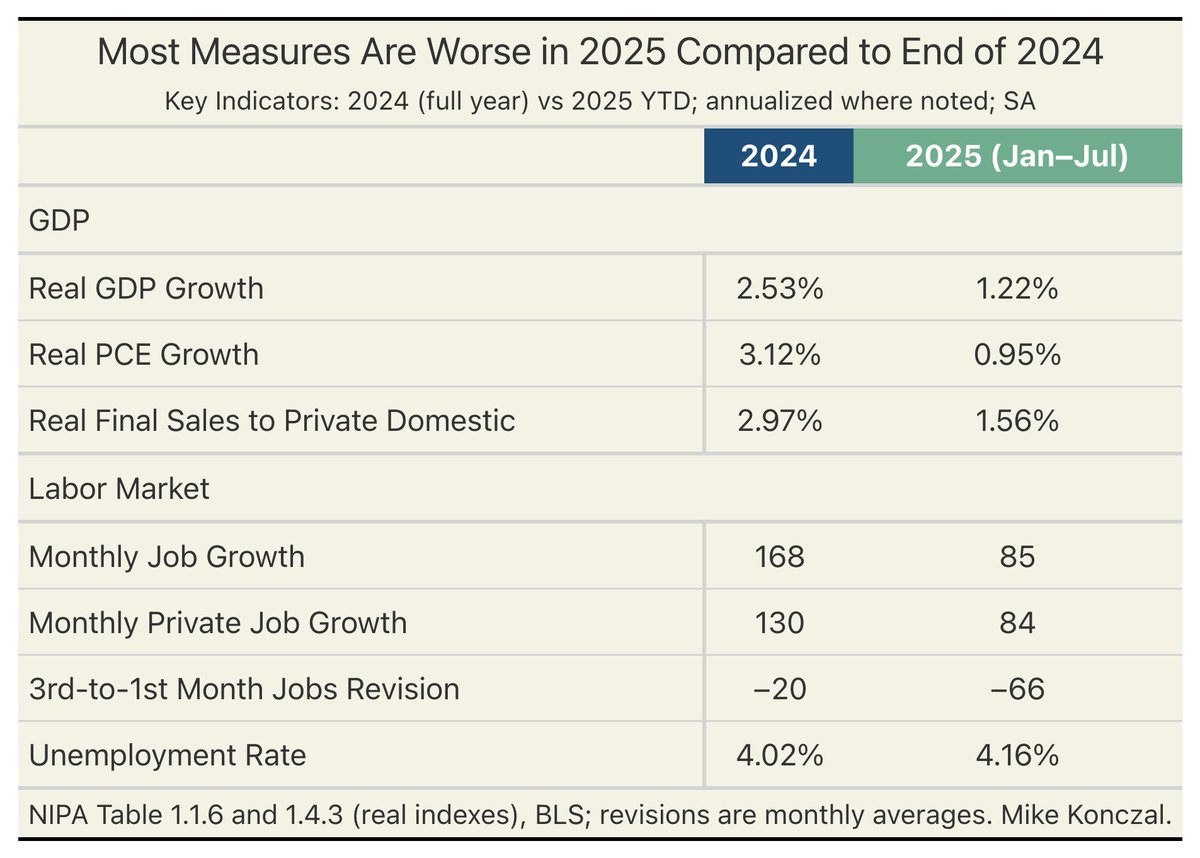
Last, here's GDP measures for the first two quarters alongside jobs. I see weakness across the board, a slowdown since 2024, with little positive.
Now is the time for a major pro-growth course correction from the Trump administration if they hope to turn this around. 9/9
• • •
Missing some Tweet in this thread? You can try to
force a refresh

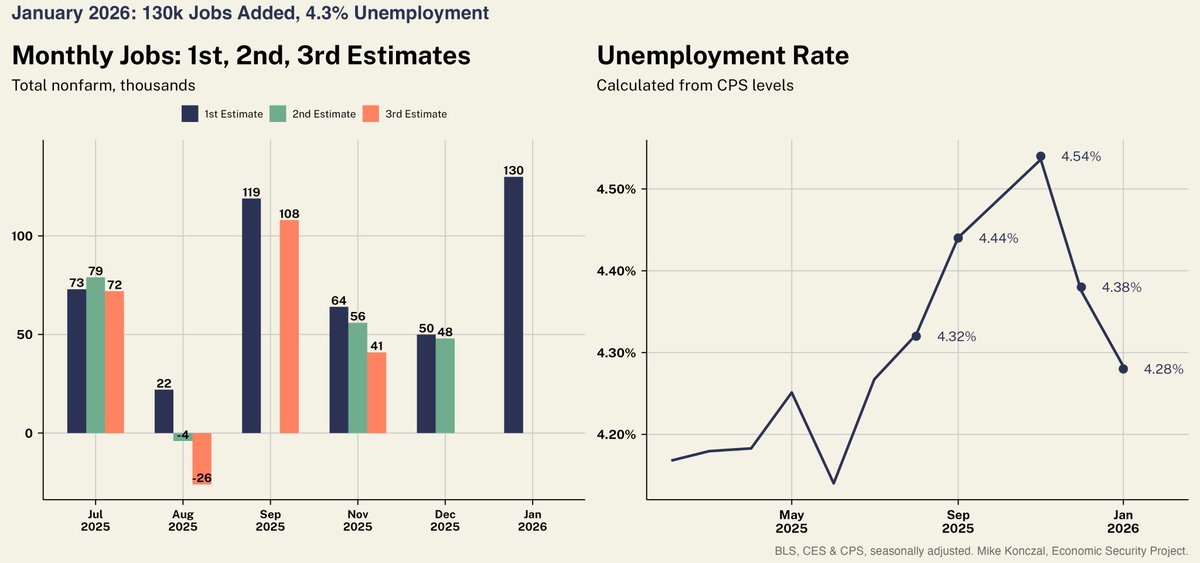
Big positive beats on both headline numbers from the January 2026 jobs report: 130k jobs added, unemployment at 4.3%. Prior two months revised down 25k. More interesting details under the hood.
Let's dig in. /1
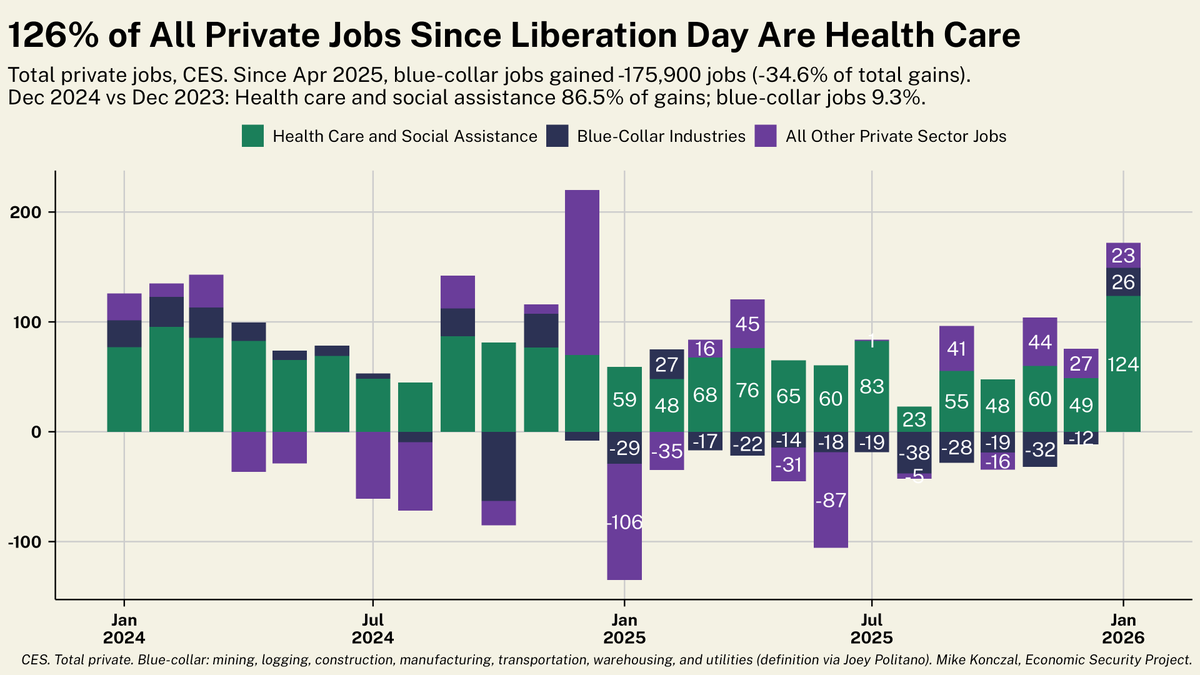
As par for the course, 95% of those total job gains in January are from health care and social assistance. That's about 124% of private sector job growth since liberation day.
Note: Government jobs were down -42,000 in Jan. Here it is as a graphic of private sector job growth:
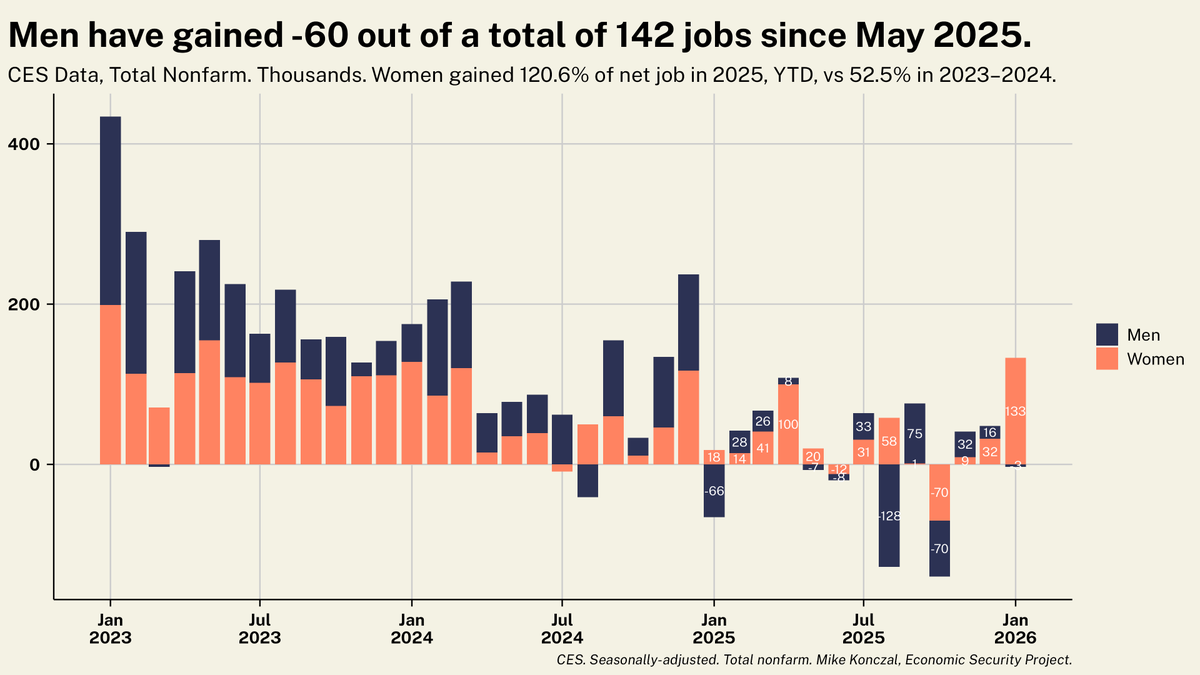
From the establishment survey, 103% of job gains in January went to women.
That's actually less than the ~121% of job gains women had in 2025, so progress for men? /3
After some technical difficulties from the missing month of data, we're up.
It's not just that this job report is bad, though it is. Unemployment is up 0.47% in 2025 and increasing.
It's that it shows what Trump hoped to do with the economy is failing. Let's dig in. /1
If you want to see where unemployment increased, here it is broken down.
It's up everywhere, but especially for younger workers, black workers, and those with BAs and without a high school diploma, and a bit more for men. This isn't a shift in employment they were hoping for. /2
On the jobs side, their goal this year was to shift the labor market from health care and federal jobs to goods-producing ones. It didn't work.
They did drop federal workers; with -162,000 in the month where those taking the deferral buyout would show up in the data. /3
Inflation came in hot. You can see tariffs are driving the price of goods higher, while the price of non-housing services isn't falling to compensate.
Shelter had a high month as well, but that is likely noise given their more general downward trend. The tariffs are here. /1
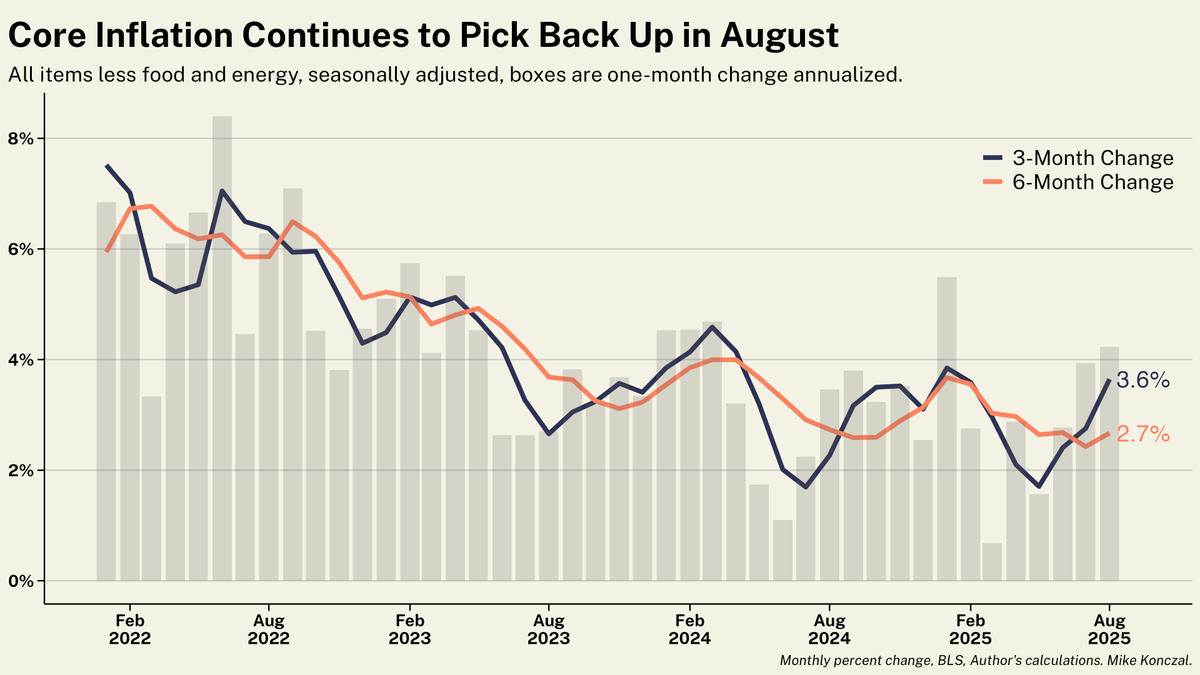
Three-month core inflation pops to 3.6%, among the highest its been in a while (and in years if you exclude January bumps). Not the direction the Federal Reserve wants to see as the labor market is quickly slowing since Liberation Day. /2
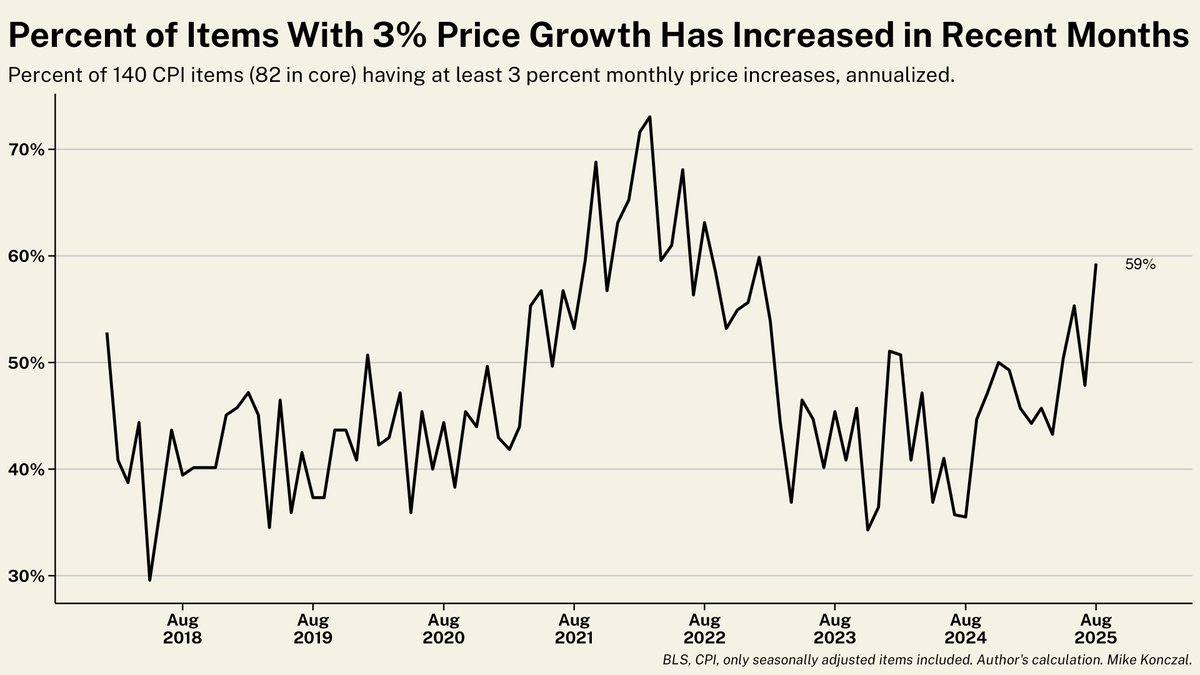
Meanwhile inflation is broadening. Here's percent of items that had at least a 3 percent (annualized) price increase over the last month, something Waller used to flag the 2023 disinflation.
I brushed this off and am surprised at its increase. ~60% for both core and overall. /3
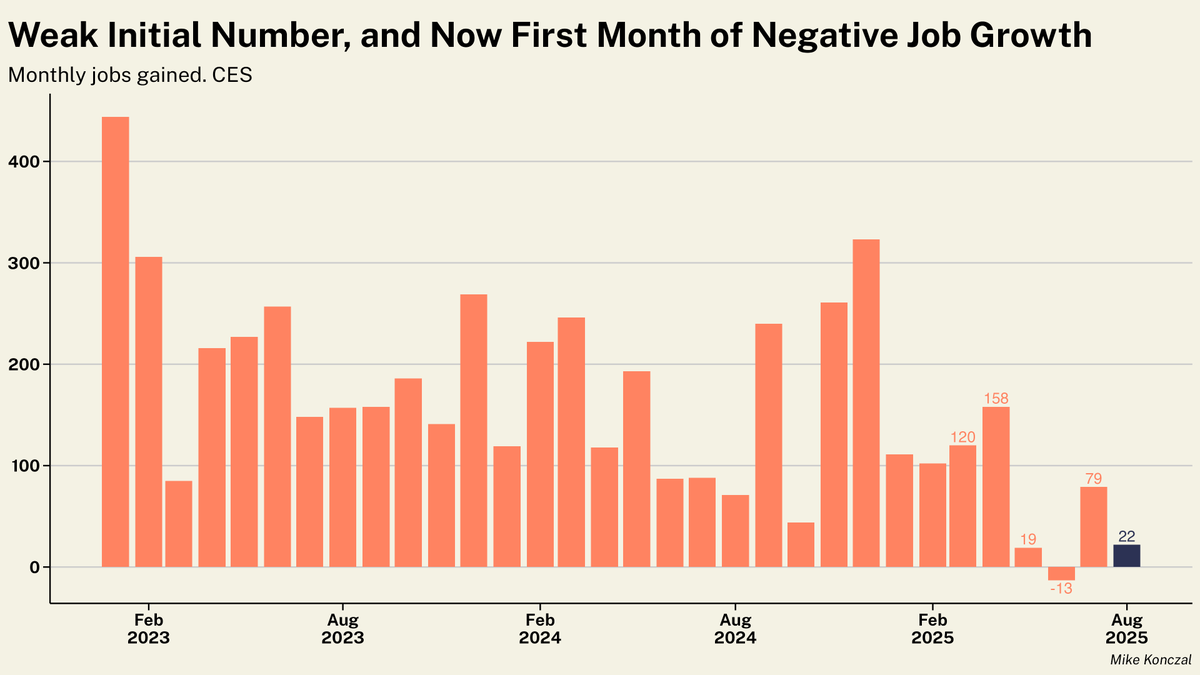
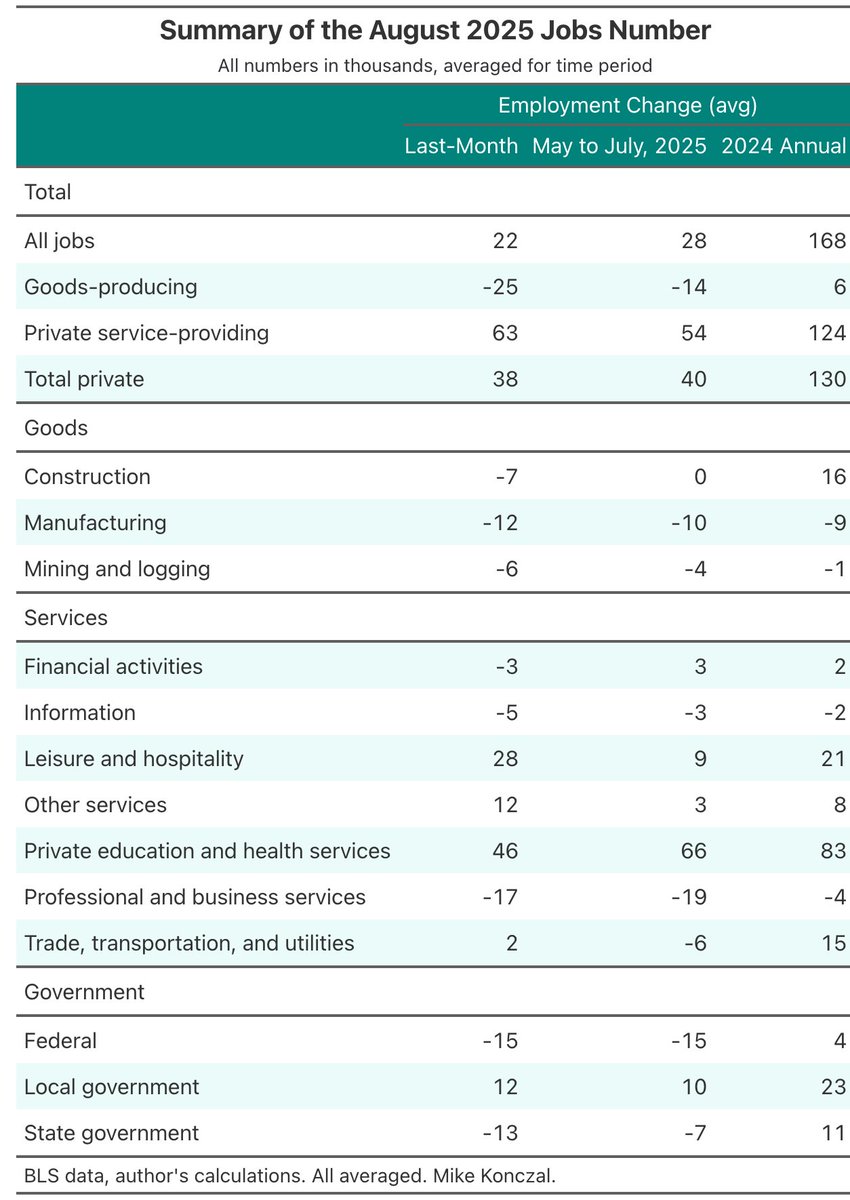
It's a bad number. Just 22,000 jobs, and with revisions June went negative to -13,000.
Worse, deeper into the data you can see that the theory of Trumponomics is failing. It's not too late to change course, but it would require dramatic action they won't take.
Let's dig in. /1
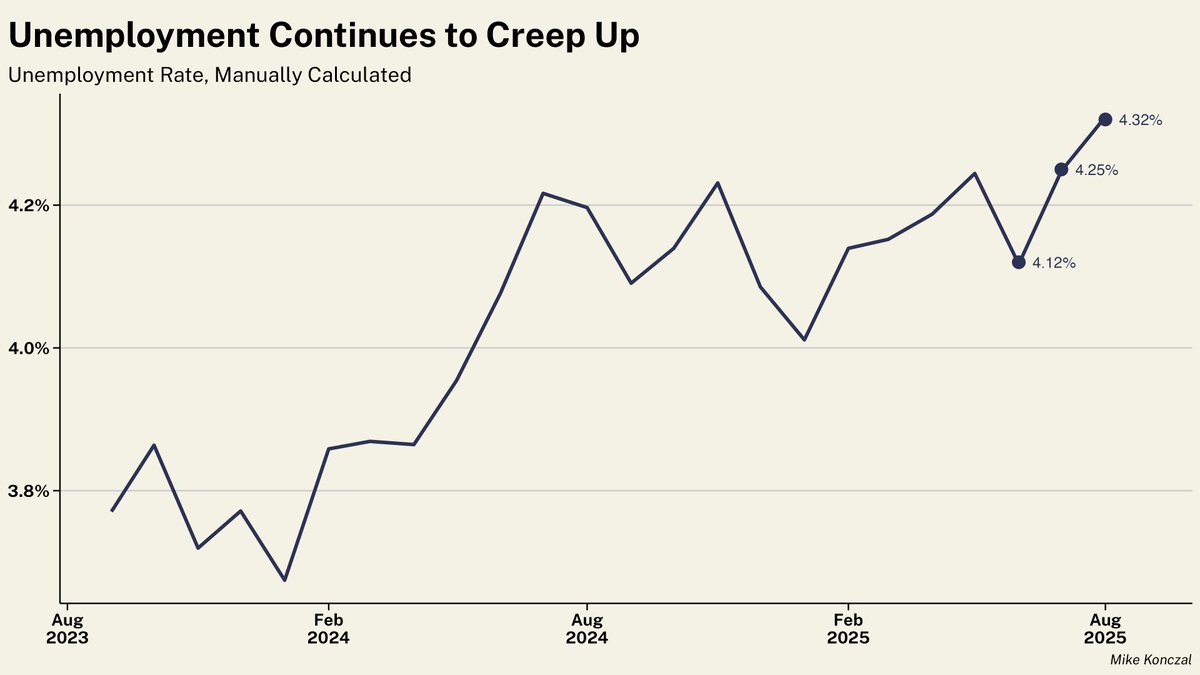
They just narrowly dodged a 4.3% unemployment rate last month and got it this month, but these aren't rounding games. You can see a steady increase over the last two months.
Maybe it's noise, but it is the highest in years and, given everything else we'll see, it's worrying. /2
Here's the breakdown by industry. The first theory of Trumponomics was that tariffs would build up manufacturing work and federal workforce cuts would free up workers for them.
That's failed. Manufacturing lost jobs almost as fast as the federal workforce (-12K vs. -15K). /3
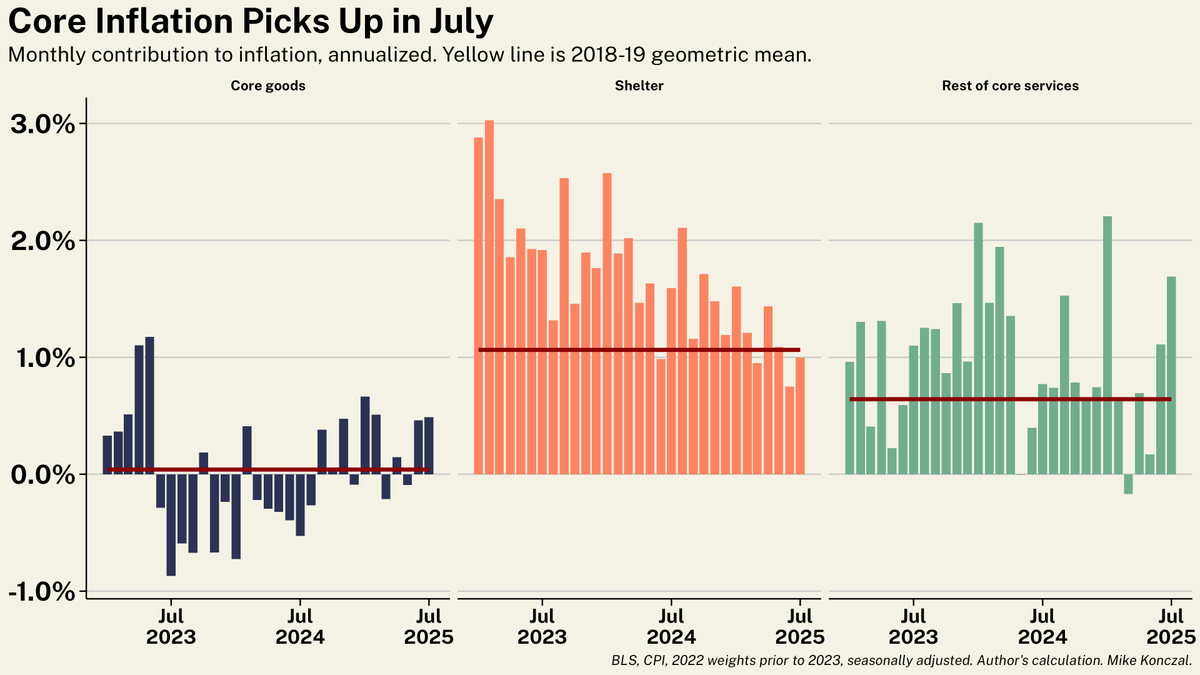
Core inflation was above expectations and had its highest print since January.
But I don't think that really conveys how much more elevated it is in 2025, as shelter disinflation continues to cover up higher services and goods.
This is worrying. Let's dig in: /1
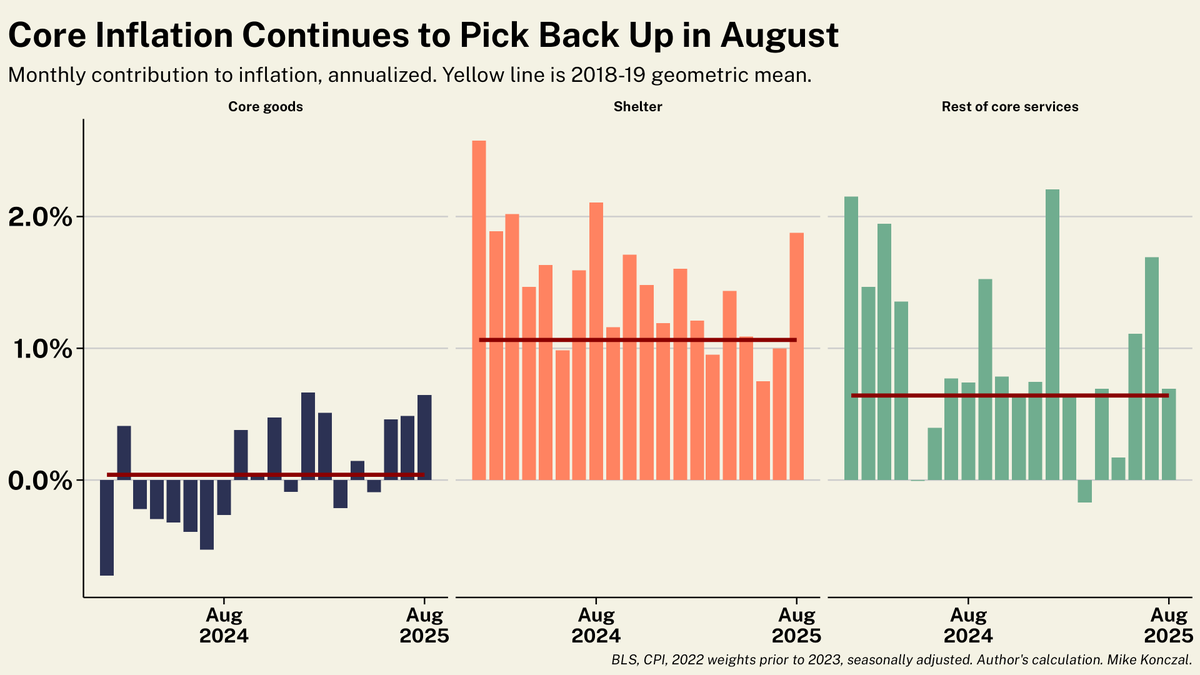
Here's core broken down by goods, shelter, and services. Goods prices are increasing from a negative trend, as expected from tariffs.
But non-housing services have picked up too, masked by the expected measured housing disinflation. /2
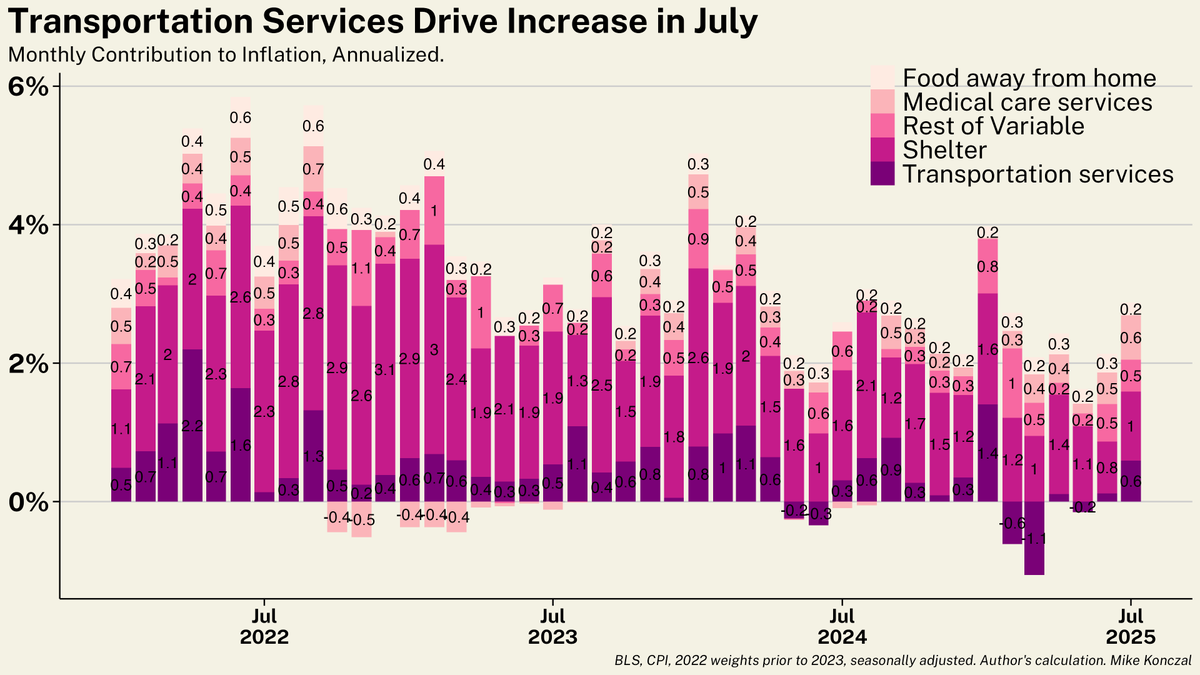
If we dig into non-housing services, 'transportation services' is a driver. Much of that is airline prices rebounding after price drops earlier this year.
But some is from 'motor vehicle maintenance and repair', showing the line between tariffs and services is complicated. /3
Job revisions have a well-known strong cyclical component; as the economy slows it is more difficult to estimate business births and deaths.
Here's average revisions as % employment for 18 months before and after a recession, from 1979 to 2025. It's negative in the slowdown. /1
Or consider the last decade. Essentially zero pre-covid.
Sharply negative under lockdowns. But very positive when the economy was gaining millions of jobs back in 2021, as the models couldn't keep up with recovery. But then negative as that recovery leveled out in 2023-2024. /2
Here you can see that with a longer-timeframe. This is very common.
The question right now, as it was in 2023, is whether the revisions indicate slowing into a lower stable steady-state (as it did then), or an actual downward freefall. 3/4