Ukraine’s new drones strike Russian targets 30–50 km out — beyond the reach of FPVs, artillery, or HIMARS.
Kyiv Independent: Ukrainian developers test mothership drones dropping quadcopters, fiber-guided systems with 40 km spools, and MAX 15 — a heavy drone with 50 km range. 1/
Kyiv Independent: Ukrainian developers test mothership drones dropping quadcopters, fiber-guided systems with 40 km spools, and MAX 15 — a heavy drone with 50 km range. 1/
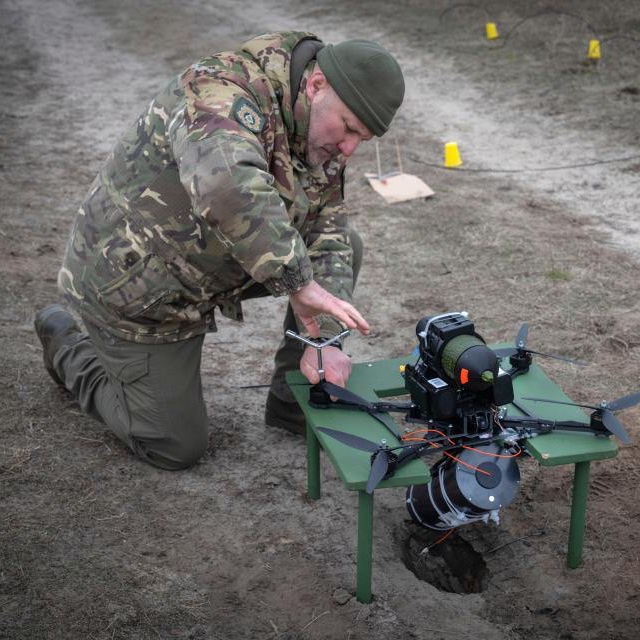
For 18 months, Ukrainian FPV drones cleared a 20 km no-man’s land along the front.
Russian forces moved logistics hubs beyond that range. Ukrainian engineers now design drones to reach 30–50 km to strike those new targets. 2/
Russian forces moved logistics hubs beyond that range. Ukrainian engineers now design drones to reach 30–50 km to strike those new targets. 2/
Ukrainian firm WarBirds modified its Puhach drone to drop quadcopters 37 km out and act as a signal repeater.
Vyriy, a top FPV maker, unveiled MAX 15 — a heavy quadcopter that delivers a warhead to 50 km, depending on load and battery. 3/
Vyriy, a top FPV maker, unveiled MAX 15 — a heavy quadcopter that delivers a warhead to 50 km, depending on load and battery. 3/
Developers wind 40 km of fiber on thick-framed drones to avoid jamming.
WarBirds uses new targeting modules to launch strikes from 800 meters altitude, 3 km from the target, without further guidance. 4/
WarBirds uses new targeting modules to launch strikes from 800 meters altitude, 3 km from the target, without further guidance. 4/
Russian jamming cut HIMARS accuracy from 90% to 20%.
Shield AI, a U.S. drone maker, says its long-range V-BAT drones identified 140 Russian targets but couldn’t find strike drones in over 100 cases.
“We watched a Pantsir for 100 minutes and couldn’t hit it”. 5/
Shield AI, a U.S. drone maker, says its long-range V-BAT drones identified 140 Russian targets but couldn’t find strike drones in over 100 cases.
“We watched a Pantsir for 100 minutes and couldn’t hit it”. 5/
Deep-strike drones hit far but cost too much to mass-produce. Ukraine now prioritizes drones for the 30–50 km gap: cheap, guided, and fast to deploy.
“We’re chasing the balance: range, payload, accuracy, and cost,” said WarBirds. 6X
“We’re chasing the balance: range, payload, accuracy, and cost,” said WarBirds. 6X
• • •
Missing some Tweet in this thread? You can try to
force a refresh