A $30B shipping war is erupting on the sidelines of Tariff war.
The U.S. slapped millions in port fees on Chinese ships.
From the Chola Empire to the British Raj, sea trade was India's strength.
But post-independence, we turned inland. Cargo piled at ports. Broken roads led to ports. Ships took 4+ days to turn around.
Result? Over 95% of our trade moved through ports, but logistics cost ballooned to 14% of GDP — almost double the global average.
That’s when a bold plan was launched — and India began building its sea legacy again. Quietly. Relentlessly.
A thread on the rise no one saw coming👇
The U.S. slapped millions in port fees on Chinese ships.
From the Chola Empire to the British Raj, sea trade was India's strength.
But post-independence, we turned inland. Cargo piled at ports. Broken roads led to ports. Ships took 4+ days to turn around.
Result? Over 95% of our trade moved through ports, but logistics cost ballooned to 14% of GDP — almost double the global average.
That’s when a bold plan was launched — and India began building its sea legacy again. Quietly. Relentlessly.
A thread on the rise no one saw coming👇

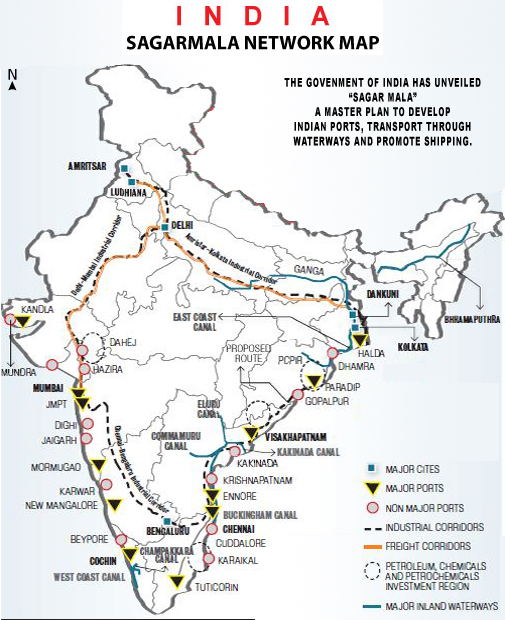
2/ In 2015, India launched the ₹5.8 lakh crore Sagarmala Programme — the largest maritime modernization mission in our history.
The goal? Make our ports faster, cheaper, cleaner, and better connected.
839 infrastructure projects
272 road & rail link upgrades
14 coastal economic zones
Promotion of inland & coastal shipping
All aimed at moving from a truck-dominated economy to a water-first logistics ecosystem.
Because water is not just cheaper — it’s strategic. And in today’s global conflicts, it’s everything.
The goal? Make our ports faster, cheaper, cleaner, and better connected.
839 infrastructure projects
272 road & rail link upgrades
14 coastal economic zones
Promotion of inland & coastal shipping
All aimed at moving from a truck-dominated economy to a water-first logistics ecosystem.
Because water is not just cheaper — it’s strategic. And in today’s global conflicts, it’s everything.
3/
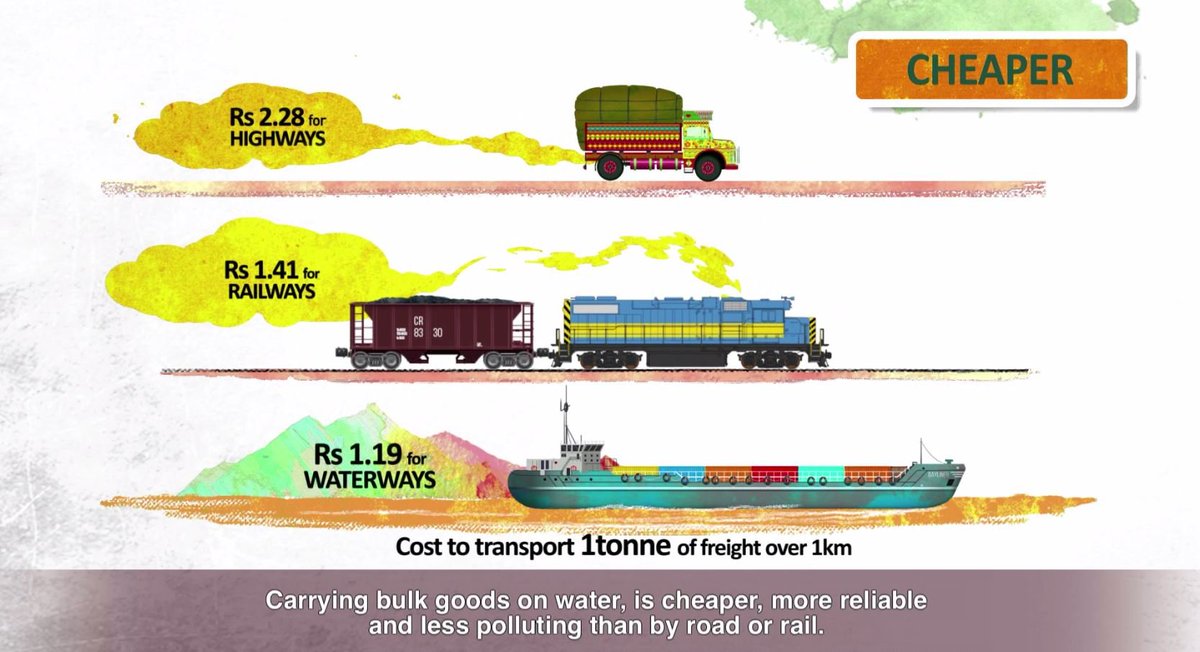
Shipping is Almost half in cost, 5 times more fuel-efficient, and 10 times less polluting than road transport.
Yet in 2015, India moved only 6% of its freight by water.
Compare that to China (~15%), the EU (~40%), or the US (~20%).
Why the gap?
Because we didn’t invest in coastal logistics.
No port-rail-road synergy. No coastal manufacturing hubs.
That’s what Sagarmala is fixing.
And now the numbers are showing: freight share by water is rising fast, and logistics cost is down from 14% to ~11% in just 9 years.
Shipping is Almost half in cost, 5 times more fuel-efficient, and 10 times less polluting than road transport.
Yet in 2015, India moved only 6% of its freight by water.
Compare that to China (~15%), the EU (~40%), or the US (~20%).
Why the gap?
Because we didn’t invest in coastal logistics.
No port-rail-road synergy. No coastal manufacturing hubs.
That’s what Sagarmala is fixing.
And now the numbers are showing: freight share by water is rising fast, and logistics cost is down from 14% to ~11% in just 9 years.
4/
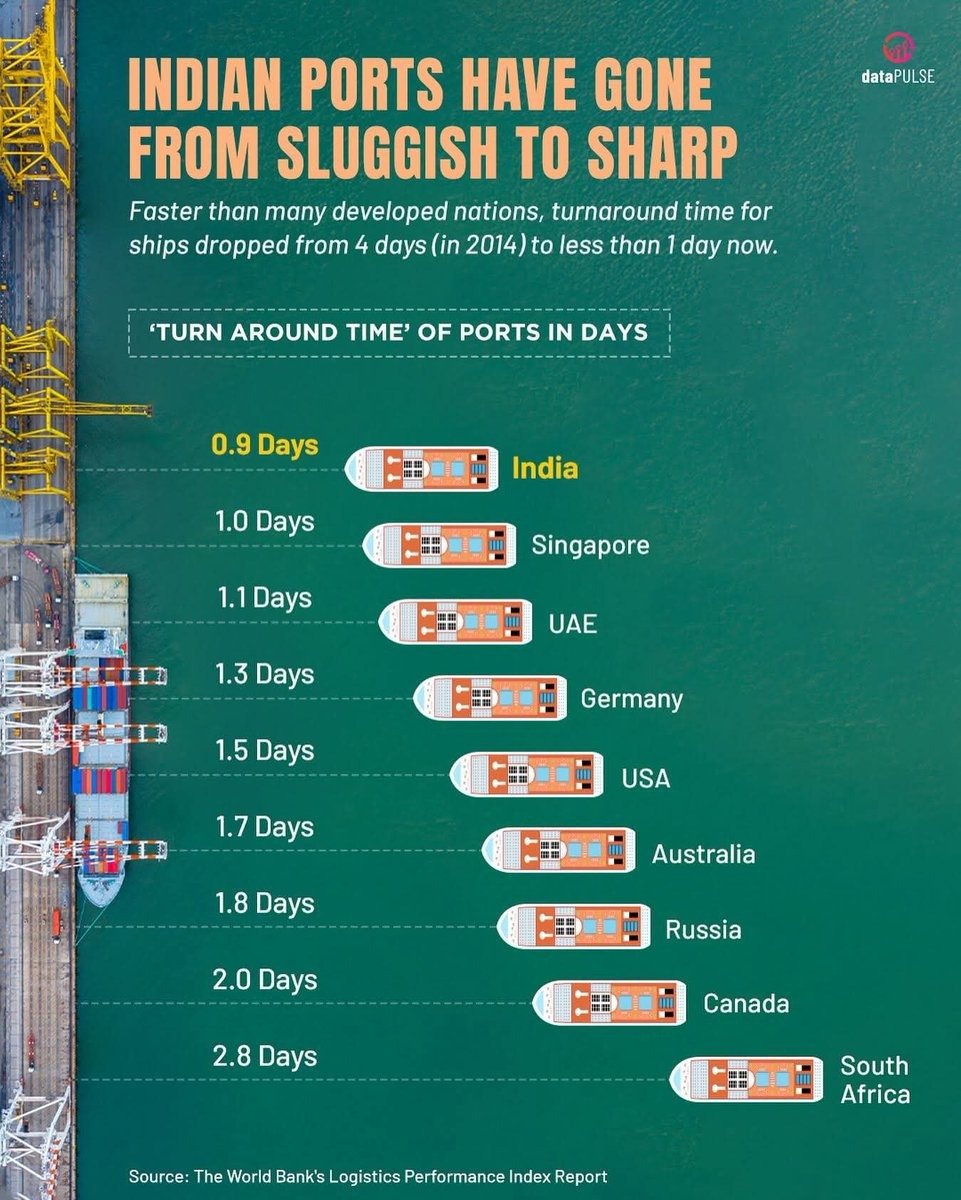
Let’s talk port speed. A decade ago, Indian ships waited 4–5 days in port. In global trade, that’s a deal killer.
Today? The average turnaround time at major Indian ports is <0.94 days — faster than the US (1.5d), Australia (1.7d), and on par with Singapore.
✅ Container dwell time reduced
✅ Port digitization boosted
✅ Logistics parks integrated
This is no accident. This is decade-long groundwork meeting data-driven execution.
And now, India’s ports are not just efficient — they’re globally competitive.
Let’s talk port speed. A decade ago, Indian ships waited 4–5 days in port. In global trade, that’s a deal killer.
Today? The average turnaround time at major Indian ports is <0.94 days — faster than the US (1.5d), Australia (1.7d), and on par with Singapore.
✅ Container dwell time reduced
✅ Port digitization boosted
✅ Logistics parks integrated
This is no accident. This is decade-long groundwork meeting data-driven execution.
And now, India’s ports are not just efficient — they’re globally competitive.
5/
Globally, advanced economies spend 6–8% of GDP on logistics. India spent 14% in 2015.
That meant higher export costs, expensive raw materials, and uncompetitive MSMEs.
Through Sagarmala + PM Gati Shakti + National Logistics Policy, India’s target is 8% logistics cost by 2030.
Why does this matter?
Because every 1% saved = ₹2 lakh crore of economic value.
Lower logistics cost = more exports = more jobs = stronger rupee = global power status.
The seas are now the bridge, not the barrier.
Globally, advanced economies spend 6–8% of GDP on logistics. India spent 14% in 2015.
That meant higher export costs, expensive raw materials, and uncompetitive MSMEs.
Through Sagarmala + PM Gati Shakti + National Logistics Policy, India’s target is 8% logistics cost by 2030.
Why does this matter?
Because every 1% saved = ₹2 lakh crore of economic value.
Lower logistics cost = more exports = more jobs = stronger rupee = global power status.
The seas are now the bridge, not the barrier.

6/
While India was building its port infrastructure, the world entered a shipping war.
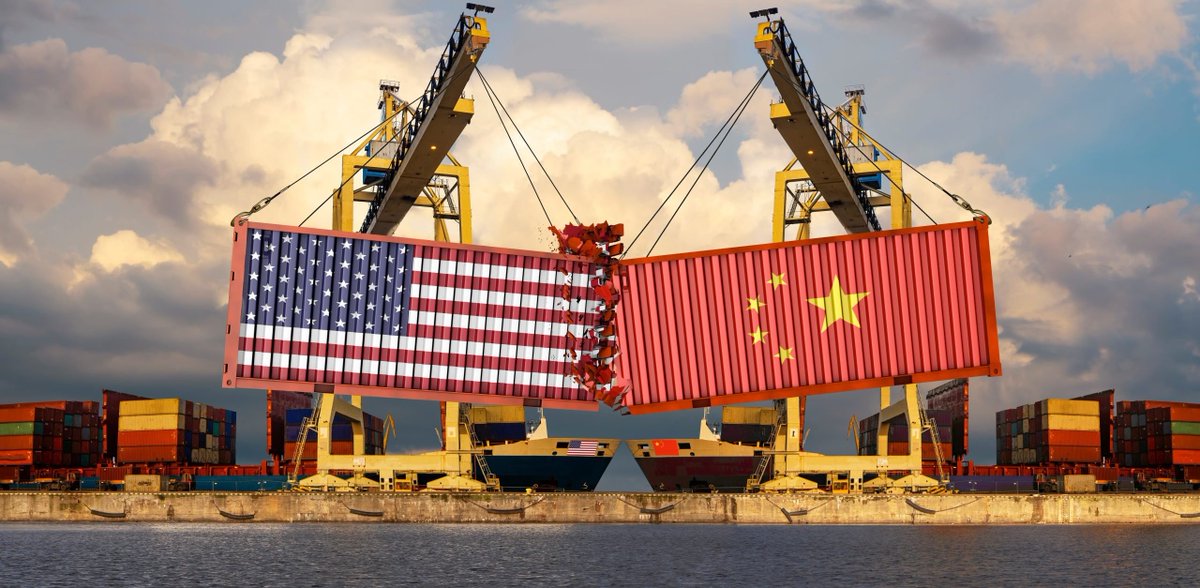
The US has begun imposing steep fees on Chinese vessels — up to $3.5 million per docking — to break China's $30 billion shipping empire.
Hundreds of Chinese-built, Chinese-flagged ships now face sanctions, trade barriers, and rerouting.
Meanwhile, India’s ports are becoming the next alternative hubs.
✅ Cleaner compliance
✅ Strategic location in the Indo-Pacific
✅ Faster turnaround & lower costs
India is rising — not through confrontation, but quiet capacity.
While India was building its port infrastructure, the world entered a shipping war.
The US has begun imposing steep fees on Chinese vessels — up to $3.5 million per docking — to break China's $30 billion shipping empire.
Hundreds of Chinese-built, Chinese-flagged ships now face sanctions, trade barriers, and rerouting.
Meanwhile, India’s ports are becoming the next alternative hubs.
✅ Cleaner compliance
✅ Strategic location in the Indo-Pacific
✅ Faster turnaround & lower costs
India is rising — not through confrontation, but quiet capacity.
7/
Amid US-China shipping tensions, Indian ports are emerging as a key neutral trade hub.
Colombo, Singapore, and Hong Kong are under pressure.
India is offering Mundra, JNPA, Vizag, and the upcoming Galathea Bay port in Great Nicobar as world-class transshipment alternatives.
It’s not just about containers.
It’s about controlling the trade routes of the future — and India's strategic geography is finally being used to full potential.
As the world reroutes, India reaps the rewards.
Amid US-China shipping tensions, Indian ports are emerging as a key neutral trade hub.
Colombo, Singapore, and Hong Kong are under pressure.
India is offering Mundra, JNPA, Vizag, and the upcoming Galathea Bay port in Great Nicobar as world-class transshipment alternatives.
It’s not just about containers.
It’s about controlling the trade routes of the future — and India's strategic geography is finally being used to full potential.
As the world reroutes, India reaps the rewards.
8/
What’s powering this port revolution? Public + Private Partnership.
Out of ₹5.8 lakh crore Sagarmala investments, ₹2.42 lakh crore is private capital.
Firms like Adani Ports, DP World, JSW Infra, Essar are racing to modernize terminals, build logistics parks, and digitize cargo flows.
India is not nationalizing ports — it is decentralizing efficiency.
This hybrid model is what lets infrastructure scale while maintaining speed and accountability.
What’s powering this port revolution? Public + Private Partnership.
Out of ₹5.8 lakh crore Sagarmala investments, ₹2.42 lakh crore is private capital.
Firms like Adani Ports, DP World, JSW Infra, Essar are racing to modernize terminals, build logistics parks, and digitize cargo flows.
India is not nationalizing ports — it is decentralizing efficiency.
This hybrid model is what lets infrastructure scale while maintaining speed and accountability.

9/
Beyond trade, India’s ports are becoming a military and strategic backbone.
✅ Navy bases being developed in Karwar, Lakshadweep, Andaman
✅ Strategic alliances at Chabahar (Iran), Duqm (Oman), Sabang (Indonesia)
✅ Shipbuilding revival via subsidies & dry docks
China has a "String of Pearls".
India is building a Diamond Necklace—with naval logistics strength that can match strategic pressure with presence.
The future of war and peace lies in maritime control. India is preparing for both.
Beyond trade, India’s ports are becoming a military and strategic backbone.
✅ Navy bases being developed in Karwar, Lakshadweep, Andaman
✅ Strategic alliances at Chabahar (Iran), Duqm (Oman), Sabang (Indonesia)
✅ Shipbuilding revival via subsidies & dry docks
China has a "String of Pearls".
India is building a Diamond Necklace—with naval logistics strength that can match strategic pressure with presence.
The future of war and peace lies in maritime control. India is preparing for both.
10/
Remember this: the sea was India’s strength long before the internet.
The Chola dynasty ruled parts of Southeast Asia via ocean trade.
The British built Mumbai, Kolkata, Chennai as maritime empires.
Post-independence, we ignored the seas — and paid in logistics cost, export stagnation, and regional irrelevance.
Sagarmala is not a project.
It’s a civilizational correction.
A return to the ocean where Bharat once ruled. And soon will again.
Remember this: the sea was India’s strength long before the internet.
The Chola dynasty ruled parts of Southeast Asia via ocean trade.
The British built Mumbai, Kolkata, Chennai as maritime empires.
Post-independence, we ignored the seas — and paid in logistics cost, export stagnation, and regional irrelevance.
Sagarmala is not a project.
It’s a civilizational correction.
A return to the ocean where Bharat once ruled. And soon will again.
11/
The world today is fighting on ships — not just tanks.
While the US sanctions Chinese vessels and Chinese ships reroute, India is calmly filling the vacuum with speed, depth, and scale.
Every port is faster.
Every port is cleaner.
Every port is digitally linked.
This isn’t a story for the future.
This is India’s silent sea rise — decade in the making, finally breaking surface.
And this time, we won't stop at the shore.
The world today is fighting on ships — not just tanks.
While the US sanctions Chinese vessels and Chinese ships reroute, India is calmly filling the vacuum with speed, depth, and scale.
Every port is faster.
Every port is cleaner.
Every port is digitally linked.
This isn’t a story for the future.
This is India’s silent sea rise — decade in the making, finally breaking surface.
And this time, we won't stop at the shore.
12/
Are superpowers noticing too?
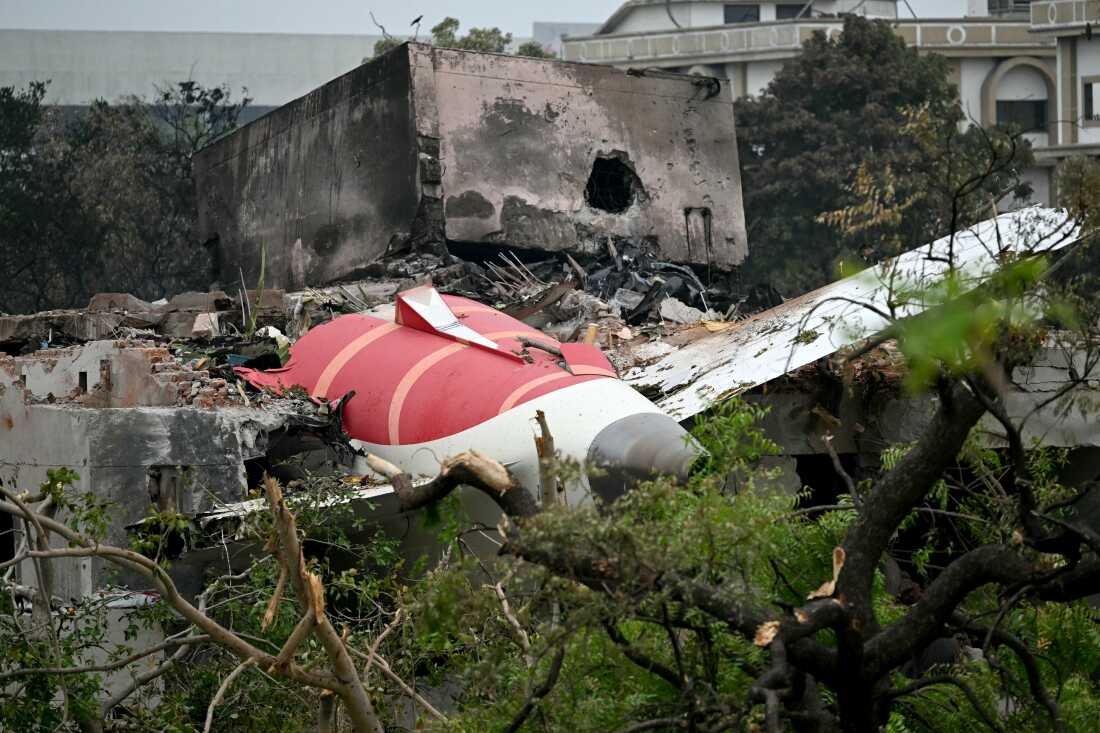
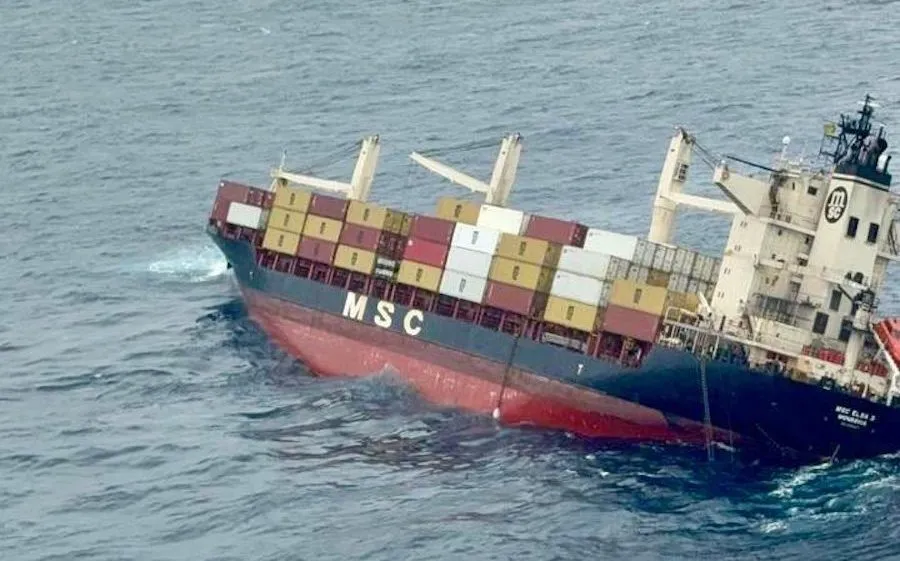
Yes, two ships sank near Kerala within weeks of Vinzingham deep water port inauguration.
MSC ELSA 3 and MV Wan Hai 503
It is a potential sabotage to disturb operations at both the port and dump garbage at sea bed which will prevent heavy ships to enter the port.
So...
Are superpowers noticing too?
Yes, two ships sank near Kerala within weeks of Vinzingham deep water port inauguration.
MSC ELSA 3 and MV Wan Hai 503
It is a potential sabotage to disturb operations at both the port and dump garbage at sea bed which will prevent heavy ships to enter the port.
So...
India’s coastal renaissance is no longer a policy plan. It’s a national transformation:
From 14% to 8% logistics cost
From 6% to 15% water freight
From port chaos to transshipment hubs
From ignored coastline to strategic command of the Indo-Pacific
India isn’t just fixing its ports — it’s preparing to dominate global trade flows.
As the West fights tariff wars and China builds debt ports, India is building speed, self-reliance, and sovereignty.
The ocean is calling.
Bharat is ready.
From 14% to 8% logistics cost
From 6% to 15% water freight
From port chaos to transshipment hubs
From ignored coastline to strategic command of the Indo-Pacific
India isn’t just fixing its ports — it’s preparing to dominate global trade flows.
As the West fights tariff wars and China builds debt ports, India is building speed, self-reliance, and sovereignty.
The ocean is calling.
Bharat is ready.

• • •
Missing some Tweet in this thread? You can try to
force a refresh