DeepDownAnalysis Profile picture
AI Engineer with multiple patents. Nationalist at Heart. Follow for analytical posts on trending topics. Send enquiry at deepdownanalysis@gmail.com
Jun 29 5 tweets 4 min read
Gulf war and India’s economic resilience is the new case study.

Read it why:

1/5

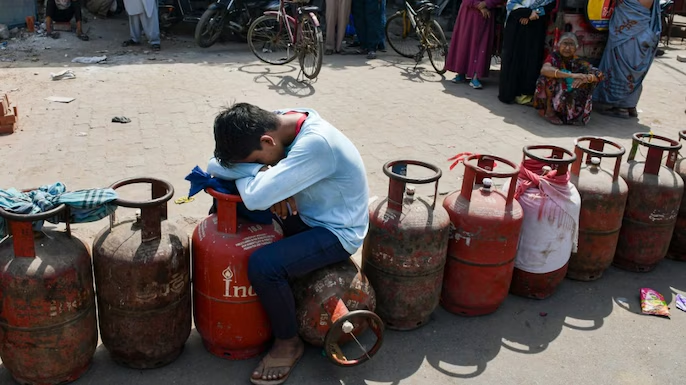
When geopolitical shocks hit the Gulf region, the expectation globally was familiar: oil spikes, supply disruptions, panic buying and pressure on import-dependent economies. India faced the same external shock, but the outcome looked different.

According to CEA V. Anantha Nageswaran’s analysis, India passed its first major stress test with stability. There were no widespread fuel shortages, no disruptions in LPG delivery to households, and no panic behavior in domestic markets.

The significance is larger than it appears. India imports nearly 85% of its crude oil requirement, which historically would make the country highly vulnerable during Gulf disruptions.

Yet the economy absorbed the initial shock without severe dislocation. Resilience in this context is not luck; it reflects years of building buffers and institutional preparedness.

The story here is not that India escaped global volatility entirely, but that the country demonstrated a stronger ability to absorb and manage external stress.
#India #EconomyImage 2/5
A major reason India remained stable was diversification in energy sourcing. Earlier, dependence on a narrow group of suppliers created concentration risk.

Over the last few years, India expanded sourcing across regions and built flexibility into procurement strategies. During recent disruptions, India increased purchases from suppliers outside the Gulf region and expanded imports from markets such as the United States and Russia. Reports indicated U.S.

LPG imports moving toward record levels, helping offset pressure from Gulf supply routes. This matters because resilience in energy security is not just about having more oil; it is about reducing dependence on a single geography or route.

A country with diversified supply chains has more room to adapt when shocks emerge. The lesson is straightforward: strategic diversification acts like insurance during global uncertainty.

India’s ability to adjust sourcing rapidly reduced vulnerability and prevented the energy shock from becoming a broader economic crisis.
#EnergySecurity #IndiaImage
Jun 15 5 tweets 3 min read
🚨The story of Biggest American Surrender Since Vietnam War:

The US–Iran deal will go down as America's biggest strategic surrender since Vietnam, not because America lost militarily, but because of the gap between its goals and the outcome.

The "deal" President surrenders.

The war began with demands for Iranian capitulation.

It ends with:

1. Up to $24 billion in frozen Iranian assets unlocked

2. Iranian oil exports moving back toward 3–4 million barrels/day

3. Potential annual oil revenues of $70–100+ billion at current prices

4. $300 billion : A reported reconstruction framework discussed in the $300 billions

Now compare that to what Trump wanted:
1. No regime change
2. No unconditional surrender
3. No dismantling of the Iranian state

Trump deployed the world's most "powerful" military.

Iran keeps its government and emerges winner at negotiation table.

How Iran did it?Image The most important number in this war wasn't missiles fired.

It was 20%.

That's roughly the share of global oil and LNG trade passing through the Strait of Hormuz.

At the height of the crisis:

1. More than 20 million barrels/day of oil supply was at risk
2. Nearly $1 billion worth of energy shipments moved through the corridor every day

3. Global shipping insurance costs surged

Iran understood something crucial:
You don't need to defeat a superpower.

You only need enough leverage to make continuing the conflict economically unbearable.

A country with a GDP smaller than many US states managed to threaten a trade route carrying one-fifth of global energy.

That leverage ultimately became its strongest weapon.

Lets talk economics:Image
Jun 12 5 tweets 4 min read
India was supposed to run out of Fuel and Gas in 25 days.

Yet after 100 days of war, everything is normal in the country.

When the Iran war erupted, experts predicted India would run out of fuel in weeks.

The logic seemed simple.

India imports over 85% of its crude oil.

The Strait of Hormuz carries nearly 20% of global oil trade.

Block Hormuz and India suffers.

Yet months later, there are no fuel queues, no rationing, no shortages.

Why?

Because India was never sitting on just "25 days of reserves."

Officially, India had around 60 days of actual stock cover and 74 days of total reserve capacity. More importantly, India had already secured alternative supplies before panic reached television studios.

The real story is bigger than oil.

It is about how Modi transformed India from an energy buyer into an energy power.

When the crisis came, India did not ask who would save it.

India had already prepared to save itself.

That is the difference between governance and headlines.Image
Image
The most underrated Modi-era achievement is diversification.
A decade ago, India was heavily dependent on a handful of suppliers and vulnerable maritime routes.

Today India imports crude from around 40 countries.

Before the crisis, about 55% of imports came through routes outside Hormuz.

During the war, that number jumped to 70%.

Think about the scale of that shift.

While analysts obsessed over one chokepoint, India quietly built alternatives across Russia, the US, Latin America, Africa and Central Asia.

This is the difference between dependence and resilience.

A nation dependent on one supplier negotiates from weakness.

A nation with 40 suppliers negotiates from strength.

Modi's energy strategy ensured that if one door closed, ten others remained open.

The result?

Global panic.

Indian fuel pumps operating normally.Image
Apr 8 7 tweets 6 min read
🚨Have Pakistan really stopped the US-Iran war?

What was India doing?

In fact what were West, Russia,China and entire BRICS doing?

Isn't it a surprise?

Read this thread till the end to understand the "game".

What you’re seeing in headlines is a carefully constructed illusion. Pakistan being projected as a “mediator” is not a reflection of diplomatic strength,it’s a reflection of geopolitical convenience.

The real driver behind bringing Iran to the table is someone else, not exactly India though.

Understand this clearly: Pakistan is not the negotiator. It is the placeholder.

Pakistan didn’t broker the ceasefire. It was used as a front. The real game was played by bigger powers.

So who did it?Image
Image
1. China

Why? How?

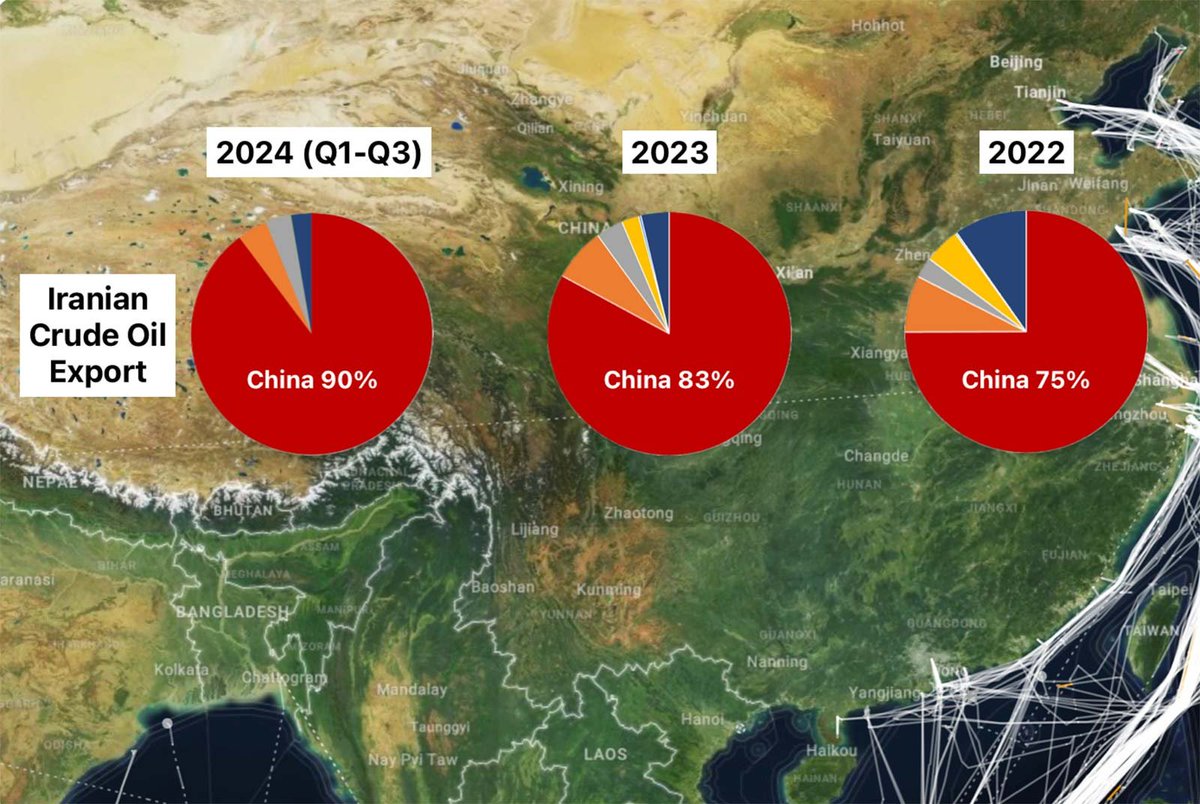
Because China depends heavily on Iranian oil, and any prolonged war, regime instability, or US-controlled disruption in Iran directly threatens Beijing’s energy security.

At the same time, US is aware of Chinese ambition in the South China sea. China used this as leverage by declaring 40 day NOTAM in the East China Sea and Yellow Sea indicating major escalation and testing American support to Taiwan, South Korea, Japan .

A prolonged Iran conflict would overstretch the US and bolden Chinese ambition. China used it as a leverage to bring Trump to the knees.

China could have pressed button on both to bring them to a negotiation table.

Trump wants exit from Iran too but will appear weak.

Trump cannot politically afford to show China as the mediator.

That damages his image. So a weak, financially broken, low-credibility state Pakistan becomes the perfect “face saver.”Image
Image
Apr 7 5 tweets 3 min read
🔥Huge Breakthrough Moment for India's Nuclear Energy Mission, very few are talking about it.

Read this till end.

India on Monday achieved a long-awaited milestone in its civil nuclear energy programme as the country's most advanced atomic reactor - the Prototype Fast Breeder Reactor (PFBR) at Kalpakkam in Tamil Nadu - attained "criticality".

It marks the start of a sustained nuclear fission chain reaction and bringing the reactor one decisive step away from full operation.

This is not a routine milestone. It marks India entering an elite club of nations mastering fast breeder reactor (FBR) technology, arguably the most advanced and complex form of civilian nuclear engineering.

In simple terms: India has taken a decisive step from energy consumer to energy architect.
And the world is watching.

Why this matters:Image A Fast Breeder Reactor is not just a power plant, it is a fuel multiplier.
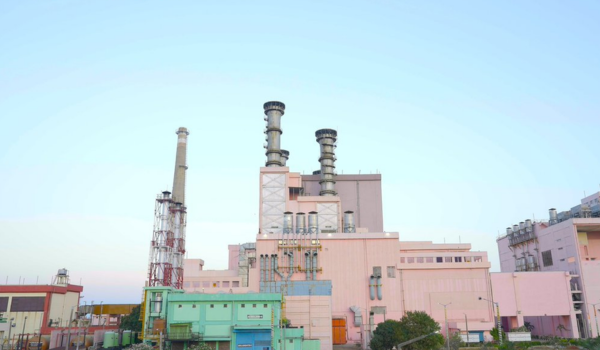
Unlike conventional reactors, PFBR can produce more nuclear fuel than it consumes.

For a country like India,short on uranium but rich in thorium, this is a game changer.

This reactor anchors Stage 2 of India’s 3-stage nuclear program, designed decades ago to ultimately unlock India’s vast thorium reserves.

In short: India is building a pathway to near energy independence for centuries.

Strategically, this is solving India's biggest vulnerability...Image
Mar 30 6 tweets 3 min read
🚨There’s a pattern emerging, and it’s not accidental.

After repeated electoral failures, Rahul Gandhi didn’t reinvent politics, he outsourced the attack.

The same recycled narrative cycle is back: first Rafale (“Chowkidar Chor Hai”), then academic credentials, now “compromise” theories.

Every claim collapses under scrutiny, yet the script continues.

What changed? The messengers.

Enter Subramanian Swamy and Madhu Kishwar, voices now amplifying narratives that previously failed politically.

When direct attacks fail, ecosystems evolve.

Multiple public campaigns against the PM have ended without substantiated evidence, including court reversals and apologies.

This isn’t about truth discovery, it’s about narrative persistence.

Same allegation. New carrier.

And that’s the real story.Image Let’s examine Subramanian Swamy’s timeline, because facts matter.
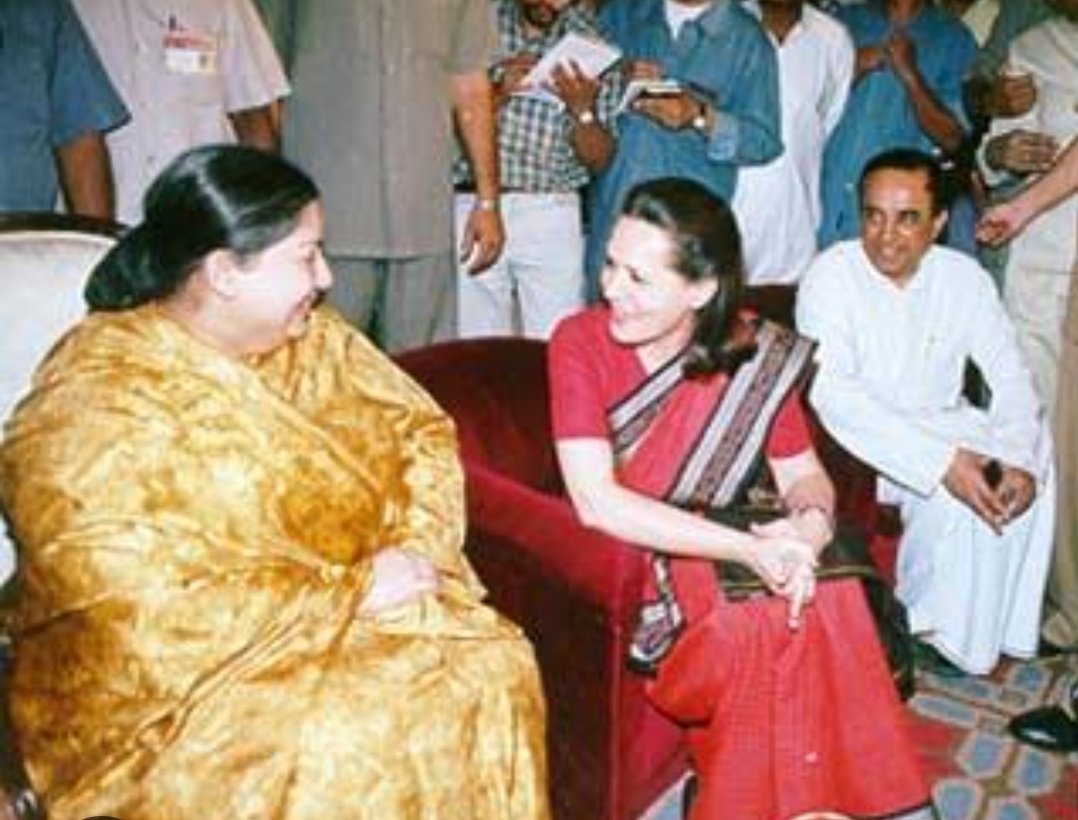
• 1999: Hosts the infamous “tea party” linking Sonia Gandhi & Jayalalithaa : Vajpayee govt falls by 1 vote
• 2003: Allegations surface of interaction with ISI-linked figures like Ghulam Nabi Fai
• 2022: Rajya Sabha term ends : denied continuation + loss of Z-security
Post-2022 = sharp escalation in attacks on Modi govt.
Correlation isn’t coincidence.

A man known for filing PILs has NOT filed a single case on his biggest allegations today.

If evidence exists, why avoid court?

Because narratives don’t need proof. Just amplification.Image
Dec 16, 2025 8 tweets 7 min read
Tariffs were supposed to kill India’s exports.

The economy was declared “dead”.

Trump raised duties.

Raghuram Rajan said Pakistan played it smart and got the better deal.
Reality check:

After 8.2% GDP growth for last quarter, India surpassed all predictions with its exports in November.

India’s exports jumped 19% to $38.13B in November. Exports to the US surged 22.6% YoY and 10% MoM.

Pakistan’s exports to the US fell ~15% in the same month.

Turns out noise does not move trade. Strategy does.

Thread. 👇Image
Image
November 2025 changed the debate. Merchandise exports jumped 19% YoY to $38.13B, and total exports (goods + services) hit $73.99B.

India’s export growth was not narrow. It was broad-based.

Major drivers in November 2025:
• Engineering goods +23.76%
• Electronic goods +38.96%
• Gems and jewellery +27.80%
• Drugs and pharmaceuticals +20.91%
• Petroleum products +11.65%

This matters because many of these sectors are either higher value or less tariff-sensitive.

The merchandise trade deficit slumped from a record ~$41.7B in October to $24.53B in November — far better than market estimates.

India’s exports to the U.S. rose 22.6% in November to $6.98 billion, which is even higher than its exports of $6.31 billion in the prior month.

India’s exports to the U.S. were down 8.6% in October and 11.9% in September.

India’s exports of goods and services for November were up 15.52% at $73.99 billion.

Those are not small moves: they show exports rose while imports eased, tightening external balances in one month.Image
Image
Dec 8, 2025 7 tweets 4 min read
IndiGo Chaos was planned well in advance in May 2025.

It was designed to bring Govt to its toes.

DGCA and Civil Aviation were never the target of this chaos.

Air India crash was the starting point.

It is part of a complicated geo politcal battle.

Read this till the end.Image Turkish connection:

IndiGo codeshares to 40+ European/US points via Turkish; reciprocal for Turkish on Indian routes.

Turkish airline is the major partner.

The major shareholder of Turkish Airlines is the Türkiye Wealth Fund (Turkish Wealth Fund), which holds approximately 49.12% of the company's shares.

This fund's chairman is President Erdogan.

Turkey has been the biggest logistical and political supporter of Pakistan during Op Sindoor.

Along with Pakistan Turkey also lost credibility of its drones and business due to India cancelling contracts for Turkish companies and Indians bycotting Turkey in different forms.

Before Air India crash on June 12, explosives...Image
Nov 10, 2025 6 tweets 4 min read
Something is not adding up.

Large scale GPS spoofing reporting coupled of days back.

ISI operatives arrested in Gujarat.

Now tons of explosives found with doctors in Faridabad.

What if the GPS “spoofing” around Delhi Airport last week wasn’t just a random tech glitch… but part of a larger counterintelligence game?Image
Image
The timing is too sharp to ignore because:
1. Visit of Israeli PM Netanyahu
2. Visit of Russian President Putin in December.
3. Preceded by Series of NOTAMs across India
4. Now back to back arrests and 2900KG explosive

In recent days, Indira Gandhi International Airport (IGIA), Delhi’s busiest hub, saw an unusual spike in navigation disturbances. Articulated in news reports: fake GPS signals — a phenomenon called “spoofing” — misled aircraft position systems within roughly 60 nautical miles of the airport.

At the same time, the main runway’s Instrument Landing System (ILS) had been temporarily withdrawn for upgrading to Category III status — meaning aircraft were more reliant than usual on satellite-based navigation.

Put together: a scenario where normal defences were weaker — and something tested India’s air-domain resilience.Image
Nov 7, 2025 4 tweets 3 min read
Alarm bells at Delhi Airport.🚨

Something unusual happening since last few days.

400 flights were ground for 2 hours.

Is "failed attempt" duringSCO summit on Modi still in action?

In the past few days, pilots arriving into IGI have reported odd GNSS behaviour: their navigation systems showing incorrect positions, altitudes or paths — clear signs of GPS spoofing, where fake satellite signals are beamed to confuse aircraft.

This is far more serious than a routine tech glitch: when approach paths are compromised, aircraft must divert or go manual...Image
Image
increasing workload for controllers, raising safety risk.
Add to this that IGI already had a partially limited landing system (ILS upgrade ongoing) and an easterly wind change forcing arrivals from the Dwarka side, and you get a perfect storm.

The message: the skies over India’s busiest airport just got a lot more hazardous not just from weather, but from cyber-physical interference.

WAS A VVIP THE TARGET — OR WAS IT A MESSAGE?
Oct 15, 2025 12 tweets 6 min read
Pakistan's Afghanistan Crisis: What Orchestrated it?

To eliminate TTP chief?

Absolutely NOT.

Then?

There are multiple factors including Op Sindoor.

This conflict can go longer than what it seems.

Read this thread till the end.Image
Image
Pakistan’s cross-border strikes into Afghanistan can't be understood simply as counterterrorism.

Domestically, Islamabad is facing escalating unrest among the Baloch and Pashtun populations protests, demands for rights, accusations of enforced disappearances, economic neglect.

The army’s image, once almost uncontested, is under pressure as the primary “institution” holding the country together.

By projecting external threats, the civil-military complex seeks to reassert its indispensability.

The Afghan front ....Image
Oct 12, 2025 16 tweets 9 min read
Pakistan is about to serve POJK on platter to India.

Modi-Shah-Doval had pressed panic button back in 2019.
Dont forget Doval's work in China.

Pahalgam Attack and Op Sindoor made it worse.

Read this thread to understand how Greed, Power and Religion making Pakistan explode👇Image
Image
Pakistan is breaking from within.

Economic collapse, militant violence, and political greed have torn apart what once held it together.

Religion no longer unites, the army no longer commands respect, and foreign powers are pulling its strings.

The fall began in 2019 when India revoked Article 370. That single act shattered Pakistan’s Kashmir dream and stripped its ideological core.

Since then, every desperate move to regain relevance has only dragged it deeper into isolation and internal decay.Image
Oct 6, 2025 6 tweets 4 min read
India turning into Pakistan: "Experts"

Because India has emerged as the largest borrower from World Bank.

Experts have started crying over PM Modi and FM Nirmala Sitharaman's policy.

But they miss out on something: India borrows to build, not to bail out.

Read How👇 Image
Image
As of March 2025, India’s total external debt stands at $736.3 billion (≈ 19.1 % of GDP) - far below most major economies and far safer than debt-ridden peers.

Nearly 96 % of India’s public debt is domestic, giving full sovereign control.

Borrowing has been strategically channelled into capital expenditure, not consumption, which means every rupee borrowed goes into assets — highways, railways, renewables, and rural infrastructure — laying the foundation for long-term self-reliance.Image
Sep 29, 2025 8 tweets 5 min read
🚨Alert: From Bareily to Leh: There is a pattern in protests.

But

these patterns won't succeed in India.

Because

Indian Gen Z weren't part of it.

Why?
Because Gen Z is focussed on something else.

Read this thread till the end to understand pattern and why it failed.Image
Image
South Asia has shown how protests toppled regimes in Bangladesh and shook governments in Nepal. The same script has been tested in India. But big central themes—CAA, NRC, “vote chori” allegations, caste divides, even farmer protests—failed to ignite a sustained Gen Z uprising.

The playbook hit a wall: India’s youth didn’t buy in. So the strategy shifted. Instead of national issues, local triggers are flared up—religious slogans in UP, exam cheating by an individual in Uttarakhand, statehood angst in Ladakh.

These are attempts to replicate regional protest styles. But the gap between street scripts and youth aspirations is glaring.Image
Sep 24, 2025 8 tweets 5 min read
Trump thought he could strong-arm India with tariffs & an H-1B squeeze.

But reality is biting back:

Zelensky begging Trump to NOT push India away.

Europe is begging Trump not to alienate Delhi.

US CEOs are panicking.

US Healthcare can crumble.

Germany offering Indian techies to come to Germany.
👇Image
Image
Trump’s tariff + H-1B squeeze was meant to be a one-two punch: punish Delhi for Russian crude buys and force geopolitical conformity.

Instead the world handed him a reality check.

After Ukraine lost refinery capacity this summer it started buying diesel from India — in August India supplied ~119,000 tonnes (≈18% of Ukraine’s diesel imports) as traders scrambled for fuel.

At the same time India’s refiners have ramped exports to multi-year highs, helping Europe plug winter gaps.

In short: the “punish India” script falls apart when markets and allies have entirely different needs.Image
Sep 20, 2025 14 tweets 7 min read
🚨Trump’s $100K H-1B Fee – Economic Earthquake or Hidden Opportunity for India?

Ruling Party and Opposition have different theories.

Let's look at the reality with numbers in this thread.

India constitutes 70% of H1B visa holders in US followed by China at 12%.

H1B holders..Image .... contribute most to patents and give US the undisputed leadership in tech.

Now President Trump has imposed a $100,000 annual fee on H-1B visas, effective September 21, 2025. This is a seismic shift in U.S. immigration policy.

Indians constitute ~70% of all H-1B holders, meaning tens of thousands of Indian professionals are directly impacted.

The fee represents a 20× increase from the prior $4,500 fee, hitting IT giants like TCS, Infosys, and Wipro hard.

The change is meant to prioritize domestic labor, but the ripple effects extend far beyond the U.S., potentially reshaping India’s tech talent distribution, remittance flows, startup ecosystem, and global influence of Indian professionals.Image
Sep 19, 2025 13 tweets 7 min read
Yes. Pakistan is "Bumper Truck".

Saudi Arabia has decided to use it in the same way.

Asim Munir's claim hence proved "Right".

Read till the end.

Why I am saying so?

Saudi Arabia and Pakistan have unveiled a “new strategic pact.”

A NATO like pact, where attack on one country means attack on both.

Pakistan will rent soldiers to fight for Saudi Arabia while Saudi Arab will be
1. busy making investments across the world.
2. Building infra like UAE in Saudi

But

Do India need to fear?👇Image
Image
No. wait. Read.

This is old wine in a new bottle: a recycled formula where Saudi gets symbolic security cover to exert some force in neighbourhood, while Islamabad gets easy loan and "prestige".

But if history, economics, and logistics are guides, the pact won’t shift the balance of power.

On the contrary, Riyadh risks jeopardizing its most important Asian partnership ie India , whose trade with Saudi is nearly 10x bigger than Pakistan’s.
Here’s why this pact is hype, not substance 👇Image
Sep 17, 2025 10 tweets 3 min read
🚨Exposed: The truth behind "Rs 1 land sold to Adani" in Bihar

Claim: "Modi sold 1000 acre of land to Adani for Rs 1 in Bihar's Bhagalapur".

Watch this video and read this thread: 2011 – First proposal
Bihar’s State Investment Promotion Board (SIPB) approved a plan by Era Infra Engineering for a thermal plant at Pirpainti.

Reason it stalled: Company faced severe financial stress (Era Infra was later dragged into insolvency proceedings), making it impossible to execute such a large project.
Sep 16, 2025 13 tweets 7 min read
"Modi, Modi, Modi": The most common word for Trump Aides

They have moved from "MAGA, MAGA, MAGA".

While they rant “Modi, Modi, Modi”, India is quietly turning punitive tariffs into policy momentum.

During tariff war, India's overall export rose up by 6.7% YoY.

The Aug 2025 tariff spike , a doubling that put many Indian exports under a 50% levy, was designed to punish.

But shock + clarity resulted into policy acceleration.

How India has made this crisis into one of its lifetime opportunity to change the game all together:Image The tariffs hit hard in numbers. Nearly half of India’s exports to the U.S. were exposed, worth billions. Orders were cancelled, prices undercut, and small exporters feared closures.

Garments and gems — sectors with thin margins — saw the sharpest blow. In the short run, Indian exporters faced a crisis of survival. Yet, history shows India often reforms fastest in times of stress — think 1991 liberalisation.

This time too, the pain created clarity: reduce input costs, diversify exports, accelerate reforms. The government wasted no time. Next: what the trade data really revealed about resilience.Image
Sep 16, 2025 11 tweets 7 min read
“Consumption-led growth is a mirage.”

"Reforms by Modi Govt is just for rich".

It has been published in an article in a major "Express" news paper last week.

Do facts tell the same story? Read this thread till the end.

Under Modi Govt's GST reforms... Image
Image
India has turned taxation from chaos into a unified system.

Compliance has risen, leakages plugged, and collections hit a record ₹2.1 lakh crore in April 2024.

Inflation has been managed, ensuring food and essentials remain affordable.

The poor are supported with free food for 80 crore people under PM Garib Kalyan Anna Yojana.

The middle class benefits from lower GST slabs on daily goods.

This is not a mirage—it’s smart policy converting every rupee spent into inclusive growth.Image
Image
Sep 12, 2025 12 tweets 7 min read
Operation Sindoor 2.0 Loading....

It won't be a military action.

It won't be about POJK.

Neither it will be a reactive measure.

Read this thread till the end as there many connecting dots to understand.

This time, it will be of the people, by the people, for the.. Image .... people of Pakistan.

Asim Munir is heading toward's KP Oli's fate but in even worst possible way.

I had predicted long back that US eyeing Pakistan's mineral reserve that's why Trump claimed credit for ceasefire to Asim Munir's face.

That came true when Pakistan signed $500 Mn deal.

Munir doesn't know he has signed warrant of his ouster.

How?

Munir's Pakistan is sitting on time bomb made of:

1. Mobilised political base around Imran Khan,
2. Freedom Movement in peripheries (Balochistan, KPK) fueled by Pakistani Army's actions,
...Image