1/
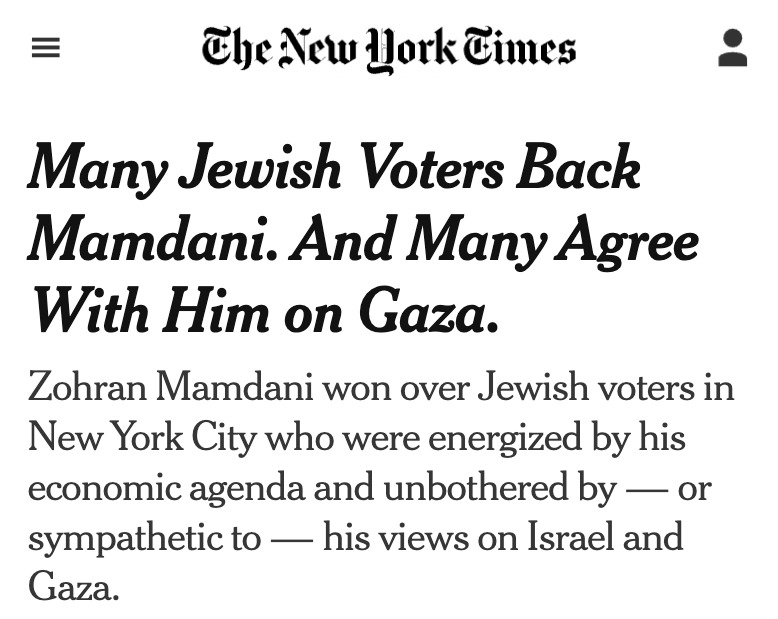
Let’s talk about Zohran Mamdani – Democratic Socialist, BDS supporter, and NYC mayoral hopeful – and how @nytimes is running PR for him while gaslighting Jews with headlines like this. 👇
Small fact NYT skips?
60% of Jews say they’d feel less safe under Mamdani.
Let’s talk about Zohran Mamdani – Democratic Socialist, BDS supporter, and NYC mayoral hopeful – and how @nytimes is running PR for him while gaslighting Jews with headlines like this. 👇
Small fact NYT skips?
60% of Jews say they’d feel less safe under Mamdani.
2/
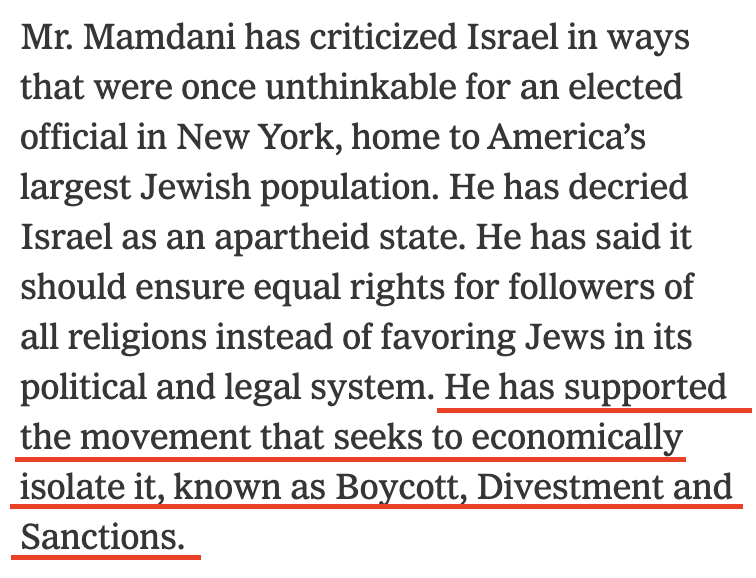
The lies start early. NYT says BDS wants to “economically isolate” Israel.
What BDS leaders actually say: they want to end Israel as a Jewish state.
That’s not economic pressure. That’s eliminationism.
Also, are we meant to applaud Mamdani’s ignorance on apartheid?
The lies start early. NYT says BDS wants to “economically isolate” Israel.
What BDS leaders actually say: they want to end Israel as a Jewish state.
That’s not economic pressure. That’s eliminationism.
Also, are we meant to applaud Mamdani’s ignorance on apartheid?
3/
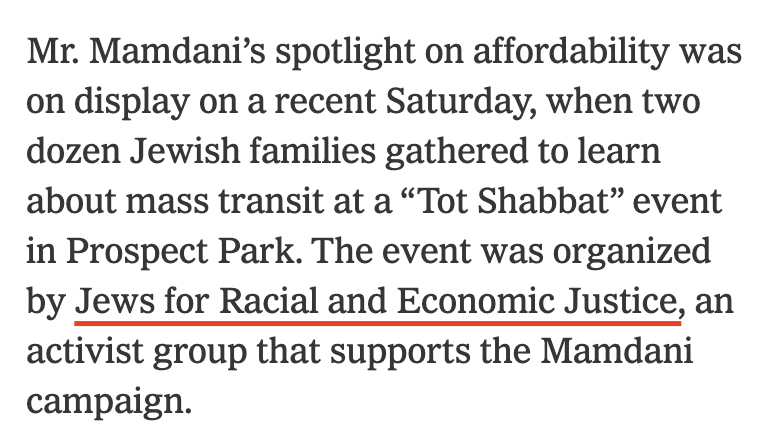
To back its case, NYT quotes… “Jews for Racial and Economic Justice” (JFREJ).
Cool name.
But after Hamas’s Oct 7 massacre, JFREJ rushed to condemn Israel – not Hamas – for “unimaginable” violence.
That’s their go-to Jewish voice.
To back its case, NYT quotes… “Jews for Racial and Economic Justice” (JFREJ).
Cool name.
But after Hamas’s Oct 7 massacre, JFREJ rushed to condemn Israel – not Hamas – for “unimaginable” violence.
That’s their go-to Jewish voice.
4/
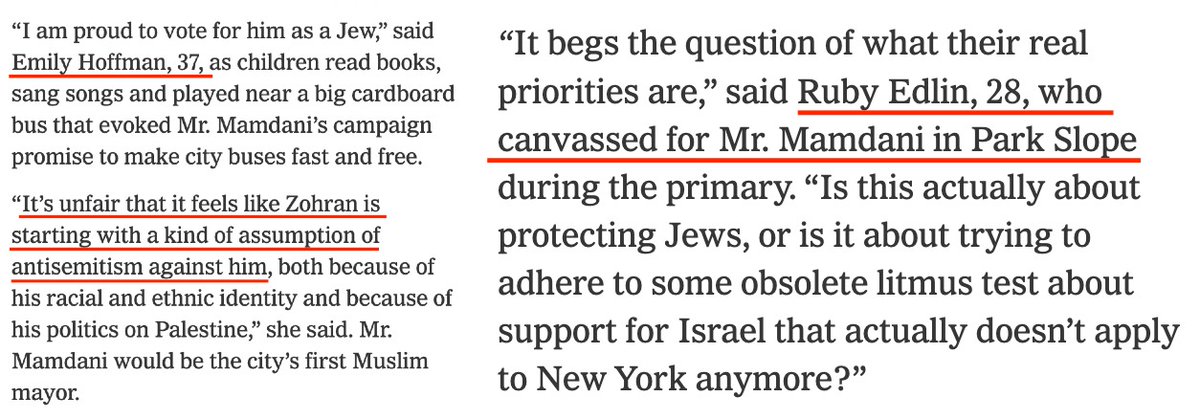
NYT went to a JFREJ event with “two dozen Jewish families.” They quoted:
🔹 A JFREJ activist
🔹A Mamdani campaigner
Both gush about how Mamdani isn’t antisemitic – just misunderstood.
Totally neutral reporting, right?
NYT went to a JFREJ event with “two dozen Jewish families.” They quoted:
🔹 A JFREJ activist
🔹A Mamdani campaigner
Both gush about how Mamdani isn’t antisemitic – just misunderstood.
Totally neutral reporting, right?
5/
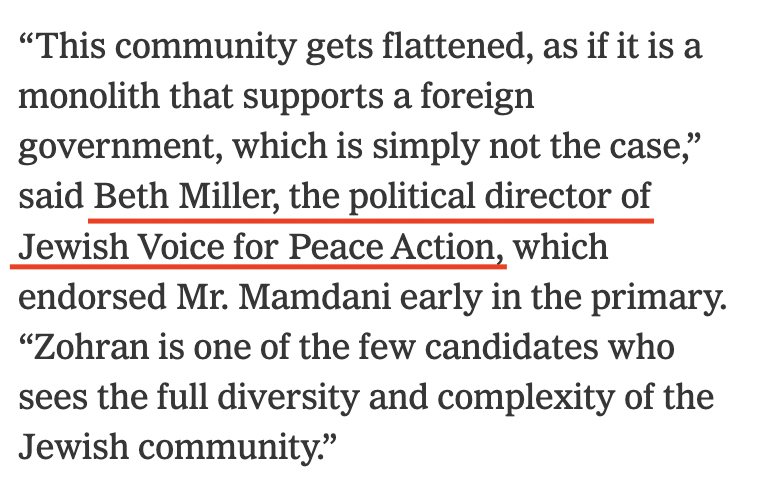
No NYT puff piece for an anti-Israel candidate is complete without a quote from Jewish Voice for Peace – a fringe group that wants Israel dismantled and is barely even Jewish.
All to sell the line that Mamdani speaks for “the Jewish community.”
No NYT puff piece for an anti-Israel candidate is complete without a quote from Jewish Voice for Peace – a fringe group that wants Israel dismantled and is barely even Jewish.
All to sell the line that Mamdani speaks for “the Jewish community.”
6/
Let’s be honest: @nytimes wants to endorse Mamdani.
But most Jews see through him.
So they’re working overtime to sanitize his record — just enough to keep the readers who haven’t unsubscribed yet.
Not journalism. Just damage control.
honestreporting.com/live-from-new-…
Let’s be honest: @nytimes wants to endorse Mamdani.
But most Jews see through him.
So they’re working overtime to sanitize his record — just enough to keep the readers who haven’t unsubscribed yet.
Not journalism. Just damage control.
honestreporting.com/live-from-new-…
• • •
Missing some Tweet in this thread? You can try to
force a refresh