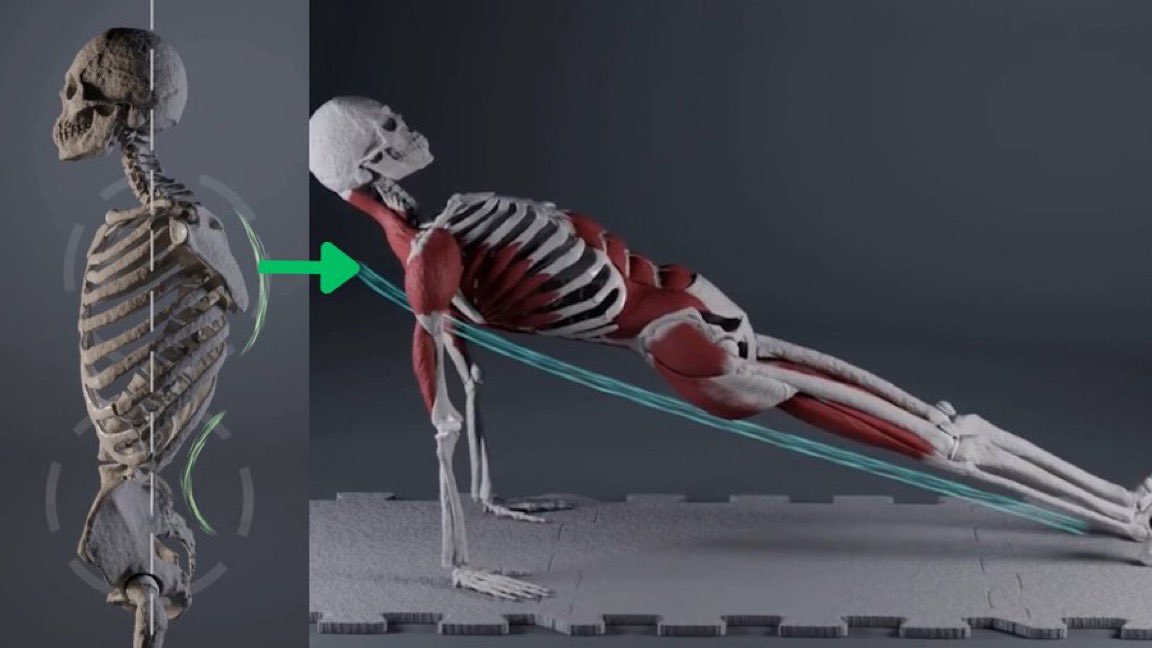
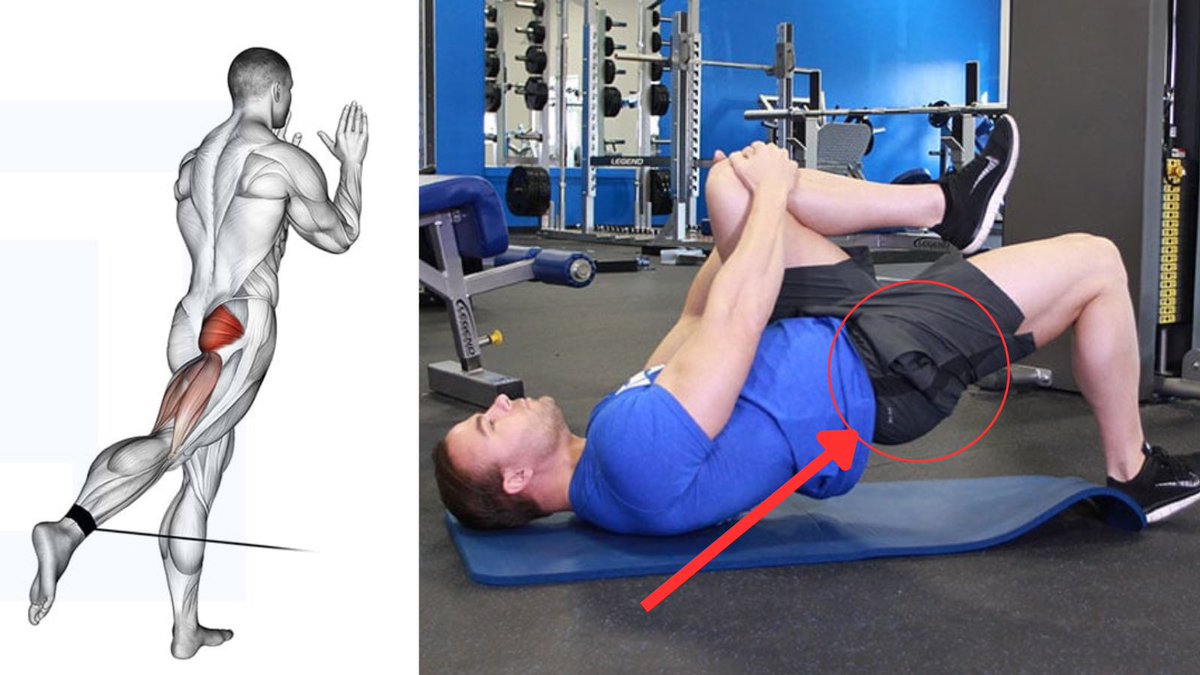
95% of people with “weak” or “underactive” glutes just simply don’t know how to train them properly.
So they do endless glute activation drills to try to fix it, when in reality they just need the right cues.
Here’s a fool-proof guide to feel your glutes properly engage 🍑💪🏼
So they do endless glute activation drills to try to fix it, when in reality they just need the right cues.
Here’s a fool-proof guide to feel your glutes properly engage 🍑💪🏼

To get a muscle to contract powerfully, it first needs to be fully lengthened.
For the glutes, this means getting a deep stretch through hip flexion, such as a hinge:
For the glutes, this means getting a deep stretch through hip flexion, such as a hinge:
Let’s break it down:
Your glutes attach to the back of your pelvis.
As you descend into hip flexion (like during a deadlift), they lengthen.
That stretch, especially with internal rotation of the hip, primes them for activation.
Your glutes attach to the back of your pelvis.
As you descend into hip flexion (like during a deadlift), they lengthen.
That stretch, especially with internal rotation of the hip, primes them for activation.
This is why exercises like:
✅ Bilateral deadlifts
✅ Single-leg RDLs
✅ Split stance hinging drills
…are far more effective for glute activation than banded side steps or clamshells.
Because they load the glutes in a lengthened position.
✅ Bilateral deadlifts
✅ Single-leg RDLs
✅ Split stance hinging drills
…are far more effective for glute activation than banded side steps or clamshells.
Because they load the glutes in a lengthened position.
So the key is to get a nice stretch in the glutes to create:
✅ Hip Internal Rotation
✅ Hip Flexion
So that way you can use the glutes in their role to contract and create:
✅ Hip External Rotation
✅ Hip Extension
✅ Hip Internal Rotation
✅ Hip Flexion
So that way you can use the glutes in their role to contract and create:
✅ Hip External Rotation
✅ Hip Extension
Here’s my all-time favorite glute activation drill that uses this exact principle 👇
Split-Stance RDL with Rotation
It’s highly effective AND adjustable to your hip mobility.
Start with just body weight - you’ll feel it immediately.
Split-Stance RDL with Rotation
It’s highly effective AND adjustable to your hip mobility.
Start with just body weight - you’ll feel it immediately.
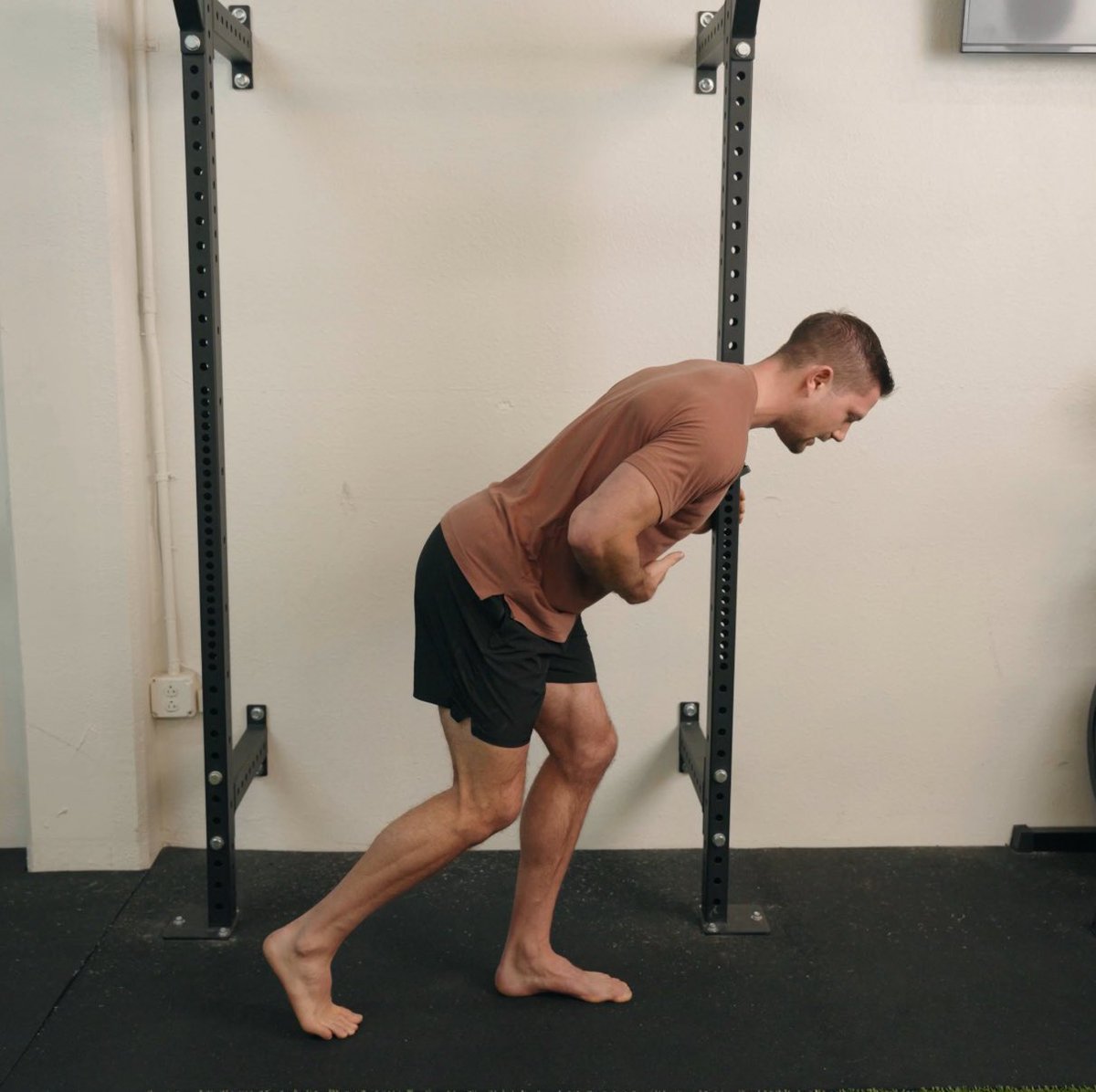
✅ How to do it:
•Slight split stance: 90% weight on front leg
•Back toes lightly touching for balance
•Knees bent ~15–20%
•Slight torso rotation toward front leg (zipper line toward stance leg)
•3-point (tripod) foot contact
•Slight split stance: 90% weight on front leg
•Back toes lightly touching for balance
•Knees bent ~15–20%
•Slight torso rotation toward front leg (zipper line toward stance leg)
•3-point (tripod) foot contact
Now, slowly hinge forward over that front leg
👉 Keep the same knee bend and heavy on front leg
👉 Stop when you feel a 3/10 stretch in the glute. Don’t go down more than this
👉 Push your foot through the earth to come up rather than trying to just stand up or lock out your knee
👉 Keep the same knee bend and heavy on front leg
👉 Stop when you feel a 3/10 stretch in the glute. Don’t go down more than this
👉 Push your foot through the earth to come up rather than trying to just stand up or lock out your knee
🔁 Repeat.
Done right, this will light up your glute like few other exercises.
Even just bodyweight is enough if your mechanics are dialed in.
I have never had someone not feel their glutes a lot if they do this properly.
Done right, this will light up your glute like few other exercises.
Even just bodyweight is enough if your mechanics are dialed in.
I have never had someone not feel their glutes a lot if they do this properly.
If you enjoyed this reel, I have a newsletter with exclusive free education.
I send out:
✅Exercises that get results fixing mobility & pain
✅Case studies
✅Targeted solutions for specific problems like this
Join here: conorharris.com/newsletter
I send out:
✅Exercises that get results fixing mobility & pain
✅Case studies
✅Targeted solutions for specific problems like this
Join here: conorharris.com/newsletter
• • •
Missing some Tweet in this thread? You can try to
force a refresh