Magnesium rapidly reverses depression, often in under a week.
(🧵1/6)
(🧵1/6)

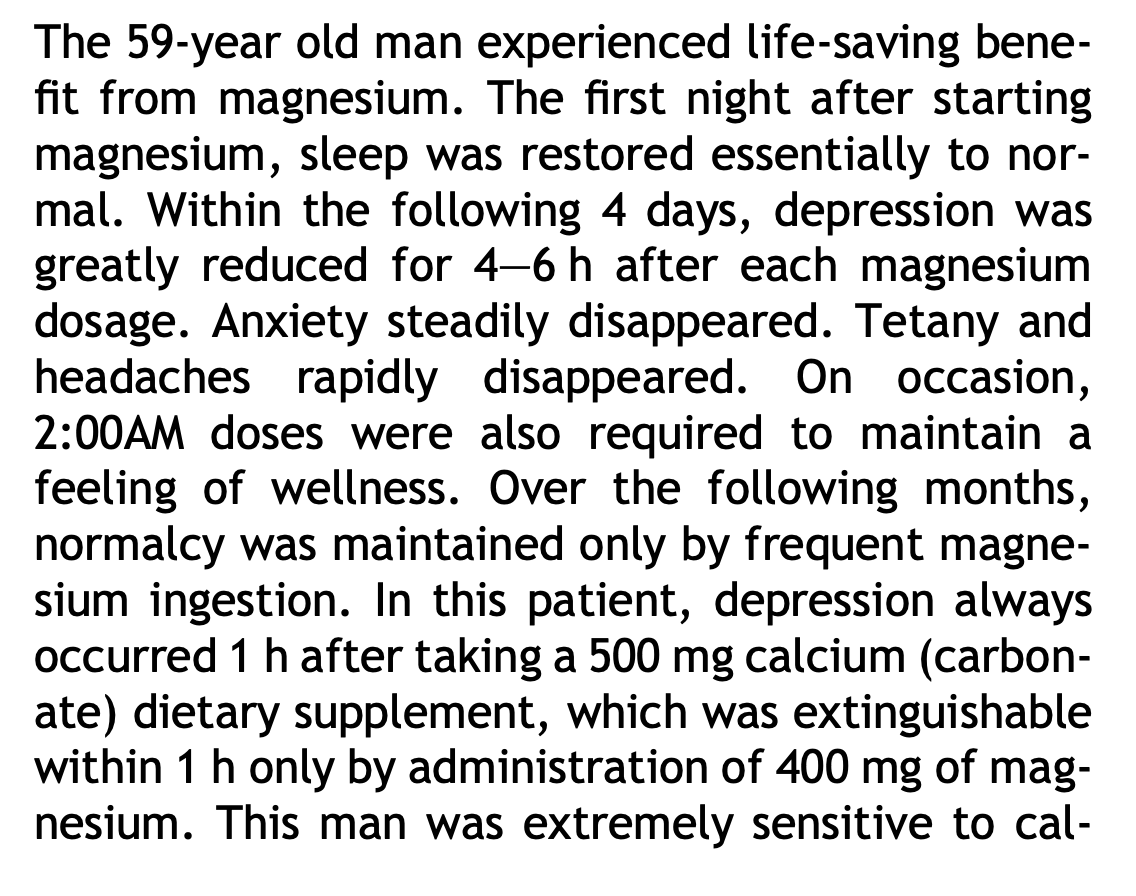
This was a short case series showing the incredible and fast turnaround of depressed patients with magnesium.
The first man experienced remission in around 4 days, taking 300 mg of magnesium taurate/glycinate multiple times daily.
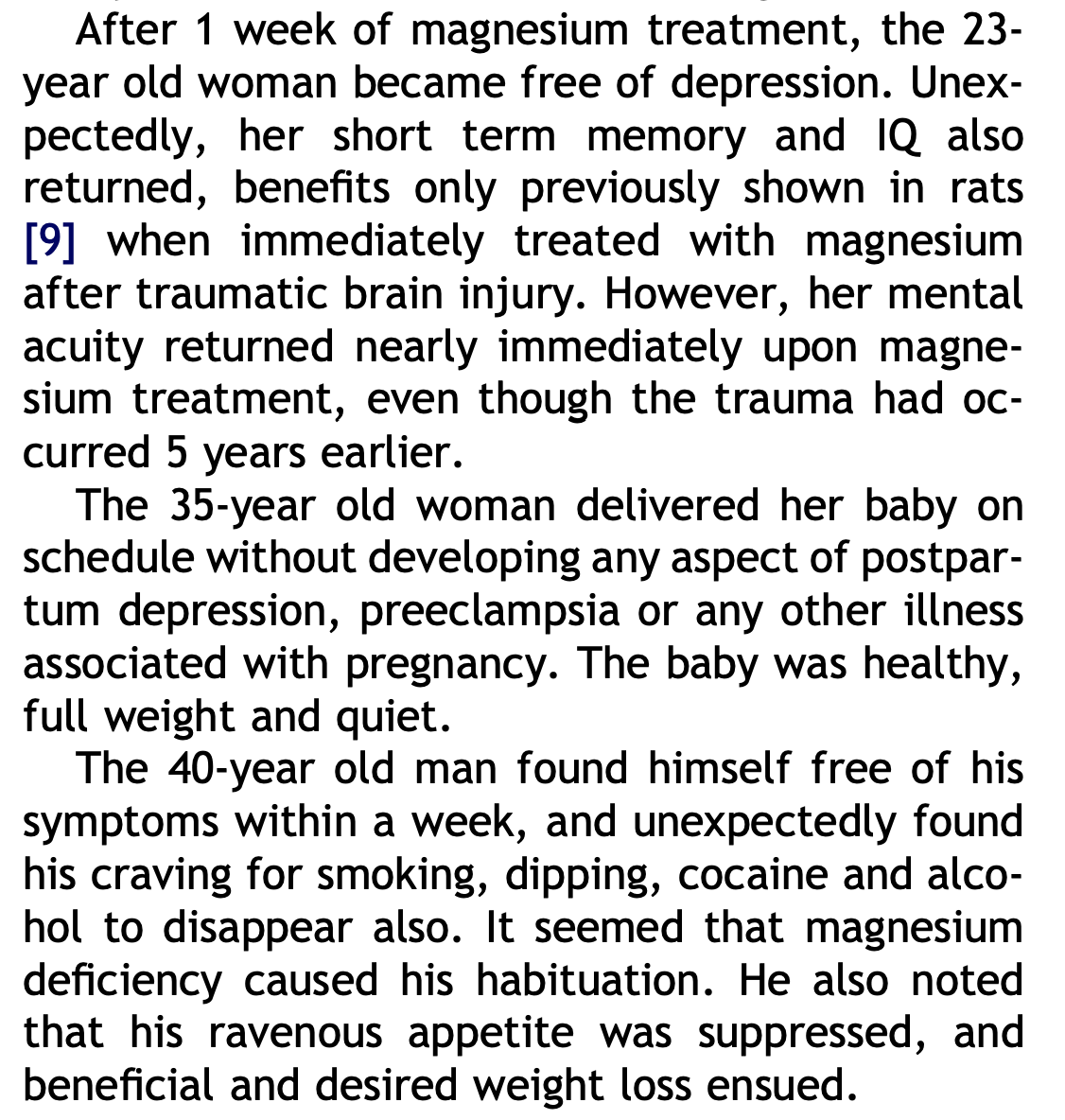
A young woman was free of depression after one week of 200 mg of magnesium glycinate per meal.
A 40 year old man got off of cocaine and reversed his depression with 125 mg magnesium taurinate at each meal, again within a week.
(2/6)
The first man experienced remission in around 4 days, taking 300 mg of magnesium taurate/glycinate multiple times daily.
A young woman was free of depression after one week of 200 mg of magnesium glycinate per meal.
A 40 year old man got off of cocaine and reversed his depression with 125 mg magnesium taurinate at each meal, again within a week.
(2/6)
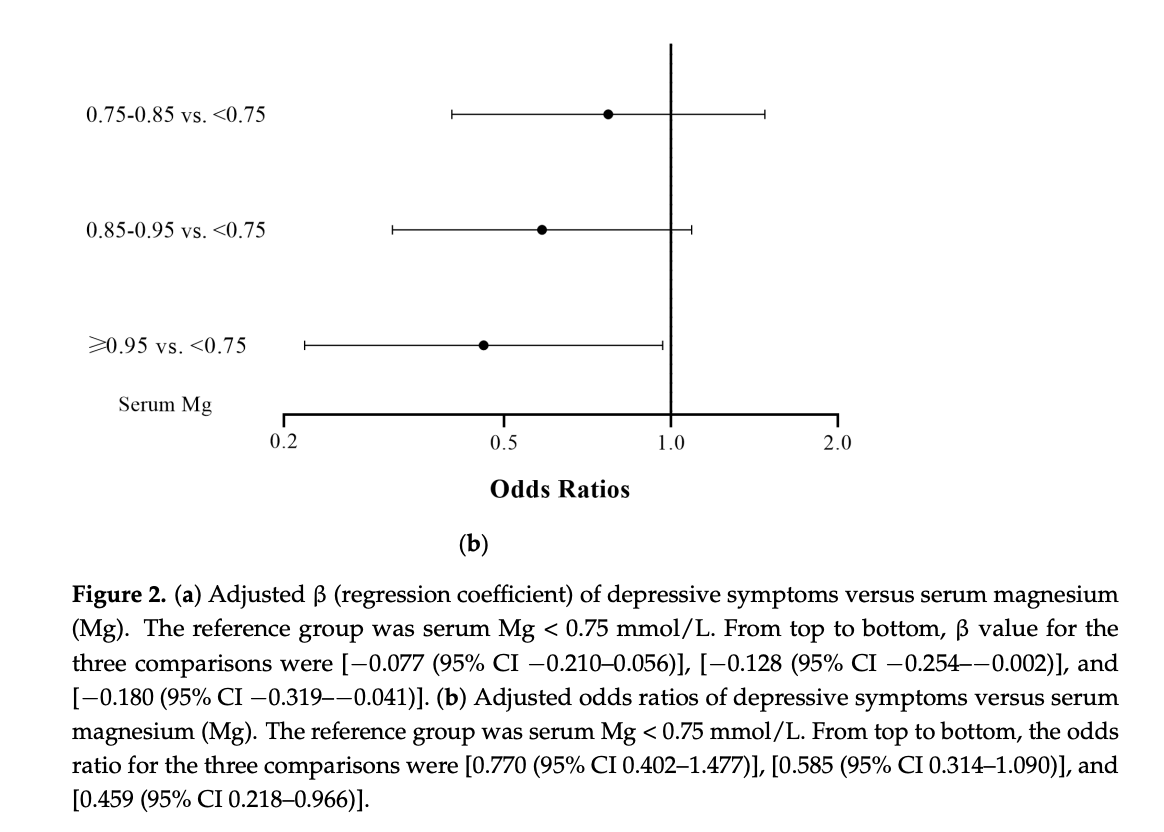
Magnesium deficit is perhaps the most common nutrient deficiency in depression.
Having low levels of serum magnesium can more than double the risk of developing depression.
While this was just a short case series, several other studies back up magnesium's ability to reverse depression.
(3/6)
Having low levels of serum magnesium can more than double the risk of developing depression.
While this was just a short case series, several other studies back up magnesium's ability to reverse depression.
(3/6)
For instance, a 2017 trial showed that magnesium chloride (248 mg elemental magnesium) could cut depression by ~50% within 2 weeks.
It also improved anxiety scores substantially.
(4/6)
It also improved anxiety scores substantially.
(4/6)
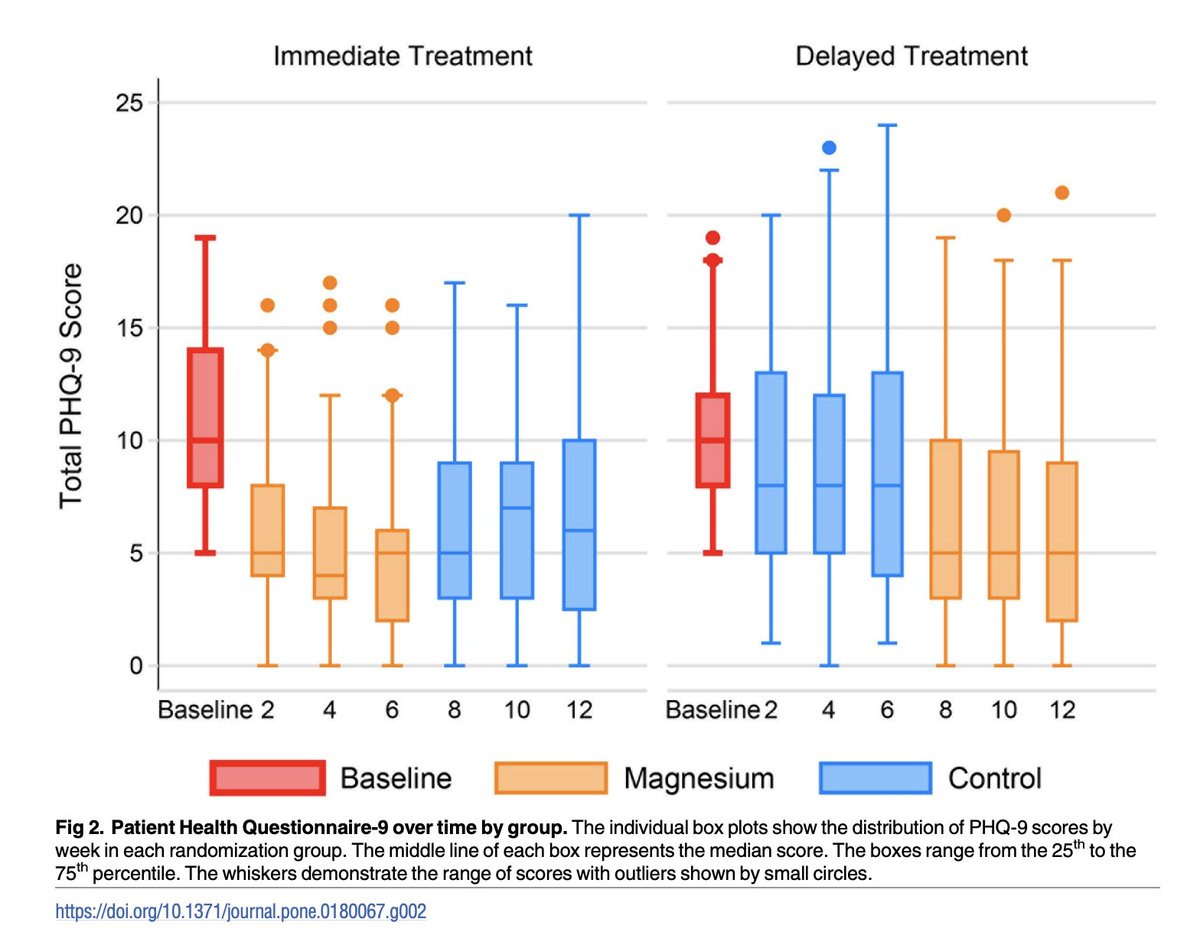
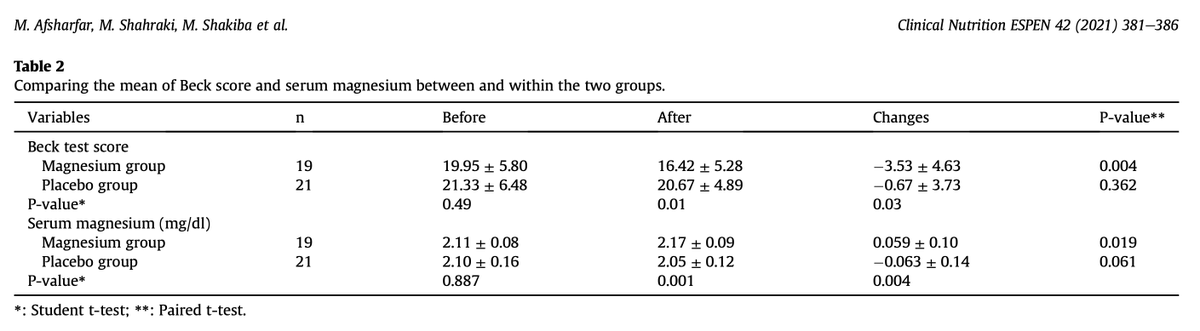
Another recent study showed that 500 mg of magnesium oxide also improved depression scores.
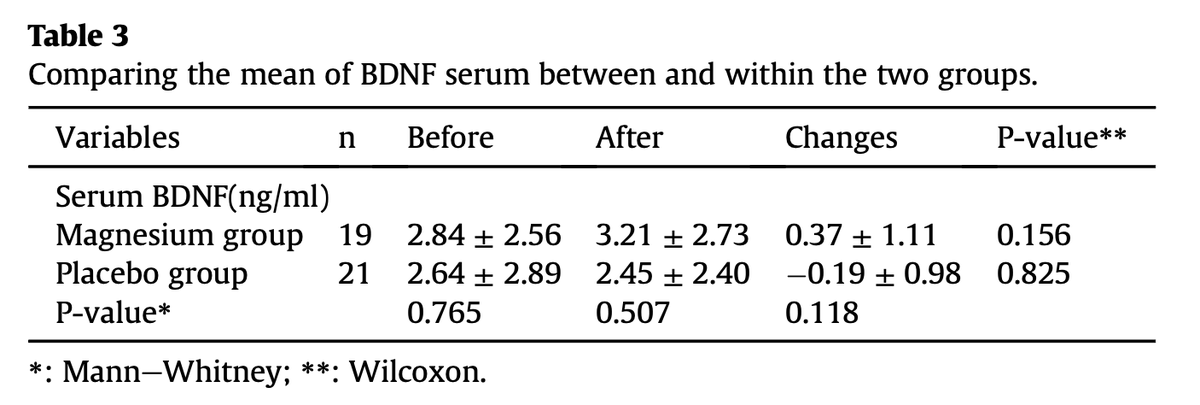
While not significant statistically, there was also a trend towards increased BDNF - a protein that facilitates brain cell growth and differentiation, which is known to be low in depression.
(5/6)
While not significant statistically, there was also a trend towards increased BDNF - a protein that facilitates brain cell growth and differentiation, which is known to be low in depression.
(5/6)
But why is magnesium so powerful for depression?
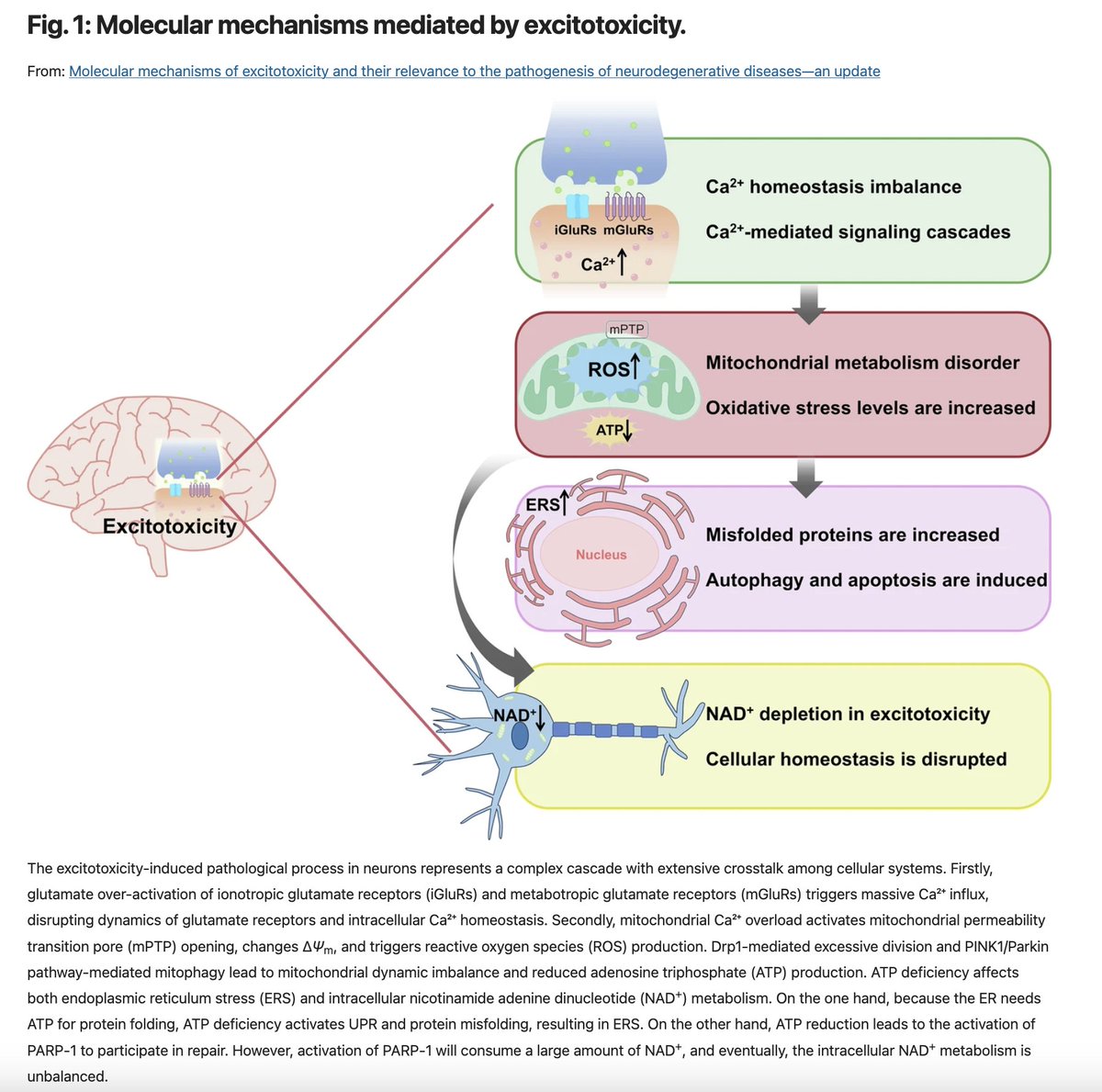
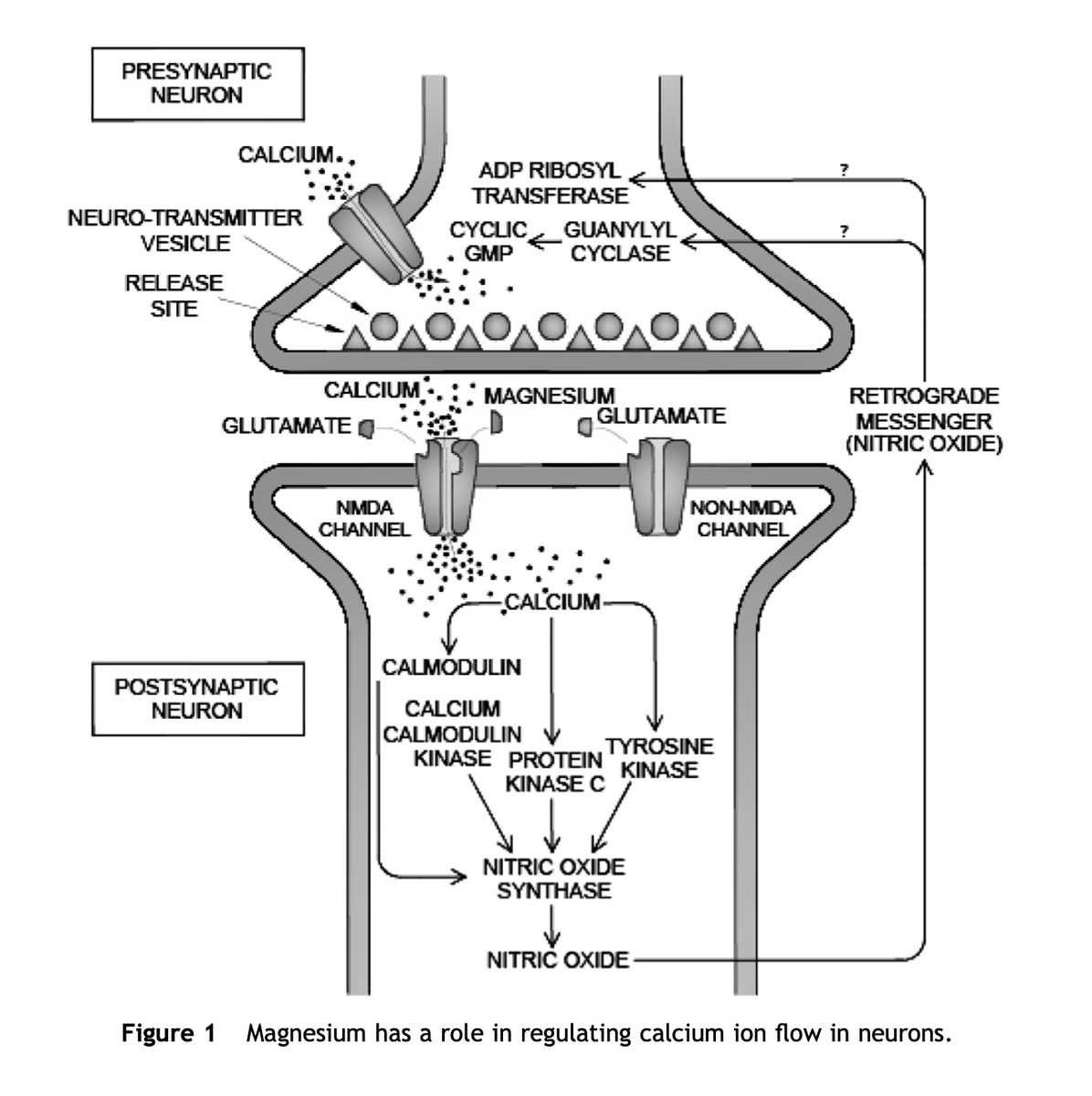
There's likely a number of mechanisms going on here, but the primary one seems to be magnesium's protective effect on excitotoxicity.
This is a process activated by the neurotransmitter glutamate through various receptors.
While glutamate is vital for many processes in the brain, excessive glutamate triggers huge influxes of calcium into neurons.
This floods the mitochondria - which opens up pores in their membranes, resulting in worsened energy production and higher reactive oxygen species.
Downstream, this impacts the endoplasmic reticulum, which halts protein production, triggers inflammation, and more.
This also depletes NAD+ levels, since NAD+ is needed for DNA repair.
Essentially, a whole lot of destruction, dysfunction and eventually cell death in the brain cells.
Glutamate excitotoxicity and neuronal cell death / impaired neurogenesis seems to be common in depression.
However, magnesium acts as an antagonist to calcium, preventing it from going into neurons excessively. It also directly blocks the NMDA receptor, a key glutamate receptor.
Magnesium also can increase BDNF as mentioned previously.
(6/6)
There's likely a number of mechanisms going on here, but the primary one seems to be magnesium's protective effect on excitotoxicity.
This is a process activated by the neurotransmitter glutamate through various receptors.
While glutamate is vital for many processes in the brain, excessive glutamate triggers huge influxes of calcium into neurons.
This floods the mitochondria - which opens up pores in their membranes, resulting in worsened energy production and higher reactive oxygen species.
Downstream, this impacts the endoplasmic reticulum, which halts protein production, triggers inflammation, and more.
This also depletes NAD+ levels, since NAD+ is needed for DNA repair.
Essentially, a whole lot of destruction, dysfunction and eventually cell death in the brain cells.
Glutamate excitotoxicity and neuronal cell death / impaired neurogenesis seems to be common in depression.
However, magnesium acts as an antagonist to calcium, preventing it from going into neurons excessively. It also directly blocks the NMDA receptor, a key glutamate receptor.
Magnesium also can increase BDNF as mentioned previously.
(6/6)
It's important to note that magnesium is not a cure-all.
The causes and solutions to depression can vary from person to person.
If YOU want PERSONALIZED help from US with any of your health goals, schedule a free call here: go.prism.miami/consultation
The causes and solutions to depression can vary from person to person.
If YOU want PERSONALIZED help from US with any of your health goals, schedule a free call here: go.prism.miami/consultation
• • •
Missing some Tweet in this thread? You can try to
force a refresh