🧵Steve Miran is a pending nominee to the Federal Reserve Board. In addition to his fringe views on dollar devaluation, he has a long history of making basic errors about economics.
The first example comes from a bizarre speech he gave after Liberation Day back in April.
Miran declared - without any evidence - that the entire economics profession is "wrong" to oppose tariffs.
whitehouse.gov/briefings-stat…
Miran declared - without any evidence - that the entire economics profession is "wrong" to oppose tariffs.
whitehouse.gov/briefings-stat…

Miran then proceeded to mischaracterize "trade models" by falsely claiming that they do not account for trade deficits, or assume they will self-correct.
In reality, economists since Adam Smith in 1776 have been pointing out the fallacy of Miran's thinking:
In reality, economists since Adam Smith in 1776 have been pointing out the fallacy of Miran's thinking:

As for Miran's claim that modern economists assume no trade deficits or assume that they are self-correcting, it's utter nonsense. There's a huge academic literature by leading economists on the persistence of trade deficits. Miran appears to be unaware of its existence.
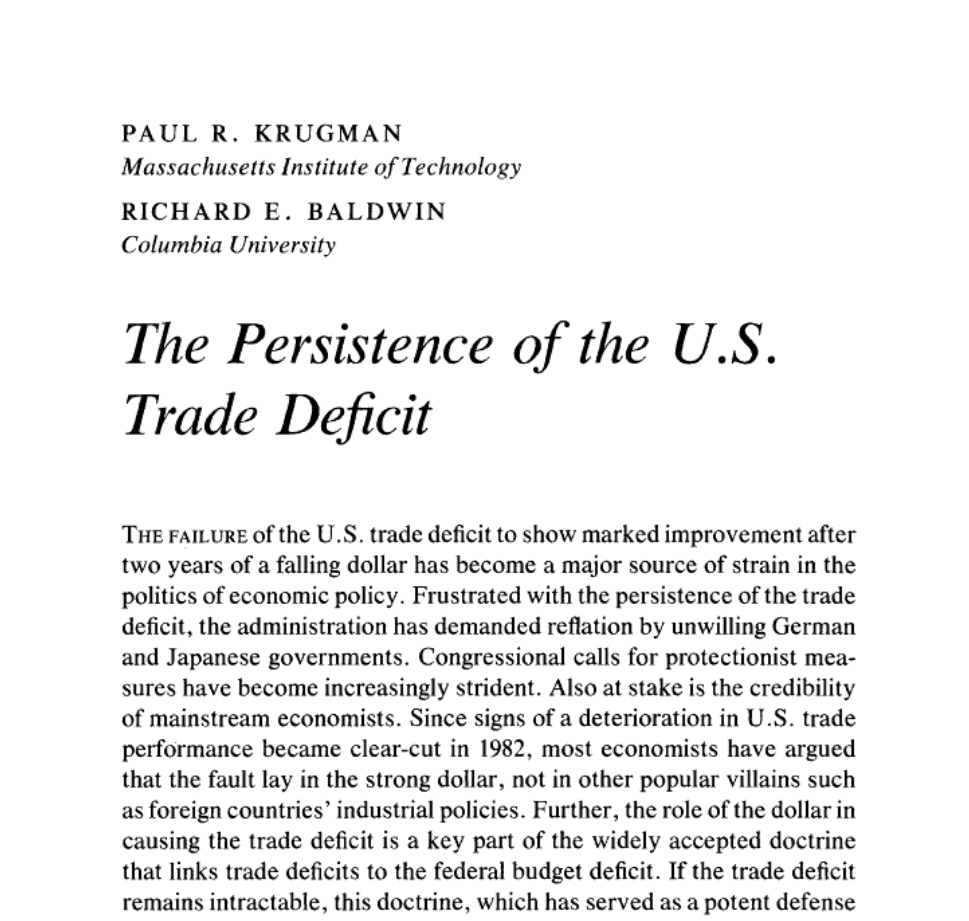
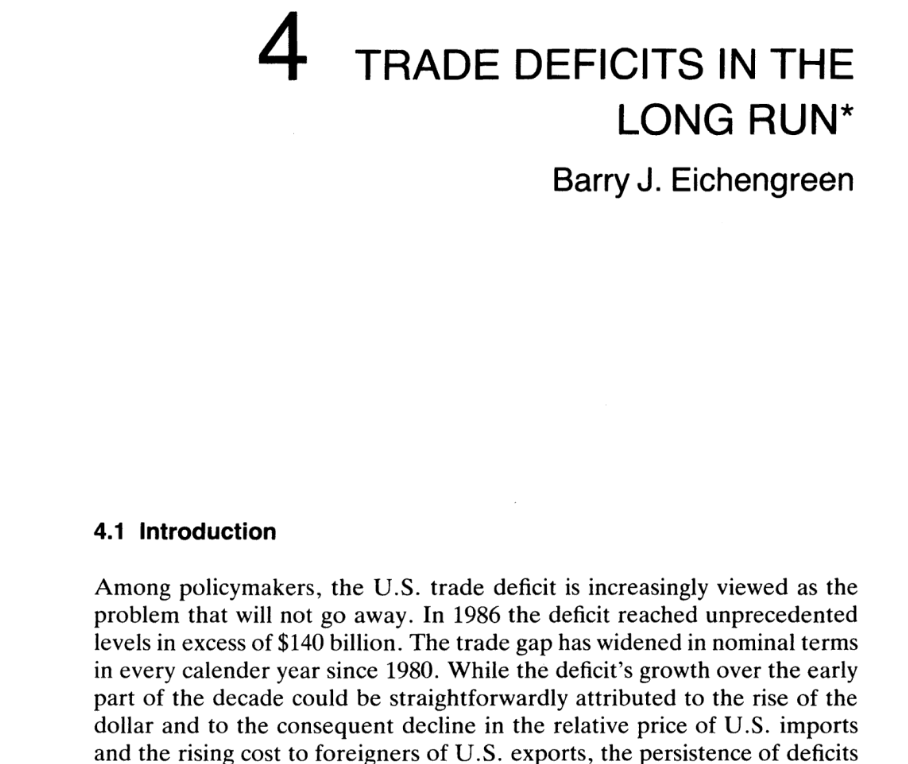
In addition to the basic errors in his claims about trade economics, Miran has a long history of misusing and misrepresenting academic papers by other economists to make claims that their authors do not support.
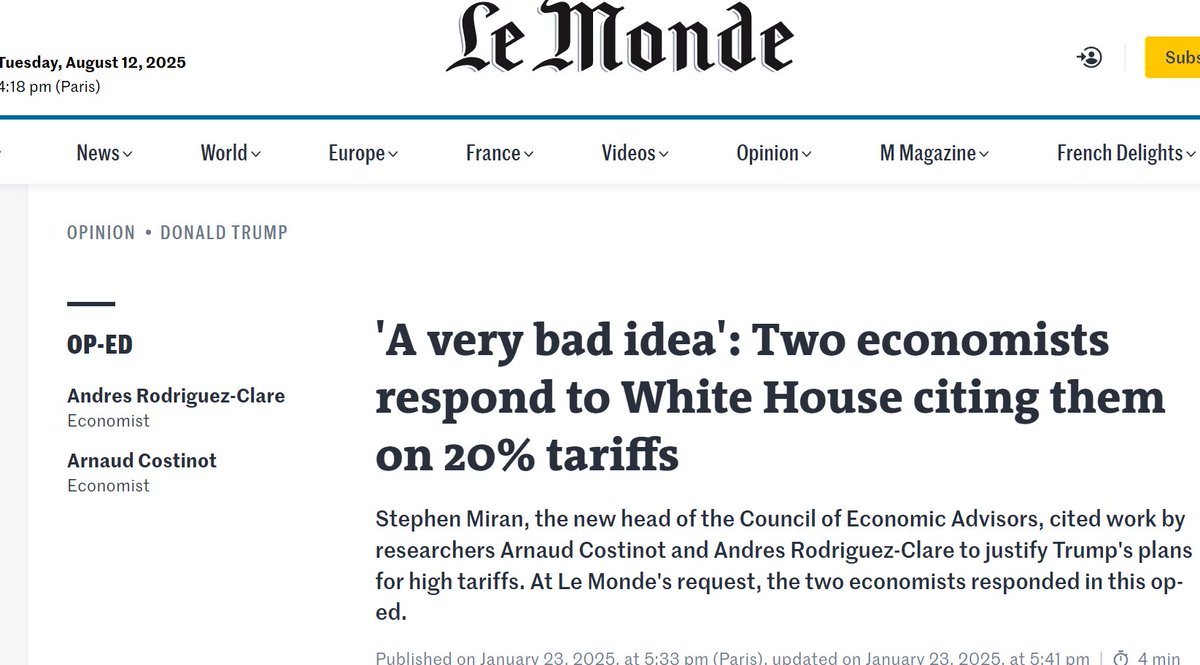
Miran's "Mar a Lago Accord" white paper from 2024 cited a paper by Costinot & Rodiguez-Claire to support his call for a 20% baseline "optimal" tariff.
The problem? Both authors denounced Miran's proposal for misrepresenting their work.
lemonde.fr/en/opinion/art…
The problem? Both authors denounced Miran's proposal for misrepresenting their work.
lemonde.fr/en/opinion/art…
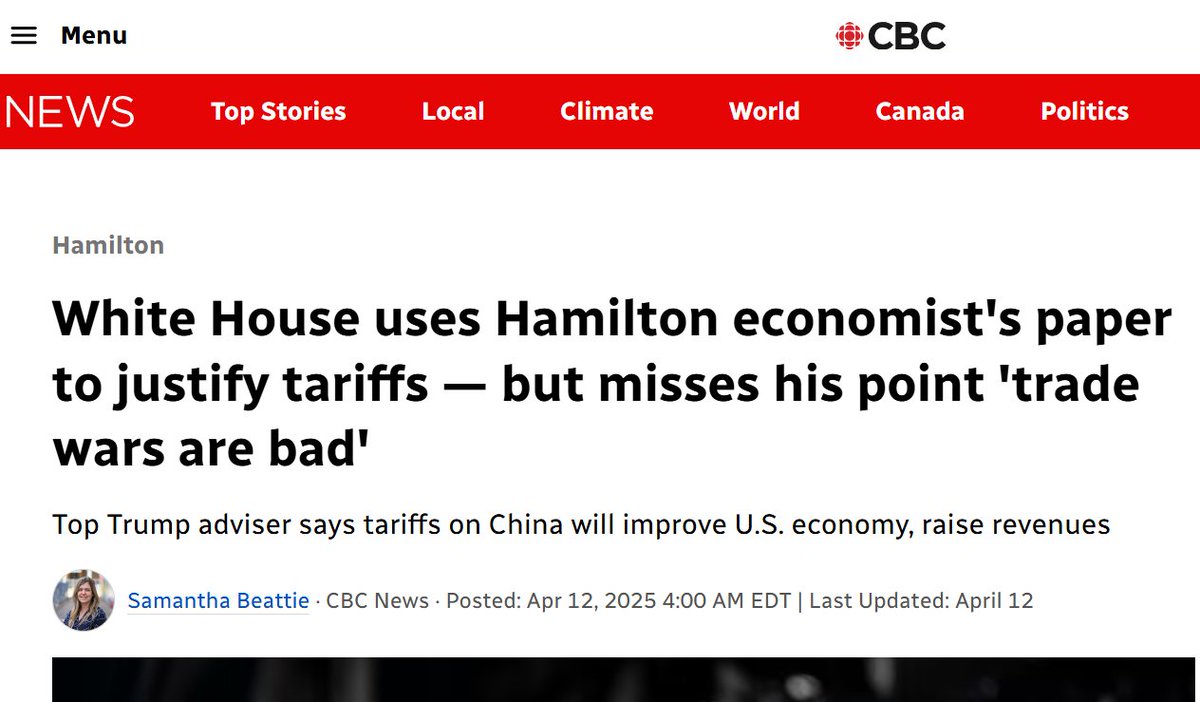
Exact same thing happened again a few months later. Miran cited a 2024 paper by Pulojas and Rossbach, claiming that it showed the US could "win" a trade war by imposing tariffs.
Except as Pujolas explained, their paper aimed to show the exact opposite.
cbc.ca/news/canada/ha…
Except as Pujolas explained, their paper aimed to show the exact opposite.
cbc.ca/news/canada/ha…
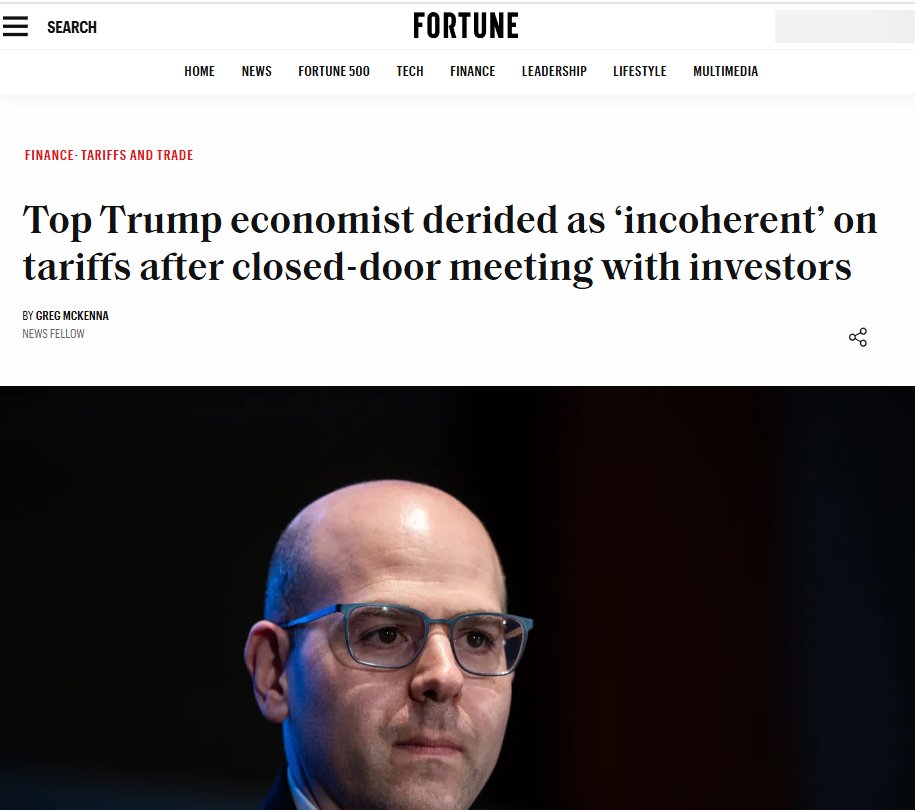
Issues of competence have plagued Miran since he took his current job at the White House. In April he met with Wall Street investors to calm their concerns about Trump's tariffs.
The opposite happened & they left the meeting saying Miran was "incoherent"
fortune.com/article/trump-…
The opposite happened & they left the meeting saying Miran was "incoherent"
fortune.com/article/trump-…
This is all in addition to Miran's adherence to a long list of fringe economic beliefs about trade, dollar devaluation, and even a backdoor default on the US National Debt, which the Wall Street Journal documented yesterday.
?wsj.com/opinion/who-is…
?wsj.com/opinion/who-is…
• • •
Missing some Tweet in this thread? You can try to
force a refresh