REVOLT.
Republicans are FIGHTING back.
GOP governors are now OPENLY talking about redistricting to COUNTER Democrat gerrymandering SCHEMES.
Governor DeSantis says he even caught Obama trying to RIG Florida’s map.
Then he dropped the numbers that could CHANGE the Midterms:
“In 2018, there were 300,000 more registered Democrats than Republicans. Today there are 1.3 million more registered Republicans than Democrats.”
🧵 THREAD
Republicans are FIGHTING back.
GOP governors are now OPENLY talking about redistricting to COUNTER Democrat gerrymandering SCHEMES.
Governor DeSantis says he even caught Obama trying to RIG Florida’s map.
Then he dropped the numbers that could CHANGE the Midterms:
“In 2018, there were 300,000 more registered Democrats than Republicans. Today there are 1.3 million more registered Republicans than Democrats.”
🧵 THREAD

No more sitting on the sidelines to get steamrolled by Democrats.
Florida Governor Ron DeSantis joined Sean Hannity on Fox to talk about Florida’s potential redistricting plans.
But before the conversation even got to that, he went straight for the heart of Democrats’ playbook.
DeSantis EXPOSED a long-running, nationwide Democrat gerrymandering operation, dating back to the Obama days.
According to DeSantis, President Barack Obama and Attorney General Eric Holder oversaw a coast-to-coast effort to manipulate election maps during the last census.
It was so pervasive that it didn’t just solidify blue strongholds….he says they even tried to rig Florida’s congressional lines and he caught them.
“Obama and Holder gerrymandered BRUTALLY across the country in this decade’s census.”
“They actually even got into Florida and I had to veto the legislature’s map and I ended up proposing one which was a much fairer map and much better.”
He pointed to California as a case study in how the game is played.
On paper, the state uses an independent redistricting commission.
In reality, he says, it’s stacked with Democrats, liberal independents, and liberal Republicans.
The result….a heavily gerrymandered map and Governor Gavin Newsom is already looking to push it further.
Florida Governor Ron DeSantis joined Sean Hannity on Fox to talk about Florida’s potential redistricting plans.
But before the conversation even got to that, he went straight for the heart of Democrats’ playbook.
DeSantis EXPOSED a long-running, nationwide Democrat gerrymandering operation, dating back to the Obama days.
According to DeSantis, President Barack Obama and Attorney General Eric Holder oversaw a coast-to-coast effort to manipulate election maps during the last census.
It was so pervasive that it didn’t just solidify blue strongholds….he says they even tried to rig Florida’s congressional lines and he caught them.
“Obama and Holder gerrymandered BRUTALLY across the country in this decade’s census.”
“They actually even got into Florida and I had to veto the legislature’s map and I ended up proposing one which was a much fairer map and much better.”
He pointed to California as a case study in how the game is played.
On paper, the state uses an independent redistricting commission.
In reality, he says, it’s stacked with Democrats, liberal independents, and liberal Republicans.
The result….a heavily gerrymandered map and Governor Gavin Newsom is already looking to push it further.
Once the groundwork was laid, DeSantis turned to what Florida is doing now to address the gerrymandering problem.
He revealed he’s already working directly with Trump’s Commerce Department to secure the state an additional congressional seat…one he believes Florida should have received in the last census.
“Florida, we got shortchanged in the census.”
This alone could be HUGE.
The governor said that new population data clearly shows Florida’s growth was underestimated, and if the Commerce Department agrees, it would trigger an automatic redraw of congressional districts.
“That would obviously force us to have to redistrict. So we’re working with the Commerce Department to see how that’s going to shake out.”
But even if the new seat doesn’t happen, DeSantis beleives there’s still a strong case for a remap now.
“There’s some racial gerrymandering that’s still lingering that we have to correct, per our recent Florida Supreme Court decision.”
The bottom line is that Florida’s current maps don’t reflect the state’s explosive growth over the past five years.
“Florida in 2020 vs. Florida in 2025, you are talking about a BIG change.”
“Our districts are not properly apportioned and if we were to do new districts, it would be a much fairer representation for the people of Florida.”
He revealed he’s already working directly with Trump’s Commerce Department to secure the state an additional congressional seat…one he believes Florida should have received in the last census.
“Florida, we got shortchanged in the census.”
This alone could be HUGE.
The governor said that new population data clearly shows Florida’s growth was underestimated, and if the Commerce Department agrees, it would trigger an automatic redraw of congressional districts.
“That would obviously force us to have to redistrict. So we’re working with the Commerce Department to see how that’s going to shake out.”
But even if the new seat doesn’t happen, DeSantis beleives there’s still a strong case for a remap now.
“There’s some racial gerrymandering that’s still lingering that we have to correct, per our recent Florida Supreme Court decision.”
The bottom line is that Florida’s current maps don’t reflect the state’s explosive growth over the past five years.
“Florida in 2020 vs. Florida in 2025, you are talking about a BIG change.”
“Our districts are not properly apportioned and if we were to do new districts, it would be a much fairer representation for the people of Florida.”
Before we get to the next clip: if you’re not following me, you may be missing out on critical updates.
Hit the bell 🔔 so you don’t miss the inconvenient truths the media hopes you’ll never see.
→ @VigilantFox
Hit the bell 🔔 so you don’t miss the inconvenient truths the media hopes you’ll never see.
→ @VigilantFox

Hannity pressed him on how many seats Republicans might stand to gain under fair maps, but DeSantis avoided putting a number on it.
“I don’t know because I think—Florida—our constitution limits, you can’t draw snake districts in Florida, they’ve got to be normal shaped, compact districts.”
Then came the number that grabbed Hannity’s attention and could have major implications for Congress.
It was a political WARHEAD that could land right before the midterms.
“But I will tell you this, when I got elected governor in 2018, there were 300,000 more registered Democrats than Republicans.”
“Today there are 1.3 million more registered Republicans than Democrats.”
It was SEISMIC.
The governor called the swing unprecedented.
Over his tenure, Florida has added millions of residents, and the voter registration balance has shifted from a slight Democratic edge to a commanding Republican advantage.
If Florida redraws its map before the midterms, that change could translate into multiple new GOP seats.
“I don’t know because I think—Florida—our constitution limits, you can’t draw snake districts in Florida, they’ve got to be normal shaped, compact districts.”
Then came the number that grabbed Hannity’s attention and could have major implications for Congress.
It was a political WARHEAD that could land right before the midterms.
“But I will tell you this, when I got elected governor in 2018, there were 300,000 more registered Democrats than Republicans.”
“Today there are 1.3 million more registered Republicans than Democrats.”
It was SEISMIC.
The governor called the swing unprecedented.
Over his tenure, Florida has added millions of residents, and the voter registration balance has shifted from a slight Democratic edge to a commanding Republican advantage.
If Florida redraws its map before the midterms, that change could translate into multiple new GOP seats.
As the interview wrapped, DeSantis continued to hint that redistricting is coming…and that this time, Democrats won’t be the ones shaping the lines.
“If you look at a state like Florida, we’re a red state with a few blue dots. If you do fair maps, Republicans are going to do much better.”
He accused Democrats of a long-standing tactic: taking heavily blue cities and carving them into surrounding red areas to keep themselves competitive.
This is what they have always done.
Illinois is the most blatant example, where Chicago’s voters are stretched across far-flung districts to dilute Republican numbers.
“That’s what they did in Illinois. They take all these voters in Chicago and they draw districts stretching out all across the state.”
DeSantis says Florida has EVERY RIGHT to do a redraw based on its rapid growth and political shift.
“So Florida has gone VERY red during my tenure as governor. Our population has grown and we have every right to be able to do new districts.”
And the timing works in their favor.
“Now we don’t have—our primaries aren’t even till—they’re more than a year away.”
“This will probably be something that we will work with the legislature on in the spring and be able to deliver, I think, really strong maps.”
The message from DeSantis was now loud and clear: a major political shakeup could be coming, and Florida may be ground zero.
“If you look at a state like Florida, we’re a red state with a few blue dots. If you do fair maps, Republicans are going to do much better.”
He accused Democrats of a long-standing tactic: taking heavily blue cities and carving them into surrounding red areas to keep themselves competitive.
This is what they have always done.
Illinois is the most blatant example, where Chicago’s voters are stretched across far-flung districts to dilute Republican numbers.
“That’s what they did in Illinois. They take all these voters in Chicago and they draw districts stretching out all across the state.”
DeSantis says Florida has EVERY RIGHT to do a redraw based on its rapid growth and political shift.
“So Florida has gone VERY red during my tenure as governor. Our population has grown and we have every right to be able to do new districts.”
And the timing works in their favor.
“Now we don’t have—our primaries aren’t even till—they’re more than a year away.”
“This will probably be something that we will work with the legislature on in the spring and be able to deliver, I think, really strong maps.”
The message from DeSantis was now loud and clear: a major political shakeup could be coming, and Florida may be ground zero.
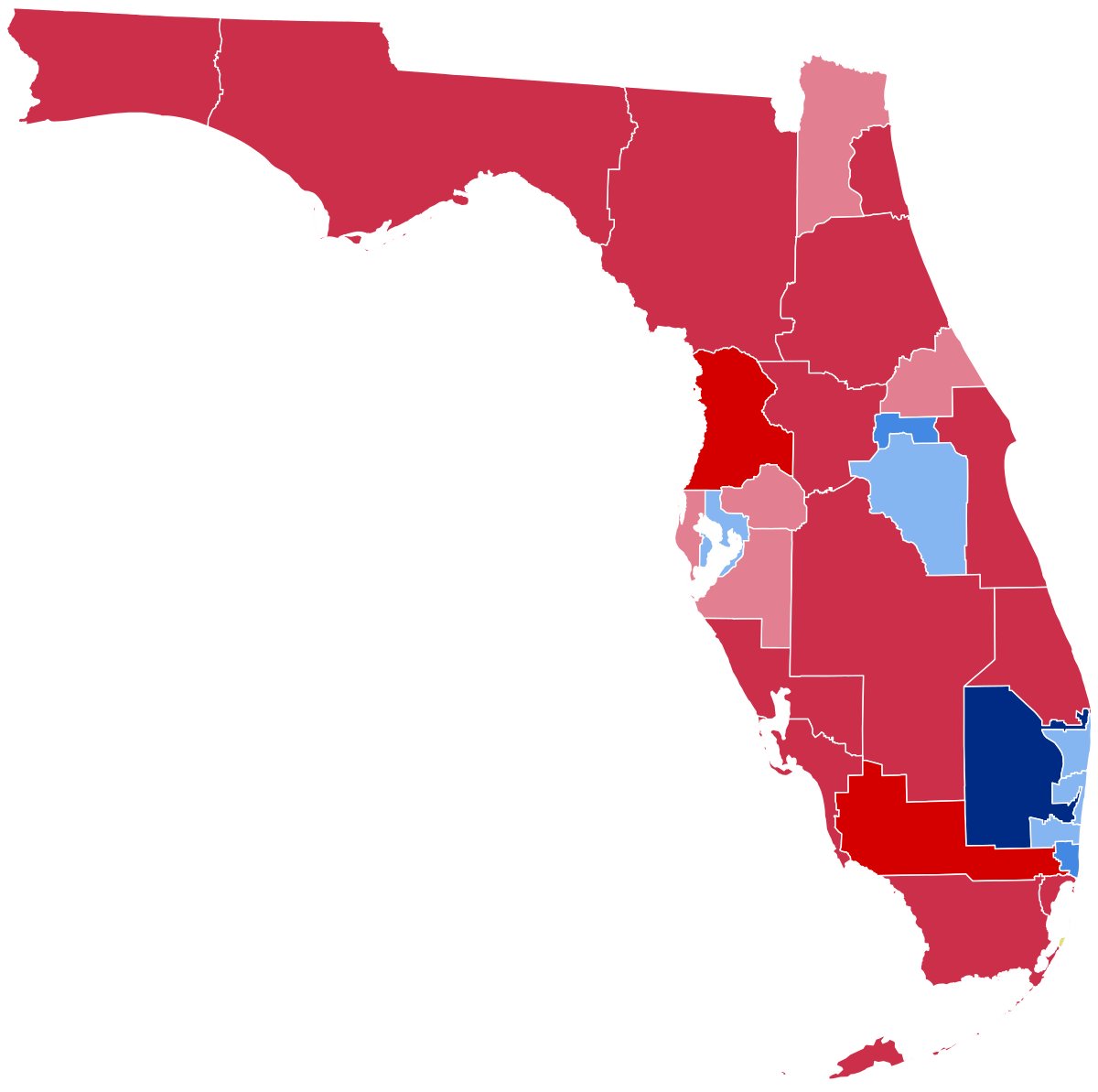
This is what Florida’s current congressional map looks like.
The state has 28 seats: 20 held by Republicans and 8 by Democrats.
If DeSantis follows through with a new redistricting plan, the impact could be GIGANTIC.
Not just in Florida, but in Washington.
A few flipped seats here could be the deciding factor in whether Republicans keep control of the House in 2026.
The state has 28 seats: 20 held by Republicans and 8 by Democrats.
If DeSantis follows through with a new redistricting plan, the impact could be GIGANTIC.
Not just in Florida, but in Washington.
A few flipped seats here could be the deciding factor in whether Republicans keep control of the House in 2026.
Special thanks to @overton_news for helping me put this thread together!
If you’re into truth-seeking news accounts like mine, they’re definitely worth a follow here and on Substack:
—> @overton_news
—> .overtonnews.com/p/who-is-overt…
If you’re into truth-seeking news accounts like mine, they’re definitely worth a follow here and on Substack:
—> @overton_news
—> .overtonnews.com/p/who-is-overt…
@overton_news I was banned 3 times from Twitter 1.0 for defying mainstream narratives.
If censorship strikes again, you’ll always find my latest threads at VigilantFox.com.
I sift through the news so you can live your life.
Stay Informed Here: vigilantfox.com/p/how-to-stay-….
If censorship strikes again, you’ll always find my latest threads at VigilantFox.com.
I sift through the news so you can live your life.
Stay Informed Here: vigilantfox.com/p/how-to-stay-….
@overton_news Thanks for reading. For more in-depth stories the mainstream won’t touch, follow me on 𝕏.
—> @VigilantFox
Looking for something else to read?
Scott Jennings Just NUKED Two Democrat Narratives in Minutes—Sending a Panelist Into Total MELTDOWN
—> @VigilantFox
Looking for something else to read?
Scott Jennings Just NUKED Two Democrat Narratives in Minutes—Sending a Panelist Into Total MELTDOWN
https://x.com/VigilantFox/status/1955307580521128184
• • •
Missing some Tweet in this thread? You can try to
force a refresh