American citizen, Varian Fry, opens the Centre Americain de Secours (American Center for Relief) in the port city of Marseille in the Vichy-government controlled unoccupied zone.
It will establish an escape network that goes on to save an estimated 2,000 Jewish and ant-Nazi refugees, many of whom were artists and intellectuals.
1/8
Fry was born in New York City on 15 October 1907 and by the age of nine, already showed a humanitarian streak when he held a fund raiser for the American Red Cross during World War One.
He went on to study at Harvard and whilst there, was introduced to Eileen Avery Hughes, his senior by seven years and editor of the Atlantic Monthly (now The Atlantic) who he married in 1931.
2/8
Fry's work as a journalist took him to Berlin in 1935 and it was there that he saw first-hand how German Jews were being increasingly persecuted. He would later state that "I could not remain idle as long as I had any chances at all of saving even a few of its intended victims."
3/8
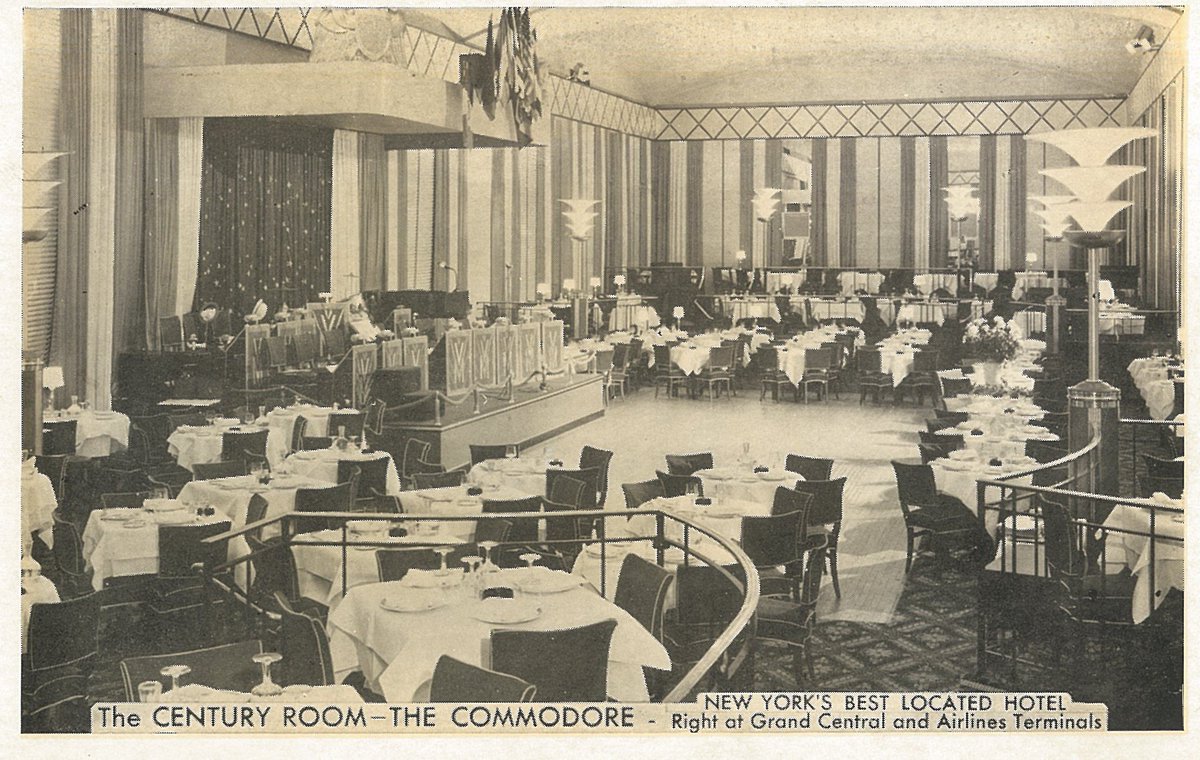
In New York on 25 June 1940 (the day on which France ceased hostilities with Italy and the official capitulation to Axis forces), a meeting was held at the Hotel Commodore and resulted in the founding of the Emergency Rescue Committee (ERC) supported by hundreds of prominent people such as Eleanor Roosevelt.
Fry later volunteered to travel to Marseille to establish what conditions were like for refugees, how people at risk from the Nazis could be helped to escape to Portugal or Morocco, and find people there who could help with the ERC.
He was due to go for three weeks, he would stay for thirteen months.
4/8
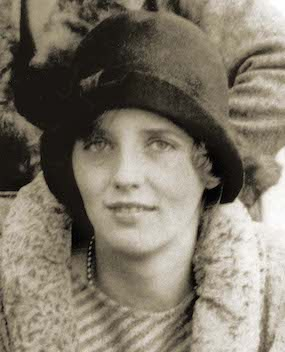
Arriving in Marseille with 3,000 dollars strapped to his leg and a list of people to help, he rented an office and set to work, soon joined by fellow Americans like Chicago heiress Mary Jayne Gold, whose wealth helped fund Fry's work.
With Vichy France preparing to deport German refugees back to their home country, there was no time to lose.
5/8
Fry soon had dozens of people queuing outside his office and he was able to secure US visas with the help of Hiram Bingham IV, the American Vice Consul in Marseille, despite the opposition to the ERC's work from Secretary of State Cordell Hull.
Mexican diplomat Gilberto Bosques Saldívar also helped secure visas, securing passage on ships still sailing from the port.
An escape line was run from a rented villa, helping people cross into Spain and then to Portugal.
On 24 March 1941, 222 people escaped on a passenger ship bound for Martinique.
6/8
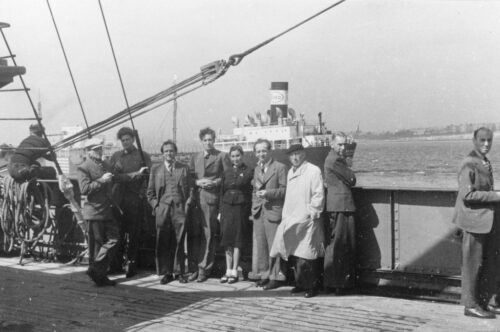
Fry was expelled by the Vichy France authorities after thirteen months flowting the law in front of their noses. The ERC would continue for a few more months, saving a few hundred more people before it closed down.
He returned to New York and the role he played in saving so many was largely forgotten.
He died in 1967.
In 1994, Yad Vashem attributed Fry with the honour of Righteous Among the Nations.
7/8
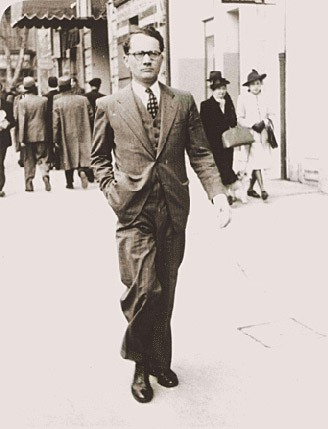
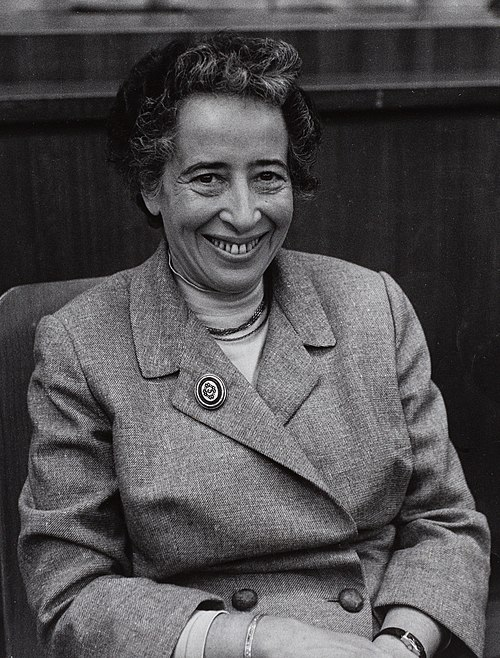
To mention only a handful of the refugees that Fry and his American and French colleagues saved.
German born Hannah Arendt, historian and philospher.
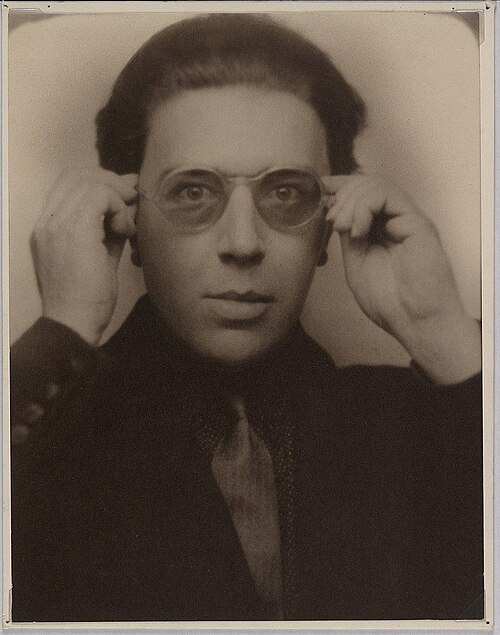
French surrealist and poet, André Breton.
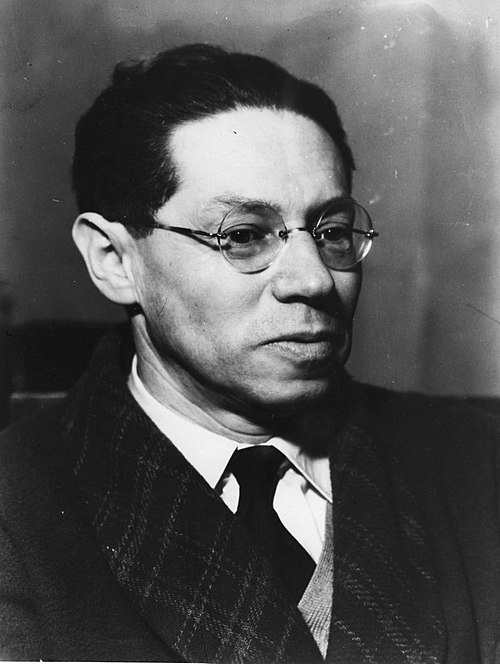
German novelist and playright, Lion Feuchtwanger.
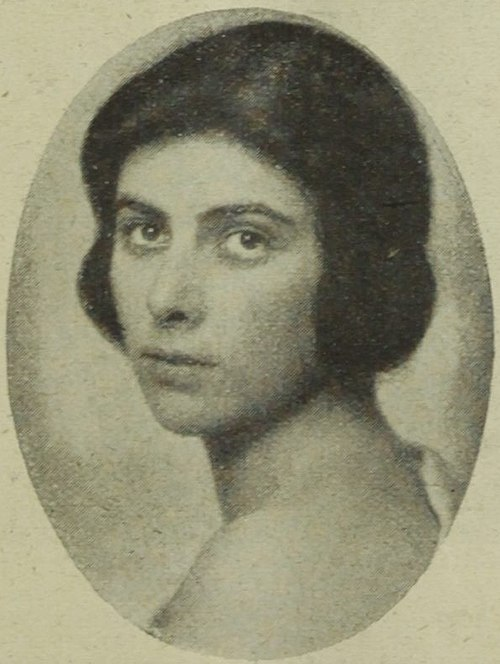
Austrian writer and actor Hertha Ernestine Pauli.
8/8
• • •
Missing some Tweet in this thread? You can try to
force a refresh

🇫🇷 A Christmas Day massacre
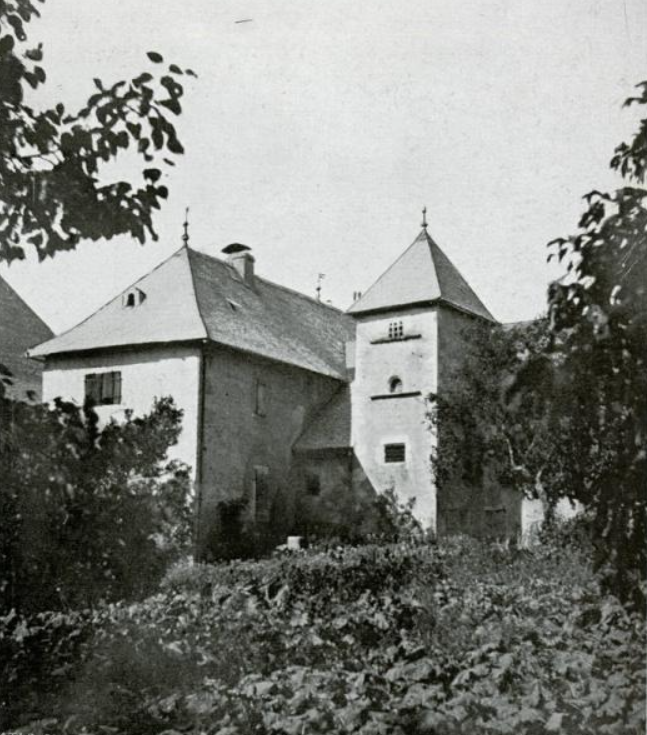
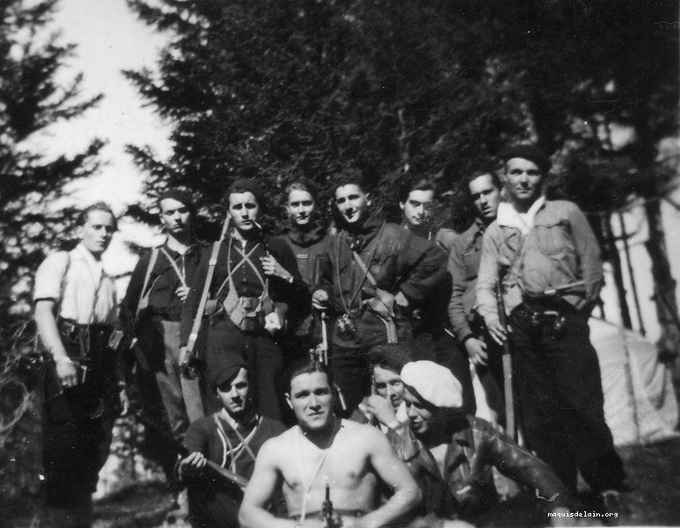
During the night of 25/26 December 1943, a group of young people held a clandestine Christmas dance party at the château d'Habère-Lullin in a small village in the hills of the Haute-Savoie region of France.
Dance parties had been banned by the occupation authorities. 1/6
Many of the young men present had refused to join the obligatory work service (STO) that saw thousands of young French men sent to work in German factories. Instead, they took to the hills, either hiding out in farms or joining maquis resistance groups. 2/6
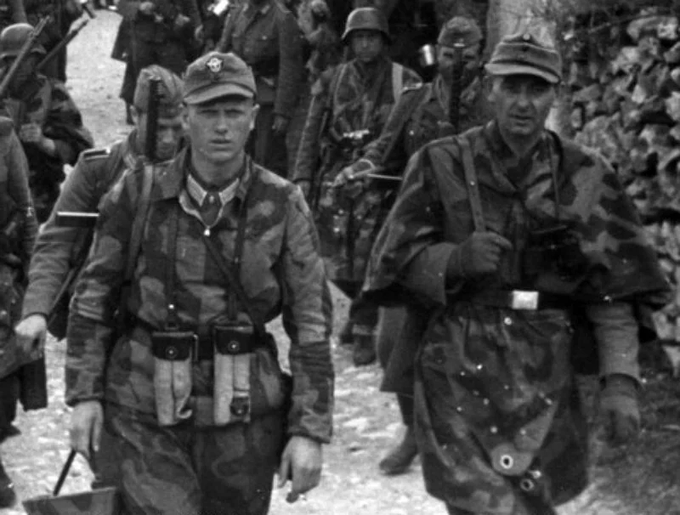
Unbeknown to the young people present at the château, one of their number was an undercover policeman named Guy Cazeaux, charged with infiltrating local maquis groups. As the party got underway, a company of SS-Polizei left Annemasse and began moving up into the hills. 3/6
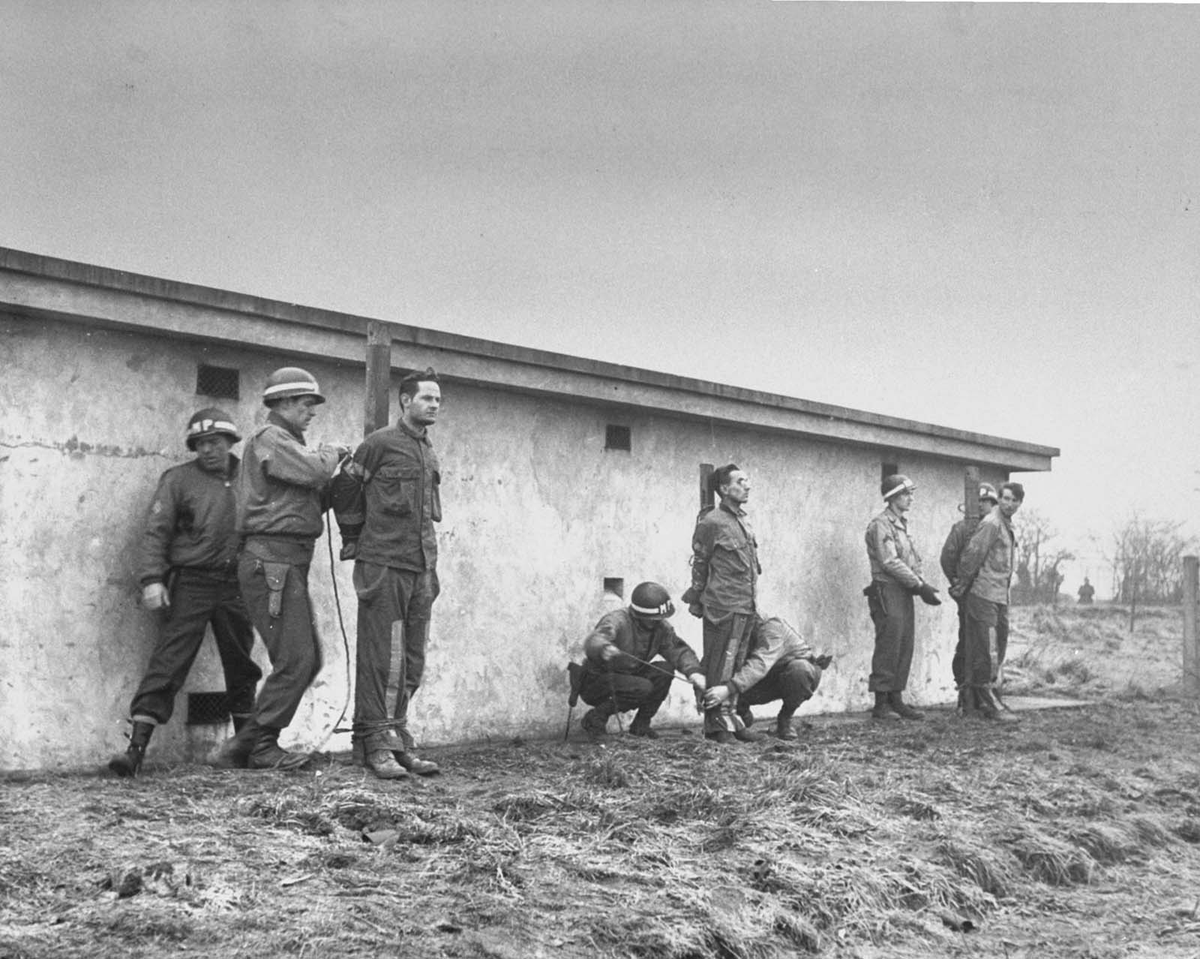
Three German soldiers who had been caught behind American lines in American uniforms, are tied to wooden stakes and shot near the village of Henri-Chapelle, Belgium. 1/5
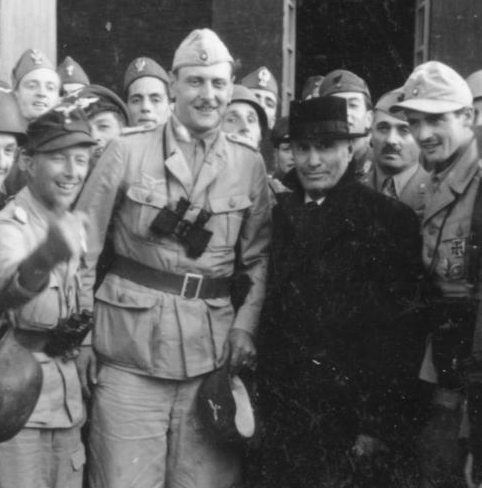
The three German infiltrators, Unteroffizier Manfred Pernass, Oberfähnrich Günther Billing, and Gefreiter Wilhelm Schmidt had been part of Operation Greif under the leadership of Otto Skorzeny, the man who had led the daring mission to rescue Mussolini in September 1943. 2/5
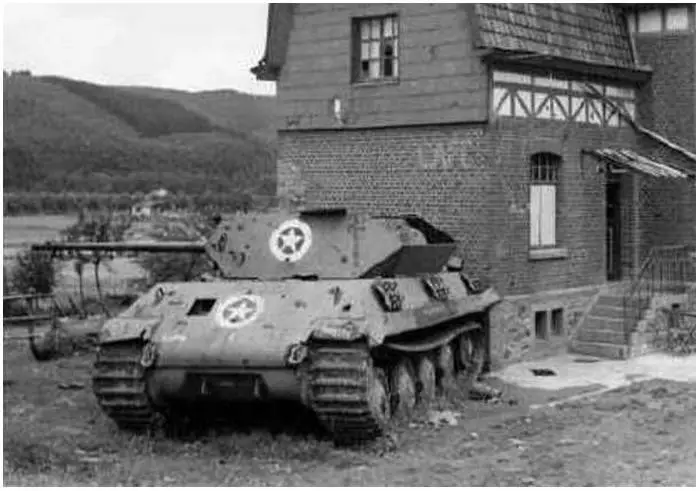
Skorzeny only had just over a month to find suitable men (English speakers) and also assemble enough captured Allied vehicles - some Panther tanks were disguised as Tank Destroyers (photo) - to pass through enemy lines once the Battle of the Bulge was under way.
Their mission was to seize vital bridges over the river Meuse at Amay, Huy, and Andenne.
3/
Most people are familiar with the images of civilians celebrating the end of four years of occupation as Allied forces broke out of Normandy and began pushing the Germans out of France.
There was, however, a dark side, seen in numerous photos of women being humiliated in public displays of vengeance, but also many extrajudicial killings. Here are some stories of the "epuration sauvage", or wild purges. 1/6 #WW2
One of the best known photos is that taken by Robert Capa as American forces liberated Chartres in mid August 1944.
Simone Tousseau is seen being led through the city holding her baby.
She was accused of both "horizontal" and active collaboration. The baby's father was a soldier, killed in Belarus the previous month and she had worked for the local Sicherheitsdienst as a secretary and was believed to have denounced locals to the Gestapo.
In many ways she was lucky - after being roughed up and shorn, she was taken away by the police and served some time in prison before eventually being stripped of her civic rights for ten years.
2/6
At the same time further east, the region of Brittany was also being liberated as US troops pushed the enemy back into fortress ports.
Some areas had seen bitter fighting as events unfolded further away in Normandy, with local Resistance groups, sometimes with SAS help, tried to pin down enemy forces and prevent reinforcements reaching Normandy.
German retribution could be swift and brutal, such as when Kriegsmarine personnel murdered 44 civilians at Gouesnou near Brest on 7 August.
3/6
🇫🇷 Pour l'amour, Lyon, 21 October 1943.
Lucie Aubrac's husband Raymond has now been in the hands of the Gestapo for four months.
Time is running out and he will soon disappear into the night and fog of the Nazi concentration camp system... 1/8
Lucie was born into a working class family in Paris in June 1912. Her father, Louis Bernard, saw action in the Great War and was badly wounded in 1915.
Her parents supported Lucie and her sister in the pursuit of their studies and after studying at the Sorbonne, whilst at the same time working as a dishwasher in a restaurant, she passed the tough competitive examination for the recruitment of associate professors and found work at the University of Strasbourg.
2/8
It was at Strasbourg University that she met Raymond Samuel, a young military engineer officer, and they married three months after war broke out.
Raymond became a POW in the Battle of France and held in a prison camp in the soon to be annexed Moselle region and it was here that Lucie helped her husband escape for the first time by smuggling to him medecine that gave him a fever.
Taken to hospital, he was able to get away.
3/8
Josette Torrent seen here with her parents (left) and sister Micheline was nine years old when war broke out and her father Michel mobilised into the French army.
After the Armistice in June 1940, the family fled from St Malo in Brittany to where Michel was waiting in Perpignan.
1/5
The family settled back into life with their now demobbed father who had found a job in a large department store in the city.
On 1 September 1942, Josette returned home from school to find her father suffering from the pain of a stomach ulcer. He had an important job to do that day and now had no choice other than tell his beloved daughter a secret, he was in the Resistance.
2/5
Her father had an important message to pass on to another resister in his network, one that would grow into the Gallia group, gathering intelligence and helping people and Allied airmen across the Pyrenees and into Spain.
Josette was told to walk to a subway near her her school and when she came across a man whislting "Auprès de ma blonde", she was to pass him the piece of paper. She was now in the Resistance at the age of 12.
3/5
The previous day, the Luftwaffe had once more launched multiple attacks on southern England, hitting airfields and the Chain Home radar station at Ventnor on the Isle of Wight.
During the attack on RAF Tangmere, American volunteer Pilot Officer William Fiske of No. 601 Squadron saw his Hurricane fighter hit and a fire broke out in the cockpit.
He crash landed at Tangmere and was brought out of the plane alive, but died the next day from surgical shock.
1/7
William "Billy" Fiske was born into a wealthy banking family in Chicago on 14 June 1911.
He travelled extensively at a young age, attending school in France, and discovered winter sports in Switzerland and, by the time he was 16, he had represented the USA at the St Moritz winter olympics and come away with a gold medal as driver of a five-man bobsled team.
He also took part in the 1932 Winter Olympics at Lake Placid, USA and as driver of a four-man team, came away with a second gold.
An invitation to the 1936 Winter games in Germany was turned down as "Billy" was opposed to Hitler's regime.
2/7
"Billy" was also one of the founders of a ski resort in Aspen, today a venue for the rich and famous, but back in the mid-1930s, it was a run down former mining town, but he saw its potential as a resort and by 1937 had opened a ski lodge and lift there. 3/7