You don't have a "change is hard" problem.
You have a comfort problem.
As a Harvard-trained psychologist, I've found most people would rather stay miserable than feel temporarily uncomfortable.
Here's the science behind why you're stuck (and how to break free):
You have a comfort problem.
As a Harvard-trained psychologist, I've found most people would rather stay miserable than feel temporarily uncomfortable.
Here's the science behind why you're stuck (and how to break free):


Your brain is literally wired to keep you stuck.
Status Quo Bias makes you overestimate the pain of change and underestimate your ability to adapt.
Researchers Samuelson & Zeckhauser found we'll choose familiar misery over unfamiliar possibility every single time.
Status Quo Bias makes you overestimate the pain of change and underestimate your ability to adapt.
Researchers Samuelson & Zeckhauser found we'll choose familiar misery over unfamiliar possibility every single time.
Here's what's really happening:
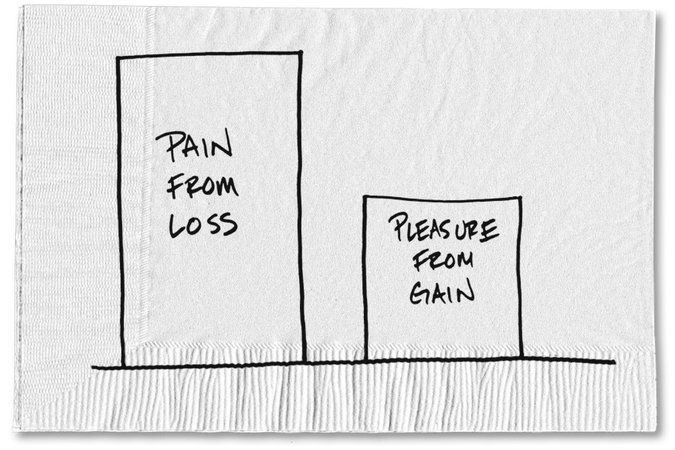
Loss aversion kicks in. Your brain focuses on what you might lose (comfort, predictability) rather than what you could gain.
Kahneman & Tversky's research shows we feel losses 2x stronger than equivalent gains.
Loss aversion kicks in. Your brain focuses on what you might lose (comfort, predictability) rather than what you could gain.
Kahneman & Tversky's research shows we feel losses 2x stronger than equivalent gains.
The "comfort zone" isn't actually comfortable.
It's a psychological prison where anxiety lives disguised as safety.
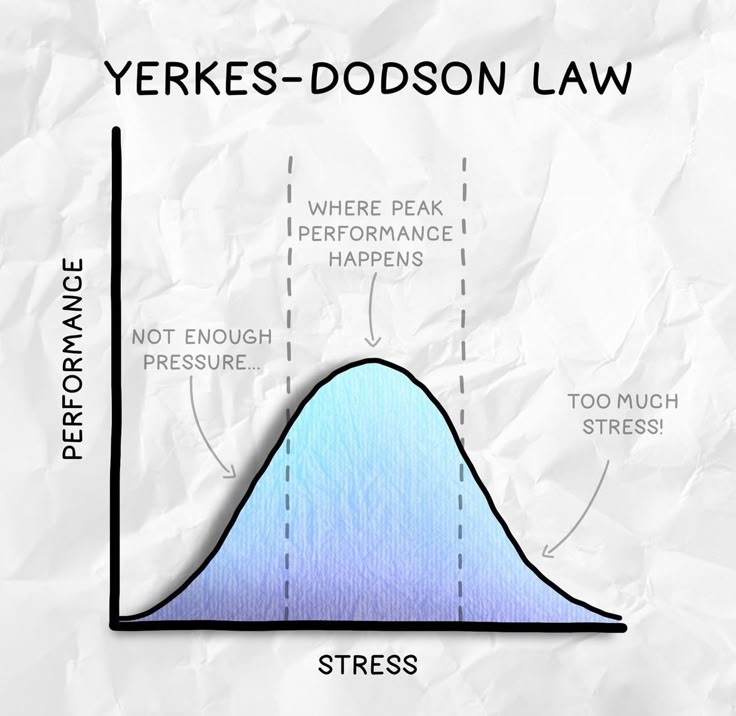
The Yerkes-Dodson Law proves moderate discomfort is optimal for growth and performance.
Staying "comfortable" is slowly killing your potential.
It's a psychological prison where anxiety lives disguised as safety.
The Yerkes-Dodson Law proves moderate discomfort is optimal for growth and performance.
Staying "comfortable" is slowly killing your potential.
Your brain can rewire itself at any age.
Neuroplasticity research by Norman Doidge showed "neurons that fire together wire together."
Every time you choose discomfort over comfort, you're literally building new neural pathways.
Neuroplasticity research by Norman Doidge showed "neurons that fire together wire together."
Every time you choose discomfort over comfort, you're literally building new neural pathways.
The biggest lie you tell yourself: "I'll change when I feel ready."
Research on hedonic adaptation shows the discomfort of change is temporary, usually lasting days or weeks, not months.
But the regret of staying stuck?
That lasts forever.
Research on hedonic adaptation shows the discomfort of change is temporary, usually lasting days or weeks, not months.
But the regret of staying stuck?
That lasts forever.
Actionable takeway?
According to Stanford professor BJ Fogg, start ridiculously small.
- Exercise? Do 2 push-ups.
- Write? Write one sentence.
- Meditate? Breathe deeply twice.
Tiny habits create massive momentum without triggering your comfort addiction.
According to Stanford professor BJ Fogg, start ridiculously small.
- Exercise? Do 2 push-ups.
- Write? Write one sentence.
- Meditate? Breathe deeply twice.
Tiny habits create massive momentum without triggering your comfort addiction.
Your self-efficacy determines everything.
Albert Bandura's research found that belief in your ability to change is the strongest predictor of actual change.
Ask yourself: "What's one small thing I've successfully changed before?"
Use that as evidence you can do it again.
Albert Bandura's research found that belief in your ability to change is the strongest predictor of actual change.
Ask yourself: "What's one small thing I've successfully changed before?"
Use that as evidence you can do it again.
That's why I created Anxiety Relief Transformation™ 3-month community. Mindfulness, philosophy, and art-ALL blended into a 90-day transformation journey you won't get anywhere else on the planet.
If you're interested, book a free discovery call with me, and we'll see if you're a fit for my life-transforming program.
calendly.com/lorwen_consult…
If you're interested, book a free discovery call with me, and we'll see if you're a fit for my life-transforming program.
calendly.com/lorwen_consult…
• • •
Missing some Tweet in this thread? You can try to
force a refresh