One concept I wish more people were aware of is the Tocqueville Effect.
Named for Alexis de Tocqueville, this concept describes the curious phenomenon by which people become more frustrated as problems are resolved:
As life gets better, people think it's getting worse!🧵
Named for Alexis de Tocqueville, this concept describes the curious phenomenon by which people become more frustrated as problems are resolved:
As life gets better, people think it's getting worse!🧵

You go to a supermarket and it's time to get some fruit.
Of course, when you go to pick your bananas and your berries, you want to pick the freshest stuff.
But if what's on display is a little less fresh than ideal, you might consider a speckled banana or squishier grapes OK.
Of course, when you go to pick your bananas and your berries, you want to pick the freshest stuff.
But if what's on display is a little less fresh than ideal, you might consider a speckled banana or squishier grapes OK.

This is natural and fine.
You know what's not fine?
Cops beatinging jaywalkers because the crime rate dropped.
With too few "assaults", more mild crimes might start getting treated like assaults, even if they shouldn't.
You know what's not fine?
Cops beatinging jaywalkers because the crime rate dropped.
With too few "assaults", more mild crimes might start getting treated like assaults, even if they shouldn't.

Freshness and assault can both be examples of the Tocqueville effect, or as it's been called in the scientific literature: prevalence-induced concept change.
If you need a real-world example, consider the concept of "microaggressions": with less racism, people have to invent it.
If you need a real-world example, consider the concept of "microaggressions": with less racism, people have to invent it.

Incredibly, we see this experimentally
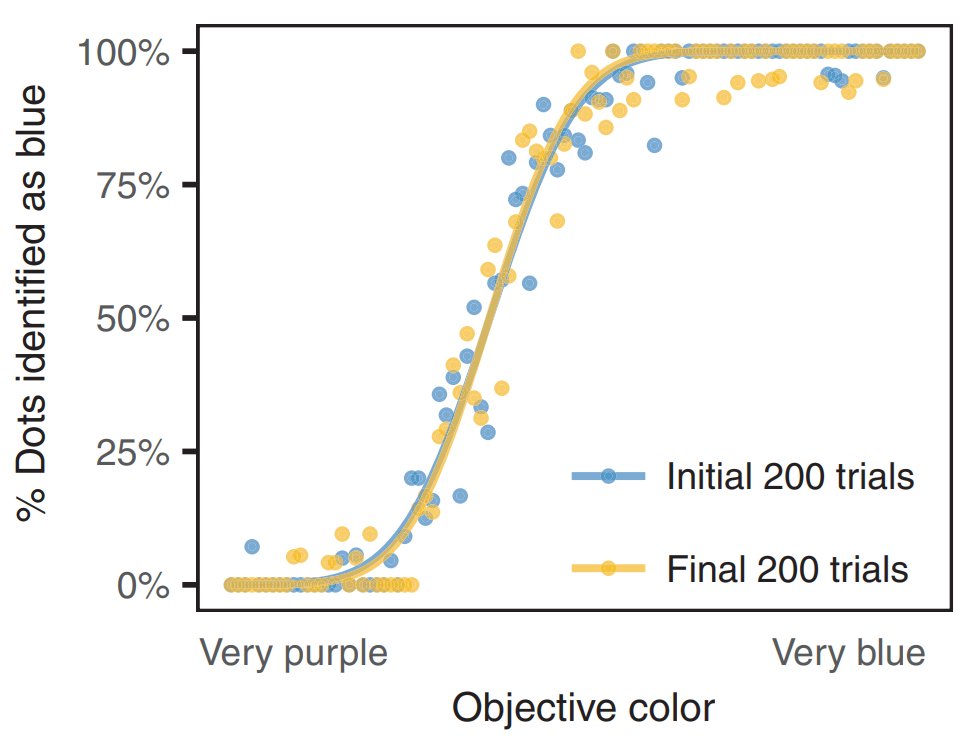
In this first trial, participants were asked to rank a series of 1000 dots that varied from very blue to very purple on a continuum, with a stable prevalence of each color throughout
Results for the first and last 200 trials were identical
In this first trial, participants were asked to rank a series of 1000 dots that varied from very blue to very purple on a continuum, with a stable prevalence of each color throughout
Results for the first and last 200 trials were identical
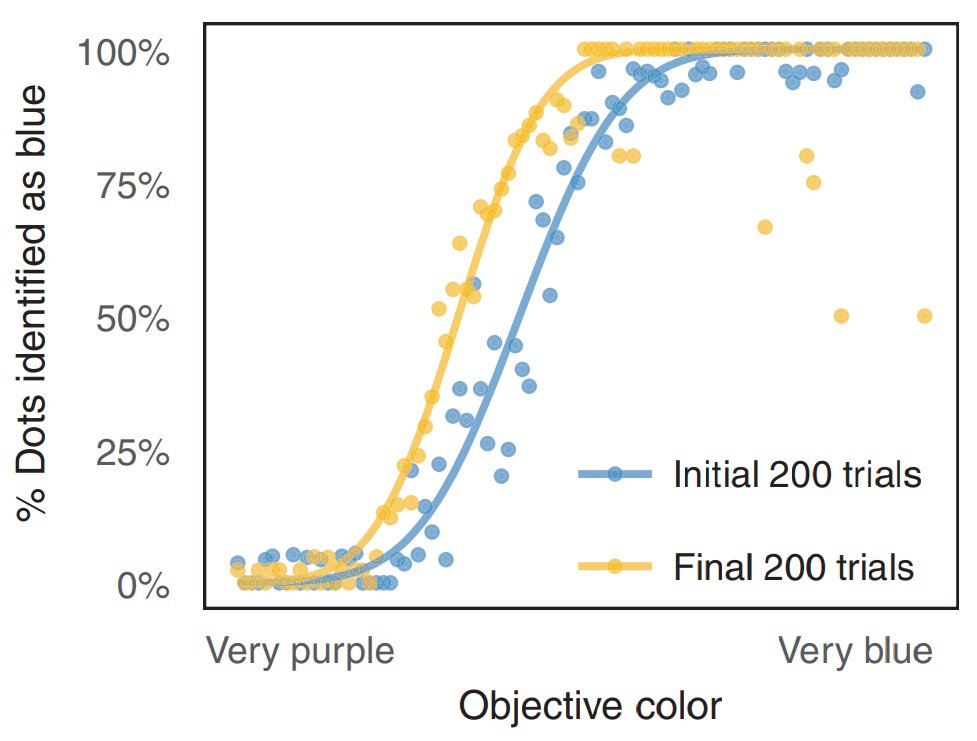
In this second trial, the researchers changed it up.
Now, the prevalence of blue dots would be decreased as the trial went on.
Notice what happened? People started seeing dots which they would've previously identified as purple as being blue instead.
Now, the prevalence of blue dots would be decreased as the trial went on.
Notice what happened? People started seeing dots which they would've previously identified as purple as being blue instead.
This is, frankly, amazing.
If you just shift the prevalence of something, people start identifying marginal things as it more often—objectively, literally in terms of what they classify the things they see with their eyes!
And this holds up in a fairly broad way.
If you just shift the prevalence of something, people start identifying marginal things as it more often—objectively, literally in terms of what they classify the things they see with their eyes!
And this holds up in a fairly broad way.
Researchers repeated this with different designs
In one, they prompted differently. In another, they asked people to stay consistent and paid for success. They changed the speed of color change, reversed the direction of the change...
Replicated each time!
In one, they prompted differently. In another, they asked people to stay consistent and paid for success. They changed the speed of color change, reversed the direction of the change...
Replicated each time!
But are we sure this applies to abstract concepts?
Yes!
In another trial, with photographs of people independently rated as more or less threatening displayed at stable prevalences, we get this:
Yes!
In another trial, with photographs of people independently rated as more or less threatening displayed at stable prevalences, we get this:

When the experiment was redone with a decreasing prevalence of threatening faces, the result held up remarkably well from the previous color experiment.
That is to say, participants started rating the same faces as more threatening.
That is to say, participants started rating the same faces as more threatening.

Rinse, repeat—Tocqueville evidently identified something very real a few hundred years ago.
And this works with even more complex concepts.
In this trial, participants played the role of reviewers on Institutional Review Boards, rating the ethicality of proposed studies.
And this works with even more complex concepts.
In this trial, participants played the role of reviewers on Institutional Review Boards, rating the ethicality of proposed studies.
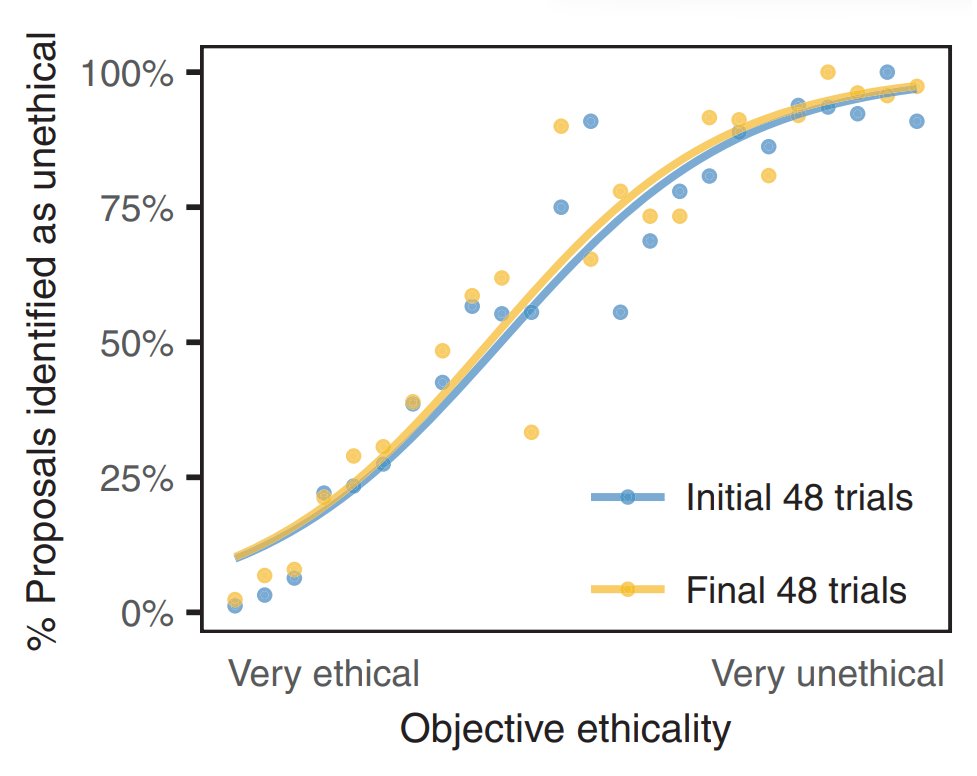
Reduce the prevalence of study ethicality (rated by outside raters until they agreed) and...
Bam! Same thing as before!
People start rating ethically neutral proposals are being unethical!
Bam! Same thing as before!
People start rating ethically neutral proposals are being unethical!
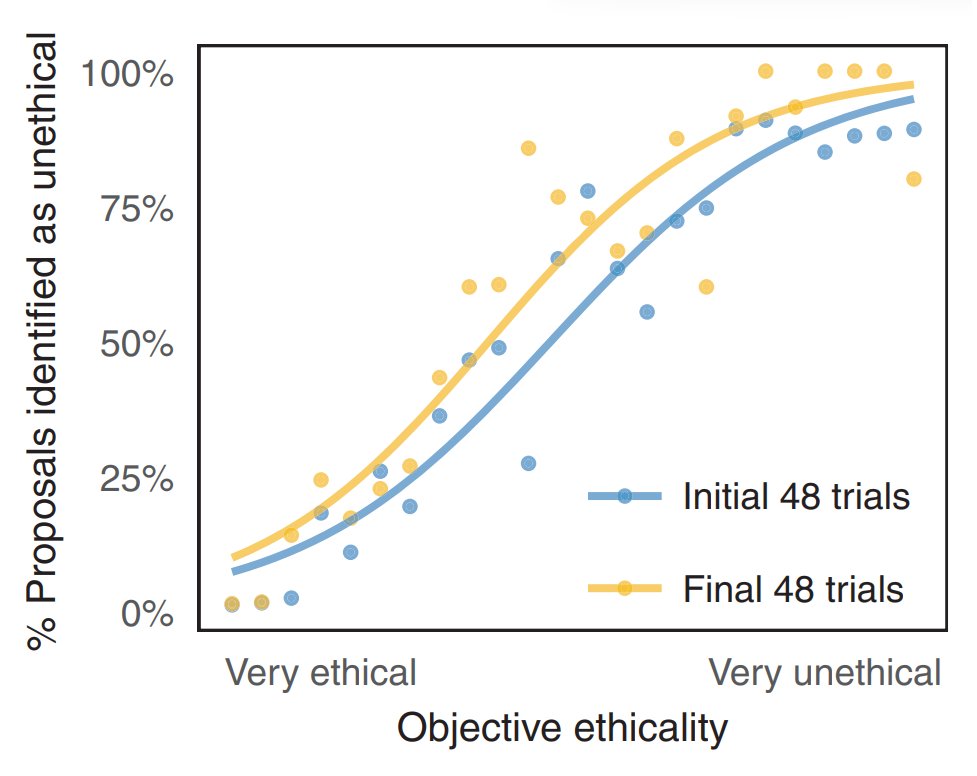
When I explained this to a friend, I told them that the most interesting thing about this was that there were individual differences in how much the effect appeared.
Some people could see prevalence change a bunch and be unaffected. Others shifted strongly. Keep that in mind!
Some people could see prevalence change a bunch and be unaffected. Others shifted strongly. Keep that in mind!
Now, I think you should be able to tell why I think this concept is so important and so neglected.
It is applicable to thinking about a huge number of issues.
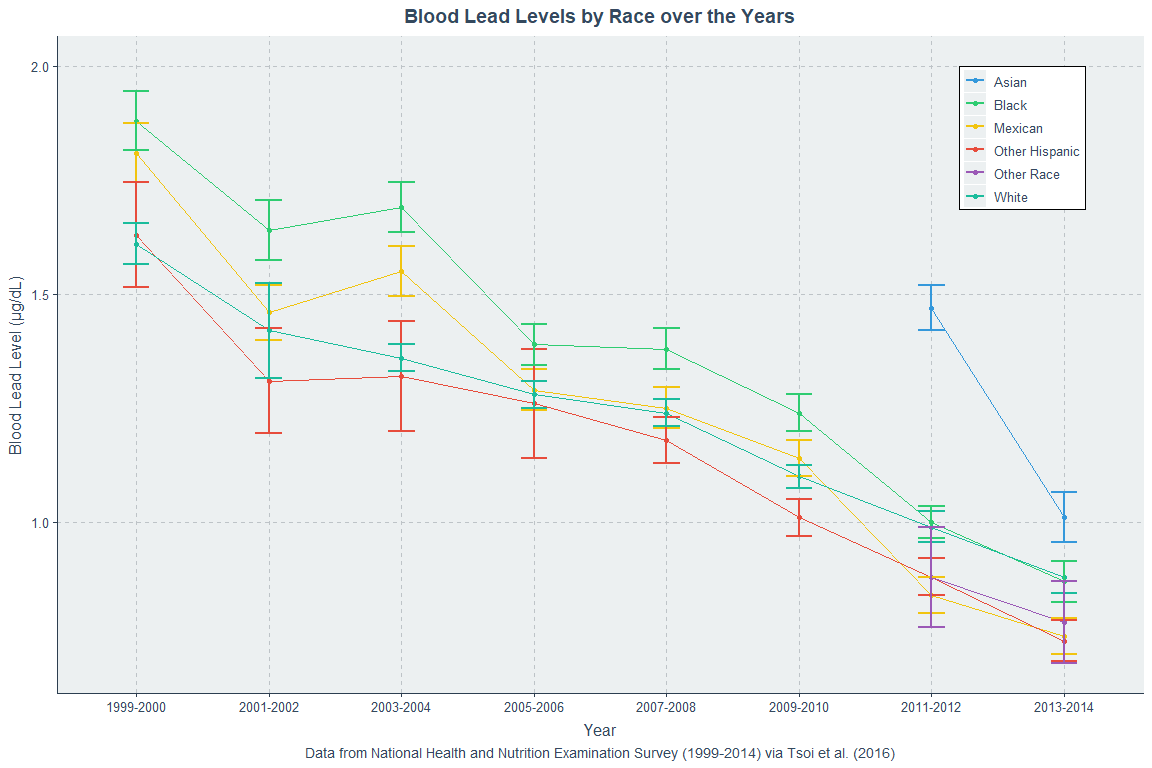
Take lead abatement. Blood lead levels keep falling, race differences are almost gone, and funders care more than ever!
It is applicable to thinking about a huge number of issues.
Take lead abatement. Blood lead levels keep falling, race differences are almost gone, and funders care more than ever!
Or take literacy.
We're at historical highs for literacy rates, so why should we be throwing more and more money, effort, and urgency at the tiny residual of people who are illiterate?
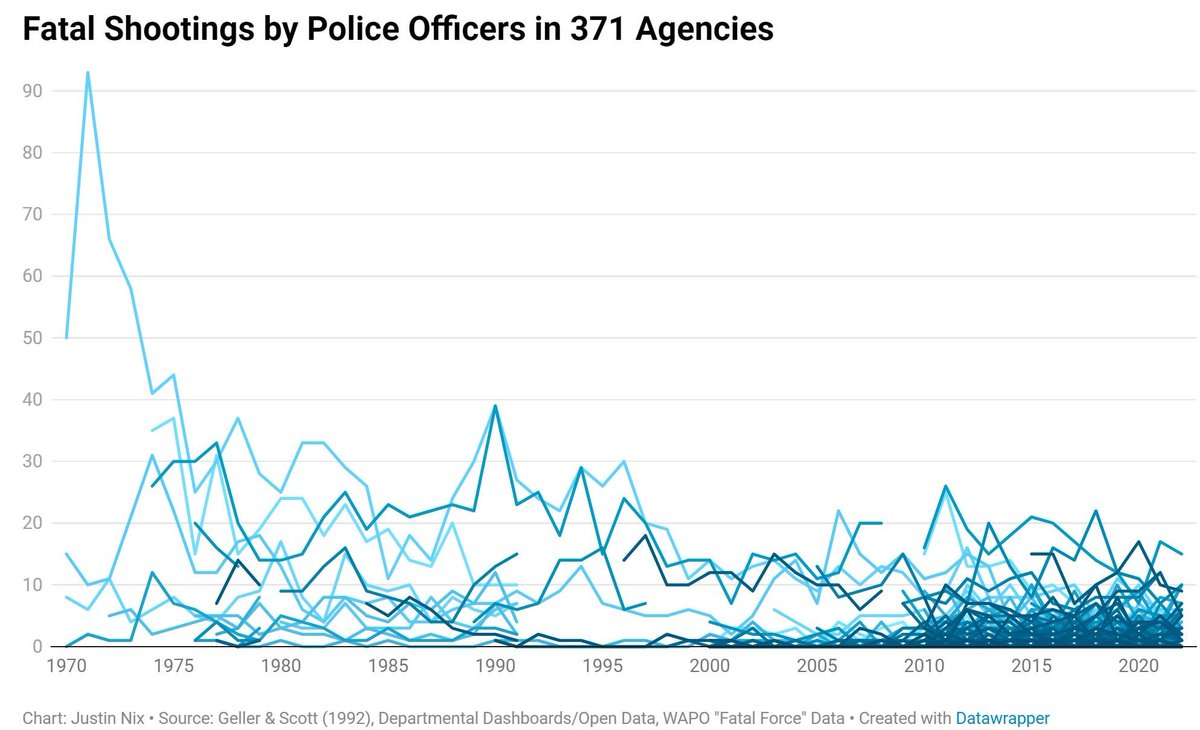
Or consider police shootings. They're way down, but public interest is way up.
We're at historical highs for literacy rates, so why should we be throwing more and more money, effort, and urgency at the tiny residual of people who are illiterate?
Or consider police shootings. They're way down, but public interest is way up.
Think about billionaires.
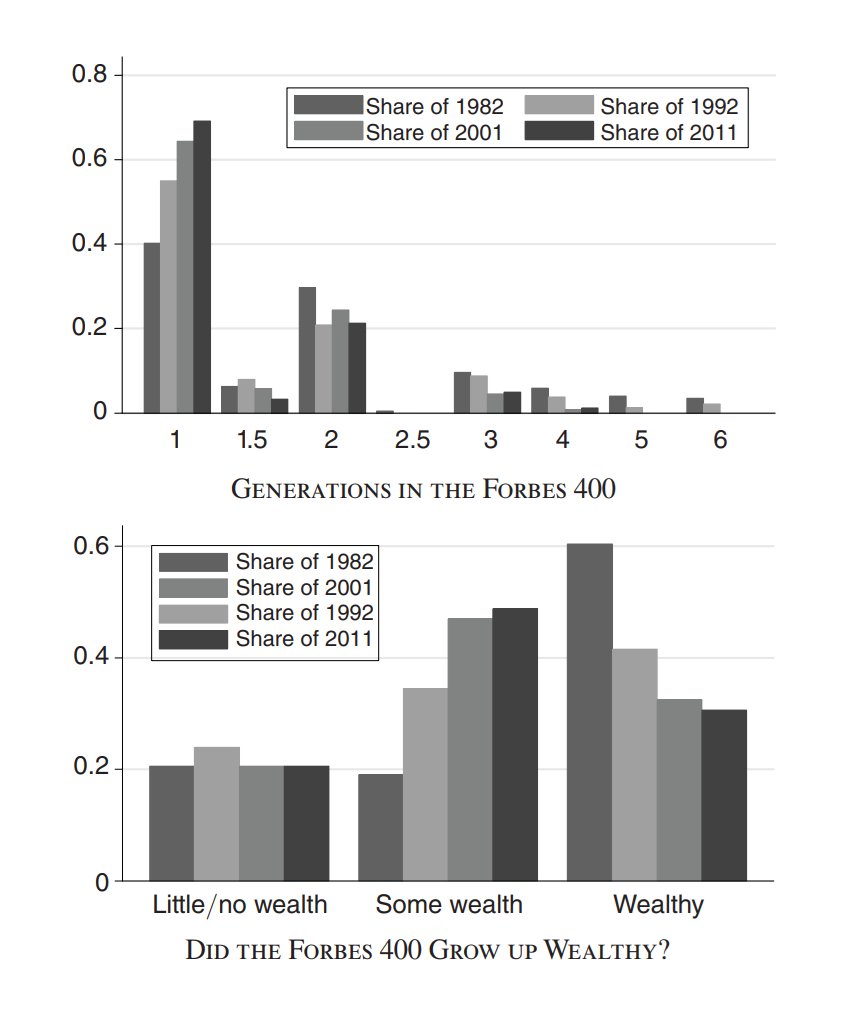
They're increasingly likely to be self-made men, but as a society, we've become increasingly likely to be worried about their unearned privileges and whatnot, when the truth is, we've been moving away from that at a breakneck pace.
They're increasingly likely to be self-made men, but as a society, we've become increasingly likely to be worried about their unearned privileges and whatnot, when the truth is, we've been moving away from that at a breakneck pace.
Human trafficking?
Slavery?
Racism?
These are all ills that have virtually vanished, but public outcry is pitched and tempers are flared, and even saying that we've basically beaten these issues (though problems remain!) is treated as denialism when it's just a fact!
Slavery?
Racism?
These are all ills that have virtually vanished, but public outcry is pitched and tempers are flared, and even saying that we've basically beaten these issues (though problems remain!) is treated as denialism when it's just a fact!
So much makes sense in light of the Tocqueville Effect.
As problems get smaller, the attention given to them must grow.
This is a personal problem for many, too. Have you ever noticed that activists refuse to claim victory? Many get stuck crusading for life.
As problems get smaller, the attention given to them must grow.
This is a personal problem for many, too. Have you ever noticed that activists refuse to claim victory? Many get stuck crusading for life.
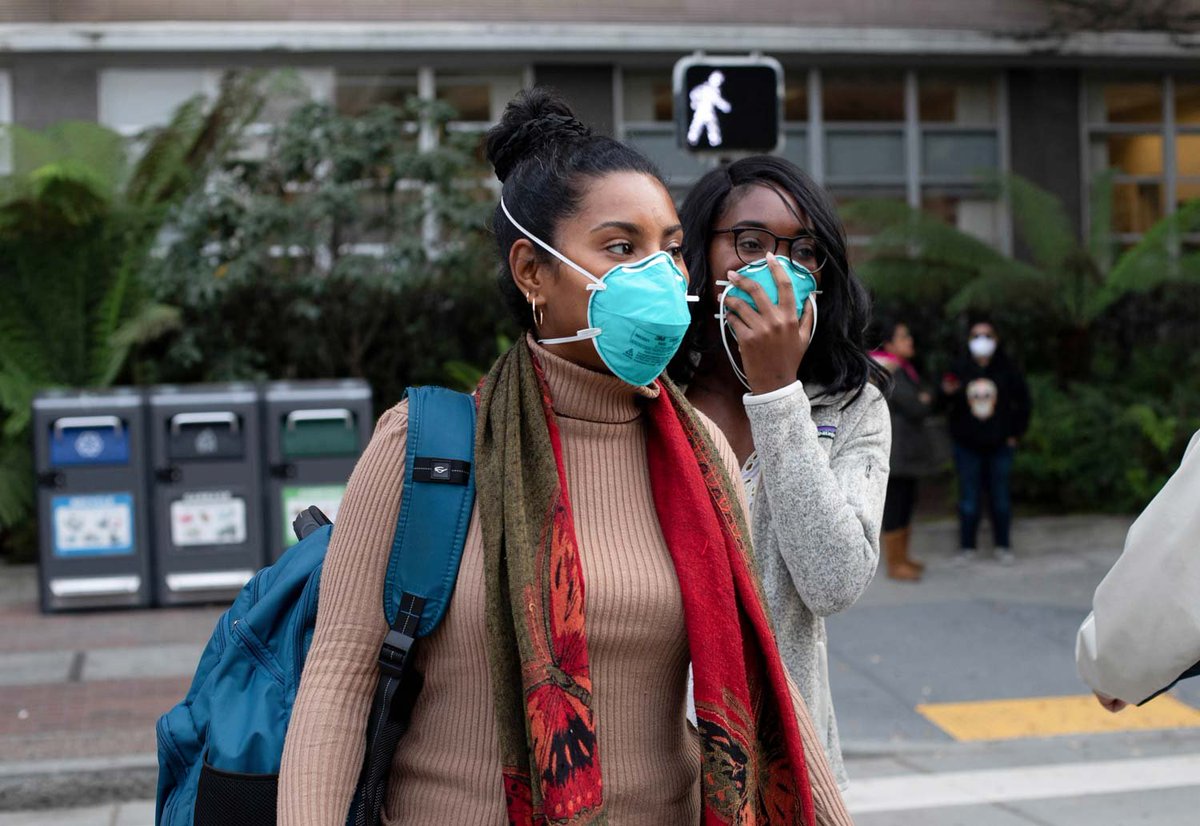
Imagine you're some HR bureaucrat tasked with fixing a problem at your company
If you manage it, you make the office a more hospitable place and you'll naturally start looking at smaller issues as evidence you're still needed, thanks to this effect—self-justification not needed!
If you manage it, you make the office a more hospitable place and you'll naturally start looking at smaller issues as evidence you're still needed, thanks to this effect—self-justification not needed!
Frankly, I think this is a source of a huge amount of modern pessimism.
Perhaps if people realized they were falling prey to this, that would help them to cheer up. Who knows?
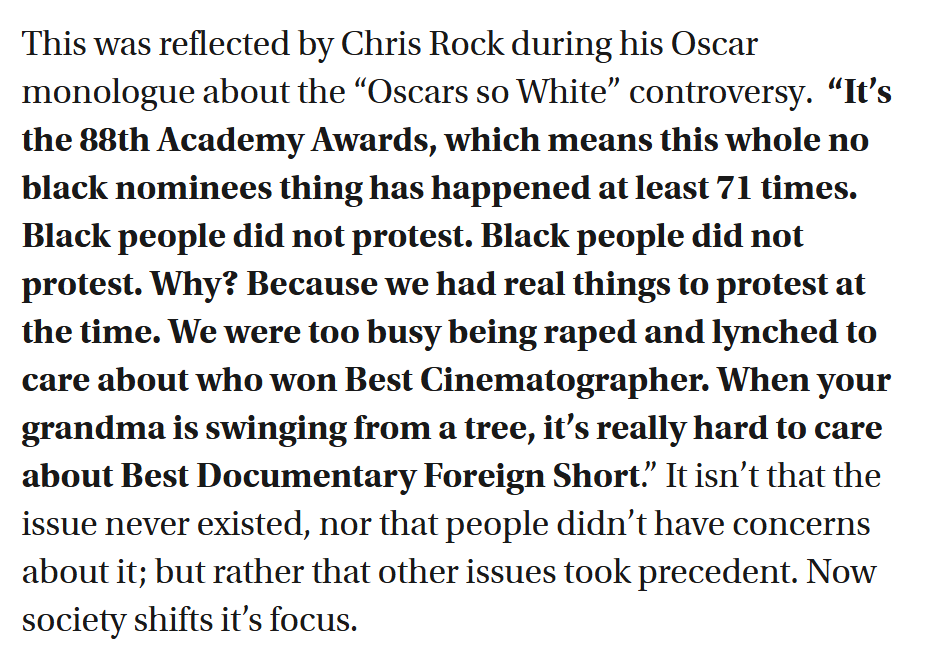
I'll leave you with some words from Chris Rock:
Perhaps if people realized they were falling prey to this, that would help them to cheer up. Who knows?
I'll leave you with some words from Chris Rock:
Sources:
en.wikipedia.org/wiki/Tocquevil…
science.org/doi/10.1126/sc…
cremieux.xyz/p/who-gets-exp…
cremieux.xyz/i/118965416/po…, cremieux.xyz/i/103294806/de…
aeaweb.org/articles?id=10… (see also: x.com/cremieuxrecuei…)
bigthink.com/culture-religi…
cato.org/policy-analysi…
P.S. I am aware that people in newer generations don't recognize the evil of the past. That matters, but it's different
en.wikipedia.org/wiki/Tocquevil…
science.org/doi/10.1126/sc…
cremieux.xyz/p/who-gets-exp…
cremieux.xyz/i/118965416/po…, cremieux.xyz/i/103294806/de…
aeaweb.org/articles?id=10… (see also: x.com/cremieuxrecuei…)
bigthink.com/culture-religi…
cato.org/policy-analysi…
P.S. I am aware that people in newer generations don't recognize the evil of the past. That matters, but it's different
P.P.S.
Lots of people have independently come up with the Tocqueville Effect in various forms.
Consider "Simon's Rule":
Lots of people have independently come up with the Tocqueville Effect in various forms.
Consider "Simon's Rule":

P.P.P.S.
Bodybuilder obsessing over that last little bit of fat on their sculpted stomach?
You guessed it: body dysmorphia as Tocqueville Effect!
Bodybuilder obsessing over that last little bit of fat on their sculpted stomach?
You guessed it: body dysmorphia as Tocqueville Effect!
• • •
Missing some Tweet in this thread? You can try to
force a refresh