How India’s S-400 Shot Down Pakistan’s Saab 2000 AEW&C – A Minute-by-Minute Timeline
1. On May 8, 2025, during India’s Operation Sindoor, the Indian Air Force achieved a historic feat by using its S-400 Triumf surface-to-air missile system to shoot down a Pakistan Air Force Saab 2000 Erieye AEW&C aircraft at a record-breaking range of 314 kilometers.
This marked the longest confirmed SAM kill in combat history, showcasing the S-400’s advanced capabilities and India’s layered air defence strategy. Below is a minute-by-minute timeline of how this high-stakes engagement likely unfolded, based on the S-400’s operational mechanics and the context of Operation Sindoor.
T-10:00 (22:50 IST, May 8, 2025) – Detection and Tracking
Location: An S-400 battery commanded by Group Captain Animesh Patni is positioned near the India-Pakistan border in Punjab or Rajasthan. It is on high alert as part of Operation Sindoor, following the terrorist attack in Pahalgam.
Action: The S-400’s 91N6E Big Bird radar, capable of detecting targets up to 600 km away, identifies a high-value airborne target – a PAF Saab 2000 Erieye AEW&C – operating approximately 314 km away, deep within Pakistani airspace near Dinga, Punjab. The radar’s high-resolution tracking confirms the aircraft’s altitude (around 8-10 km) and slow cruising speed (typical for AEW&C platforms).
Context: The Saab 2000, equipped with the Erieye radar, is a critical asset for the PAF, providing real-time situational awareness and directing fighter operations. Its presence suggests Pakistan is coordinating a response to Indian strikes. The IAF, aware of its strategic importance, prioritises it as a target.
1. On May 8, 2025, during India’s Operation Sindoor, the Indian Air Force achieved a historic feat by using its S-400 Triumf surface-to-air missile system to shoot down a Pakistan Air Force Saab 2000 Erieye AEW&C aircraft at a record-breaking range of 314 kilometers.
This marked the longest confirmed SAM kill in combat history, showcasing the S-400’s advanced capabilities and India’s layered air defence strategy. Below is a minute-by-minute timeline of how this high-stakes engagement likely unfolded, based on the S-400’s operational mechanics and the context of Operation Sindoor.
T-10:00 (22:50 IST, May 8, 2025) – Detection and Tracking
Location: An S-400 battery commanded by Group Captain Animesh Patni is positioned near the India-Pakistan border in Punjab or Rajasthan. It is on high alert as part of Operation Sindoor, following the terrorist attack in Pahalgam.
Action: The S-400’s 91N6E Big Bird radar, capable of detecting targets up to 600 km away, identifies a high-value airborne target – a PAF Saab 2000 Erieye AEW&C – operating approximately 314 km away, deep within Pakistani airspace near Dinga, Punjab. The radar’s high-resolution tracking confirms the aircraft’s altitude (around 8-10 km) and slow cruising speed (typical for AEW&C platforms).
Context: The Saab 2000, equipped with the Erieye radar, is a critical asset for the PAF, providing real-time situational awareness and directing fighter operations. Its presence suggests Pakistan is coordinating a response to Indian strikes. The IAF, aware of its strategic importance, prioritises it as a target.

2. T-08:00 (22:52 IST) – Threat Assessment and Command Decision
Action: The S-400’s command and control centre, integrated with India’s broader Integrated Air Defence System (IADS), processes radar data and classifies the Saab 2000 as a high-priority threat due to its role as a force multiplier. The IAF’s Air Defence Command, overseen by senior officers, authorises engagement to disrupt Pakistan’s command-and-control capabilities.
Details: The S-400’s 55K6E command post correlates data from multiple radars (including the 92N6E Grave Stone for fire control) to ensure precise targeting. The system’s automation reduces human error, but the decision to fire is cleared at a high level given the target’s significance and the risk of escalation.
(Picture: Inside the Saab 2000 AEW&C aircraft. These people never knew what hit them.)
Action: The S-400’s command and control centre, integrated with India’s broader Integrated Air Defence System (IADS), processes radar data and classifies the Saab 2000 as a high-priority threat due to its role as a force multiplier. The IAF’s Air Defence Command, overseen by senior officers, authorises engagement to disrupt Pakistan’s command-and-control capabilities.
Details: The S-400’s 55K6E command post correlates data from multiple radars (including the 92N6E Grave Stone for fire control) to ensure precise targeting. The system’s automation reduces human error, but the decision to fire is cleared at a high level given the target’s significance and the risk of escalation.
(Picture: Inside the Saab 2000 AEW&C aircraft. These people never knew what hit them.)

3. T-06:00 (22:54 IST) – Missile Selection and Preparation
Action: The S-400 battery prepares to launch a 40N6 long-range missile, designed to engage targets up to 400 km away with a 143 kg high-explosive fragmentation warhead. The missile is loaded onto one of the battery’s 5P85TE2 launchers, and the system calculates the optimal intercept trajectory, factoring in the Saab 2000’s speed (approximately 600 kph) and altitude.
Risk Factor: The S-400 unit is positioned close to the border, within range of Pakistani artillery, making rapid deployment and firing critical to avoid counter-detection.
Action: The S-400 battery prepares to launch a 40N6 long-range missile, designed to engage targets up to 400 km away with a 143 kg high-explosive fragmentation warhead. The missile is loaded onto one of the battery’s 5P85TE2 launchers, and the system calculates the optimal intercept trajectory, factoring in the Saab 2000’s speed (approximately 600 kph) and altitude.
Risk Factor: The S-400 unit is positioned close to the border, within range of Pakistani artillery, making rapid deployment and firing critical to avoid counter-detection.

4. T-04:00 (22:56 IST) – Final Confirmation and Lock-On
Action: The S-400’s Grave Stone radar achieves a firm lock-on, continuously updating the target’s position. The system’s ability to track up to 80 targets simultaneously ensures no interference from other PAF assets, such as fighters or drones, which may be operating nearby.
Context: The Saab 2000, unaware of the lock-on, continues its orbit, likely coordinating PAF fighter jets or monitoring Indian airspace. Its radar emissions make it a juicy target for the S-400’s passive detection systems. (Passive radars can track targets without emitting signals that could reveal their own presence and location).
Action: The S-400’s Grave Stone radar achieves a firm lock-on, continuously updating the target’s position. The system’s ability to track up to 80 targets simultaneously ensures no interference from other PAF assets, such as fighters or drones, which may be operating nearby.
Context: The Saab 2000, unaware of the lock-on, continues its orbit, likely coordinating PAF fighter jets or monitoring Indian airspace. Its radar emissions make it a juicy target for the S-400’s passive detection systems. (Passive radars can track targets without emitting signals that could reveal their own presence and location).
5. T-02:00 (22:58 IST) – Missile Launch
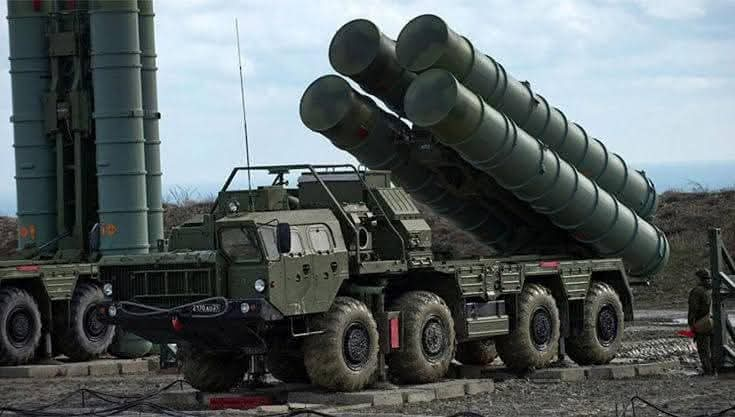
Action: The S-400 fires a 40N6 missile from its mobile launcher. The missile, travelling at Mach 12 (approx 14,700 kph), climbs rapidly to an optimal altitude for its semi-active radar homing phase. The launch is discreet, with the road-mobile S-400 battery prepared to relocate immediately to avoid counterstrikes.
Environment: Nighttime conditions and the Saab 2000’s distance reduce the likelihood of visual detection by Pakistani forces. The missile’s onboard radar begins tracking the target as it approaches.
Action: The S-400 fires a 40N6 missile from its mobile launcher. The missile, travelling at Mach 12 (approx 14,700 kph), climbs rapidly to an optimal altitude for its semi-active radar homing phase. The launch is discreet, with the road-mobile S-400 battery prepared to relocate immediately to avoid counterstrikes.
Environment: Nighttime conditions and the Saab 2000’s distance reduce the likelihood of visual detection by Pakistani forces. The missile’s onboard radar begins tracking the target as it approaches.
6. T-00:30 (22:59:30 IST) – Mid-Course Guidance
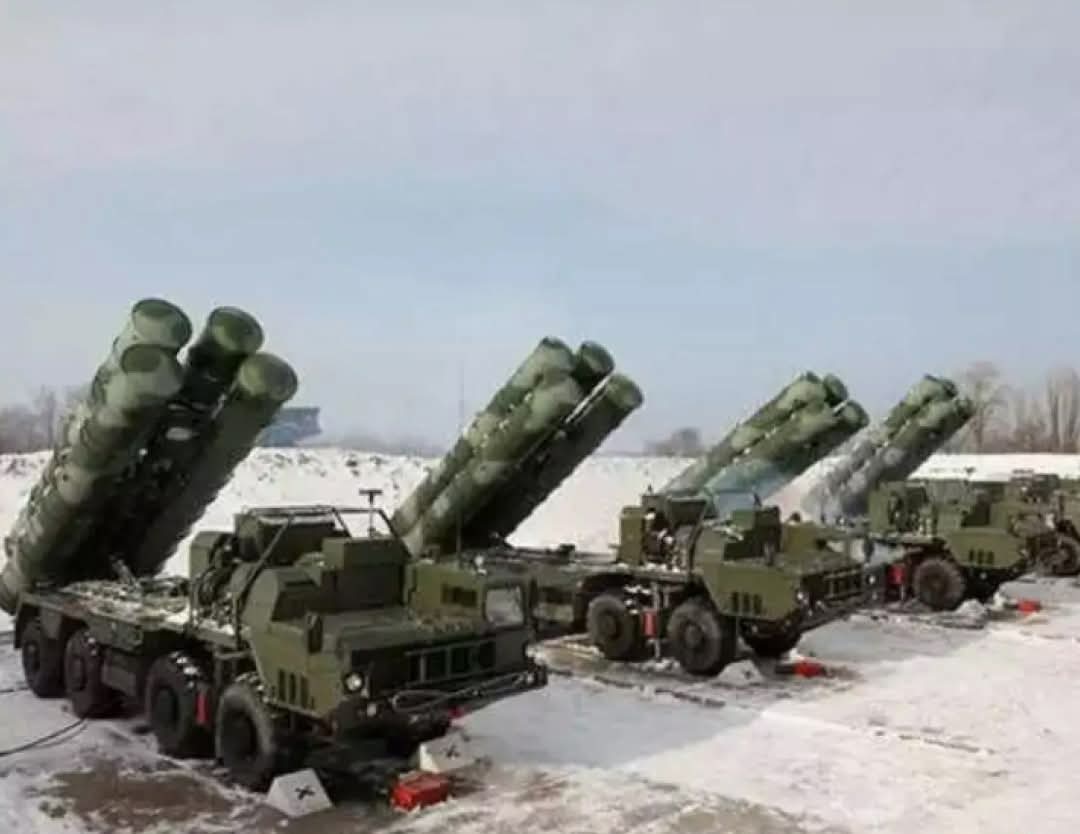
Action: The 40N6 missile, now in its mid-course phase, receives continuous updates from the S-400’s ground-based radars via data link. The missile adjusts its trajectory to account for any evasive manoeuvres by the Saab 2000, though the aircraft’s slow speed and large radar cross-section make it an easier target compared to fighters.
PAF Response: Theoretically the Saab 2000’s crew may detect the incoming missile via onboard warning systems, but the missile’s speed and the aircraft’s limited maneuverability leave little time for effective countermeasures. The crew probably do not get time to even say their prayers.
Action: The 40N6 missile, now in its mid-course phase, receives continuous updates from the S-400’s ground-based radars via data link. The missile adjusts its trajectory to account for any evasive manoeuvres by the Saab 2000, though the aircraft’s slow speed and large radar cross-section make it an easier target compared to fighters.
PAF Response: Theoretically the Saab 2000’s crew may detect the incoming missile via onboard warning systems, but the missile’s speed and the aircraft’s limited maneuverability leave little time for effective countermeasures. The crew probably do not get time to even say their prayers.
7. T-00:00 (23:00 IST) – Intercept and Destruction
Action: The 40N6 missile detonates its 143 kg warhead in proximity to the Saab 2000, shredding the aircraft with a high-explosive fragmentation blast. The impact occurs at approximately 314 km from the launch site, over Dinga. A massive fireball, later captured by local citizens, confirms the destruction.
Outcome: The Saab 2000 is obliterated, severely degrading the PAF’s airborne surveillance and command capabilities. The loss of this critical asset disrupts Pakistan’s ability to coordinate air operations.
T+02:00 (23:02 IST) – Post-Engagement Actions
Action: The S-400 battery relocates to avoid Pakistani retaliation, leveraging its road-mobile design. The IAF’s command centre assesses the strike’s success using satellite imagery and intercepted PAF communications, confirming the kill.
Strategic Impact: The engagement, part of a broader campaign that included a Brahmos missile strike on another AEW&C at Bholari airbase, cripples Pakistan’s AEW&C fleet, with two of nine platforms lost.
Aftermath and Significance
The S-400’s 314-km kill demonstrates its ability to create an anti-access/area-denial (A2AD) zone, forcing enemy aircraft to operate far from Indian borders.
This engagement, validated by Indian media and international analysts, underscores the system’s precision and India’s strategic foresight in acquiring it despite US pressure.
The loss of the Saab 2000, combined with other strikes during Operation Sindoor, signals India’s growing air defence dominance over Pakistan.
As India considers acquiring the even more potent S-500 Prometheus from Russia, its air defence shield - an indigenous Iron Dome - is poised to become even more formidable.
Ends
Action: The 40N6 missile detonates its 143 kg warhead in proximity to the Saab 2000, shredding the aircraft with a high-explosive fragmentation blast. The impact occurs at approximately 314 km from the launch site, over Dinga. A massive fireball, later captured by local citizens, confirms the destruction.
Outcome: The Saab 2000 is obliterated, severely degrading the PAF’s airborne surveillance and command capabilities. The loss of this critical asset disrupts Pakistan’s ability to coordinate air operations.
T+02:00 (23:02 IST) – Post-Engagement Actions
Action: The S-400 battery relocates to avoid Pakistani retaliation, leveraging its road-mobile design. The IAF’s command centre assesses the strike’s success using satellite imagery and intercepted PAF communications, confirming the kill.
Strategic Impact: The engagement, part of a broader campaign that included a Brahmos missile strike on another AEW&C at Bholari airbase, cripples Pakistan’s AEW&C fleet, with two of nine platforms lost.
Aftermath and Significance
The S-400’s 314-km kill demonstrates its ability to create an anti-access/area-denial (A2AD) zone, forcing enemy aircraft to operate far from Indian borders.
This engagement, validated by Indian media and international analysts, underscores the system’s precision and India’s strategic foresight in acquiring it despite US pressure.
The loss of the Saab 2000, combined with other strikes during Operation Sindoor, signals India’s growing air defence dominance over Pakistan.
As India considers acquiring the even more potent S-500 Prometheus from Russia, its air defence shield - an indigenous Iron Dome - is poised to become even more formidable.
Ends

• • •
Missing some Tweet in this thread? You can try to
force a refresh