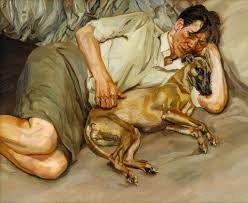
Lucian Freud didn’t just paint people.
He entered their psyche.
Here’s the untold story of Freud’s great-grandson...
And, what he reveals about your anxiety...🧵
He entered their psyche.
Here’s the untold story of Freud’s great-grandson...
And, what he reveals about your anxiety...🧵


Born in 1922, Lucian Freud inherited
Sigmund Freud's passion for emotions and the unconscious.
But he chose NOT to study people in the consulting room.
He chose to paint them in his studio.
Sigmund Freud's passion for emotions and the unconscious.
But he chose NOT to study people in the consulting room.
He chose to paint them in his studio.

His paintings revealed unspoken feelings that dripped off the canvas.
They revealed loneliness and an inner preoccupation.
Profound psychological disturbance is visible in the body.
The result: viewers were both riveted and repelled by his work.
They revealed loneliness and an inner preoccupation.
Profound psychological disturbance is visible in the body.
The result: viewers were both riveted and repelled by his work.
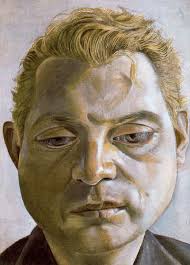
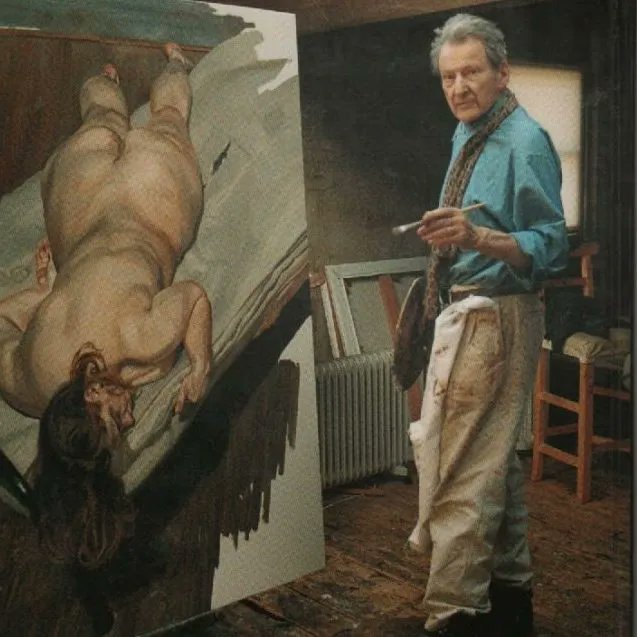
In contrast, prominent painters of his time pursued clean abstraction and polite realism.
Not Freud.
He told the raw truth:
1. sagging skin
2. tired eyes
3. tangled limbs
4. disfigured mouths
Not Freud.
He told the raw truth:
1. sagging skin
2. tired eyes
3. tangled limbs
4. disfigured mouths
1. The sorrow of missed opportunities.
2. Sadness of forgotten promises.
3. Or, the anguish of an unfulfilled life.
--all written in the bodies of his models.
2. Sadness of forgotten promises.
3. Or, the anguish of an unfulfilled life.
--all written in the bodies of his models.
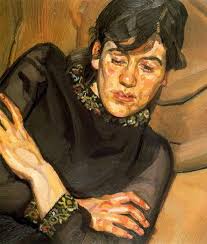
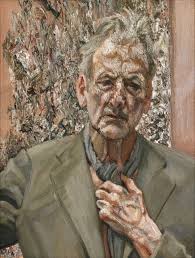
Standing for hours in front of his easel.
Layering paint thickly on the canvas...
Every brushstroke carried the weight of skin, gravity, and breath.
Layering paint thickly on the canvas...
Every brushstroke carried the weight of skin, gravity, and breath.
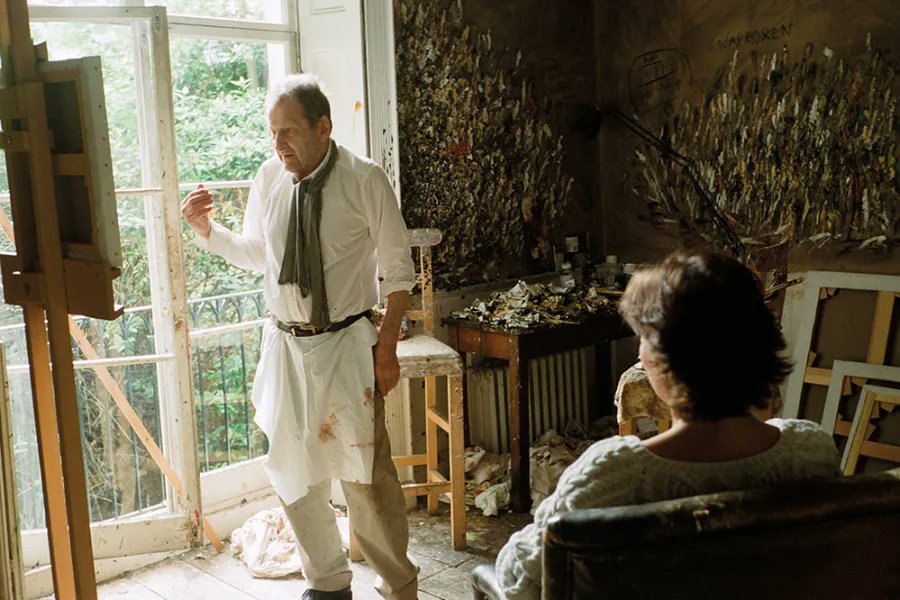
This is why his paintings buzz.
Not because they look perfect...
but because they carry the nervous system’s blueprint:
1. tension
2. release
3. stillness
4. vulnerability
Not because they look perfect...
but because they carry the nervous system’s blueprint:
1. tension
2. release
3. stillness
4. vulnerability
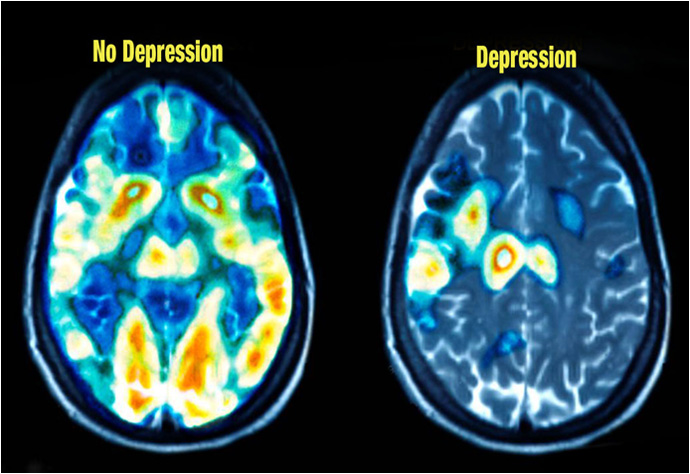
Neuroscience now shows what Freud seemed to know intuitively:
Human connection—whether in therapy, art, or conversation—activates three core brain networks:
• The Default Mode Network (DMN)
• The Executive Control Network (ECN)
• The Salience Network (SN)
Human connection—whether in therapy, art, or conversation—activates three core brain networks:
• The Default Mode Network (DMN)
• The Executive Control Network (ECN)
• The Salience Network (SN)
The Default Mode Network (DMN) is the imagination space.
Memory, daydream, narrative.
In Freud’s paintings, the DMN hums:
You start wondering about the sitter’s past…
The quiet tension in the room…
The relationship between artist and subject.
Memory, daydream, narrative.
In Freud’s paintings, the DMN hums:
You start wondering about the sitter’s past…
The quiet tension in the room…
The relationship between artist and subject.
The Executive Control Network (ECN) is about decision-making and precision.
Freud’s ECN was relentless—his long sittings, his surgical adjustments to composition, his editing until the piece felt inevitable.
Freud’s ECN was relentless—his long sittings, his surgical adjustments to composition, his editing until the piece felt inevitable.
The Salience Network (SN) detects what’s emotionally and bodily relevant.
•The sheen of sweat
•The slump of posture
•The micro-expression of guardedness
•
Your body says:
Pay attention.
•The sheen of sweat
•The slump of posture
•The micro-expression of guardedness
•
Your body says:
Pay attention.
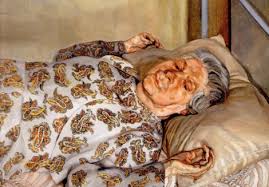
When these three networks are in harmony—SN, ECN, DMN—we feel present, focused, and deeply connected.
This integration is achieved through deep meditation.
It's the feeling of being embodied, relational, imaginative, and present.
The result: a nervous system that can hold complexity without panic.
This integration is achieved through deep meditation.
It's the feeling of being embodied, relational, imaginative, and present.
The result: a nervous system that can hold complexity without panic.
Here’s the leap:
Freud’s paintings are neural training grounds.
They ask us to notice the body (SN), sustain attention (ECN), and imagine the inner life (DMN) of the person—ALL at the same time.
Freud’s paintings are neural training grounds.
They ask us to notice the body (SN), sustain attention (ECN), and imagine the inner life (DMN) of the person—ALL at the same time.
This is exactly the principle behind my Anxiety Relief Transformation (ART) method.
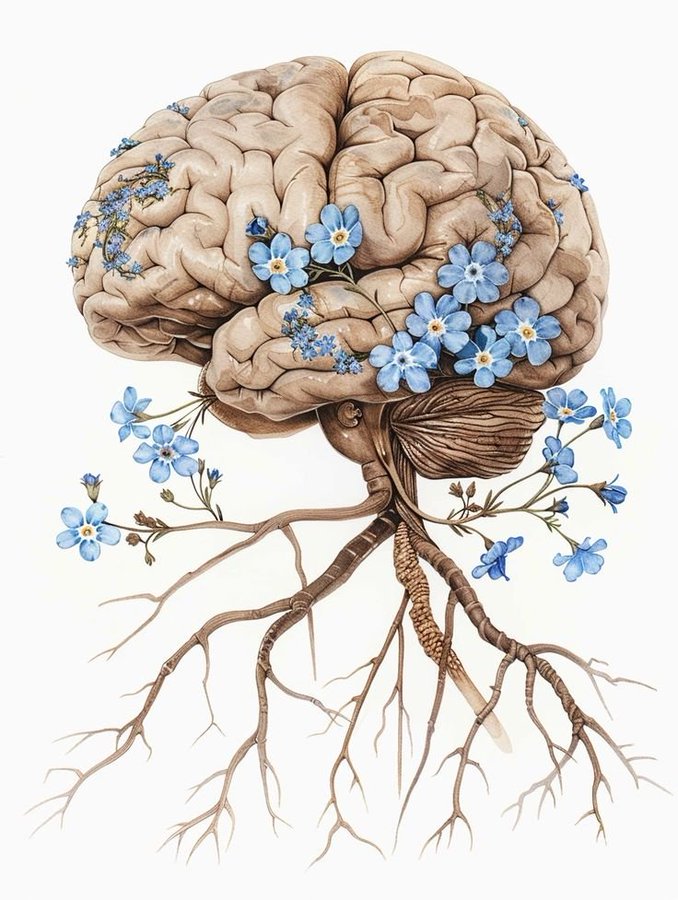
In ART, we use creative expression along with psychoanalysis and walking without devices to activate and integrate these 3 neural networks.
In ART, we use creative expression along with psychoanalysis and walking without devices to activate and integrate these 3 neural networks.
Why?
Because anxiety often happens when the networks are out of sync.
1. The SN is overfiring (“danger!”)
2. The DMN floods with catastrophic imagery
3. And, the ECN can’t hold a steady focus.
Because anxiety often happens when the networks are out of sync.
1. The SN is overfiring (“danger!”)
2. The DMN floods with catastrophic imagery
3. And, the ECN can’t hold a steady focus.
Lucian Freud’s art was never just about oil painting.
And maybe, like him, the real work of our lives isn’t just about our jobs or looking good.
It's about:
1. Being seen.
2. Being present.
3. Feeling grounded.
And maybe, like him, the real work of our lives isn’t just about our jobs or looking good.
It's about:
1. Being seen.
2. Being present.
3. Feeling grounded.
If you're feeling helpless because you know what to do, but can't access the support to do it, book a free discovery call with me.
calendly.com/lorwen_consult…
calendly.com/lorwen_consult…
If this resonated, here’s a related thread I wrote earlier this year ⬇️
https://x.com/LORWEN108/status/1954180965032681602
• • •
Missing some Tweet in this thread? You can try to
force a refresh