There are roughly 1.2 million "foreign students" in Australia (4.4% of the Australian population), only 500,000 of which are actually studying. The whole institution has effectively turned into a backdoor UberEats visa. A case study in the problems with expanding student visas.
In 2025, "student visas" in the Anglosphere have effectively become a backdoor to the labor market. The problem is worst in Canada, followed closely by Australia, Britain, and New Zealand, but it's a problem in the US too (OPT), and we have birthright citizenship.
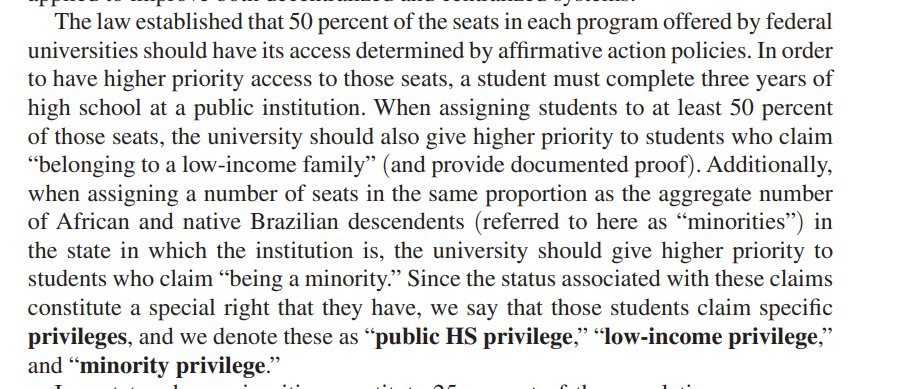
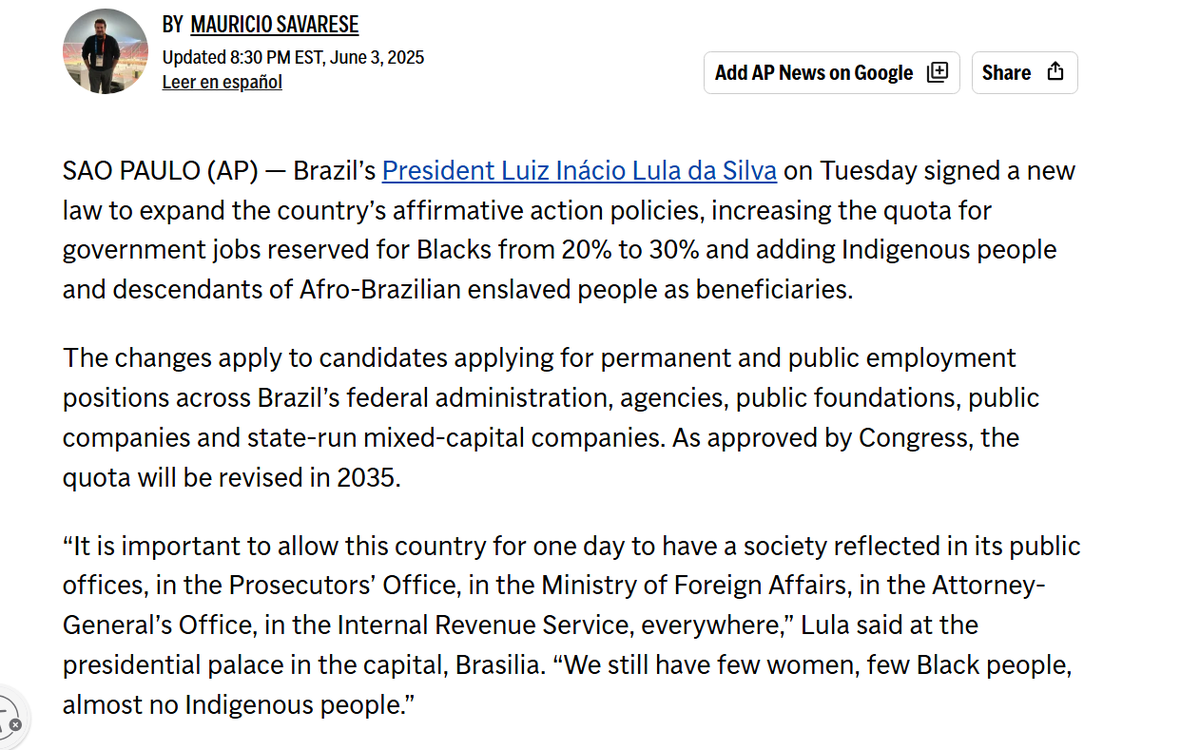
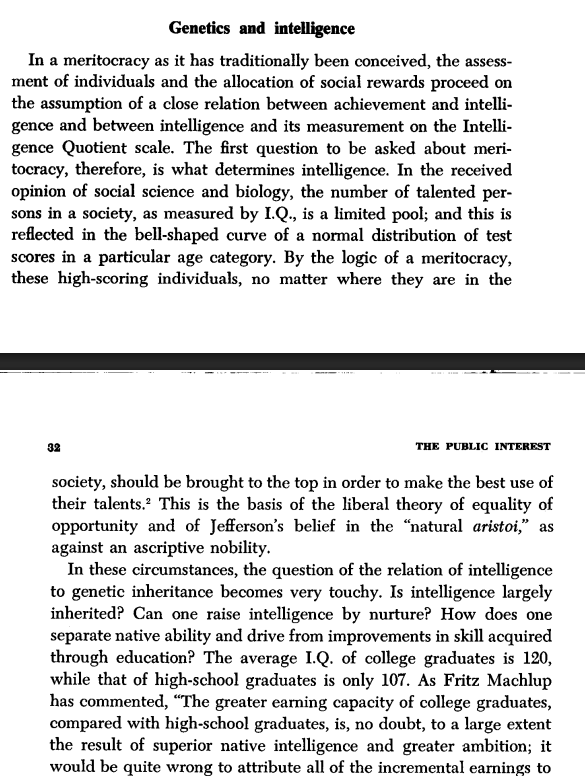
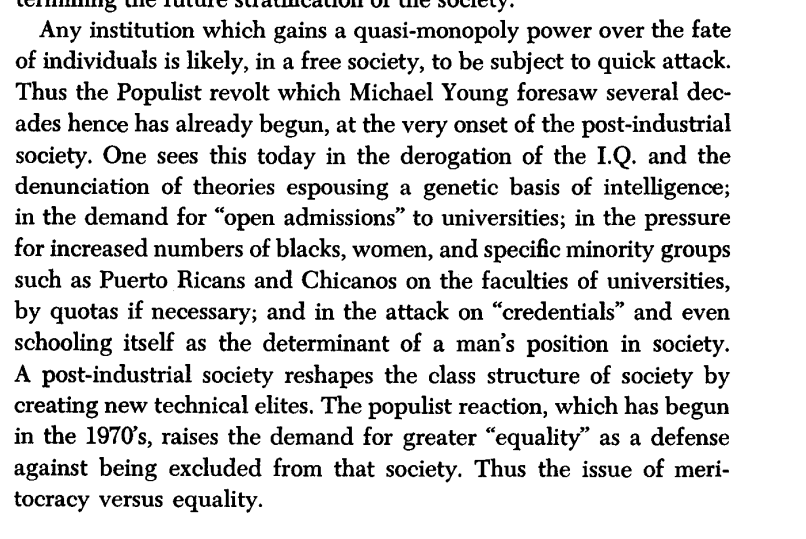
I want to break the impression that Affirmative Action/DEI began in 2014 or is limited to school admissions and a handful of infamously left-wing fields. Here are some excerpts from chapter 4 of the 1992 book "Paved With Good Intentions." First, firefighting.
Police, firefighting, sanitation work, federal civil service. All public fields throwing out tests because blacks scored lower. These fields don't have market competition, so eliminating these tends to make them very dysfunctional.
Court order whites be fired first during teacher cuts, school boards who did not meet racial targets suspended.
Brief thread on human capital, education, and skilled immigration. The major source of human capital is on-the-job experience; the main function of education is getting your foot in the door for your first job.
There's a market failure here wherein firms don't invest in training because a trained worker can then easily leave, instead electing to only hire people who can already do the job (hence all the "entry level: 5 years experience required" postings).
There's a huge entry-level job bottleneck. Entry level jobs, and not education, are the major source of skilled workers in a field, hence why you can have many grads not employed in their chosen field and a 'shortage' simultaneously.
Argument against doctrinaire free trade: (1) labor market scarring (2) loss of human capital (skills learned on the job, not schooling) (3) loss of physical capital (machines) (4) allocative/Ricardian benefits are a one-time windfall, while industry has high productivity gains.
Note: all of these arguments are common in economics literature, just not typically presented to the public or used in the static models used to argue for free-trade agreements. Also note that these are actually args against *deindustrialization* not free trade per se.
Personally, my response to these arguments would be crushing what's left of unions, deregulation in certain areas, and trying to strangle the worthless parts of higher ed rather than tariffs.
The Immigration Act of 1990, which greatly increased skilled immigration to the US (in part by creating the H-1B visa), led native-born Americans to shift out of STEM and into marketing and management, thus de-skilling the native-born American workforce.
In the same way that a country that receives immense quantities of free food is not likely to have a great agricultural sector, skilled immigration causes 'skill shortages' by reducing the incentive for natives to acquire said skills.
Does it matter if all technical jobs in America are done by Americans or foreigners? I think yes. First, obvious national security argument. Second, the cultural effects of math and tech being a foreign thing are awful. Third, a lot of wasted potential in native-born Americans.
Paper on the decline of US manufacturing employment. I believe it illustrates some well-known limits of macro statistics. First, the fall in manufacturing employment 1980-2000 was illusory, just factories hiring temps through contractors being counted as 'services' employment.
Then, between 2000 and 2007 US manufacturing employment really did collapse, across all subsectors, far more than in any other major economy. The number of manufacturing establishments also fell.
An anomaly: manufacturing share of GDP is plummeting, but real GDP in manufacturing is keeping pace with broader growth. How? Answer: price deflators in computers and electronics are very large. If you exclude computers, you do so manufacturing GDP stagnating.
Thread with excerpts from Gail Heriot's "Title VII Disparate Impact Liability Makes Almost Everything Presumptively Illegal". The argument is very simple: everything has disparate impact; therefore disparate impact doctrine gives the EEOC effectively unlimited arbitrary power.
They use this power poorly. For example, the EEOC requires employers hire criminals on the grounds that African-Americans are more likely to be criminals, therefore not hiring criminals is racist.
Disparate impact has also been used to overturn the plain text of Title VII, which bans racial discrimination, to allow for affirmative action (racial discrimination against whites).