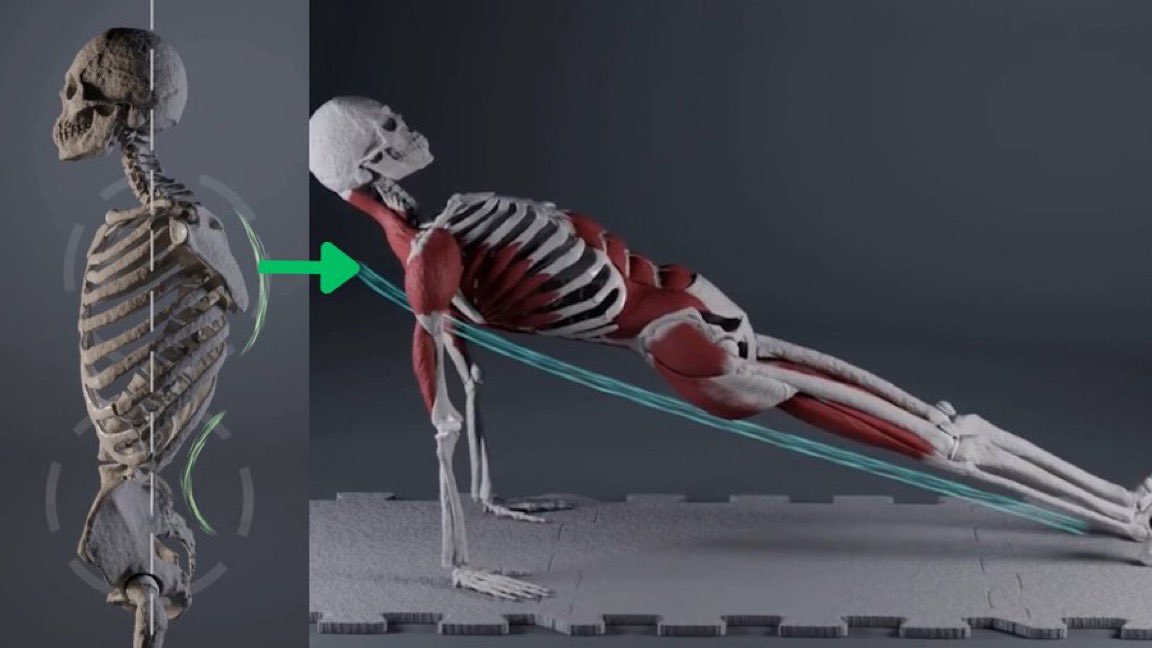
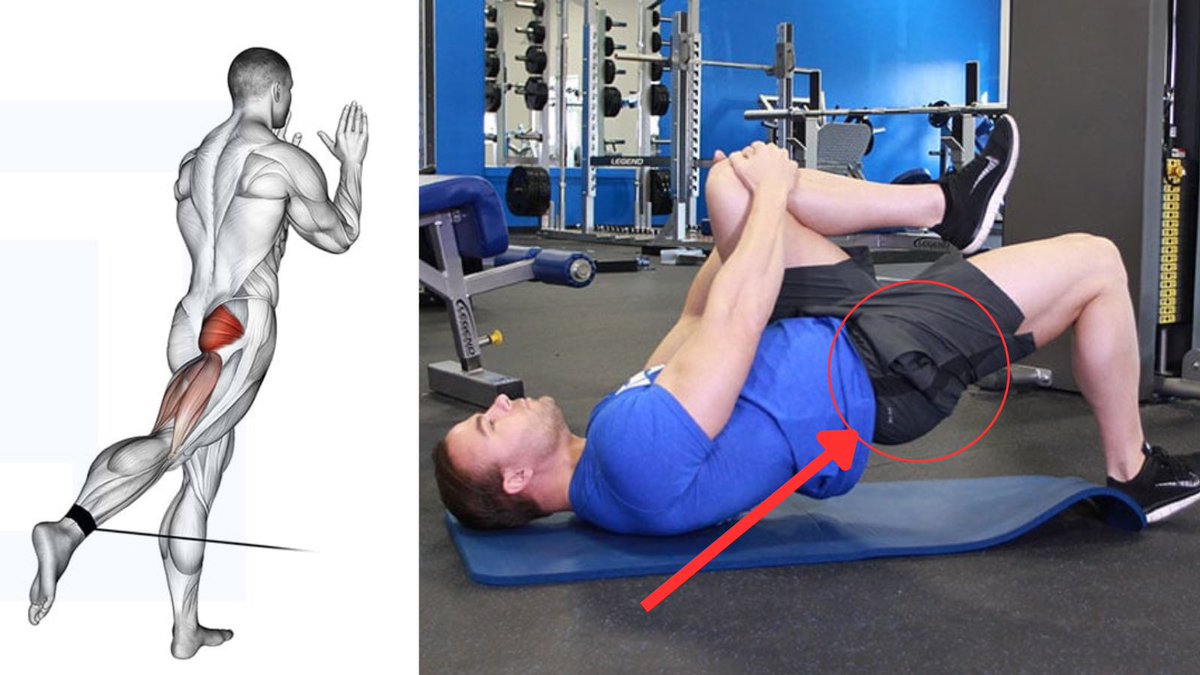
Most people think anterior pelvic tilt, or hyperlordosis, is caused by:
•Tight hip flexors
•A tight low back
•Weak abs & glutes
But that’s just scratching the surface.
Understanding the real cause leads to better resulting fixing it 👇
•Tight hip flexors
•A tight low back
•Weak abs & glutes
But that’s just scratching the surface.
Understanding the real cause leads to better resulting fixing it 👇

The overlooked question:
👉 Why are these muscles tight or weak in the first place?
👉 Why are these muscles tight or weak in the first place?
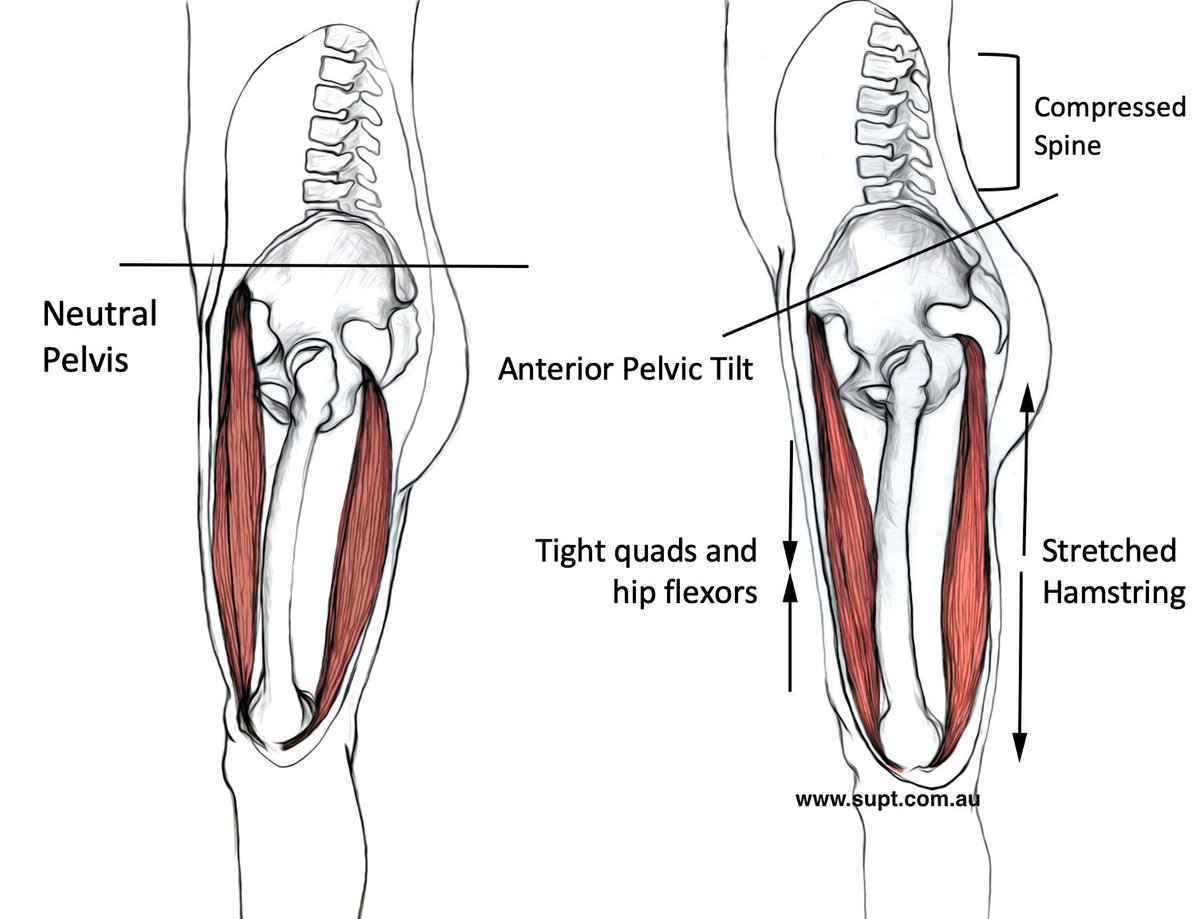
With APT, the center of gravity of the pelvis + lower body shifts forward.
This pushes the pelvis down into hip flexion.
As a natural byproduct:
•Hip flexors get tight
•Low back gets tight
•Abs & glutes lengthen → weaken
This pushes the pelvis down into hip flexion.
As a natural byproduct:
•Hip flexors get tight
•Low back gets tight
•Abs & glutes lengthen → weaken
The reason the pelvis tilts forward is usually because it’s looking for a way to create compensatory internal rotation - a very commonly limited range of motion in many people.
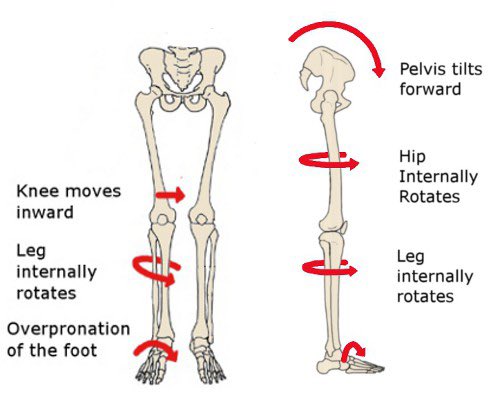
That’s why so many people fail to fix APT long term.
They keep stretching hip flexors and “activating” glutes… but those muscles are just reacting to a deeper skeletal issue.
They keep stretching hip flexors and “activating” glutes… but those muscles are just reacting to a deeper skeletal issue.
Key concept:
Skeletal position dictates muscular function.
If bones are positioned poorly, muscles adapt to that new position, and their function can even change accordingly.
Skeletal position dictates muscular function.
If bones are positioned poorly, muscles adapt to that new position, and their function can even change accordingly.
So the real fix for anterior pelvic tilt is restoring your center of gravity back onto your heels and stacking:
👉 Head → ribcage → pelvis → feet
👉 Head → ribcage → pelvis → feet
Here’s a simple drill to start:
1.Stand ~1 foot from a wall, feet hip-width apart.
a ball between thighs + hold a chair in front.
3.Keep eyes straight, most of your back flat on the wall. 2.Place
1.Stand ~1 foot from a wall, feet hip-width apart.
a ball between thighs + hold a chair in front.
3.Keep eyes straight, most of your back flat on the wall. 2.Place
Now:
•Evenly feel heel + big toe + pinky toe on both feet.
•Slightly bend knees until pelvis is gently against wall.
•Reach chair forward (don’t slouch).
•Keep mid & low back on wall.
Breathing:
•Exhale fully through mouth (5–10 sec) → feel side abs engage.
•Pause, then close mouth.
•Inhale silently through nose (don’t lose abs).
Do 5–10 breaths.
•Evenly feel heel + big toe + pinky toe on both feet.
•Slightly bend knees until pelvis is gently against wall.
•Reach chair forward (don’t slouch).
•Keep mid & low back on wall.
Breathing:
•Exhale fully through mouth (5–10 sec) → feel side abs engage.
•Pause, then close mouth.
•Inhale silently through nose (don’t lose abs).
Do 5–10 breaths.
This drill shifts your pelvis back, re-centers your weight, and restores the skeletal foundation so muscles can actually function properly.
Stop chasing “tight hip flexors.”
Fix the root: center of gravity + skeletal stack.
Stop chasing “tight hip flexors.”
Fix the root: center of gravity + skeletal stack.
Keep in mind there’s nothing inherently wrong with anterior pelvic tilt, as many people have it.
In fact, most of the population does to some extent.
But as I touched on in this thread, it can be indicative of potential significant movement limitations, which it then can matter. But many people live with it with no problems.
In fact, most of the population does to some extent.
But as I touched on in this thread, it can be indicative of potential significant movement limitations, which it then can matter. But many people live with it with no problems.
If you enjoyed this thread, I have a newsletter with exclusive free education.
I send out:
✅Exercises that get results fixing mobility & pain
✅Case studies
✅Targeted solutions for specific problems like this
Join here: conorharris.com/newsletter
I send out:
✅Exercises that get results fixing mobility & pain
✅Case studies
✅Targeted solutions for specific problems like this
Join here: conorharris.com/newsletter
• • •
Missing some Tweet in this thread? You can try to
force a refresh