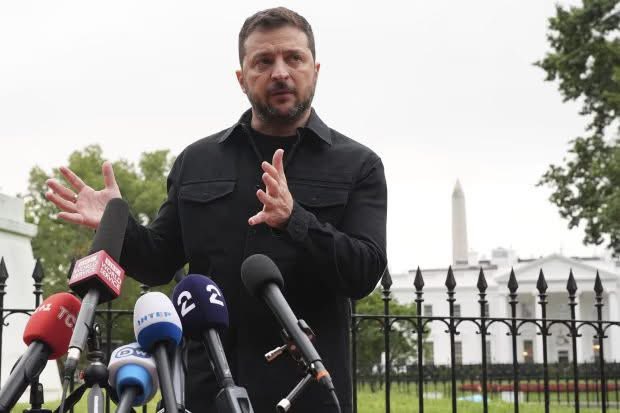
Zelenskyy’s Briefing After Meeting with Trump
Battlefield clarity
• “I was able to show our American colleagues on the map who really controls what on the battlefield.”
1/n
Battlefield clarity
• “I was able to show our American colleagues on the map who really controls what on the battlefield.”
1/n
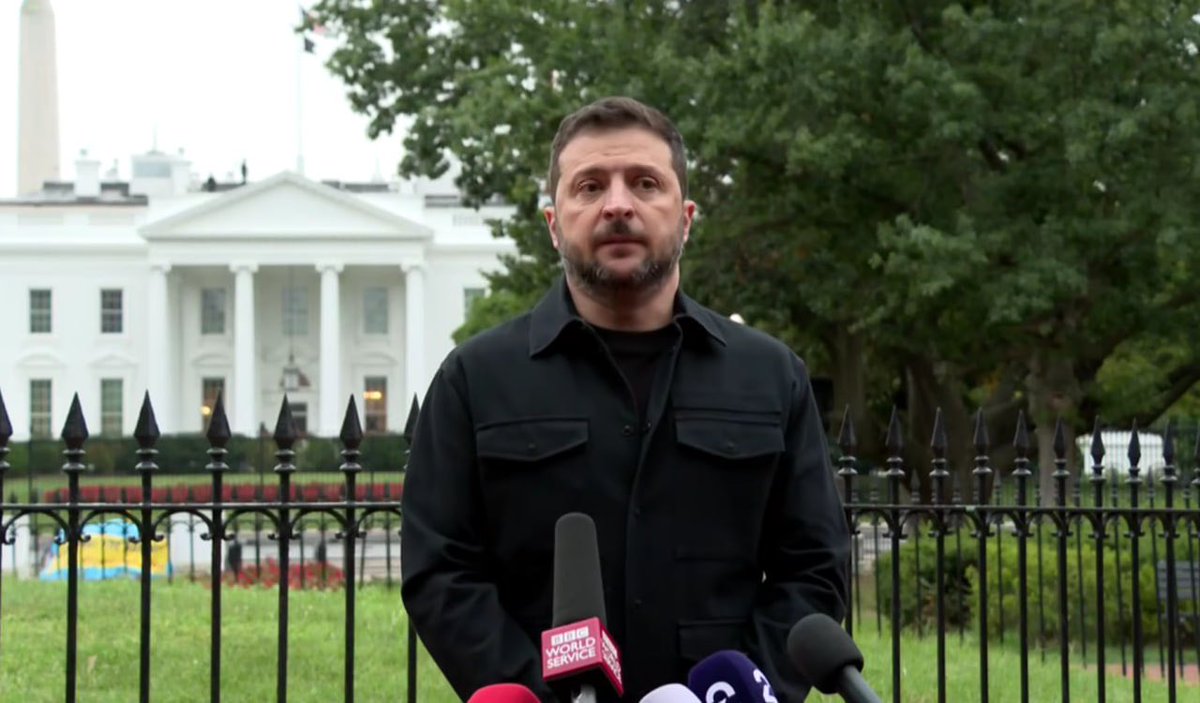
2/ Security guarantees
• Discussed not just a temporary pause, but a framework for “real peace.”
• The U.S. has signaled it will help coordinate and also directly participate in providing security guarantees for Ukraine.
• Discussed not just a temporary pause, but a framework for “real peace.”
• The U.S. has signaled it will help coordinate and also directly participate in providing security guarantees for Ukraine.
3/ • These guarantees are expected to be formalized on paper within 7–10 days.
• Ukraine has prepared a $90 billion weapons purchase package from the U.S. as part of the guarantees.
• Ukraine has prepared a $90 billion weapons purchase package from the U.S. as part of the guarantees.
4/ Prisoner exchange
• Trump agreed to help prepare an “all-for-all” exchange — covering not only soldiers, but also journalists, political prisoners, and others.
• Trump agreed to help prepare an “all-for-all” exchange — covering not only soldiers, but also journalists, political prisoners, and others.
5/ Negotiations with russia
• The U.S. proposes a trilateral meeting (U.S.–Ukraine–russia) “as soon as possible.”
• Trump has already contacted the russian side.
• russia suggested first holding a bilateral Ukraine–russia meeting, followed by a trilateral one.
• The U.S. proposes a trilateral meeting (U.S.–Ukraine–russia) “as soon as possible.”
• Trump has already contacted the russian side.
• russia suggested first holding a bilateral Ukraine–russia meeting, followed by a trilateral one.
• • •
Missing some Tweet in this thread? You can try to
force a refresh