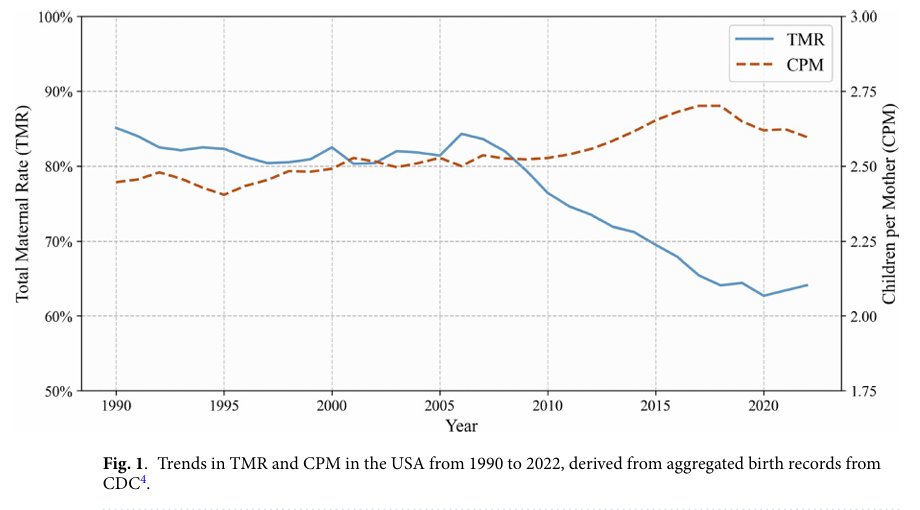
Published today, an important paper proposes a framework dividing total fertility rate into two component parts:
TFR = Total Maternity Rate (TMR) x Children per Mother (CPM)
This lens shows that virtually all recent declines in fertility were due to increasing childlessness. 🧵
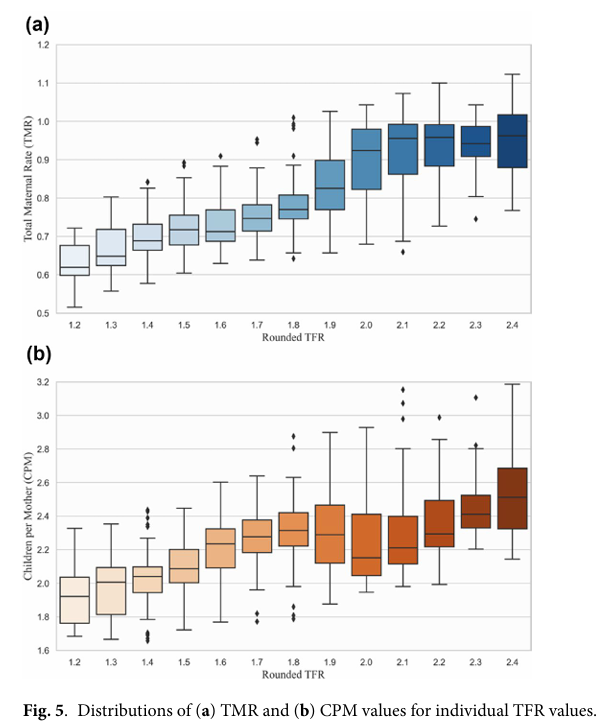
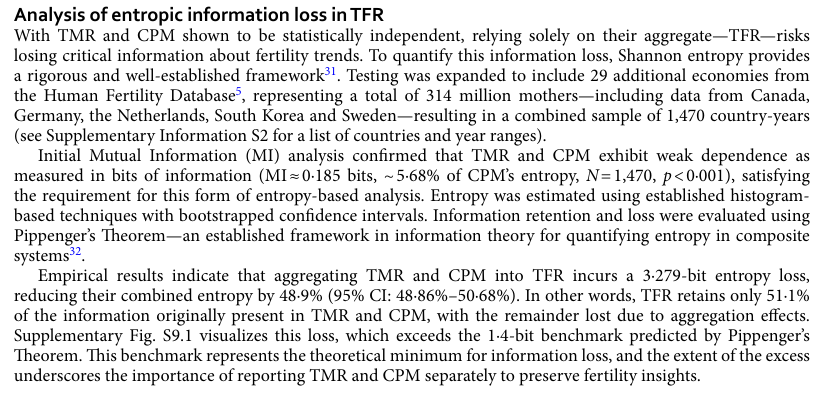
Demographer @StephenJShaw realized that these two components of TFR, the total maternity rate (or equivalently, the childless rate) and children per mother move quite independently of each other.
That means one gets much more information from looking at both parts together. 2/6
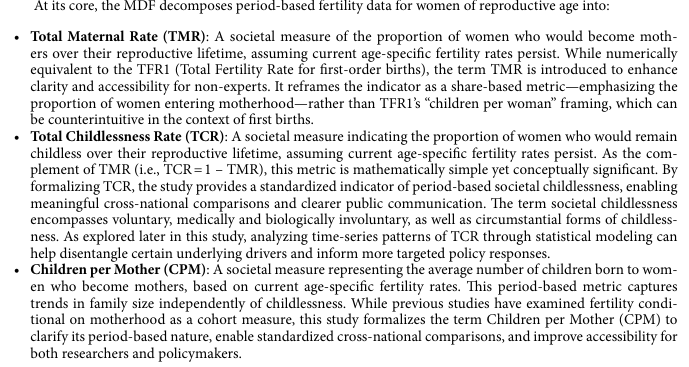
Unsurprisingly, both lower rates of motherhood and smaller family sizes are contributors to the crisis of low birthrates.
But both factors matter since the policies helping people reach parenthood may be very different from the ones supporting or encouraging larger families. 3/6
Shaw finds that among developed countries, those with the lowest fertility rates, namely Korea, Japan, Spain and Italy all have much higher rates of childlessness, suggesting that has been a major cause of ultra-low fertility. 4/6
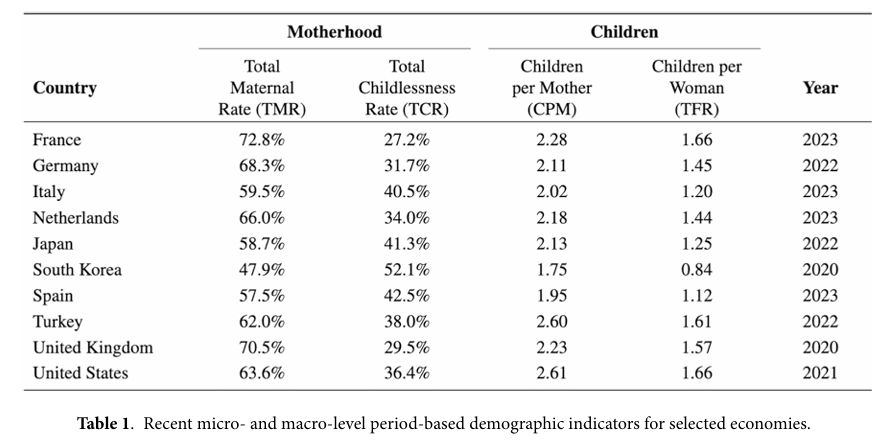
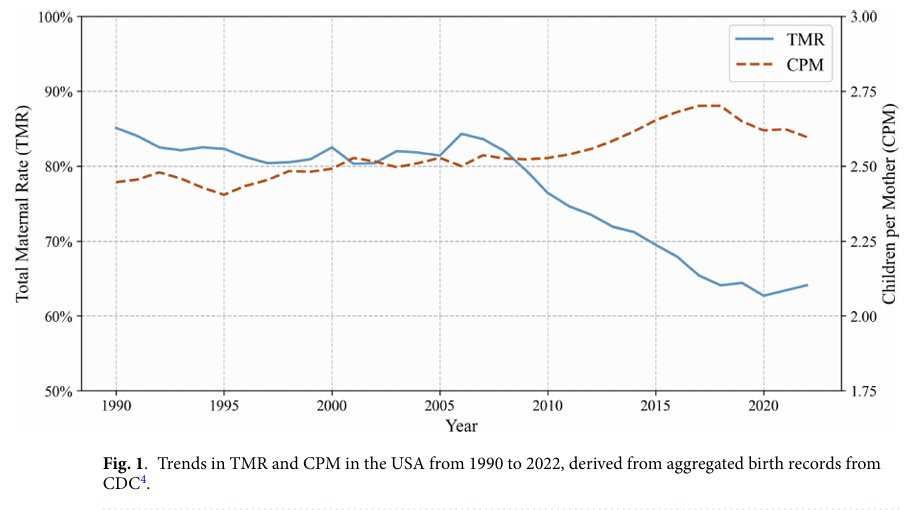
At the same time, the US has had better fertility than other advanced countries in large part because lower rates of motherhood have been compensated for by steadily increasing family sizes.
In the US, a pronatal culture of big families helped counteract rising childlessness! 5/6
Shaw's work is the culmination of many years of research as he analyzed a staggering amount of data, covering some 314 million mothers across 33 higher-income countries! 6/6
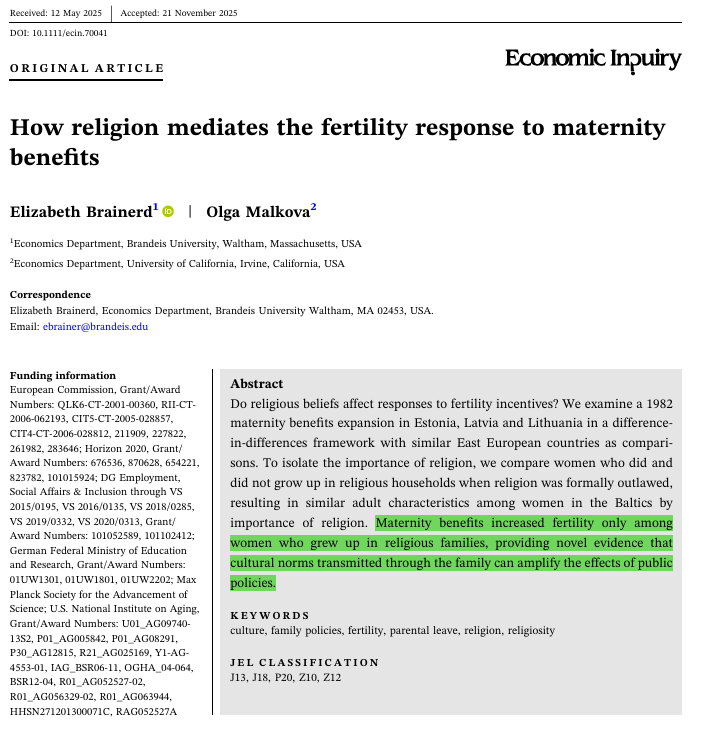
A newly published paper found pronatal policies only worked when supported by culture.
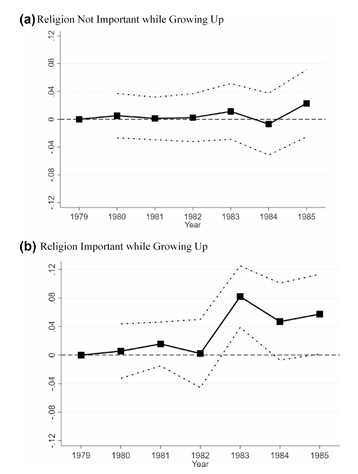
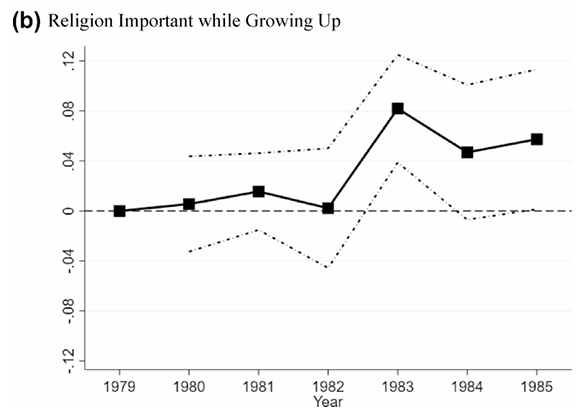
"Maternity benefits increased fertility only among women who grew up in religious families" in the Baltics.
This could explain why many pronatal policies have not boosted fertility more. 🧵.
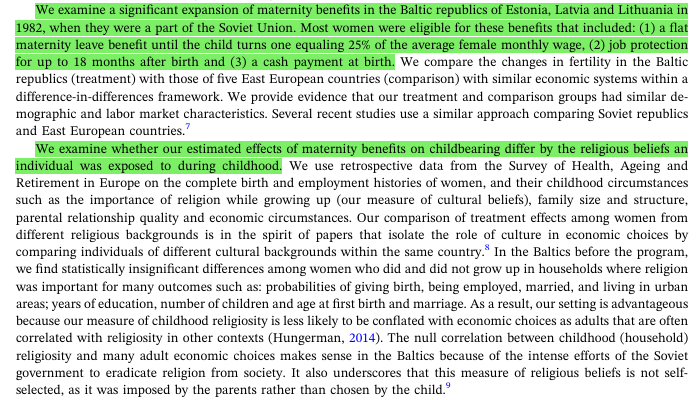
In 1982, there was a big expansion in child benefits in Estonia, Latvia and Lithuania including maternity leave wage benefits, a cash payment for birth and 18 months of job protection.
Five East European countries with comparable economic systems did not get the benefits. 2/5
The study found, "among women who grew up in religious households, fertility went up by a statistically significant 5.7 percentage points representing a 46.3% increase."
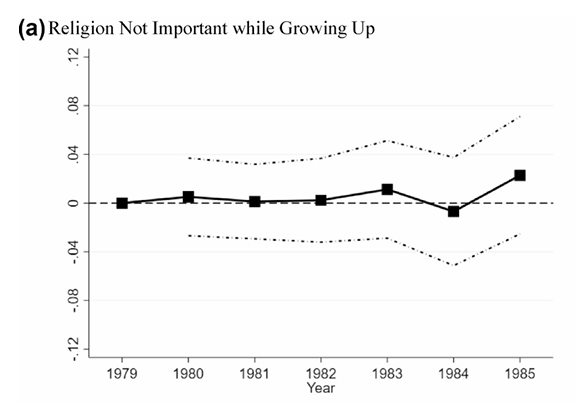
Meanwhile, there was "no change in fertility among women who did not grow up in religious households." 3/5
A new study finds that work-from-home raises fertility more than any conventional family policy.
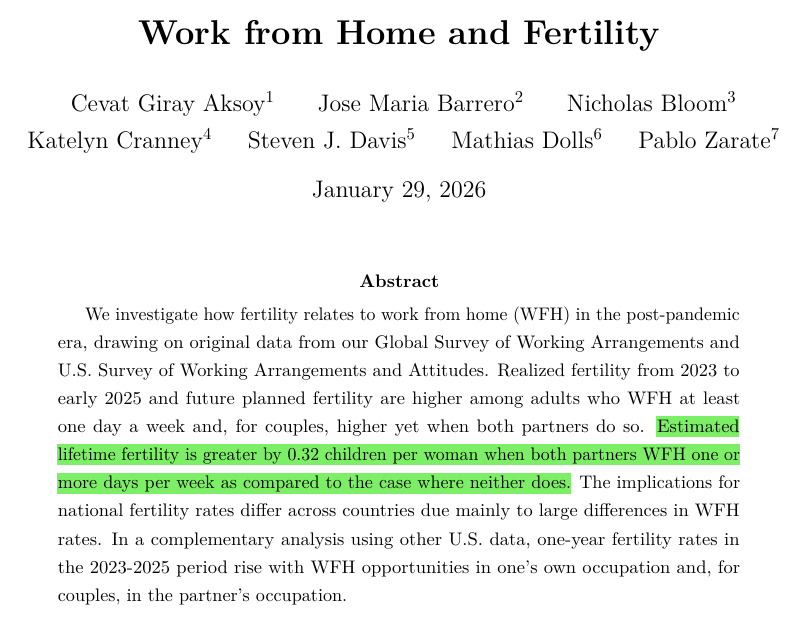
"Estimated lifetime fertility is greater by 0.32 children per woman when both partners WFH one or more days per week as compared to the case where neither does." 🧵.
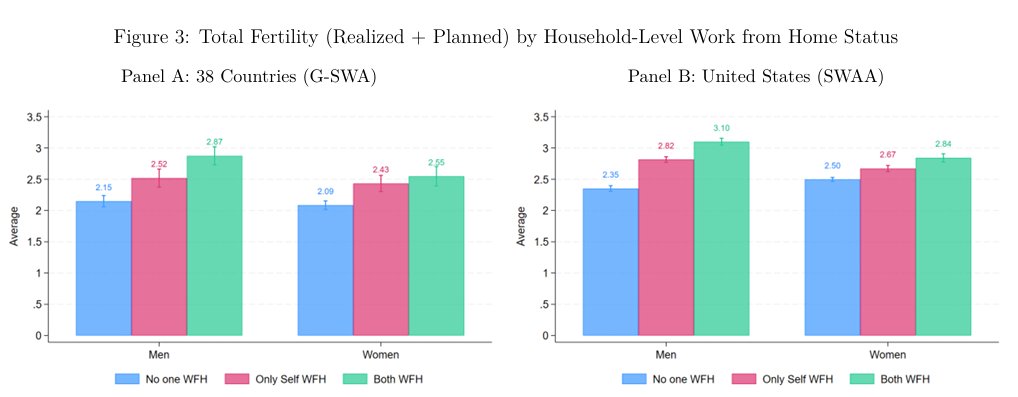
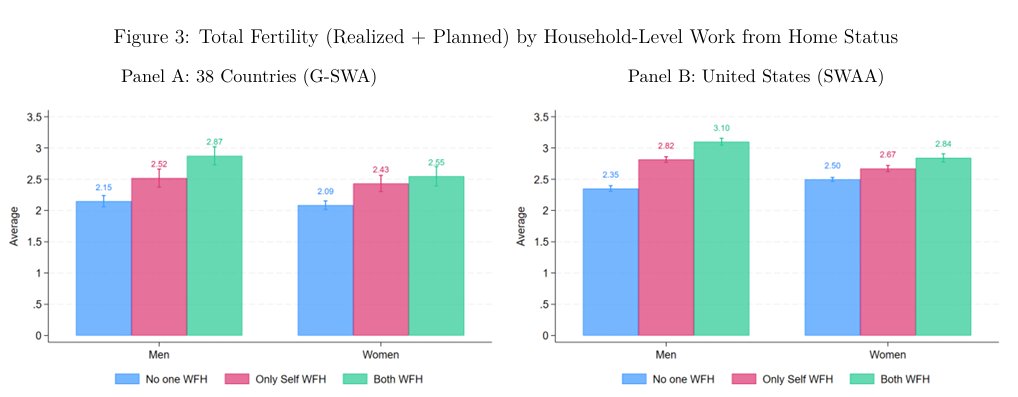
In this chart, a large effect is clearly seen, with fertility higher when either partner has some work-from-home and highest when both do.
The authors say this is not due to selection because fertility rose among those that unexpectedly got WFH, compared to those that didn't.
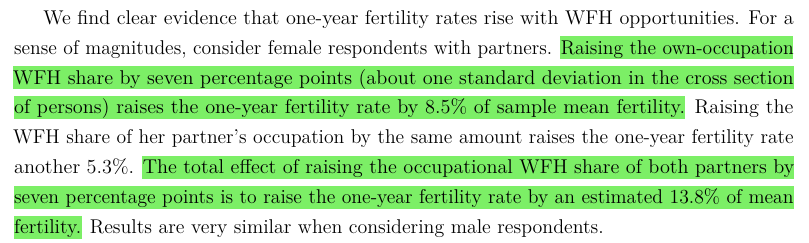
Raising the work-from-home share of either partner by seven percent raised the one-year fertility by a similar amount, which means that families that have WFH have considerably higher fertility on average.
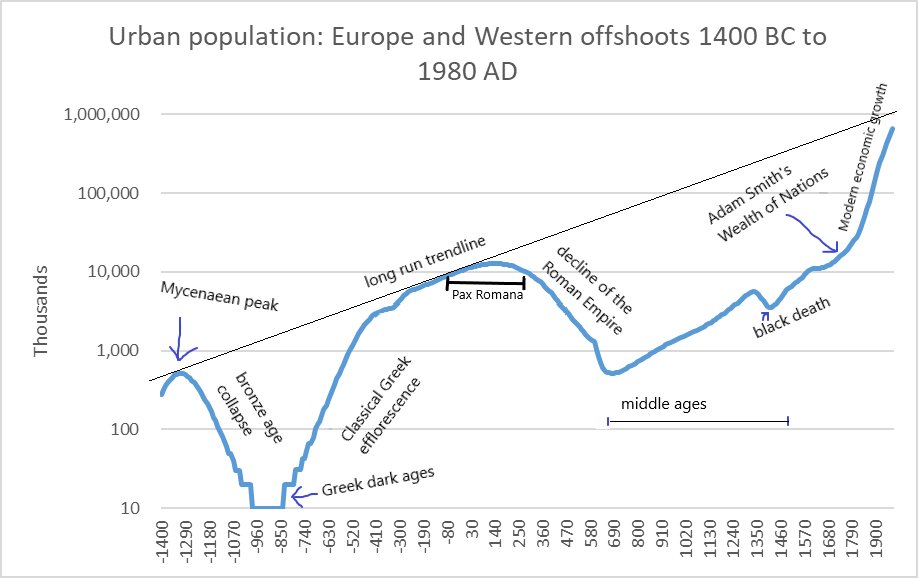
On this Christmas, we can reflect how Christianity was able to grow out of the ashes of collapsing Rome.
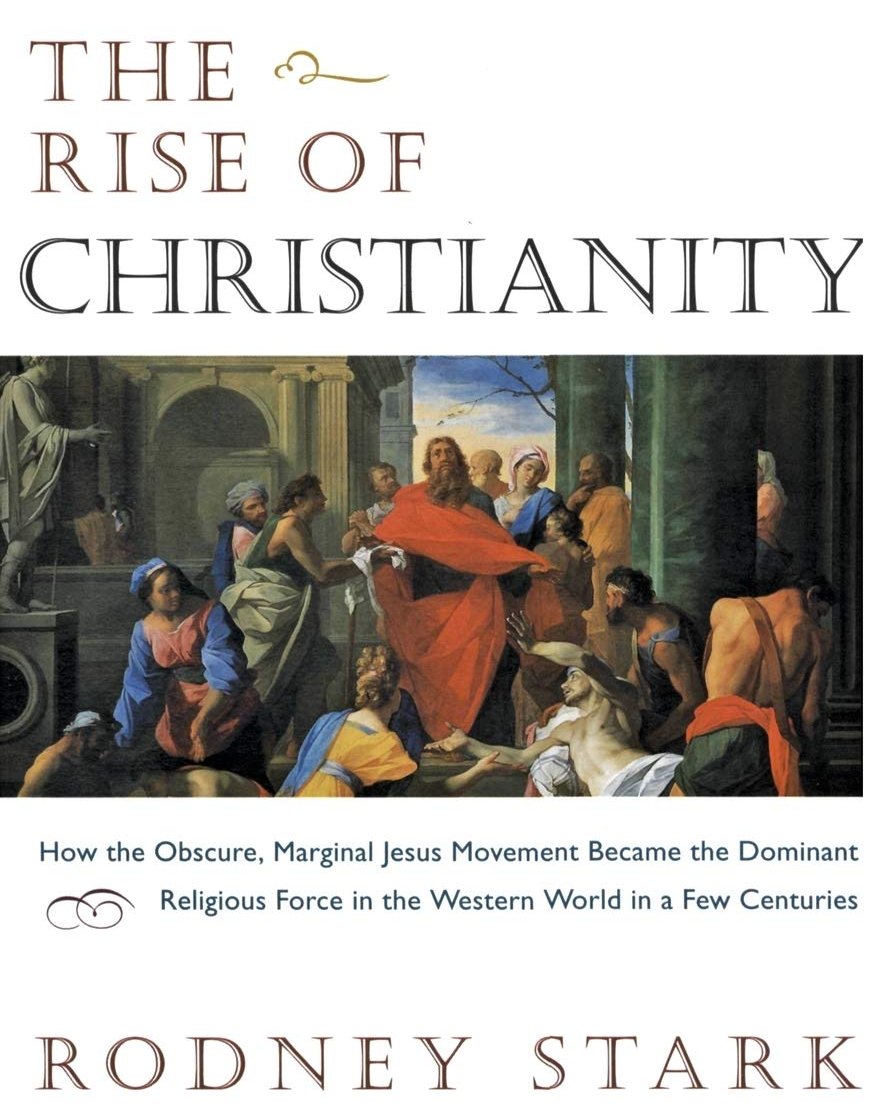
Scott Alexander reviews Rodney Stark's The Rise of Christianity and describes how the new faith won out by valuing women and children.
Important 🧵!
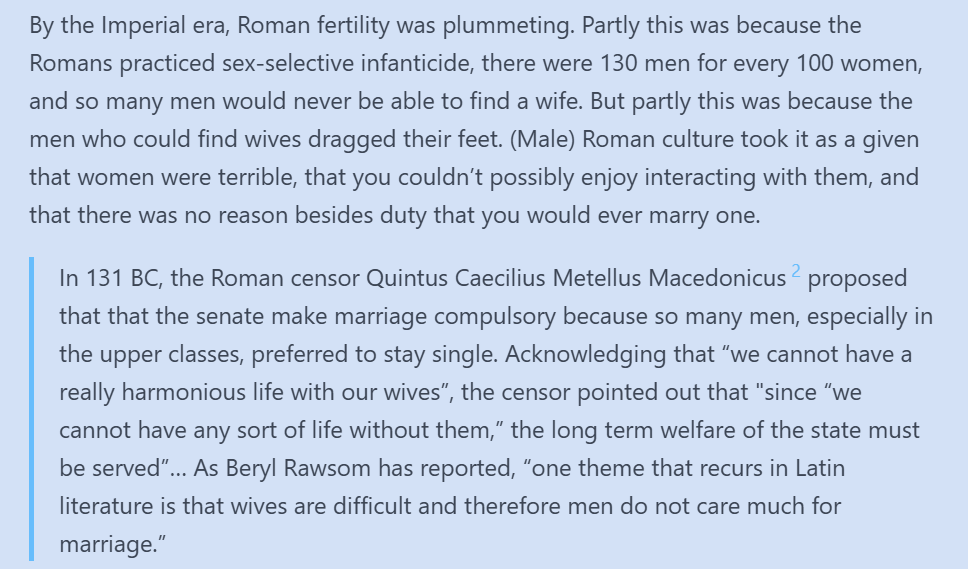
Much like our world today, Pagan Rome faced terrible birthrates.
Sex-selective infanticide was the norm. Women were not valued and many men just wanted to stay single.
It got so bad that Roman General Macedonicus proposed forcing people to marry! 2/7
When schemes to make marriage mandatory failed, Augustus tried taxing the unmarried and childless.
Alexander writes, "Formal and informal social pressure eventually convinced most Roman men to take wives, but no amount of love or money could make them have children." 3/7
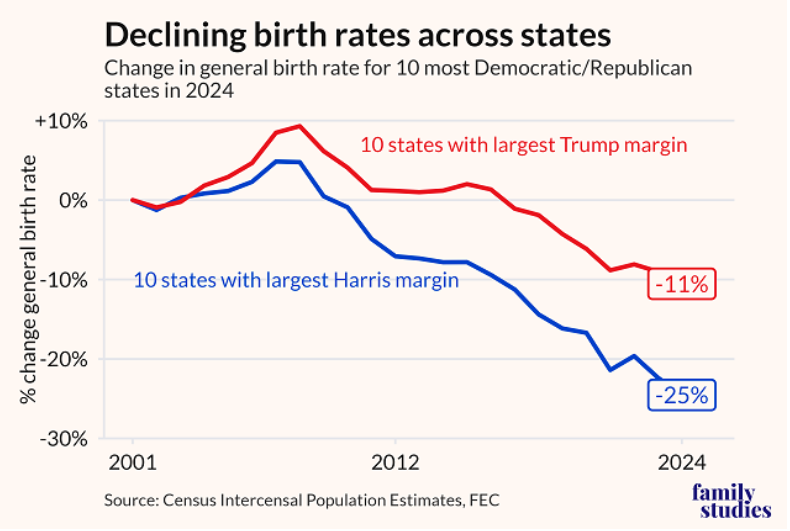
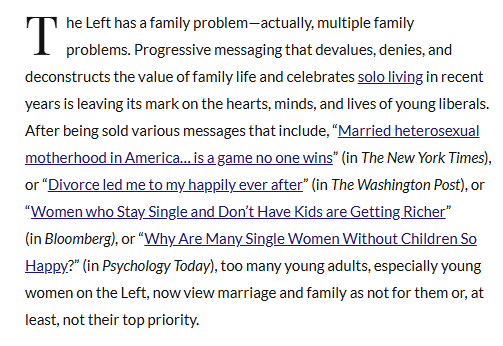
Fertility and child populations are collapsing in left-leaning areas.
A new analysis by @FamStudies documents how marriage and childbearing are in steep decline among young liberals.
Given political trends, we may see big declines for national birthrates ahead. Important 🧵.
Media headlines across left-leaning media tell the story of growing anti-marriage and anti-child attitudes. 2/6
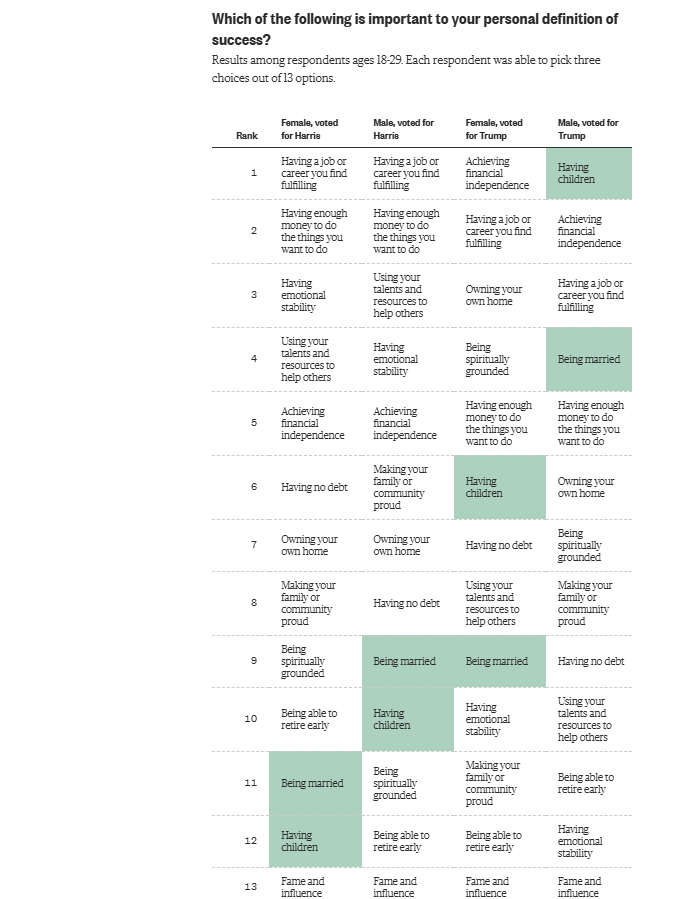
A recent NBC poll highlighted the growing difference in priorities between conservatives and liberals, men and women.
For young male conservatives, having kids was seen as the highest marker of success. For young female liberals, having kids was considered least important. 3/6
The Cradle of Europe, Fading Fast
Italy is at the center of our world, with more cultural and religious heritage than anywhere else on Earth.
How did Italy, once famous for its family culture, become the most aged country in Europe and what could turn things around? 🧵!
Italy's fertility in 2025 is just 1.12 births/woman, one of the lowest in Europe.
There are many statistics that help explain why the birthrate in Italy is so low, but one astonishing number stands out: Some 52% of Italian men aged 25-34 still live at home. 2/8
"Failure to launch" is an unfortunate downside to Italy's famously close-knit family culture, and that hurts birthrates in several ways.
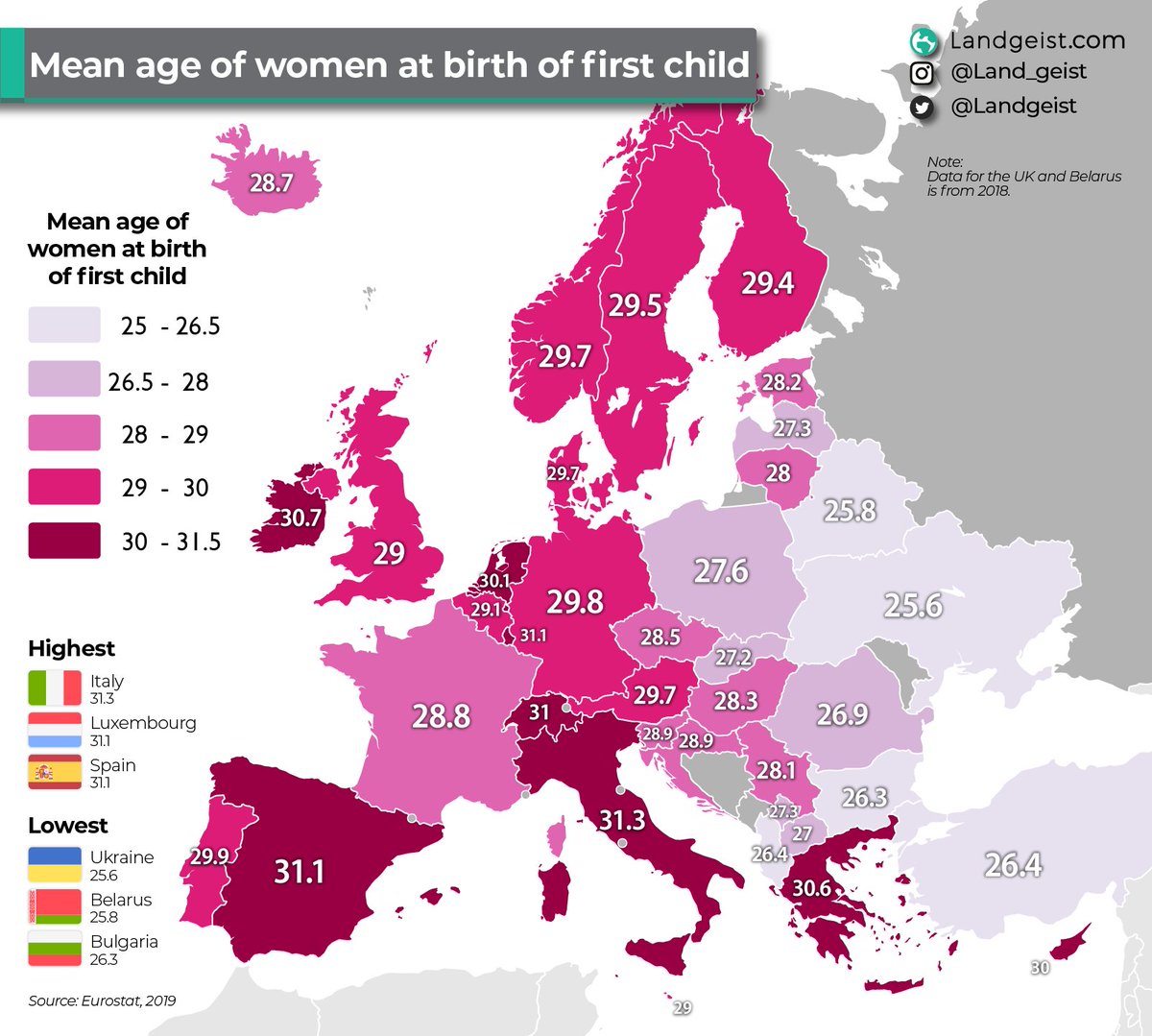
Italy has the EU's lowest marriage rate. On top of this, Italians have children later than any other country in Europe.
Low marriage and late childbearing are a recipe for low fertility on a national scale. 3/8
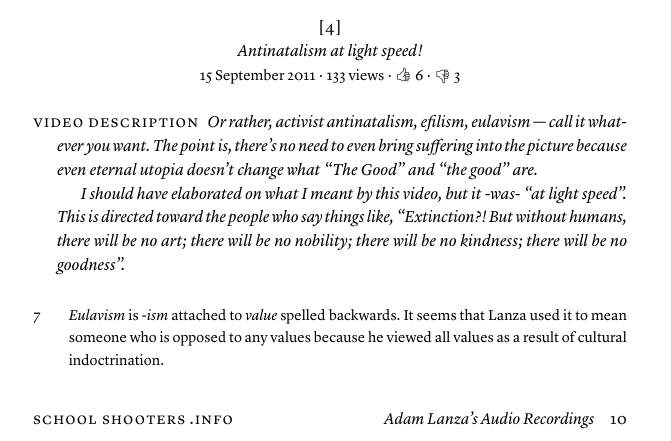
It has gone unnoticed that the most infamous school shooting in US history, the Sandy Hook shooting, may have had its origin in far left, antinatalist ideology.
Adam Lanza's recordings, found in 2021, expressed strong interest in antinatalism as well as p*dophilia. 🧵.
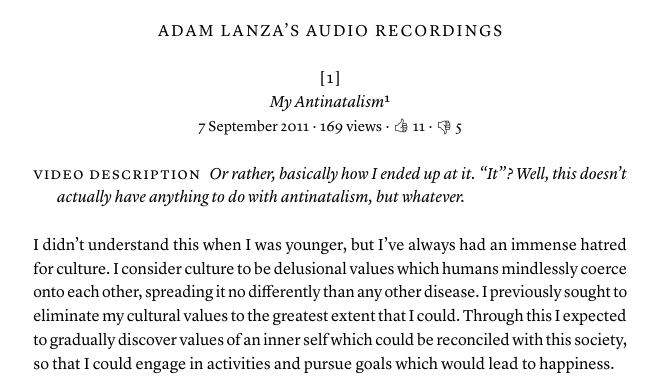
Adam Lanza's YouTube channel "CulturalPhilistine" was not discovered until September of 2021, some 9 years after the shooting, after public interest had waned. At the time of the shootings, Lanza's motives were a mystery.
The YouTube channel contained only audio but matched recordings of Lanza's voice. The strongest evidence that the channel belonged to Lanza is that it includes long readings from a 35-page college application essay that Lanza had submitted on the topic of p*dophilia.
Lanza's first and fourth recordings were on the topic of antinatalism and "antinatal" appears 24 times in the transcripts.
"Life is suffering" appears in the title of another recording, and this is a key part of antinatal ideology. 2/6
In his recording "antinatalism at light speed" Lanza spoke of 'activist antinatalism' - just one year before he would kill 26 children and teachers at Sandy Hook elementary.
Lanza's recordings discuss not only antinatalism, but a more extreme online ideology called efi*ism. 3/6