“MY APARTMENT IN NIGERIA IS CONSTANTLY ROBBED” - what it is like to live in a poor part of a Nigerian city 🧵
In Ryszard Kapuściński’s Book ‘The Shadow of the Sun’ the author spends time in Nigeria and decides to try living in an African neighbourhood instead of an expat one. He describes how he is constantly robbed until a witch doctor helps him protect his apartment with enchanted totems
“The apartment that I rent in Lagos is constantly broken into. It happens not only when I am away for a longer stretch of time- even if I am going on a short trip to a nearby town, to Abeokuta or to Oshogbo, I know that upon my return I will find the window popped out of its frame, the furniture turned upside down, the cupboards emptied.
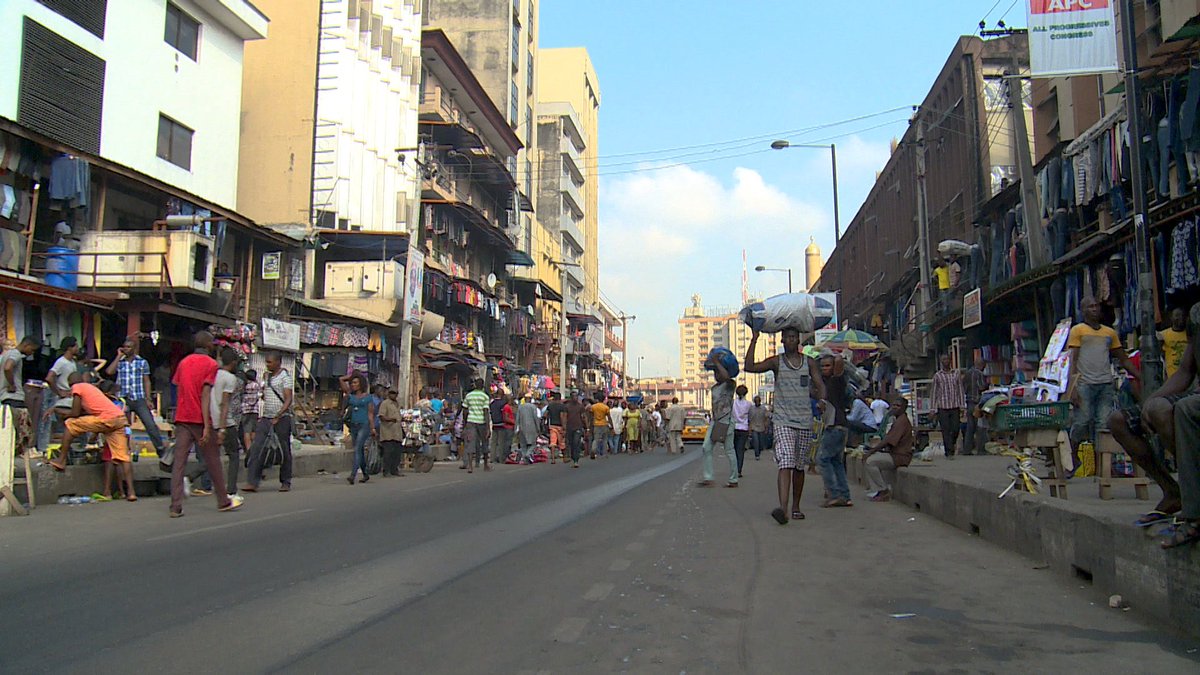
The apartment is located in the center of town, on the island of Lagos. The island was once a staging area for slave traders, and these shameful, dark origins of the city have left traces of something restless and violent in its atmosphere. You are made constantly aware of it. For instance, I may be riding in a taxi and talking with the driver, when suddenly he falls silent and nervously surveys the street. "What's wrong?" I ask, curious. "Very bad place!" he answers, lowering his voice. We drive on, he relaxes and once again converses calmly. Some time later, we pass a group of men walking along the edge of the road (there are no sidewalks in the city), and at the sight of them the driver once again falls silent, looks about, accelerates. "What's going on?" I ask. "Very bad people!" he responds. It's another kilometer before he is calm enough to resume our conversation.
Imprinted in such a driver's head must be a map of the city resembling those that hang on the walls of police stations. Little multicolored warning lights are constantly lighting up on it, flashing, pulsating, signaling places of danger, sites of attacks and other crimes. These warning lights are especially numerous on the map of the downtown, where I live. I could have chosen to live in Ikoyi, a safe and luxurious neighborhood of rich Nigerians, Europeans, diplomats, but it is too artificial a place, exclusive, closed, and vigilantly guarded. I want to live in an African street, in an African building. How else can I get to know this city? This continent?
But it is far from simple for a white man to move into an African neighborhood. To start with, the Europeans are outraged. Someone with my intentions must be deranged, not in complete possession of his mental faculties. So they try to dissuade me, warn me: It is certain that you will perish, and the only thing still in doubt is the precise way this will happen--either you will be killed, or you will simply die of your own accord, because living conditions are so dreadful there.
But the African side also regards my plan with scant enthusiasm. First of all, there are the technical difficulties--live where, exactly? This kind of neighborhood is all poverty and overcrowding, wretched little houses, clay huts, slums; there is no fresh air, and often no electricity; it is dust, stench, and insects. Where can you go? Where can you find a separate corner? How do you get around? What do you do? Take, for instance, something as basic as water. Water must be brought from the other end of the street, because that's where the pump is. Children do this. Sometimes--women. Men? Never. And here's a white gentleman standing with the children in the line for the pump. Ha! Ha! Ha! This is impossible! Or let's say that you have found a small room somewhere, and you want to shut the door to work. Shut the door? This is unthinkable. We all live together in a family, in a group--children, adults, old people; we are never apart, and even after death our spirits remain among the living, with those who are still in this world. Shut yourself alone in a room, in such a way that no one can enter? Ha! This is impossible! "And besides," the natives explain gently to me, "it is dangerous in our neighborhood.”
[1/5]
In Ryszard Kapuściński’s Book ‘The Shadow of the Sun’ the author spends time in Nigeria and decides to try living in an African neighbourhood instead of an expat one. He describes how he is constantly robbed until a witch doctor helps him protect his apartment with enchanted totems
“The apartment that I rent in Lagos is constantly broken into. It happens not only when I am away for a longer stretch of time- even if I am going on a short trip to a nearby town, to Abeokuta or to Oshogbo, I know that upon my return I will find the window popped out of its frame, the furniture turned upside down, the cupboards emptied.
The apartment is located in the center of town, on the island of Lagos. The island was once a staging area for slave traders, and these shameful, dark origins of the city have left traces of something restless and violent in its atmosphere. You are made constantly aware of it. For instance, I may be riding in a taxi and talking with the driver, when suddenly he falls silent and nervously surveys the street. "What's wrong?" I ask, curious. "Very bad place!" he answers, lowering his voice. We drive on, he relaxes and once again converses calmly. Some time later, we pass a group of men walking along the edge of the road (there are no sidewalks in the city), and at the sight of them the driver once again falls silent, looks about, accelerates. "What's going on?" I ask. "Very bad people!" he responds. It's another kilometer before he is calm enough to resume our conversation.
Imprinted in such a driver's head must be a map of the city resembling those that hang on the walls of police stations. Little multicolored warning lights are constantly lighting up on it, flashing, pulsating, signaling places of danger, sites of attacks and other crimes. These warning lights are especially numerous on the map of the downtown, where I live. I could have chosen to live in Ikoyi, a safe and luxurious neighborhood of rich Nigerians, Europeans, diplomats, but it is too artificial a place, exclusive, closed, and vigilantly guarded. I want to live in an African street, in an African building. How else can I get to know this city? This continent?
But it is far from simple for a white man to move into an African neighborhood. To start with, the Europeans are outraged. Someone with my intentions must be deranged, not in complete possession of his mental faculties. So they try to dissuade me, warn me: It is certain that you will perish, and the only thing still in doubt is the precise way this will happen--either you will be killed, or you will simply die of your own accord, because living conditions are so dreadful there.
But the African side also regards my plan with scant enthusiasm. First of all, there are the technical difficulties--live where, exactly? This kind of neighborhood is all poverty and overcrowding, wretched little houses, clay huts, slums; there is no fresh air, and often no electricity; it is dust, stench, and insects. Where can you go? Where can you find a separate corner? How do you get around? What do you do? Take, for instance, something as basic as water. Water must be brought from the other end of the street, because that's where the pump is. Children do this. Sometimes--women. Men? Never. And here's a white gentleman standing with the children in the line for the pump. Ha! Ha! Ha! This is impossible! Or let's say that you have found a small room somewhere, and you want to shut the door to work. Shut the door? This is unthinkable. We all live together in a family, in a group--children, adults, old people; we are never apart, and even after death our spirits remain among the living, with those who are still in this world. Shut yourself alone in a room, in such a way that no one can enter? Ha! This is impossible! "And besides," the natives explain gently to me, "it is dangerous in our neighborhood.”
[1/5]

There are many bad people around here. The worst are the boma boys--gangs of debauched hoodlums, who attack, mug, and rob--a dreadful swarm of locusts that ravages everything. They will quickly sniff out that a lone European has come to live here. And to them, a European is a rich man. Who will protect you then?
But I held firm. I didn't listen to the warnings. My mind was made up--perhaps in part because so often I had felt irritated with people who arrived here, lived in "little Europe" or "little America" (i.e., in luxury hotels), and departed, bragging later that they had been to Africa, a place that in reality they had never seen.
And suddenly, an opportunity arose. I met an Italian who in a back alley not far from Massey Street owned a little warehouse of farm implements. Like many whites who were gradually liquidating their enterprises here, he had closed his business. The two-room service apartment above it was now vacant, and he was all too happy to rent it to me. He drove me there one evening in his car and helped me carry up my things (the metal stairs were attached to the building's exterior walls). It was pleasantly cool inside, he had turned on the air conditioner that morning. There was also a working refrigerator. He wished me a good night and quickly departed. He was flying to Rome early the next morning--after the latest military coup, he was afraid of further unrest and wanted to take some of his money out of the country.
I began to unpack. An hour later the lights went out.
I didn't have a flashlight. Worse still, the air conditioner had stopped, and in addition to it being completely dark, it now quickly became hot and stuffy. I opened the window. In swept the stench of rotten fruit, burnt oil, soap, and urine. Although the sea was somewhere nearby, you could detect no breeze in this enclosed and congested alley. It was March, a month of crushing heat, when the nights often seemed hotter and more stifling than the days. I looked out the window. Up and down the street below me, on woven mats or directly on the ground, lay half-naked people. The women and children were asleep; several men, their backs leaning against the walls of the clay houses, stared at me. I didn't know what their gazes meant. Did they want to meet me? Help me? Kill me?
I decided that I could not endure until dawn in these sweltering rooms, and went down. Two men rose; the others watched, motionless. We were all sweaty, deadly tired; merely existing in this climate is an extraordinary effort. I asked them if this kind of electrical outage happened often. They didn't know. I asked if something could be done about it. They conversed among themselves in a language I did not understand. One of them disappeared. Minutes passed--fifteen, thirty, forty-five. Finally he returned, bringing two young men with him. They said that they could fix the problem for ten pounds. I agreed. Soon, the lights were back on inside the apartment, and the air conditioner was working. Several days later--another outage, another ten pounds. Then fifteen, twenty.
And the thefts? In the beginning, I was filled with rage each time I returned to my ransacked apartment. To be robbed is, first and foremost, to be humiliated, to be made a fool of. But with time I came to understand that seeing a robbery as a humiliation and an affront is an emotional luxury. Living amid the poverty of my neighborhood, I realized that theft, even a petty theft, can be a death sentence. To steal is to commit manslaughter, murder. A solitary woman had her little corner in my street, and her sole possession was a pot. She made a living buying beans for credit from the vegetable vendors, cooking them, seasoning them with a sauce, and selling them to passersby. For many, this bowl of beans was the only daily meal.
[2/5]
But I held firm. I didn't listen to the warnings. My mind was made up--perhaps in part because so often I had felt irritated with people who arrived here, lived in "little Europe" or "little America" (i.e., in luxury hotels), and departed, bragging later that they had been to Africa, a place that in reality they had never seen.
And suddenly, an opportunity arose. I met an Italian who in a back alley not far from Massey Street owned a little warehouse of farm implements. Like many whites who were gradually liquidating their enterprises here, he had closed his business. The two-room service apartment above it was now vacant, and he was all too happy to rent it to me. He drove me there one evening in his car and helped me carry up my things (the metal stairs were attached to the building's exterior walls). It was pleasantly cool inside, he had turned on the air conditioner that morning. There was also a working refrigerator. He wished me a good night and quickly departed. He was flying to Rome early the next morning--after the latest military coup, he was afraid of further unrest and wanted to take some of his money out of the country.
I began to unpack. An hour later the lights went out.
I didn't have a flashlight. Worse still, the air conditioner had stopped, and in addition to it being completely dark, it now quickly became hot and stuffy. I opened the window. In swept the stench of rotten fruit, burnt oil, soap, and urine. Although the sea was somewhere nearby, you could detect no breeze in this enclosed and congested alley. It was March, a month of crushing heat, when the nights often seemed hotter and more stifling than the days. I looked out the window. Up and down the street below me, on woven mats or directly on the ground, lay half-naked people. The women and children were asleep; several men, their backs leaning against the walls of the clay houses, stared at me. I didn't know what their gazes meant. Did they want to meet me? Help me? Kill me?
I decided that I could not endure until dawn in these sweltering rooms, and went down. Two men rose; the others watched, motionless. We were all sweaty, deadly tired; merely existing in this climate is an extraordinary effort. I asked them if this kind of electrical outage happened often. They didn't know. I asked if something could be done about it. They conversed among themselves in a language I did not understand. One of them disappeared. Minutes passed--fifteen, thirty, forty-five. Finally he returned, bringing two young men with him. They said that they could fix the problem for ten pounds. I agreed. Soon, the lights were back on inside the apartment, and the air conditioner was working. Several days later--another outage, another ten pounds. Then fifteen, twenty.
And the thefts? In the beginning, I was filled with rage each time I returned to my ransacked apartment. To be robbed is, first and foremost, to be humiliated, to be made a fool of. But with time I came to understand that seeing a robbery as a humiliation and an affront is an emotional luxury. Living amid the poverty of my neighborhood, I realized that theft, even a petty theft, can be a death sentence. To steal is to commit manslaughter, murder. A solitary woman had her little corner in my street, and her sole possession was a pot. She made a living buying beans for credit from the vegetable vendors, cooking them, seasoning them with a sauce, and selling them to passersby. For many, this bowl of beans was the only daily meal.
[2/5]

One night, a piercing cry awoke us. The entire alleyway stirred. The woman was running around in a circle, despairing, frenzied: thieves had snatched her pot, and she had lost the one thing she depended on for her livelihood.
Many of my neighbors here have just the one thing. Someone has a shirt, someone a panga, someone a pickax. The one with a shirt can find a job as a night watchman (no one wants a half-naked guard); the one with a panga can be hired to cut down weeds; the one with the pickax can dig a ditch. Others have only their muscles to sell. They count on someone needing them as porters or messengers. In all these instances, the chances of employment are slim, because competition is enormous. And further, these are frequently only odd jobs--for one day, for several hours.
Thus my alley, the adjacent streets, and the entire neighborhood are full of idle people. They wake in the morning and search for some water with which to wash their faces. Then, those with a bit of money buy themselves breakfast: a glass of tea and stale roll. But many people don't eat anything. Before noon still, the heat is difficult to bear--one must look for a shady spot. The shade moves hourly with the sun, and man moves with the shade--following the shade, crawling after it to hide in its dark, cool interior, is each day his only real occupation. Hunger. One badly wants to eat, but there is nothing to be had. Making matters worse, the smell of roasting meal wafts from a nearby bar. Why don't these people storm the bar? After all, they are young and strong.
One of them, apparently, was unable to control himself, for suddenly, a cry resounds: it's one of the street vendors shouting--a boy snatched a bunch of bananas from her stand. The victim and her neighbors set off in pursuit and eventually catch him. The police appear out of nowhere. Policemen here carry large wooden clubs, with which they brutally beat offenders, striking them with all their might. The boy is lying in the street now, cringing, curled up, trying to shield himself from the blows. A crowd has gathered, which occurs here in the blink of an eye, since these legions of the unemployed have little to do besides waiting for some event, some commotion, some excitement--anything to distract them, to help pass the time. They press closer and closer, as if the dull thud of the clubs and the moans of the victim afforded them genuine pleasure. With shouts and screams they encourage and incite the policemen. Here, if a thief is caught, people immediately want to tear him apart, lynch him, chop him into pieces. The boy is groaning, already he has let go of the bananas. Those standing closest throw themselves on the fruit, tear the bunch apart.
Then everything returns to normal. The vendor still complains and curses, the policemen leave, the battered, tortured boy drags himself to some hiding place--sore and hungry. The onlookers disperse, returning to their places under walls, under roofs--to the shade. They will stay there until evening. After a day of heat and hunger, one is weak and listless. But a certain stupor, an internal numbness, has its benefits: man could not survive here without it, for otherwise the biological, animal part of his nature would bite to death everything that is still human in him.
In the evening, the alleyway comes ever so slightly to life. Its residents gather. Some of them have spent the whole day here, tormented by attacks of malaria. Others are just returning from the city. Some have had a good day: they found work somewhere, or else they met one of their kinsmen, who shared his pennies with them. They will be eating supper tonight, a bowl of cassava with a hot paprika sauce, perhaps even accompanied by a boiled egg or a piece of lamb. Some of this will go to the children, who watch the men greedily as they swallow each bite. Every bit of food disappears immediately and without a trace. Everything is eaten, down to the last crumb.
[3/5]
Many of my neighbors here have just the one thing. Someone has a shirt, someone a panga, someone a pickax. The one with a shirt can find a job as a night watchman (no one wants a half-naked guard); the one with a panga can be hired to cut down weeds; the one with the pickax can dig a ditch. Others have only their muscles to sell. They count on someone needing them as porters or messengers. In all these instances, the chances of employment are slim, because competition is enormous. And further, these are frequently only odd jobs--for one day, for several hours.
Thus my alley, the adjacent streets, and the entire neighborhood are full of idle people. They wake in the morning and search for some water with which to wash their faces. Then, those with a bit of money buy themselves breakfast: a glass of tea and stale roll. But many people don't eat anything. Before noon still, the heat is difficult to bear--one must look for a shady spot. The shade moves hourly with the sun, and man moves with the shade--following the shade, crawling after it to hide in its dark, cool interior, is each day his only real occupation. Hunger. One badly wants to eat, but there is nothing to be had. Making matters worse, the smell of roasting meal wafts from a nearby bar. Why don't these people storm the bar? After all, they are young and strong.
One of them, apparently, was unable to control himself, for suddenly, a cry resounds: it's one of the street vendors shouting--a boy snatched a bunch of bananas from her stand. The victim and her neighbors set off in pursuit and eventually catch him. The police appear out of nowhere. Policemen here carry large wooden clubs, with which they brutally beat offenders, striking them with all their might. The boy is lying in the street now, cringing, curled up, trying to shield himself from the blows. A crowd has gathered, which occurs here in the blink of an eye, since these legions of the unemployed have little to do besides waiting for some event, some commotion, some excitement--anything to distract them, to help pass the time. They press closer and closer, as if the dull thud of the clubs and the moans of the victim afforded them genuine pleasure. With shouts and screams they encourage and incite the policemen. Here, if a thief is caught, people immediately want to tear him apart, lynch him, chop him into pieces. The boy is groaning, already he has let go of the bananas. Those standing closest throw themselves on the fruit, tear the bunch apart.
Then everything returns to normal. The vendor still complains and curses, the policemen leave, the battered, tortured boy drags himself to some hiding place--sore and hungry. The onlookers disperse, returning to their places under walls, under roofs--to the shade. They will stay there until evening. After a day of heat and hunger, one is weak and listless. But a certain stupor, an internal numbness, has its benefits: man could not survive here without it, for otherwise the biological, animal part of his nature would bite to death everything that is still human in him.
In the evening, the alleyway comes ever so slightly to life. Its residents gather. Some of them have spent the whole day here, tormented by attacks of malaria. Others are just returning from the city. Some have had a good day: they found work somewhere, or else they met one of their kinsmen, who shared his pennies with them. They will be eating supper tonight, a bowl of cassava with a hot paprika sauce, perhaps even accompanied by a boiled egg or a piece of lamb. Some of this will go to the children, who watch the men greedily as they swallow each bite. Every bit of food disappears immediately and without a trace. Everything is eaten, down to the last crumb.
[3/5]

No one has any supplies, for even if someone did have extra food, he wouldn't have anywhere to keep it, no place to shut it. You live in the immediate, current moment; each day is an obstacle difficult to surmount, and the imagination does not reach beyond the present, does not concoct plans, does not dream.
Whoever has a shilling goes to the bar. The bars are numerous--in the back streets, at intersections, in the squares. Sometimes these are humble places, with walls cobbled together from corrugated iron, and calico curtains instead of doors. Even so, we are meant to feel as if we have entered an amusement park, found ourselves at a carnival. Music is coming from the old radio, a red lightbulb dangles from the ceiling. Glossy photographs of film actresses cut out from magazines adorn the walls. Behind the counter stands the usually fat, powerfully built madame: the proprietress. She sells the only thing available in the bar: a home-brewed beer. The beers can be various--banana, corn, pineapple, palm. Generally, each of these women specializes in one kind. A glass of such a beverage has three merits: (a) it contains alcohol, (b) being a liquid, it quenches thirst, and (c) because the solution at the bottom of the glass is thick and dense, it constitutes for the hungry an ersatz nourishment. Therefore, if someone has earned only a shilling in the course of a day, he will most probably spend it in a bar.
It is rare for someone to settle for long in my alleyway. The people who pass through here are the city's eternal nomads, wanderers along the chaotic and dusty labyrinth of its streets. They move away quickly and vanish without a trace, because they never really had anything. They go, either tempted by the mirage of employment, or frightened by an epidemic that has suddenly broken out nearby, or evicted by the owners of the clay huts and verandas, whom they were unable to pay for the space they occupied. Everything in their life is temporary, fluid, and frail. It exists and it doesn't exist. Even if it does exist--then for how long? This eternal uncertainty causes my neighbors to live in a perpetual state of alert, of unabating fear. They fled the poverty of the countryside and made their way to the city in the hope that life would be better for them here. Those who succeeded in tracking down a cousin could count on some support, some help getting started. But many of these former peasants did not find any of their relations, or any fellow tribesmen. Often, they didn't even understand the language being spoken in the streets, didn't know how to ask about anything. Still, the force of the city absorbed them, its life became their only world, and by the next day already they were unable to extricate themselves from it.
They started to build a roof over their heads, some little corner, a nook of their own. Because these arrivals had no money--having come here to make some from traditional villages where money is not commonly used--they could look for a place only in the slum neighborhoods. It is an extraordinary sight, the construction of such a neighborhood. Most often, the municipal authorities designate the worst land for this purpose: marshes, quagmires, or barren desert sands. Someone erects the first shack there. Next to it, someone else puts up another one. And then another. Thus, spontaneously, a street is formed. Nearby, another street is advancing. Eventually they will meet, and create an intersection. Now both streets will start to spread, divide, branch out. And a neighborhood will come into being. But first, people collect building material. It is impossible to figure out where they get it. Do they dig it out of the earth? Do they pull it down from the clouds? The one thing is certain: this penniless throng is not buying anything.
[4/5]
Whoever has a shilling goes to the bar. The bars are numerous--in the back streets, at intersections, in the squares. Sometimes these are humble places, with walls cobbled together from corrugated iron, and calico curtains instead of doors. Even so, we are meant to feel as if we have entered an amusement park, found ourselves at a carnival. Music is coming from the old radio, a red lightbulb dangles from the ceiling. Glossy photographs of film actresses cut out from magazines adorn the walls. Behind the counter stands the usually fat, powerfully built madame: the proprietress. She sells the only thing available in the bar: a home-brewed beer. The beers can be various--banana, corn, pineapple, palm. Generally, each of these women specializes in one kind. A glass of such a beverage has three merits: (a) it contains alcohol, (b) being a liquid, it quenches thirst, and (c) because the solution at the bottom of the glass is thick and dense, it constitutes for the hungry an ersatz nourishment. Therefore, if someone has earned only a shilling in the course of a day, he will most probably spend it in a bar.
It is rare for someone to settle for long in my alleyway. The people who pass through here are the city's eternal nomads, wanderers along the chaotic and dusty labyrinth of its streets. They move away quickly and vanish without a trace, because they never really had anything. They go, either tempted by the mirage of employment, or frightened by an epidemic that has suddenly broken out nearby, or evicted by the owners of the clay huts and verandas, whom they were unable to pay for the space they occupied. Everything in their life is temporary, fluid, and frail. It exists and it doesn't exist. Even if it does exist--then for how long? This eternal uncertainty causes my neighbors to live in a perpetual state of alert, of unabating fear. They fled the poverty of the countryside and made their way to the city in the hope that life would be better for them here. Those who succeeded in tracking down a cousin could count on some support, some help getting started. But many of these former peasants did not find any of their relations, or any fellow tribesmen. Often, they didn't even understand the language being spoken in the streets, didn't know how to ask about anything. Still, the force of the city absorbed them, its life became their only world, and by the next day already they were unable to extricate themselves from it.
They started to build a roof over their heads, some little corner, a nook of their own. Because these arrivals had no money--having come here to make some from traditional villages where money is not commonly used--they could look for a place only in the slum neighborhoods. It is an extraordinary sight, the construction of such a neighborhood. Most often, the municipal authorities designate the worst land for this purpose: marshes, quagmires, or barren desert sands. Someone erects the first shack there. Next to it, someone else puts up another one. And then another. Thus, spontaneously, a street is formed. Nearby, another street is advancing. Eventually they will meet, and create an intersection. Now both streets will start to spread, divide, branch out. And a neighborhood will come into being. But first, people collect building material. It is impossible to figure out where they get it. Do they dig it out of the earth? Do they pull it down from the clouds? The one thing is certain: this penniless throng is not buying anything.
[4/5]
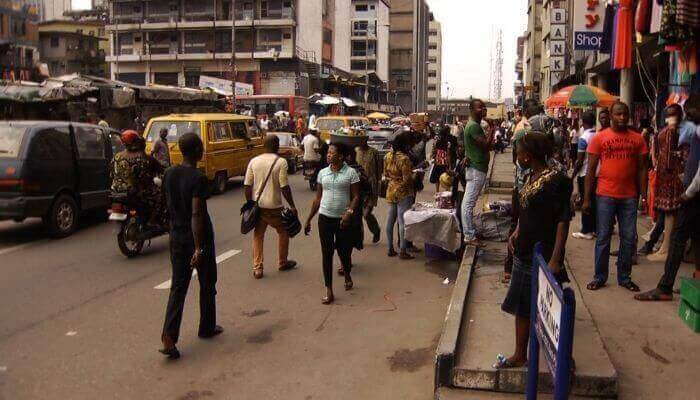
On their heads, on their backs, under their arms, they bring pieces of corrugated iron, boards, plywood, plastic, cardboard, metal automobile parts, crates, and all this they assemble, erect, nail, and glue into something halfway between a cabin and a lean-to, whose walls configure themselves into an improvised, colorful collage. Because the floor of the hut often consists of swampy ground, or sharp rocks, they line it with elephant grass, banana leaves, raffia, or rice straw, so as to have somewhere to sleep. These neighborhoods, these monstrous African papier-mâché creations, are made up of everything and anything, and it is they, and not Manhattan or the Parisian La Défence, that represent the highest achievement of human imagination, ingenuity, and fantasy. An entire city erected without a single brick, metal rod, or square meter of glass!
Like many other elemental "happenings," the slum neighborhoods have a short life span. It suffices that they spread too far, or that the city decides to build something on the same site. I once witnessed a slum extermination, not far from my alleyway. The shacks had reached down to the shore of the island. The military government deemed this unacceptable. Trucks carrying policemen arrived in the morning. A crowd gathered instantly. The police started to move on the settlement, driving out the inhabitants. A cry went up; there was turmoil. At this the bulldozers materialized, enormous bright-yellow Caterpillars. A moment later, clouds of dust and debris gusted upward as the machines advanced, demolishing street after street and leaving in their wake trampled, bare earth. That day, the alley filled up with refugees. It was crowded and noisy for a while, and even more stifling.
One day I had a visitor. He was a middle-aged man in a white djellabah. His name was Suleiman, and he hailed from Northern Nigeria. He had once worked for my Italian landlord as a night watchman. He knew the street and the entire surrounding neighborhood. He acted shy and didn't want to sit in my presence. He asked if I didn't need a night watchman, for he had just lost his job. I said I didn't, but he made a good impression on me and I gave him five pounds. A few days later he came again. This time he sat down. I made him some tea, and we started to talk. I told him about how I was being continually robbed. Suleiman considered this to be something completely normal. Theft is a method--admittedly unpleasant--of lessening inequality. It is good that they rob me, he declared. It can even be seen as a friendly gesture on the part of the perpetrators--their way of letting me know that I am useful, and, therefore, that they accept me. Basically, I can feel safe. Have I ever felt threatened here? No, I had to admit. Well, there you go! I will be safe here as long as I let myself be freely robbed. The moment I inform the police, and they start to pursue the thieves, is the moment I would be advised to move away.
He came again a week later. I gave him tea. He drank, and then said in a mysterious tone that he would take me to the Jankara Market, where we would make an appropriate purchase. Jankara Market is where witch doctors, herbalists, fortune tellers, and exorcists sell all manner of amulets, talismans, divining rods, and magical medicines. Suleiman walked from table to table, looking, asking. Finally, he indicated that I should buy a bunch of white rooster feathers from a certain woman. They were expensive, but I didn't resist. We returned to the alley. Suleiman arranged the feathers, tied them together with a piece of thread, and hung them from the top of my door frame.
From that moment on, nothing ever disappeared from my apartment.
[5/5]
Like many other elemental "happenings," the slum neighborhoods have a short life span. It suffices that they spread too far, or that the city decides to build something on the same site. I once witnessed a slum extermination, not far from my alleyway. The shacks had reached down to the shore of the island. The military government deemed this unacceptable. Trucks carrying policemen arrived in the morning. A crowd gathered instantly. The police started to move on the settlement, driving out the inhabitants. A cry went up; there was turmoil. At this the bulldozers materialized, enormous bright-yellow Caterpillars. A moment later, clouds of dust and debris gusted upward as the machines advanced, demolishing street after street and leaving in their wake trampled, bare earth. That day, the alley filled up with refugees. It was crowded and noisy for a while, and even more stifling.
One day I had a visitor. He was a middle-aged man in a white djellabah. His name was Suleiman, and he hailed from Northern Nigeria. He had once worked for my Italian landlord as a night watchman. He knew the street and the entire surrounding neighborhood. He acted shy and didn't want to sit in my presence. He asked if I didn't need a night watchman, for he had just lost his job. I said I didn't, but he made a good impression on me and I gave him five pounds. A few days later he came again. This time he sat down. I made him some tea, and we started to talk. I told him about how I was being continually robbed. Suleiman considered this to be something completely normal. Theft is a method--admittedly unpleasant--of lessening inequality. It is good that they rob me, he declared. It can even be seen as a friendly gesture on the part of the perpetrators--their way of letting me know that I am useful, and, therefore, that they accept me. Basically, I can feel safe. Have I ever felt threatened here? No, I had to admit. Well, there you go! I will be safe here as long as I let myself be freely robbed. The moment I inform the police, and they start to pursue the thieves, is the moment I would be advised to move away.
He came again a week later. I gave him tea. He drank, and then said in a mysterious tone that he would take me to the Jankara Market, where we would make an appropriate purchase. Jankara Market is where witch doctors, herbalists, fortune tellers, and exorcists sell all manner of amulets, talismans, divining rods, and magical medicines. Suleiman walked from table to table, looking, asking. Finally, he indicated that I should buy a bunch of white rooster feathers from a certain woman. They were expensive, but I didn't resist. We returned to the alley. Suleiman arranged the feathers, tied them together with a piece of thread, and hung them from the top of my door frame.
From that moment on, nothing ever disappeared from my apartment.
[5/5]
• • •
Missing some Tweet in this thread? You can try to
force a refresh