Financial Times: The US will provide Ukraine with air & intel support. Postwar.
Trump says Washington will take part in “co-ordination” of European security guarantees, offering battlefield oversight as part of a security shield. 1/
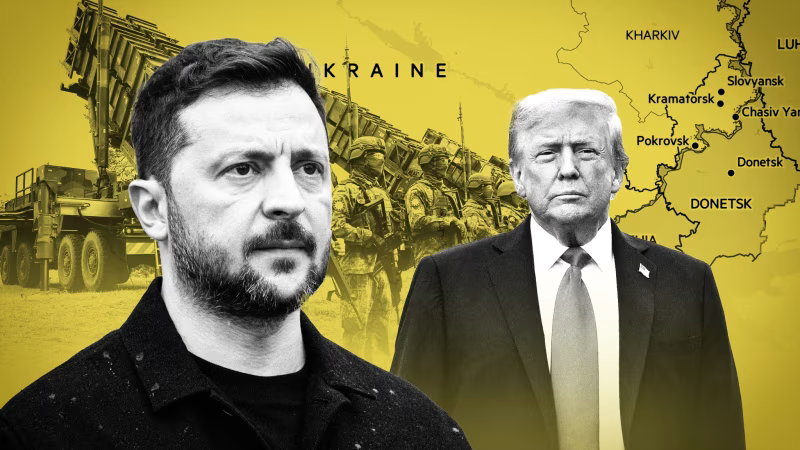
The US is ready to provide “strategic enablers” — intelligence, surveillance, command & control, and air defense — if Europe deploys tens of thousands of troops to Ukraine.
А major shift from Trump’s prior refusal to back postwar Ukraine. 2/
European officials say deployments need US support to protect their troops. A UK-France-led “coalition of the willing” pledges to defend postwar Ukraine.
The US opposes sending its own forces, with some officials, including Defence Sec. Hegseth, skeptical. 3/
Trump told Fox News the US is “willing to help” European forces, likely by air.
Postwar support would include US aircraft, logistics, and radar for an air shield, plus intelligence and command to monitor a ceasefire and coordinate Western forces. 4/
A three-tier defense plan envisions a DMZ, Ukrainian troops on the border, and a European-led force deeper in Ukraine supported by the US.
Putin demands Russia’s role in guarantees, rejecting a Trump-proposed summit and pressing maximalist territorial claims. 5/
Zelenskyy said his military leadership is working with the "coalition of the willing" and that the "defence component of the security guarantees must be detailed in the near future." 6X
McFaul in Foreign Affairs: Trump mixed talks on a Russia-Ukraine ceasefire, land swaps and security guarantees into one package and got nowhere.
The only workable order is to: first, secure US–European guarantees for Ukraine, then Zelenskyy and Putin should meet on borders. 1/
Putin will not end the war without holding Ukrainian territory. Zelenskyy can't cede land without risking removal from office.
The only viable compromise is de facto occupation: Russia keeps what it holds, Ukraine commits to reunify only by peaceful means. 2/
Zelenskyy can only risk that deal with hard insurance. NATO is blocked.
The substitute is a US–European pact: arm Ukraine to be Europe’s strongest army, pledge collective defense, and base troops and aircraft in Poland and Romania. 3/
Rutte: Russia and China expand militaries fast with little transparency. Their industries produce weapons to secure influence and undermine order.
Russia will roll out 1,500 tanks, 3,000 vehicles, hundreds of Iskanders this year. China already has the world’s largest navy. 1/
Rutte: Russian military build-up shows they prepare for long-term confrontation. But Europe and America will turn the tide in defence production. NATO agreed to invest 5% GDP. Germany plans €153B by 2029, doubling spending in 8 years. 2/
Rutte: Deterrence comes from capability to fight, not 5%. Rheinmetall is important. This factory plans 350,000 shells a year.
This year, plants in Germany, Spain, Hungary, South Africa and Australia will produce 700,000 artillery rounds. 3/
Russian drones are flying over Germany to surveil U.S. and allied supply routes to Ukraine, NYT says.
Concentrated in Thuringia, Russian UAVs map weapons corridors.
Officials warn Moscow seeks to disrupt aid through future sabotage operations. 1/
Intelligence may aid Kremlin sabotage and support Russian troops in Ukraine. U.S. and German officials discussed plots, leading to May arrests of 3 Ukrainians.
Russian sabotage in Europe has sharply declined in 2025 after peaking in 2024. 2/
Russian attacks in Europe surged 4x in 2022–23 and 3x in 2023–24, but fell to just 4 incidents in early 2025. The drop is linked to tighter European security and Ukraine peace talks.
Gen. Grynkewich credited “robust law enforcement efforts” for curbing sabotage. 3/
Ukraine’s 1st Deputy Foreign Minister, Kyslytsa: Trump’s leadership forced Putin to at least consider negotiations.
His media caricature doesn't match reality.
In person, he appeared physically strong, cognitively sharp, and able to run multiple conversations at once. 1/
Kyslytsa: In 2022 global support for Ukraine was driven by shock and emotion.
By 2025 it’s structured: over 30 states form a coalition that delivers both political backing and practical military aid through a system that works daily, not just symbolic declarations. 2/
Kyslytsa: Ukraine rejects Russia and China as guarantors of its safety. Past experience proves their role is destructive.
Real guarantees must come only from states that respect international law and can enforce it politically, militarily, and institutionally. 3/
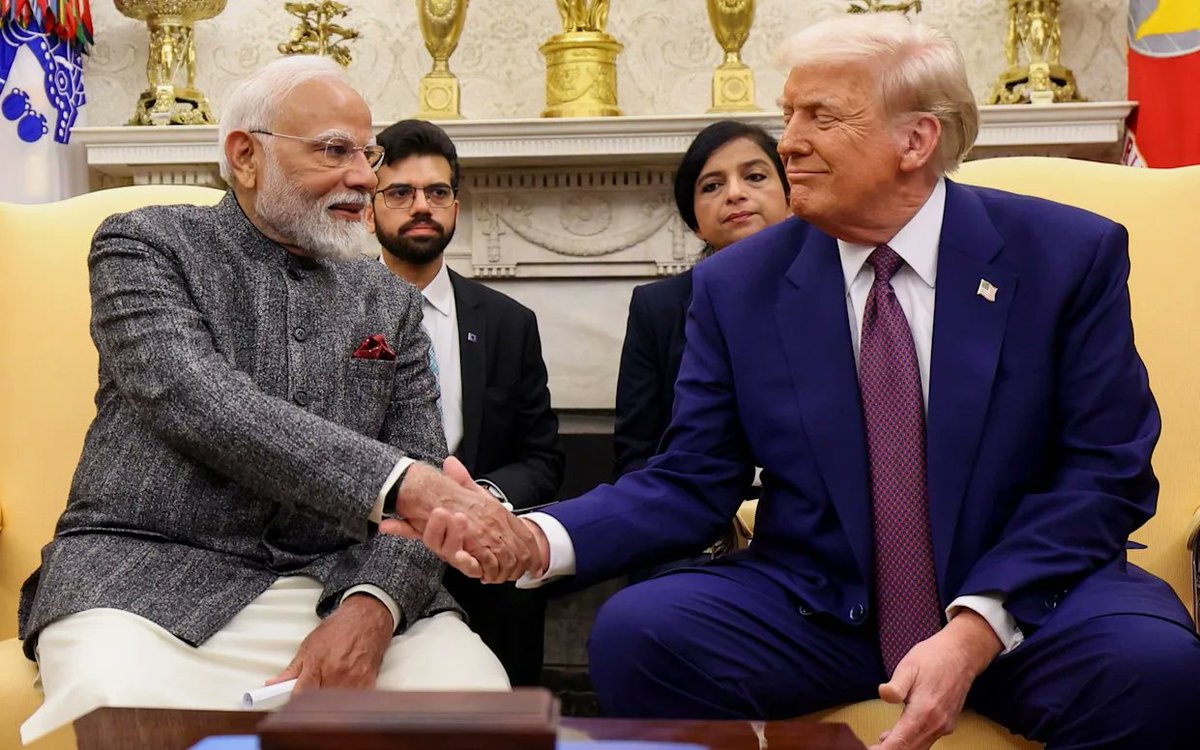
Bloomberg: Trump hit India with 50% tariffs at midnight, punishing Modi for buying Russian oil.
Tariffs strike 55% of exports to the US, crippling labor-intensive industries like textiles, footwear, and jewelry, while sparing electronics and pharma. 1/
The US canceled a trade mission set for Aug 25-29, wrecking hopes of a fall deal promised during Modi’s February White House visit.
As talks collapse, India turns to BRICS: Modi heads to China next week, while trade with Russia is set to jump 50% to $100B. 2/
Trump ties trade to geopolitics, claiming he brokered a ceasefire after May’s India-Pakistan clashes — a story Modi rejects.
Citigroup sees tariffs cutting 0.6-0.8 pp from GDP, though exports are just 2% of output. Modi bets on tax reform and aid to cushion the blow. 3X
Bessent: Europe must step up. They buy refined products from Russian oil yet won’t threaten tariffs on India.
Only Canada backed Graham’s bill for high secondary tariffs at the G7. This war is in Europe’s backyard — they must share the burden, not leave it to the U.S.
1/
Bessent: Frozen Russian assets are part of negotiations with Putin. We shouldn’t seize them immediately — they’re leverage. In talks, some or all may go to Ukraine’s rebuild.
2/
Q: India vows retaliation after Trump’s 50% tariff over Russian oil. Thoughts?
Bessent: Trump and Modi have good ties, but India stalled tariff talks since Liberation Day. I expected a deal by May-Jun. Instead, they drag talks while profiteering on Russian crude.