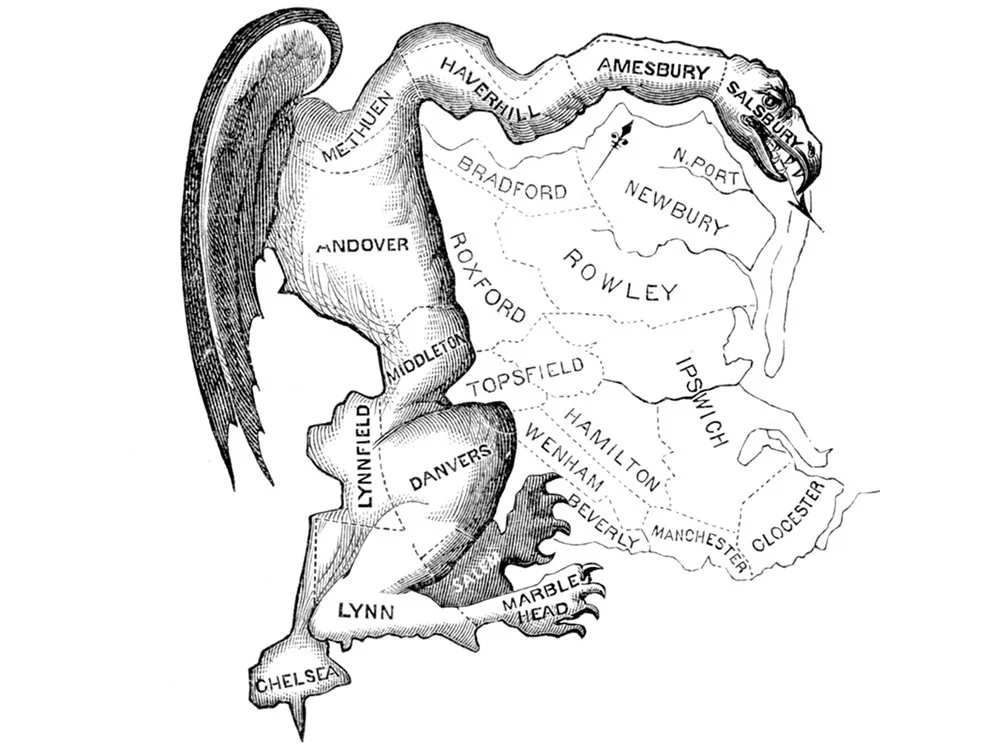
Gerrymandering is the death of centrism in America.
The more districts are uncompetitive, the less hope there is for moderate candidates, and the less value there is in moving to the center.
Gerrymandering means a more divisive and polarized America, with poorer governance🧵
The more districts are uncompetitive, the less hope there is for moderate candidates, and the less value there is in moving to the center.
Gerrymandering means a more divisive and polarized America, with poorer governance🧵
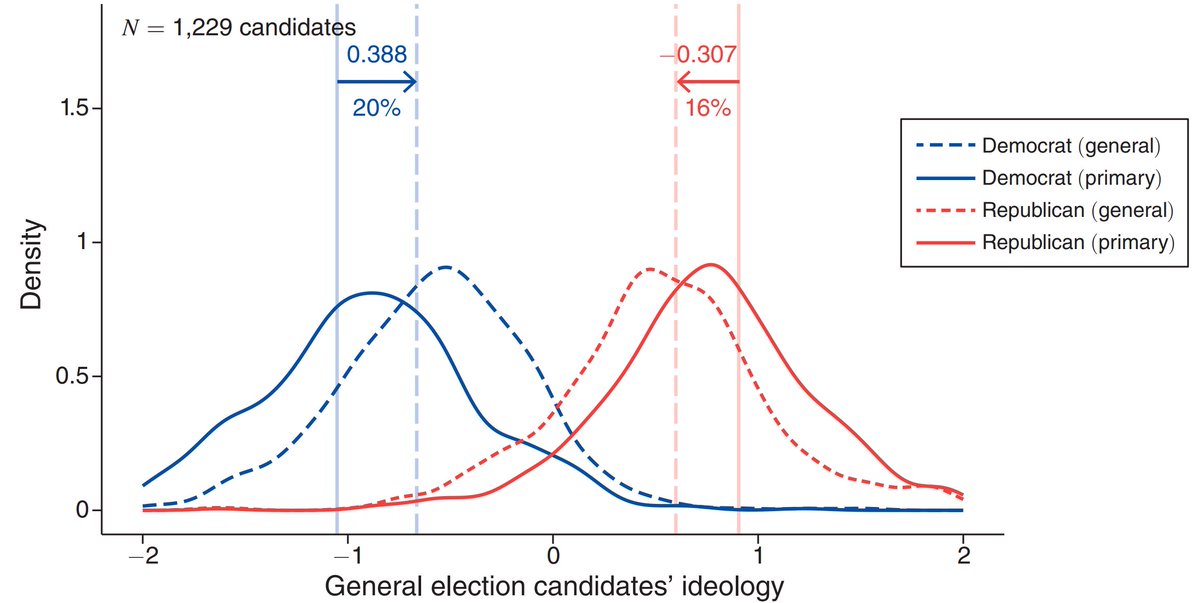
A recent paper in the American Economic Review made the value of competitive elections clear using data from America and France.
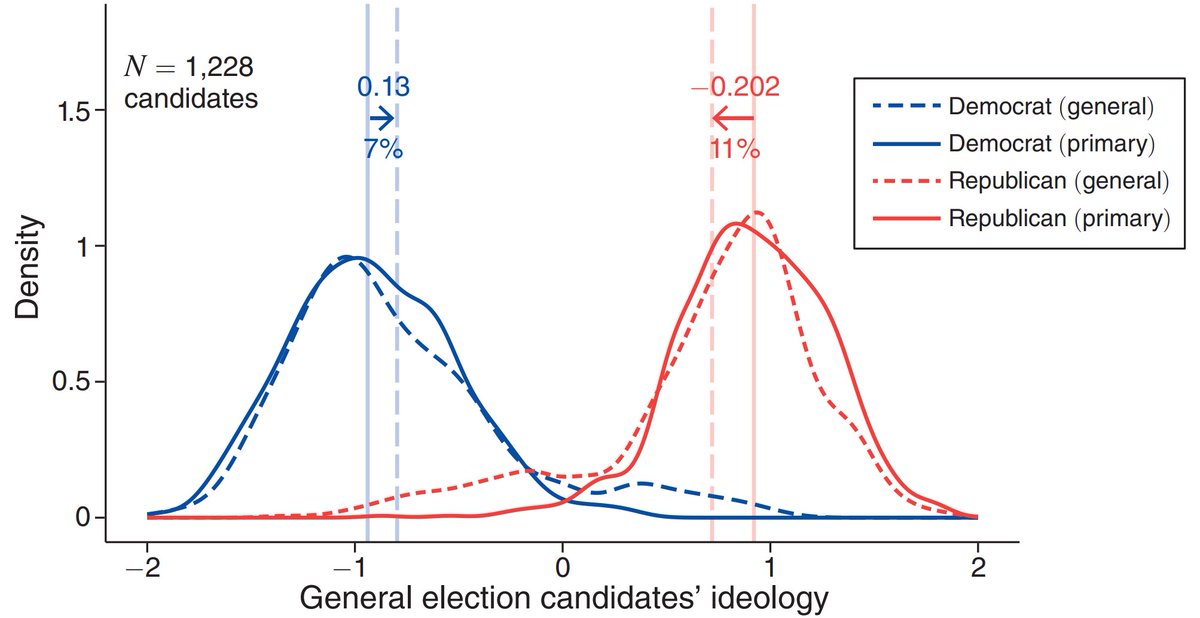
Looking at American elections, when candidates are in their primaries, they're more radical. When they compete with the other party, they moderate.
Looking at American elections, when candidates are in their primaries, they're more radical. When they compete with the other party, they moderate.
The same thing is observed in France, where the multi-round elections come with extensive moderation for some, slight moderation for others, and essentially no moderation for those who are already at the nation's center.
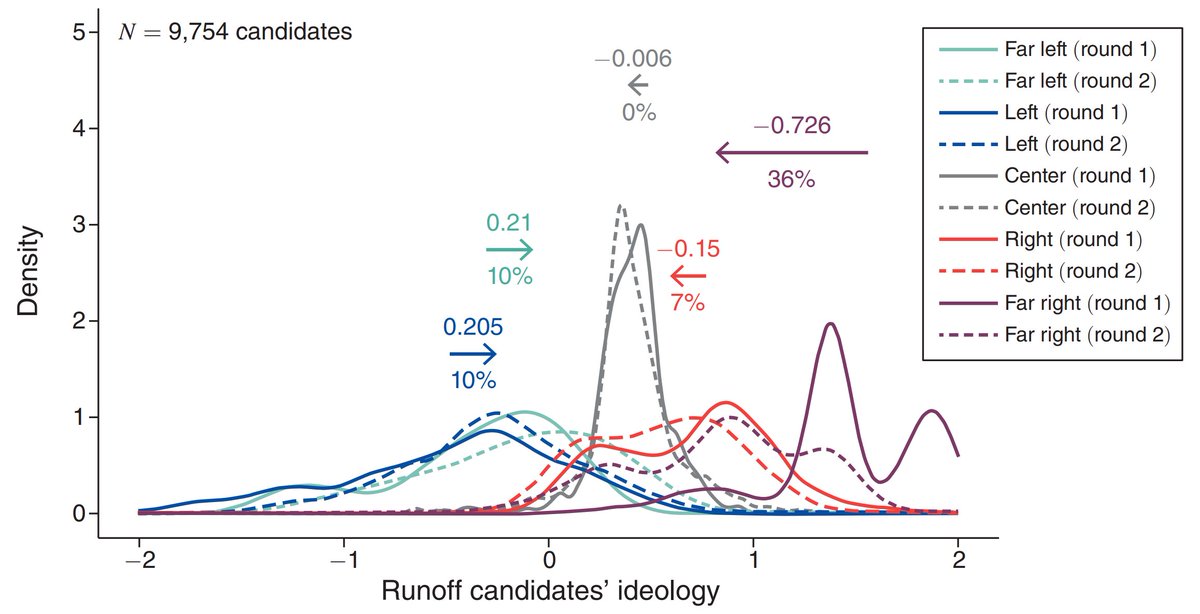
You can see this result replicated in America using the campaign contributions of donors.
As candidates move to the general, they seek out more moderate donors.
As candidates move to the general, they seek out more moderate donors.
You can also see this in candidate speeches.
When they're talking to their party, they're focused on their party's priorities. When they're talking across the aisle, they talk to the other party's priorities.
When they're talking to their party, they're focused on their party's priorities. When they're talking across the aisle, they talk to the other party's priorities.

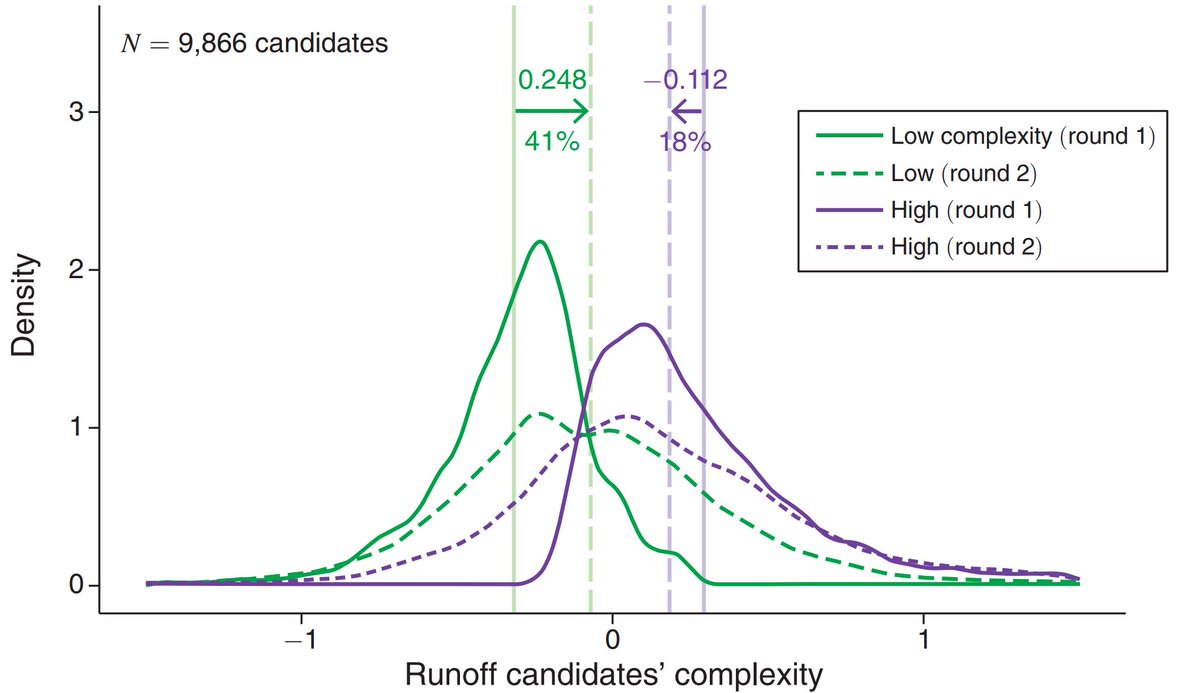
Another way you can see this in speeches is by looking at their complexity.
Candidates who appear a little dull tend to move their speech quality up a bit, whereas candidates who appear too brainy for the electorate try to appear less nerdy.
Candidates who appear a little dull tend to move their speech quality up a bit, whereas candidates who appear too brainy for the electorate try to appear less nerdy.

The complexity finding also replicates in France.
Notice that in that key second round of elections, people are talking a lot more 'normally' to the electorate.
Notice that in that key second round of elections, people are talking a lot more 'normally' to the electorate.
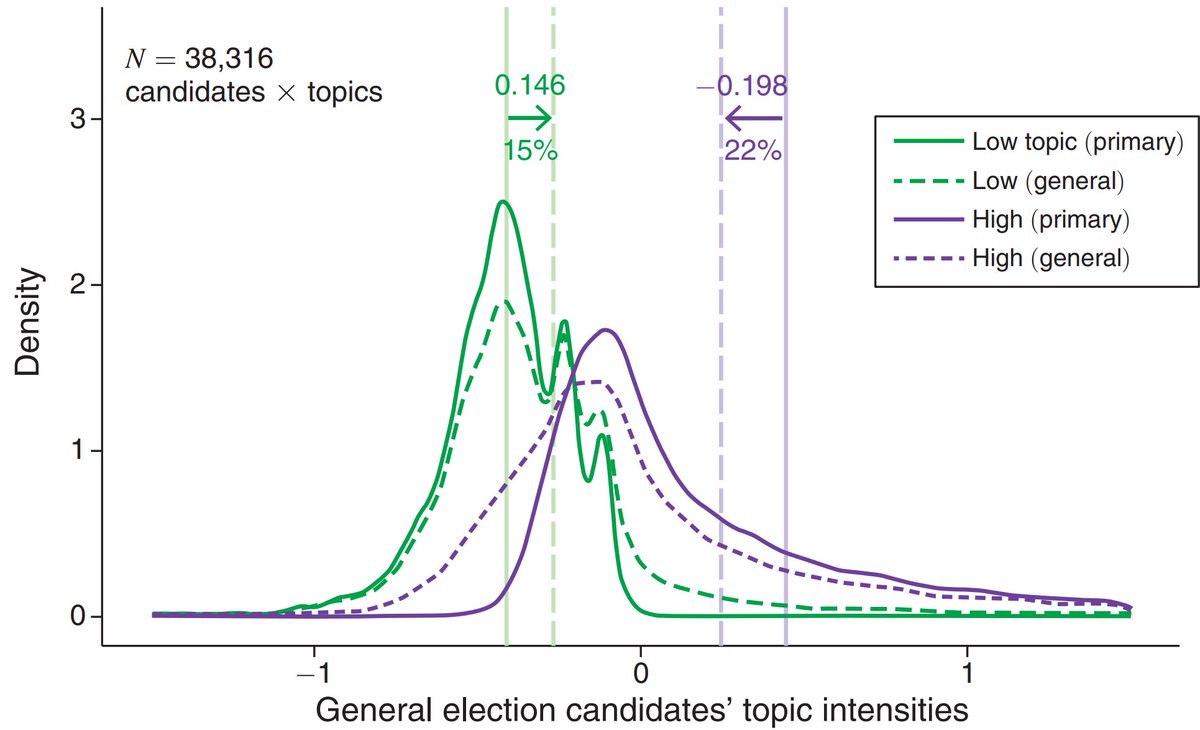
A some-times frustrating part of this moderation is that candidates change their focus on topics
This is a necessary part of appearing to moderate, but it can mean candidates focusing on too few or too many topics relative to your personal desires
This also replicates in France
This is a necessary part of appearing to moderate, but it can mean candidates focusing on too few or too many topics relative to your personal desires
This also replicates in France
How candidates choose to converge is similar in both countries as well.
The moderation shift is towards the positions of the winning opponent, rather than to people who fell out of the primary or to other runner-ups that failed.
People converge to their opponents!
The moderation shift is towards the positions of the winning opponent, rather than to people who fell out of the primary or to other runner-ups that failed.
People converge to their opponents!
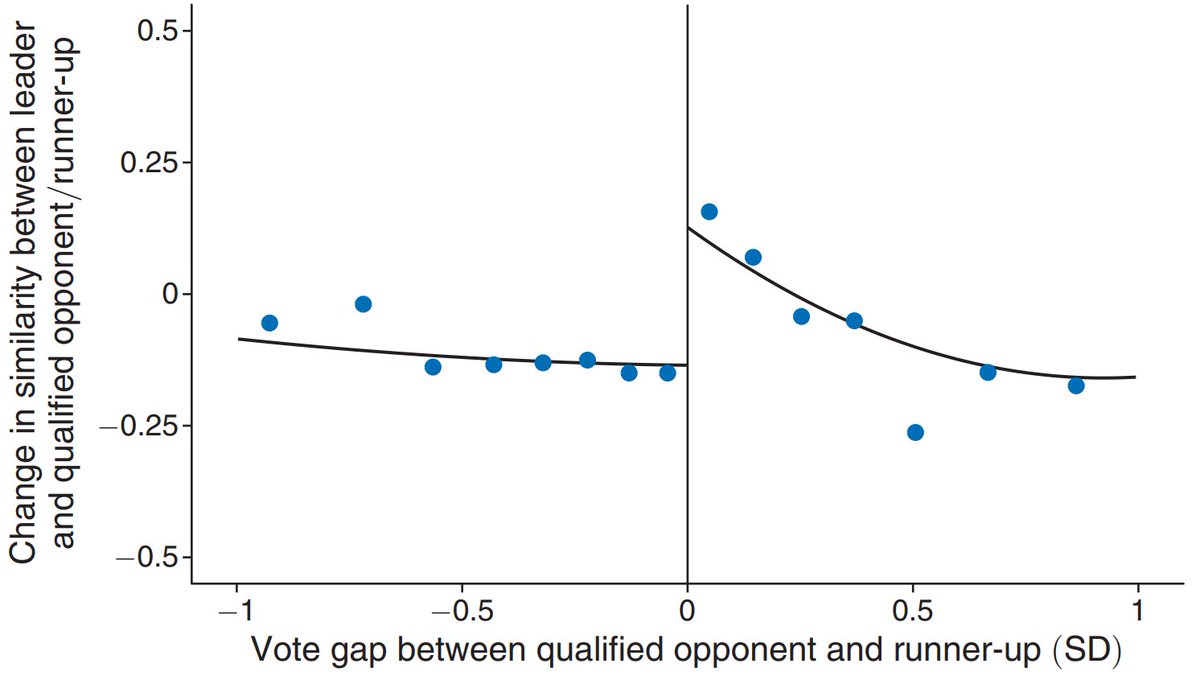
This is key.
If the electorate demands a far-left candidate, the far-right candidate will move even further left; if they demand a far-right candidate, the far-left candidate will move even further right.
There's an inherent moderating tendency to competitive elections!
If the electorate demands a far-left candidate, the far-right candidate will move even further left; if they demand a far-right candidate, the far-left candidate will move even further right.
There's an inherent moderating tendency to competitive elections!
But there are tendencies that militate against moderating.
For example, voters punish candidates they perceive as "flip-flopping"—changing from one position to a seemingly or actually contradictory one.
For example, voters punish candidates they perceive as "flip-flopping"—changing from one position to a seemingly or actually contradictory one.
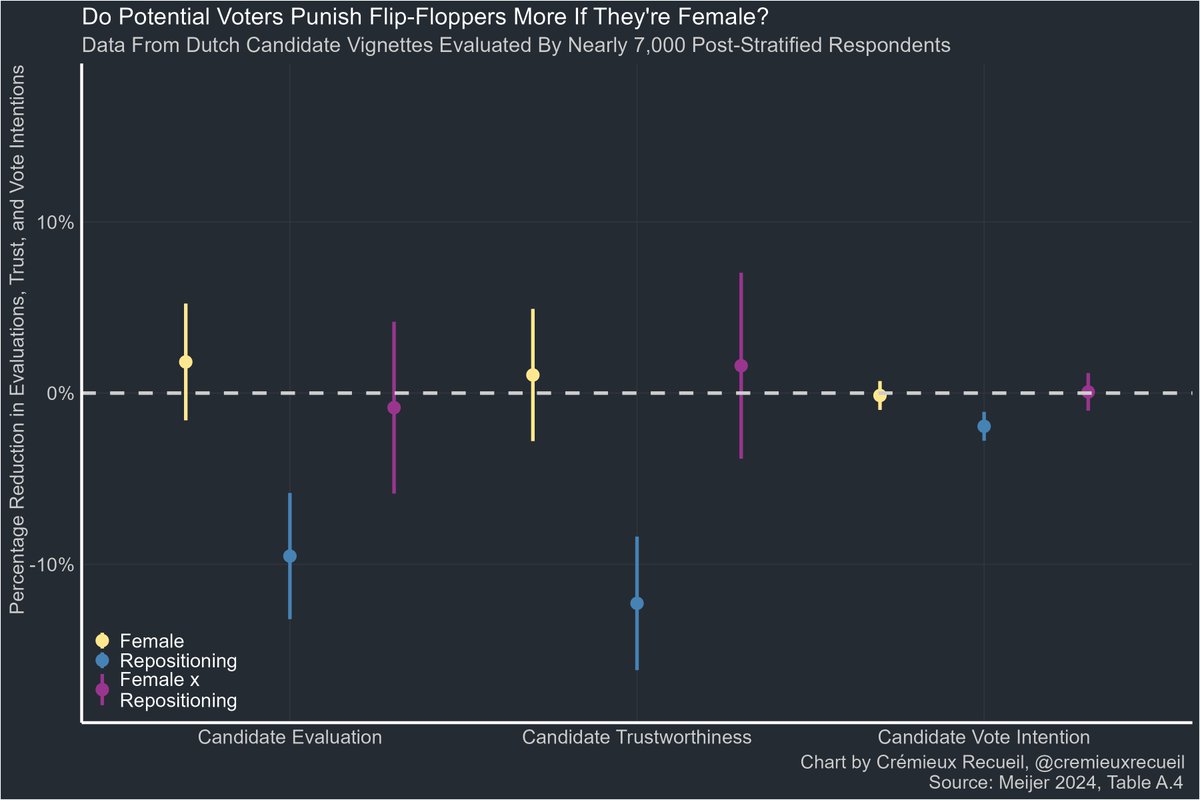
There's something to this.
When you look at candidate roll call votes, the tendency to moderate when facing an election is small.
If you've paid attention, you'll notice that it's fully of token gestures and leads to claims of bipartisanship that are obviously untrue.
When you look at candidate roll call votes, the tendency to moderate when facing an election is small.
If you've paid attention, you'll notice that it's fully of token gestures and leads to claims of bipartisanship that are obviously untrue.

Politicians also, famously, do not keep their promises.
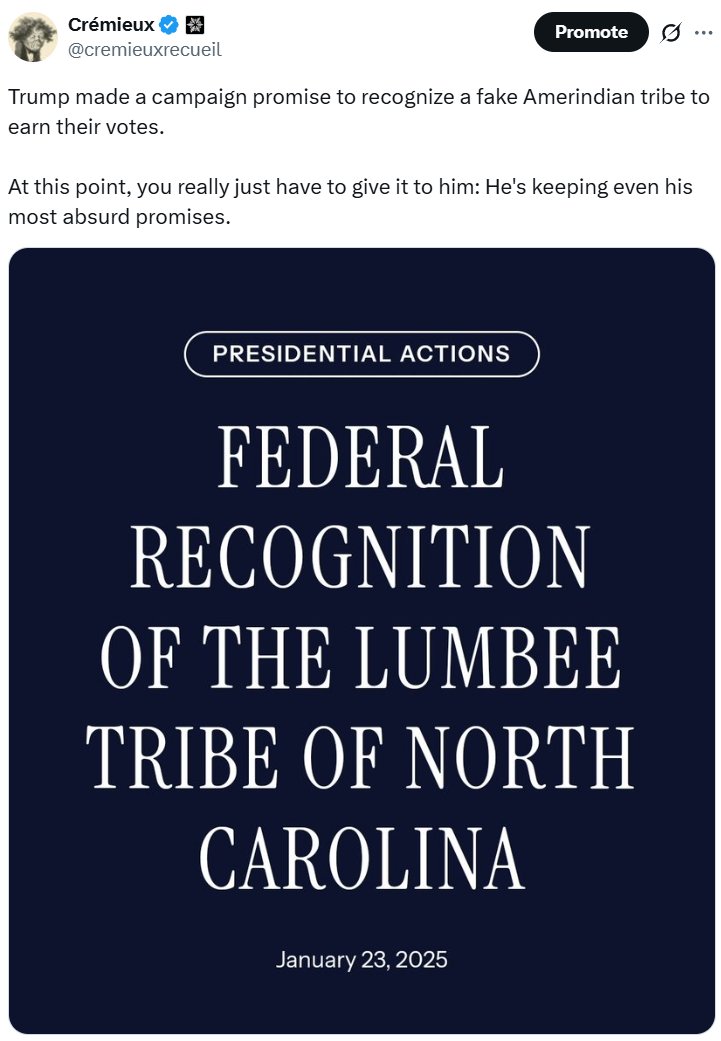
It's been a surprise to see Trump sticking to his 2024 campaign motto of "Promises made, promises kept" for even ridiculously silly promises, like recognizing a group of African Americans as an official native tribe.
It's been a surprise to see Trump sticking to his 2024 campaign motto of "Promises made, promises kept" for even ridiculously silly promises, like recognizing a group of African Americans as an official native tribe.
The primary way competitive elections moderate and depolarize is therefore not through actually moderating candidates.
It's through selection effects.
If you must be a moderate to win, then only moderates will win; if any old partisan can win, internal party politics dominate.
It's through selection effects.
If you must be a moderate to win, then only moderates will win; if any old partisan can win, internal party politics dominate.
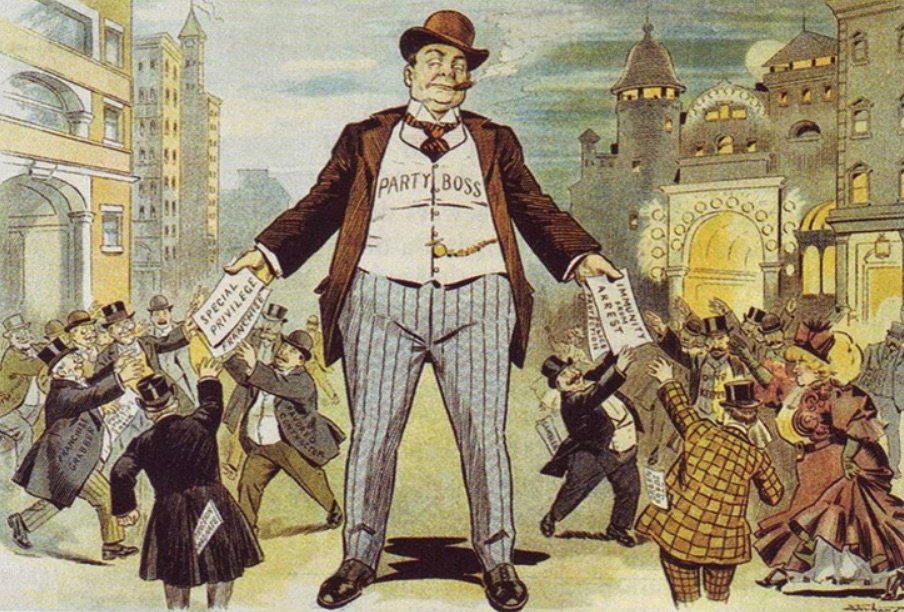
One of the key political issues in recent decades has been that Congress has empowered the President by withdrawing from its duty to write laws clearly and forcefully, to regulate, to provide oversight, and to just generally govern.
Instead, they entrust power to the agencies.
Instead, they entrust power to the agencies.

Agencies have gained extensive regulatory powers. Under Chevron, opinions of petty bureaucrats even effectively had the force of law.
If Congress is to legislate again and exercise its powers well, it'll need to be depolarized. Partisan Congressmen will not agree to a fix.
If Congress is to legislate again and exercise its powers well, it'll need to be depolarized. Partisan Congressmen will not agree to a fix.
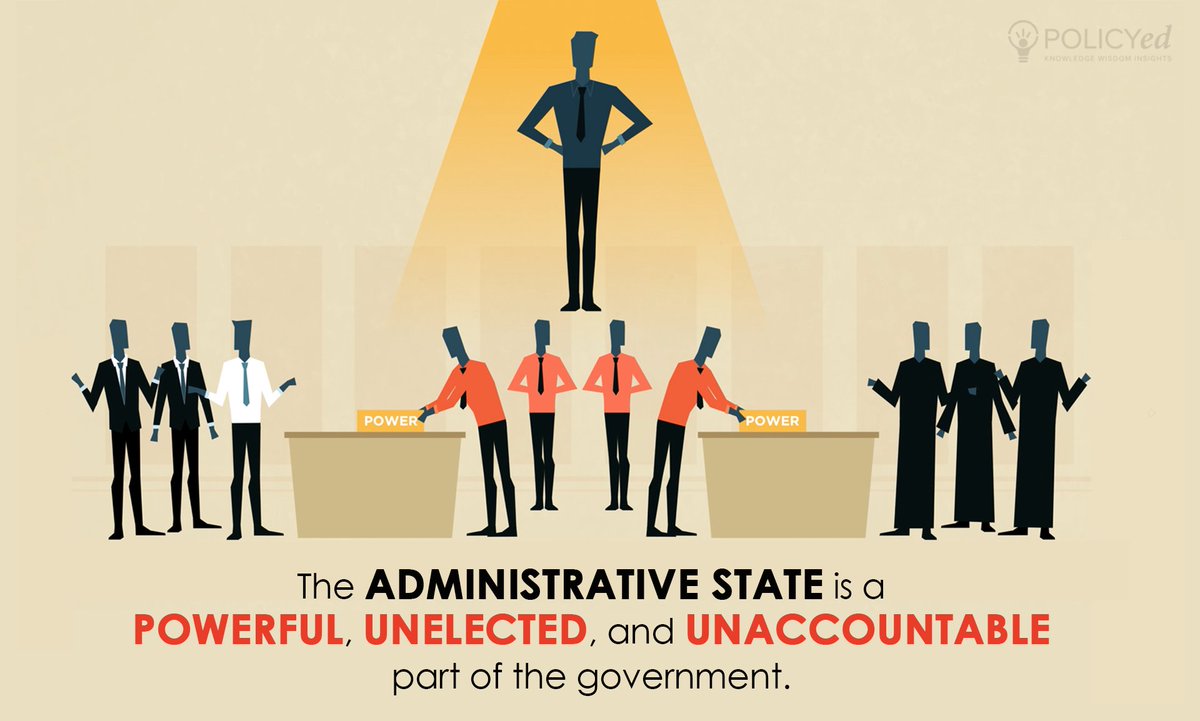
Even when the parties weren't as starkly opposed as now, they ceded enormous power to the administrative state.
With things becoming even worse, it's not clear Congress will ever act in the interest of retaining and exercising its power. Partisan Presidencies will run roughshod.
With things becoming even worse, it's not clear Congress will ever act in the interest of retaining and exercising its power. Partisan Presidencies will run roughshod.
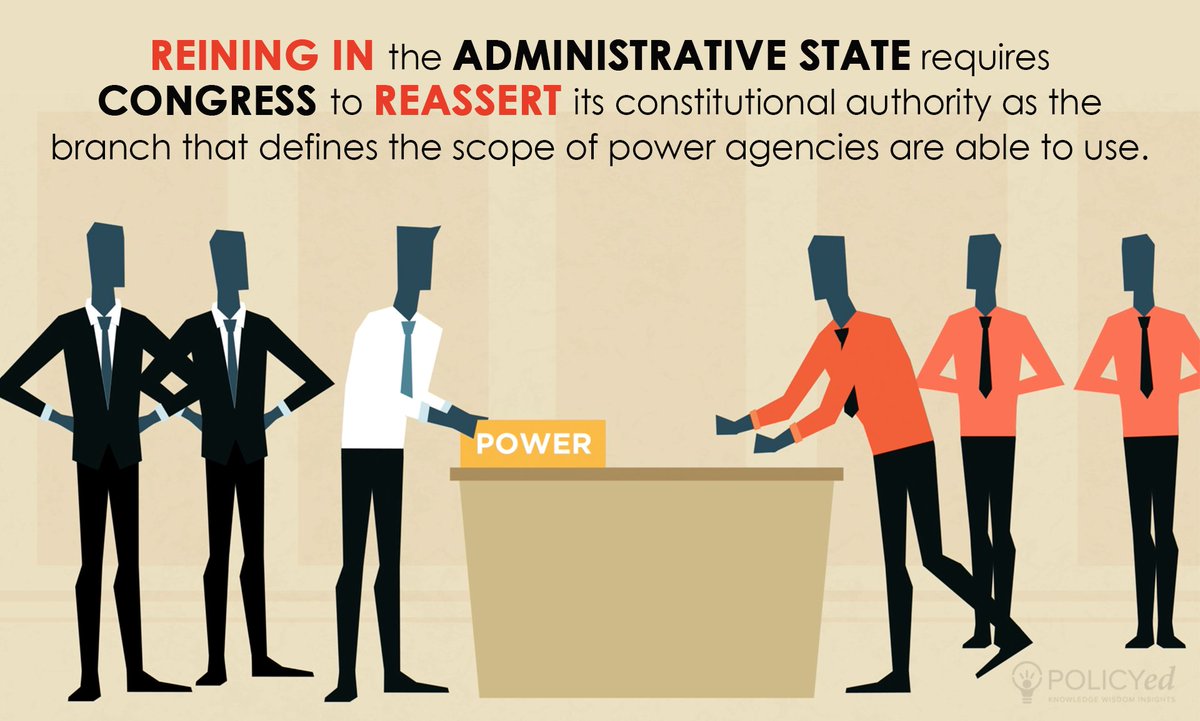
If you care about getting Congress to function properly again and America getting out of its legislative funk, you need to be proposing and promoting strategies to combat gerrymandering.
Not only that, but you should promote both party's centers to depolarize Congress again.
Not only that, but you should promote both party's centers to depolarize Congress again.
Promoting good governance will be a bipartisan thing so long as Americans live under a two-party system (which is far better than a one-party one!).
If you're a Democrat or Republican partisan, you de facto support Congressional dysfunction.
That has not been good for America.
If you're a Democrat or Republican partisan, you de facto support Congressional dysfunction.
That has not been good for America.
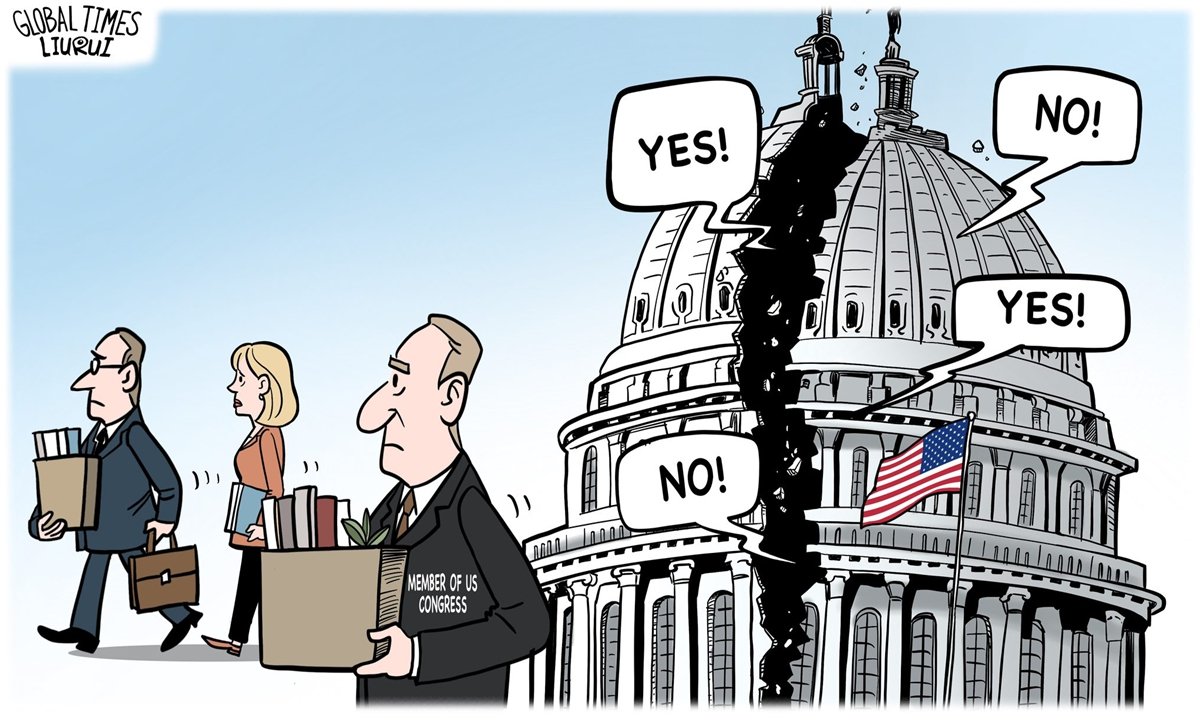
Similarly, if you support things like cancellations and politically-motivated prosecutions, you are de facto supporting Congressional dysfunction.
You support pushing people to the point where moderation disappears, revenge is desired, and extremity remains on the table.
You support pushing people to the point where moderation disappears, revenge is desired, and extremity remains on the table.

If you want more peace, more normality, and more and better governance, you should want to end gerrymandering—you should want competition.
Sources:
aeaweb.org/articles?id=10…
cremieux.xyz/p/voters-dont-…
Sources:
aeaweb.org/articles?id=10…
cremieux.xyz/p/voters-dont-…
P.S. I am aware that the electoral benefits of campaign moderation have declined. That's irrelevant to the findings discussed above and to my broader point, in no small part because it's based on falling competition
Anyway, moderates are more electable: split-ticket.org/2025/03/17/are…
Anyway, moderates are more electable: split-ticket.org/2025/03/17/are…
P.P.S. I am also aware of the rallying effect of ideologically extreme candidates when it comes to their own party's base.
This fails at the national level (thank god), and becomes increasingly irrelevant under gerrymandering, so it's not a legitimate quibble.
This fails at the national level (thank god), and becomes increasingly irrelevant under gerrymandering, so it's not a legitimate quibble.
P.P.P.S. The requirement in the Voting Rights Act to have racially gerrymandered districts to ensure minority representation directly encourages this by forcing blue districts into existence, and turning surrounding districts more red.
Less competition!
Less competition!
https://x.com/cremieuxrecueil/status/1959459885432615356
• • •
Missing some Tweet in this thread? You can try to
force a refresh