Hathyogi (हठयोगी) Profile picture
Aug 27 10 tweets 3 min read Read on X
America Has Played Its Last Card – But India Hasn’t Even Started and the Trump administration is slowly beginning to realize something uncomfortable: it has miscalculated.
.
.
.
.
.
.
.
.
.
.
.
.
.
.
Read the entire post to know the latest updates on tarrif war. Image
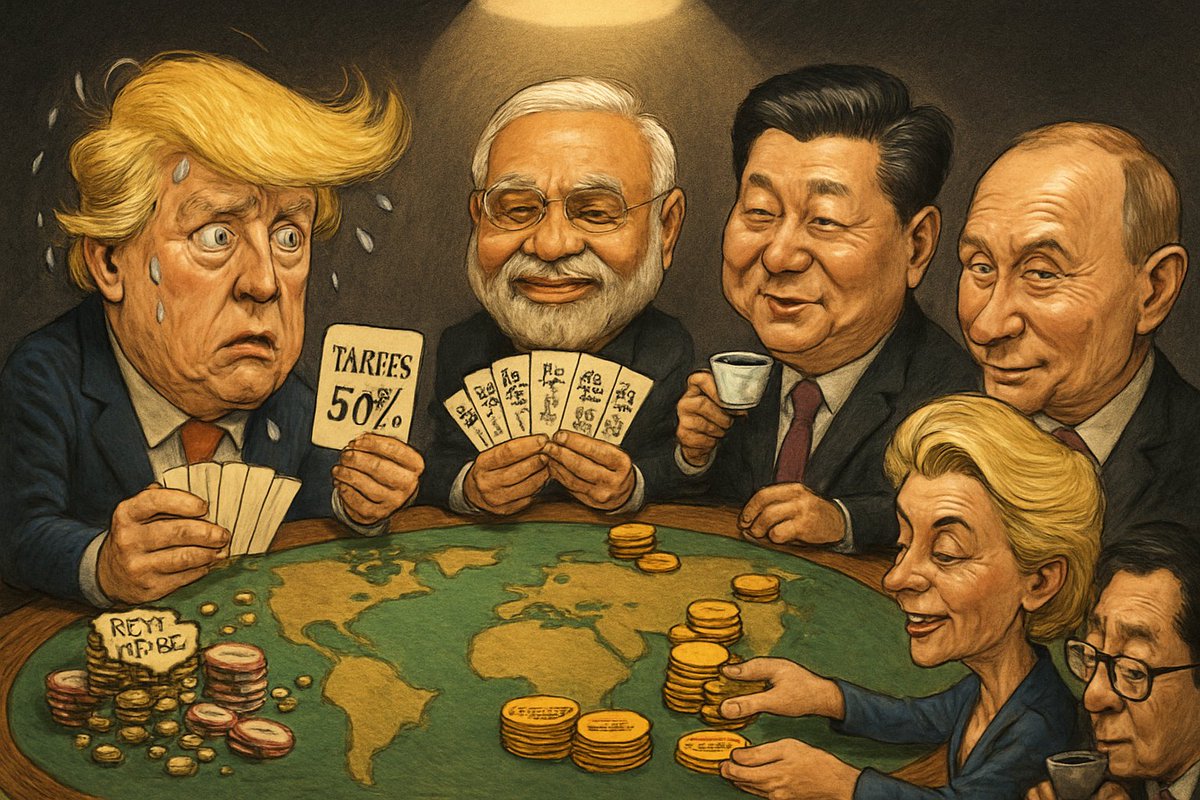
By slapping 50% tariffs on Indian goods, Washington believes it has exhausted its strongest hand. But here lies the irony—America may have played its final card, while India hasn’t even opened the game.
Some will argue that the U.S. can still target India’s IT services, electronics, or pharma exports. But let’s be clear, if Washington could have done it, it already would have.
There are no real alternatives to Indian IT services, no substitute for Indian generics that keep healthcare affordable for American middle and lower classes, and no replacement for the electronics ecosystem tied to India’s labor and manufacturing hubs. This is why the so-called “threats” remain empty.
The only extreme step left for the U.S. would be economic sanctions—placing India in the same category as enemy states like Russia. That would be a suicidal escalation, effectively ending decades of strategic partnership. But does Trump want to push ties with the world’s largest democracy to the brink?
Meanwhile, New Delhi has not even begun to retaliate. Prime Minister Modi holds multiple cards in hand. India has yet to touch the sensitive ground of digital taxation, data localization, and Big Tech regulation—moves that could cripple American tech giants operating in India. Nor has India begun counter-leveraging defense deals, energy partnerships, or regional alignments.
And here’s the real twist—while America is cornering itself, India is strengthening its position globally-

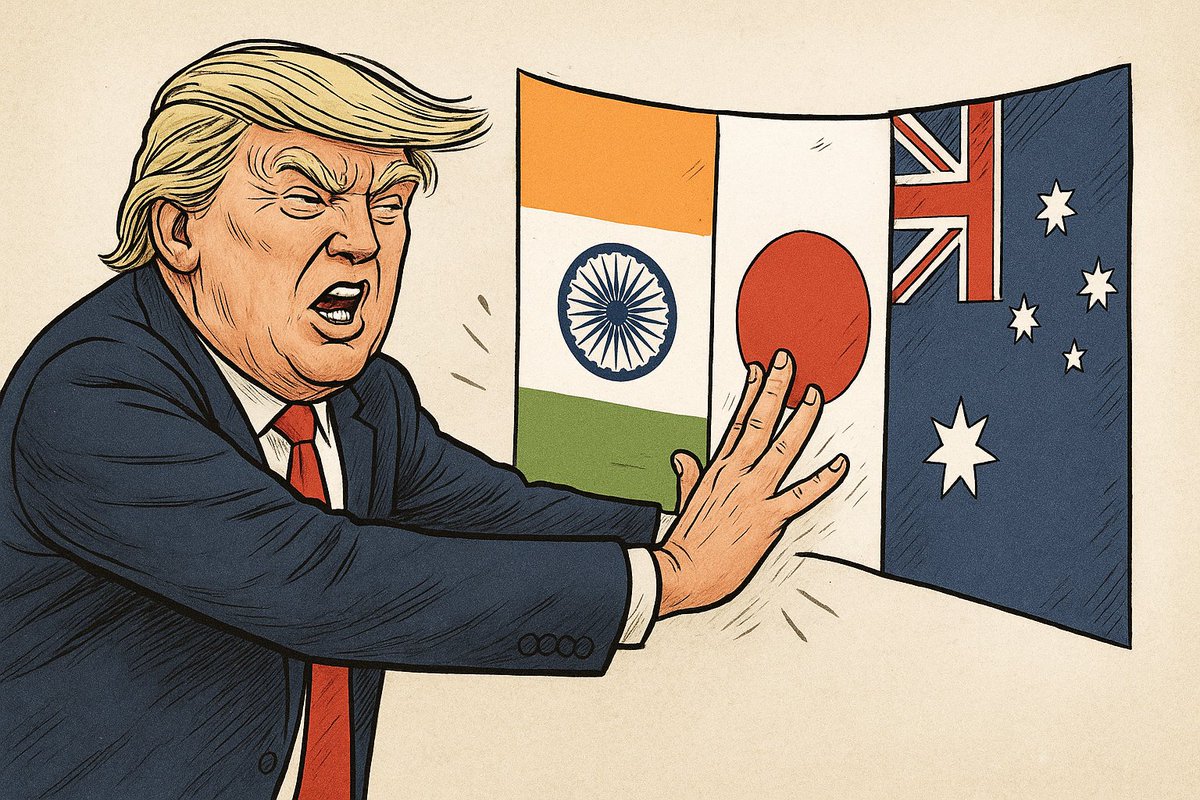
▪️Japan has already committed nearly $70 billion of investments over the next decade.

▪️Australia is emphasizing India as a “credible partner” and warning Washington against destabilizing QUAD.

▪️Even within the U.S., the Pentagon is pressing the administration not to push India away, recognizing that losing defense cooperation with India would be catastrophic for America’s Indo-Pacific strategy.
The most telling sign, however, comes from U.S. Treasury Secretary Scott Bessent—once known for his harsh anti-India rhetoric—now suddenly softening his tone. Why?

Because Washington is realizing what it should have known all along: India cannot be coerced. Every aggressive step taken so far has yielded no concessions. America has “broken the glass” but gained nothing.
On the other side, India is carefully calibrating. Modi’s upcoming visits to China and Japan highlight a masterstroke of balance. At Beijing, India will stand alongside Xi Jinping and Vladimir Putin in a show of Global South solidarity.

Yet at Tokyo, Modi will reaffirm trust with Japan, a democratic partner and a reliable investor. This dual track makes India unshakable—deeply tied to both the Global South and the democratic West.
When India finally decides to play its cards—digital restrictions on Big Tech, diversification of defense partnerships, counter-tariffs, or deepened alignment with Russia and China—the U.S. will have no answers left.

Trump may have played his last move. India hasn’t even started.

• • •

Missing some Tweet in this thread? You can try to force a refresh

 

Keep Current with Hathyogi (हठयोगी)

Hathyogi (हठयोगी) Profile picture

Stay in touch and get notified when new unrolls are available from this author!

Read all threads

This Thread may be Removed Anytime!

PDF

Twitter may remove this content at anytime! Save it as PDF for later use!

Try unrolling a thread yourself!

how to unroll video
  1. Follow @ThreadReaderApp to mention us!

  2. From a Twitter thread mention us with a keyword "unroll"
@threadreaderapp unroll

Practice here first or read more on our help page!

More from @hathyogi31

Aug 29
A New Axis Emerges: How Trump’s Tariff War is Reshaping Global Alignments. A new Troika is loading.
.
.
.
.
.
.
.
.
.
.
.
.
.
.
.
.
Read the entire post to know about this new troika griup Image
When President Donald Trump initiated his tariff war, he was well aware of its looming economic consequences. What he may not have anticipated, however, were the far-reaching geopolitical ripple effects it would unleash. Today, those consequences are taking shape in ways that few in Washington could have foreseen.
Initially, Trump’s aggressive tariff policies drove Russia, India, and China closer together, consolidating their alignment against U.S. trade hegemony. But now, a second and perhaps more surprising axis is forming: India, Japan, and Australia—the three non-U.S. members of the Quad. What was once a U.S.-led security grouping designed to balance China in the Indo-Pacific is now showing cracks, with its members turning to each other in defiance of Trump’s transactional diplomacy.
Read 14 tweets
Aug 29
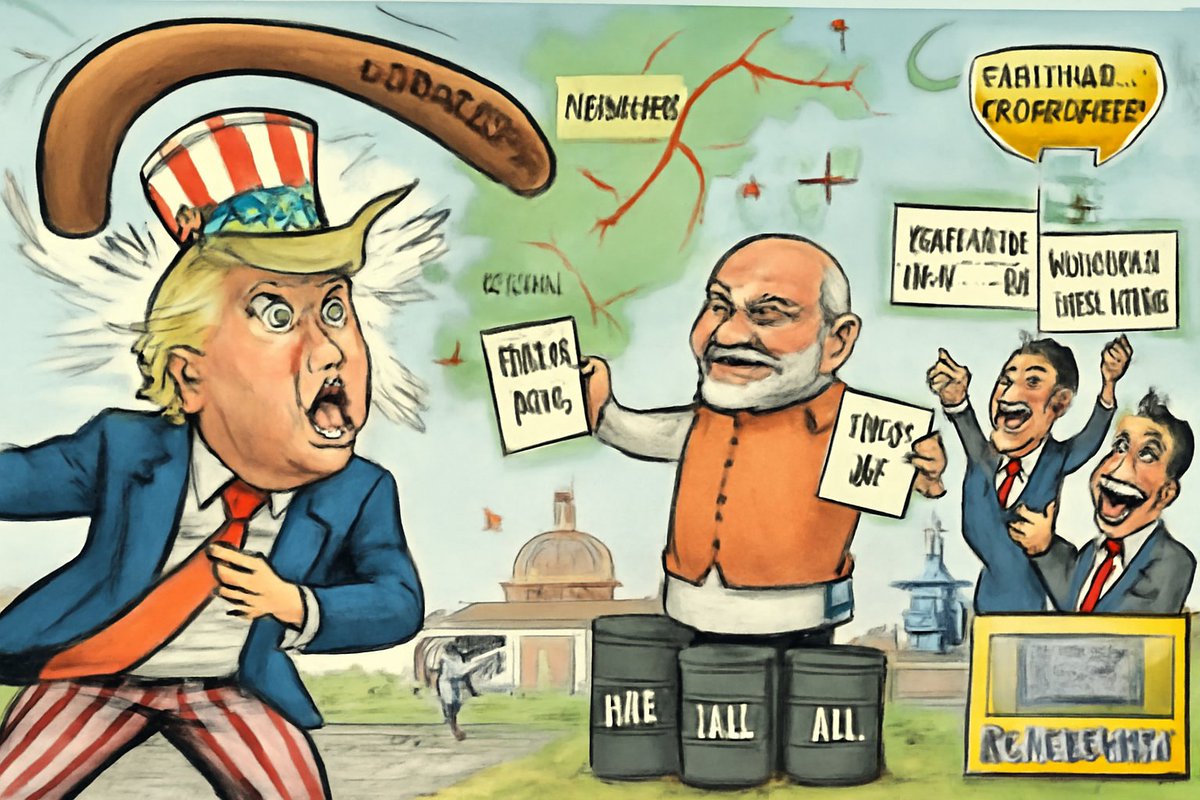
Trump’s Tariff Gamble Backfires as India Strengthens Global Standing. “We were betrayed by our own, outsiders had no strength.” Ironically, this seems to be the reality facing President Donald Trump today.
.
.
.
.
.
.
.
.
.
.
.
.
.
Read the entire post to know the whole context. Image
His aggressive tariff policy, especially towards India, is no longer only drawing criticism from economists but is now sparking political backlash within the United States itself.

Growing Opposition at Home

Initially, Trump’s tariff strategy was ridiculed by American economists who openly criticized and even humiliated him for the policy’s impracticality. But the pushback has now moved beyond the economic circles. Members of the U.S. Congress, particularly from the House Foreign Affairs Committee, have publicly questioned Trump’s approach.
Democrats—and even some Republicans—have argued that these tariffs are not only damaging U.S.–India relations but are also directly hurting American citizens by making everyday goods more expensive. The Committee noted that the policy appears “confused” and suggested it may not even be about Ukraine, as Trump claimed, but driven by other unclear motives.
Read 8 tweets
Aug 28
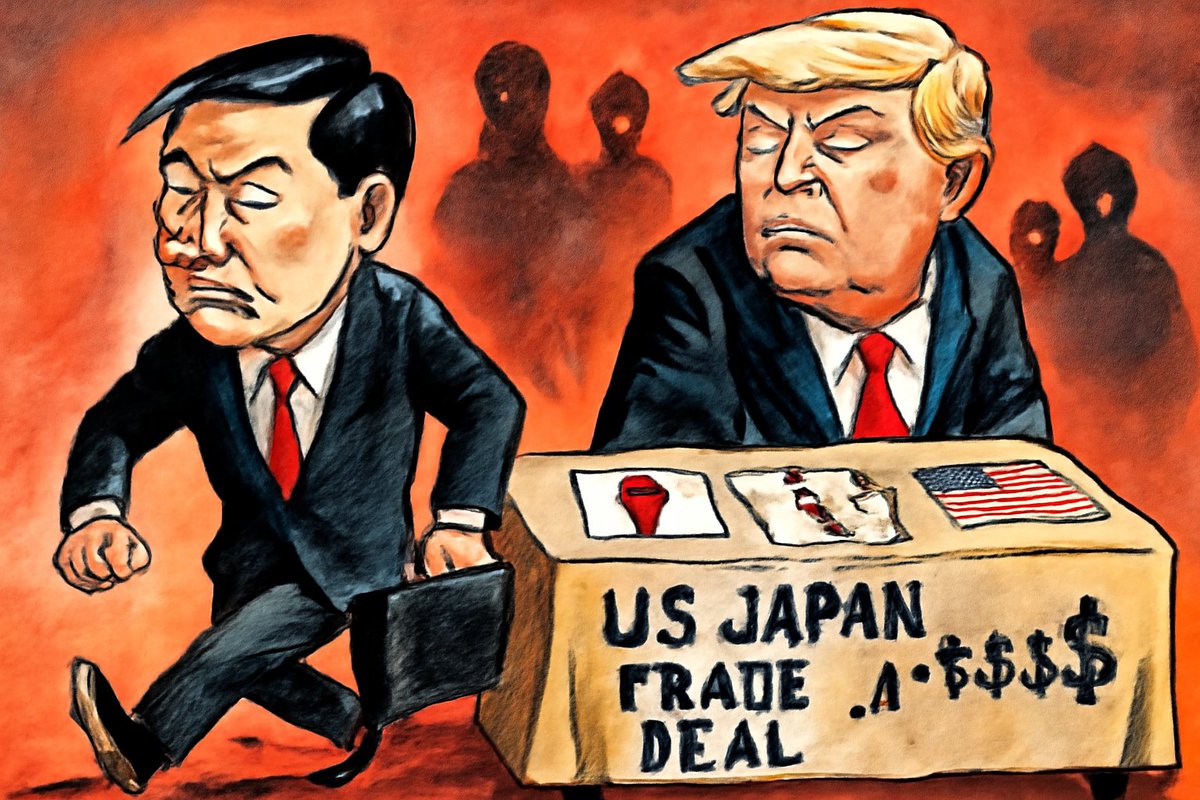
MASSIVE!! Japan Cancels U.S. Trade Visit: A Blow to Trump’s Deal-Making Strategy

A major setback has emerged in the Japan–U.S. trade negotiations as Japan’s top trade representative abruptly canceled his planned visit to Washington. Reports suggest deep frustration in Tokyo over Washington’s failure to honor promises made under the trade deal.Image
Japan was expected to invest $50 billion in the U.S. economy, but the terms demanded by Washington are being called exploitative. Not only would Japan still face 15% tariffs, but a significant share of profits from these investments would also flow directly to the U.S. — a condition widely criticized within Japan as a “horrible deal.”
This cancellation is seen as a warning sign that the U.S.–Japan trade pact could collapse, joining the list of contentious deals the Trump administration has struck with other nations, including Vietnam, Taiwan, and the EU, where threats and last-minute demands were frequent.
Read 6 tweets
Aug 28
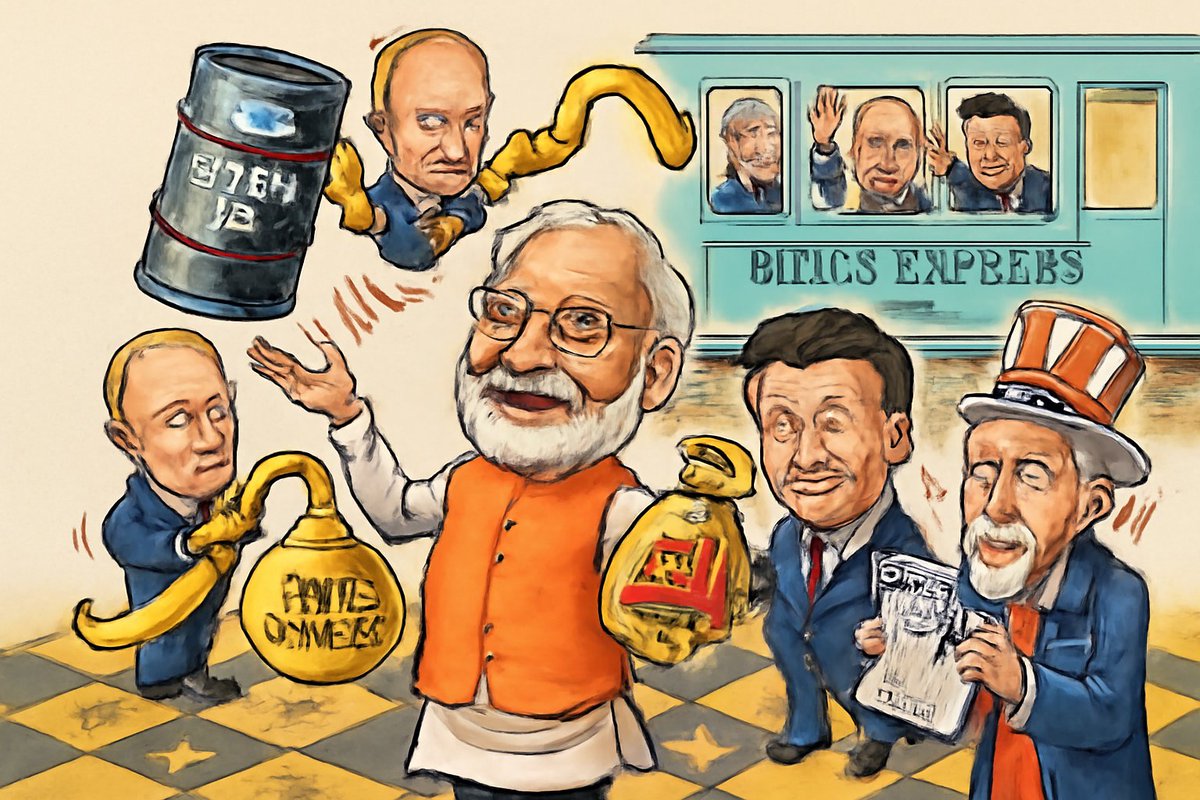
BRICS in Action: India, Russia, and China Redefine the Global Order.
.
.
.
.
.
.
.
.
Read the entire post to know the latest developments on this topic
.
.
. Image
BRICS has entered an action mode, and the aftershocks are already being felt in Washington. Two major developments signal a dramatic shift in the global balance of power—India’s recalibrating relationship with China and its steadfast energy partnership with Russia. Together, these moves demonstrate New Delhi’s strategic defiance of Western pressure and its determination to chart an independent course.
India’s Bold Oil Gamble with Russia

Despite repeated American warnings, India continues to import discounted Russian crude. In fact, imports are projected to rise another 10–20% in September. New Delhi has made it clear: “Country first, commerce later.” Cheap Russian oil not only strengthens India’s energy security but also highlights the limits of U.S. pressure campaigns. Washington’s threats of tariffs have failed to deter India’s strategic energy partnership with Moscow—a relationship rooted in decades of historical trust.
Read 11 tweets
Aug 28
India’s Sudarshan Chakra Air Defense Shield: A Game-Changer with Russia Looking to Join in.
.
.
.
.
.
.
.
.
.
.
.
.
.
.
.
Read the entire post to know the latest developments on Sudarshan Chakra project Image
On August 15th, during his Independence Day address, Prime Minister Narendra Modi made a landmark announcement: India is embarking on the development of its most advanced multi-layered air defense shield—Project Sudarshan Chakra.

What began as a bold declaration is now unfolding into one of the most significant defense initiatives in India’s history. The project aims to build a comprehensive, indigenous air defense architecture, integrating multiple missile systems to secure India’s skies against any aerial threat.
But what has truly turned heads across the world is the unexpected move by Russia—a country long considered a leader in air defense technology with its celebrated S-400 and upcoming S-500 systems. Recently, Russia’s envoy to India, Roman Babushkin, openly confirmed Moscow’s interest in collaborating with India on Sudarshan Chakra. When the very country that set global benchmarks in air defense expresses a desire to participate, it is a powerful signal that India is doing something right—and something big.
Read 9 tweets
Aug 27
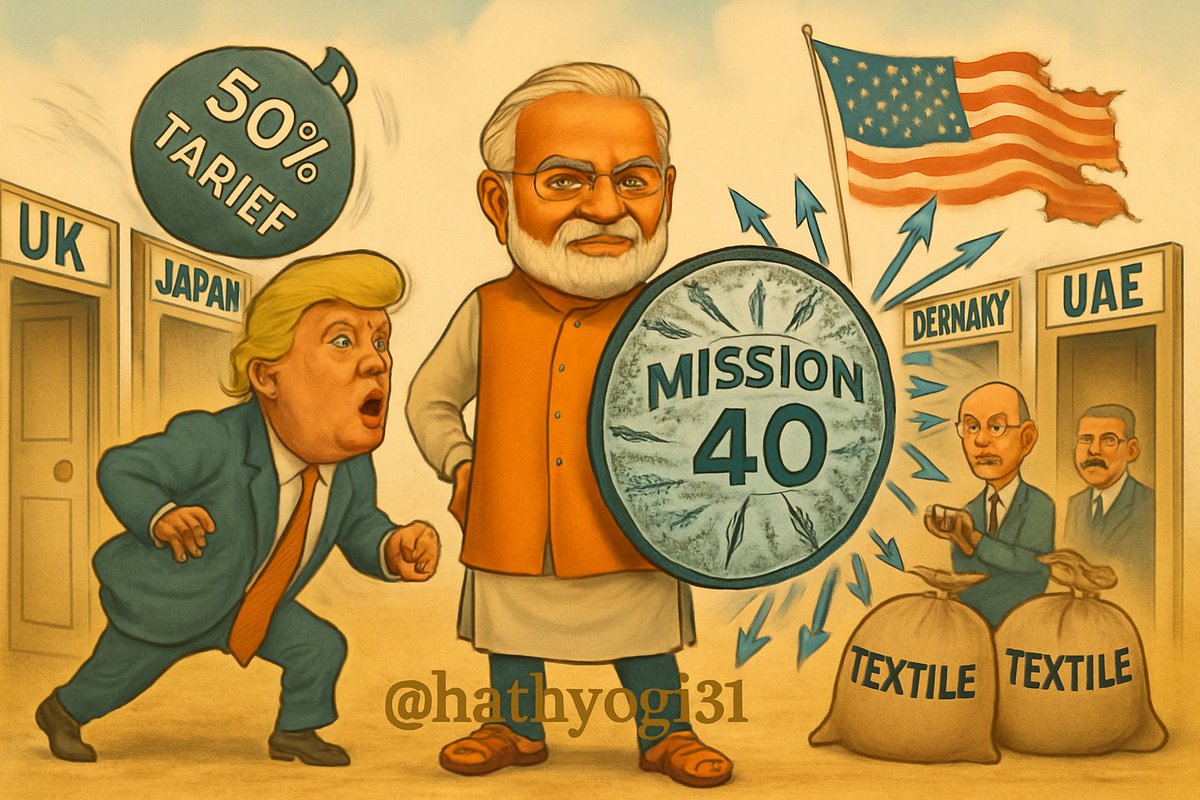
India Strikes Back: Launched Mission 40 to end America’s trade bullying. Trump cannot do anything about it
.
.
.
.
.
.
.
.
.
.
.
.
.
Read the entire post to know the latest developments of tarrif war Image
For far too long, Western nations have viewed India through a distorted lens—considering it a land of barbarians, weakened by two centuries of colonial rule, and incapable of standing tall on its own terms. They often forget that the India of today is no longer a subjugated nation. It is the world’s fourth-largest economy, the fastest-growing major economy, and the country with the greatest demographic asset—its people.
This is why India cannot be bullied into submission. And yet, that is exactly what U.S. President Donald Trump attempted when he officially imposed a 50% tariff on Indian goods starting August 27. The expectation was simple: India would panic, retreat, and accept Washington’s terms.

But Prime Minister Narendra Modi had already made India’s stance crystal clear. He declared that India would never bow to pressure or accept unfair conditions. His words were not just rhetoric—they were a roadmap. Modi hinted weeks earlier that if punitive tariffs were imposed, India would carve its own path forward, without compromising national interests.

And that is exactly what happened.
Read 13 tweets

Did Thread Reader help you today?

Support us! We are indie developers!


This site is made by just two indie developers on a laptop doing marketing, support and development! Read more about the story.

Become a Premium Member ($3/month or $30/year) and get exclusive features!

Become Premium

Don't want to be a Premium member but still want to support us?

Make a small donation by buying us coffee ($5) or help with server cost ($10)

Donate via Paypal

Or Donate anonymously using crypto!

Ethereum

0xfe58350B80634f60Fa6Dc149a72b4DFbc17D341E copy

Bitcoin

3ATGMxNzCUFzxpMCHL5sWSt4DVtS8UqXpi copy

Thank you for your support!

Follow Us!

:(