Watch the carriers and the nuclear submarine patrols.
Nuclear-powered carrier strike groups extend endurance and keep pressure forward. Along with Marine expeditionary forces.
SSBN and SSN patrols stretch reach and lock down deterrence.
Nuclear-powered carrier strike groups extend endurance and keep pressure forward. Along with Marine expeditionary forces.
SSBN and SSN patrols stretch reach and lock down deterrence.
https://twitter.com/gonglei89/status/1963067557134619053
1/x
Building power projection will take a few decades. Which is why Beijing is so careful to maintain a non intervention stance.
Power projection is critical. But the PLAN cannot sustain extended pr large scale blue water deployments.
Endurance is a major factor.
Building power projection will take a few decades. Which is why Beijing is so careful to maintain a non intervention stance.
Power projection is critical. But the PLAN cannot sustain extended pr large scale blue water deployments.
Endurance is a major factor.

2/x
Endurance is the ability of a nabal force to remain in the field. This is the sustainment I keep mentioning.
Fuel, supplies, and logistics.
It measures how long a task force can stay effective once deployed. Even nuclear powered ships with unlimited range are affected.
Endurance is the ability of a nabal force to remain in the field. This is the sustainment I keep mentioning.
Fuel, supplies, and logistics.
It measures how long a task force can stay effective once deployed. Even nuclear powered ships with unlimited range are affected.

3/x
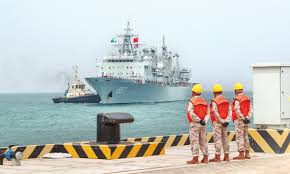
China has the hardware, carriers, LHDs, SSBNs.
But hasn't developed the oversead sustainment infrastructure that gives the USN global endurance and power projection.
No Djibouti isn't enough.
China has the hardware, carriers, LHDs, SSBNs.
But hasn't developed the oversead sustainment infrastructure that gives the USN global endurance and power projection.
No Djibouti isn't enough.
4/x
The main gap here is the endurance difference.
Future PLA MEUs = short-range, short-duration. U.S. MEUs = long-range, long-duration.
Chinese carriers = limited deployments. U.S. carriers = sustained global presence.
Chinese SSBNs = East Asian patrols. U.S. SSBNs = worldwide patrols.
The main gap here is the endurance difference.
Future PLA MEUs = short-range, short-duration. U.S. MEUs = long-range, long-duration.
Chinese carriers = limited deployments. U.S. carriers = sustained global presence.
Chinese SSBNs = East Asian patrols. U.S. SSBNs = worldwide patrols.
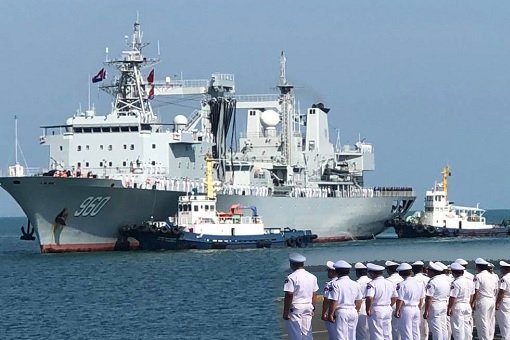
5/END
China isn’t incapable. But building endurance takes time.
Expect 3 shifts:
-Use politics and economics to open lines for overseas bases, framing them as goodwill, not garrisons.
-Reshape naval doctrine and C2 to handle longer deployments.
-Push diplomatic and development narratives to build support while capability catches up.
Because China is so trade focused? This will be strategically layered.
Like political and economic outreach alongside naval growth, much like Britain once did. Trade and naval power go hand in hand even now.
China isn’t incapable. But building endurance takes time.
Expect 3 shifts:
-Use politics and economics to open lines for overseas bases, framing them as goodwill, not garrisons.
-Reshape naval doctrine and C2 to handle longer deployments.
-Push diplomatic and development narratives to build support while capability catches up.
Because China is so trade focused? This will be strategically layered.
Like political and economic outreach alongside naval growth, much like Britain once did. Trade and naval power go hand in hand even now.
@threadreaderapp unroll
• • •
Missing some Tweet in this thread? You can try to
force a refresh