Cancer starts in the mitochondria, & fixing them might treat it - a groundbreaking study shows it more clearly than ever.
(🧵1/8)
(🧵1/8)
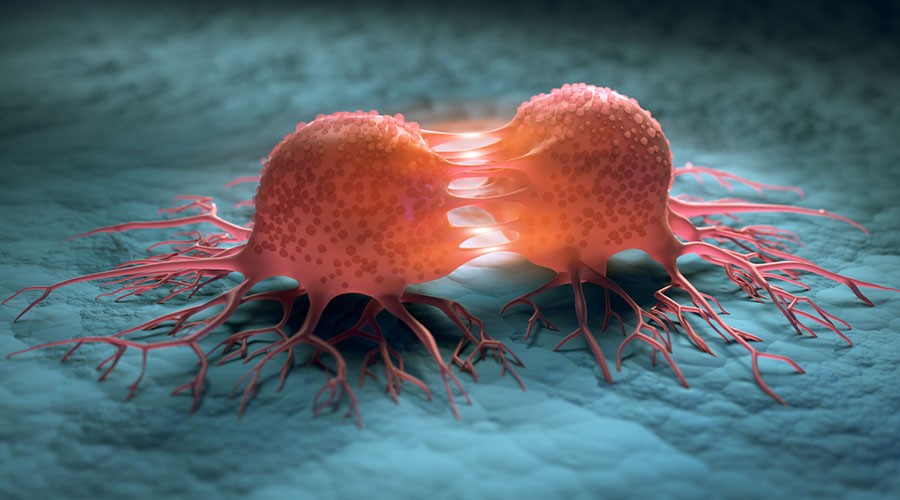
The metabolic origins of cancer have been known for about a century.
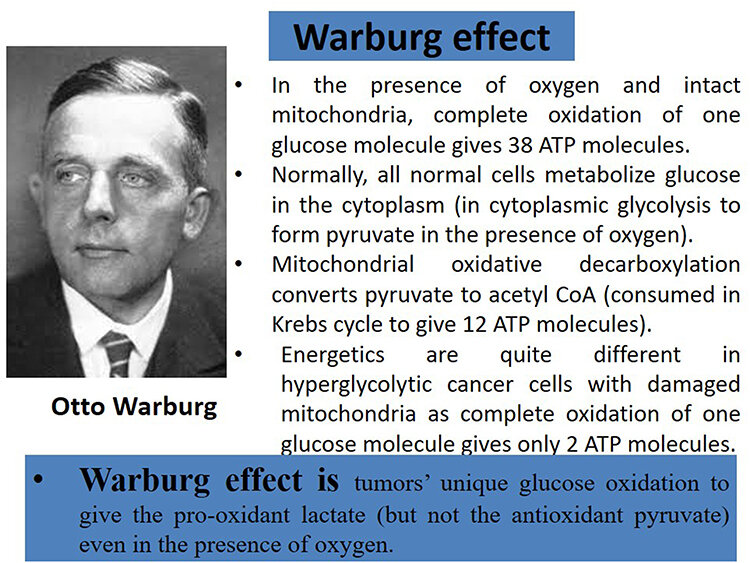
Nobel prize winner Otto Warburg noted that cancer cells had inefficient metabolism - they turned glucose into lactic acid preferentially, instead of into CO2.
Why this helps cancer grow has been revealed more recently.
(2/8)
Nobel prize winner Otto Warburg noted that cancer cells had inefficient metabolism - they turned glucose into lactic acid preferentially, instead of into CO2.
Why this helps cancer grow has been revealed more recently.
(2/8)
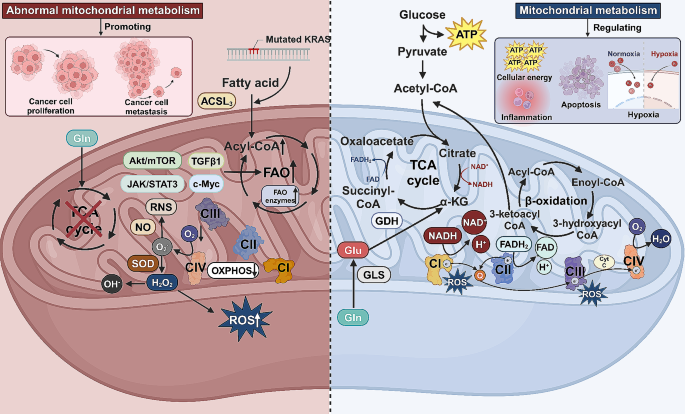
When mitochondria are not working properly, it is a breeding ground for cancer.
◈ More reactive oxygen species produced
◈ Greater acidification
◈ More oncometabolites
◈ Aberrant epigenetic signaling
◈ Worsened immune function
◈ Impaired cell death
◈ Improper cycle regulation
+ more.
This recent study showed that restoring mitochondrial health is a viable treatment for cancer.
They did this by transplanting mitochondria from healthy cells into cancer cells.
(3/8)
◈ More reactive oxygen species produced
◈ Greater acidification
◈ More oncometabolites
◈ Aberrant epigenetic signaling
◈ Worsened immune function
◈ Impaired cell death
◈ Improper cycle regulation
+ more.
This recent study showed that restoring mitochondrial health is a viable treatment for cancer.
They did this by transplanting mitochondria from healthy cells into cancer cells.
(3/8)
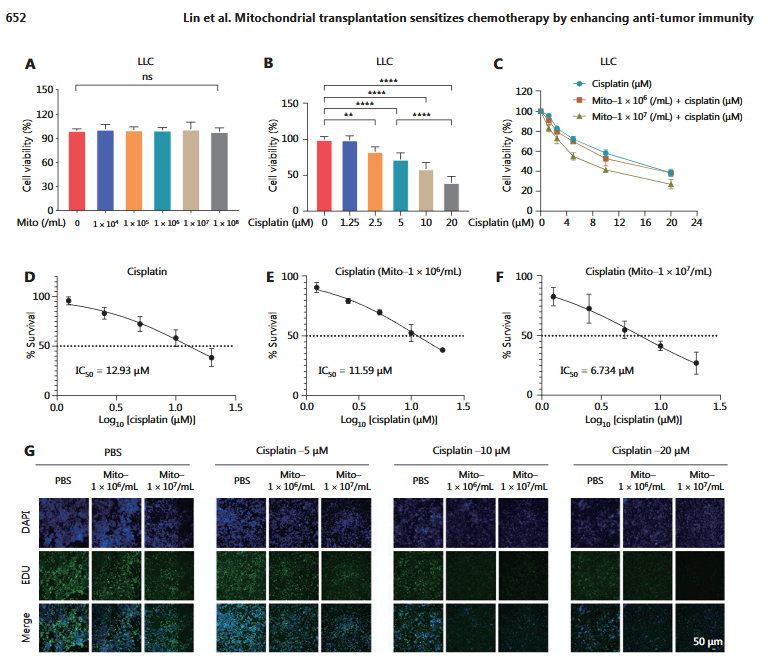
When lung cancer cells received the healthy mitochondria, they became more sensitized to chemotherapy.
A higher concentration of healthy mitochondria cut the amount of chemo (cisplatin) needed to kill the cancer cells by around half.
(4/8)
A higher concentration of healthy mitochondria cut the amount of chemo (cisplatin) needed to kill the cancer cells by around half.
(4/8)
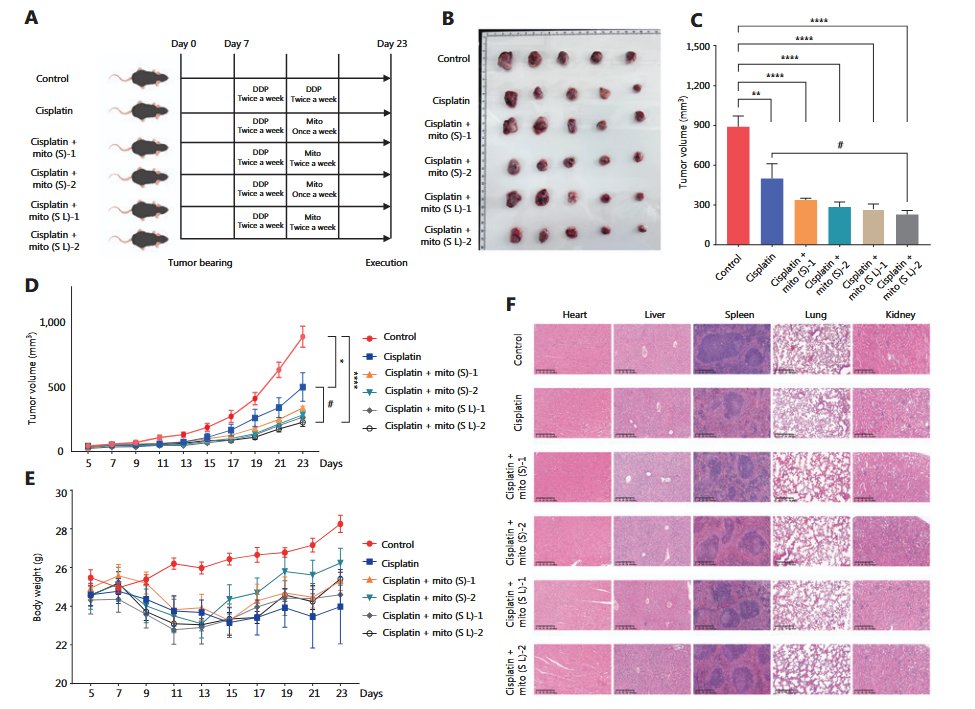
Healthy mitochondria also shrank tumor growth in animals.
Greatly enhanced the effectiveness of the chemo.
(5/8)
Greatly enhanced the effectiveness of the chemo.
(5/8)
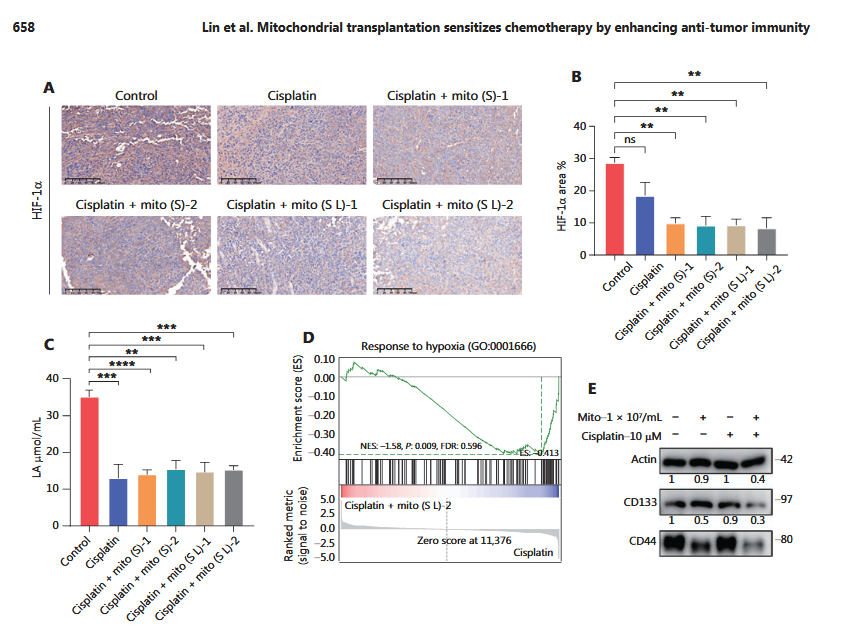
Reversing the mitochondrial dysfunction in cancer cells also reversed the other hallmarks of cancer.
For instance, healthy mitochondria reduced HIF1α, a key mediator of cancer invasion.
It also reduced the "stemness" or the ability of cancer cells to turn into cancer stem cells.
(6/8)
For instance, healthy mitochondria reduced HIF1α, a key mediator of cancer invasion.
It also reduced the "stemness" or the ability of cancer cells to turn into cancer stem cells.
(6/8)
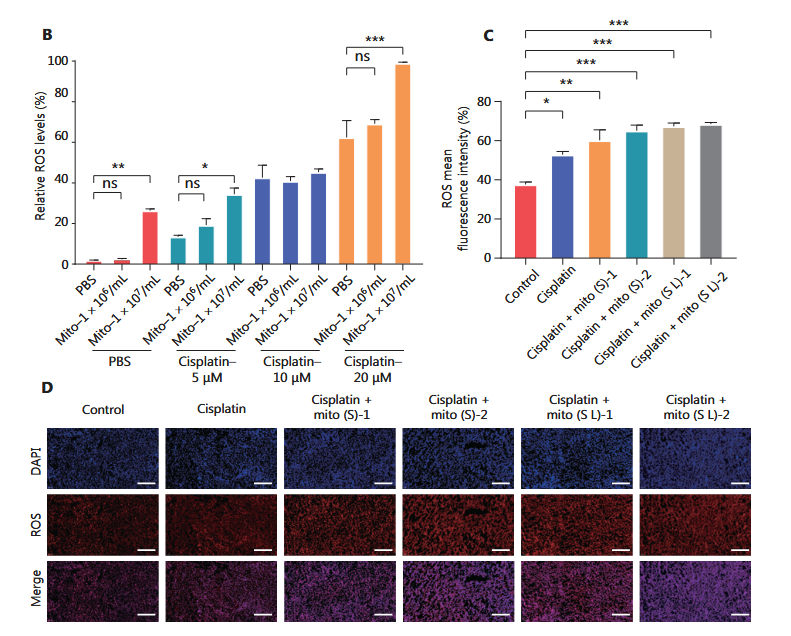
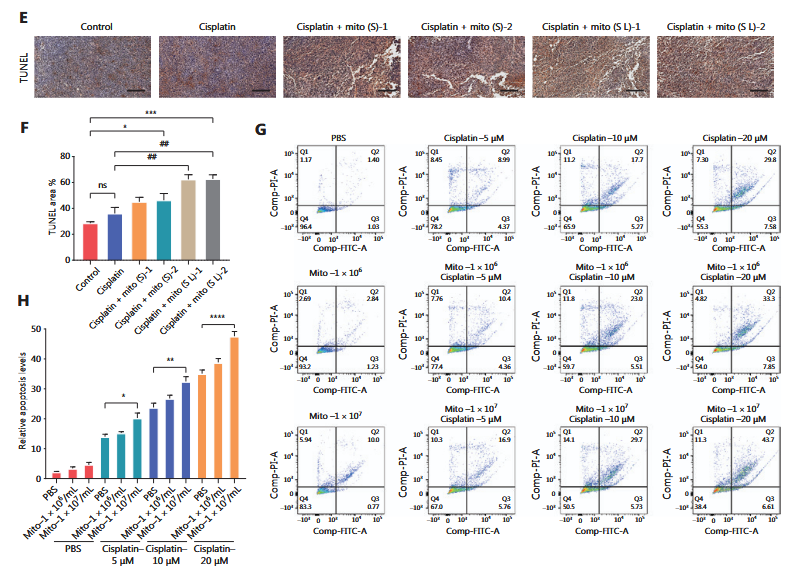
With healthy mitochondria, cancer cells are able to kill themselves properly.
They could produce more ROS and were able to induce programmed cell death (TUNEL), processes that are impaired in cancer and lead to the cells' accumulation.
(7/8)
They could produce more ROS and were able to induce programmed cell death (TUNEL), processes that are impaired in cancer and lead to the cells' accumulation.
(7/8)
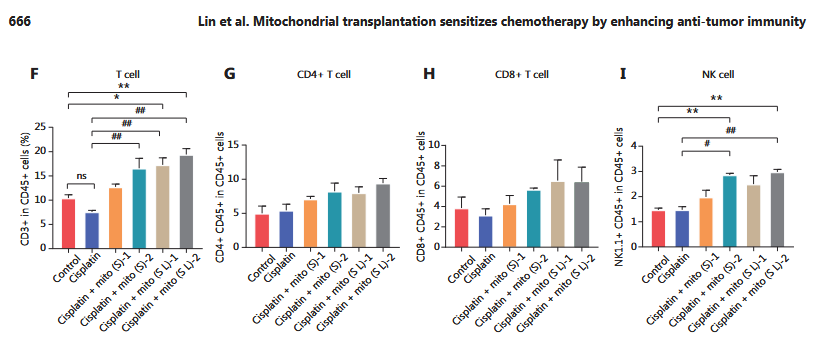
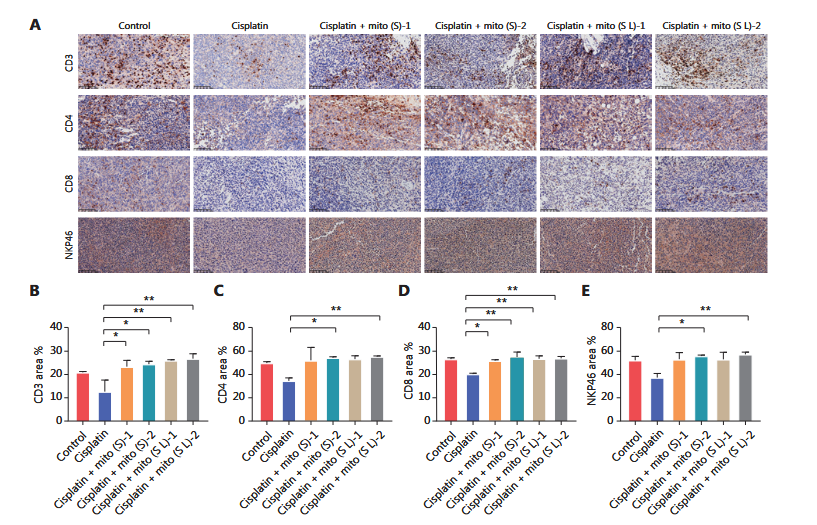
Another key component to solving cancer is proper immune functioning, since it is the immune system that actually clears out tumors.
While chemo (cisplatin) worsened anti-tumor immunity, the healthy mitochondria increased:
◉ CD4+ area - a marker of T helper cells
◉ CD8+ area - for cytotoxic T cells
◉ NKp46 - a marker for natural killer cells
all critical factors in immune cell clearance of cancer cells.
(8/8)
While chemo (cisplatin) worsened anti-tumor immunity, the healthy mitochondria increased:
◉ CD4+ area - a marker of T helper cells
◉ CD8+ area - for cytotoxic T cells
◉ NKp46 - a marker for natural killer cells
all critical factors in immune cell clearance of cancer cells.
(8/8)
Cancer is a metabolic / mitochondrial disease in nature.
I've written here about all of the angles one would take to optimize mitochondrial function:
I've written here about all of the angles one would take to optimize mitochondrial function:
https://x.com/Outdoctrination/status/1915144669161570634/
See the full study here: pmc.ncbi.nlm.nih.gov/articles/PMC12…
• • •
Missing some Tweet in this thread? You can try to
force a refresh