arctotherium Profile picture
Sep 8 23 tweets 14 min read Read on X
Thread with excerpts from economics Nobelist Robert Fogel's "Without Consent or Contract: The Rise and Fall of American Slavery" (1989). Note: the first thread was much longer, but X ate it. Much of the book will not be in this one. Image
The slave trade was not dying in America; instead imports continued to rise until it was banned in 1808. US became the largest reservoir of slaves in the New World because of high rates of natural increase. Slaves were best suited (vs free labor) to sugar and cotton. Image
Image
Slaves entered the workforce as children and were economically profitable to their masters from ~9 to ~70 on average. Image
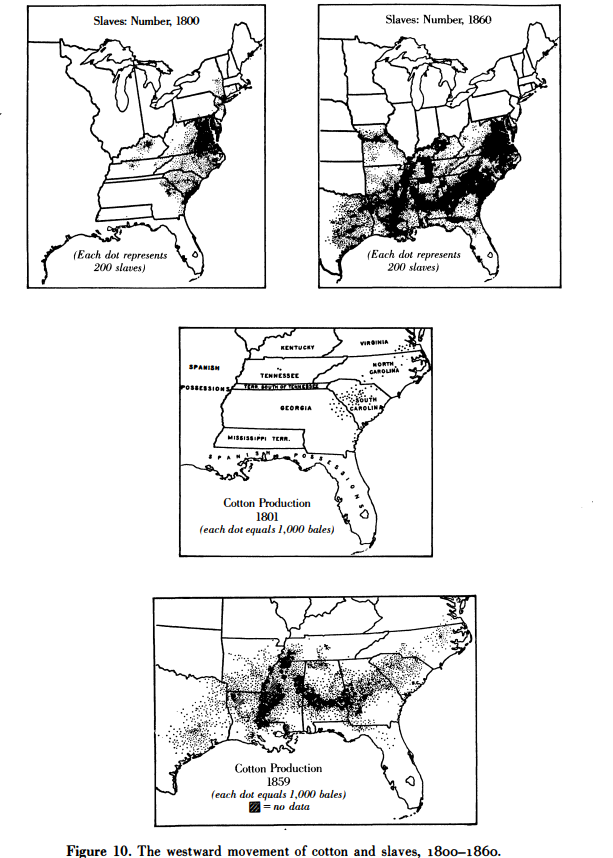
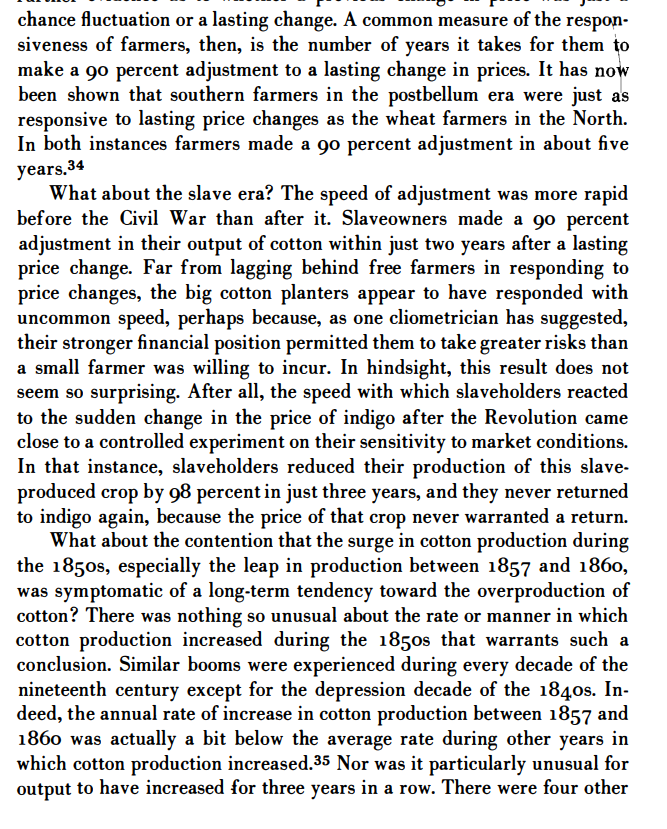
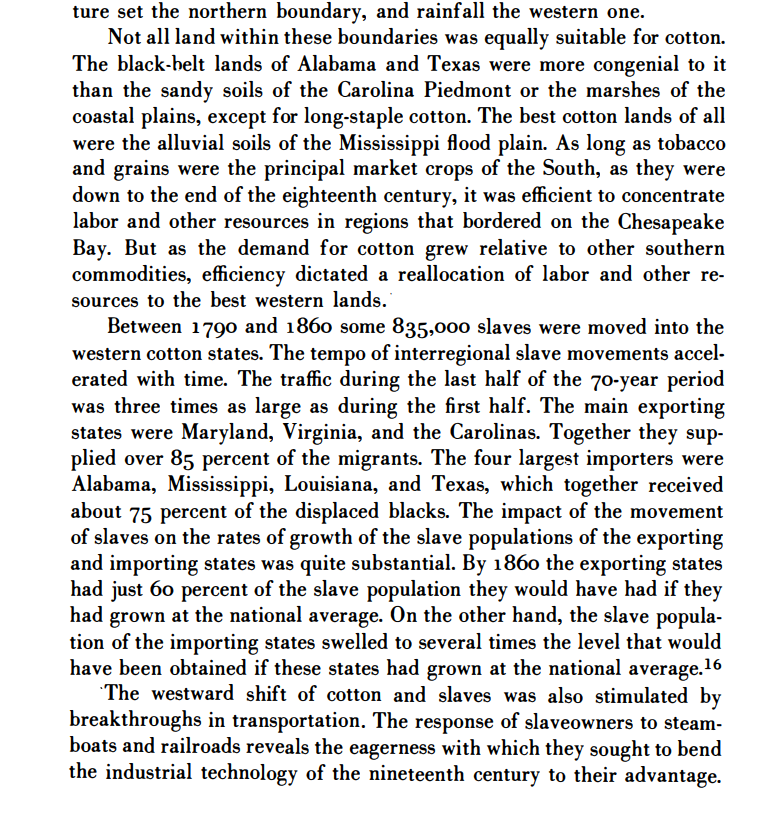
Southern plantation slavery was flexible, with slaves quickly shifting between regions (mostly to the West) and crops (away from indigo/tobacco, towards cotton), as relative prices shifted, and slaves were priced according to market value (not sentiment or love of domination). Image
Image
Image
Image
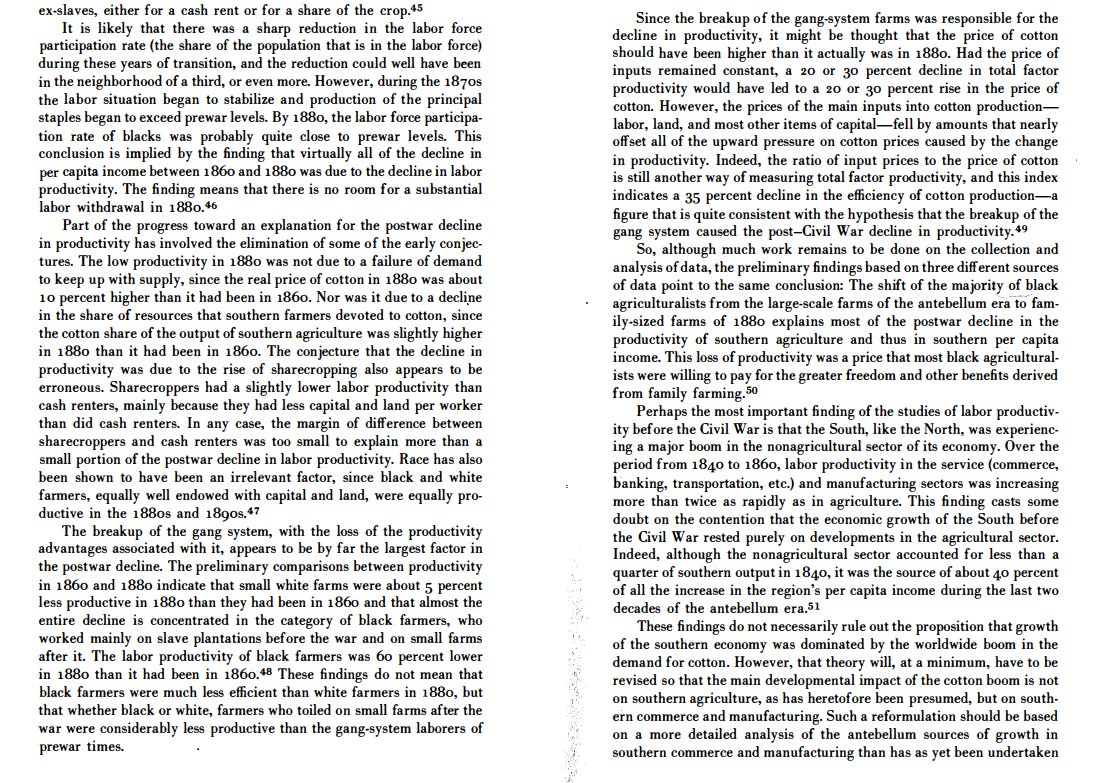
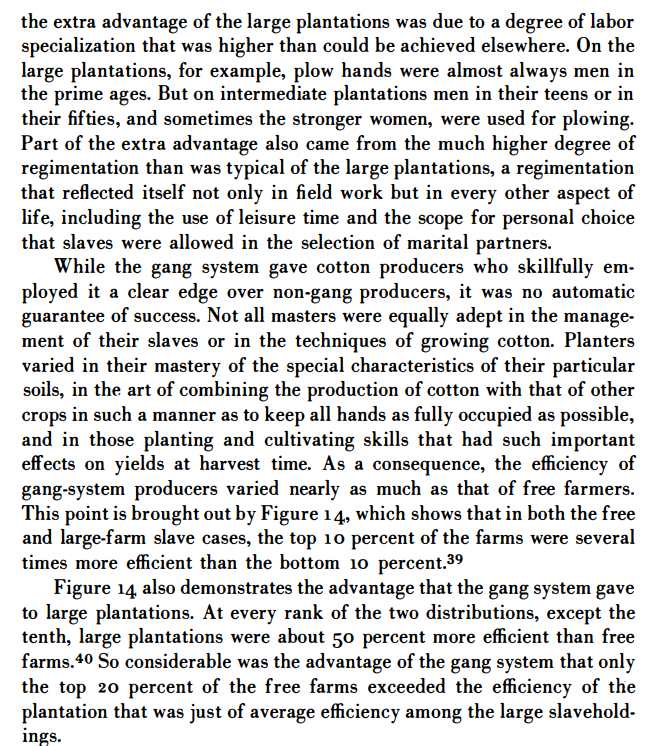
In TFP terms slaves were 35% more efficient than free labor, because of the highly specialized "gang system" prevalent on large (>15 slaves) plantations, which regimented field work like factory work, and Southern agriculture was more efficient than Northern. Image
Image
Image
The Antebellum South was prosperous, with a similar distribution of wealth to the North, and if you count slaves as property, just as wealthy on average. The difference: in the North, the richest were industrial or commercial magnates, in the South, plantation owners. Image
Image
Image
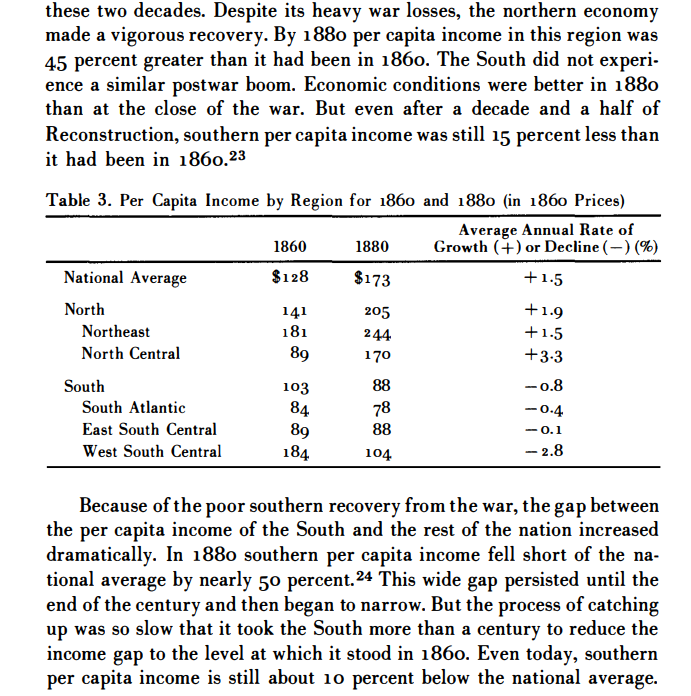
The South was not backwards. If treated as a separate nation in 1860, it would have been the 4th most prosperous in the world, exceeding all of Europe except England, and quickly growing, even faster than the North. Image
Image
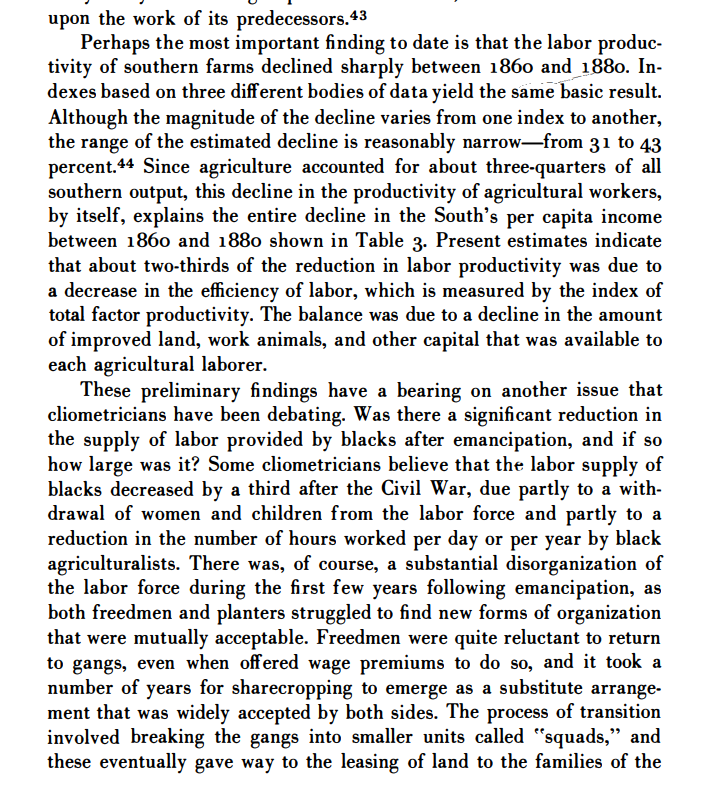
The South became backwards *after* the Civil War, because free black labor was so much less productive than slaves (60% lower!). This parallels the West Indies, where sugar production declined by a third after emancipation (abolitionists lied that they were richer than ever). Image
Image
Image
Image
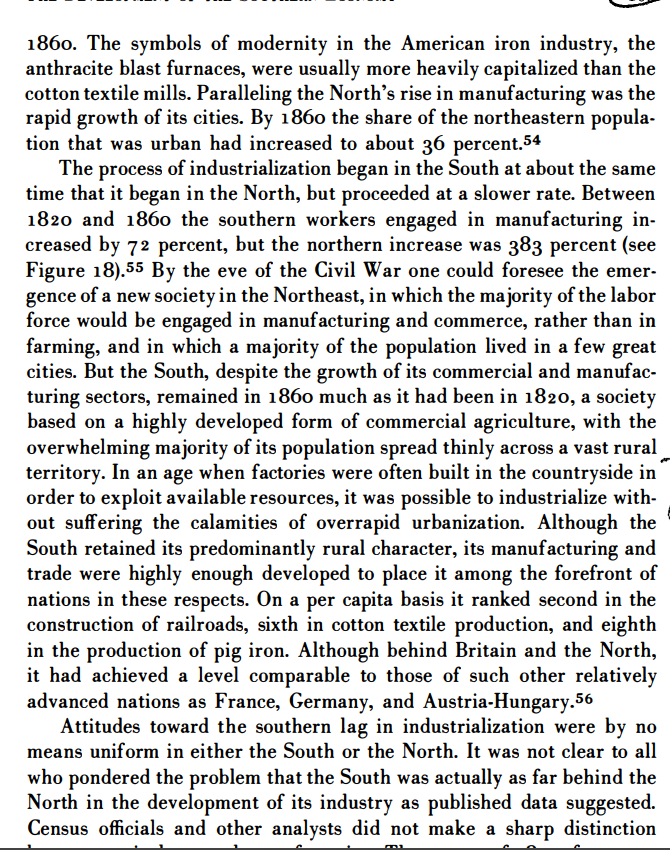
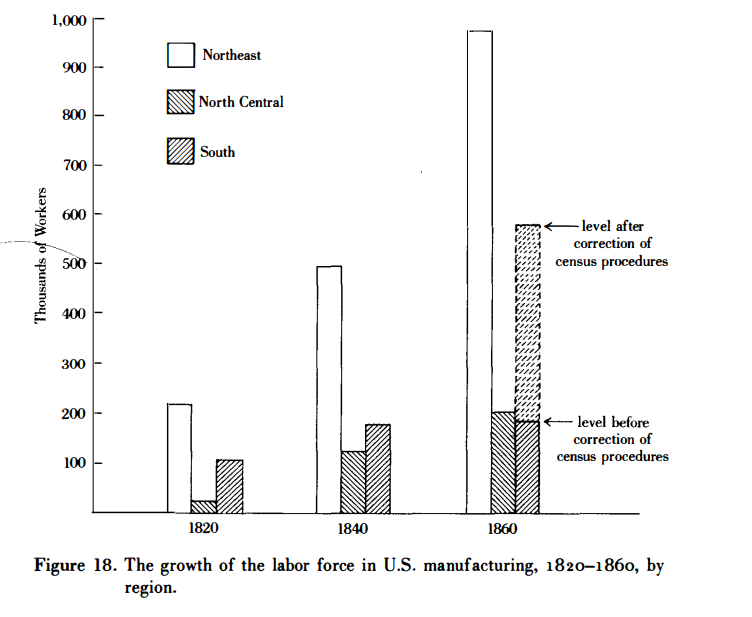
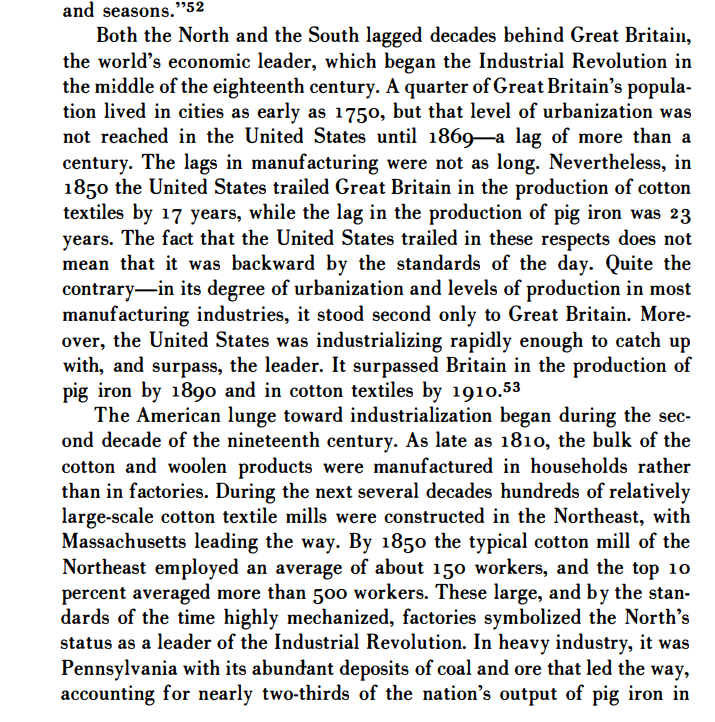
Both North and South were far less urbanized than Britain, but the North industrialized faster. However, the South was still (per capita) #2 in the world for railroads, #6 for cotton textiles, and #8 for pig iron, comparable to France or Germany. Image
Image
Image
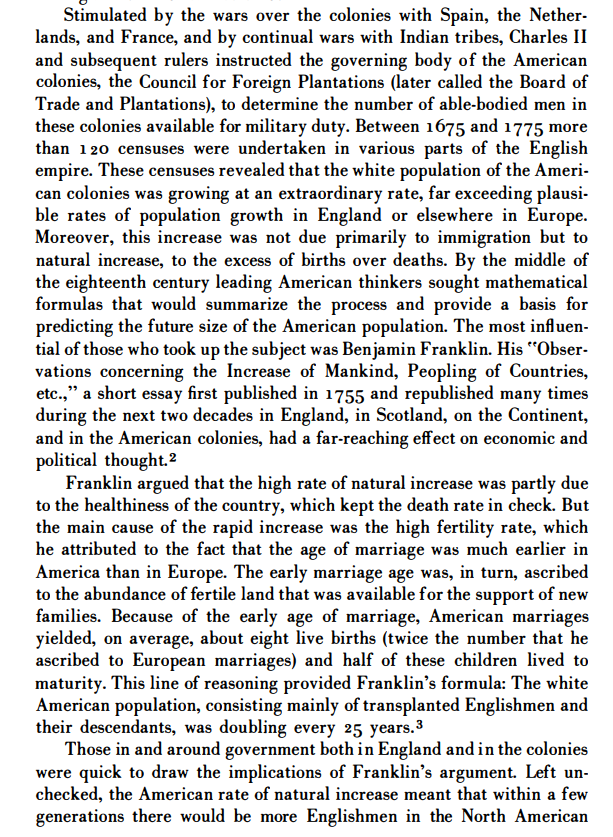
Demographics: the high rate of natural increase of the American colonies worried English policymakers, who were concerned we would rebel once we were powerful enough (they were right) and so sought to limit American expansion (ironically provoking said rebellion). Image
Image
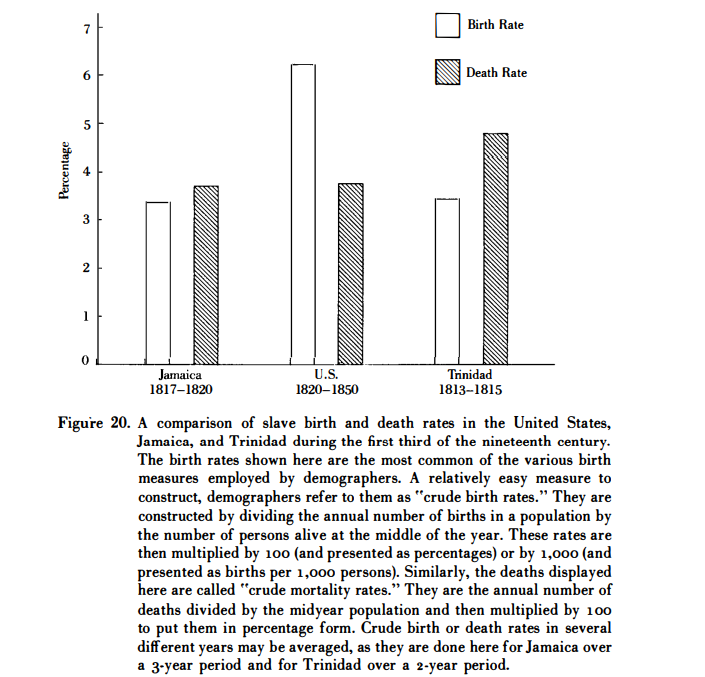
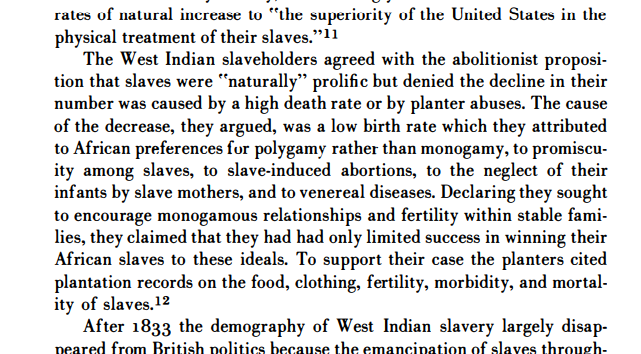
Slaveowners promoted monogamous nuclear families and various pronatal policies (bounties for marriage and large families, better rations for pregnant women) among slaves to encourage population growth. This succeeded in the US, though less so in the Caribbean. Image
Image
Image
Image
(I note that US slave pop growth being from a very high birth rate more than a low death rate, at least vs Jamaica, is something of a narrative violation, though the death rate was much lower than Brazil or Trinidad.) Image
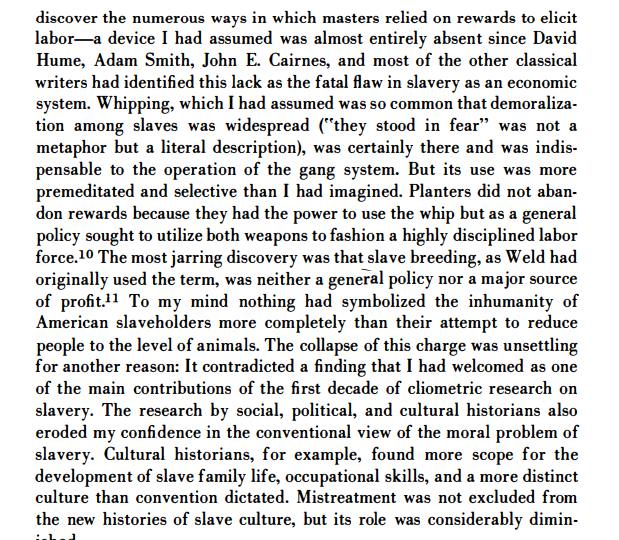
"Slave breeding" that is, selective breeding of slaves, was not a thing, though abolitionists accused slaveowners of it. Image
Image
Slave diets were quite good. Not as good as US free farmers, but better than US urbanites or farmers just about anywhere else in the world. Image
Image
After abolishing slavery in the Caribbean, British abolitionists moved onto India, then to Africa. Image
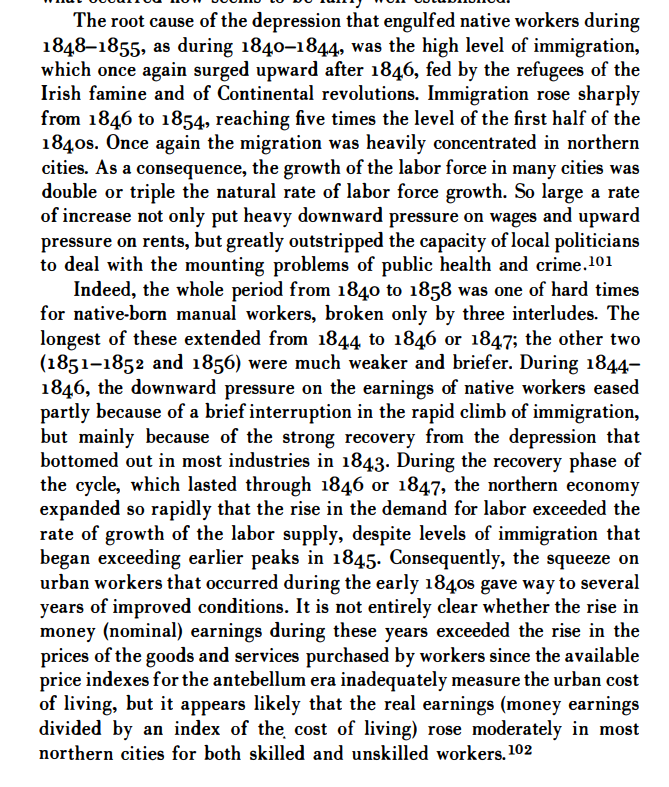
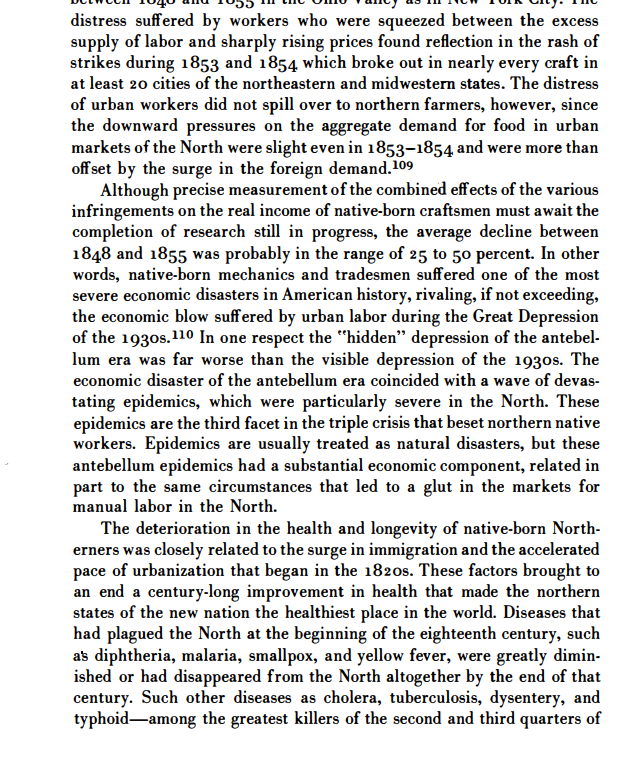
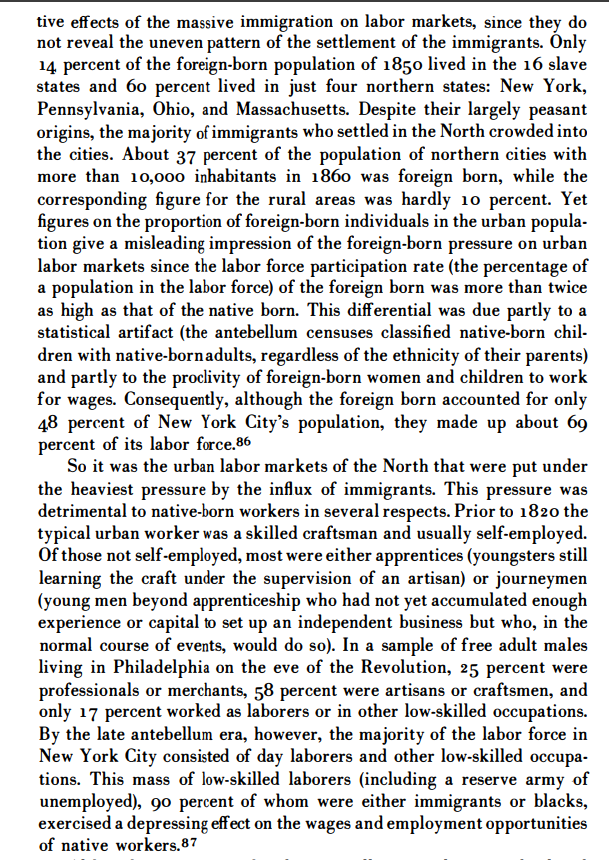
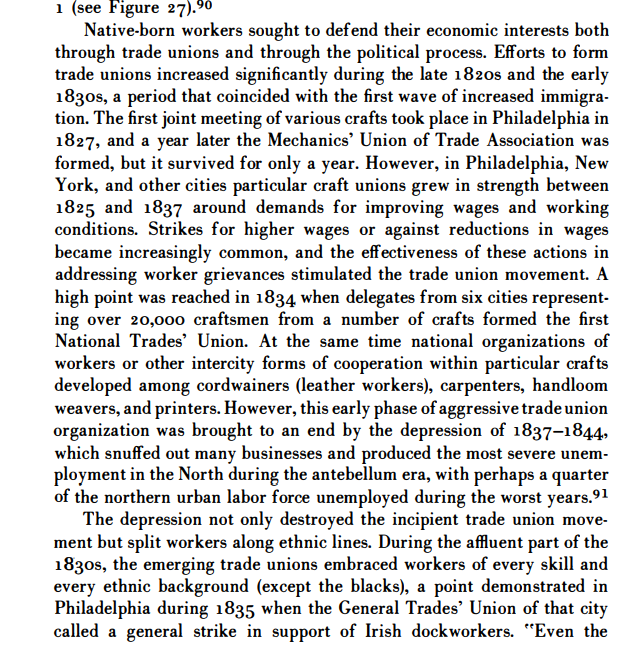
The issue that destroyed the Whig/Democrat party system and opened the door to a Northern anti-slavery coalition was immigration, which starting ~1830 wrecked the living standards of northern urban workers (25-50% wage drop, 10 year drop in life expectancy). Image
Image
Image
Image
The deterioration of American health. Height and life expectancy at age 10 didn't recover it's level from Washington's time until WWII! Primarily driven by immigration and urbanization, which immiserated Northern laborers in the 1840s and 50s. Image
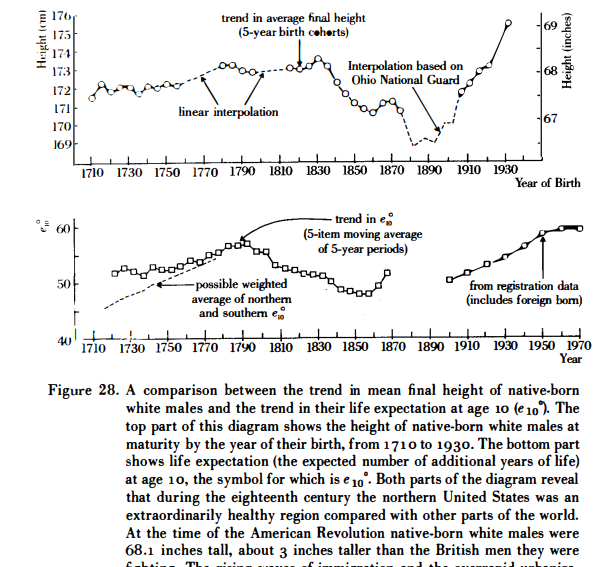
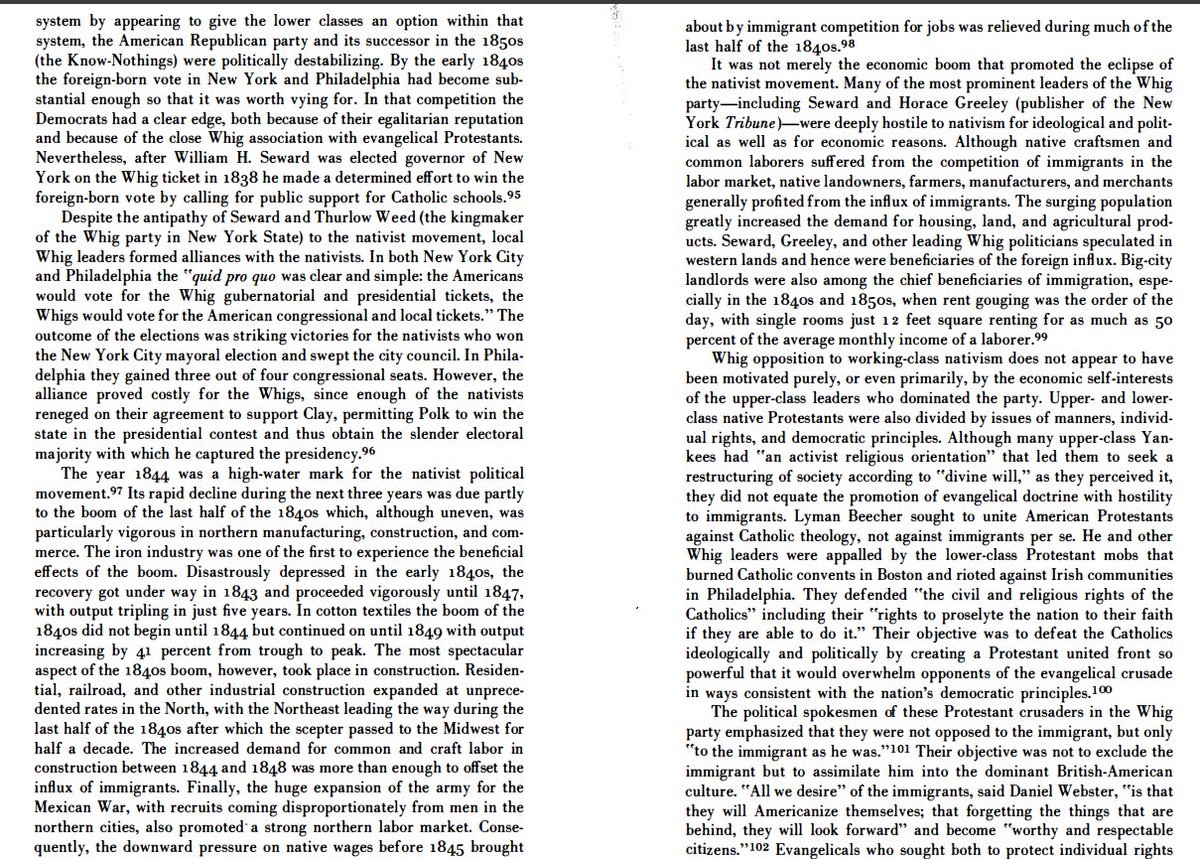
The result of this immiseration: labor agitation and the Know-Nothing movement, which destroyed the Whigs and devastated Northern Democrats (who instead became the party of the immigrants), setting the stage for the Republican Party. Image
Image
Image
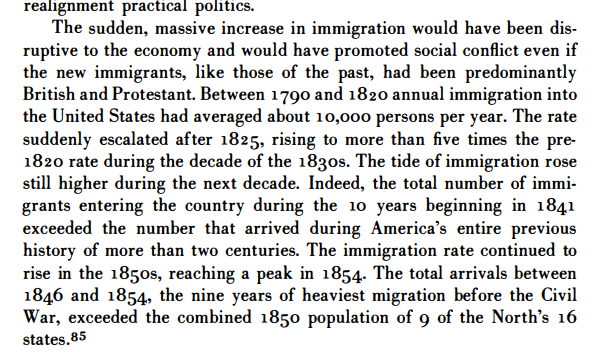
More immigrants arrived in the 1840s than in all of previous American history combined, mostly from Germany and Ireland. They overwhelmingly moved to Northern cities, which became big, crowded, sick, and poor as a direct result, proletarianizing urban Northerners. Image
Image
Image
Image
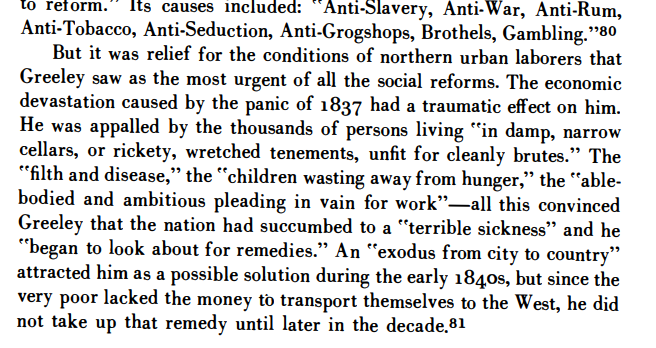
Two things transmuted the Northern nativist/labor revolt into anti-slavery: a drop in immigration, which made it less salient and Southern opposition to homesteading, which Northerners hoped would relieve population pressure. Image
Image
Image
The well-timed drop in immigration let the Free Soiler faction beat the Know-Nothing faction for control of the Republican Party, which squeaked out a win in 1860 with only Northern states (only possible because of immigration leading to a much bigger North than South). Image
Image
"Slavery was profitable, efficient, and economically viable in both the United States and the West Indies when it was destroyed." Image
I thought the book was quite interesting as a story of how immigration destabilized America over the pre-existing fault-line of slavery, leading to the devastating Civil War. Also that economists used to have no problem admitting immigration might be very bad.

• • •

Missing some Tweet in this thread? You can try to force a refresh

 

Keep Current with arctotherium

arctotherium Profile picture

Stay in touch and get notified when new unrolls are available from this author!

Read all threads

This Thread may be Removed Anytime!

PDF

Twitter may remove this content at anytime! Save it as PDF for later use!

Try unrolling a thread yourself!

how to unroll video
  1. Follow @ThreadReaderApp to mention us!

  2. From a Twitter thread mention us with a keyword "unroll"
@threadreaderapp unroll

Practice here first or read more on our help page!

More from @arctotherium42

Aug 28
Why Brazil is Brazil: during the huge population boom of the second half of the 20th century, the lowest class decile had more than twice as many kids as the highest (7 vs 3 in the 1914 birth cohort, 5 vs 1.9 in the 1964 birth cohort). Image
"Women without educational achievement have more than 4 children, women with more than 12 years of schooling have only 1. Image
This is why I am not a fan of pro-natalist proposals of the form of "giant unconditional cash transfers." I think for the right value of giant (like Hanson's $200K) they would "work" to get TFRs above replacement, but at the cost of Brazilification, which defeats the purpose. Image
Read 4 tweets
Aug 24
Japan's aging demographics are sadly causing labor shortages, leading to rising wages, reallocation of labor from low to high productivity firms, investment in automation, and 30-year-low youth unemployment. A tragedy that can only be averted with 20M migrants, ASAP. Image
Image
Image
One of the special interests for labor migration in many countries is low productivity firms trying to avoid going out of business. An example: textile factories in postwar Britain recruiting Pakistanis. They phrase this as "labor shortages," but we don't have to listen.
The same thing might actually bail China out of their extremely high youth unemployment, which is consistently around 15%. With 22% of the country still in low productivity agriculture too. Image
Read 4 tweets
Aug 17
Quick thread on "white flight" in the Bronx. In 1950, the Bronx was over 90% white. Between 1970 and 1980, the absolute number of whites dropped by half, partially replaced not by blacks but by new immigrant minorities (Puerto Ricans, Hondurans, Vietnamese, etc). Image
Image
From the 1930s to the 1960s, the Bronx was known for its tranquility, with children playing outside unaccompanied, bikes and scooters left unattended, and doors left ajar for fresh air (!). Image
Image
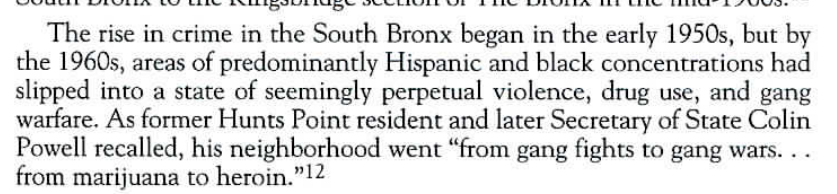
This changed in the 60s/70s, when black and Hispanic residents entered the Bronx en masse, attracted by public housing and rent-controlled apartments. For some reason, crime and drug use exploded around the same time. Knives, mugging, shootings, drugs, gang warfare. Image
Image
Image
Read 13 tweets
Aug 17
A few excerpts from the 1968 book "Danger in Washington," about 20 years experience in Washington DC public schools, serving as head of the system for decades. Had a much longer thread, but the site ate it. Author is a postwar liberal overtaken by the 60s Cultural Revolution. Image
The author, Carl Hansen, moved from Omaha, Nebraska to DC to join the public school system there. He was shocked and horrified by segregation in DC, which he regarded as evil, and made up his mind to do all he could to oppose it. Image
Image
By 1954, pretty much all DC was desegregated except the schools. Basically the whole DC govt and school system was thus prepared and eager to comply when Brown v Board was decided. Image
Image
Read 19 tweets
Aug 12
If democracy means unlimited pensions and Pakistanis, of course it won't be popular. The prestige of democracy came from the fact that in the late 20th century democratic countries were world-historically rich, stable, powerful, and internally peaceful.
Fact of the matter is that most of the winning Cold War democratic bloc has been in very noticeable decline since 2008. In my view, mostly because of extremely destructive social/legal changes in the 60s that undermined the basis of our civilization. Image
The US has had actual economic growth thanks mostly to tech and fracking, but even worse social decay.
Read 4 tweets
Aug 8
1Disagree. 85.9 to 77.4 is like going from Argentina to Kenya. This is one reason why getting some sort of racist or nativist political consensus is so urgent from a "keep the power on" perspective. If half the political spectrum is pro-Open Borders when Africa's pop doubles...
Even ignoring absolutely everything else, the default future of the rich world without severe immigration restriction is like 3/4 African + (unselected) South Asian. That's civilization-ending. We need a consensus for restriction on *some* basis ASAP.
This in turn is the single biggest reason mass skilled immigration is fatal: skilled immigrants tend to see themselves as *immigrants* (rather than Americans, or civilized, high IQ individuals, or some other identity that could oppose this) and oppose restrictions on that basis. Image
Read 4 tweets

Did Thread Reader help you today?

Support us! We are indie developers!


This site is made by just two indie developers on a laptop doing marketing, support and development! Read more about the story.

Become a Premium Member ($3/month or $30/year) and get exclusive features!

Become Premium

Don't want to be a Premium member but still want to support us?

Make a small donation by buying us coffee ($5) or help with server cost ($10)

Donate via Paypal

Or Donate anonymously using crypto!

Ethereum

0xfe58350B80634f60Fa6Dc149a72b4DFbc17D341E copy

Bitcoin

3ATGMxNzCUFzxpMCHL5sWSt4DVtS8UqXpi copy

Thank you for your support!

Follow Us!

:(