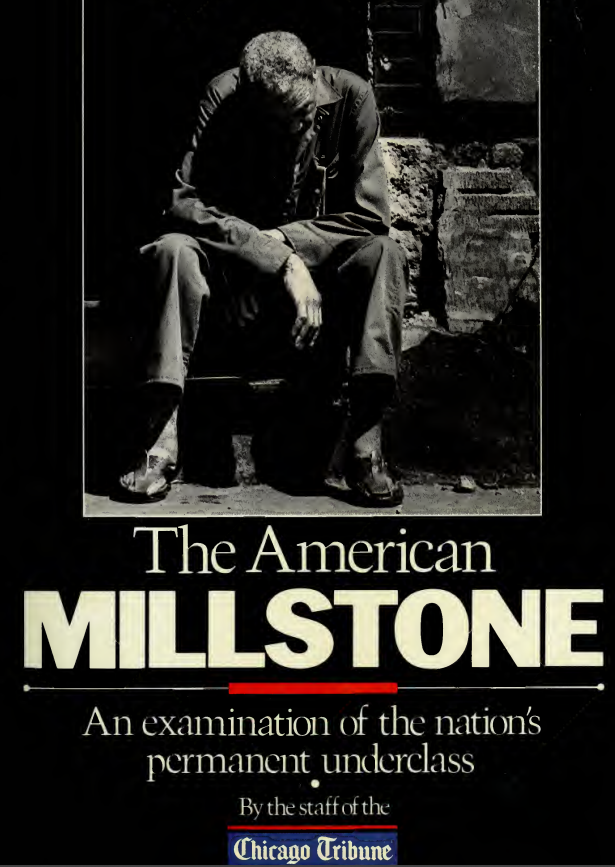
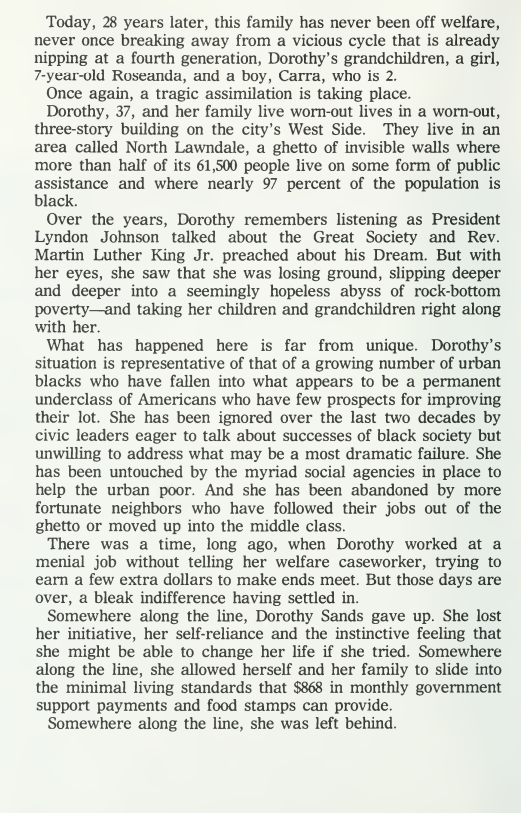
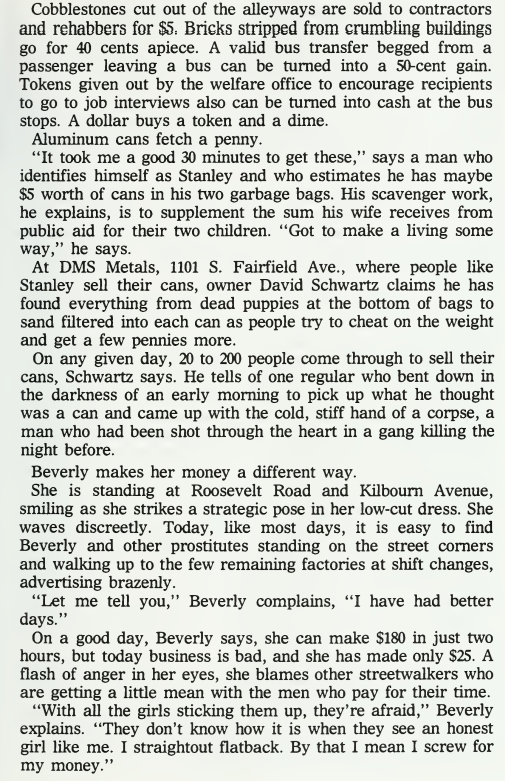
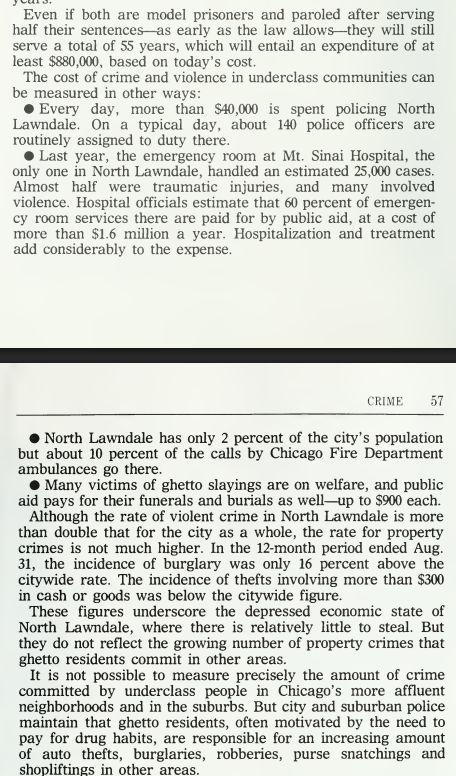
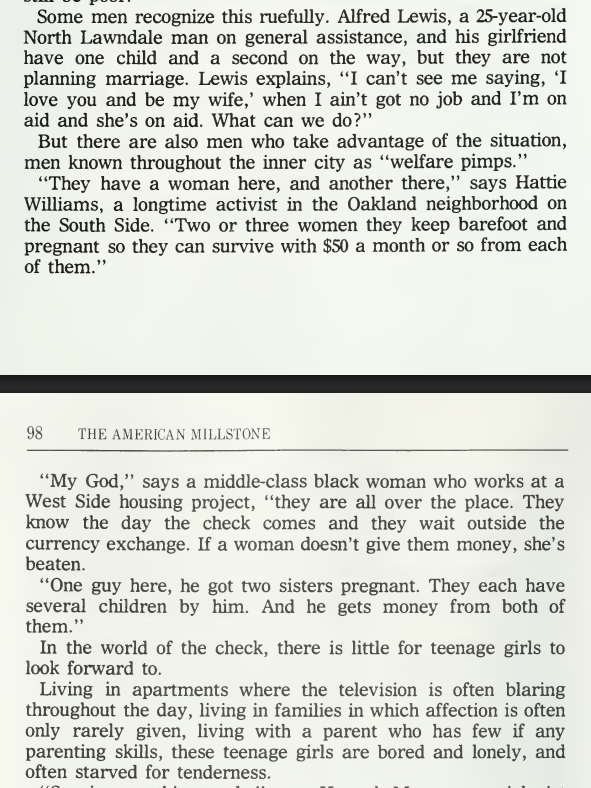
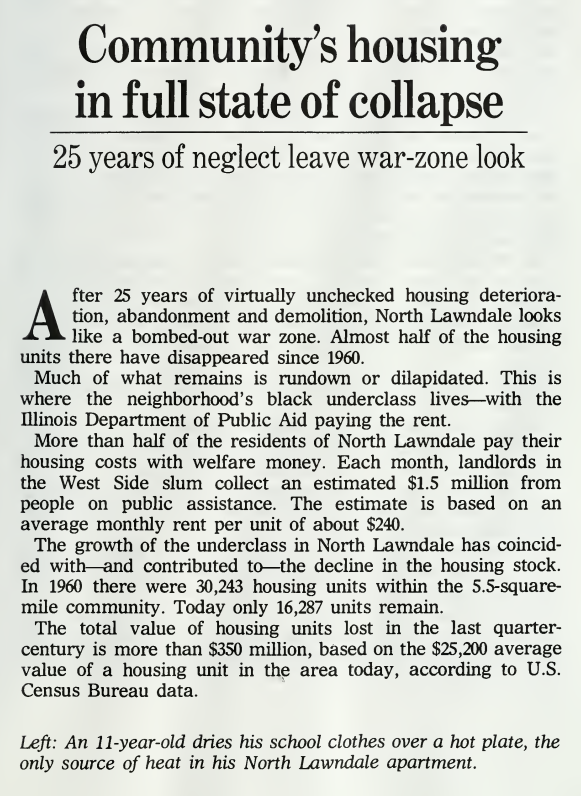
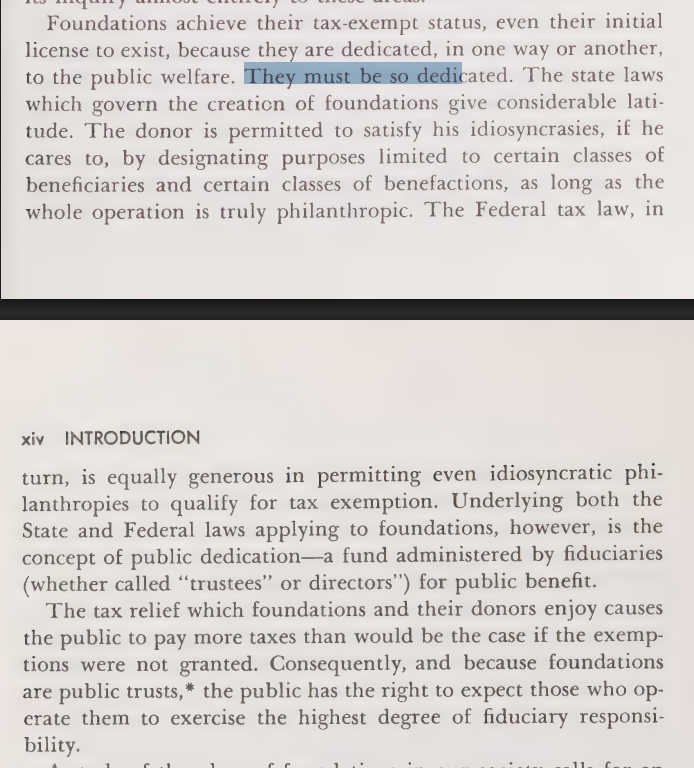
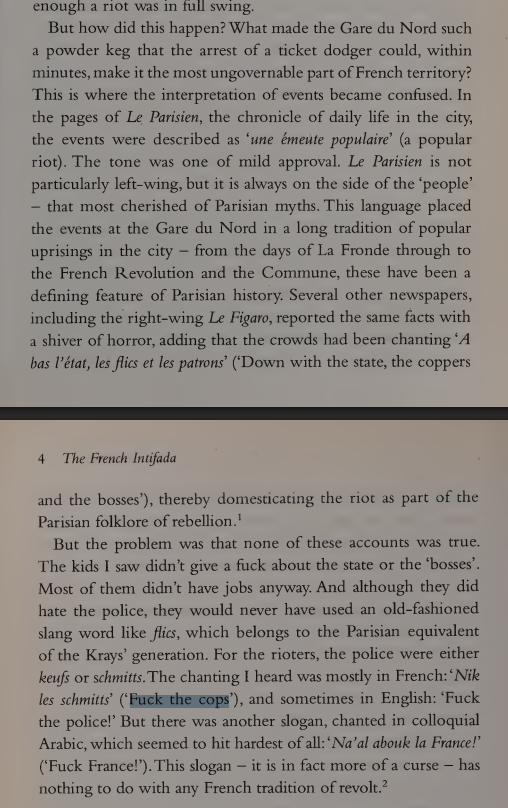
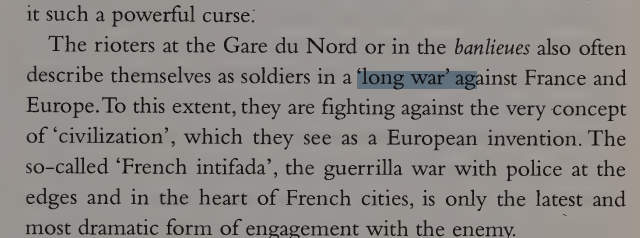
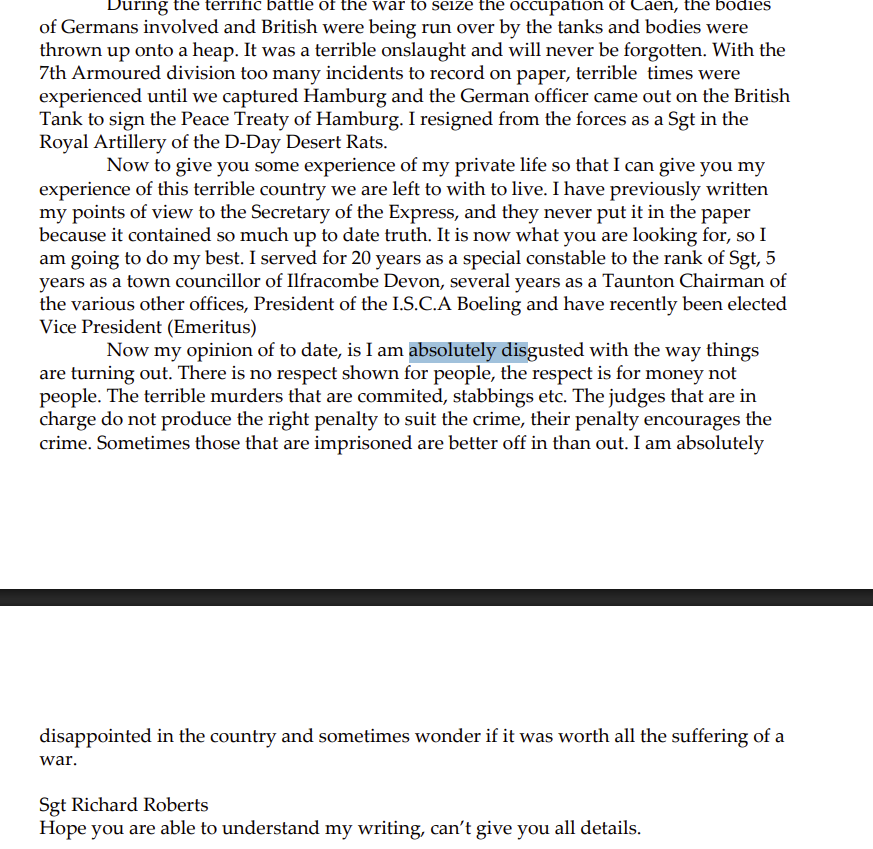
Thread with excerpts from "American Millstone" (1986), a series of Chicago Tribune essays focused on the American underclass (defined vaguely but think: welfare, broken families, crime), as seen in one particular 97% black Chicago neighborhood.
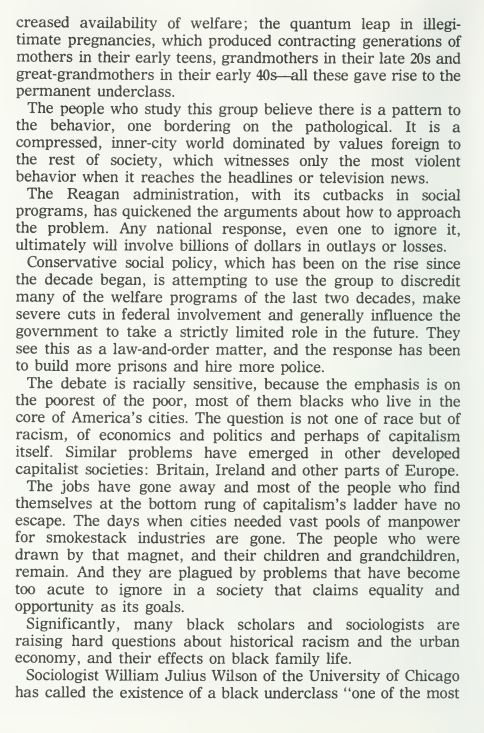
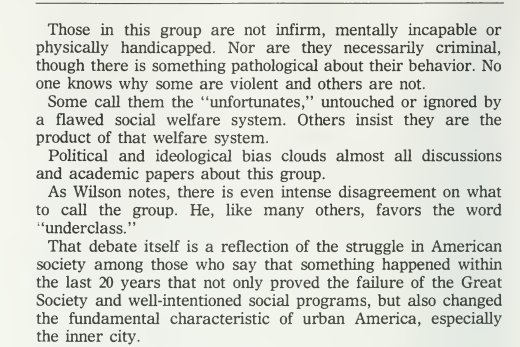
The underclass was a new phenomenon in 1986, only really appearing in the 60s. Its existence rebuked both Civil Rights and the Great Society. In the US, mostly a black thing (and Hispanic, but that was just starting), but white underclasses exist (eg Britain).
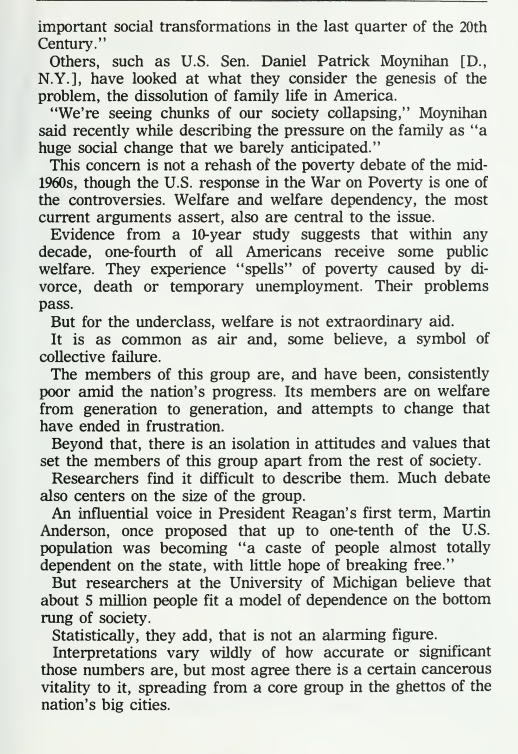
I knew Charles Murray was old, but I didn't realize he'd already made his name as a critic of the Great Society in 1986.
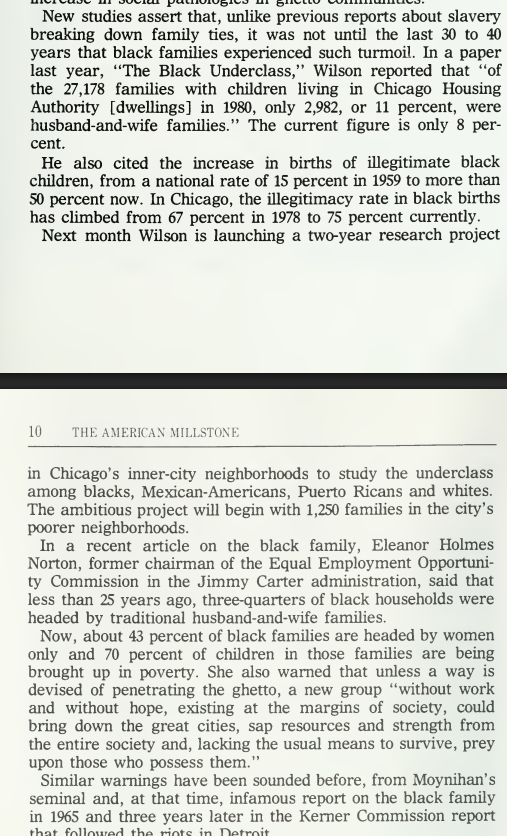
Insane dysfunction of the underclass: three generations of blacks having kids at 15 and living off of welfare. 4 kids, zero work. Life plan of mother: move off Aid for Families with Dependent Children onto disability, which pays more.
The incredible financial cost of managing urban black crime. Most underclass members supplemented their welfare checks with theft, stripping public infrastructure (cobblestones), drugs, and prostitution.
The De Mau Maus, a gang of black terrorists who killed 10 whites during a 5-month crime spree.
Just account after account of people blowing up their and other people's lives for no reason, all funded by the government.
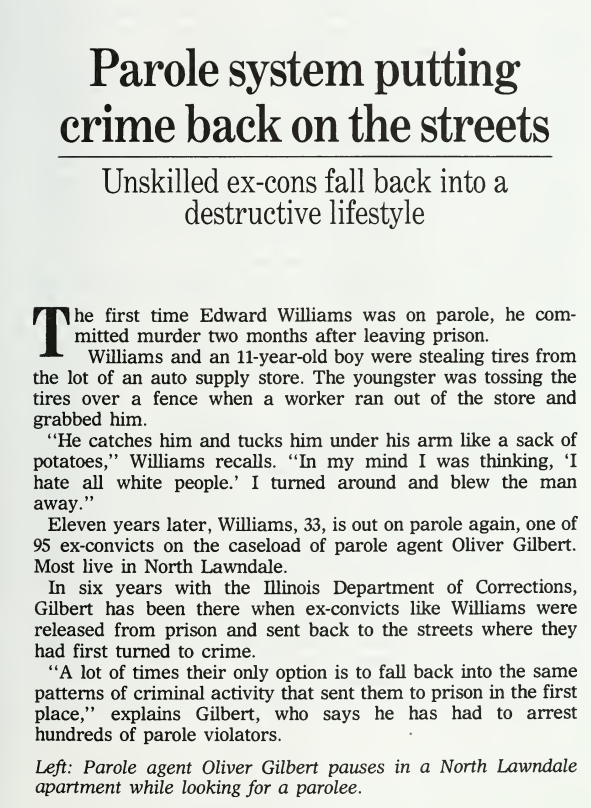
The change in who received AFDC over time: from widows to single mothers.
The rite of adulthood in the underclass: having a kid (many women in this book have 4,5,8 kids) and getting your first welfare check. Ending AFDC in the 90s fixed this, I'm quite confident serious $$$ pronatalism that was not carefully designed would bring it back.
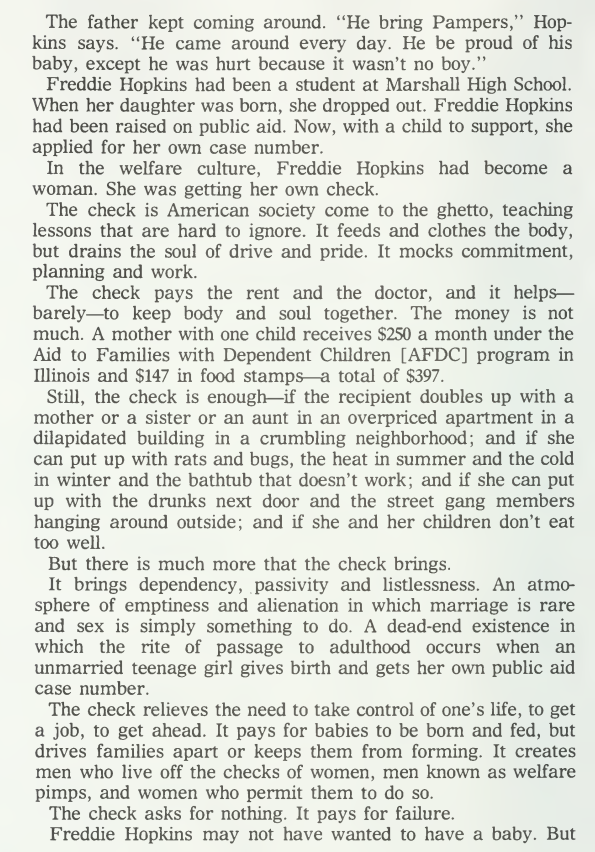
Sex is simply "something to do." I think cheap, ubiquitous entertainment is responsible for the decline of the underclass birth rate since 2012, which is the one really positive demographic trend of the 21st century.
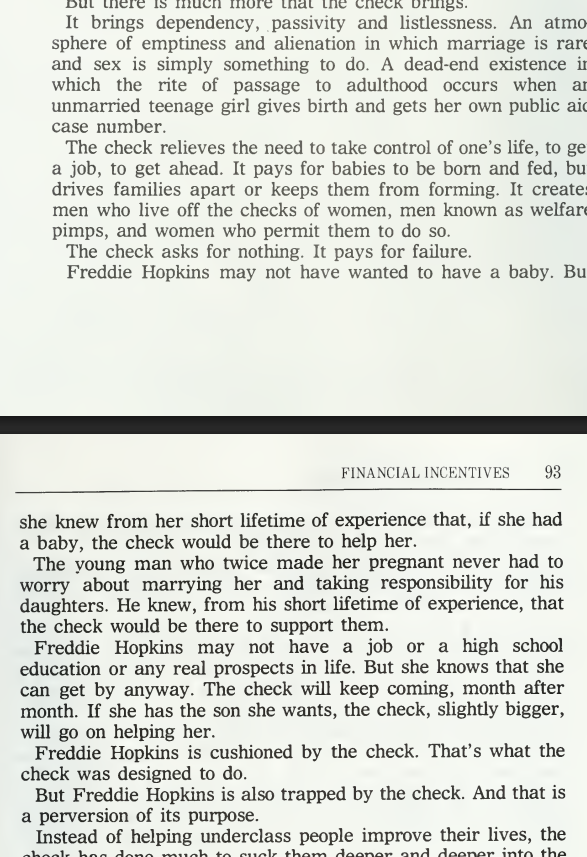
Neither underclass men nor underclass women see much point in marrying. The check is good enough for the women, and the men don't want to be tied down (but are happy to mooch off the checks).
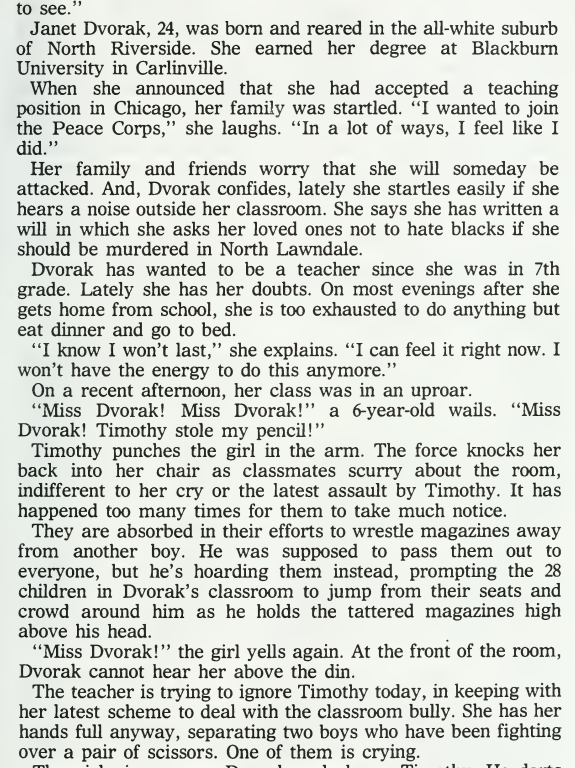
White teacher moved to underclass Chicago to teach. She wrote a will asking her family not to blame blacks if they killed her.
Jobs do not bring respect, but scorn.
Area was physically destroyed in the 1968 race riots. Feds poured in millions to no avail. Black employment collapsed after Civil Rights and the Great Society. Urban decline and "racial succession" go hand-in-hand.
Blacks became too prideful for menial jobs in the 60s and the stigma of welfare vanished.
This particular burned-out ruin of a neighborhood, full of junkies and murderers living off of women literally paid to have more children, was a Democrat success story: 99.5% voted for Mondale against Reagan.
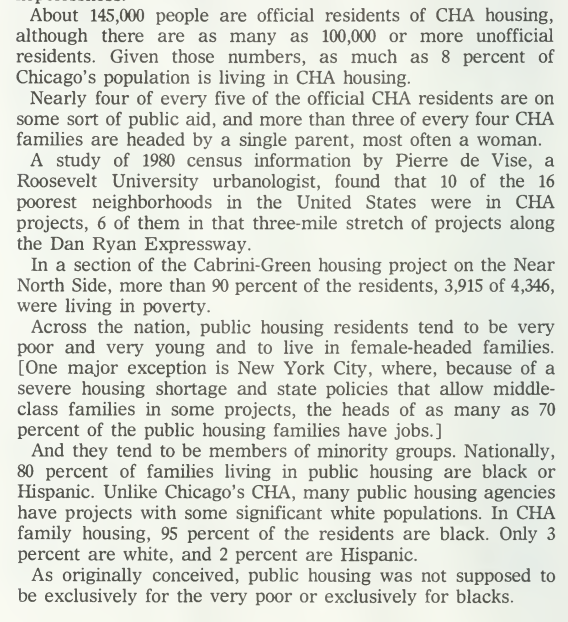
Nationally, 80% of social housing was occupied by blacks or Hispanics [still a small group in 1986]. In Chicago, 95% was black.
I respect Reagan and the 80s/90s welfare reformers a lot more having read this book. Though of course they did not go nearly far enough. Today, some of the more extreme dysfunction of the underclass is abating (fewer broods of 8 children starting at age 15, all paid for by the taxpayer) and aging and mass incarceration have rendered it less violent. However, the more basic elements of the underclass (disdaining work and marriage) have spread and are now mainstream in American society.
• • •
Missing some Tweet in this thread? You can try to
force a refresh

Employers hiring people and then training them in the specific skills they require has declined as a hiring model for decades, in favor of a hiring market where employers look for people who already have those skills.
In the training/internal labor markets model, a company struggling to find specific skills will train promising entry-level employees. In the hiring market model, they can raise wages or otherwise improve conditions. In both, they can also substitute technology for labor.
Neither a hiring market nor training model for matching jobs to seekers is compatible with "skill shortages" as a concept, which implicitly assumes skills are fixed and once people with those skills run out employers can do nothing (except through immigration or schooling).
"Fire and Blood: A History of Mexico" (TR Fehrenbach, 1973/1995) thread of threads. Mesoamerican civilization was horrifying and very backwards by Old World standards, but unique.
Excerpts from TR Fehrenbach's "Fire and Blood: A History of Mexico" (1995). The PRI had massively expanded higher education. These universities were entirely 'free'/self-governing and became locuses of left-wing organizing.
In 1968, security forces fired upon a massive student demonstration/riot against the Olympic Games.
By 1970 Mexico had made enormous progress; the national income increased sixfold while the death rate dropped by half. But Mexico was still struggling with foreign-exchange; the govt pursued import-substitution to improve balance-of-payments.
Thread with excerpts from the Partido Nacional Revolucionario (PNR) section of TR Fehrenbach's "Fire and Blood: A History of Mexico" (1995). Calles created the PNR in 1929 to institutionalize the govt and Revolution, creating a Mexican party-state.
The Calles/Obregon governments were corrupt, but never succumbed to paranoia; there was no equivalent to the Soviet or Chinese liquidations of class enemies, the press was free, and the average Mexican had nothing to fear from the govt (Red Terror against the Church aside).
Roughly 19M acres were redistributed through 1933; most land remained with latifundios. But the new latifundios were not like the old ones, they were commercial enterprises rather than social systems. The clerics, army, and latifundistas were all tamed by Calles/Obregon.
Thread with excerpts from TR Fehrenbach's "Fire and Blood: A History of Mexico" (1995), on post-Revolutionary Mexico. To justify land reform, the revolutionaries revived the principle that expropriation was justifiable if the national interests demanded it.
The Constitutionalists defeated the Villistas in battle and assassinated the leader of the last revolutionary faction, Zapata, by treachery.
Carranza, the erstwhile leader of the victorious Constitutionalists, dug his own grave by trying to promote someone other than Obregon to the presidency after him; he was forced to flee the capital, run down, and murdered.
Excerpts from TR Fehrenbach's "Fire and Blood: A History of Mexico" (1973). The Porfiriato gave Mexico a generation of stability and development for the first time since independence. This left Mexico overdue for another civil war: the Mexican Revolution.
One problem was that the Porfirian school system had created a large, literate middle structure (not class). These educated mestizos became dissatisfied due to lack of opportunity; growth was rapid but not rapid enough to absorb them all.
The Revolution kicked off in 1910, when Diaz announced he'd won reelection with 99% of the vote. This kicked off an insurgency in Chihuahua, in the mestizo, frontier north.