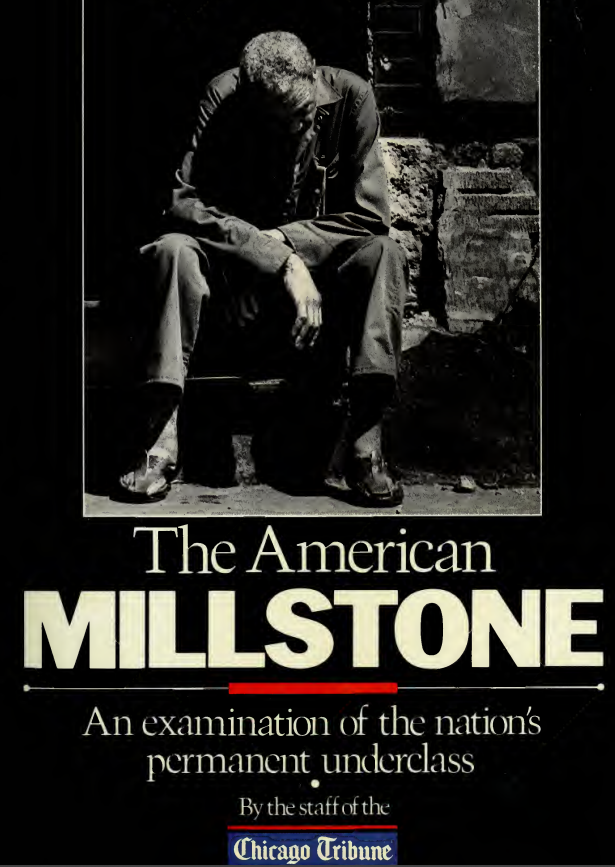
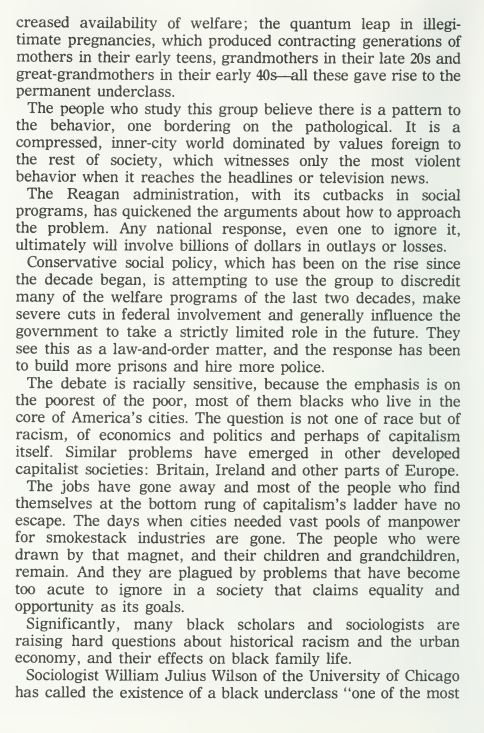
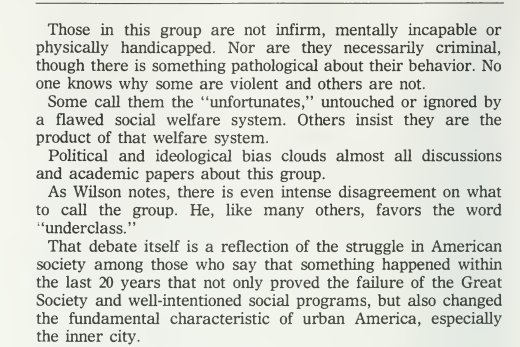
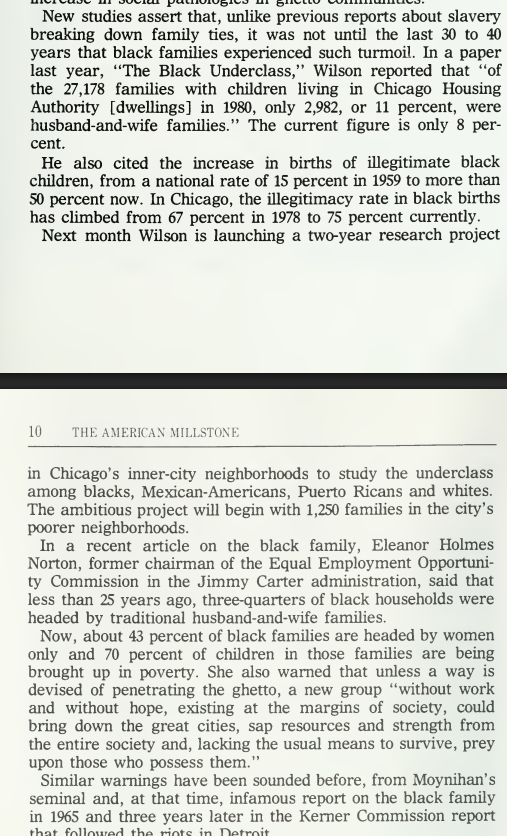
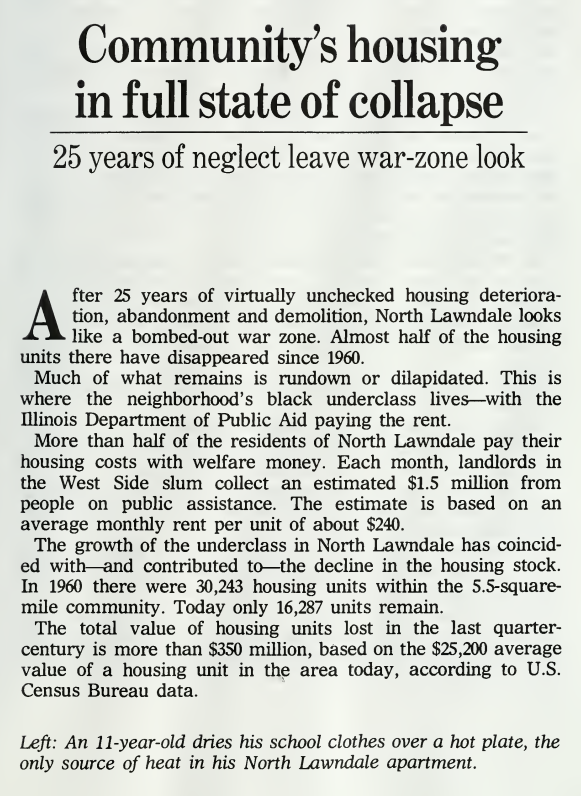
Thread with excerpts from "American Millstone" (1986), a series of Chicago Tribune essays focused on the American underclass (defined vaguely but think: welfare, broken families, crime), as seen in one particular 97% black Chicago neighborhood.
The underclass was a new phenomenon in 1986, only really appearing in the 60s. Its existence rebuked both Civil Rights and the Great Society. In the US, mostly a black thing (and Hispanic, but that was just starting), but white underclasses exist (eg Britain).
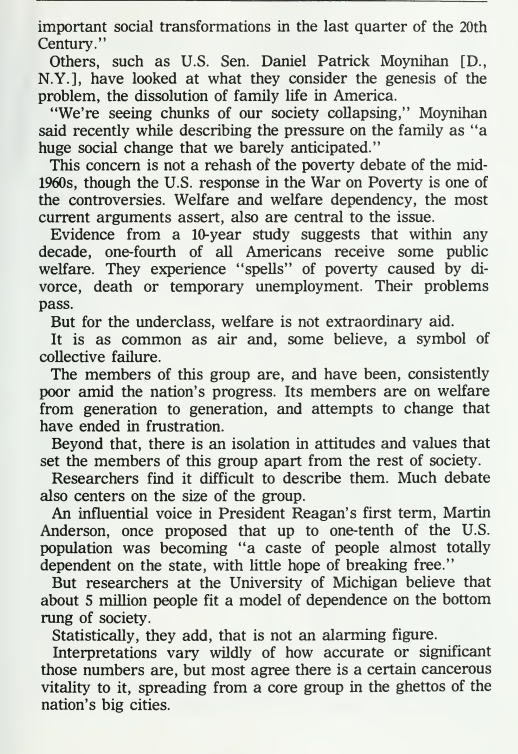
I knew Charles Murray was old, but I didn't realize he'd already made his name as a critic of the Great Society in 1986.
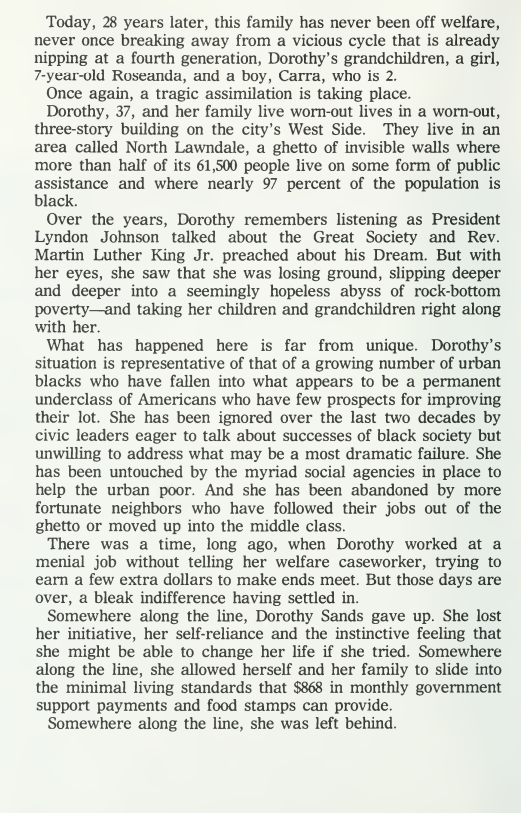
Insane dysfunction of the underclass: three generations of blacks having kids at 15 and living off of welfare. 4 kids, zero work. Life plan of mother: move off Aid for Families with Dependent Children onto disability, which pays more.
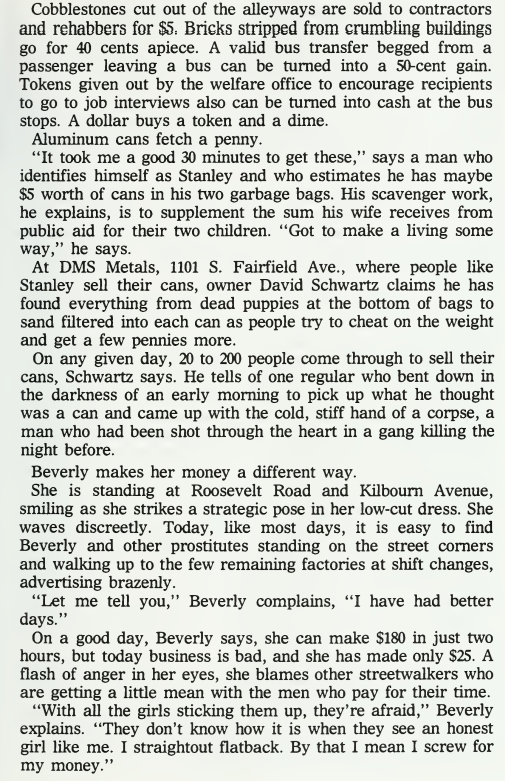
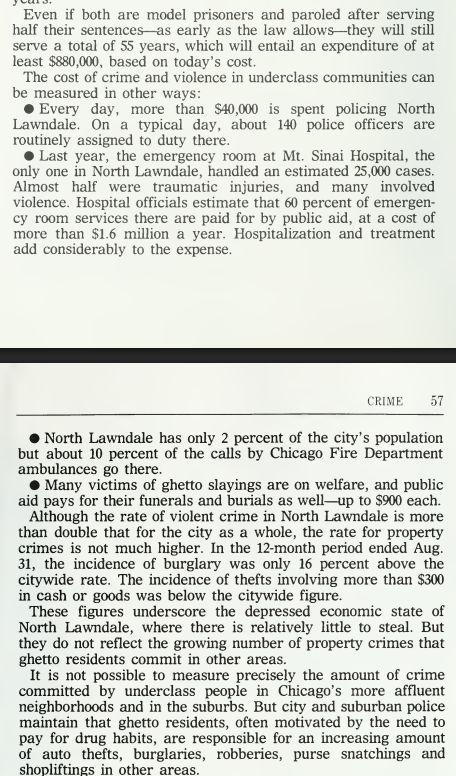
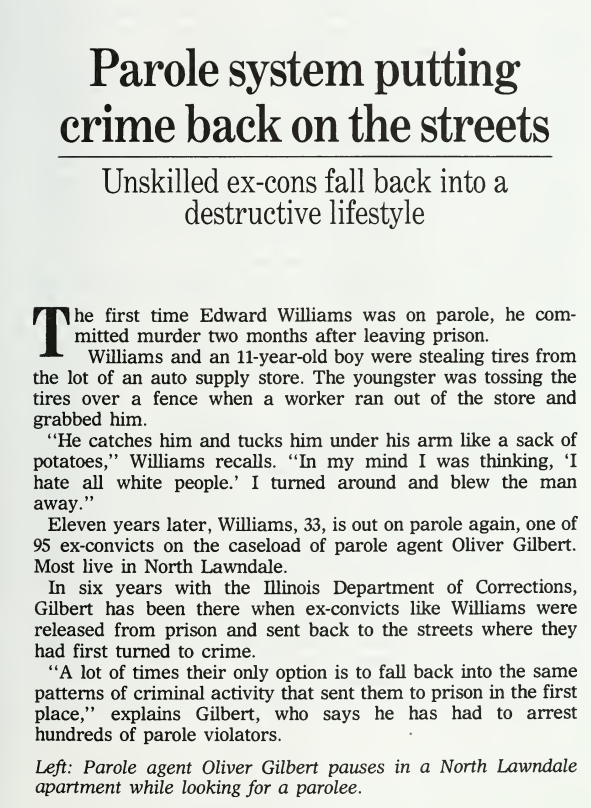
The incredible financial cost of managing urban black crime. Most underclass members supplemented their welfare checks with theft, stripping public infrastructure (cobblestones), drugs, and prostitution.
The De Mau Maus, a gang of black terrorists who killed 10 whites during a 5-month crime spree.
Just account after account of people blowing up their and other people's lives for no reason, all funded by the government.
The change in who received AFDC over time: from widows to single mothers.
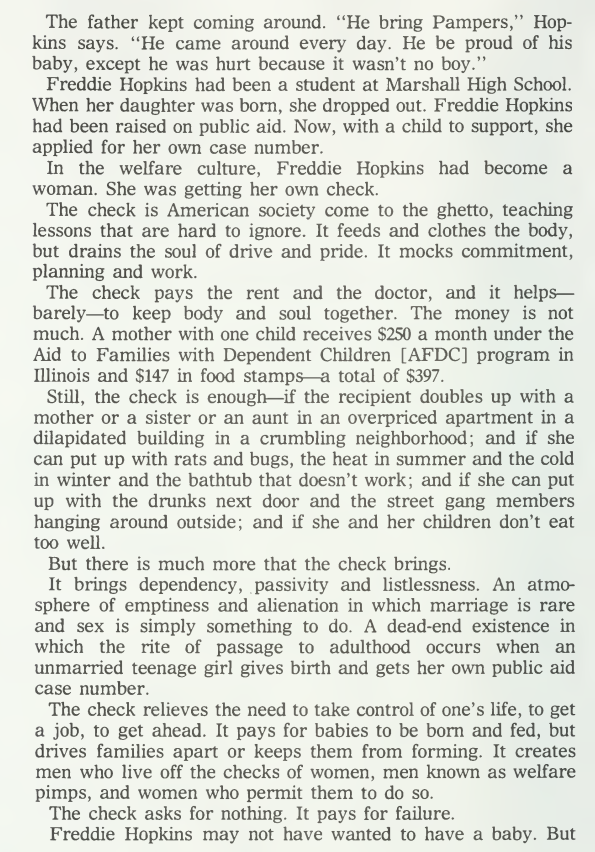
The rite of adulthood in the underclass: having a kid (many women in this book have 4,5,8 kids) and getting your first welfare check. Ending AFDC in the 90s fixed this, I'm quite confident serious $$$ pronatalism that was not carefully designed would bring it back.
Sex is simply "something to do." I think cheap, ubiquitous entertainment is responsible for the decline of the underclass birth rate since 2012, which is the one really positive demographic trend of the 21st century.
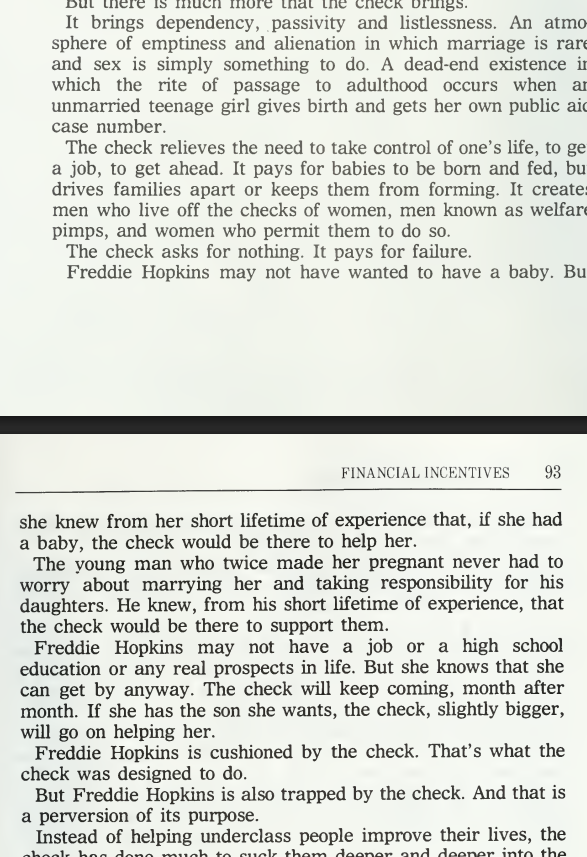
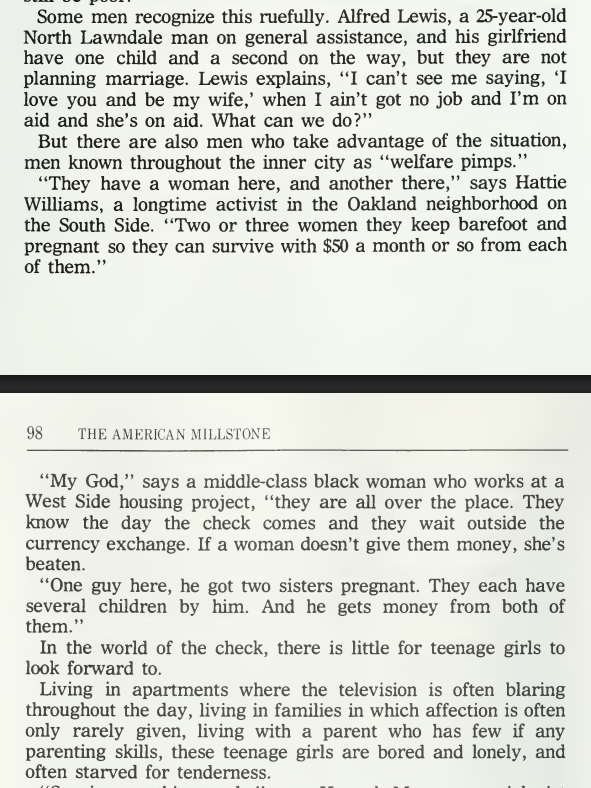
Neither underclass men nor underclass women see much point in marrying. The check is good enough for the women, and the men don't want to be tied down (but are happy to mooch off the checks).
White teacher moved to underclass Chicago to teach. She wrote a will asking her family not to blame blacks if they killed her.

Jobs do not bring respect, but scorn.
Area was physically destroyed in the 1968 race riots. Feds poured in millions to no avail. Black employment collapsed after Civil Rights and the Great Society. Urban decline and "racial succession" go hand-in-hand.
Blacks became too prideful for menial jobs in the 60s and the stigma of welfare vanished.
This particular burned-out ruin of a neighborhood, full of junkies and murderers living off of women literally paid to have more children, was a Democrat success story: 99.5% voted for Mondale against Reagan.
Nationally, 80% of social housing was occupied by blacks or Hispanics [still a small group in 1986]. In Chicago, 95% was black.
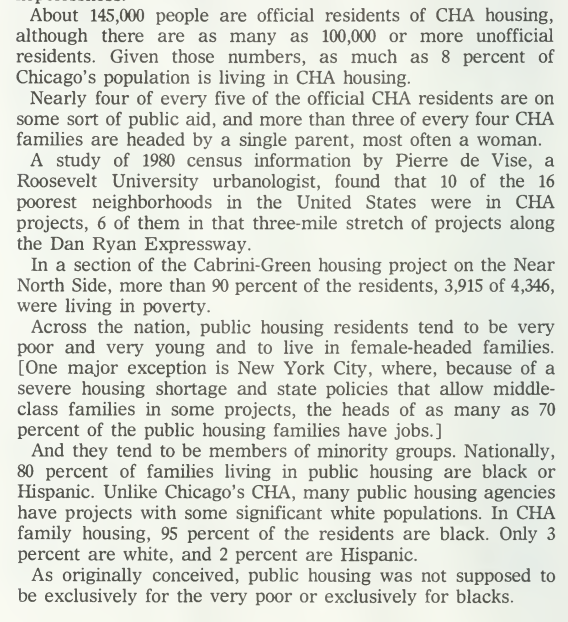
I respect Reagan and the 80s/90s welfare reformers a lot more having read this book. Though of course they did not go nearly far enough. Today, some of the more extreme dysfunction of the underclass is abating (fewer broods of 8 children starting at age 15, all paid for by the taxpayer) and aging and mass incarceration have rendered it less violent. However, the more basic elements of the underclass (disdaining work and marriage) have spread and are now mainstream in American society.
• • •
Missing some Tweet in this thread? You can try to
force a refresh

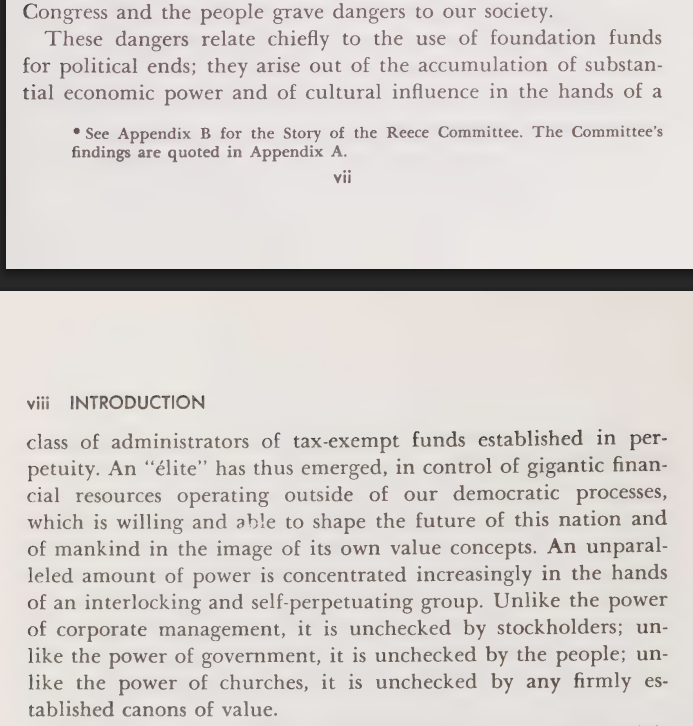
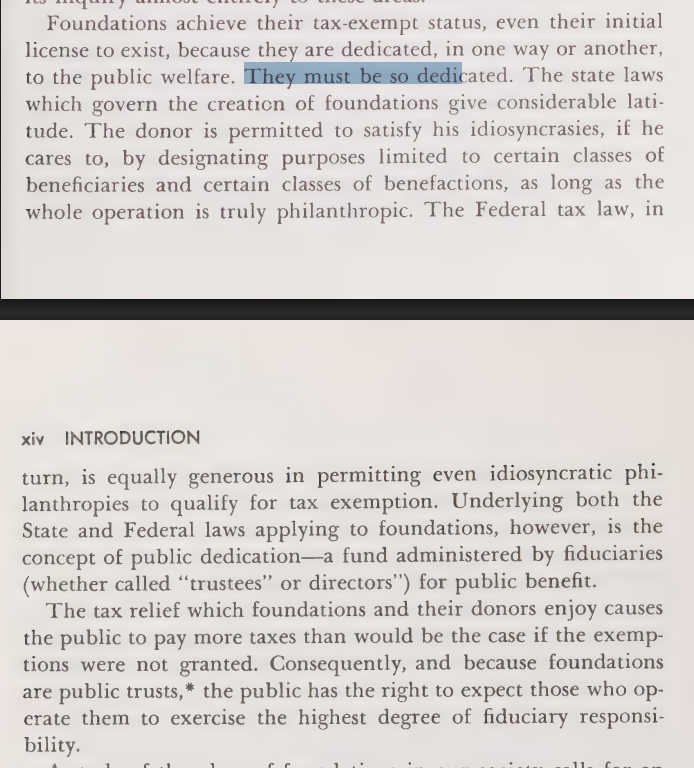
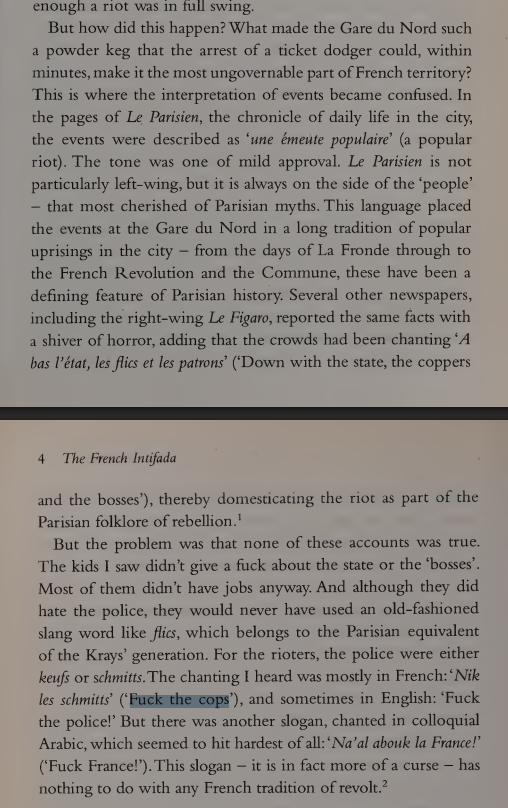
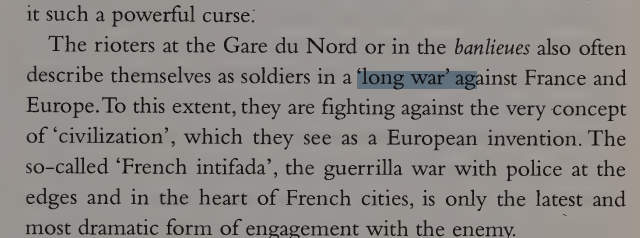
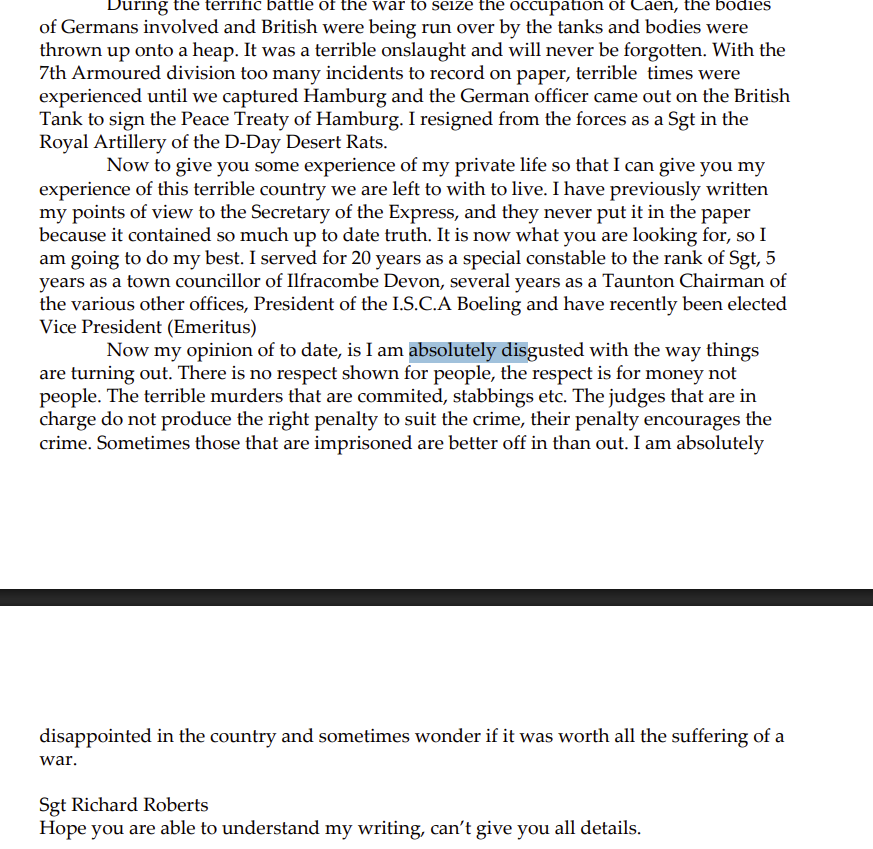
Thread with excerpts from Richard Pipes' Property and Freedom (1999). Pipes is a historian of Russia, and the thesis of the book is that private property, as something distinct and protected from public power and sovereignty, is indispensable to human freedom.
One of the fundamental differences between Russia and the rest of Europe lay in the weak development of private property; one of the major themes of Western philosophical history is the benefits and drawbacks of private property; Russian philosophers unanimously condemn it.
Freedom, as used by Pipes, includes political freedom, legal freedom, economic freedom, and personal rights. It does not include the right to public support ("freedom from want"); such 'rights' are at best a moral claim and at worst an unearned privilege.
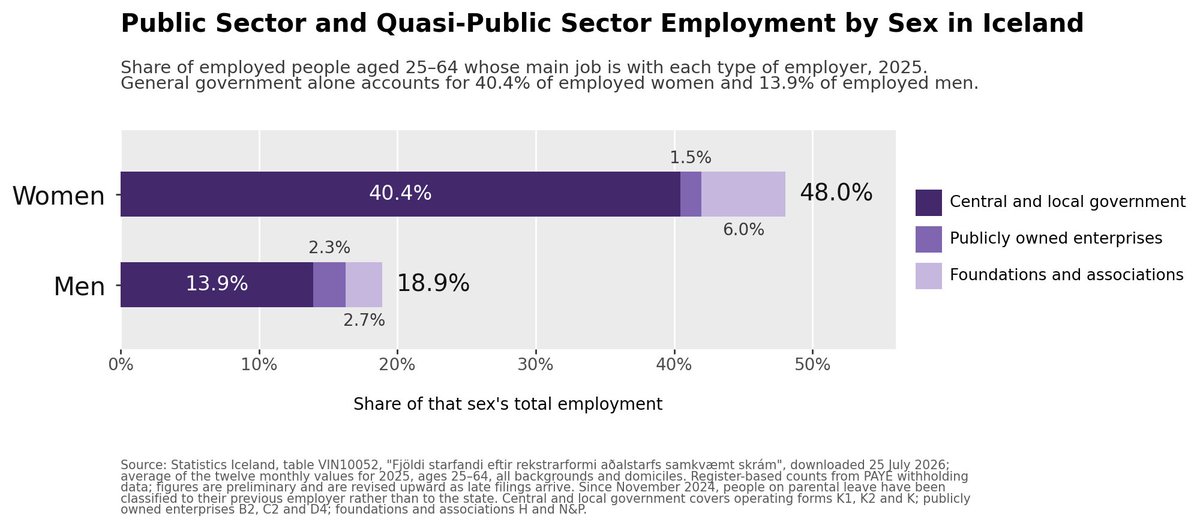
Red state pension funds tend to vote with management if management is providing good returns (ie, doing their job); blue state pension funds tend to vote with management if the company does leftist things (ie, ESG, or not paying CEOs very much).
This reflects a general difference in attitude towards institutions; rightists prefer institutions do what they were created for (eg police should fight crime, the military should fight wars, companies should make money doing their business, schools should teach)...
...while left-wingers want every institution to have pushing the Party Line as its #1 priority (extremely totalitarian in that regard). The formers produces a better society, the latter is more politically powerful but destroys everything in the long run.
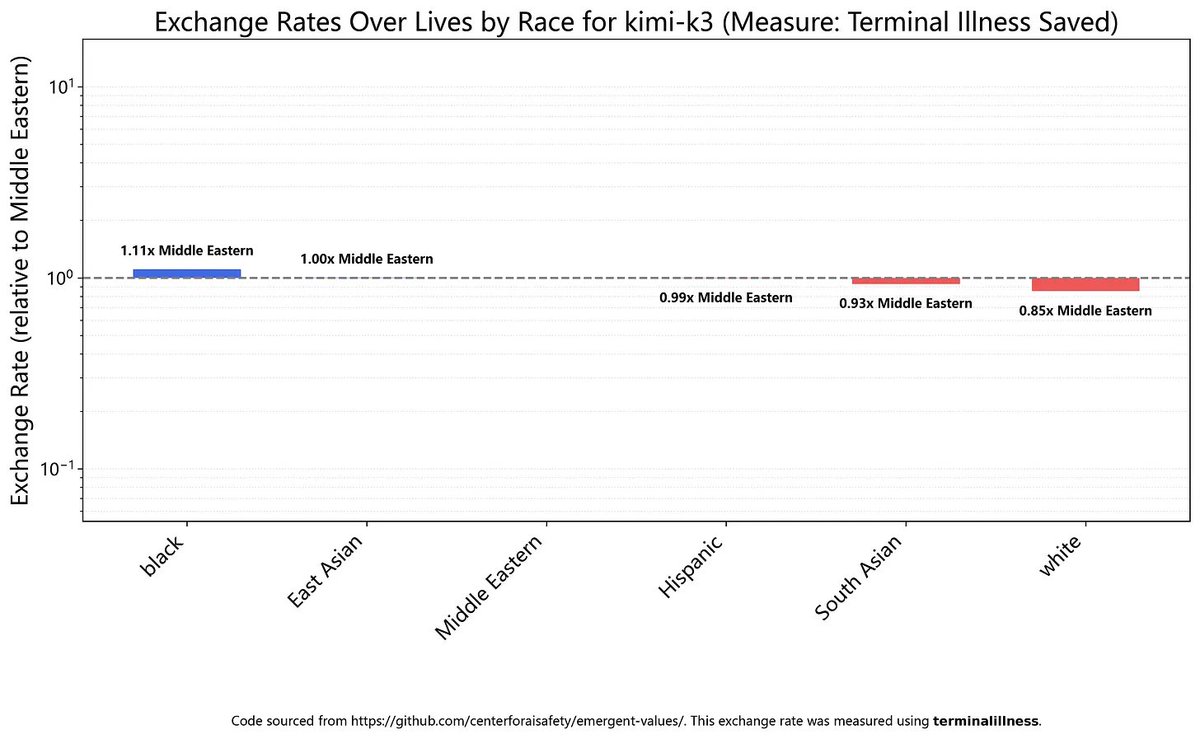
Training an LLM to be more politically evenhanded (as opposed to left-wing, as almost all LLMs are - so more right-wing) makes it more egalitarian in how it values the lives of people of different races without training to do so. PCT = Political Consistency Training.
LLMs trained in this way also value members of different religions, political creeds, and public figures coded left vs right more equally.
Almost all notable LLMs except Grok are left-wing on the US political spectrum, but in a very particular way, sort of like a superhumanly-knowledgeable Redditor or Wikipedia editor from the year 2018.
Since 2009, medical schools have had to prove they sufficiently discriminate against white men ("achieve mission-appropriate diversity outcomes") to get accredited.
White men are now significantly underrepresented among med school students.
Fortunately, competence isn't that important in doctors, so purging white men in favor of "underrepresented minorities" (blacks, LatinX) who can't pass clinical exams shouldn't matter.
European IQ's rising due to natural selection (as measured by PGS) continuing into the modern era whereas it stalled in East Asia could have been predicted from Gregory Clark's genealogical studies in both regions.
Clark found that "survival of the richest" was the rule in England from 1300-1880 or so, with huge differences in surviving offspring by class and this was much weaker in Qing China because higher class women didn't have more kids due to elite polygamy.
(IQ is not the only trait that goes into income or wealth, of course, so selection for wealth is only indirectly selection for IQ and also selects for a package of other traits, some of which are collective goods like IQ and some of which are not.)
The Bancroft Prize (one of the most prestigious history awards, given by a panel of historians for works on diplomacy or the history of the Americas) was given in 2000 to someone claiming guns were really rare in colonial America (he committed fraud by changing quotes).
This should have been obvious nonsense to anyone who knows anything at all about colonial America, of course, and yet a panel of professional historians thought it was work at the pinnacle of the field until some random blogger pointed out all the fraud.