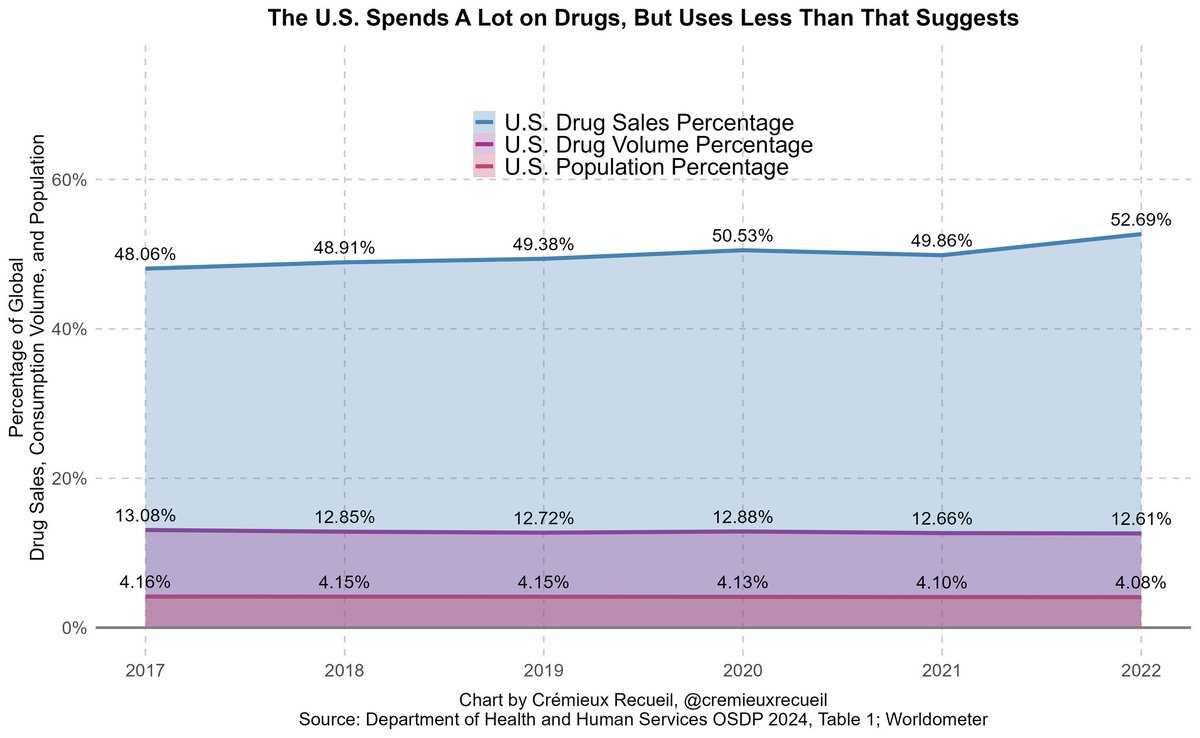
I tell non-Americans that the United States accounts for:
- About 4% of the global population
- About 13% of global drug consumption
- About 50% of global drug spending
And they're often floored.
For so many drugs, America is *the market*.
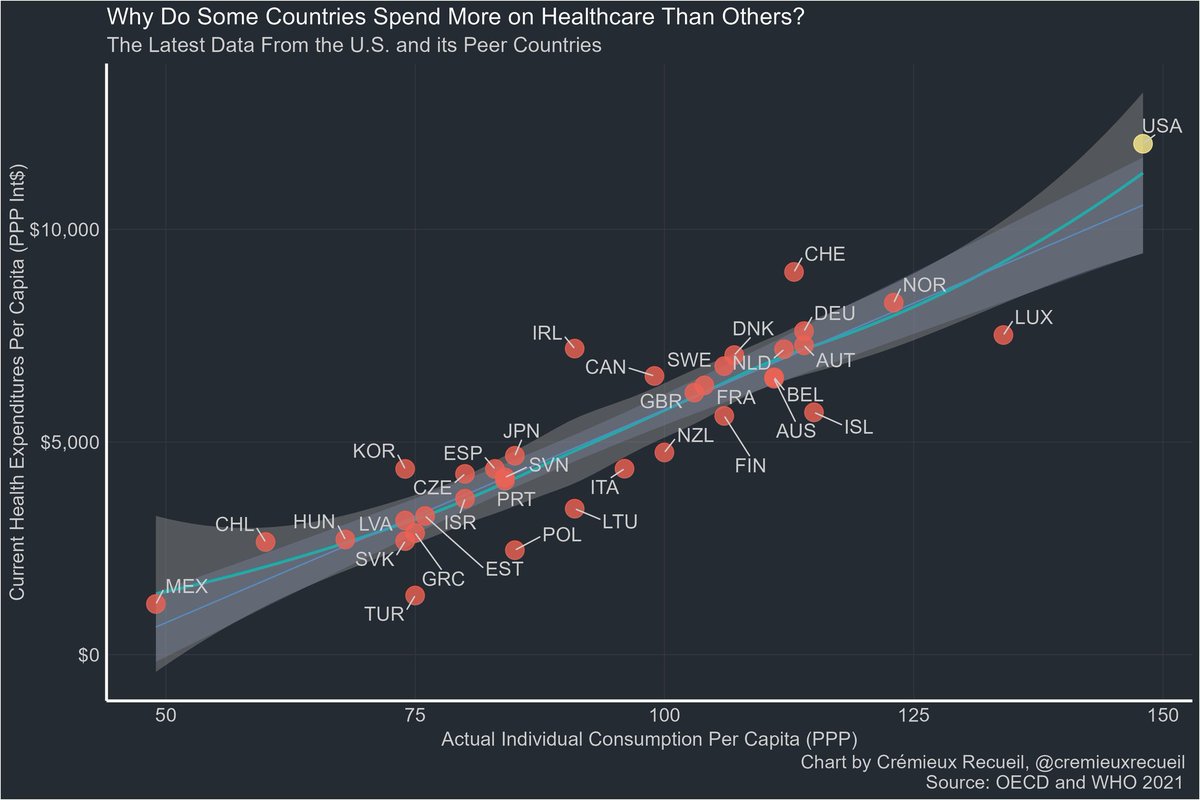
What's wild is, this isn't alarming because the U.S. is a rich country and medicine is a superior good.
U.S. health spending is in line with its exceptionally high spending in general. Other countries consume about as much as the U.S. did when it was as poor as them.
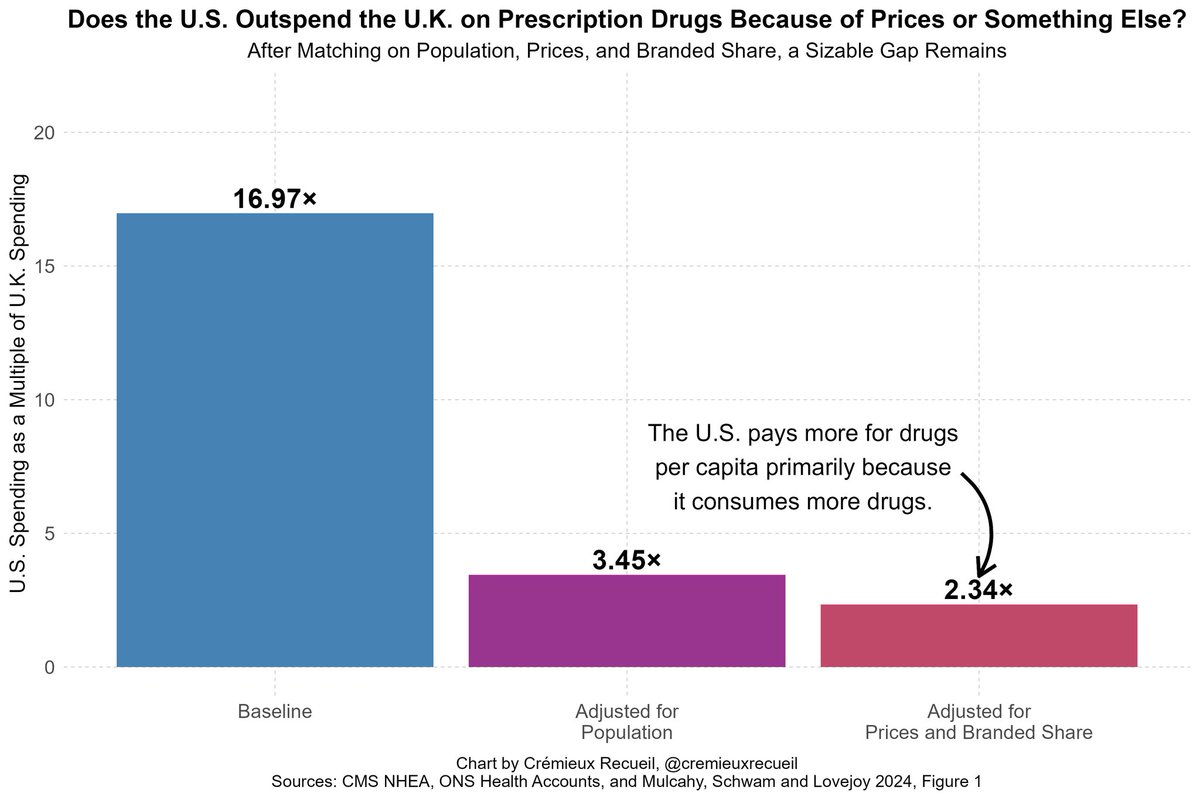
And no, America's high drug prices aren't the reason it spends so much. The main driver is consumption volume.
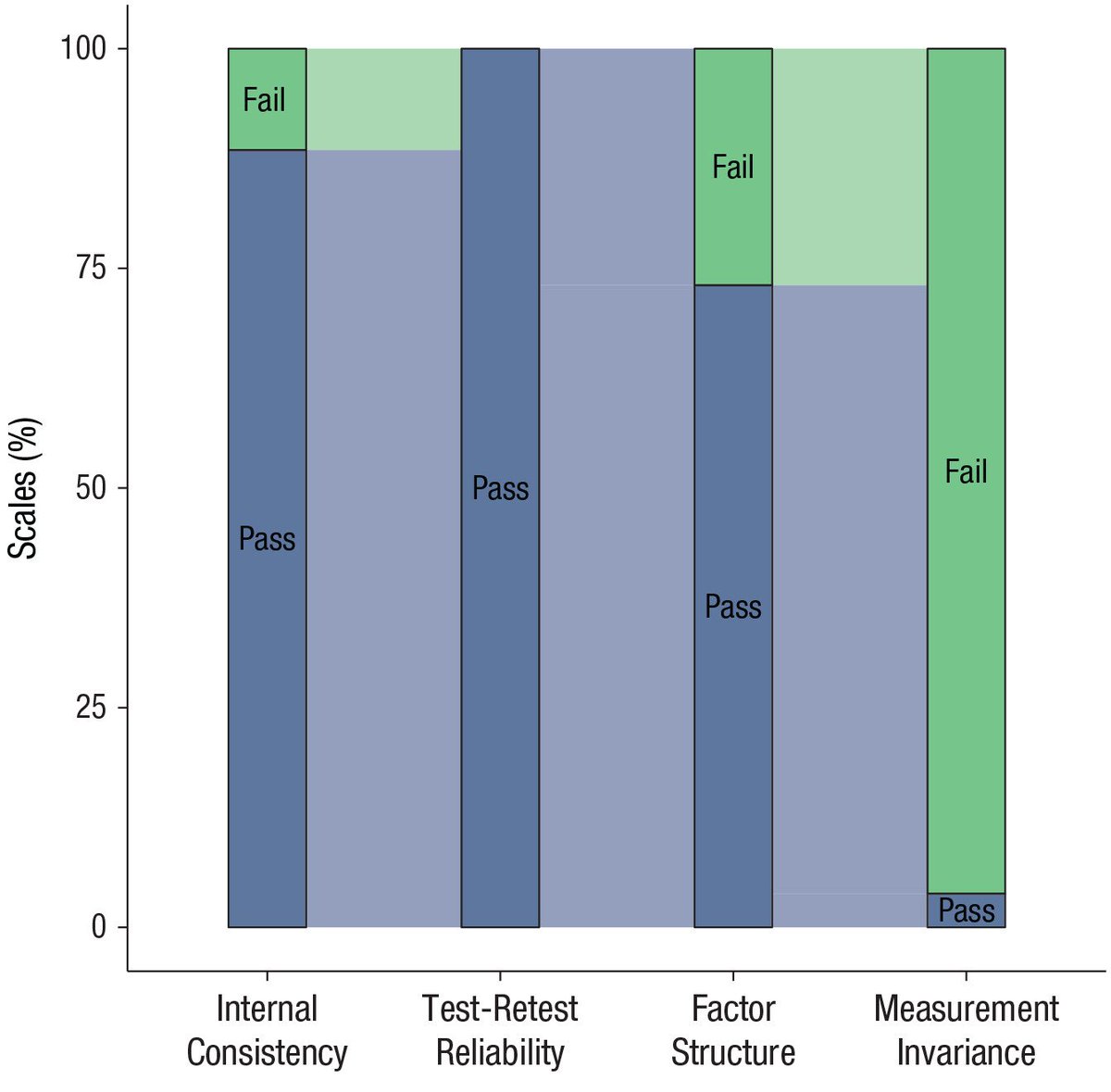
One of my favorite studies on the validity of psychological measures was a survey that included 15 commonly-used measures.
Virtually all of them were found to be invalid for making comparisons between groups.
The only scale passing muster was the Need for Cognition scale.
Measurement invariance was assessed for age and sex and the degree of measurement invariance violations was not computed. That degree could be problematic or fine, but we don't know.
Either way, lots of invalidity.
And commonly-used measures are likely going to be the ones that are better-vetted.
My experience with measures that people make up for their own studies is that they're usually much worse than measures that have at least had some level of validation.
After I posted this thread, I was given all the raw data.
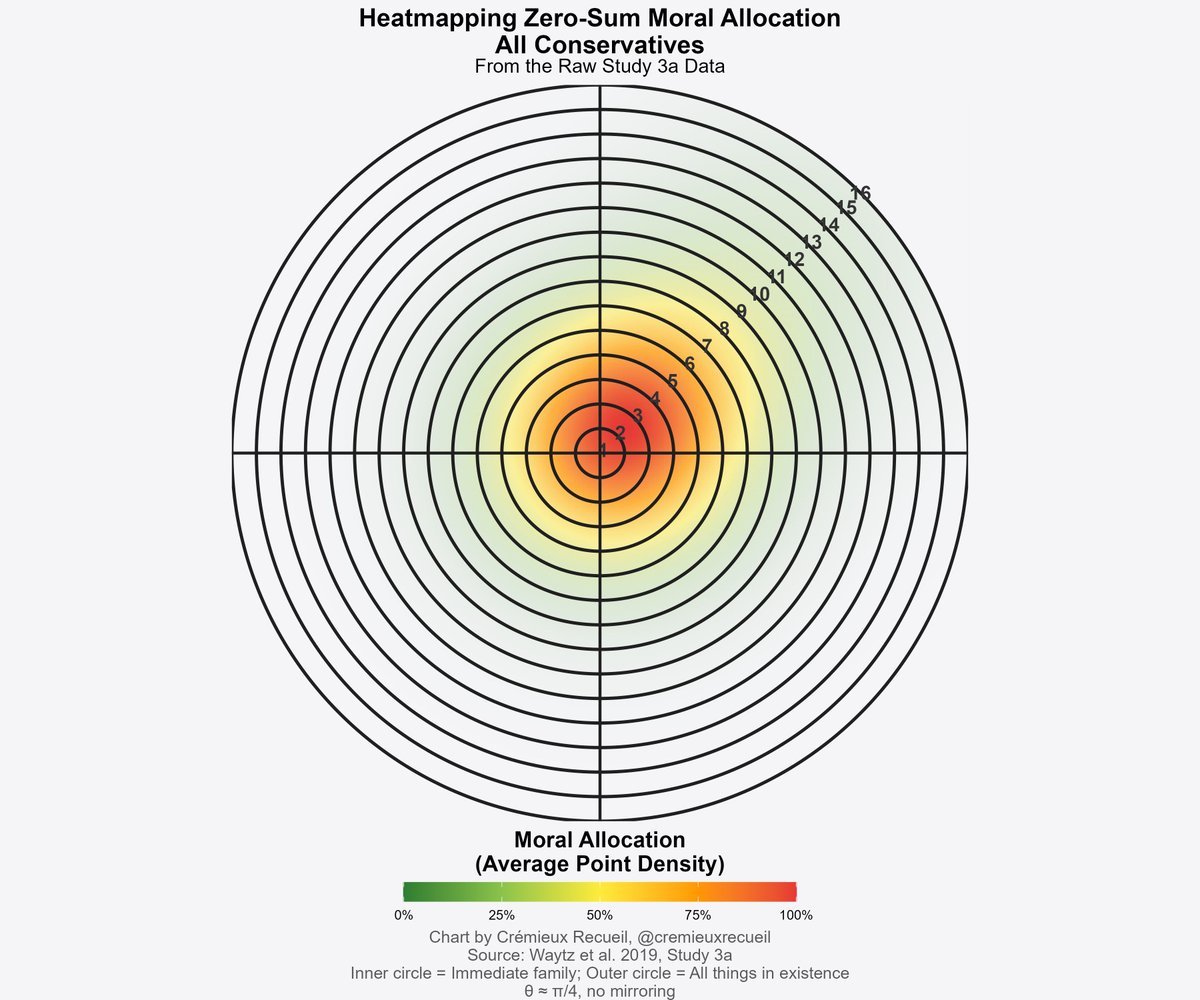
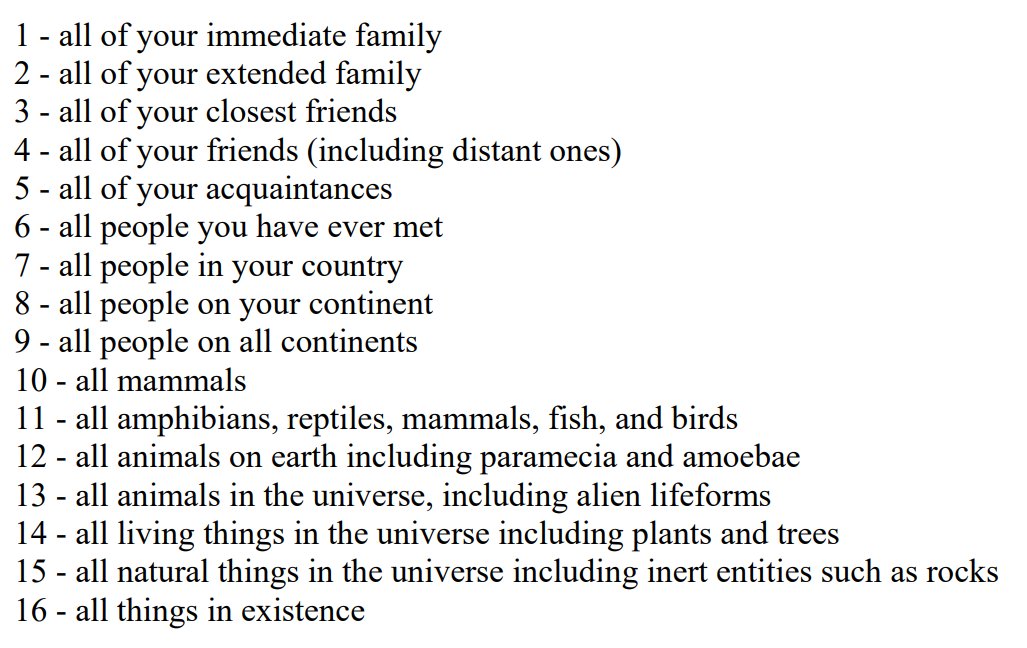
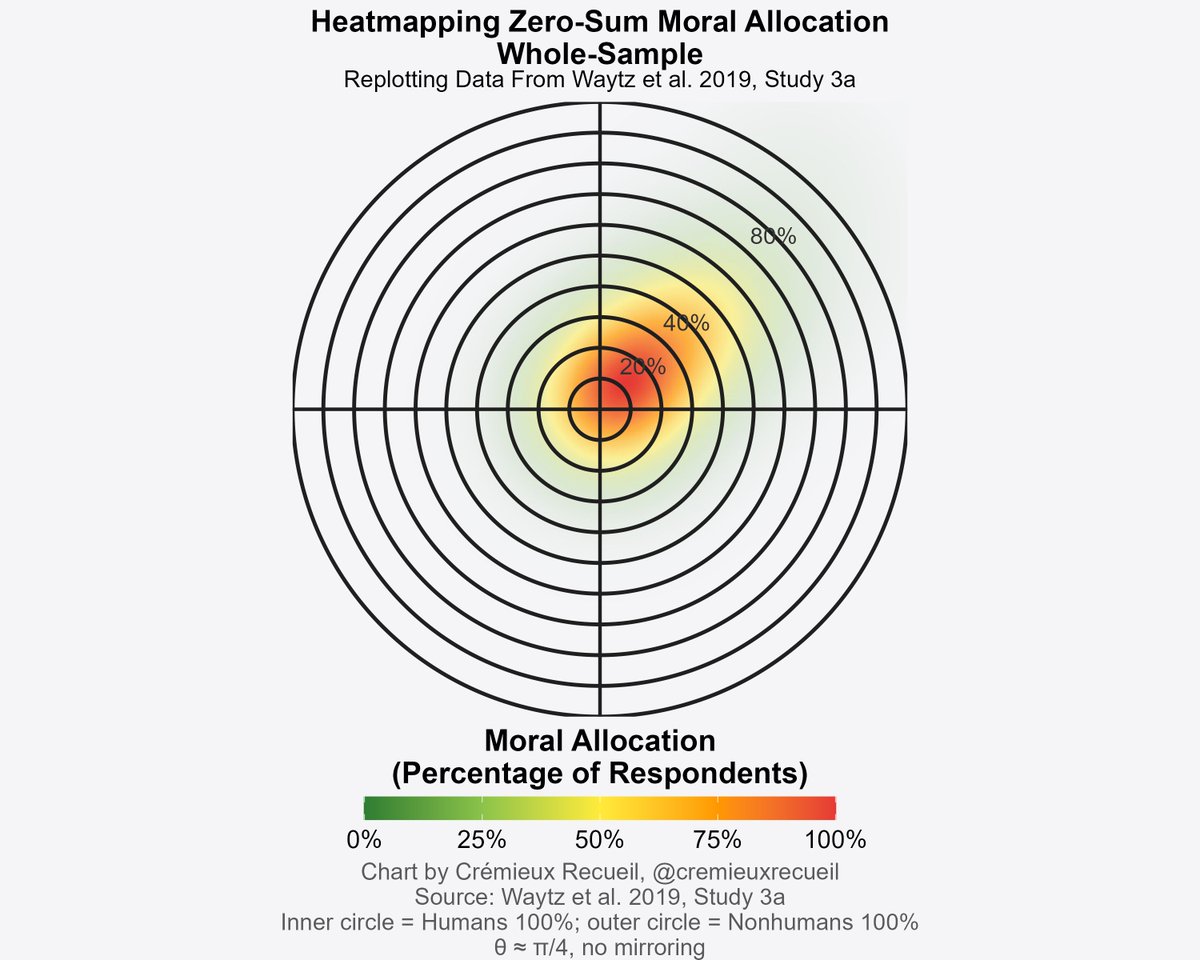
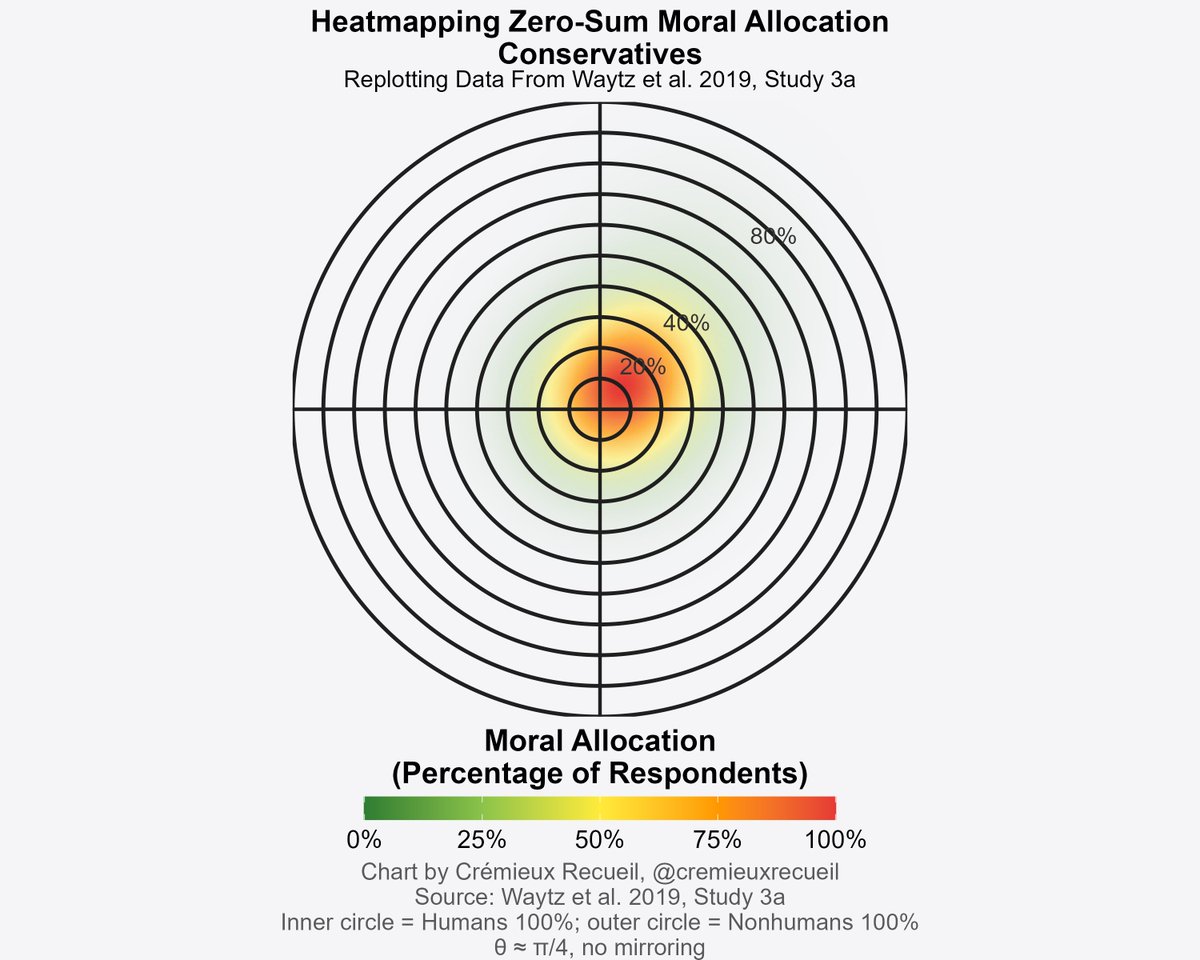
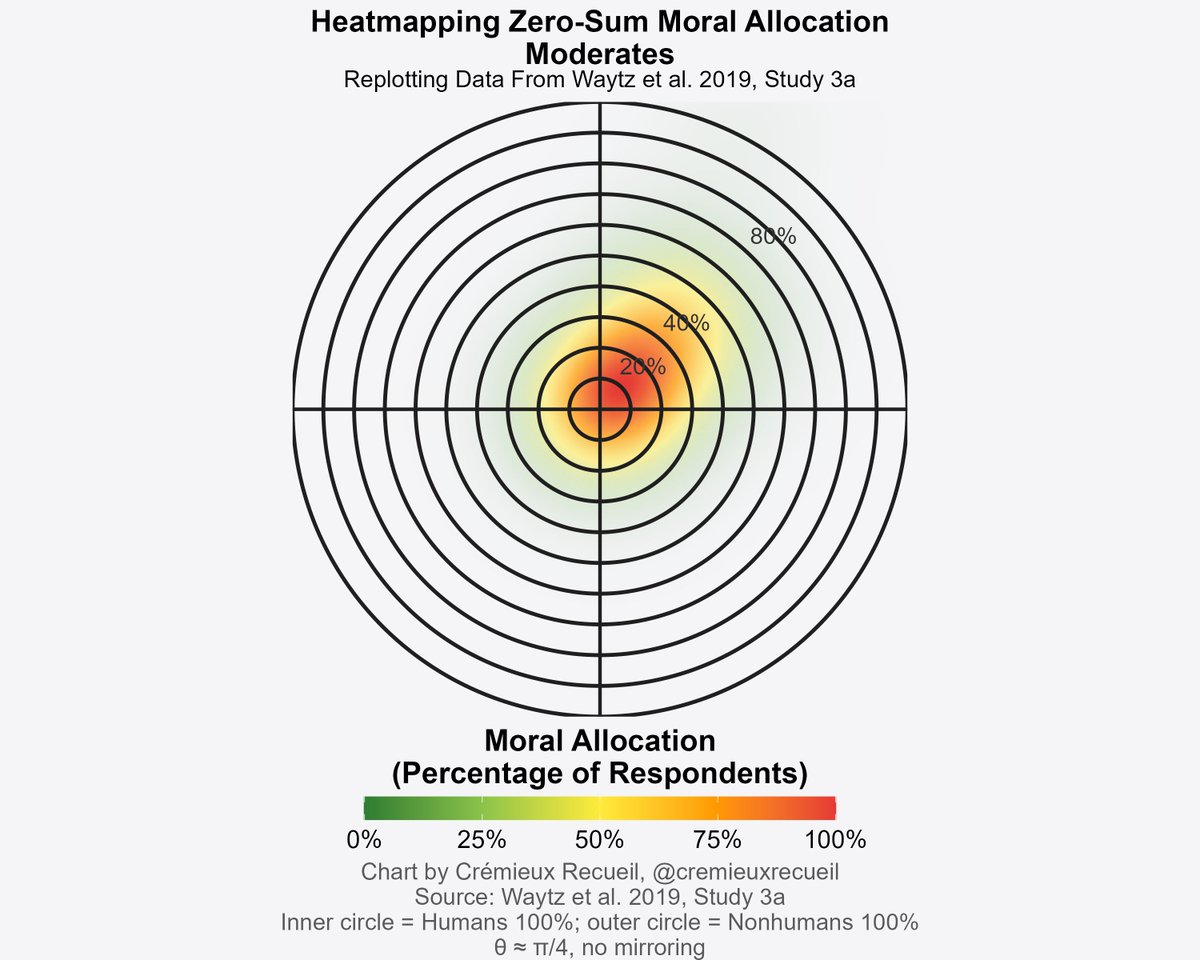
So, here are the zero-sum moral circles, where the categories are explicitly non-overlapping and giving moral units to a higher category does not include a lower-level category.
Participants were instructed that the moral units to allocate were like currency they can spend on others and allocate to different moral circles, and that a higher-level circle does **not** mean allocating to a lower one.
If you pick "16" in this exercise, then you take a moral unit away from levels 1-15.
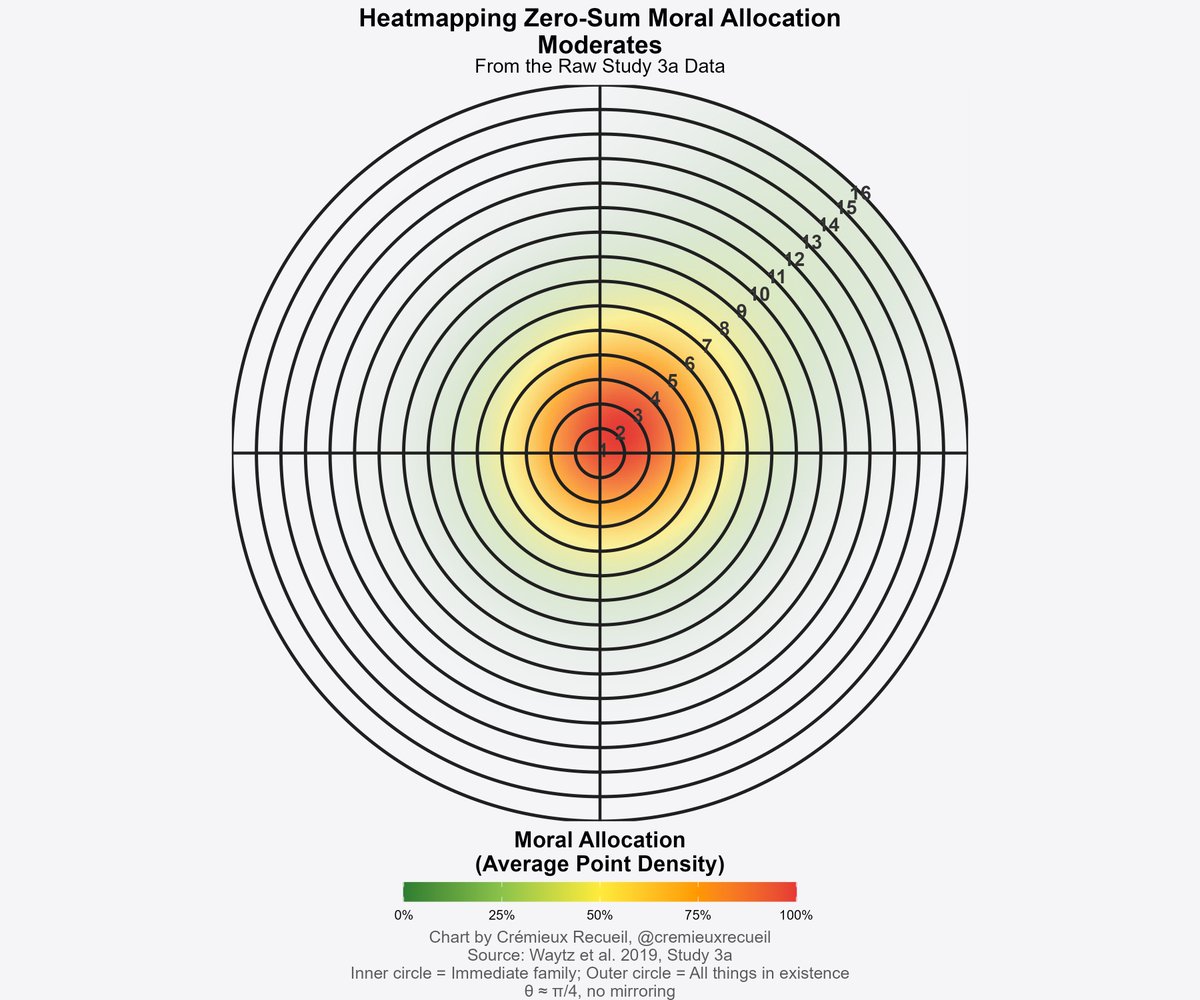
Here's how this worked out for moderates. Curious result: they're a little more family-focused than conservatives!
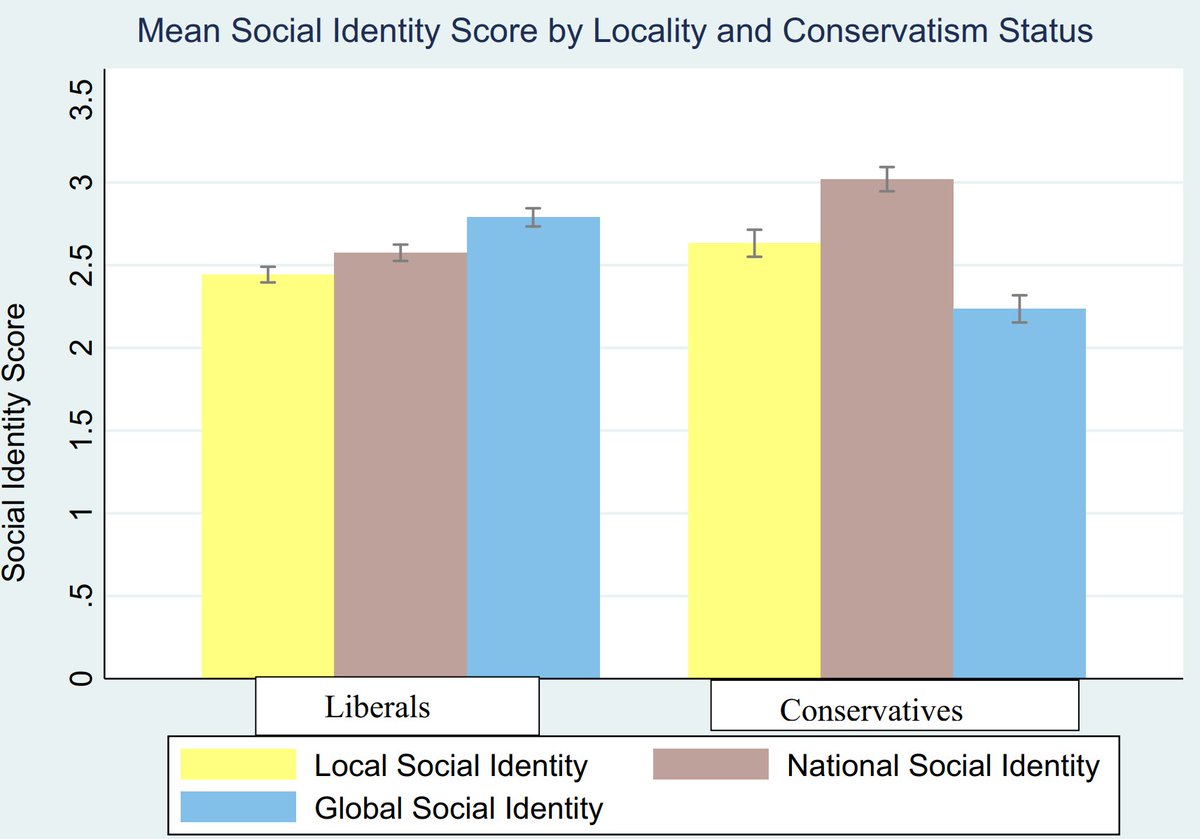
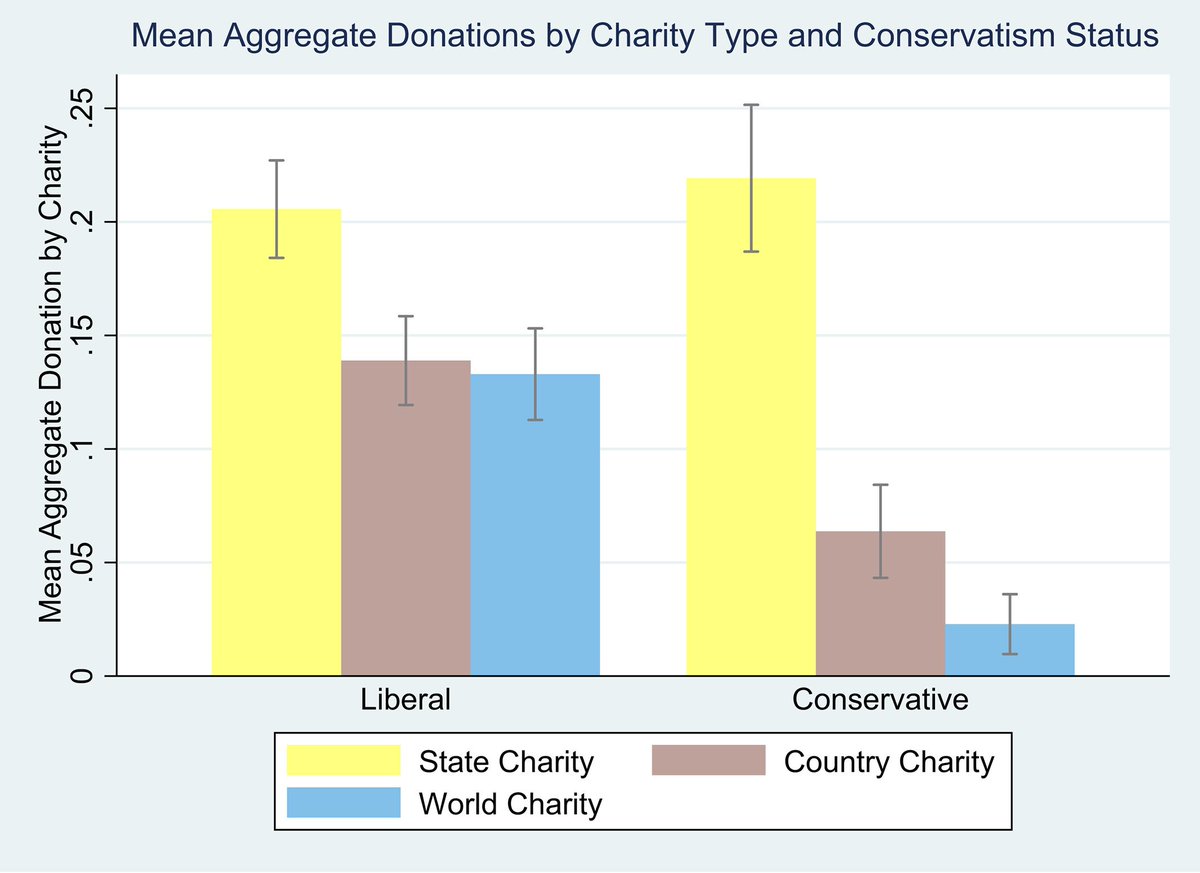
This study also gave participants the option to either pocket or donate another $5 for completing the survey.
They were given an international, national, or local charity option.
70% of liberals and 56% of conservatives donated something. Both liked local charity the most.
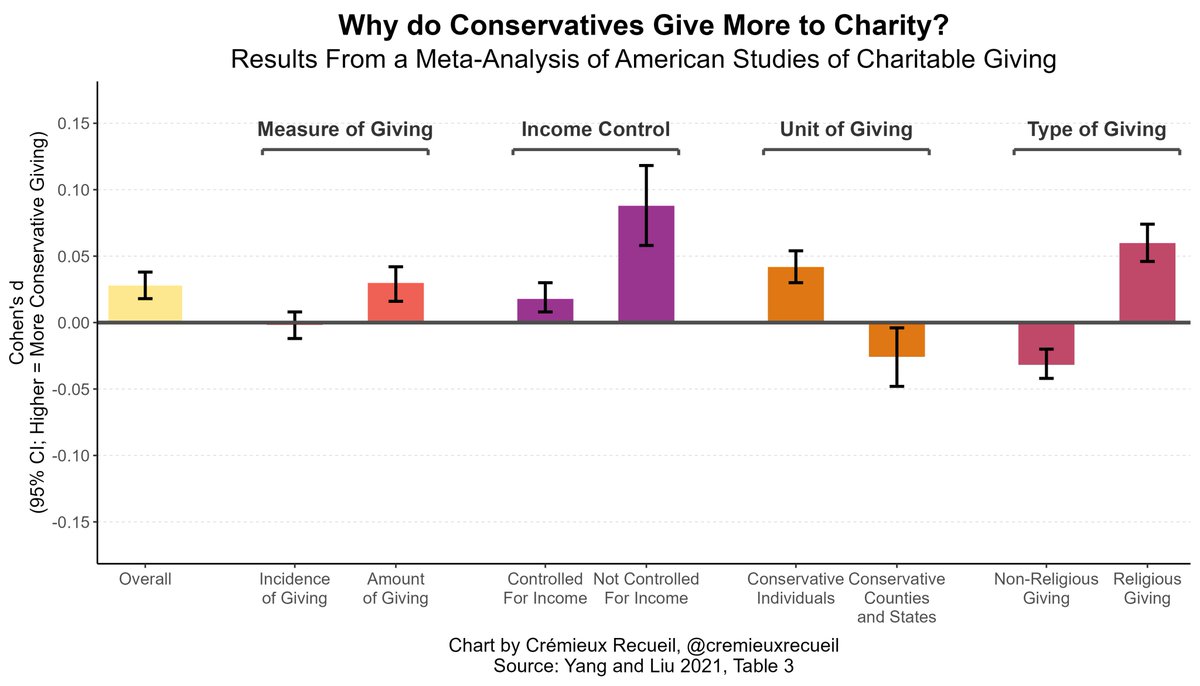
This result is curious because, in the real world, conservatives tend to donate more. No more often, but in greater amounts, so they overall give more, even controlling for income.
The reason has to do with religion. That explains the entire small conservative charity bump.