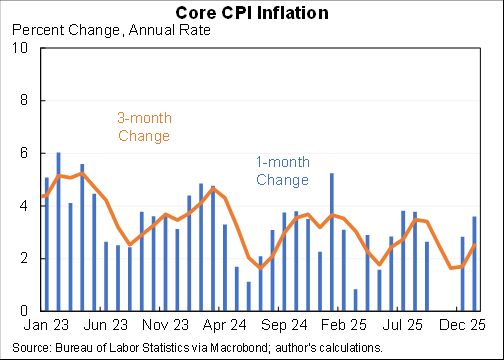
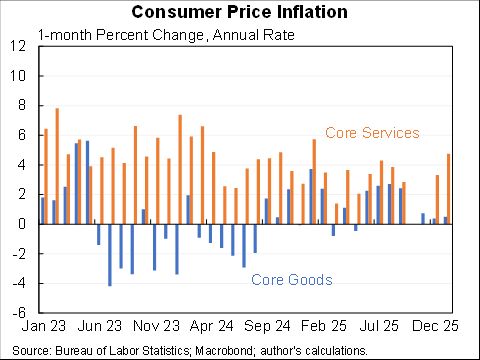
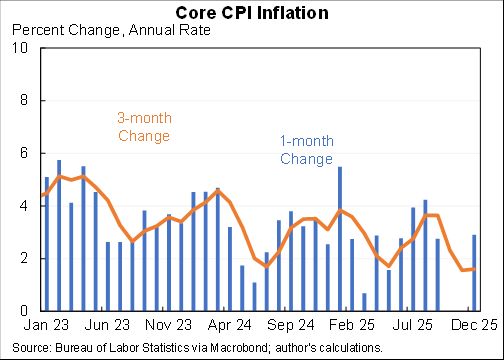
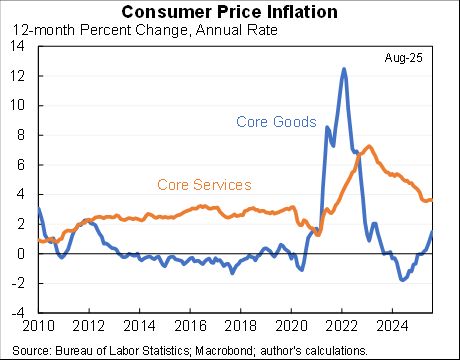
The problem recently has been in both goods and services. Core goods inflation has typically been about zero but in the run-up to this year had deflation. Now tariff-driven inflation.
And at the same time core services inflation has picked up.
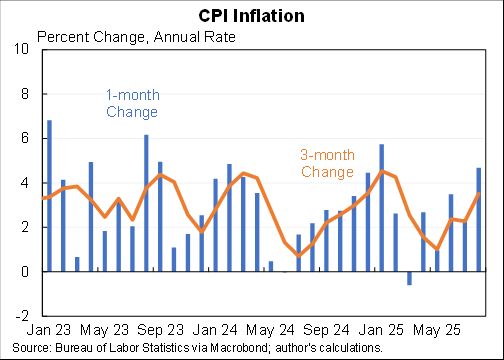
Here is a lower frequency way to visualize the same point.
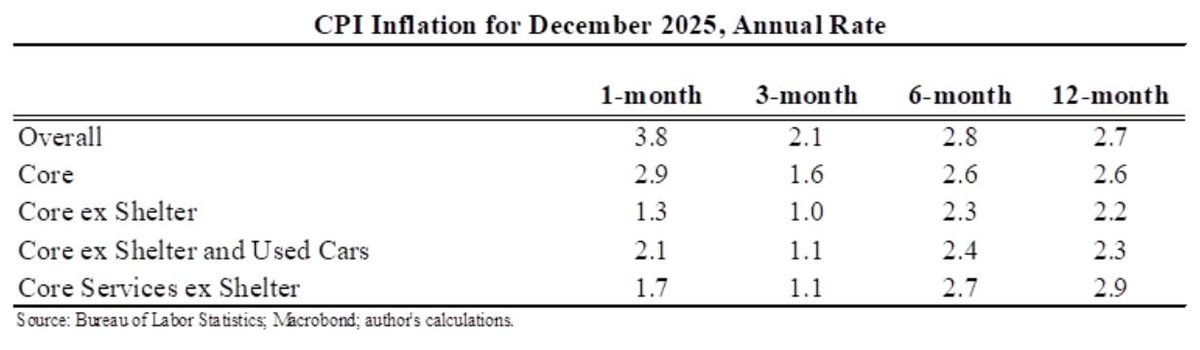
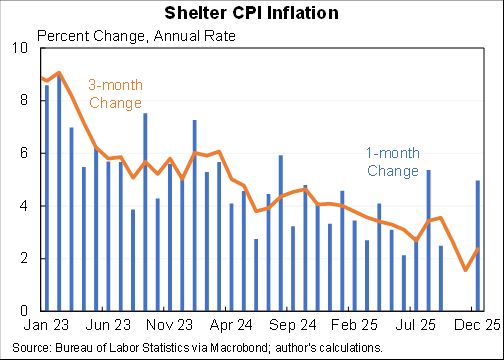
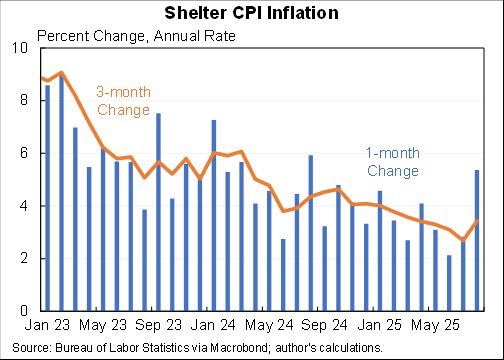
Part of the pickup in August was a pop in shelter. Wouldn't worry too much about that. But even with more normal shelter would still have very elevated core.
BTW, the actual inflation people are experiencing hasn't been as bad this year because of falling energy prices. Well they're not falling any more and overall inflation was worse than core in August.
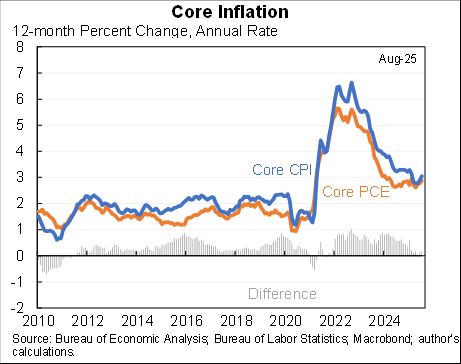
Finally, normally PCE (which the Fed targets) runs below the CPI (which is today's report). But lately they've been similar. Getting to a 3% core PCE inflation is very likely.
The whiff of stagflation is getting stronger as the unemployment rate continues to rise, job growth slows, and now inflation continues to pick up. There are no good options for the Fed given the set of circumstances we're facing.
• • •
Missing some Tweet in this thread? You can try to
force a refresh

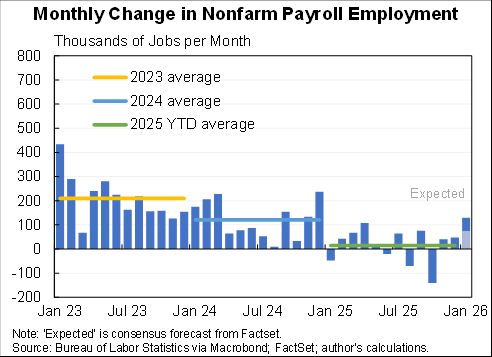
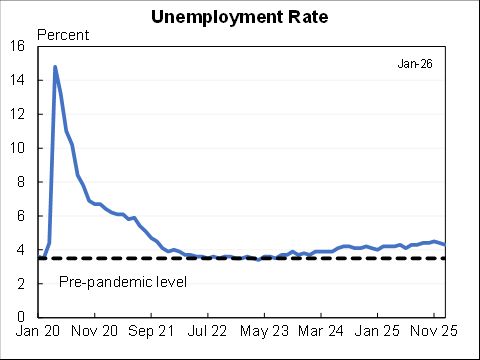
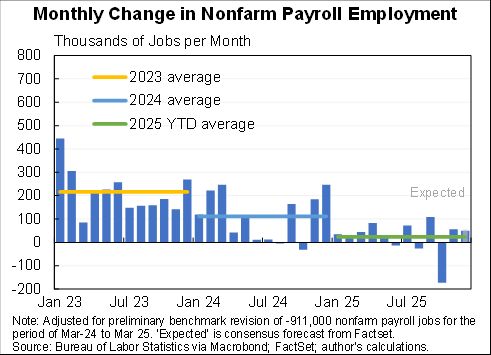
On the surface a strong jobs report (130K jobs & unemployment falls to 4.3%).
And just about every detail makes it even stronger: participation up, involuntary part-time down, hours up, wages up.
The mystery of strong GDP and weak jobs is being resolved in the direction of GDP.
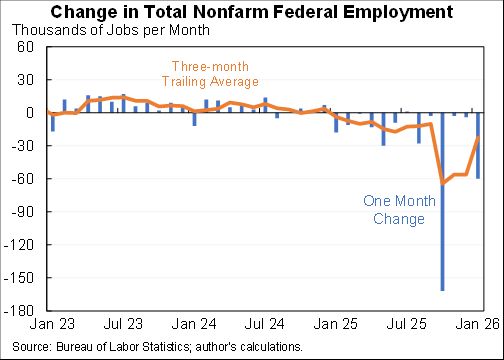
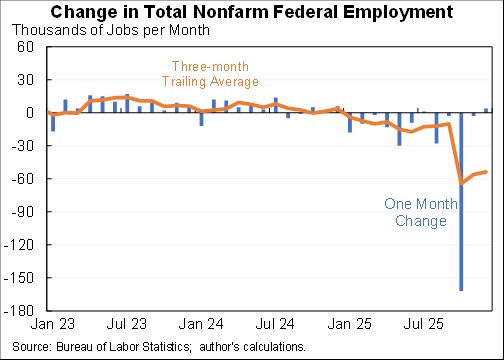
The job growth happened despite further cuts in federal jobs. Private employment was up an impressive 172K.
Note, breakeven job growth is currently about 25-50K because of reduced net immigration & also more fully recovered participation. So job growth has slowed but the unemployment rate now seems to have stabilized after slowly and steadily increasing since mid-2023.
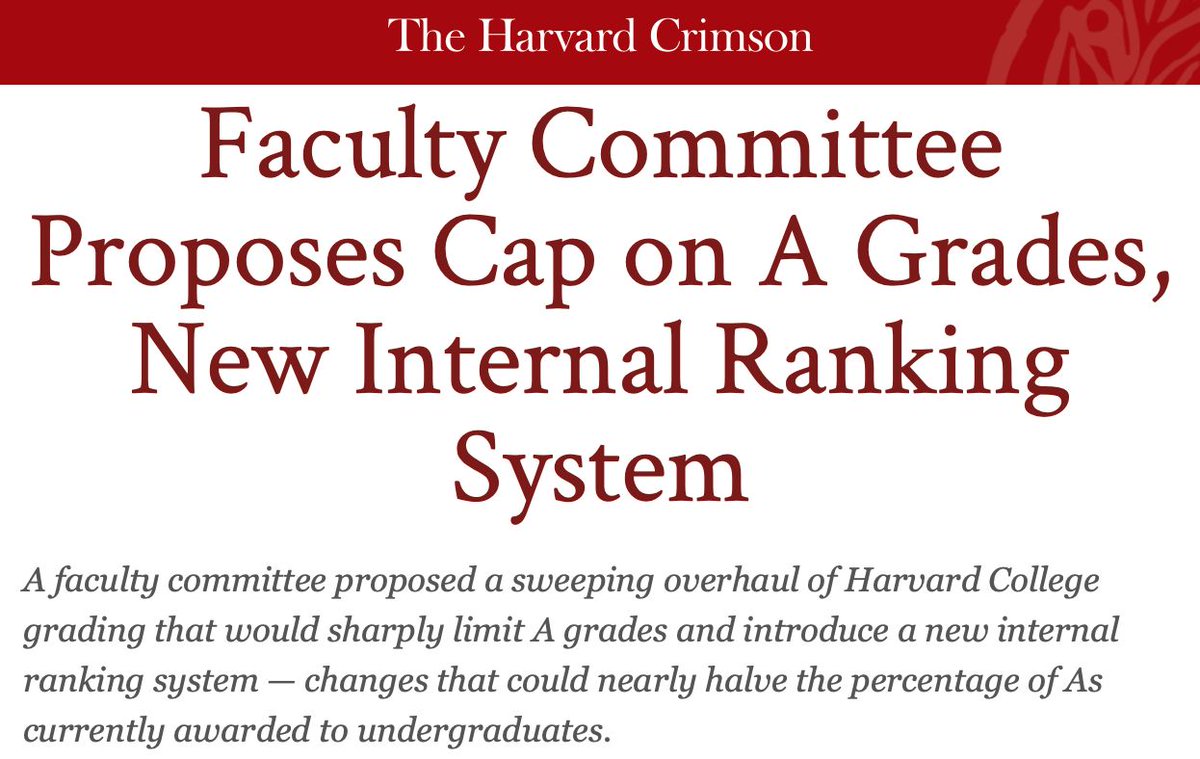
I will be enthusiastically supporting faculty legislation to cap the number of A's at Harvard at 20% (plus a bit). The collective action problem that has driven grades higher & higher over time is increasingly problematic. I hope other institutions consider similar steps.
I've talked to numerous colleagues & students about grade inflation. Almost all of them see it as a a problem. I've also heard about as many different ideas for solutions as I've had conversations. I would tweak this proposal in various ways. But would support it over nothing.
One place the current system fails--and it's not the only place--is honors. I'm on the Committee to recommend honors in the economics department. It's increasingly hard to distinguish excellence with so many A's. I believe that now even two A-'s makes you ineligible for Summa.
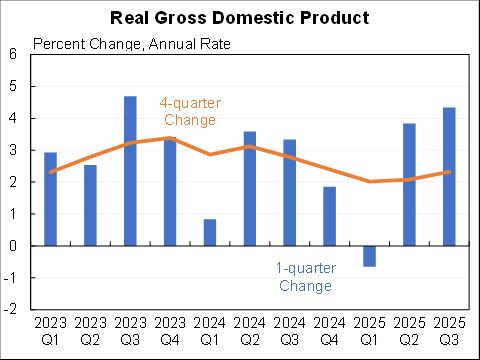
Depending on how you look at it growth in Q3 was very very strong or very strong or just possibly merely strong. Annual rates:
GDP: 4.3%
Real final sales to domestic purchasers: 2.9%
Average of GDP & GDI: 3.4%
GDI: 2.4%
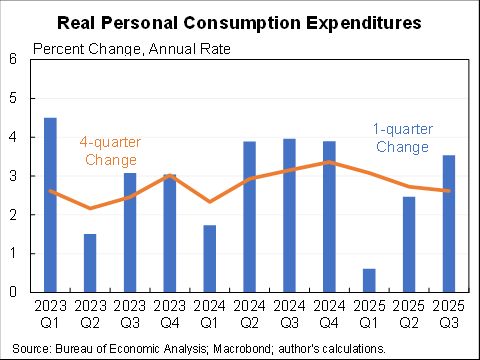
A big part of the story was consumer spending up at a 3.5% annual rate. Started the year looking weak but new data and revisions have made consumers very strong.
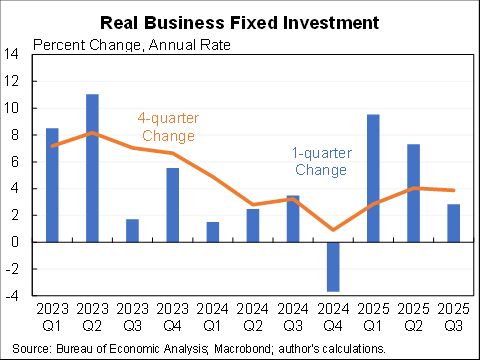
Business fixed investment a bit weaker but also very heterogenous. Equipment investment and IPP up but non-residential structures down for the seventh straight quarter.