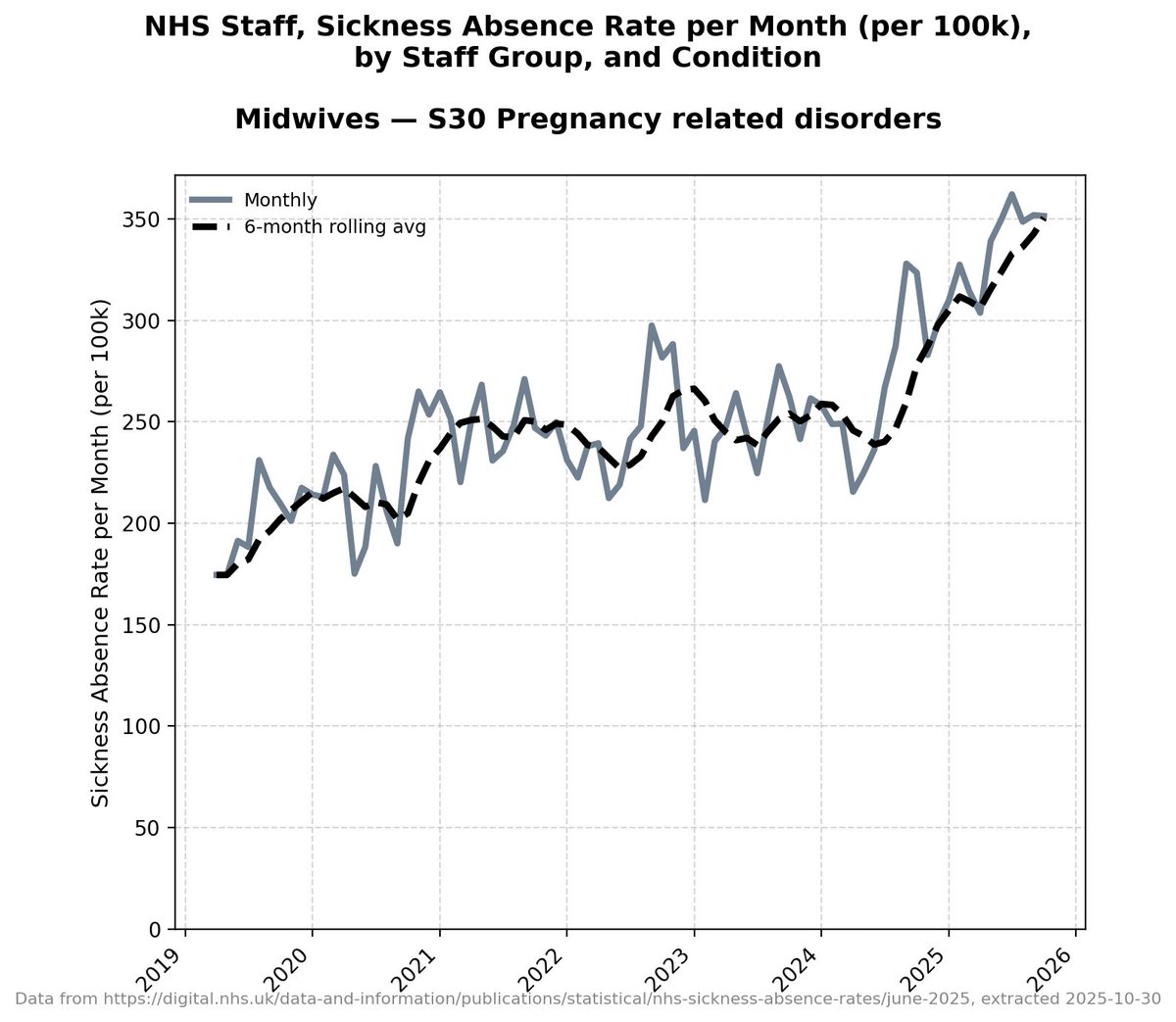
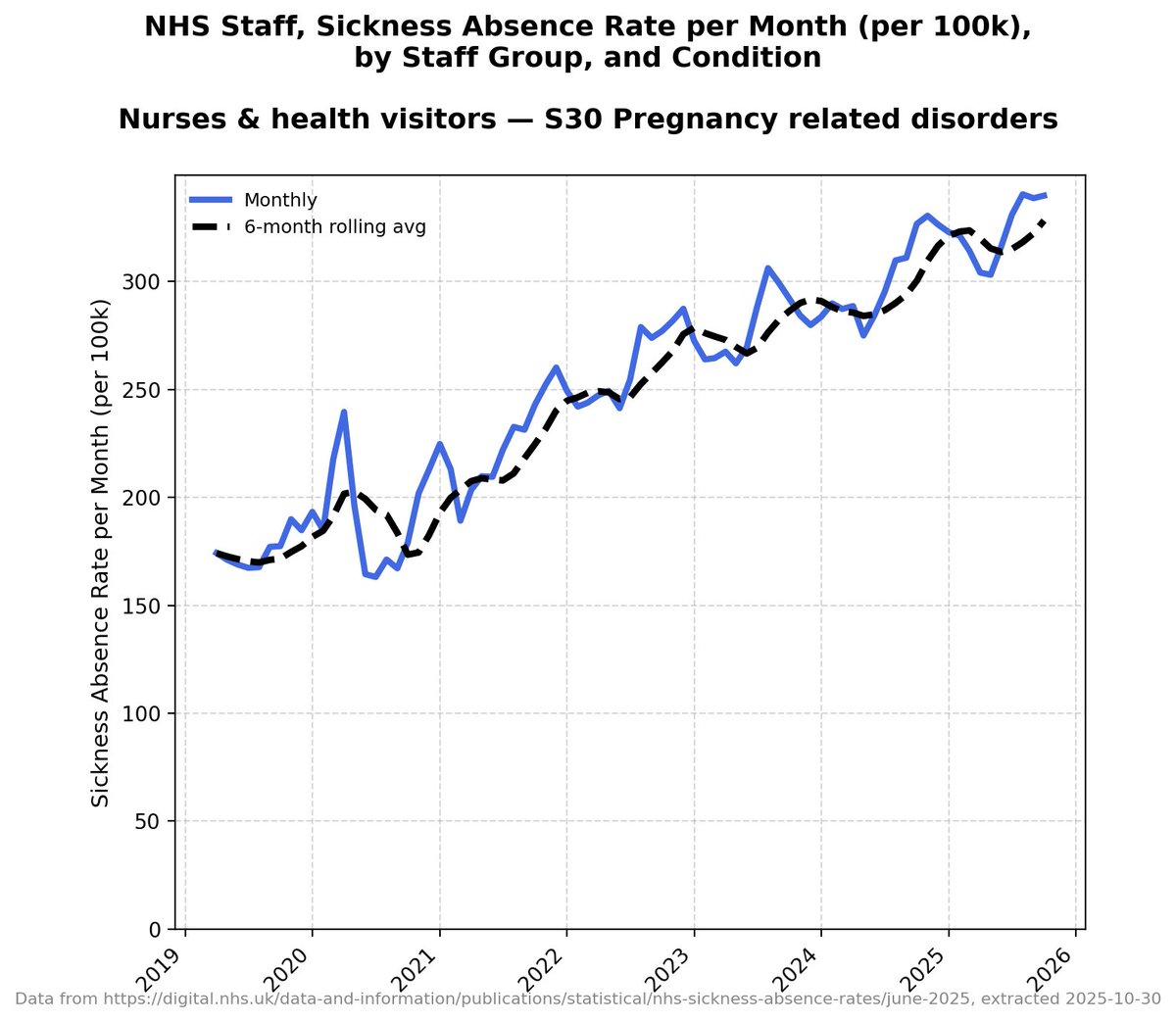
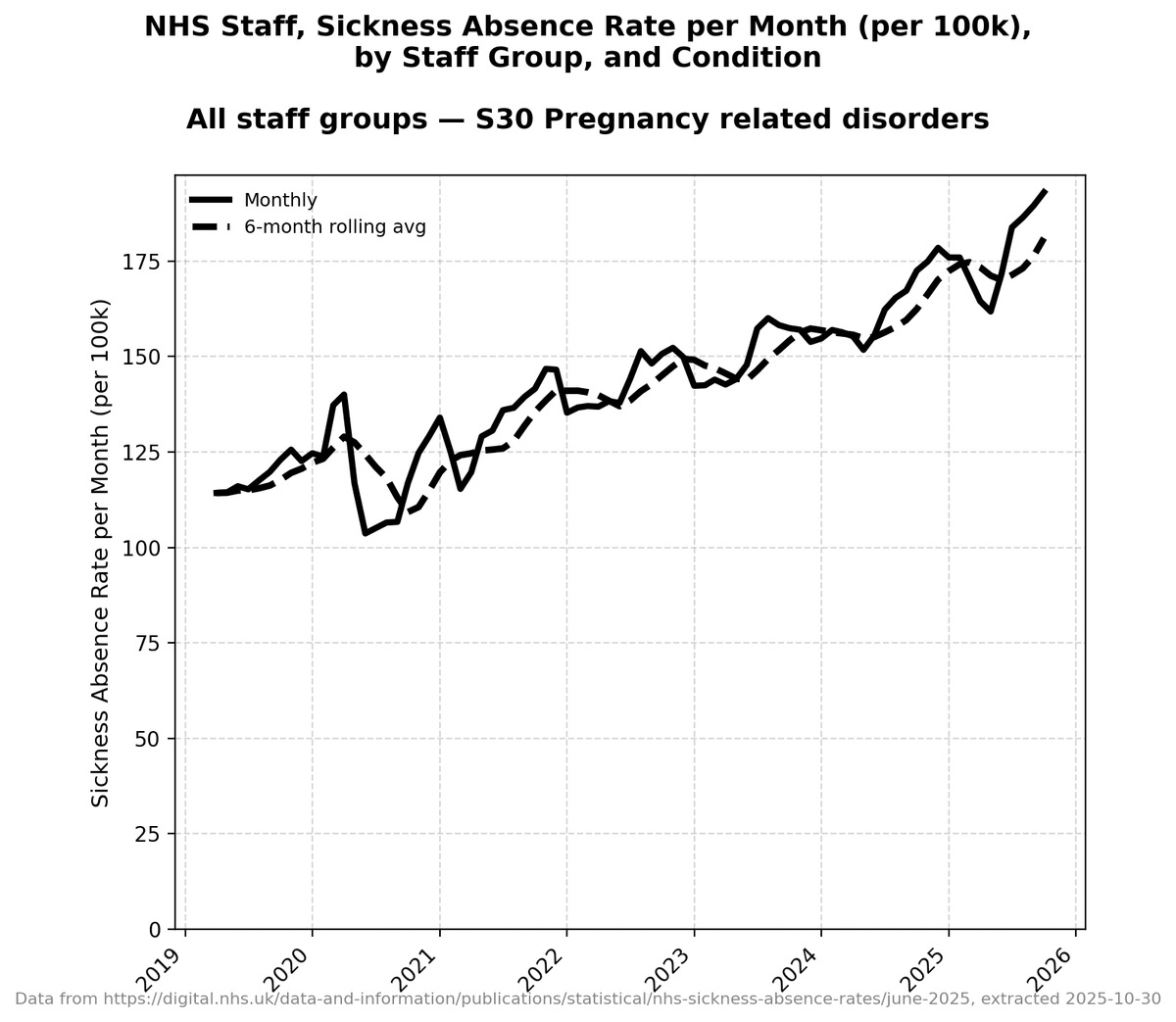
Every now and then I say to myself, "Am I nuts to be trying to avoid covid infection? No one else is."
And then I think about what those scaremongering bedwetters at the British Heart Foundation say.
And then I think about what those scaremongering bedwetters at the British Heart Foundation say.

"How does Covid-19 affect your heart?
We explain what Covid-19 does to your heart and circulatory system and how it can lead to conditions such as blood clots, heart damage, palpitations and high heart rate."
We explain what Covid-19 does to your heart and circulatory system and how it can lead to conditions such as blood clots, heart damage, palpitations and high heart rate."

All those things sound nice.
What's on this page.
Ooo.
Questions.
And answers.
Ooo.
Questions.
And answers.
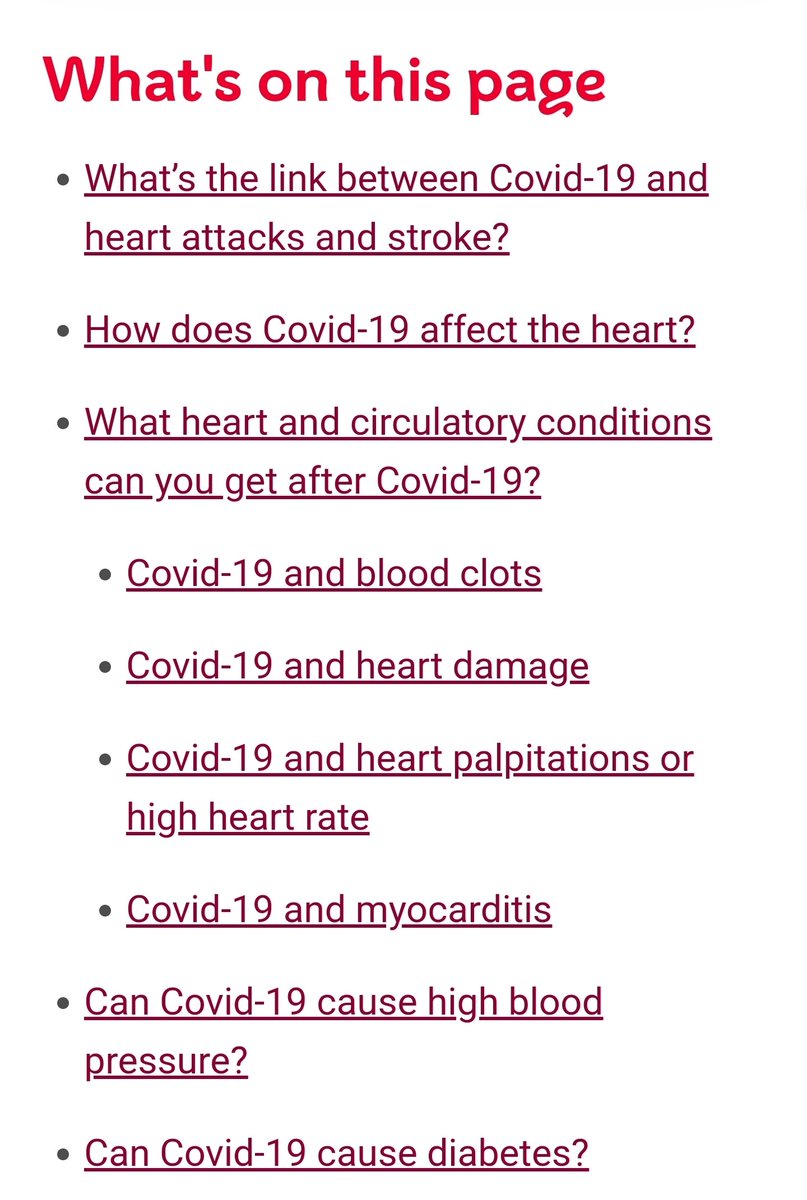
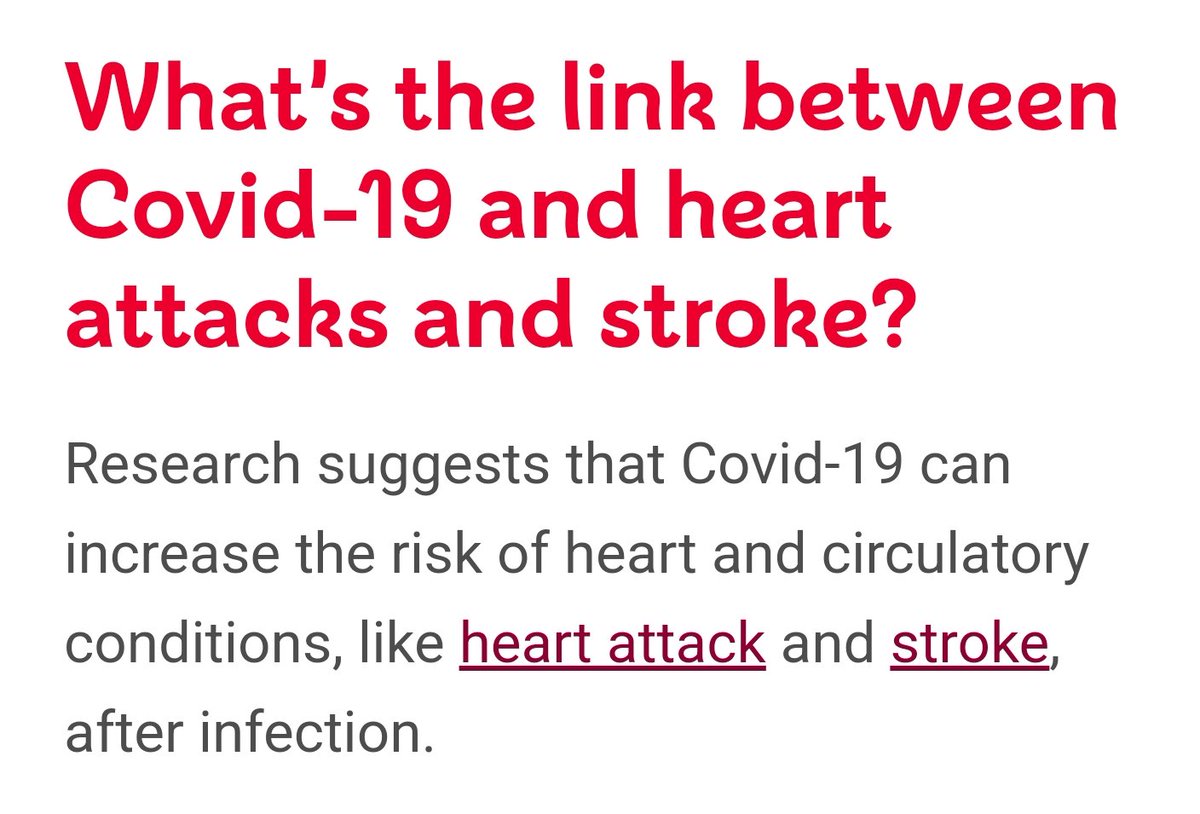
"What’s the link between Covid-19 and heart attacks and stroke?
Research suggests that Covid-19 can increase the risk of heart and circulatory conditions, like heart attack and stroke, after infection."
Research suggests that Covid-19 can increase the risk of heart and circulatory conditions, like heart attack and stroke, after infection."
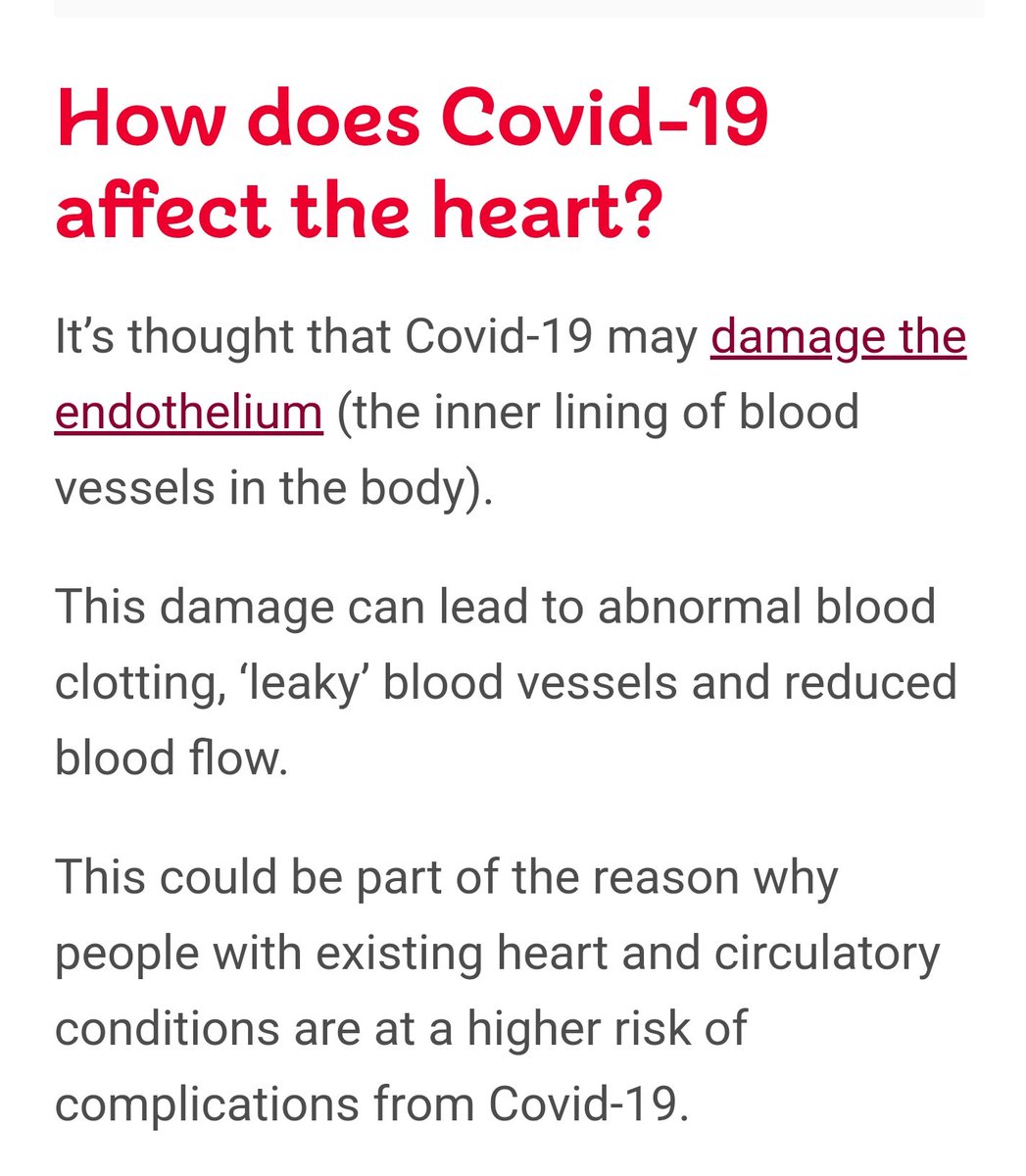
"How does Covid-19
affect the heart?
It's thought that C0vid-19 may damage the
endothelium (the inner lining of blood
vessels in the body).
This damage can lead to abnormal blood
clotting, 'leaky' blood vessels and reduced
blood flow."
affect the heart?
It's thought that C0vid-19 may damage the
endothelium (the inner lining of blood
vessels in the body).
This damage can lead to abnormal blood
clotting, 'leaky' blood vessels and reduced
blood flow."
"This could be part of the reason why
people with existing heart and circulatory
conditions are at a higher risk of
complications from Covid-19."
people with existing heart and circulatory
conditions are at a higher risk of
complications from Covid-19."
"What other conditions can you get after Covid-19?
Covid-19 and blood clots
People who develop severe illness from Covid-19 are at a higher risk of blood clots."
Covid-19 and blood clots
People who develop severe illness from Covid-19 are at a higher risk of blood clots."
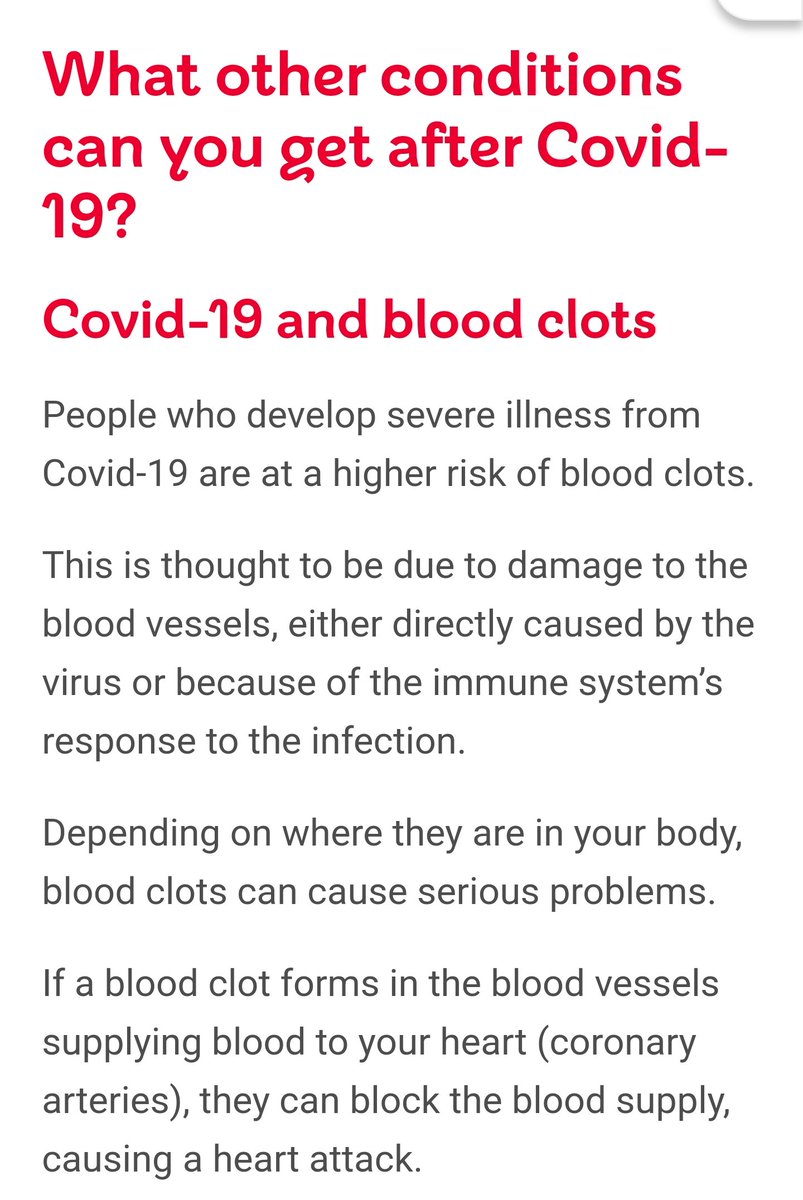
"This is thought to be due to damage to the blood vessels, either directly caused by the virus or because of the immune system’s response to the infection.
Depending on where they are in your body, blood clots can cause serious problems."
Depending on where they are in your body, blood clots can cause serious problems."
"If a blood clot forms in the blood vessels supplying blood to your heart (coronary arteries), they can block the blood supply, causing a heart attack."
"And clots that block the blood supply to the brain can cause a stroke.
Blood clots can also cause deep vein thrombosis in the blood vessels in your leg, or a pulmonary embolism if they form in the blood vessels in the lung."
Blood clots can also cause deep vein thrombosis in the blood vessels in your leg, or a pulmonary embolism if they form in the blood vessels in the lung."
"Covid-19 and heart damage
Covid-19 can cause fever and inflammation, which places extra stress on the heart as your body fights the infection.
And if the Covid-19 infection is severe enough to damage the lungs, or a blood clot forms in the lungs’ blood vessels... "
Covid-19 can cause fever and inflammation, which places extra stress on the heart as your body fights the infection.
And if the Covid-19 infection is severe enough to damage the lungs, or a blood clot forms in the lungs’ blood vessels... "
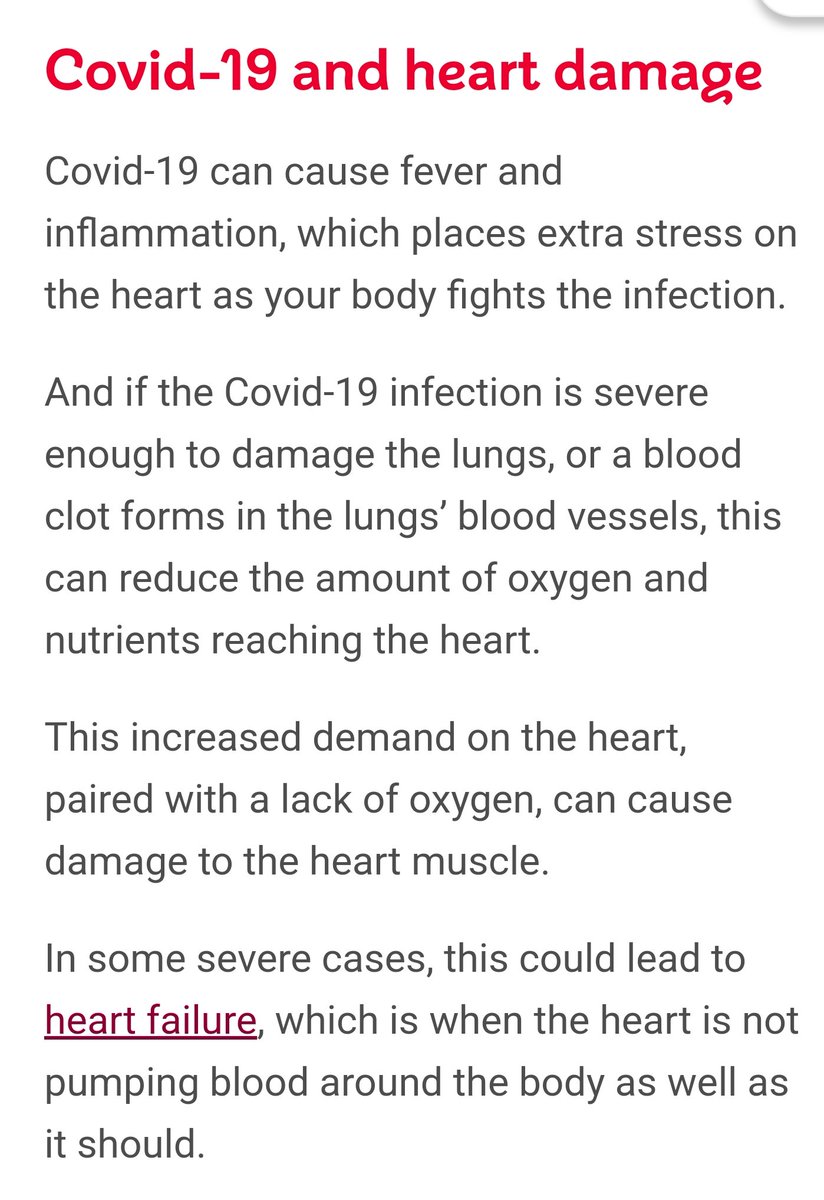
"... reduce the amount of oxygen and nutrients reaching the heart.
This increased demand on the heart, paired with a lack of oxygen, can cause damage to the heart muscle.
In some severe cases, this could lead to heart failure."
This increased demand on the heart, paired with a lack of oxygen, can cause damage to the heart muscle.
In some severe cases, this could lead to heart failure."
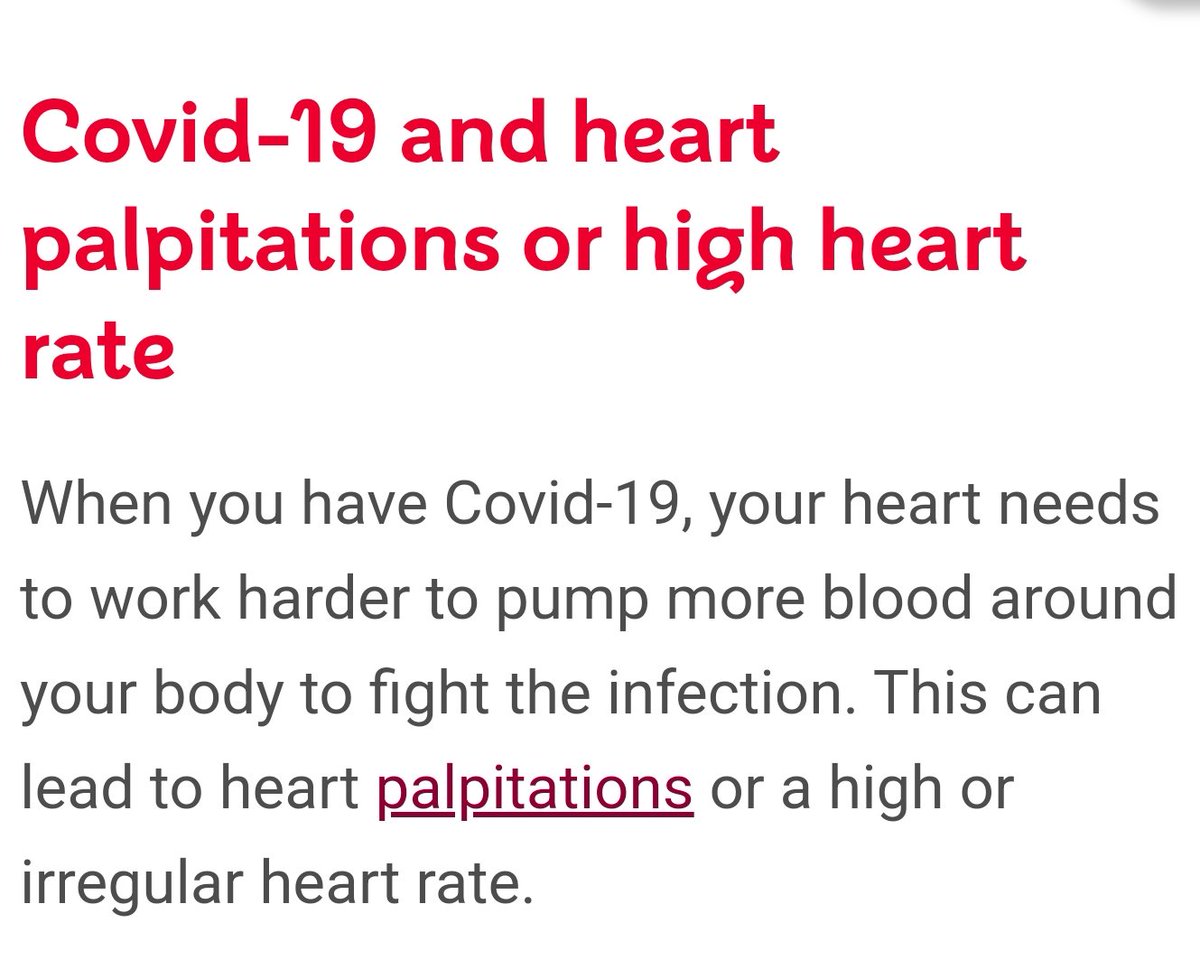
"Covid-19 and heart palpitations or high heart rate
When you have Covid-19, your heart needs to work harder to pump more blood around your body to fight the infection. This can lead to heart palpitations or a high or irregular heart rate."
When you have Covid-19, your heart needs to work harder to pump more blood around your body to fight the infection. This can lead to heart palpitations or a high or irregular heart rate."
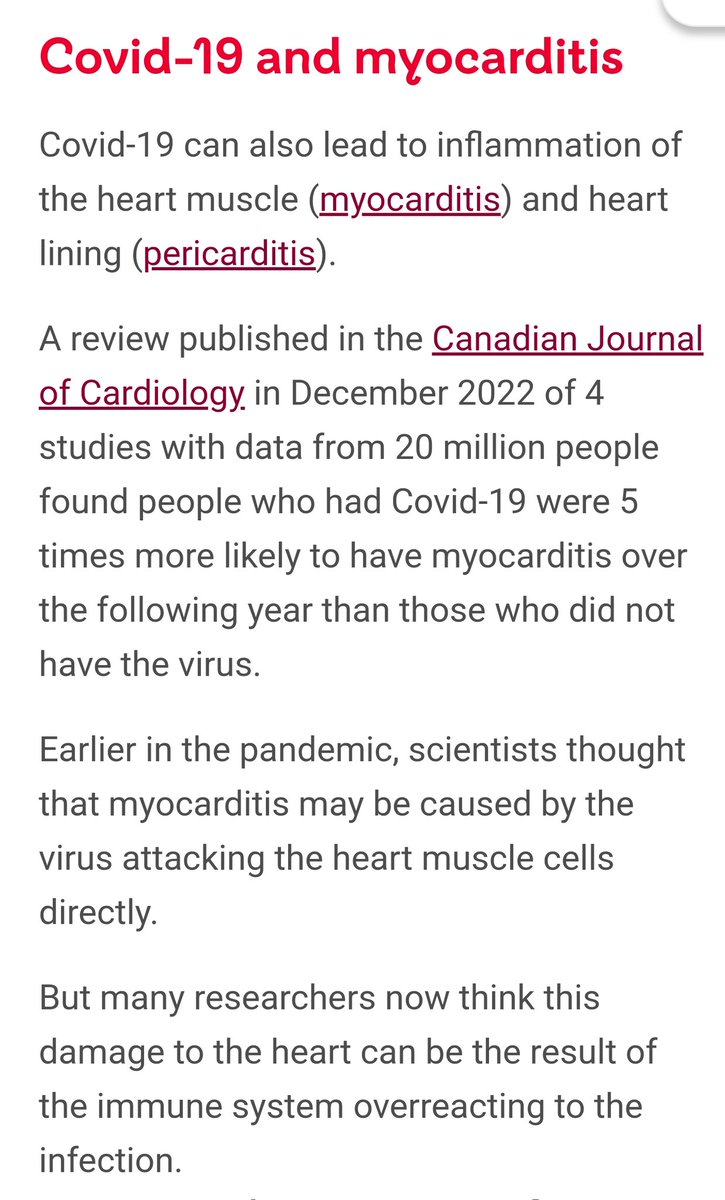
"Covid-19 and myocarditis
Covid-19 can also lead to inflammation of the heart muscle (myocarditis) and heart lining (pericarditis)."
Covid-19 can also lead to inflammation of the heart muscle (myocarditis) and heart lining (pericarditis)."
"Can Covid-19 cause high blood pressure?
Some research suggests that Covid-19 could be linked to an increased risk of developing high blood pressure (hypertension).
This is a serious condition, as high blood pressure raises your chances of having a heart attack or stroke."
Some research suggests that Covid-19 could be linked to an increased risk of developing high blood pressure (hypertension).
This is a serious condition, as high blood pressure raises your chances of having a heart attack or stroke."

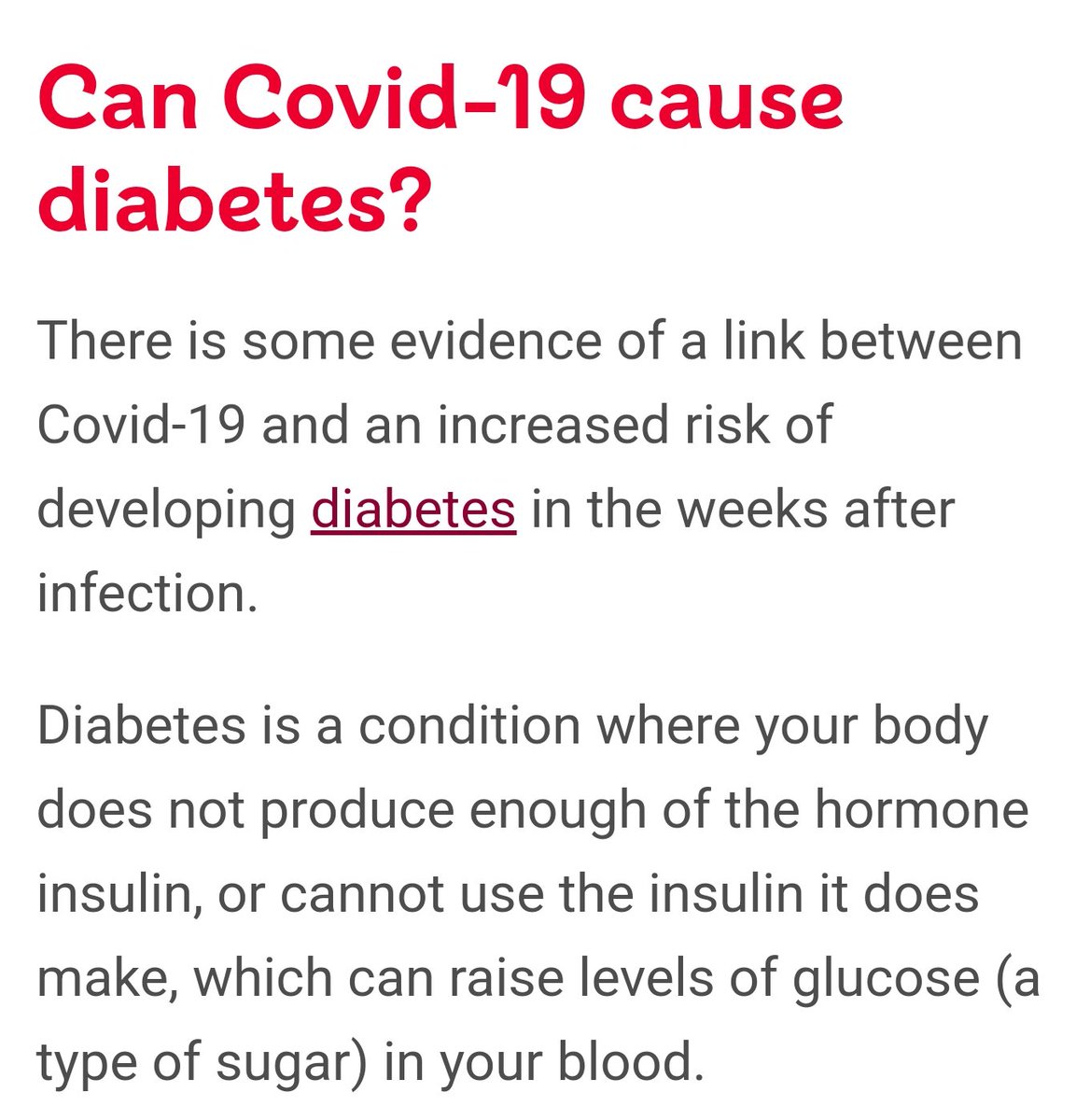
"Can Covid-19 cause diabetes?
There is evidence of a link between Covid-19 and an increased risk of developing diabetes in the weeks after infection."
There is evidence of a link between Covid-19 and an increased risk of developing diabetes in the weeks after infection."
And then I think, no, no I'm not nuts.
The British Heart Foundation, How Does Covid Affect Your Heart?
bhf.org.uk/informationsup…
bhf.org.uk/informationsup…
Spoiler alert: badly.
• • •
Missing some Tweet in this thread? You can try to
force a refresh