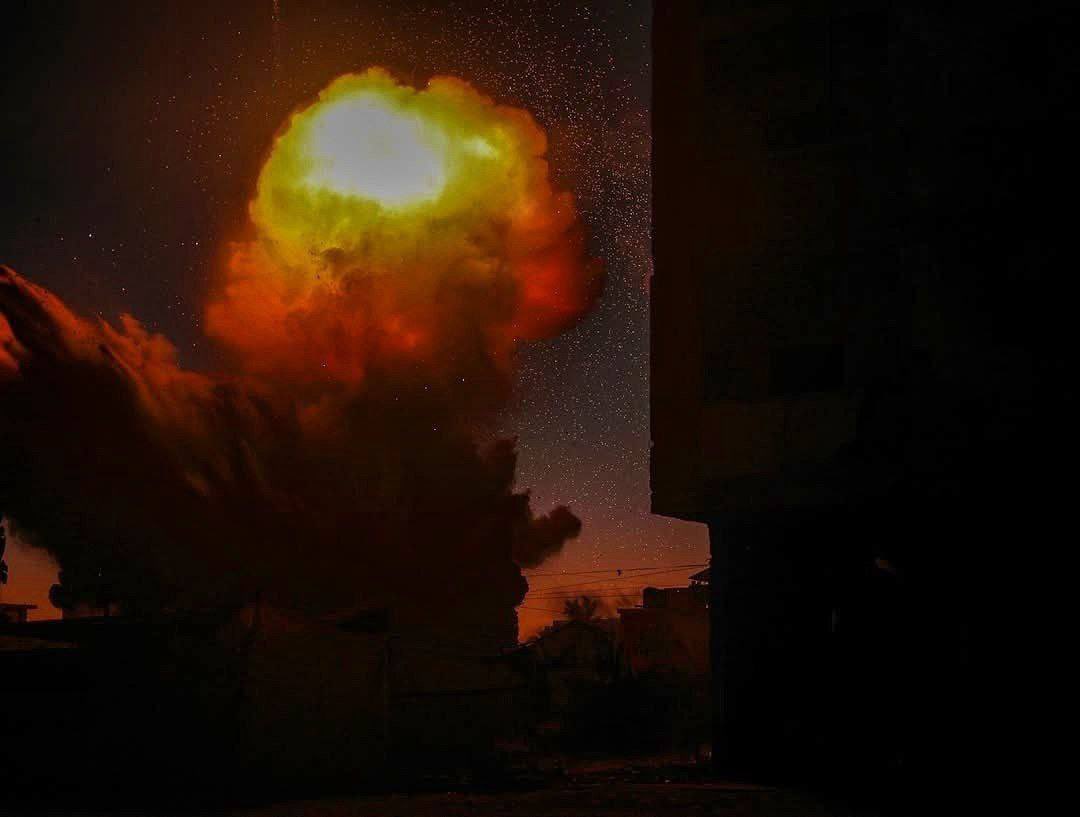
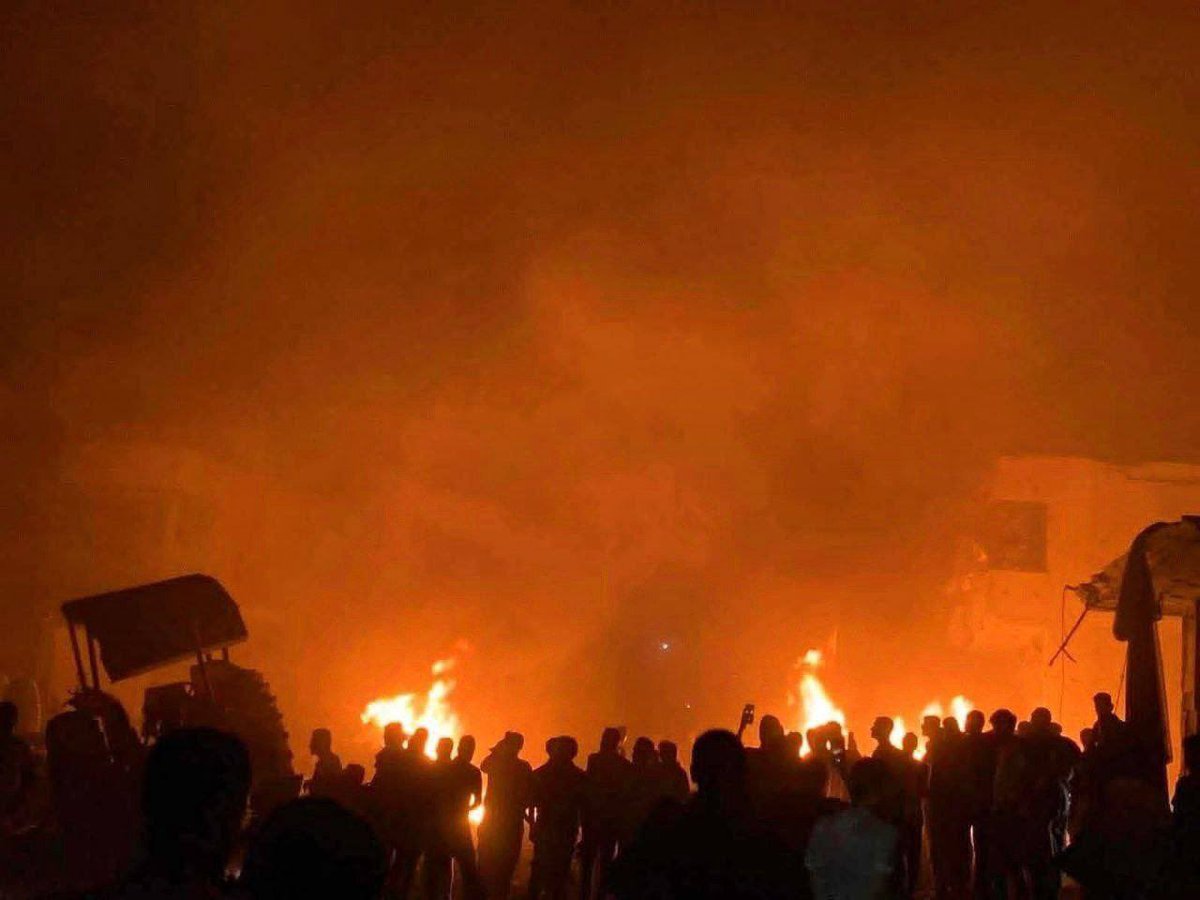
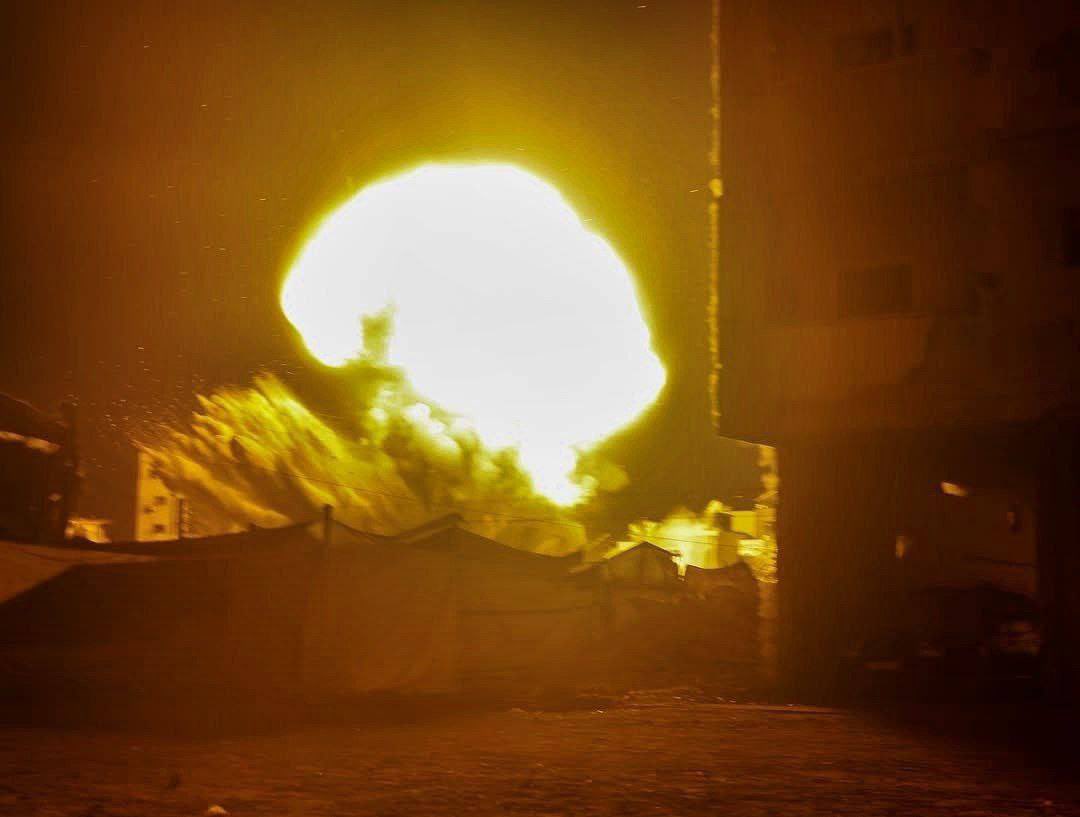
Occupation warplanes have launched one of the heaviest waves of raids in weeks, flattening residential towers, schools, and displacement shelters across Gaza City. Fires burn through entire blocks as civil defense teams struggle to reach the wounded.
Confirmed targets so far:
– Al-Sitt Sura, Shuheibar, and Al-Aliya schools in Sweidi Al-Shati, sheltering hundreds of displaced families.
– Al-Noor Tower near the Ministry of Education, completely destroyed.
– Harz, Karizm, Skeik, Dawood, Al-Dallo, and Ashour residential buildings reduced to rubble.
– Multiple homes hit: Lothan, Al-Nadim, Al-Jarousha, Al-Madhoun, Abu Mar’i, Madoukh, Harz, Abu Suweirih, Daghmash, Al-Ifrangi, Al-Sharif.
– Public prosecution offices, the old TV building, internal security headquarters, and intelligence towers struck repeatedly.
– A displaced persons’ tent at Palestine Stadium targeted.
– Strikes west of Al-Quds Hospital and near Al-Sham’a Mosque in Al-Zaytoun.
Casualty reports are still coming in, with martyrs and wounded pulled from collapsed buildings at Al-Ghafri junction and Al-Yarmouk Street.
The scale of destruction is total war on civilian infrastructure, schools, courts, homes, and shelters bombed in succession. Gaza City is burning.
• • •
Missing some Tweet in this thread? You can try to
force a refresh

In the shadow of Israel’s regional war, another front has opened, this one not on the battlefield but in the refugee camps of Lebanon.
Behind closed doors, Mahmoud Abbas in Ramallah and Nawaf Salam in Beirut are coordinating with U.S. and Saudi backers to strip Palestinians in Lebanon of their weapons.
Marketed as “reform” and “dialogue,” the initiative is in fact a liquidation project: dismantling the camps’ resistance backbone, coercing families into exile, and erasing the political presence of Palestinians abroad.
The early “disarmament” gestures, rusted rifles from Fatah cells, were symbolic, a soft opening before targeting the only forces that matter: Hamas, Islamic Jihad, and camp networks aligned with Hezbollah.
The plan is mapped out in eight steps.
First, a sweeping criminalization campaign: anyone refusing to disarm will be branded a fugitive, hunted inside and outside the camps.
Second, Ramallah-controlled security units will be rebuilt to work with the Lebanese army in joint raids.
Third, camp residents will have their civil and social rights tethered to disarmament, no aid, no schooling, no health care without compliance.
Fourth, non-Palestinians in camps will be expelled under the pretext of “law enforcement,” while Islamic factions listed as terrorists will be directly targeted.
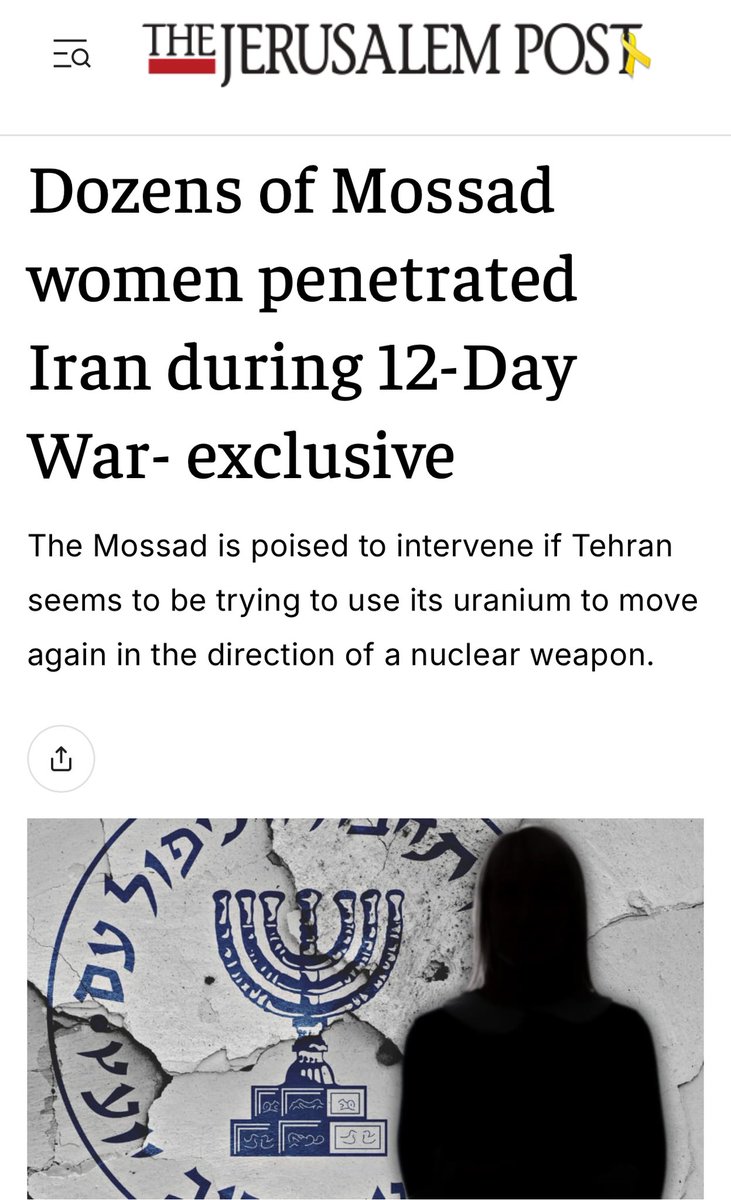
This Jerusalem Post “exclusive” is classic psychological warfare dressed up as revelation.
The claim that “dozens of Mossad women penetrated Iran” during the 12-Day War reads less like intelligence and more like a recycling of orientalist spy-fiction tropes.
By centering female operatives, the narrative borrows from the old Mossad Amazons mythos, seduction, disguise, infiltration, designed to glamorize Mossad’s reach and mask its actual dependence on U.S. coordination and foreign assets.
What the piece admits, buried under theatrics, is that Israel had to deploy hundreds of operatives and manage networks of Iranian dissidents just to enable airstrikes.
Mossad agents were not waltzing through Tehran unscathed; they were propping up a kill-chain reliant on aerial refueling, foreign basing, and informant networks vulnerable to Iranian counterintelligence.
The “female operatives” framing is cover for this wider dependence, turning an operational liability into PR spectacle.
The article also concedes the real failure: despite “destroying” (they didn’t) Natanz, Fordow, and Isfahan, Israel left untouched over 400 kilograms of 60% enriched uranium, enough feedstock for several warheads if advanced to weapons-grade.
Even Israeli officials are split, with critics acknowledging that Iran could rush enrichment in months. Others admit it would take years to rebuild the bombed infrastructure.
Either way, the West’s immediate concern is access: forcing Iran to admit IAEA inspectors under threat of snapback sanctions.
The Jerusalem Post has confirmed the conviction of a 22-year-old Haredi yeshiva student, Elimelech Stern, for espionage on behalf of Iran. Stern, from Beit Shemesh and belonging to the Vizhnitz Hassidic dynasty, was indicted for conspiring with an Iranian intelligence handler through the encrypted Telegram app.
According to court filings, Stern not only maintained regular contact with his Iranian handler but also executed specific tasks on their behalf. More significantly, he managed to recruit two additional Israelis into the espionage network, expanding the operational scope of Iranian intelligence inside the occupied territories.
This case highlights Tehran’s ability to infiltrate Israeli society through unconventional channels, leveraging ideological, religious, or disenfranchised elements within the Zionist state. The incident is another blow to Israeli counterintelligence credibility, exposing cracks inside its social fabric and showcasing how Iran can tap into deep internal divisions to run assets within the Zionist entity itself.
Egyptian sources reveal that Cairo has issued a direct warning to the Zionist entity against any attempt to target Palestinian leaders present in Egypt. Egyptian intelligence reportedly has concrete information that Israel is planning to strike Palestinian resistance leaders who have been living under Egyptian protection for years.
If true, this is Egypt acknowledging that the Doha strike is part of a broader Zionist decapitation campaign against resistance leadership abroad, and that Cairo could be next on the target list. These leaders are not simply “political figures,” but strategic nodes in the regional resistance architecture, linked to active command-and-support pipelines into Gaza.
Hitting them on Egyptian soil would be an escalation far beyond symbolic politics; it would be a direct attempt to dismantle the operational continuity of the resistance while severing one of Gaza’s key logistical and diplomatic lifelines. Egypt’s public warning is a signal shot, both to Tel Aviv and to allied capitals, that any breach of this sovereignty will not just undermine mediation, it will shift Egypt’s role from neutral broker to a frontline state in the wider regional confrontation.
Even enemy media concedes what Tel Aviv’s censors want buried, the Ramon Airport strike was no isolated mishap, but part of a proven Yemeni pattern from Tel Aviv to Eilat: missile salvos, split warheads, and now a direct drone hit eroding the occupier’s illusion of security.
Maariv warns the hit could cripple the airport’s reputation, spook foreign airlines back out of “Israel,” and force an urgent conscription of resources just to convince them to keep flying in. Even Arkia’s CEO admits the incident will have lasting consequences for the aviation sector.
Channel 14 concedes the Yemenis remain a “continuous challenge” despite months of bombardment and assassinations.
The Ramon hit exposed that even a supposedly low-tech adversary can bypass Israel’s air defense gaps, and that Ansar Allah is now using more complex flight paths to evade detection.
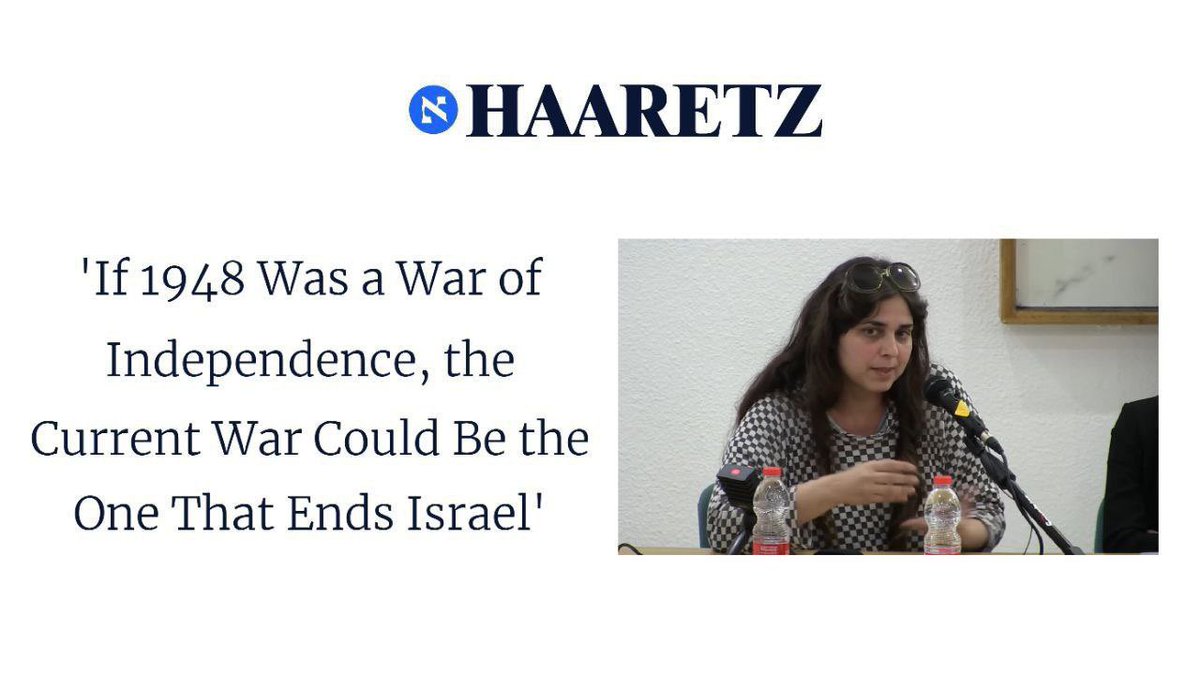
Haaretz has now published words from inside the Zionist entity that sound less like confidence and more like an obituary. Neta Shoshani, the director of the documentary 1948, openly admits that the regime born in that year’s war, the same war that expelled and slaughtered Palestinians in the Nakba, is now staring down the consequences of its own creation.
She links 1948 directly to the present, saying that after 77 years, the cycle that began with the theft of Palestine has reached its breaking point. In her own account, October 7, 2023, and the nearly two years of war that followed have obliterated whatever “ethical principles” Israel once pretended to uphold. Her warning is stark: this may be the last war, the one that ends Israel entirely.
For the resistance, such words confirm what has been evident on the battlefield and in the streets: the Zionist project is rotting from within. The myths of invincibility and moral exceptionalism have collapsed under the weight of siege, defeat, and global isolation. When even its own filmmakers speak in terms of finality, it signals that the occupier’s political, military, and psychological foundations are crumbling.