Continued thread on 1965 "The Oxford History of the American People." Apologies for the format, X's thread feature is not good enough for a book this long (1216 pages). Three big FP issues for early America: the Indians, control over New Orleans, and British Northwest forts. 
https://twitter.com/arctotherium42/status/1967023712001290353

Hamilton gave most-favored nation status to both Britain and France, signaling friendliness to Britain. Algerian pirates kidnapped American sailors; Congress approved a ransom to stop them from converting to Islam. John Jay negotiated a treat with Britain over the forts.


Federalists (concentrated in New England) saw revolutionary France like Democrats saw the Germans in 1917/41, and looked to Britain as a bulwark against the new republic.

Like WWI German diplomacy, Revolutionary French diplomacy was incredibly bad, with the XYZ affair, officials demanding massive bribes to start negotiations, killing pro-French sentiment among the Democratic-Republicans and Americans generally.
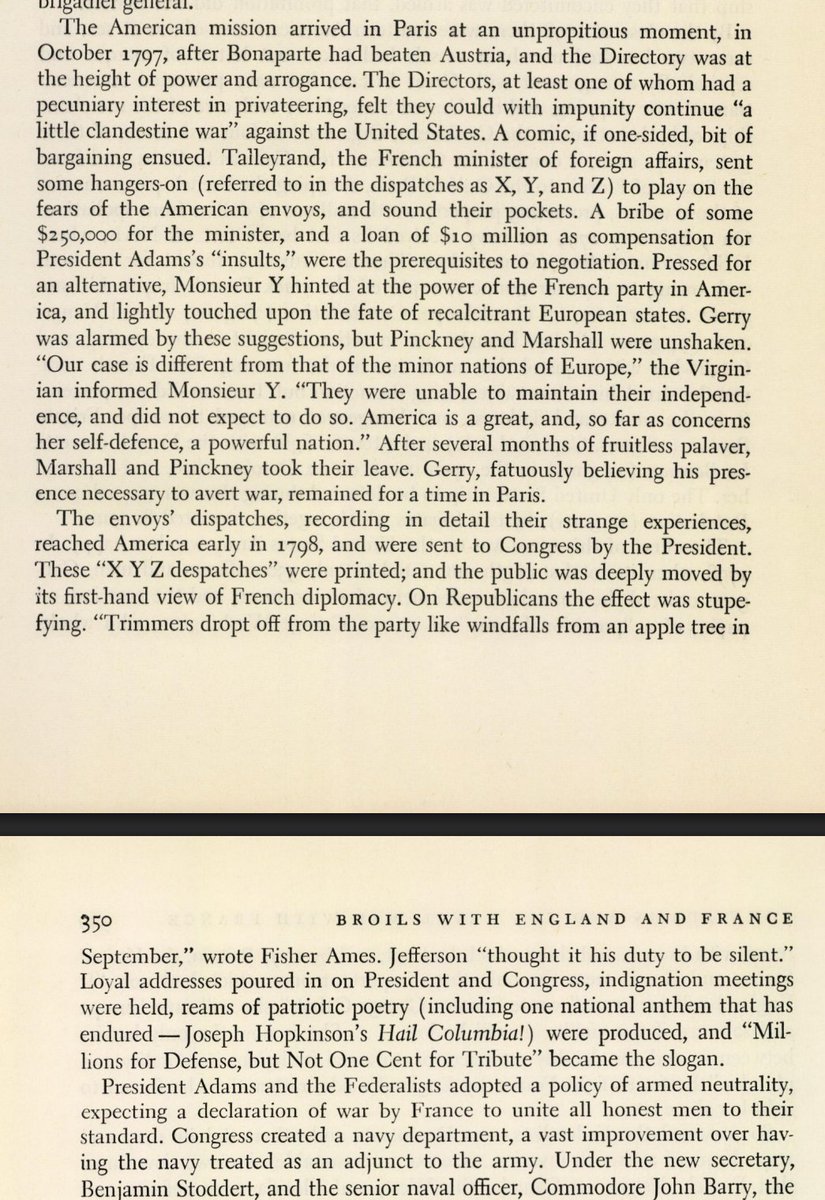
Naturalization Act of 1798 increased the naturalization time from 5 to 14 years in response to the (real) threat of French Jacobin refugees. Alien Act allowed the President to expel subversive aliens at will. Sedition Act criminalized defaming the govt.

Louisiana Purchase nearly held up over constitutionality. Out of power, some New England Federalists began plotting secession.

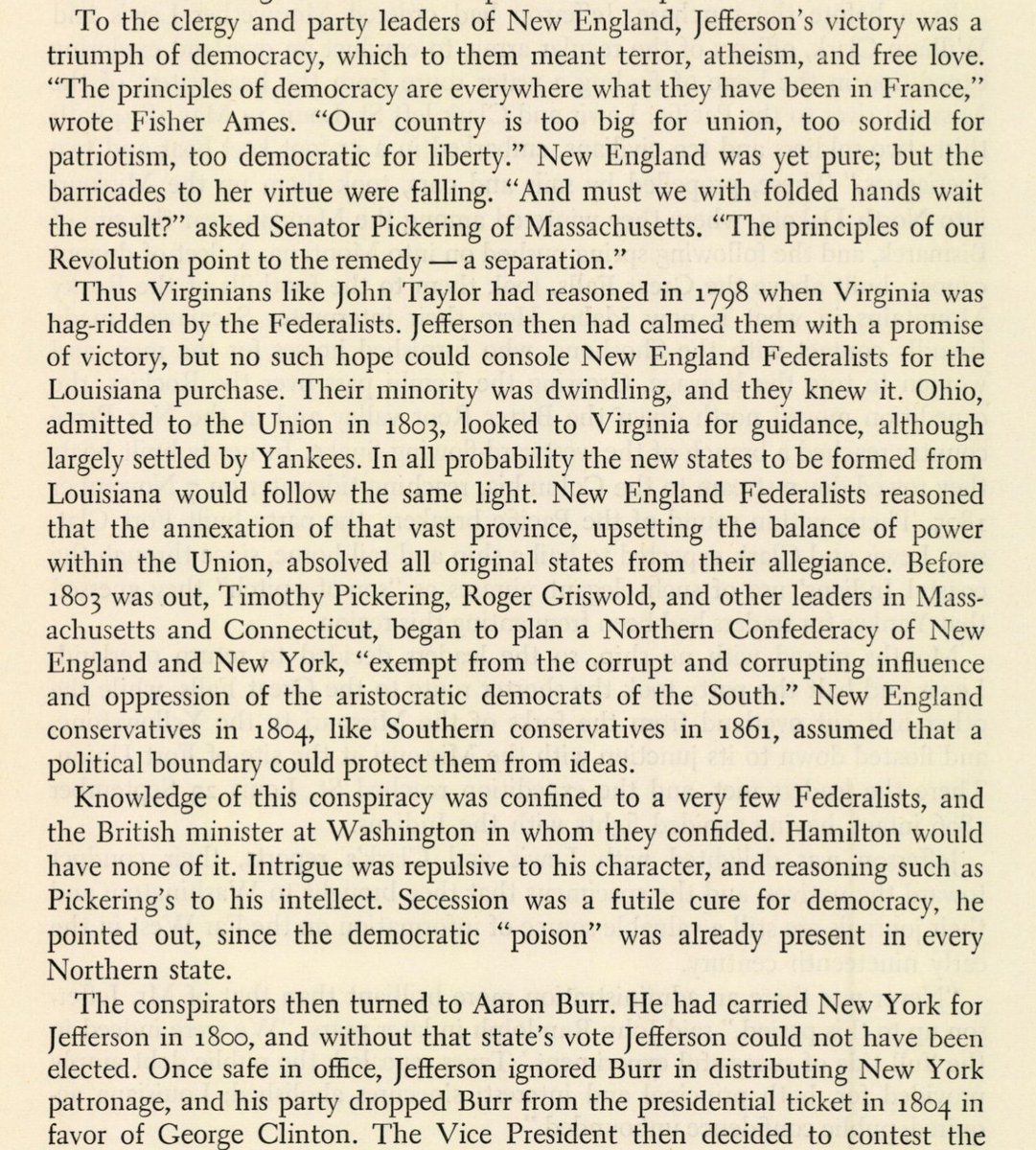
Hamilton agreed to duel Burr because he expected the Jacobinism of Jefferson's Democratic-Republicans to lead to a Napoleon figure, who he expected to be. Napoleon could not be a coward, so he fought. Burr then seriously conspired for Louisiana secession, and nearly succeeded.

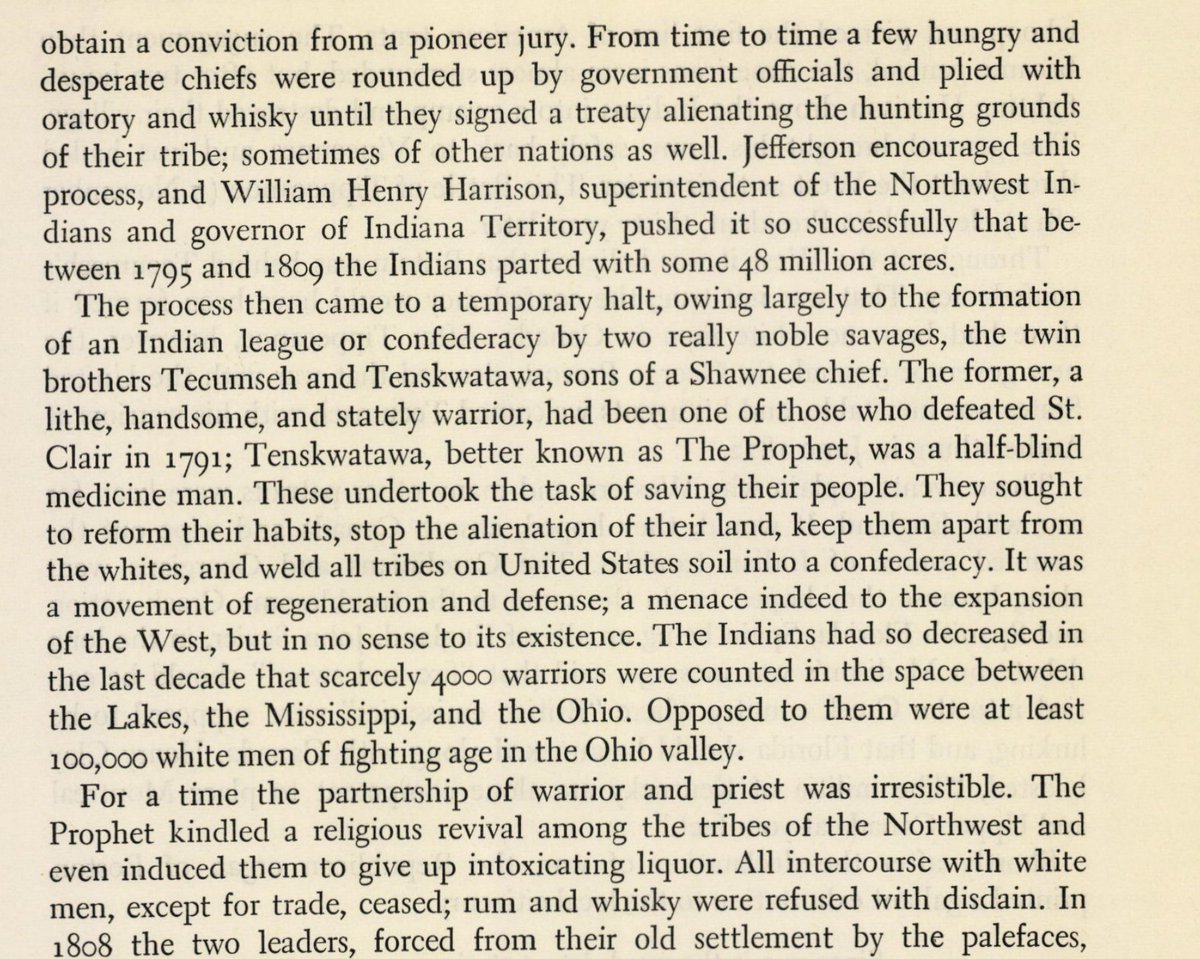
Many US warhawks wanted the War of 1812 over the questions of Canada and the Indians protected by Britain, especially Tecumseh's Confederacy.


The War of 1812 was declared over sea issues, but fought on land. The US should have been able to conquer Canada with 15x the population (and mostly dubiously-loyal Quebecers and recent American immigrants), but failed due to incompetence and the weakness of the standing army.


More on total US failure to resolve the Canadian Question. However, Tecumseh was killed and his Confederacy destroyed.


The great American military hero of the war was Andrew Jackson, who first destroyed the Creek nation in Alabama and crushed a British force at New Orleans (no effect on the war, but wiped out the stain of American military incompetence from the Canadian failure).


US/British relations were bad after the War of 1812, with worries about democracy preventing the "common ties of blood and language from having their natural effect." Amazing how intellectually superior 1965 libs were vs their modern counterparts.

Andrew Jackson invaded Spanish Florida to defeat the Seminoles; the Spanish, seeing Florida was indefensible, then sold it to the US.


The Monroe Doctrine: partly developed out of fear for the Holy Alliance. Also the Hellenophilia of Americans.

The Era of Good Feelings was a quiet one, but the seeds for the next 50 years of US history were sown (Erie Canal, Last of the Mohicans, Second Great Awakening, and US scientific institutions).

Thomas Jefferson and John Adams, famous rivals, died on July 4th, 1826, exactly 50 years after the Declaration of Independence.

1828 was the first really nasty election, and Andrew Jackson, champion of the common man, won. He was very much a proto-Trumpian or FDR-like figure. But one of the Federal Government's biggest problems under Jackson was having too much money and nothing to spend it on. Retvrn.


Panic of 1837 killed this fiscal surplus. Jackson also removed the remaining Indians East of the Mississippi.


Morison makes comparisons to Canada, as sort of a control for "no Revolution." Canada was an oligarchy controlled from London, but had democratic uprisings. Both failed over religion; the Quebec one over anticlericalism and the Ontario over which sect of Protestantism to pick.


US almost supported the Canadian rebels; there was a lot of sympathy. But Van Buren prioritized relations with Britain instead. The defeat of the rebellion led the British to make concessions to avoid a repeat, which Morison believed wise.


The sudden onset of the Age of Mass Migration, with immigration increasing by a factor of 22 between the 1820s and 1850s, almost entirely Irish, German, and English, in that order. Race riots on both sides resulted.

Europeans not sending their best, subsidizing emigration for paupers. The wave of immigration crushed wages, yet "added surprisingly little to American economic life, and almost nothing to American intellectual life." English and Protestant Irish excepted.

This created the "foreign vote" as a political bloc for the first time, with Tammany Hall developing a system to recruit aliens via gibs. This has been a consistent Democratic power source ever since, Republicans take note.

The celebration of Christmas took off in the 1820s, with The Night Before Christmas written in 1821. Horseracing continued to be popular.


Though strongly anti-slavery, Morison has high praise for Southern gentlemen, seeing them as civically and personally virtuous; he blames Jacksonian Democracy for Southern radicalization before the Civil War.


Progressive reform movements for women's rights, mental asylums, and Quaker pacifism.

The "Virginia galaxy of political thinkers" replaced with New Englanders.

The Oregon territory was a major friction point with Britain; Americans dreamed of a Pacific outlet. Getting access required dealing with the formidable Plains Indians (who "inflicted cruelty without a qualm and endured torture without flinching") via the Mountain Men.


On the Mormons: Morison is very pro-Mormon, viewing Brigham Young as one of the greatest commonwealth builders of the English-speaking world.


Texan independence and annexation. Morison doesn't understand why the Mexicans encouraged American immigration into Texas to begin with; the concept of giving up territory for transient economic advantage is too foreign to him in 1965.


The Mexican-American War was planned by Polk to secure California. Europeans thought the Mexicans would win, but the US won very solidly and easily. The US wound up paying most of what they'd originally proposed for it in the peace settlement anyways.


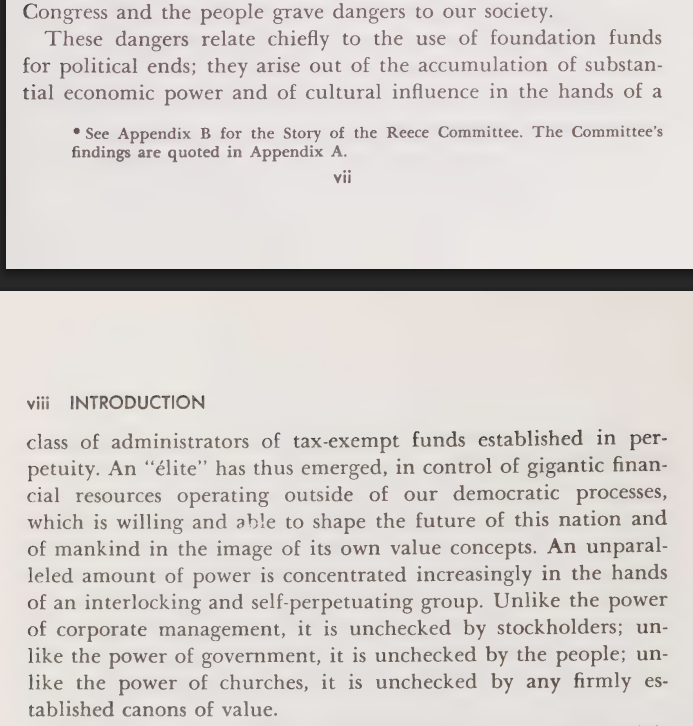
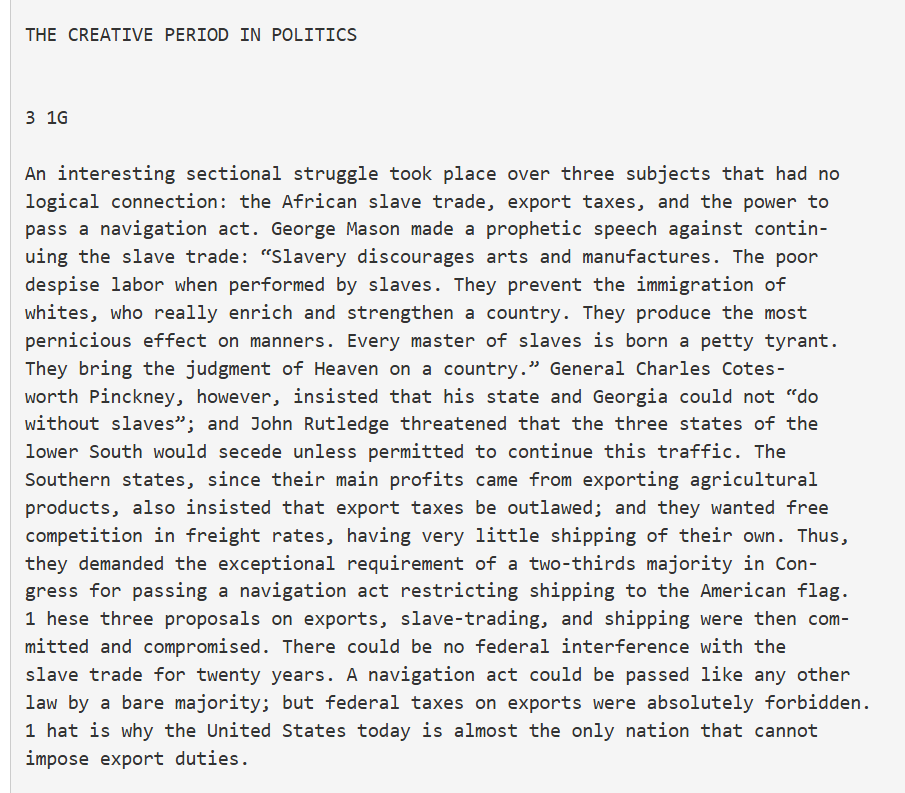
Sectional conflicts over the Constitution I forgot to excerpt earlier: George Mason, one of the biggest slave owners in the country, opposed the slave trade on the grounds that it prevented the immigration of whites, who really enriched and strengthened a country.
• • •
Missing some Tweet in this thread? You can try to
force a refresh