Ever wondered why advertisements heavily feature Black actors when they're just 12-14% of the population?
I might have an explanation:
Black viewers have a strong preference for seeing other Blacks in media, whereas Whites have no racial preferences.
I might have an explanation:
Black viewers have a strong preference for seeing other Blacks in media, whereas Whites have no racial preferences.

These results are derived from a meta-analysis of 57 pre-2000 and 112 post-2000 effect sizes for Blacks alongside 76 and 87 such effect sizes for Whites.
If you look at them, you'll notice that Whites' initial, slight preference declined and maybe reversed.
If you look at them, you'll notice that Whites' initial, slight preference declined and maybe reversed.

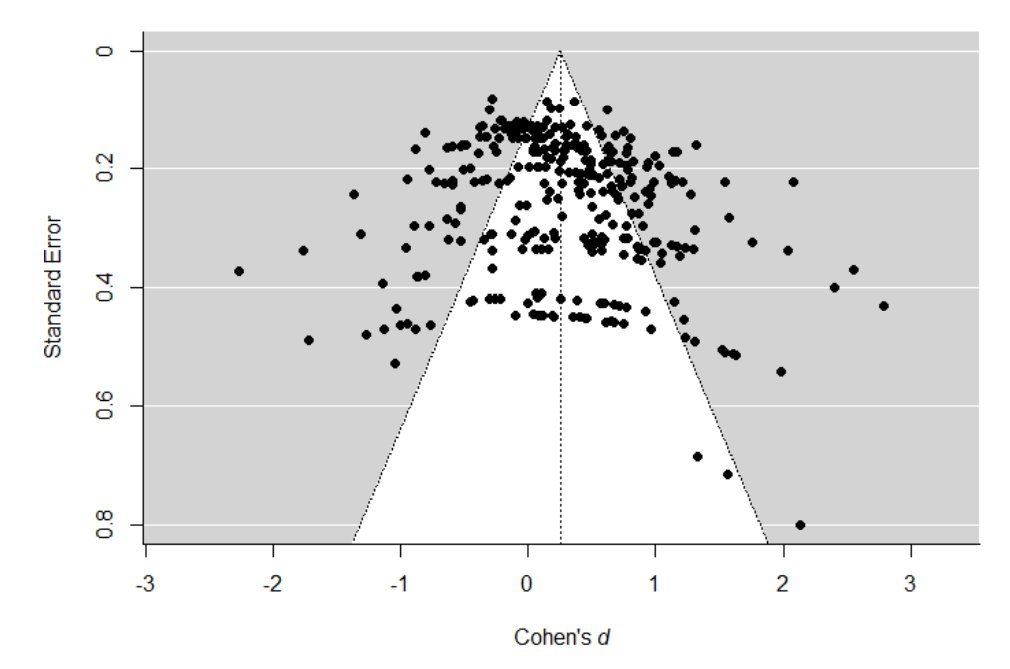
It's worth asking if this is explained by publication bias.
It's not!
Neither aggregately (as pictured), nor with results separated by race.
It's not!
Neither aggregately (as pictured), nor with results separated by race.
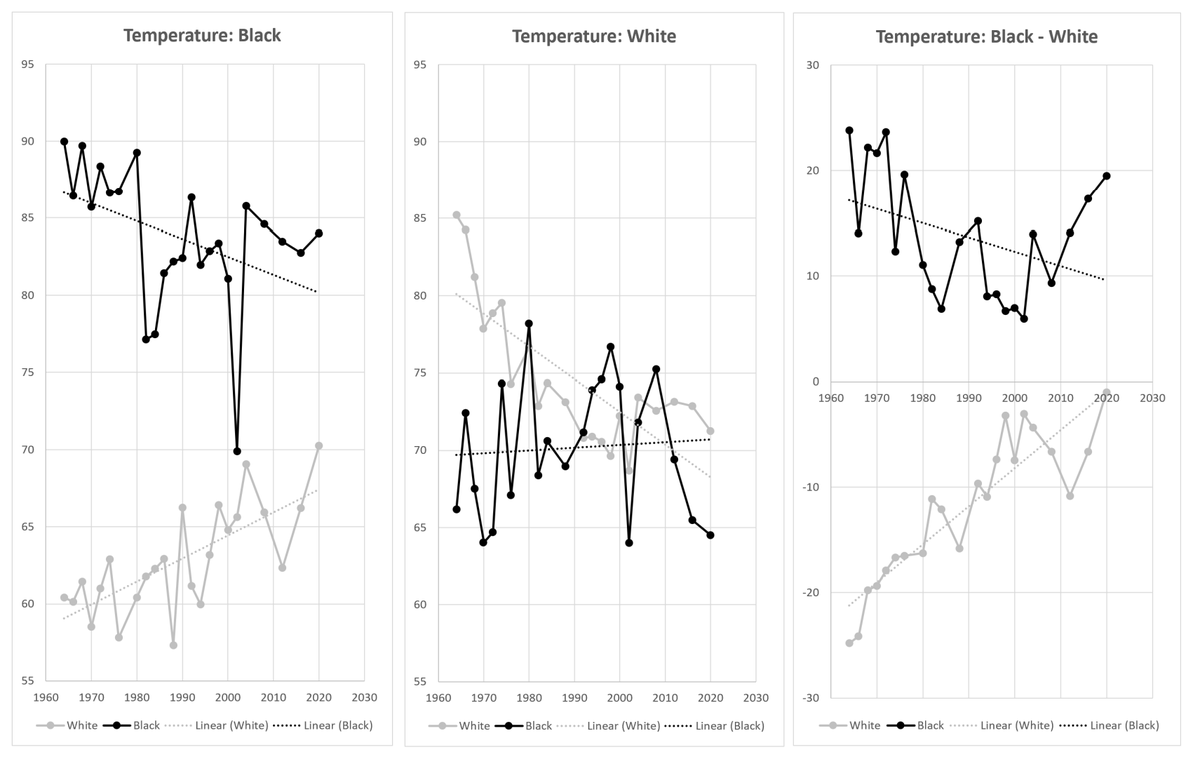
This study also plotted an alternative measure of racial preferences: differences in thermometer ratings.
These are ratings of how "warm" people feel towards other groups.
For Blacks, a persistent, consistent in-group preference. For Whites, in the past, yes, but now, no.
These are ratings of how "warm" people feel towards other groups.
For Blacks, a persistent, consistent in-group preference. For Whites, in the past, yes, but now, no.
The hypothesis that Black media overrepresentation is due to catering to higher propensities for Blacks to spend, all else equal, is interesting, but it fails on the merits (less total spending).
It seems plausible that advertisers and media creators are just catering to demand.
It seems plausible that advertisers and media creators are just catering to demand.
Of course, people could just ask.
We do see this crop up in many other areas too. There is usually a Black in-group bias, and at the very least, no/a small White net disdain for Blacks or preference for Whites.
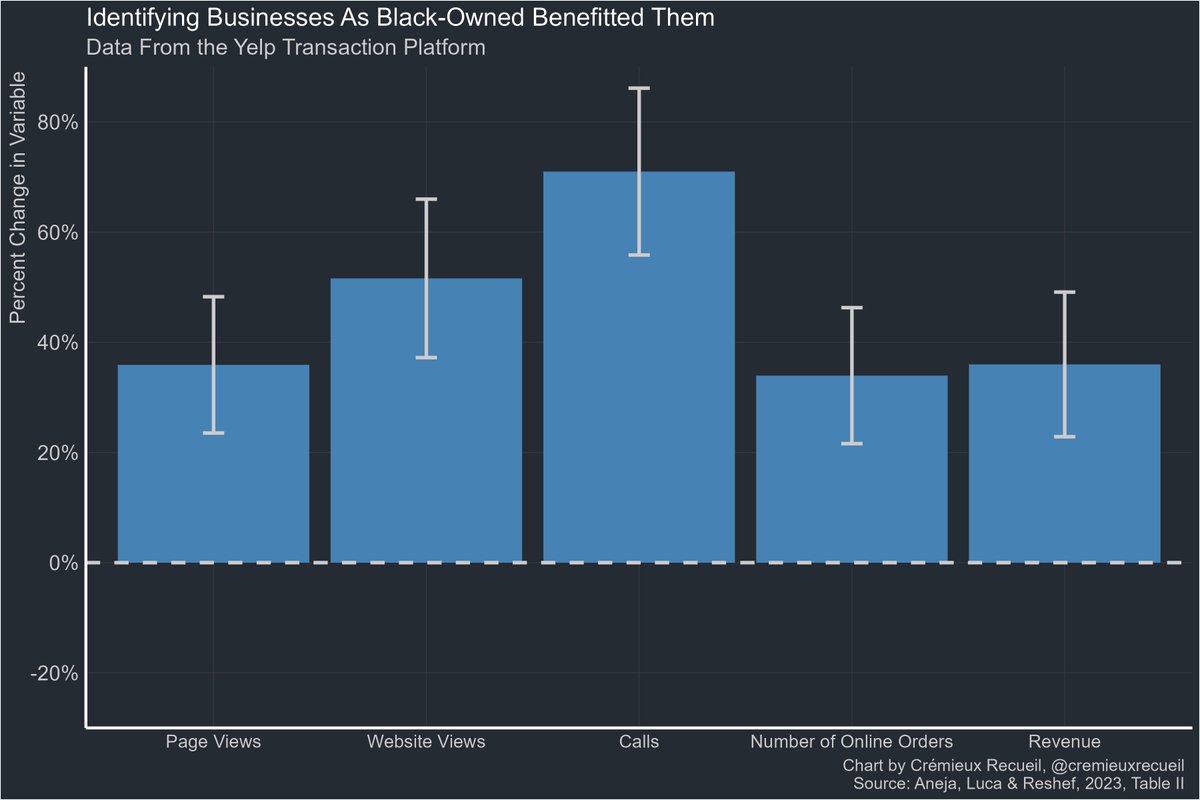
Accordingly, identifying Black-owned businesses benefits owners:
We do see this crop up in many other areas too. There is usually a Black in-group bias, and at the very least, no/a small White net disdain for Blacks or preference for Whites.
Accordingly, identifying Black-owned businesses benefits owners:
And here's another example of this 'net bias' that I posted about earlier today. This time, it's in jury trials:
https://x.com/cremieuxrecueil/status/1967337196391985485
• • •
Missing some Tweet in this thread? You can try to
force a refresh