In Ukraine, there is a fresh opinion poll about the Russia-Ukraine war, by reputable KIIS pollster. A short thread.
Only 18% of Ukrainian respondents think that the war will end in 2025; 27% believe it will end in 2026; 32% - in 2027 or later.
1/x
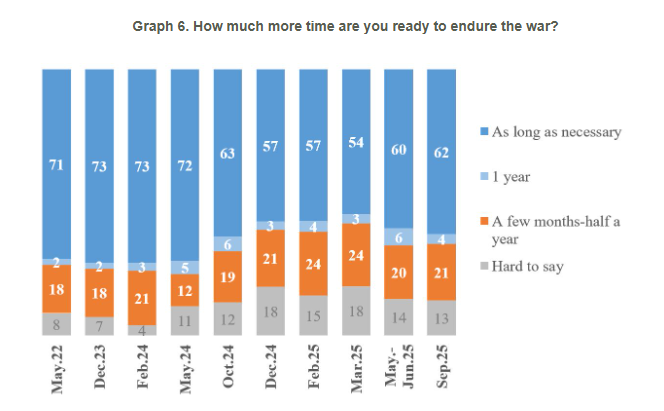
Number of Ukrainians saying that they are willing to endure the war "as long as necessary" is now 62%, up from 54% in March 2025.
2/x
In the event if the US stops all support to Ukraine, overwhelming majority of Ukrainians (76% in Sep 2025) believe the country should continue its resistance; only 14% would support to agree to Russian demands:
3/x
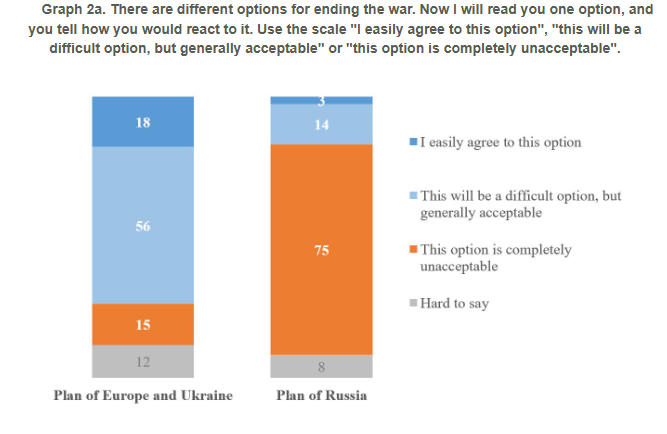
75% of Ukrainians say that the Russian plan to end the war (i.e., accepting the Russian demands) is unacceptable.
4/x
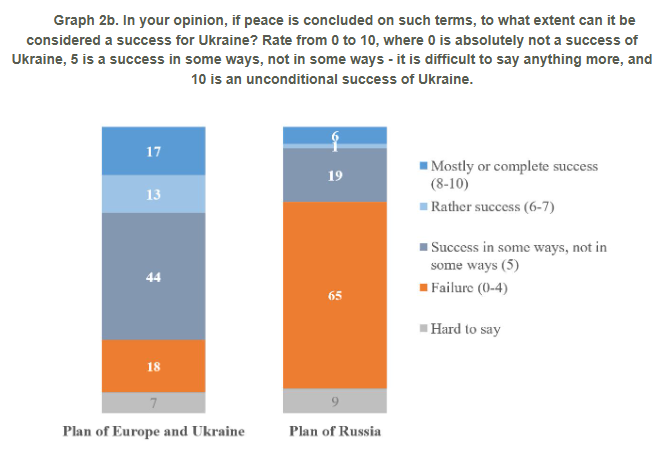
65% of Ukrainians say that they would view implementation of the Russian plan as a failure of Ukraine as a state.
5/x
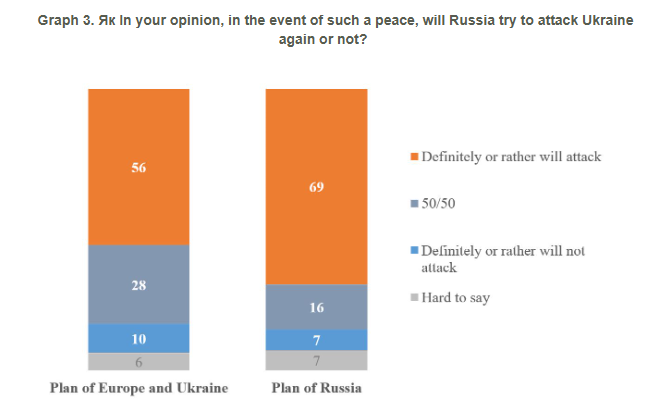
Majority of Ukrainians think that irrespective of whether EU/Ukraine's plan or the Russian plan to end the current war is implemented, Russia would re-attack Ukraine in the future. More Ukrainians (69%) think that Russia would re-attack if Russian plan is implemented:
6/x
Link to full press release to the latest KIIS poll in Ukraine:
So, I looked at the US-Russian “peace plan” and found multiple contradictions, where one point of the plan would directly contradict one or several other points. One thing is clear - the plan was not developed by diplomats or specialists in international law.
THREAD.
1/11
2/11
1. “Ukraine’s sovereignty will be confirmed” vs handing territory to Russia
•Point 1: “Ukraine’s sovereignty will be confirmed.”
•Point 21: Crimea, Luhansk and Donetsk are recognised as “de facto Russian, including by the United States.” Kherson and Zaporizhzhia are frozen along current front lines, and Ukrainian forces withdraw from the part of Donetsk they still control; that withdrawal zone becomes a neutral demilitarised buffer zone, internationally recognised as territory belonging to the Russian Federation.
These two ideas pull in opposite directions:
•If “sovereignty” is meant in the sense of Ukraine’s internationally recognised 1991 borders, then confirming it contradicts the explicit recognition of Russian control over Crimea, Donbas and a demilitarised slice of Donetsk.
•If instead “sovereignty” is silently redefined to mean “whatever is left after these concessions”, then point 1 becomes essentially cosmetic and misleading relative to the rest of the document.
So there’s a built-in contradiction between the headline promise (sovereignty confirmed) and the detailed territorial carve-outs.
3/11
2. “Reliable security guarantees” vs caps, alliance bans, and loss of guarantees if Ukraine fights back
•Point 5: “Ukraine will receive reliable security guarantees.”
•Points 6-8: Limit the Ukrainian armed forces to 600,000; require a constitutional ban on NATO membership; and forbid NATO from stationing troops in Ukraine.
•Point 22: After the territorial arrangements, both sides must not change them by force; any security guarantees do not apply if this is breached.
In practice:
•Ukraine is permanently barred from the main collective defence alliance that could make its security guarantee credible, and its own forces are capped.
•If Ukraine ever tries to regain lost territory “by force”, the guarantees are voided - effectively punishing it for exercising self-defence.
Calling such a conditional and one-sided promise “reliable” is internally inconsistent: the plan describes the guarantees as strong while simultaneously writing in conditions that gut them at the moment Ukraine might need them most.
Yesterday, it was exactly 30 years since dictator Alexander Lukashenka came to power in Belarus on 20 July 1994. He campaigned on the platform of being a young and energetic leader in his late 30s who wanted to replace the 70 year olds in power.
1/x
In June-July 1994, Belarusians went to a free and open election, the last free election in Belarusian history. I was 17 back then and could not vote.
Before the election, Lukashenka claimed that he would fight against corruption and would restore the ling standards.
2/x
Within a year from the election, Lukashenka held a referendum, which gave Russian the official language status (thus ending the process of revitalising Belarusian language and culture), and replaced national flag and coat of arms with the Soviet ones.
Today, in #Akhtubinsk, #Astrakhan region, south #Russia, Ukrainian attack UAVs have reportedly targeted a military airfield located some 600 km from #Ukraine, reportedly causing damage to Su-57 fighter jet.
Yesterday, the illegal Lukashenka regime in #Belarus designated the Telegram channel of Belarusian Library in #London, #UK, @skarynauka, as an "extremist" one.
Belarusian Library in #London, #UK, @skarynauka, was founded in 1971, contains 40,000 books. It makes it the largest collection of Belarusian books outside o Belarus.
@skarynauka The Belarusian library contains many rare editions and old books, some from the 15th century. More than 1,000 scholars of Belarus have used it for research. Now, when visiting Belarus is problematic because of politics, it's a unique source of information for scholars.
It's nearly 9 May, when #Russia is celebrating "Victory Day". It's time to talk about #Pobedobesie - a militaristic fetishisation of WW2 in Putin's Russia.
1/x
#Pobedobesie is a pejorative term used to describe the "hyperbolic celebrations" of Victory Day in #Russia. This has been dubbed the Victory Cult.
2/x
#Pobedobesie includes weaponisation of the legacy of World War II to justify #Russia's aggressive policies and an increase of militarism, using the Soviet victory over Nazi Germany for propaganda purposes.