SB 79 Thread #3: @California_HCD's role (w/ some preliminary advice)
This is the most important of my SB 79 🧵s, b/c SB 79 puts HCD in driver's seat.
HCD could drive SB 79 into the ditch if it's not careful... and wreck the Housing Element Law in the process.
1/24
This is the most important of my SB 79 🧵s, b/c SB 79 puts HCD in driver's seat.
HCD could drive SB 79 into the ditch if it's not careful... and wreck the Housing Element Law in the process.
1/24
https://twitter.com/CSElmendorf/status/1966910007141867675
Big picture: HCD's job under SB 79 is to:
1) Issue standards for "counting" SB 79 capacity toward cities' RHNA-rezone obligations
2) Review two kinds of local ordinances, which I'll call "SB 79 conforming ordinances" and "SB 79 alternative plans"
/2
1) Issue standards for "counting" SB 79 capacity toward cities' RHNA-rezone obligations
2) Review two kinds of local ordinances, which I'll call "SB 79 conforming ordinances" and "SB 79 alternative plans"
/2
As my previous 🧵s explained, the compromises in SB 79 open the door to local mischief, including (among other things) demolition controls that could negate SB 79, and reallocation of SB 79 capacity to sites that are infeasible to develop.
HCD is the main check.
/3
HCD is the main check.
/3
Start w/ counting of SB 79 capacity toward housing-element obligations.
If HCD gets these standards right, it will create strong incentives for cities to implement SB 79 in good faith.
If HCD mess it up, the HE process will have been for naught & SB 79 will be at risk.
/4
If HCD gets these standards right, it will create strong incentives for cities to implement SB 79 in good faith.
If HCD mess it up, the HE process will have been for naught & SB 79 will be at risk.
/4

My strong rec is that HCD:
1) establish *very conservative* standards for the rest of the 6th housing element cycle, while
2) announcing that for the 7th, HCD will "assume continued SB 79 production at the annualized rate observed from 2026-[due date of 7th cycle HE]."
/6
1) establish *very conservative* standards for the rest of the 6th housing element cycle, while
2) announcing that for the 7th, HCD will "assume continued SB 79 production at the annualized rate observed from 2026-[due date of 7th cycle HE]."
/6
This would have two salutary effects:
(1) prodding cities to complete most of the rezoning they've already planned (think: AFFH & overall production)
(2) incentivizing cities to facilitate housing on SB 79 sites. (more housing approved today ➡️ smaller upzone tomorrow)
/7
(1) prodding cities to complete most of the rezoning they've already planned (think: AFFH & overall production)
(2) incentivizing cities to facilitate housing on SB 79 sites. (more housing approved today ➡️ smaller upzone tomorrow)
/7
Of course, the "very conservative" standard must also be reasonable. I would suggest:
- exclude sites s/t demolition & antidisplacement controls under state or local law,
- exclude sites that cities withdraw per GC 65912.160(e) or 65912.161(b)
and...
/8
- exclude sites s/t demolition & antidisplacement controls under state or local law,
- exclude sites that cities withdraw per GC 65912.160(e) or 65912.161(b)
and...
/8
- discount nominal capacity on other sites by estimated p(dev) of, say, a "10th percentile" TOD site in Los Angeles
Why LA? B/c @TernerHousing has a p(dev) model for the city.
Why 10th percentile? B/c many SB 79 sites will be bad sites, as they were chosen based on...
/9
Why LA? B/c @TernerHousing has a p(dev) model for the city.
Why 10th percentile? B/c many SB 79 sites will be bad sites, as they were chosen based on...
/9
proximity to transit rather than development potential.
It would be nice if bespoke p(dev) calculations could be done for each site, but the standards must be in place by July 1, 2026!
/10
It would be nice if bespoke p(dev) calculations could be done for each site, but the standards must be in place by July 1, 2026!
/10
HCD hasn't the time to commission city-specific models, and it'd be a mistake to let cities use their own reverse-engineered models.
SB 79 tells HCD to "promulgate standards" for counting capacity. This is the opposite of, "defer to cities."
/11
SB 79 tells HCD to "promulgate standards" for counting capacity. This is the opposite of, "defer to cities."
/11
If SB 79 yields more housing in a city than HCD projected, the city has no cause to complain under my suggested approach, as the overage would be reflected in the city's "SB 79 credit" for the 7th cycle.
In sum, my proposal is conservative, easy to implement, and fair.
/12
In sum, my proposal is conservative, easy to implement, and fair.
/12

Now, let's consider HCD review of cities' SB 79 ordinances. As noted, there are two kind of SB 79 ordinances.
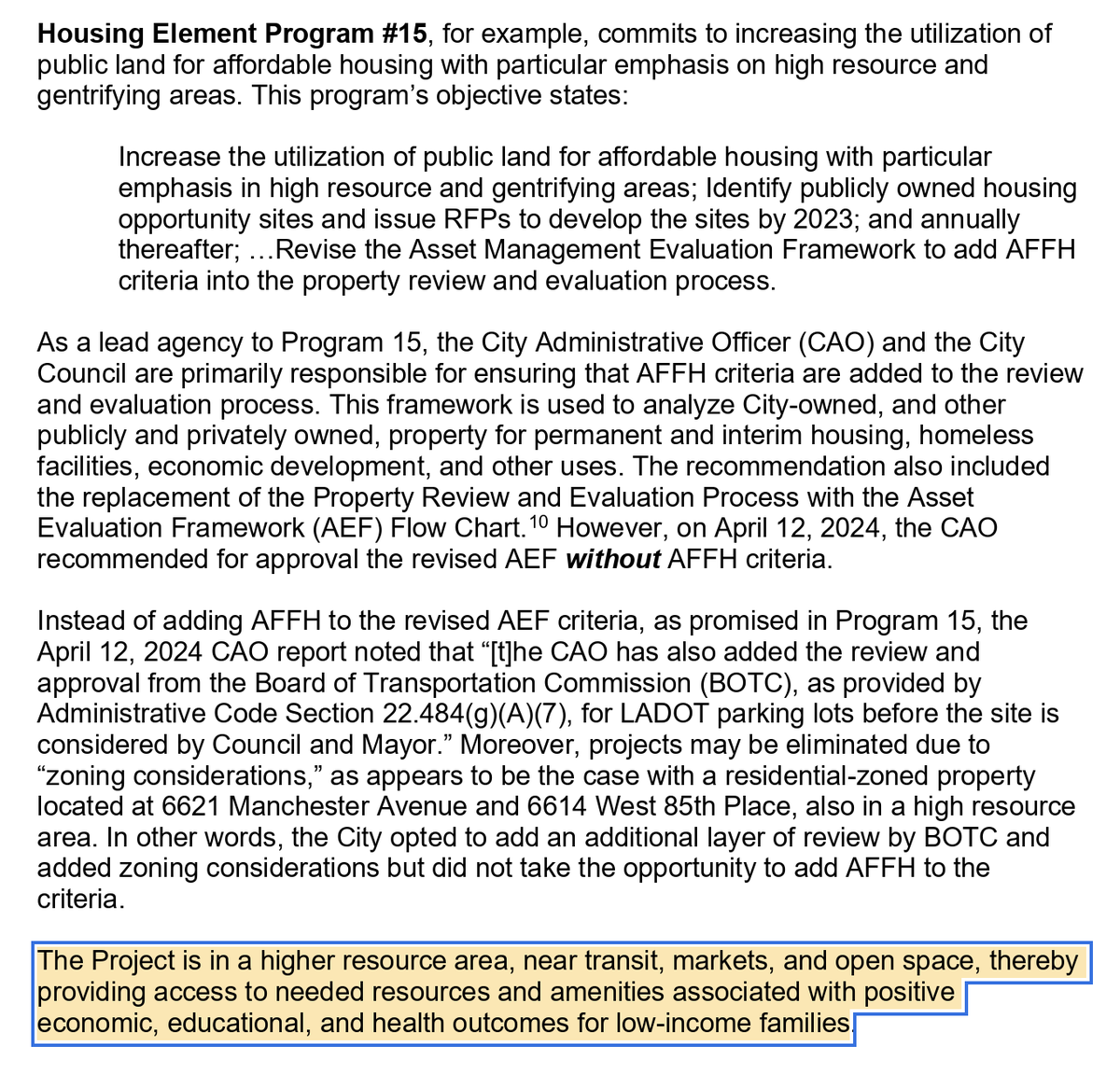
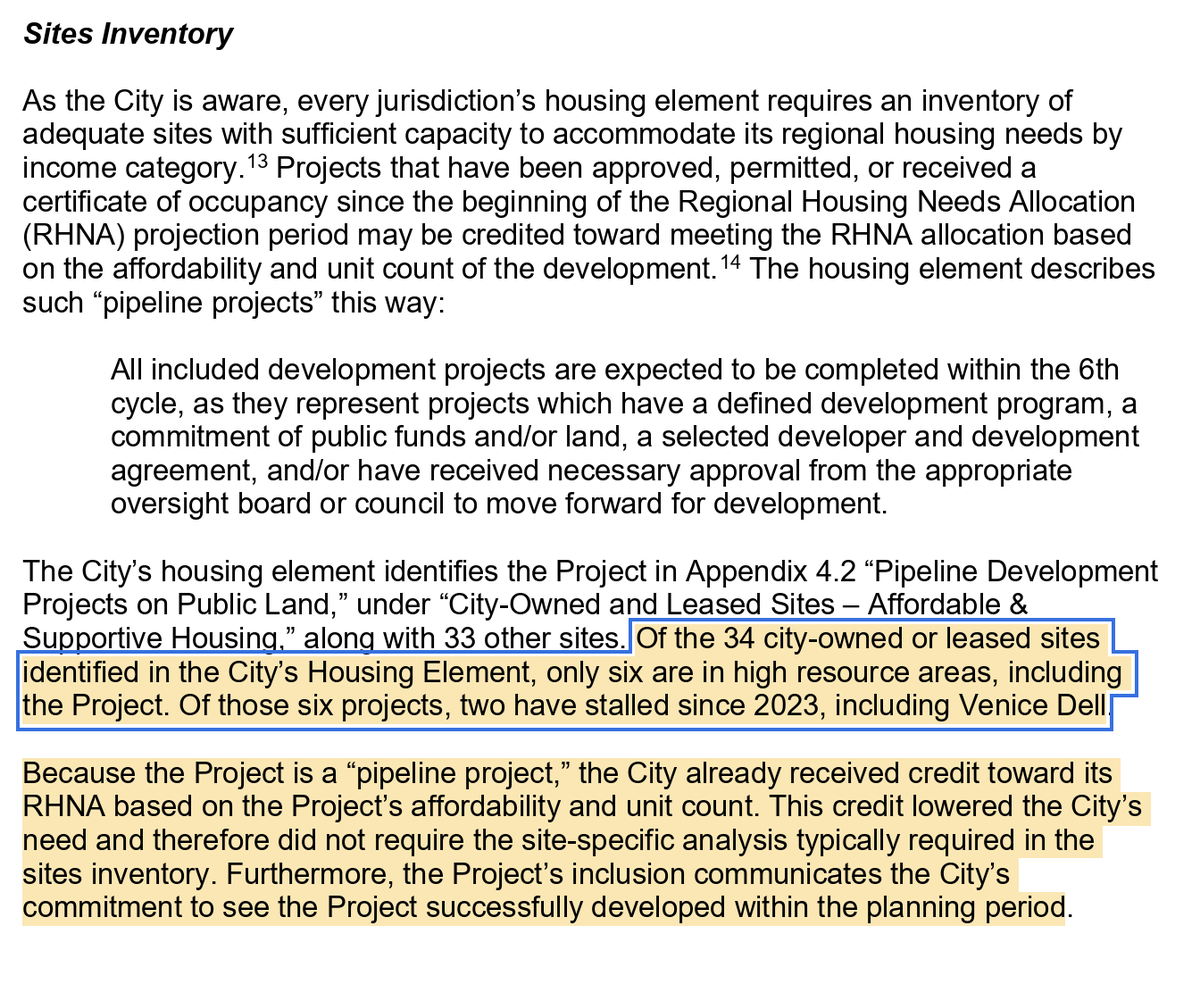
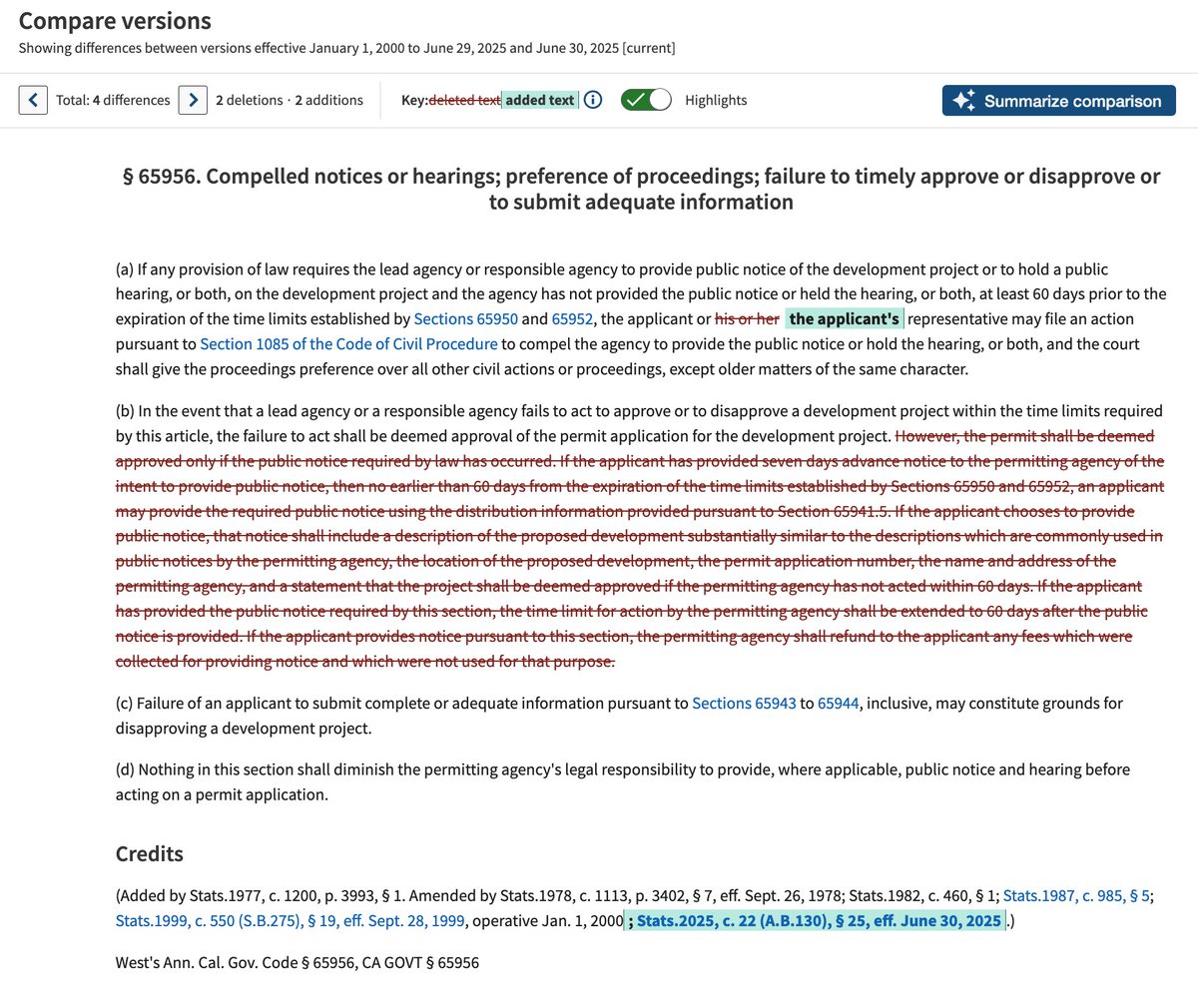
A "conforming" ordinance makes municipal law consistent with SB 79. It may also withdraw certain sites, especially prior to 7th cycle (see screenshots).
/13
A "conforming" ordinance makes municipal law consistent with SB 79. It may also withdraw certain sites, especially prior to 7th cycle (see screenshots).
/13

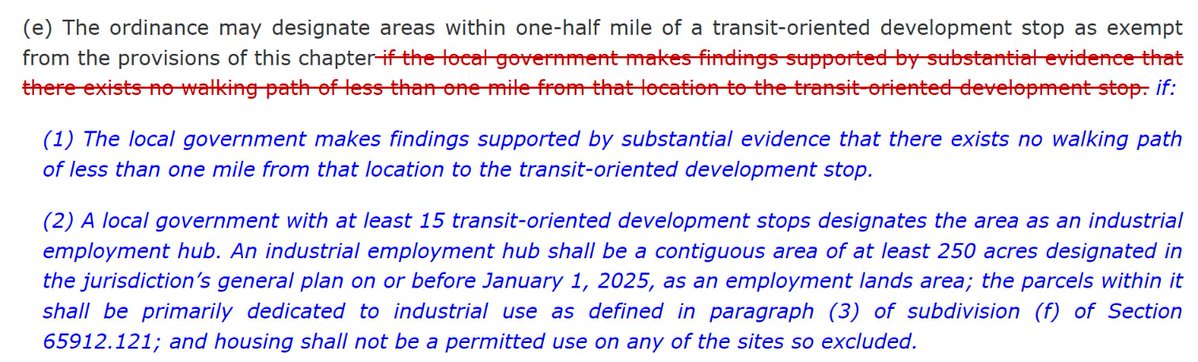


An "alternative plan" ordinance goes further. It may reallocate SB 79 FAR & density among sites within 1/2 mile of transit.
And, crucially, once an alt-plan ordinance has been approved by HCD, GC 65912.157 *does not apply* in the city until next housing-element amendment.
/14
And, crucially, once an alt-plan ordinance has been approved by HCD, GC 65912.157 *does not apply* in the city until next housing-element amendment.
/14
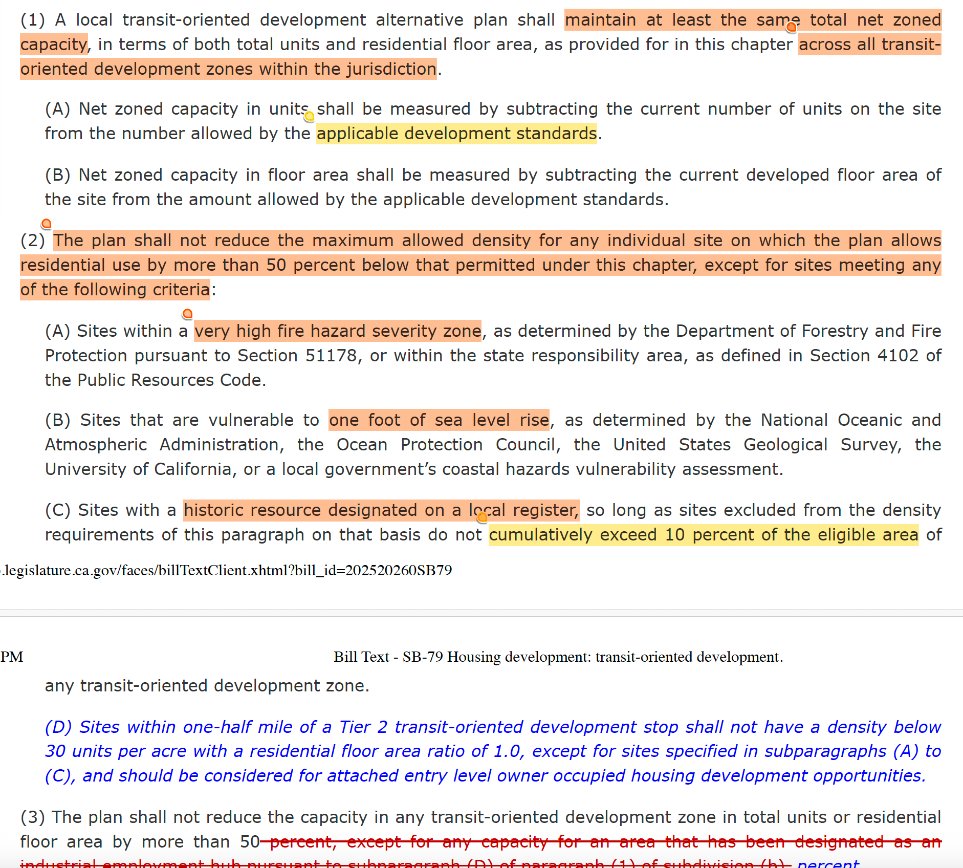

This means that in alt-plan cities, a developer cannot use SB 79 to get waivers of height/density/FAR restrictions that "physically preclude" their project (except insofar as the alt plan authorizes them).
/15
/15
https://x.com/CSElmendorf/status/1968034317034197036
There's a pretty clear formula in SB 79 for counting density & FAR in an alt plan and comparing it to the SB 79 baseline, at least until the 7th cycle.
/16
/16
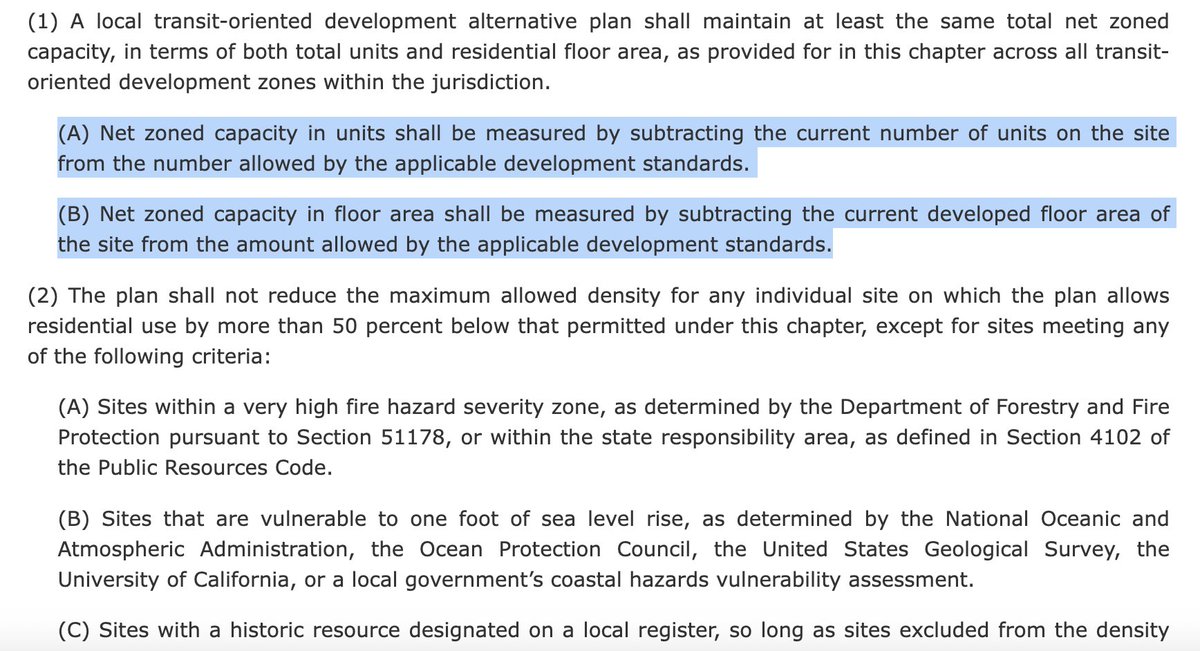
But there's also a critically important policy question that's been delegated, de facto, to HCD:
How to account for interplay between demolition & antidisplacement restrictions, on the one hand, and conventional zoning & development standards, on the other?
/17
How to account for interplay between demolition & antidisplacement restrictions, on the one hand, and conventional zoning & development standards, on the other?
/17
To illustrate the stakes: Assume that the front 40% of a parcel is occupied by a small apartment building. The city's zoning code requires the rear 60% of parcels to be open space.
The owner would like to build a second apartment bldg or extension of main bldg in backyard.
/18
The owner would like to build a second apartment bldg or extension of main bldg in backyard.
/18
If the city *hasn't* passed SB 79 implementation & alt-plan ordinances, it must waive its rear-yard open space requirement, so long as total project (existing bldg + new bldg) is within SB 79's height, FAR, and density limits.
/19
/19
But if HCD has approved an alt-plan that requires rear 60% of lots to be open space, and if the alt-plan does not provide for waivers, the developer is out of luck.
/20
/20
Fortunately, SB 79 sets a high bar for local development standards that a conforming or alt-plan ordinance incorporates. The city must show by a "preponderance of the evidence" that its standards do not, "alone or in concert, physically preclude" SB 79 FAR/density.
/21
/21

I think HCD could (and should) say that *for sites whose existing use is subject to state or local demolition controls,* conforming and alt-plan ordinances MUST authorize waivers of local standards that physically preclude a project at the nominally allowed density & FAR.
/22
/22
The interaction of non-demo'able existing uses w/ setbacks, stepbacks, etc. is simply too variable for a city to "demonstrate by a preponderance of the evidence" that its rules don't preclude what they must allow
(unless the city produces a project mock up for EVERY site)
/23
(unless the city produces a project mock up for EVERY site)
/23
By insisting on waivers for demo-controlled sites, HCD would incentivize cities not to impose pretextual demolition controls.
A city could only demand the designs it likes (e.g., via non-waiveable form-based zoning) if it allows demolitions.
/end
A city could only demand the designs it likes (e.g., via non-waiveable form-based zoning) if it allows demolitions.
/end
@threadreaderapp unroll
@threadreaderapp unroll
• • •
Missing some Tweet in this thread? You can try to
force a refresh