High cholesterol probably makes you live longer, and might even prevent cancer.
This research gets ignored, but here's one example.
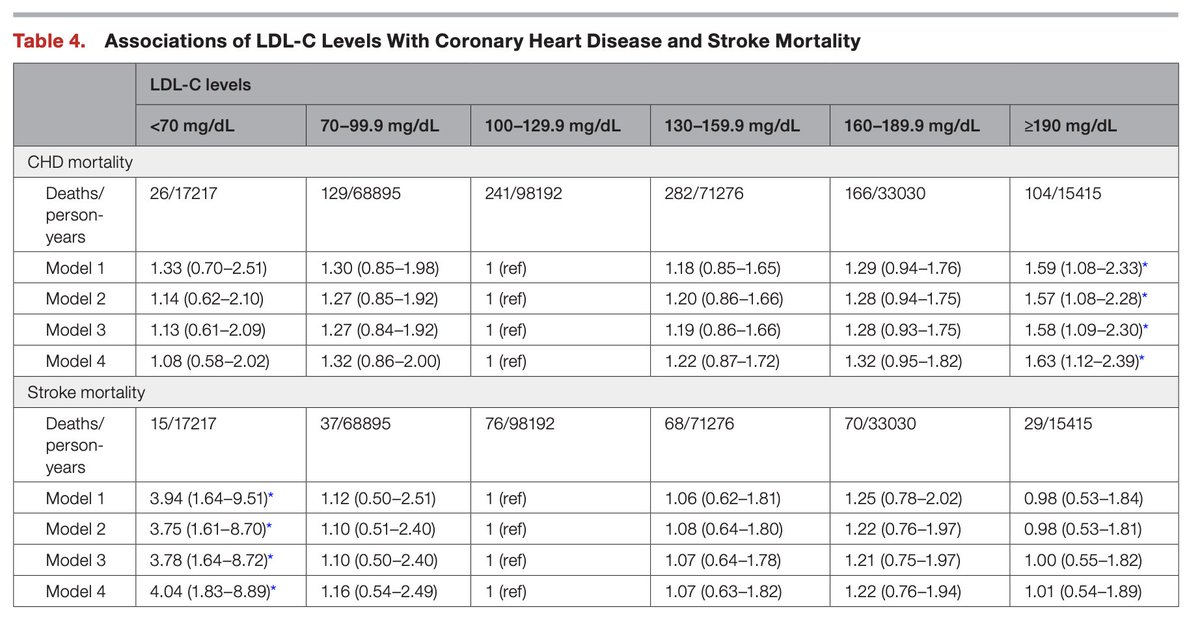
People in this study with LOW LDL cholesterol had a 4X increased risk of dying from stroke.
(🧵1/8)
This research gets ignored, but here's one example.
People in this study with LOW LDL cholesterol had a 4X increased risk of dying from stroke.
(🧵1/8)
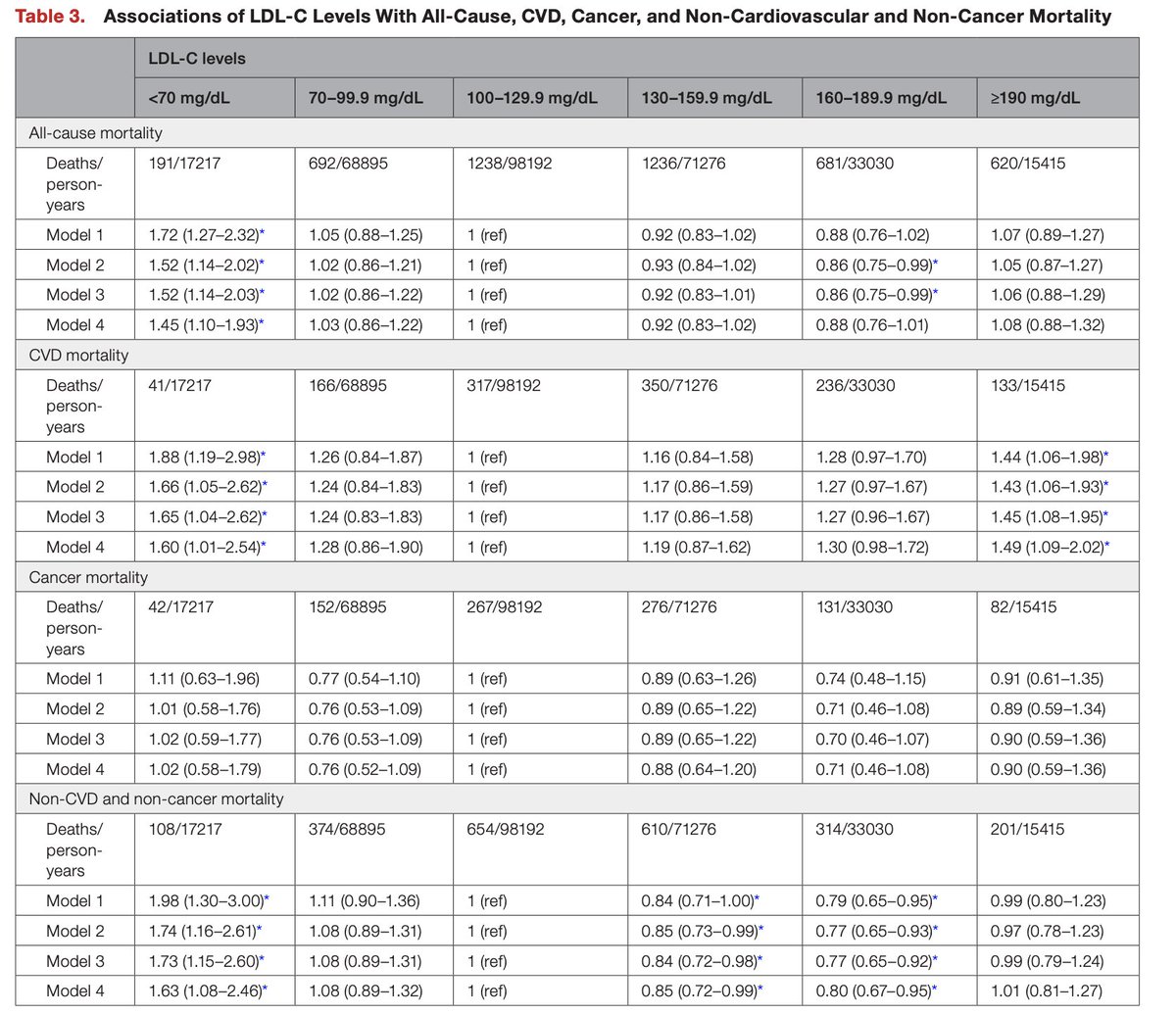
High cholesterol was protective, even against heart disease.
People with "high" (>100) LDL had lower deaths from:
◇ Any cause
◇ Cardiovascular disease
◇ Cancer
These people were followed for 23 years (median), one of the longest / best studies to date.
(2/8)
People with "high" (>100) LDL had lower deaths from:
◇ Any cause
◇ Cardiovascular disease
◇ Cancer
These people were followed for 23 years (median), one of the longest / best studies to date.
(2/8)
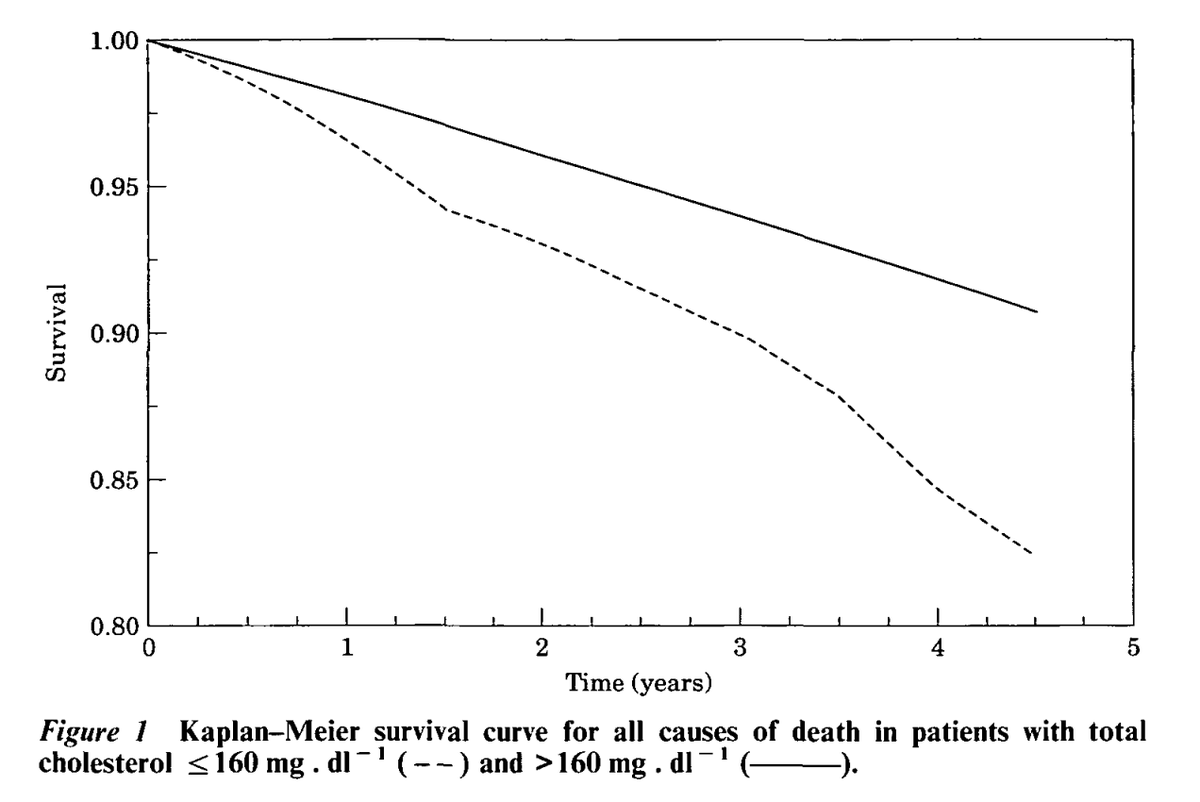
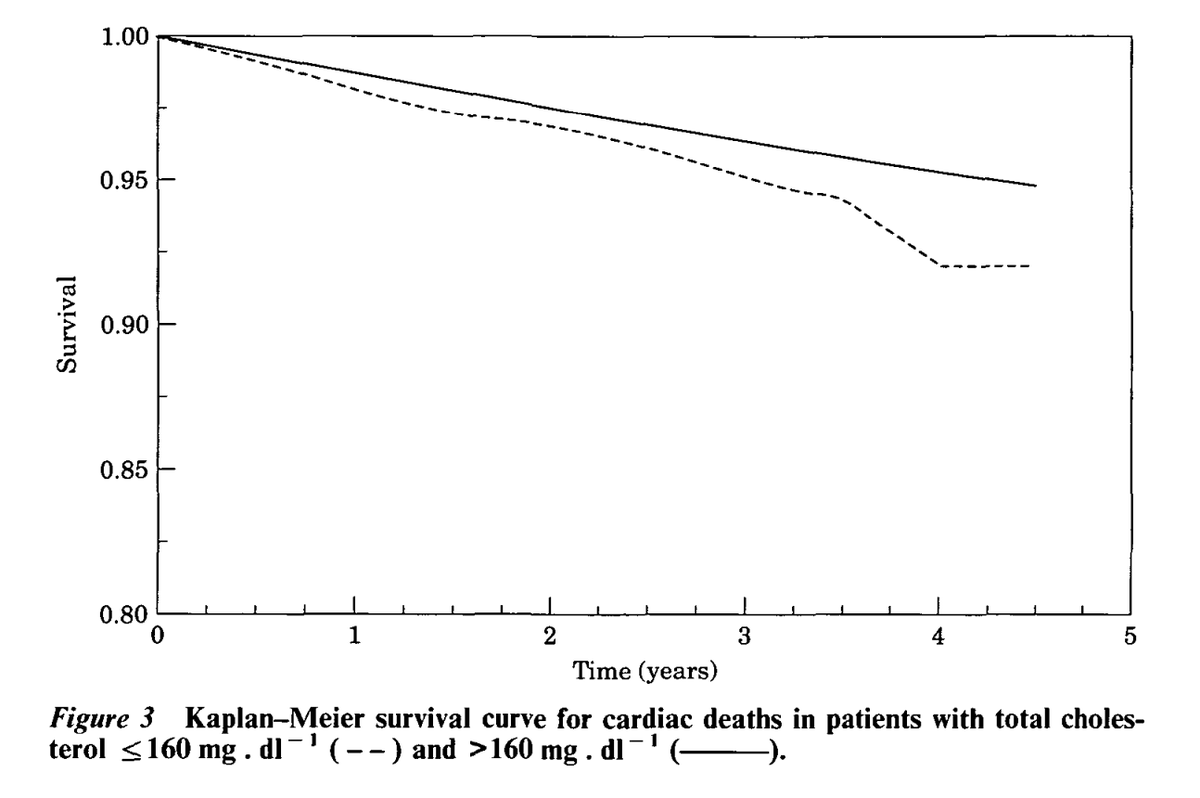
An older study here showed similar results.
People with high cholesterol survived substantially longer on average.
This was true, even for dying of a heart problem.
(3/8)
People with high cholesterol survived substantially longer on average.
This was true, even for dying of a heart problem.
(3/8)
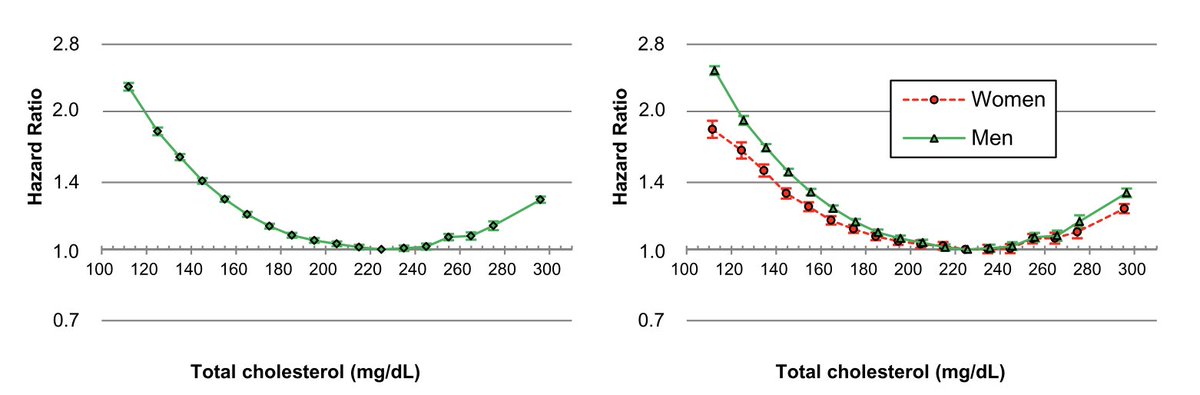
Here's another recent study, showing that high cholesterol at around 220 total was the safest level.
Keep in mind, labs most often have the limit for cholesterol at 170.
(4/8)
Keep in mind, labs most often have the limit for cholesterol at 170.
(4/8)
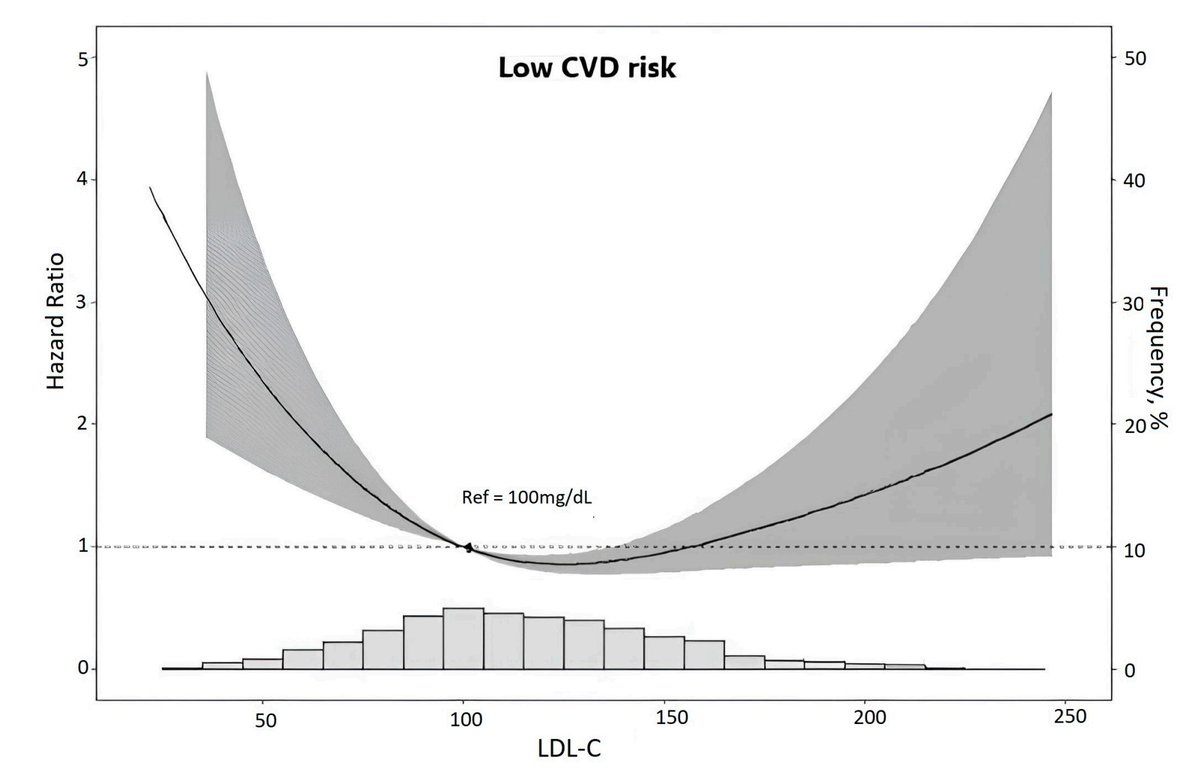
A common argument is that people with low cholesterol are frail, so the low cholesterol is a result of overall just impaired function.
Well, a recent study confirmed that the protective effect of high cholesterol was NOT due to frailty.
If removing people who died within 5 years of the study's start, high cholesterol was equally as protective.
(5/8)
Well, a recent study confirmed that the protective effect of high cholesterol was NOT due to frailty.
If removing people who died within 5 years of the study's start, high cholesterol was equally as protective.
(5/8)
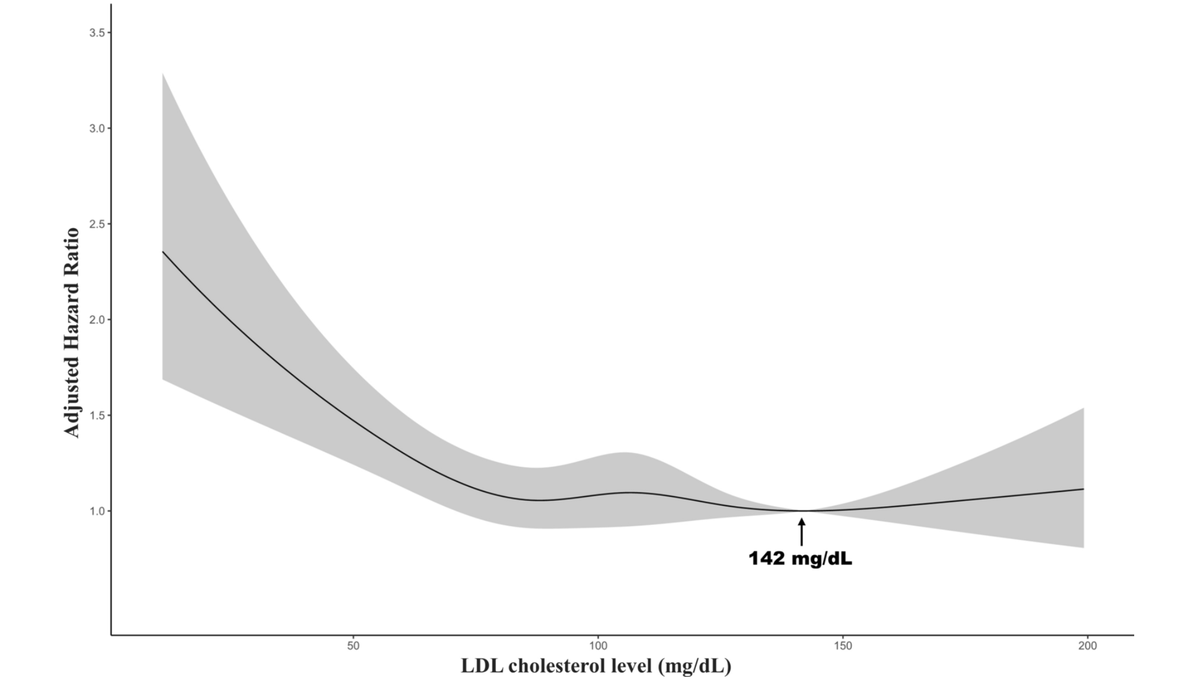
High cholesterol is particularly beneficial in cancer.
A 2024 study found that the lowest risk of dying in people with newly diagnosed cancer was at 42% above the limit most labs set.
Above that was still better than having "normal" cholesterol.
(6/8)
A 2024 study found that the lowest risk of dying in people with newly diagnosed cancer was at 42% above the limit most labs set.
Above that was still better than having "normal" cholesterol.
(6/8)
In the oldest of old people (>85), it was recently shown that the higher the cholesterol, the less people died.
Full stop.
(7/8)
Full stop.
(7/8)

The question is, why would cholesterol be protective?
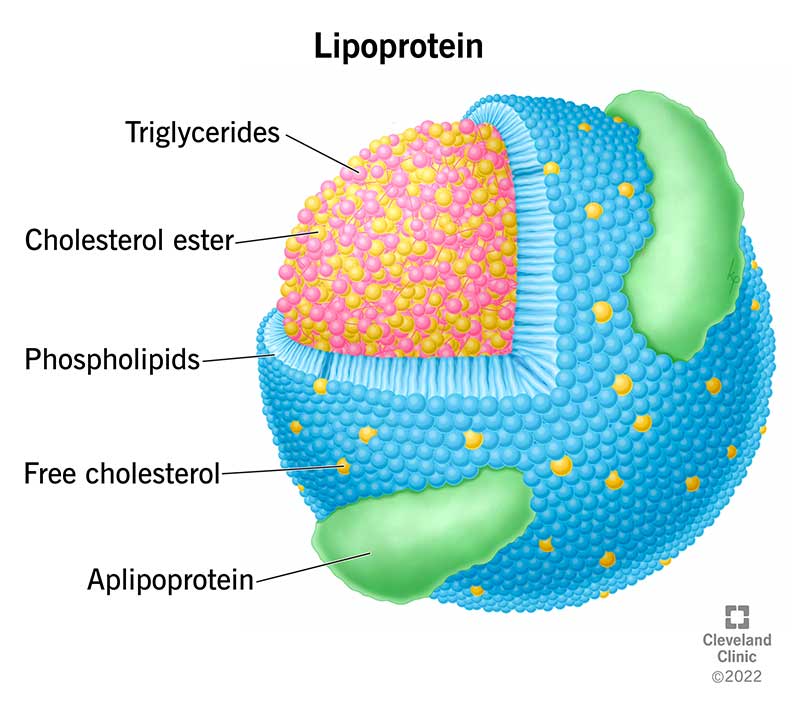
Low density lipoprotein (LDL) is a fat soluble raft that carries most cholesterol that is in your blood.
While it is almost universally seen as bad, it actually has multiple protective functions for the body:
◇ Infection resistance - LDL can bind to pathogens and other inflammatory triggers, and neutralize them.
◇ Anti-tumor immunity - Low LDL levels have been associated with lower amounts of key immune cells that help to clear out cancer cells.
◇ Membranes - cells require cholesterol in order to maintain the integrity of their membranes. LDL acts as a source for cholesterol.
◇ Inhibits angiogenesis - this is the formation of new blood vessels, a key hallmark of cancer. LDL can prevent it.
◇ Fat soluble antioxidants - LDL carries more than just cholesterol, it also has fat soluble vitamins and other components like CoQ10 which are vital for mitochondrial function
(8/8)
Low density lipoprotein (LDL) is a fat soluble raft that carries most cholesterol that is in your blood.
While it is almost universally seen as bad, it actually has multiple protective functions for the body:
◇ Infection resistance - LDL can bind to pathogens and other inflammatory triggers, and neutralize them.
◇ Anti-tumor immunity - Low LDL levels have been associated with lower amounts of key immune cells that help to clear out cancer cells.
◇ Membranes - cells require cholesterol in order to maintain the integrity of their membranes. LDL acts as a source for cholesterol.
◇ Inhibits angiogenesis - this is the formation of new blood vessels, a key hallmark of cancer. LDL can prevent it.
◇ Fat soluble antioxidants - LDL carries more than just cholesterol, it also has fat soluble vitamins and other components like CoQ10 which are vital for mitochondrial function
(8/8)
Studies mdpi.com/2077-0383/13/2… - not at high CVD risk but yes diabetes, following for 10 years, not explained by frailty (ACM)
pubmed.ncbi.nlm.nih.gov/35904192/ - 23 yr follow up, incr CVD, 4x stroke, ACM
pubmed.ncbi.nlm.nih.gov/21160131/ - same
pubmed.ncbi.nlm.nih.gov/9049515/ - same
nature.com/articles/s4159… - protective in cancer, good mechs
sci-hub.se/10.1016/S0140-… - another same thing
pmc.ncbi.nlm.nih.gov/articles/PMC63… - TC
pubmed.ncbi.nlm.nih.gov/38938514/ - old old, higher better
pubmed.ncbi.nlm.nih.gov/35904192/ - 23 yr follow up, incr CVD, 4x stroke, ACM
pubmed.ncbi.nlm.nih.gov/21160131/ - same
pubmed.ncbi.nlm.nih.gov/9049515/ - same
nature.com/articles/s4159… - protective in cancer, good mechs
sci-hub.se/10.1016/S0140-… - another same thing
pmc.ncbi.nlm.nih.gov/articles/PMC63… - TC
pubmed.ncbi.nlm.nih.gov/38938514/ - old old, higher better
• • •
Missing some Tweet in this thread? You can try to
force a refresh