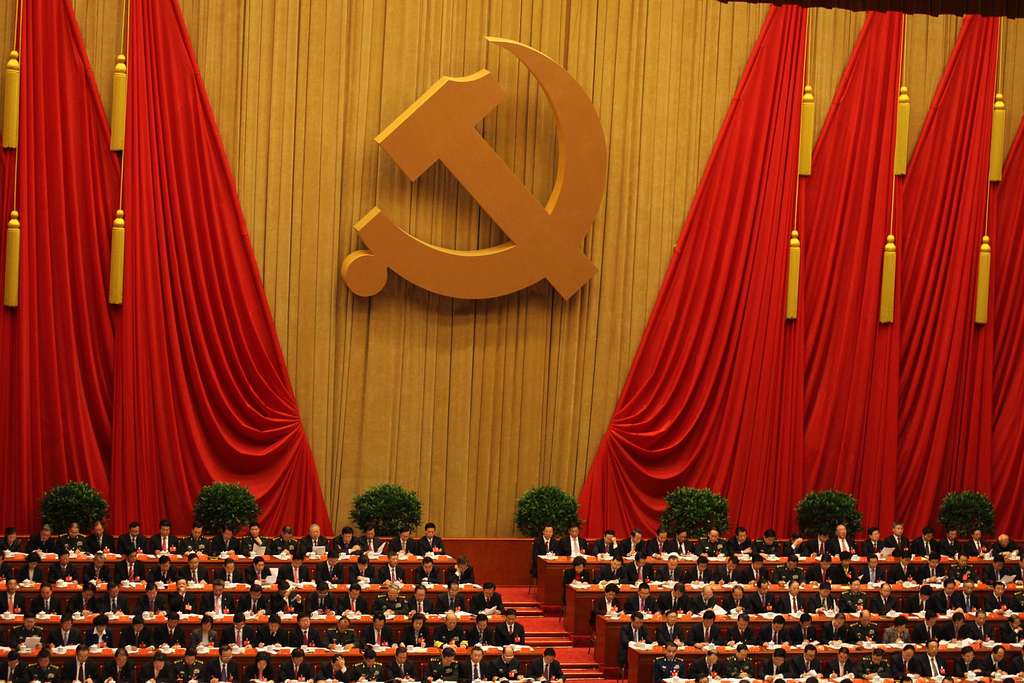
How can Germany evolve its underdeveloped strategic culture to better defend liberal democracy against autocratic encroachment? What lessons can be drawn from Israel and China—without copying their military doctrines? A short 🧵 /1
Germany’s Zeitenwende was a start, but we need a bolder and more reflexive mindset to counter Russia’s revisionism, China’s hybrid interference, and Iran’s meddling #CRINK. What can we selectively adapt from allies and rivals? /2
Israel’s “Campaign Between the Wars” doctrine demonstrates early threat disruption—e.g., targeted cyber ops or sanctions. While Germans clearly would not back kinetic active measures, we urgently need to counter transnational repression, espionage, prepositioning, and sabotage /3
For example, Germany should boost public-private tech partnerships to shield critical infrastructure from China’s cyber espionage and Russian sabotage. De-risking is not enough, proactivity is essential /4
Yet Israel’s strategic culture has downsides: global backlash against pre-emptive strikes and an increasingly militarised society. Germany must steer clear of this pitfall, combining military deterrence, active defence, diplomacy and soft power to lead liberally in the EU /5
What about China? The PLA’s ‘active defense’ (积极防御) safeguards not just territory but regime stability. While rooted in regime paranoia, it offers insights for Germany to strengthen liberal democracy’s resilience in a volatile world—democracy needs to be defended, too / 6
Xi Jinping’s “struggle” mindset (斗争) sees encirclement everywhere. While we reject CCP authoritarianism, Germany needs vigilance against hybrid threats—China’s economic coercion, Russia’s election meddling, Iran’s proxies. Coordinated democratic resilience must be the goal /7
We need to develop a new #GrandStrategy to overcome Germany’s ‘Zivilmacht’ limits, like countering hybrid threats. The Cold War took decades, won via Ostpolitik’s carrots and rearmament’s sticks—no hot war is needed. This requires a lot of political will and collective effort /8
9/ And if you think I’m pushing militarisation, think again. Our democracy won’t survive without a bolder strategic mindset—non-kinetic pushback to defend liberal institutions and democratic values against autocratic threats /9
What do you think? How can we unlearn overgeneralised lessons from Germany’s past, challenge foreign policy dogma, and relearn to face today’s autocratic challenges? #GrandStrategy #StrategicCulture /10
Please unroll @threadreaderapp
• • •
Missing some Tweet in this thread? You can try to
force a refresh

AI models are approaching PhD-level capabilities in some tasks, transforming how we teach and learn in higher ed. A short🧵 with my take as an associate professor using AI. Please note that these are speculative reflections, not predictions, to spark discussion /1
As an early adopter, I am amazed by AI’s rapid progress in research and analysis. Hallucinations persist - e.g. fabricated academic sources - but are improving in newer models /2
If AI continues to advance, students could have personalised agents for expert-level learning in the foreseeable future. How could this reshape traditional lectures and coursework assignments? /3
We can count ourselves lucky that war in the Taiwan Strait hasn't erupted—yet. But Jennifer Kavanagh unfairly blames Taiwan for tensions. Do we see a mirroring of the 🇺🇦 debate, only this time it is 🇹🇼 where defenders are faulted for existing? A short 🧵/1 nytimes.com/2025/09/15/opi…
Kavanagh's op-ed wrongly frames Taiwan as troublemaker: "Taiwanese defiance toward China provokes aggressive bluster from Beijing." No explanation is given what the supposedly problematic 'defiance' consists of. Maybe asserting the sovereignty of the Republic of China on🇹🇼? /2
Recommending Trump to 'put Taiwan on notice', Kavanagh assumes that 🇺🇸 can unilaterally 'restore equilibrium across the Taiwan Strait', thereby overestimating 🇺🇸 power and stripping 🇹🇼 of agency. Like blaming Taiwan for ‘defiance,’ it’s pure ethnocentrism. Why sideline 🇹🇼? /3
Deutschland mangelt es an einer Grand strategy. Darunter verstehen wir die umfassende, langfristige Koordination militärischer, wirtschaftlicher, diplomatischer und kultureller Mittel eines Landes zur Sicherung nationaler Interessen und Bewältigung globaler Herausforderungen /1
Wir haben eine unterentwickelte strategische Kultur. Damit meine ich die gesellschaftlich tief verwurzelten Normen, Werte, und historische Erfahrungen eines Landes, ein über Jahrzehnte gewachsener Resonanzboden, der das aussen- und sicherheitspolitische Verhalten beeinflusst /2
Lange Zeit liess sich Deutschland als Zivilmacht beschreiben. Trotz NATO-Beitritt in den 1950er Jahren spielten militärische Mittel eine untergeordnete Rolle. Mit Mitteln der Diplomatie, Außenwirtschaftsförderung und europäische Integration nahm die BRD Einfluss /3
Die Militärparade in Peking zeigt, wie Xi, Putin und Kim die Geschichte des 2. Weltkriegs in ihrem Sinne umschreiben #CRINK. Derweil werden Diktaturen immer noch von zu vielen Zeitgenossen normalisiert. Wer sie schonungslos analysiert, gilt schnell als 'Kalter Krieger' /1
Es ist schon erstaunlich, dass westliche Chinaexperten selbst heute noch für eine 'Partnerschaft' mit 🇨🇳 eintreten. Klartext über politische Missstände in China wird dann als Hindernis für Dialog und Kooperation angesehen. Tatsächlich entsteht so ein massiver blinder Fleck /2
Wer aus taktischen Gründen die autokratischen Missstände in China herunterspielt, wird nicht gleichzeitig auch eine ergebnisoffene Risikoanalyse betreiben. Ein effektives Risikomanagement kann es so nicht geben. Aus dem Versuch der Annäherung an 🇨🇳 wird dann eine Verstrickung /3
Is it time for a new trifecta in EU-China relations? A 🧵on why we should reframe China led by the Chinese Communist Party (CCP) as a competitor, a systemic rival, and a threat /1
In Autumn 2019, European Commission President von der Leyen urged Europe to ‘learn the language of power’. Six years later, the European Union (EU) still hasn't made much progress /2 dw.com/en/von-der-ley…
A recent example is the 25th EU-China summit that concluded on 24th July 2025. The meeting was originally scheduled for Brussels, but General Secretary Xi Jinping declined the invitation /3
There is no other way to put it: this article is an example of a dysfunctional and moralised discourse about threat frames in public policy. It's high time for us to move towards an evidence-based approach towards geopolitical risk management. A short🧵/1 carnegieendowment.org/research/2025/…
Efforts by politicians to 'persuade through fear appeals' are criticised. Drawing on McCarthy ('Red Scare') and George W. Bush ('Global War on Terror') the costs of 'instrumentalizing threats' are highlighted. The article then pivots to the case of China, but fails to convince /2
While I appreciate that the author is most likely motivated by a desire to advance constructive 🇨🇳 engagement, I find it irritating that the overall argument is littered with logical fallacies. While they could be unintentional, they weaken the persuasiveness of the article /3