Scientists Accidentally Discover Laser-Free LASIK Alternative
A lab mistake revealed that a tiny electric current can soften the cornea—then lock it into perfect focus.
Vision was reshaped in minutes.
It even showed signs of repairing things once thought to be irreversible.
🧵 THREAD
A lab mistake revealed that a tiny electric current can soften the cornea—then lock it into perfect focus.
Vision was reshaped in minutes.
It even showed signs of repairing things once thought to be irreversible.
🧵 THREAD
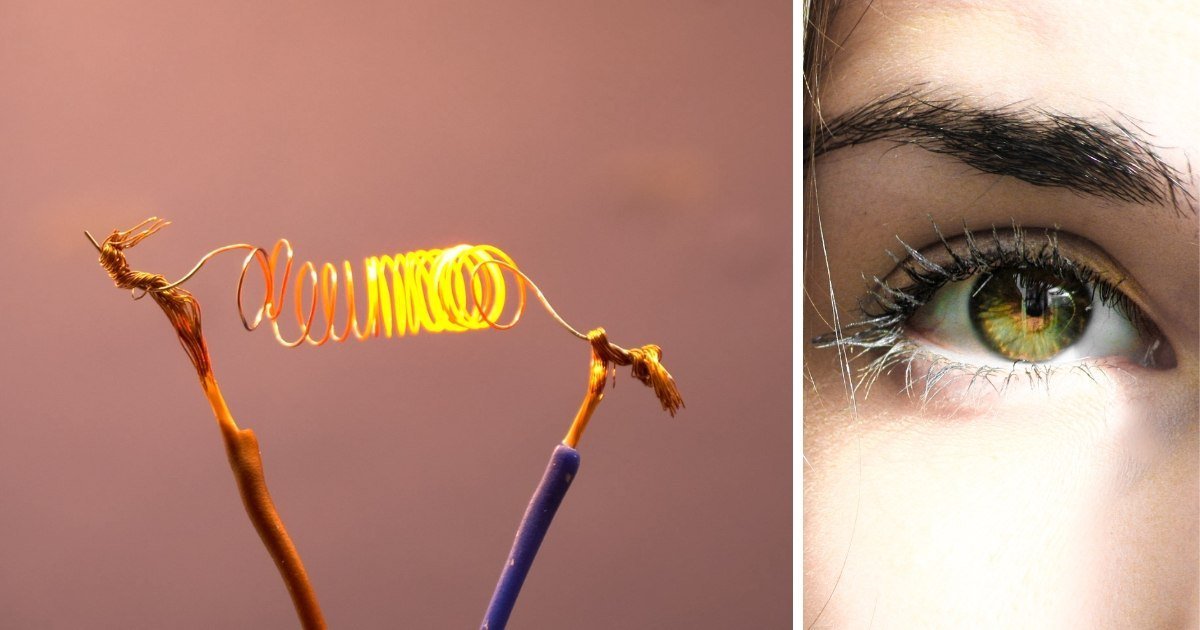
A chemistry professor trying to heat cartilage with electricity made a mistake that could change eye surgery.
theepochtimes.com/health/scienti…
theepochtimes.com/health/scienti…
Michael Hill at Occidental College accidentally used too little current in his experiment—and stumbled upon a discovery that might replace LASIK with a gentler treatment that reshapes corneas without ever cutting the eye.
The discovery may offer hope for the millions of people living with poor vision who want an alternative to glasses and contact lenses but are wary of LASIK’s risks.
While laser eye surgery is generally successful, it involves cutting into the eye and can cause complications including dry eyes, vision problems, and in rare cases, severe side effects.
The discovery may offer hope for the millions of people living with poor vision who want an alternative to glasses and contact lenses but are wary of LASIK’s risks.
While laser eye surgery is generally successful, it involves cutting into the eye and can cause complications including dry eyes, vision problems, and in rare cases, severe side effects.

Happy Accident Behind the Discovery
The breakthrough happened entirely by chance when Hill and his collaborator, Dr. Brian Wong, a professor of otolaryngology-head and neck surgery at the University of California–Irvine, were frustrated with their attempts to reshape cartilage using lasers.
Hill said that they decided to try heating the material using an electric current, but accidentally used a far smaller current than they intended. They expected to see the cartilage bubbling and shaking. However, when Wong touched the cartilage, it wasn’t hot—suggesting another effect was at play.
The breakthrough happened entirely by chance when Hill and his collaborator, Dr. Brian Wong, a professor of otolaryngology-head and neck surgery at the University of California–Irvine, were frustrated with their attempts to reshape cartilage using lasers.
Hill said that they decided to try heating the material using an electric current, but accidentally used a far smaller current than they intended. They expected to see the cartilage bubbling and shaking. However, when Wong touched the cartilage, it wasn’t hot—suggesting another effect was at play.

While Wong is a medical professional, Hill is a physical chemist, and it was their partnership that allowed them to connect the dots.
Low electrical currents change the pH of cartilage, loosening molecular bonds and making tissues more malleable.
“And it’s like, this is electrochemistry,” Wong said. “That’s hydrogen and oxygen being evolved, so the discovery was entirely by accident on cartilage—100 percent by accident.”
Low electrical currents change the pH of cartilage, loosening molecular bonds and making tissues more malleable.
“And it’s like, this is electrochemistry,” Wong said. “That’s hydrogen and oxygen being evolved, so the discovery was entirely by accident on cartilage—100 percent by accident.”

Alternative to Carving the Eye With a Laser
Hill’s team has developed a technique called electromechanical reshaping (EMR) that uses small electric currents to make the cornea—the clear, dome-shaped front part of the eye—more malleable, then molds it into the correct shape.
The electrical current makes the cornea tissue more moldable, like clay. Once the electricity stops, the tissue locks into its new configuration.
Hill’s team has developed a technique called electromechanical reshaping (EMR) that uses small electric currents to make the cornea—the clear, dome-shaped front part of the eye—more malleable, then molds it into the correct shape.
The electrical current makes the cornea tissue more moldable, like clay. Once the electricity stops, the tissue locks into its new configuration.

In tests on rabbit eyes, the process took about a minute—comparable to LASIK’s speed but without incisions, expensive laser equipment, or tissue removal.
The cornea focuses light onto the retina. If it’s misshapen, vision becomes blurry. LASIK surgery corrects this by using a laser to burn a small amount of material to reshape the cornea, but it’s an invasive procedure with potential risks.
“LASIK is just a fancy way of doing traditional surgery. It’s still carving tissue—it’s just carving with a laser,” said Hill in a press statement. He will present his findings at the American Chemical Society’s fall meeting in August.
The cornea focuses light onto the retina. If it’s misshapen, vision becomes blurry. LASIK surgery corrects this by using a laser to burn a small amount of material to reshape the cornea, but it’s an invasive procedure with potential risks.
“LASIK is just a fancy way of doing traditional surgery. It’s still carving tissue—it’s just carving with a laser,” said Hill in a press statement. He will present his findings at the American Chemical Society’s fall meeting in August.

The team repeated the process on 12 rabbit eyeballs, 10 of which had simulated nearsightedness.
In all cases, the treatment adjusted the eye’s focusing power, indicating potential for vision correction. The cells in the eyeballs survived because the researchers carefully controlled the tissue’s acidity levels.
They also demonstrated that the technique might reverse some corneal cloudiness caused by chemical damage, which currently requires corneal transplants.
In all cases, the treatment adjusted the eye’s focusing power, indicating potential for vision correction. The cells in the eyeballs survived because the researchers carefully controlled the tissue’s acidity levels.
They also demonstrated that the technique might reverse some corneal cloudiness caused by chemical damage, which currently requires corneal transplants.

A little about us: We’re a team of journalists and researchers on a mission to give you REAL and honest information about your health.
Side effects of reading our posts may include: critical thinking.
Follow us for more daily threads—backed by hard data.
—> @EpochHealth
Side effects of reading our posts may include: critical thinking.
Follow us for more daily threads—backed by hard data.
—> @EpochHealth

Hill and Wong are now investigating whether the cornea can be reshaped without incisions, using EMR.
Dr. James R. Kelly, an ophthalmologist at Kelly Vision and director of Refractive Surgery Education at Northwell Health in New York, who was not involved in the study, said in an interview with The Epoch Times that EMR could “in theory” significantly reduce certain complication risks by avoiding incisions or ablation.
“There’s no flap to dislocate, no laser-induced tissue removal, and less disturbance to the corneal nerve supply,” he said. This could mean fewer dry eye symptoms after surgery. “Additionally, if EMR proves reversible, that would be a major safety advantage over current laser-based techniques,” he added.
Dr. James R. Kelly, an ophthalmologist at Kelly Vision and director of Refractive Surgery Education at Northwell Health in New York, who was not involved in the study, said in an interview with The Epoch Times that EMR could “in theory” significantly reduce certain complication risks by avoiding incisions or ablation.
“There’s no flap to dislocate, no laser-induced tissue removal, and less disturbance to the corneal nerve supply,” he said. This could mean fewer dry eye symptoms after surgery. “Additionally, if EMR proves reversible, that would be a major safety advantage over current laser-based techniques,” he added.

Greater Safety and Accessibility
Hill noted that the team’s goal was to come up with a technique that was more accessible and safer than current laser-based treatments.
However, EMR temporarily alters the tissue pH, and there are “potential risks” involved—and those risks can only be sorted out through a live study, he said.
“We have data on ex vivo specimens that suggest the electrochemical technique does not cause acute changes to the underlying collagen structure of the cornea, nor does it immediately cause cellular necrosis, but these data are very, very limited,” Hill said.
Hill noted that the team’s goal was to come up with a technique that was more accessible and safer than current laser-based treatments.
However, EMR temporarily alters the tissue pH, and there are “potential risks” involved—and those risks can only be sorted out through a live study, he said.
“We have data on ex vivo specimens that suggest the electrochemical technique does not cause acute changes to the underlying collagen structure of the cornea, nor does it immediately cause cellular necrosis, but these data are very, very limited,” Hill said.

Kelly said his biggest concern is whether the reshaping will hold up over time and remain uniform.
He noted that the cornea is “biologically active” and its collagen structure and hydration can change with healing, aging, or inflammation. Without long-term in-vivo data, “we don’t know if the refractive effect will regress, shift unpredictably, or affect corneal transparency.”
Kelly added that “durability, stability, and optical quality” over many years will be key tests for EMR before it can be considered a viable alternative to LASIK, and believes it could be 20 years or more before this technique becomes commercially available—if it ever does.
He noted that the cornea is “biologically active” and its collagen structure and hydration can change with healing, aging, or inflammation. Without long-term in-vivo data, “we don’t know if the refractive effect will regress, shift unpredictably, or affect corneal transparency.”
Kelly added that “durability, stability, and optical quality” over many years will be key tests for EMR before it can be considered a viable alternative to LASIK, and believes it could be 20 years or more before this technique becomes commercially available—if it ever does.

While funding uncertainties have temporarily halted progress, Hill remains optimistic, noting there’s a “long road” between what has been accomplished and clinical use.
“Our next steps are definitely to carry out a live-animal study.”
“Our next steps are definitely to carry out a live-animal study.”

Thanks for reading! If you found this valuable, here's a special deal:
Unlock our ENTIRE library of @EpochHealth articles for just $1/week—plus unlimited access to everything else on our site.
Claim it here:
on.theepochtimes.com/vfox/health?ut…
Unlock our ENTIRE library of @EpochHealth articles for just $1/week—plus unlimited access to everything else on our site.
Claim it here:
on.theepochtimes.com/vfox/health?ut…

• • •
Missing some Tweet in this thread? You can try to
force a refresh