We are watching a 21st Century Moment moving from Horse & Carriage to Racecars but it's really hard to discount.
Here is a framework that works in the current backdrop:
Investors have always had the choice of where to put their fiat money.
They can either invest in productive assets, sit in cash or sit in stores of value.
The simple equation of how to invest- Start with a basket of goods for $100. If productivity per year is 2% that basket of goods at the end of the year should cost $98 if you are invested in productive equity or business.
If inflation is 3% then that basket of goods at the end of the year would be $103 if you just sat in cash.
The difference between inflation & productivity is tax you pay to the issuer of the sovereign currency if you sit in cash. In this case you are paying 5% tax to sit in fiat cash.
Now where this gets really wonky is if you have productivity that is completely outside of any norm in history.
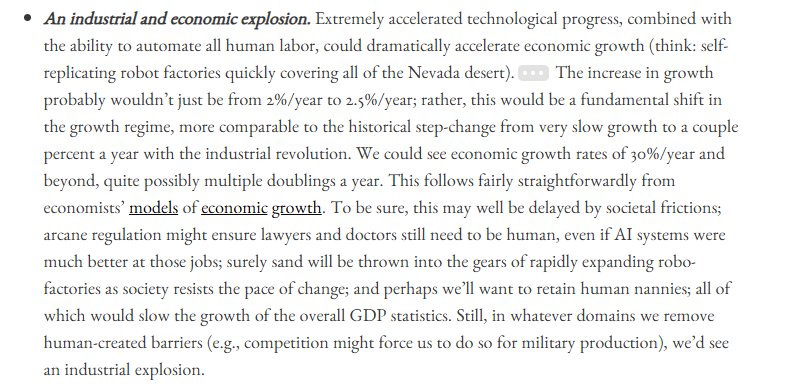
@leopoldasch Describes this productivity boom in his Situational Awareness treatise.
If productivity gains are in the 100%+ then the choice to keep your money in Fiat Currency becomes obsolete.
The concept of inflation & currency becomes negligible next to the productivity gains.
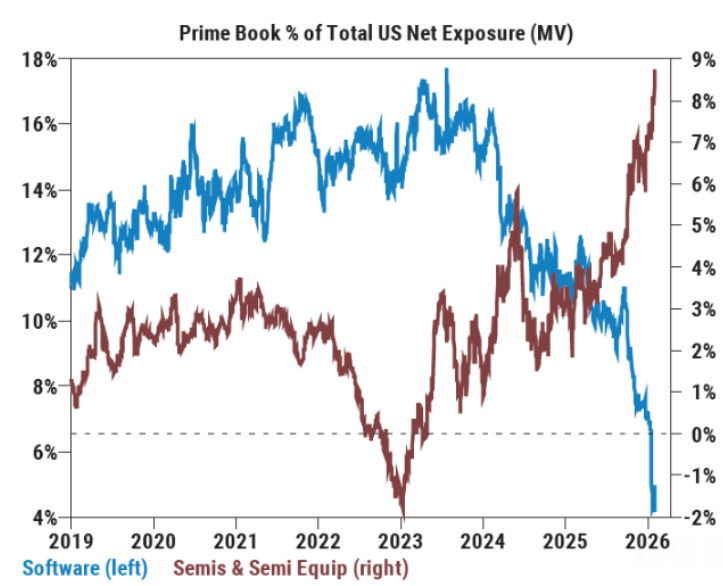
I think this is why bitcoin is falling- bitcoin at the end of the day is a software.
Software as we know it with high P/E ratios gets decimated just like the news industry got decimated by podcasts & Substack.
As access costs drop to zero and productivity boom starts in overdrive there are winners & losers.
My guess is this chart does not mean revert this time unless there is some sort of credit event (Possible- we are starting to see stress, but the gov't has backstopped AI with the Genesis Plan)
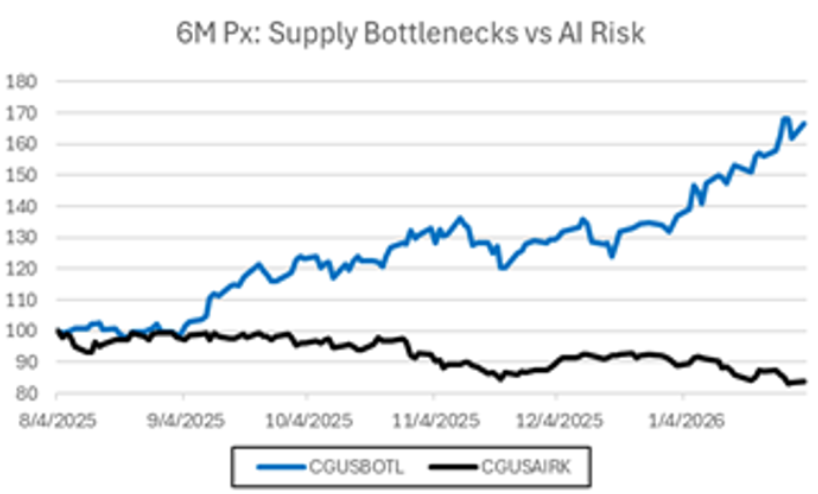
There is no other choice but to invest in the AI supply chain if this productivity boom is real.
This is the Citigroup Basket of AI Supply Bottlenecks vs. AI at risk companies.
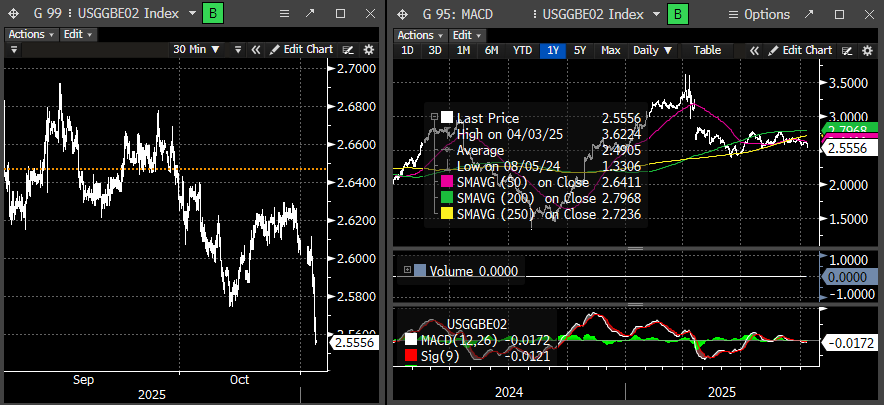
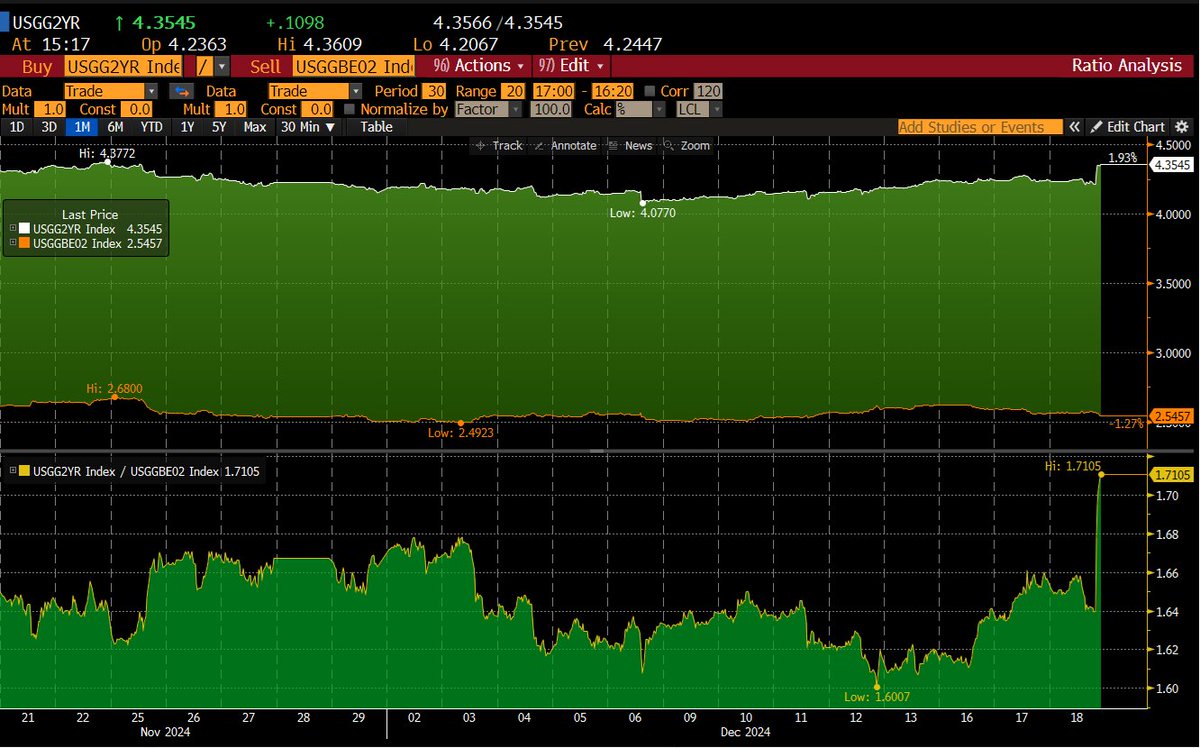
Yesterday was pretty simple- By concentrating on inflation, Powell jawboned the breakeven inflation rates lower (orange line) while nominal rates slightly rose (white line) from overly dovish expectations.
Financial conditions tightened and systematic investors seem to have priced in an overly-hawkish Fed NOW because of self-reinforcing volatility targeting flows.
🧵
Credit Tightened a bit and HYG broke the 50 day. This will be important to watch going forward to see if the longer term bull has ended, but the economy is in way different shape and a lot of debt has been termed out.
The biggest risks in credit are geopolitical (from China imploding).
The front month VIX hit 27 which the 3 month VIX hit 24 signaling an inversion in the volatility structure.
This has generally been one of the best contra-indicators where equity has been an incredible buy for the last 10 years.
My favorite John Burbank line is "“Last price is a liar, [real] price is an equilibrium of liquidity.”
How does this relate to bitcoin and meme stocks?
A Thread..
Now, imagine there was a utopian island where everyone wanted to live.
This island was relatively unknown, but for the majority who lived there, it was extremely coveted.
Every citizen loved the island so much, there was absolutely no price at which they would sell their home.
Even in the middle of a black swan event like the coronavirus pandemic, only 14% of residents were forced to sell their homes because of external financial issues.
When ownership of any asset class is cornered by large institutions, everything trades on the margin.
When large institutions own a majority of shares, the remaining shares that are available to trade on the open market (known as the float), become constricted.
“For 9 in 10 companies on the S&P 500, their largest shareholder is one of the Big Three [Vanguard, BlackRock, and State Street]. For many, the indexers control 20% or more of their shares. Index funds now control 20 to 30% of American equities, if not more.”