1/ Propaganda isn’t just lies shouted loudly.
It’s the systematization of belief.
Joseph Goebbels built that system for Hitler—turning mass communication into a weapon of control.
What he did. How he did it. What it achieved.
It’s the systematization of belief.
Joseph Goebbels built that system for Hitler—turning mass communication into a weapon of control.
What he did. How he did it. What it achieved.

2/ Control
Appointed Minister of Public Enlightenment & Propaganda (1933), Goebbels controlled press, film, radio, and culture.
His brief: ensure every word, song, and image served one story—one leader, one nation, one truth.
Appointed Minister of Public Enlightenment & Propaganda (1933), Goebbels controlled press, film, radio, and culture.
His brief: ensure every word, song, and image served one story—one leader, one nation, one truth.

3/ Cultural Domination
He merged state and media, licensing newspapers, scripting film, and blacklisting dissent.
Art, theatre, and music were remade to glorify unity and sacrifice.
Culture became a branch of government.
He merged state and media, licensing newspapers, scripting film, and blacklisting dissent.
Art, theatre, and music were remade to glorify unity and sacrifice.
Culture became a branch of government.
4/ Message Control
Each morning editors received a “theme of the day.”
No publication could contradict it.
Goebbels’ office replaced curiosity with compliance—turning journalism into choreography.
Each morning editors received a “theme of the day.”
No publication could contradict it.
Goebbels’ office replaced curiosity with compliance—turning journalism into choreography.

5/ Emotion Over Reason
He taught that feelings move masses faster than facts.
Fear, pride, belonging—each message pressed those buttons.
Repetition made slogans feel self-evident.
He taught that feelings move masses faster than facts.
Fear, pride, belonging—each message pressed those buttons.
Repetition made slogans feel self-evident.

6/ The Spectacle
Rallies, torches, synchronized salutes—politics staged as ritual.
Radio carried the same emotions into every home.
Audiences felt unity long before they thought about policy.
Rallies, torches, synchronized salutes—politics staged as ritual.
Radio carried the same emotions into every home.
Audiences felt unity long before they thought about policy.

7/ The Leader Myth
Hitler’s image was crafted as infallible and compassionate—father, savior, and soldier.
Goebbels built the cult; Hitler sustained it by rewarding loyalty over truth.
Hitler’s image was crafted as infallible and compassionate—father, savior, and soldier.
Goebbels built the cult; Hitler sustained it by rewarding loyalty over truth.

8/ Feedback Loop
Propaganda raised Hitler’s popularity.
That popularity justified Goebbels’ control.
Each success proved the system “worked,” erasing any space for dissent.
Propaganda raised Hitler’s popularity.
That popularity justified Goebbels’ control.
Each success proved the system “worked,” erasing any space for dissent.

9/ Consequences
By 1939, opposition press was extinct.
Persecution was portrayed as protection, conquest as defense.
A nation marched to ruin believing it was righteous.
By 1939, opposition press was extinct.
Persecution was portrayed as protection, conquest as defense.
A nation marched to ruin believing it was righteous.
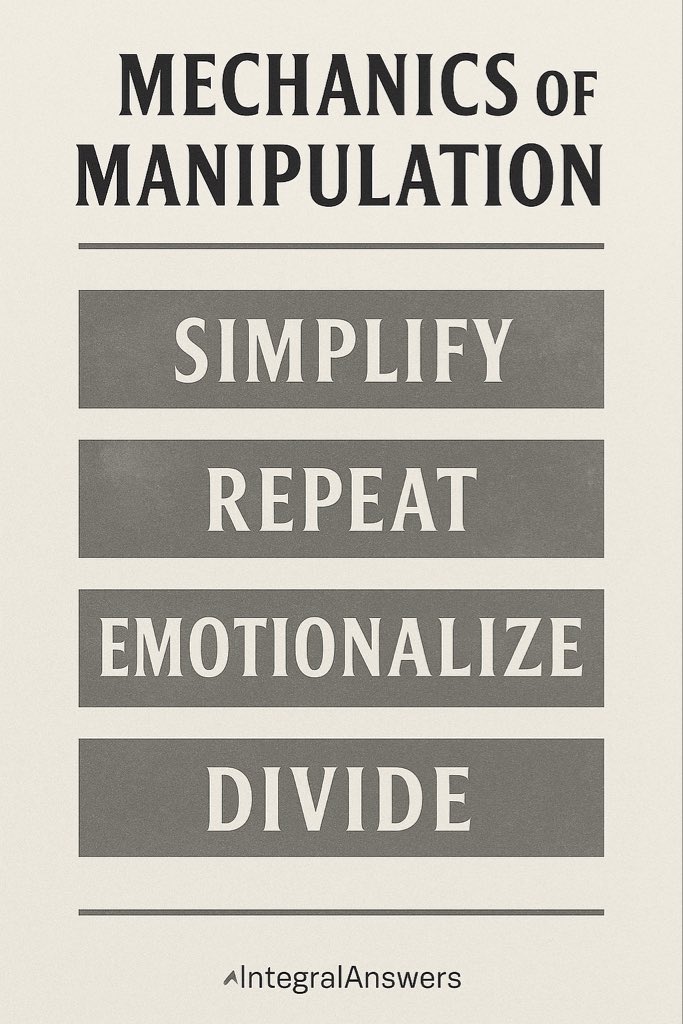
10/ The Mechanics
Simplify. Repeat. Emotionalize. Divide.
These were not accidents; they were policies—codified, measured, refined.
Simplify. Repeat. Emotionalize. Divide.
These were not accidents; they were policies—codified, measured, refined.
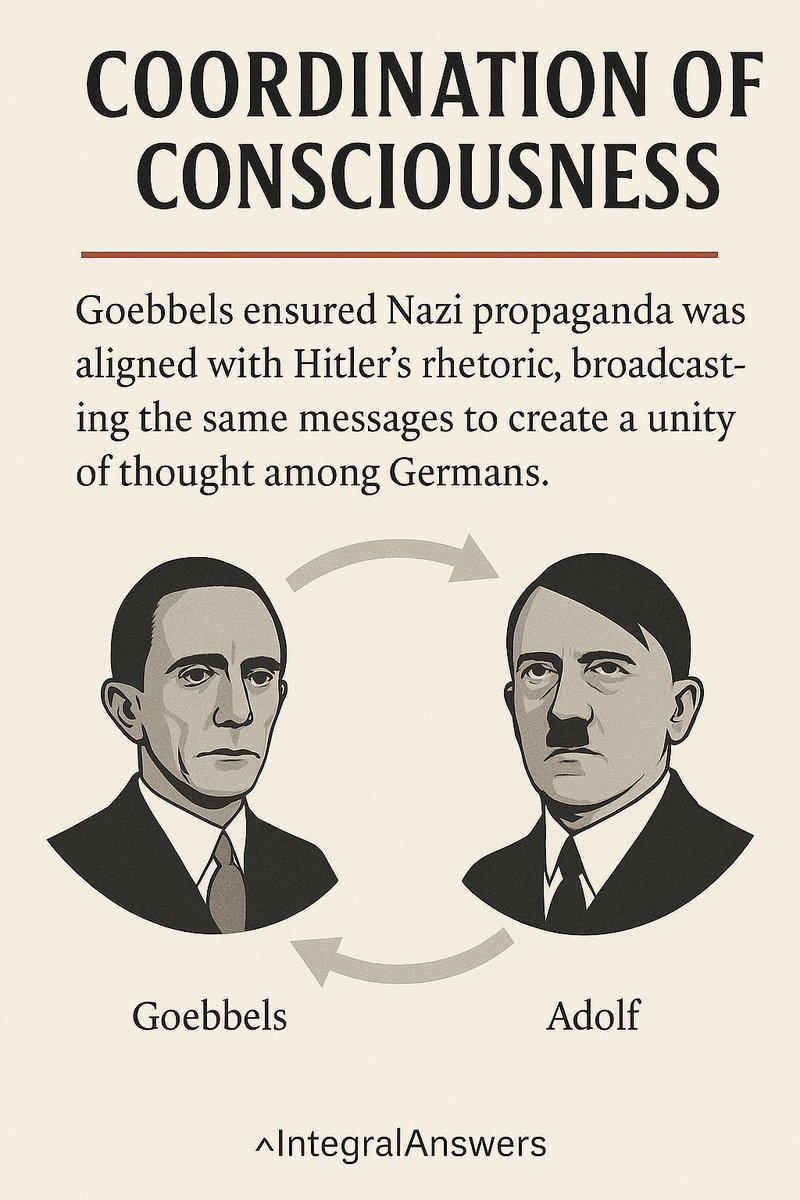
11/ Coordination of Consciousness
Historians call this the “coordination of consciousness.”
Once information flows only one way, democracy becomes theatre and citizens become audience.
Historians call this the “coordination of consciousness.”
Once information flows only one way, democracy becomes theatre and citizens become audience.
12/ Reflection
Goebbels proved propaganda can manufacture morality.
Understanding his matrix is not about the past—it’s about inoculation.
The first defense against propaganda is noticing it.
Goebbels proved propaganda can manufacture morality.
Understanding his matrix is not about the past—it’s about inoculation.
The first defense against propaganda is noticing it.
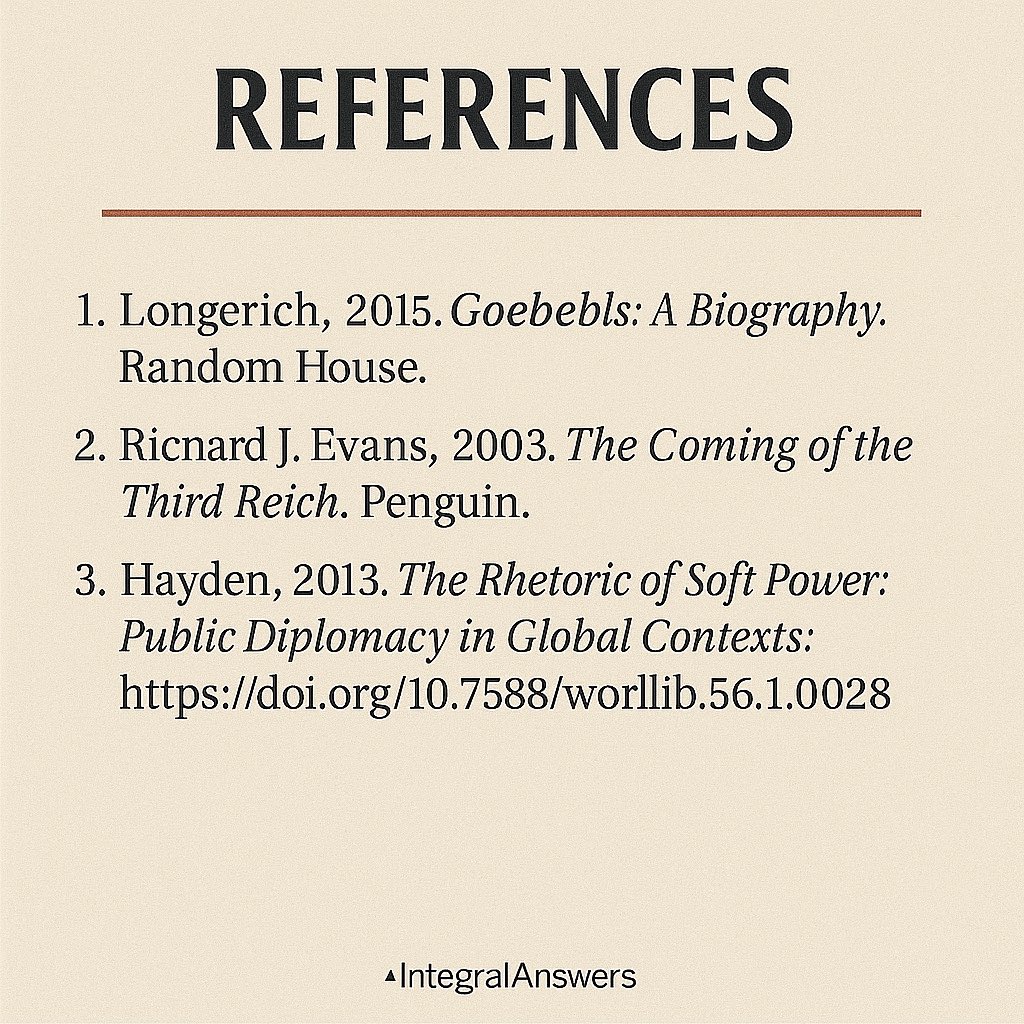
13/ References
• • •
Missing some Tweet in this thread? You can try to
force a refresh