Pfizer’s data didn’t just go missing—it was edited.
In an exchange with @RWMaloneMD, Pfizer admitted its biodistribution studies were done “in close consultation” with the FDA.
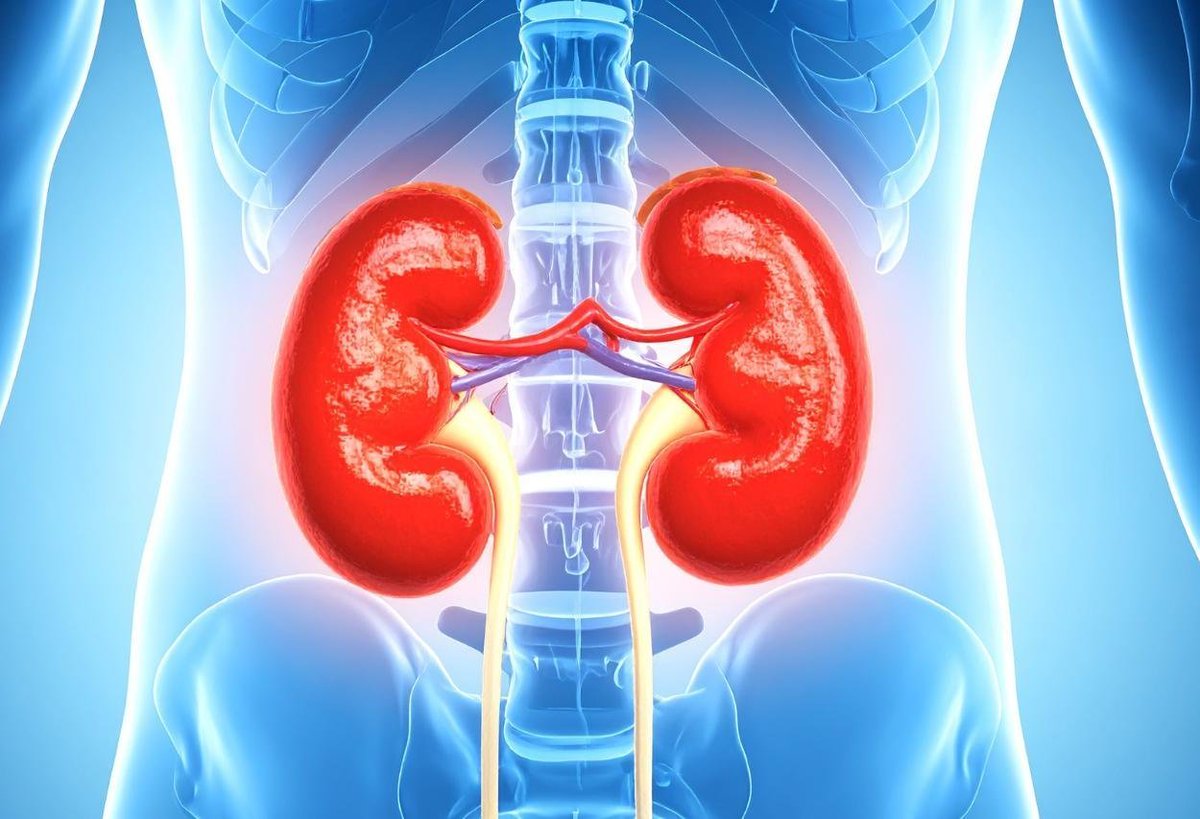
Images were cropped and dimmed to make the COVID vaccine look confined to the arm, when unedited images revealed mRNA spreading to organs like the kidneys and adrenal glands.
If the FDA helped shape that illusion, what else in the “safe and effective” story was rewritten to hide the truth?
🧵 THREAD
In an exchange with @RWMaloneMD, Pfizer admitted its biodistribution studies were done “in close consultation” with the FDA.
Images were cropped and dimmed to make the COVID vaccine look confined to the arm, when unedited images revealed mRNA spreading to organs like the kidneys and adrenal glands.
If the FDA helped shape that illusion, what else in the “safe and effective” story was rewritten to hide the truth?
🧵 THREAD

Data on how parts of a Pfizer-BioNTech COVID-19 vaccine spread in the bodies of mice were withheld from regulatory submissions to the U.S. FDA, according to a new comparison of those submissions and similar documents sent to Japanese regulators.
theepochtimes.com/us/pfizer-left…
theepochtimes.com/us/pfizer-left…
Byram Bridle, who has a PhD in immunology and is an associate professor of immunology and virology at the University of Guelph in Canada, authored the comparison. It was dated Aug. 13 and released on Oct. 4 by Dr. Robert Malone, a vaccine adviser to the U.S. government.
“The findings of this report raise serious questions about the integrity of the health regulatory process during the declared COVID-19 pandemic,” Bridle said in his conclusions.
Pfizer, BioNTech, and the FDA did not respond to requests for comment.
“The findings of this report raise serious questions about the integrity of the health regulatory process during the declared COVID-19 pandemic,” Bridle said in his conclusions.
Pfizer, BioNTech, and the FDA did not respond to requests for comment.

During a September meeting, under questioning by Malone, a Pfizer representative said that its studies of the spread of vaccine elements, known as biodistribution, were done in consultation with the FDA. “Pfizer does not have a further comment other than we did our work in close consultation with the FDA on all our of biodistribution studies that were approved for our licensed product,” the representative said.
Malone told The Epoch Times that the images in the submissions appear to have been manipulated “to hide the fact that the biodistribution was much broader than the initial narrative that was promoted, which is that it stays at the site of injection and draining lymph nodes.”
He added: “That was clearly a lie, and it was a lie that we now know was supported by editing data that were presented to the FDA. And, according to what the Pfizer representative stated, that editing of data was done in cooperation and consultation between Pfizer and the FDA. That is completely unacceptable.”
Malone told The Epoch Times that the images in the submissions appear to have been manipulated “to hide the fact that the biodistribution was much broader than the initial narrative that was promoted, which is that it stays at the site of injection and draining lymph nodes.”
He added: “That was clearly a lie, and it was a lie that we now know was supported by editing data that were presented to the FDA. And, according to what the Pfizer representative stated, that editing of data was done in cooperation and consultation between Pfizer and the FDA. That is completely unacceptable.”

Edited Data
Pfizer and Moderna did not carry out human biodistribution studies before the FDA cleared their messenger ribonucleic acid (mRNA) vaccines in late 2020. They tested the spread of mRNA in animals.
Pfizer and BioNTech tested a surrogate product containing modified RNA, or modRNA, and luciferase, a bioluminescent enzyme found in fireflies, in mice and rats. The distribution was tracked over nine days, according to documents released by the FDA in 2022 under court order.
“Highest signal was detected at the first time points after immunization at the injection site and the signal declined slowly over time until day 9,” the BioNTech report on the mice study stated. The testing “showed limited drainage to the liver,” but no signal was detected 48 hours after immunization, according to the report.
A single picture from imaging of the mice was included in that section of the report, which was sent to the FDA in 2020. Additional images, with more of the mice bodies included, were provided in filings to Japanese regulators. The images showed that the mRNA spread to the rodents’ kidneys and adrenal glands, Bridle said in his analysis. He also said the luminescence was toned down in the FDA document.
“The image in the FDA’s version of the common technical document appears to be a version of the image from the Japanese document that was manipulated in numerous ways, potentially to discourage discovery that they are one and the same,” Bridle stated. “It was then cropped to hide clear evidence of systemic biodistribution of the modRNA vaccine.”
All of the images sent to American and Japanese regulators cut off at least 25 percent of the mice bodies, including their heads, which prevented any conclusions being made about potential spread to the brain, Bridle said.
Pfizer and Moderna did not carry out human biodistribution studies before the FDA cleared their messenger ribonucleic acid (mRNA) vaccines in late 2020. They tested the spread of mRNA in animals.
Pfizer and BioNTech tested a surrogate product containing modified RNA, or modRNA, and luciferase, a bioluminescent enzyme found in fireflies, in mice and rats. The distribution was tracked over nine days, according to documents released by the FDA in 2022 under court order.
“Highest signal was detected at the first time points after immunization at the injection site and the signal declined slowly over time until day 9,” the BioNTech report on the mice study stated. The testing “showed limited drainage to the liver,” but no signal was detected 48 hours after immunization, according to the report.
A single picture from imaging of the mice was included in that section of the report, which was sent to the FDA in 2020. Additional images, with more of the mice bodies included, were provided in filings to Japanese regulators. The images showed that the mRNA spread to the rodents’ kidneys and adrenal glands, Bridle said in his analysis. He also said the luminescence was toned down in the FDA document.
“The image in the FDA’s version of the common technical document appears to be a version of the image from the Japanese document that was manipulated in numerous ways, potentially to discourage discovery that they are one and the same,” Bridle stated. “It was then cropped to hide clear evidence of systemic biodistribution of the modRNA vaccine.”
All of the images sent to American and Japanese regulators cut off at least 25 percent of the mice bodies, including their heads, which prevented any conclusions being made about potential spread to the brain, Bridle said.

Unredacted Image
The BioNTech report stated that after 9 days, the luminescence signal had dropped to background levels.
BioNTech included a graph to support the statement. The lower portion of the graph, representing mice that received a buffer control, was unredacted by the FDA. The rest of the graph, showing levels in mice that received the modRNA product, was redacted.
The same graph was included without redaction in documents released by Japanese regulators. The full graph showed that the levels in vaccine recipients started high and did not reach background levels after 9 days, Bridle said.
“Based on the data from the Japanese document, the claim in the FDA’s report that ‘After 9 d, the reporter expression dropped to background levels’ appears to be a bald-faced lie that was facilitated by redacting data to avoid scrutiny and then hoping nobody would realize that non-redacted data had previously been released by Japan’s Pharmaceuticals and Medical Devices Agency,” Bridle wrote.
He also said that it appeared that the experiments were preliminary and rushed, due to the graph missing typical information, such as error bars.
“The regulatory scientist(s) that reviewed these data should have requested that the study be repeated with an extended timeline and with sufficient experimental replicates until proper statistical analyses revealed a timepoint at which the luciferase signal in the immunized group was no longer statistically different from the background signal in the sham-treated control group,” he said.
The BioNTech report stated that after 9 days, the luminescence signal had dropped to background levels.
BioNTech included a graph to support the statement. The lower portion of the graph, representing mice that received a buffer control, was unredacted by the FDA. The rest of the graph, showing levels in mice that received the modRNA product, was redacted.
The same graph was included without redaction in documents released by Japanese regulators. The full graph showed that the levels in vaccine recipients started high and did not reach background levels after 9 days, Bridle said.
“Based on the data from the Japanese document, the claim in the FDA’s report that ‘After 9 d, the reporter expression dropped to background levels’ appears to be a bald-faced lie that was facilitated by redacting data to avoid scrutiny and then hoping nobody would realize that non-redacted data had previously been released by Japan’s Pharmaceuticals and Medical Devices Agency,” Bridle wrote.
He also said that it appeared that the experiments were preliminary and rushed, due to the graph missing typical information, such as error bars.
“The regulatory scientist(s) that reviewed these data should have requested that the study be repeated with an extended timeline and with sufficient experimental replicates until proper statistical analyses revealed a timepoint at which the luciferase signal in the immunized group was no longer statistically different from the background signal in the sham-treated control group,” he said.

A little about us: We’re a team of journalists and researchers on a mission to give you REAL and honest information about your health.
Side effects of reading our posts may include: critical thinking.
Follow us for more daily threads—backed by hard data.
—> @EpochHealth
Side effects of reading our posts may include: critical thinking.
Follow us for more daily threads—backed by hard data.
—> @EpochHealth

Moderna’s Biodistribution Testing
Moderna also tested the spread of mRNA in animals.
Testing in rats detected the mRNA in multiple organs, such as the liver and spleen, and heart and brain tissue, according to a description of the testing included in a European Medicines Agency document made public in 2021.
Darin Edwards, an executive at Moderna, told the advisory panel on which Malone sits, the Advisory Committee on Immunization Practices, in September that testing showed the mRNA and another part of the vaccine, spike protein, “does primarily localize to the injection site and the draining lymph node.”
While there was some detection in other tissues and organs, “that does clear vary rapidly post-injection, with no detection after 14 days in those studies” provided to the FDA, he added.
As with Pfizer, Moderna used a surrogate product in biodistribution testing, rather than the vaccine that the FDA ultimately cleared.
“A biodistribution study was not performed with mRNA-1273 vaccine. Results from the biodistribution study of a different vaccine ... were submitted,” FDA reviewers stated in a 2022 document recommending approval of Moderna’s Spikevax, or mRNA-1273.
Edwards said the product used in the animal testing was “commercially representative material” that uses the same mRNA that is part of Spikevax.
Malone said the FDA document showed the answer was not truthful.
Asked for a response, a Moderna spokesperson pointed The Epoch Times to a company webpage, which does not address the differences between the products.
Moderna also tested the spread of mRNA in animals.
Testing in rats detected the mRNA in multiple organs, such as the liver and spleen, and heart and brain tissue, according to a description of the testing included in a European Medicines Agency document made public in 2021.
Darin Edwards, an executive at Moderna, told the advisory panel on which Malone sits, the Advisory Committee on Immunization Practices, in September that testing showed the mRNA and another part of the vaccine, spike protein, “does primarily localize to the injection site and the draining lymph node.”
While there was some detection in other tissues and organs, “that does clear vary rapidly post-injection, with no detection after 14 days in those studies” provided to the FDA, he added.
As with Pfizer, Moderna used a surrogate product in biodistribution testing, rather than the vaccine that the FDA ultimately cleared.
“A biodistribution study was not performed with mRNA-1273 vaccine. Results from the biodistribution study of a different vaccine ... were submitted,” FDA reviewers stated in a 2022 document recommending approval of Moderna’s Spikevax, or mRNA-1273.
Edwards said the product used in the animal testing was “commercially representative material” that uses the same mRNA that is part of Spikevax.
Malone said the FDA document showed the answer was not truthful.
Asked for a response, a Moderna spokesperson pointed The Epoch Times to a company webpage, which does not address the differences between the products.

More Recent Biodistribution Data
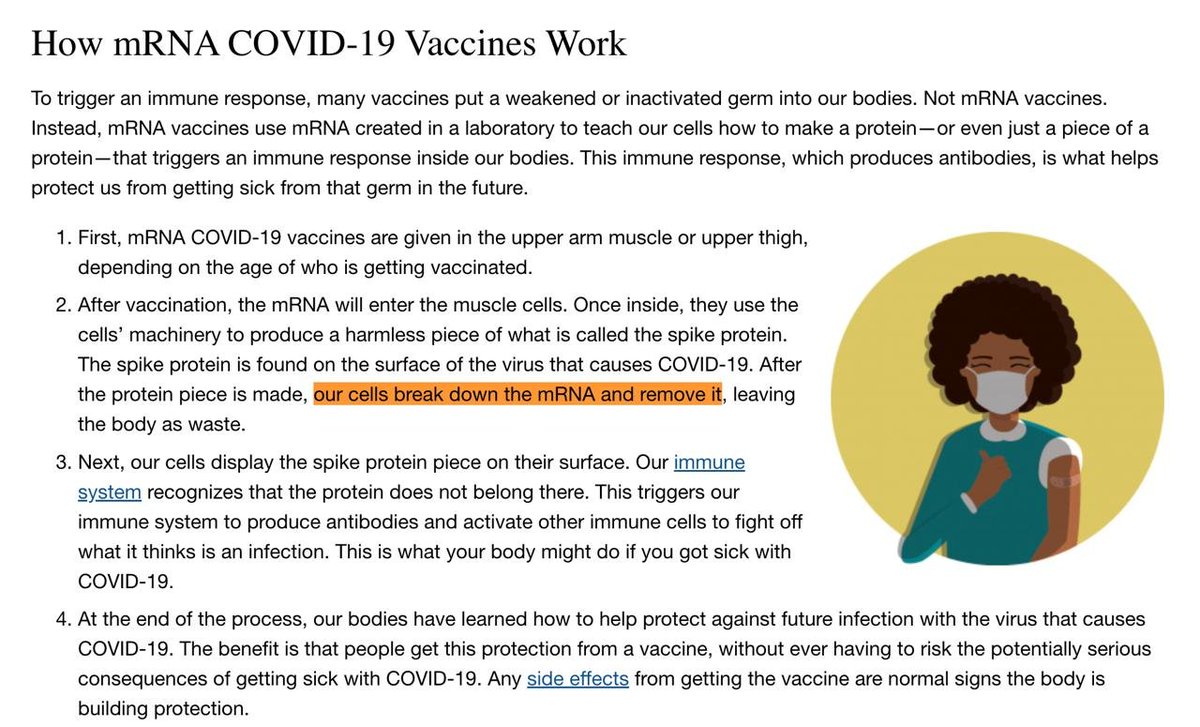
The Centers for Disease Control and Prevention, the U.S. public health agency, said for years that after receipt of a Pfizer or Moderna vaccine, “our cells break down mRNA from these vaccines and get rid of it within a few days after vaccination” and the spike protein within a few weeks.
The CDC still maintains that after the mRNA delivers instructions to the body on how to make spike protein copies, “our cells break down the mRNA and remove it.”
More recent biodistribution data from humans, though, show mRNA and spike protein spread to various parts of the body and stay there for much longer than stated. That includes spike protein being present in people’s cerebral arteries up to 17 months following Moderna and Pfizer vaccination, Japanese researchers reported in the Journal of Clinical Neuroscience in April.
The Centers for Disease Control and Prevention, the U.S. public health agency, said for years that after receipt of a Pfizer or Moderna vaccine, “our cells break down mRNA from these vaccines and get rid of it within a few days after vaccination” and the spike protein within a few weeks.
The CDC still maintains that after the mRNA delivers instructions to the body on how to make spike protein copies, “our cells break down the mRNA and remove it.”
More recent biodistribution data from humans, though, show mRNA and spike protein spread to various parts of the body and stay there for much longer than stated. That includes spike protein being present in people’s cerebral arteries up to 17 months following Moderna and Pfizer vaccination, Japanese researchers reported in the Journal of Clinical Neuroscience in April.
Charlotte Kuperwasser, who has a PhD in molecular and cellular biology and is a professor of developmental, molecular, and chemical biology at Tufts University School of Medicine, told The Epoch Times in an email that the FDA should have made the companies use the vaccines they wanted cleared in the preclinical testing.
“Given what was reported in the preclinical biodistribution study, and what we’ve learned about biodistribution in humans, I think there needs to be careful reevaluation of these products in general but most importantly in the reproductive setting,” she said, noting that none of the animals tested by the companies were pregnant.
“Given what was reported in the preclinical biodistribution study, and what we’ve learned about biodistribution in humans, I think there needs to be careful reevaluation of these products in general but most importantly in the reproductive setting,” she said, noting that none of the animals tested by the companies were pregnant.

Kuperwasser pointed to a paper published in February that described how Taiwanese researchers who administered Moderna’s vaccine to pregnant mice found the mRNA rapidly circulated and within one hour crossed the placenta to spread in the fetus.
The researchers said that the vaccine “did not pose discernible safety issues in pregnant mice and their pups” but that “the proof of transplacental mRNA-1273 transmission with enduring mRNA retention in the offspring’s liver or spleen inevitably aroused an interest in the genotoxic effects of mRNA vaccines on the developing fetus.” They added later, “the risk of long-term genotoxicity in the offspring born to mRNA-vaccinated mothers cannot be overlooked.”
Malformed ribs were found in the offspring of rats injected with the Moderna and Pfizer vaccines, the companies have said. They said that was not an issue since the wavy ribs are known to resolve on their own. They also say the vaccines are safe and effective for pregnant women, primarily based on observational data from humans.
The researchers said that the vaccine “did not pose discernible safety issues in pregnant mice and their pups” but that “the proof of transplacental mRNA-1273 transmission with enduring mRNA retention in the offspring’s liver or spleen inevitably aroused an interest in the genotoxic effects of mRNA vaccines on the developing fetus.” They added later, “the risk of long-term genotoxicity in the offspring born to mRNA-vaccinated mothers cannot be overlooked.”
Malformed ribs were found in the offspring of rats injected with the Moderna and Pfizer vaccines, the companies have said. They said that was not an issue since the wavy ribs are known to resolve on their own. They also say the vaccines are safe and effective for pregnant women, primarily based on observational data from humans.

Updated COVID-19 Vaccine Recommendations
Following orders from Health Secretary Robert F. Kennedy, the CDC in May stopped recommending the COVID-19 vaccines to healthy children and pregnant women.
theepochtimes.com/health/cdc-upd…
Following orders from Health Secretary Robert F. Kennedy, the CDC in May stopped recommending the COVID-19 vaccines to healthy children and pregnant women.
theepochtimes.com/health/cdc-upd…
Kennedy said in a directive that COVID-19 vaccination “pose[s] potential risks to the mother and developing baby.”
The changes were made without consulting the Advisory Committee on Immunization Practices, the CDC’s vaccine advisory panel.
The FDA in August revoked emergency authorization for the vaccines. In updated approvals, the shots were cleared for people aged 65 and older as well as younger people with risk factors, one of which is being pregnant.
The changes were made without consulting the Advisory Committee on Immunization Practices, the CDC’s vaccine advisory panel.
The FDA in August revoked emergency authorization for the vaccines. In updated approvals, the shots were cleared for people aged 65 and older as well as younger people with risk factors, one of which is being pregnant.

In memorandums explaining the decisions, FDA official Dr. Vinay Prasad wrote that “there is growing clinical evidence that spike protein, which is generated as a result of or in the course of vaccination, may persist for some time in a subset of individuals” and that the persistence may be linked to so-called long COVID.

Clinical trials that the companies have pledged to carry out in younger, healthier people may provide answers on the persistence and possible link, according to Prasad.
theepochtimes.com/us/covid-vacci…
theepochtimes.com/us/covid-vacci…
The CDC’s vaccine advisers met in September to consider, in light of the FDA’s actions, to whom the CDC should recommend the vaccines.
Kuperwasser presented the advisers with emerging data on biodistribution and immune changes following vaccination.
“Studies in humans have confirmed that vaccine mRNA can be detected in multiple tissues, including lymph nodes, the heart, the central nervous system, and blood,” she told them.
“Finally, persistence is not just short-term. In some reports, mRNA has been detected for weeks to months, and in certain cases, as long as 706 days post-vaccination.”
Kuperwasser presented the advisers with emerging data on biodistribution and immune changes following vaccination.
“Studies in humans have confirmed that vaccine mRNA can be detected in multiple tissues, including lymph nodes, the heart, the central nervous system, and blood,” she told them.
“Finally, persistence is not just short-term. In some reports, mRNA has been detected for weeks to months, and in certain cases, as long as 706 days post-vaccination.”

Members of the panel said they were concerned about COVID-19 vaccine data, including newer studies on biodistribution and residual DNA.
theepochtimes.com/us/fda-conside…
theepochtimes.com/us/fda-conside…
They voted to advise the CDC to tell people they should consult with health care professionals before being vaccinated.
theepochtimes.com/us/cdc-should-…
theepochtimes.com/us/cdc-should-…
Jim O'Neill, the CDC’s acting director, accepted the advice on Oct. 6.
theepochtimes.com/us/cdc-says-co…
theepochtimes.com/us/cdc-says-co…
Thanks for reading! If you found this valuable, here's a special deal:
Unlock our ENTIRE library of @EpochHealth articles for just $1/week—plus unlimited access to everything else on our site.
Claim it here:
on.theepochtimes.com/vfox/health?ut…
Unlock our ENTIRE library of @EpochHealth articles for just $1/week—plus unlimited access to everything else on our site.
Claim it here:
on.theepochtimes.com/vfox/health?ut…

• • •
Missing some Tweet in this thread? You can try to
force a refresh