Carl Hendrick Profile picture
Oct 13 14 tweets 3 min read Read on X
Vygotsky's 'Zone of Proximal Development' is perhaps the most misunderstood idea in education. It was never a teaching method but a metaphor for how teaching can pull thinking upward, from the everyday to the scientific. ⬇️ 🧵Image
There are, broadly speaking, two Vygotskys.
The Anglo-American Vygotsky is social, collaborative, constructivist. Born in Mind in Society (1978), he became the patron saint of progressive education and appears alongside Bruner, Piaget, Rogoff, and Wertsch in teacher education courses.
His classroom privileges dialogue, peer tutoring, and scaffolding. He advocates discovery learning, group work, and authentic tasks. The teacher steps back.
On the other hand, the Russian Vygotsky is dialectical, instructional, insistent on the systematic transmission of conceptual tools. This version appears in the Collected Works, the notebooks, and the research of his successors: Menchinskaia, Galperin, Davydov.
His classroom centres the teacher as the one who introduces learners to forms of thought they could never reach alone. The teacher steps in.
Mind in Society appeared in 1978 at exactly the moment Western education needed an alternative to behaviourism. The social Vygotsky fitted the progressive mood perfectly and was institutionalised before the full body of his work arrived in the West.
But when the Collected Works finally appeared in English between 1987 and 1999, many scholars found a more dialectical philosopher of instruction, not the high priest of discovery learning he would later become.
psychologyinrussia.com/volumes/pdf/20…Image
The phrase 'Zone of Proximal Development' does not come from a unified, definitive work. It comes from one book, Mind in Society, an assemblage of various writings, published in 1978, more than forty years after Vygotsky’s death.
That book was not written by Vygotsky but compiled by his colleagues and edited for an American readership searching for an alternative to behaviourism.
The editors selected and rearranged excerpts from unpublished manuscripts, omitting Vygotsky’s Marxist and dialectical context to make his ideas more palatable to Western psychology.
The result was a version of Vygotsky that was both accessible and unrecognisable. The Zone of Proximal Development (originally a metaphor describing the dialectical relation between instruction and development) was reinterpreted as a practical teaching method: a “scaffold,” a zone of peer support, a recipe for collaborative learning. In the process, a philosophical construct about the growth of consciousness became a pedagogical slogan.
Scaffolding and peer dialogue are very useful, but for Vygotsky they were means through which teaching induces qualitative shifts in consciousness, not pedagogical goals in themselves.
Collaboration without the conceptual clarity Vygotsky advocated merely rehearses "everyday" ideas. The purpose of teaching is not to co-construct reality but to reveal structures of thought learners could not reach alone.
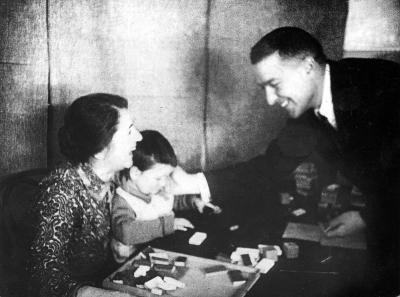
The Vygotsky of today's teacher training programmes died in 1934, was resurrected in California in 1978, and has lived ever since as a poor translation of himself. 🧵 Image
• • •

Missing some Tweet in this thread? You can try to force a refresh

 

Keep Current with Carl Hendrick

Carl Hendrick Profile picture

Stay in touch and get notified when new unrolls are available from this author!

Read all threads

This Thread may be Removed Anytime!

PDF

Twitter may remove this content at anytime! Save it as PDF for later use!

Try unrolling a thread yourself!

how to unroll video
  1. Follow @ThreadReaderApp to mention us!

  2. From a Twitter thread mention us with a keyword "unroll"
@threadreaderapp unroll

Practice here first or read more on our help page!

More from @C_Hendrick

Sep 23
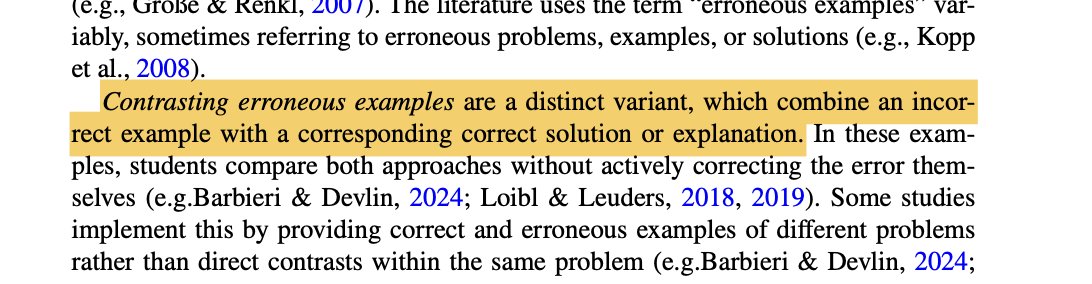
Really interesting new paper on using 'contrasting erroneous example' as a means of preventing common misconceptions.
The worked example effect shows that novices benefit from step-by-step clarity, while this paper suggests that once some foundations are in place, contrasting erroneous examples can push learning further by clarifying boundaries.Image
Again I'm reminded of Theory of Instruction here and the idea that we learn what something is by contrasting it with what it isn't.Image
The crucial thing here seems to be prompts and the specific operators they use (explain, reflect, describe) which determine whether students engage in generative learning or mere recognition. Image
Read 9 tweets
Aug 3
Not all wrong answers are equal. I used to think students just needed the right information to fix misconceptions but then I read the work of Michelene Chi🧵⬇️ Image
Chi’s research revealed that misconceptions are not just small knowledge deficits; they are often coherent yet incorrect frameworks of understanding.

Put simply, a student’s wrong answer can stem from a well-formed but fundamentally flawed theory about how something works, rather than from a simple factual mistake.
So a student’s wrong answer might be the right answer according to their internal model. That’s the problem.
Read 16 tweets
Jul 24
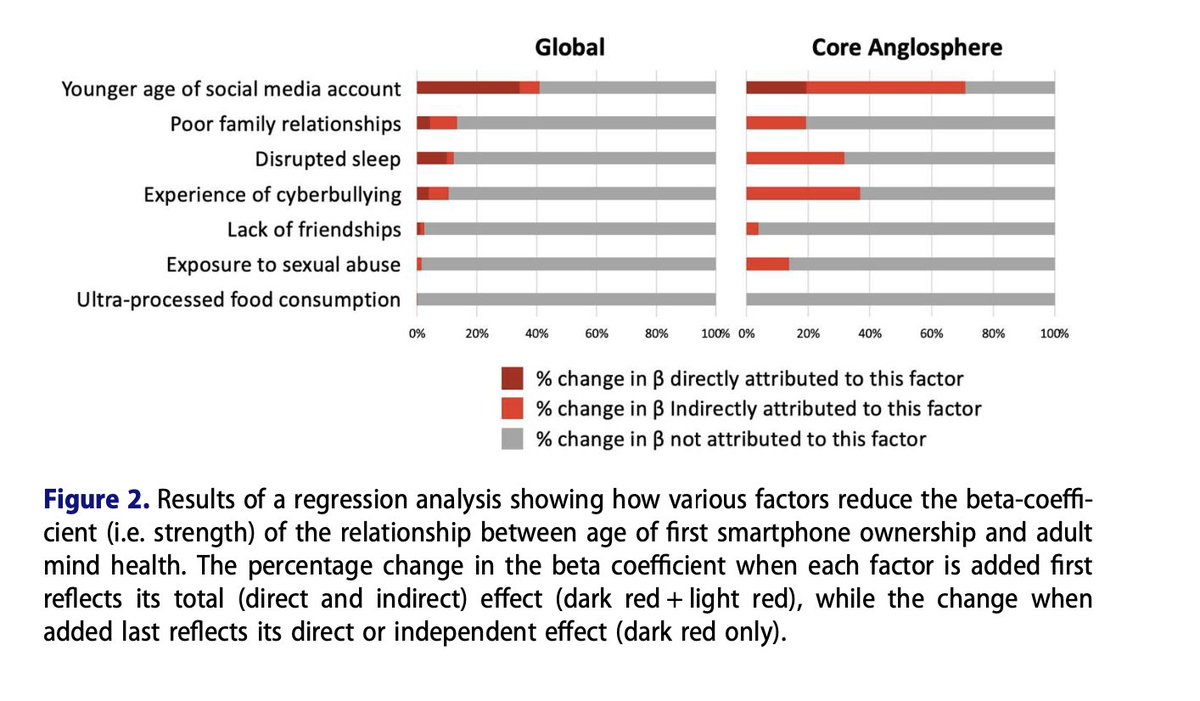
What is the effect of giving children smartphones before the age of 13? It's bad. Strongly associated with poorer mental health and wellbeing. BUT the evidence is largely correlational. What does this mean? 🧵⬇️ Image
A new global study of over 100,000 young adults found that receiving a smartphone before age 13 is associated with significantly poorer mental health outcomes in early adulthood, particularly increased suicidal thoughts and diminished emotional regulation, with effects primarily mediated through early social media access.
The research demonstrates a clear dose-response relationship: the younger children are when they receive smartphones, the worse their mental health outcomes as young adults. Females who received smartphones at ages 5-6 showing 20 percentage points higher rates of suicidal ideation compared to those who received them at 13.
Read 15 tweets
Jul 23
"Learning facts is going to fade into the background." 🤦‍♂️
Quick thread on why this is a terrible take🧵⬇️
For whatever reason, the idea of knowing stuff has become unfashionable. We’ve absorbed the idea that facts are “mere” details, that skills and dispositions matter more, and that technology makes memory unnecessary.
But knowledge isn’t obsolete, it’s the precondition for reasoning, creativity, and insight. Skills divorced from knowledge are empty performances.
Read 11 tweets
Jul 20
Expertise isn't about having more working memory, it's about needing less of it. Experts automate many components in long-term memory and can recognise meaningful patterns instantly, bypassing the need to process individual elements. ⬇️ 🧵
For example, the multiplication tables aren't memorised for their own sake, but because automated arithmetic facts free working memory for algebraic reasoning.
Phonics isn't taught to create little robots, but because automated letter-sound correspondences liberate the cognitive resources necessary for comprehension and analysis.
Read 10 tweets
Jul 3
New study: A single 10-minute retrieval practice activity significantly improved final exam performance compared to a review session. But there's a lot more to this study 🧵⬇️ Image
The intervention was 10 minutes of students taking an unexpected, closed-notes practice test consisting of:
- 10 multiple-choice questions created by the instructor
- Questions focused on key concepts likely to appear on the final exam
- Each question had four answer choices
- Questions assessed recall or comprehension of foundational concepts

Students were told it was ungraded and framed as preparation for the final exam. Immediately after the 10-minute test, the instructor provided corrective feedback, explaining why each answer was correct or incorrect.
The passive review was a brief PowerPoint-based presentation where the instructor delivered key concepts as bullet points to the class. Specifically, the review group received:

The same content that was tested in the retrieval practice group
Information presented in bullet-point format on slides
Instructor clarification of misconceptions
A structured overview of concepts likely to appear on the final exam

This is what the study calls a "more common instructional approach"; essentially a traditional pre-exam review session where students passively receive information rather than actively retrieving it from memory.
Read 9 tweets

Did Thread Reader help you today?

Support us! We are indie developers!


This site is made by just two indie developers on a laptop doing marketing, support and development! Read more about the story.

Become a Premium Member ($3/month or $30/year) and get exclusive features!

Become Premium

Don't want to be a Premium member but still want to support us?

Make a small donation by buying us coffee ($5) or help with server cost ($10)

Donate via Paypal

Or Donate anonymously using crypto!

Ethereum

0xfe58350B80634f60Fa6Dc149a72b4DFbc17D341E copy

Bitcoin

3ATGMxNzCUFzxpMCHL5sWSt4DVtS8UqXpi copy

Thank you for your support!

Follow Us!

:(