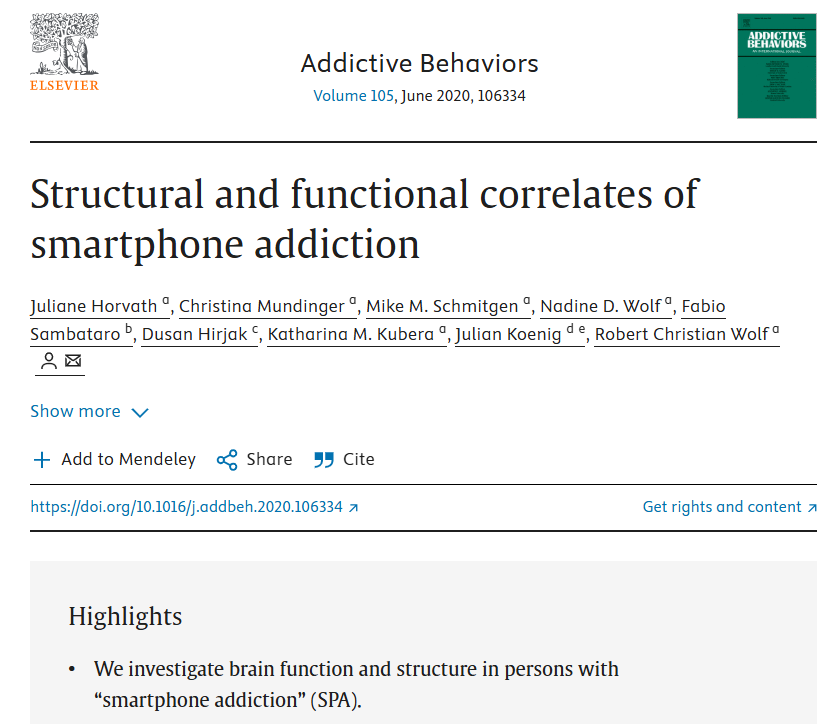
Stanford paid 35,000 people to quit social media.
This was the largest study on emotional health in history.
The results were so shocking, scientists called it "comparable to therapy."
Here's what happens when you break free from the algorithm:
🧵
This was the largest study on emotional health in history.
The results were so shocking, scientists called it "comparable to therapy."
Here's what happens when you break free from the algorithm:
🧵

Over 35,000 people took part.
They were paid to deactivate either Instagram or Facebook for 6 weeks.
It was done right before the 2020 Presidential Election.
And the results were undeniable:
They were paid to deactivate either Instagram or Facebook for 6 weeks.
It was done right before the 2020 Presidential Election.
And the results were undeniable:
Participants didn’t just feel better.
They were measurably happier, less anxious, and less depressed.
• Facebook users saw a 6% improvement in emotional well-being
• Instagram users saw a 4% improvement
And not only that...
They were measurably happier, less anxious, and less depressed.
• Facebook users saw a 6% improvement in emotional well-being
• Instagram users saw a 4% improvement
And not only that...

The researchers found that:
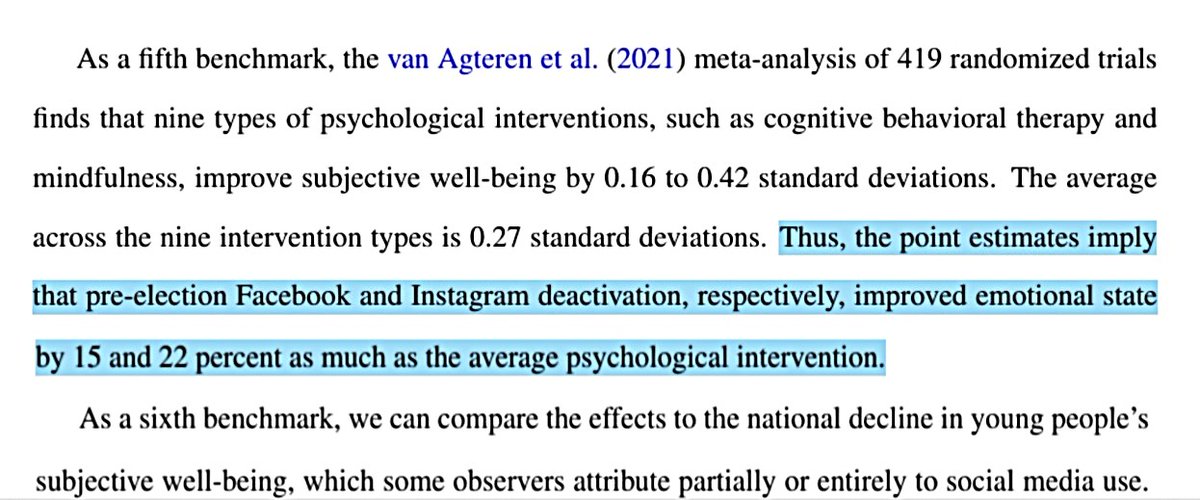
• Quitting Facebook was 15% as effective as therapy
• Quitting Instagram: 22% as effective
• Both eliminated over half of this election-related stress.
But here's the twist:
• Quitting Facebook was 15% as effective as therapy
• Quitting Instagram: 22% as effective
• Both eliminated over half of this election-related stress.
But here's the twist:
These people didn’t stop using their phones.
They just switched to other apps.
That means time on social media ≠ time on other apps.
Social media is measurably worse for us.
They just switched to other apps.
That means time on social media ≠ time on other apps.
Social media is measurably worse for us.
As Psychologist Angela Duckworth put it:
Our phones are “adult pacifiers.”
But her other point is deeper:
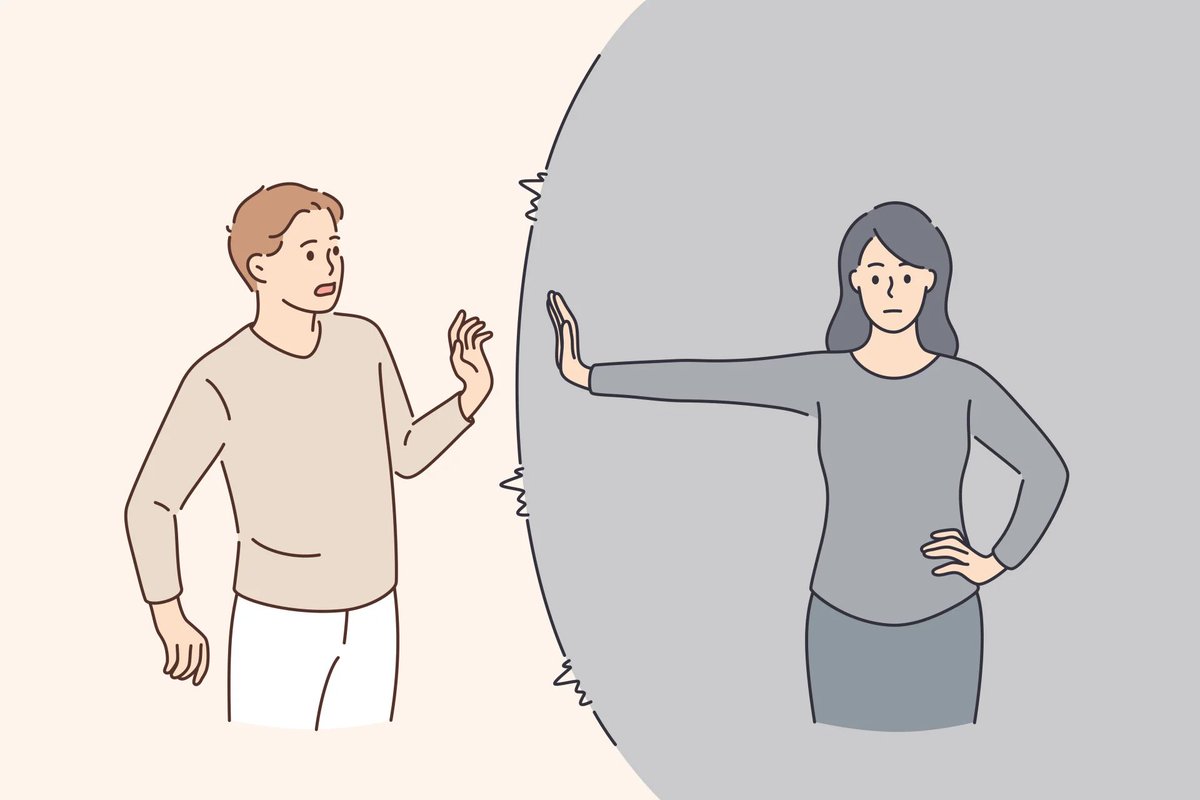
You can't break free with willpower. Change your environment instead.
She calls it situation modification.
Our phones are “adult pacifiers.”
But her other point is deeper:
You can't break free with willpower. Change your environment instead.
She calls it situation modification.
The Stanford study proved something we already knew deep down:
You don’t need to give up your phone.
You just need to be more intentional with your time.
Here's where you can start:👇
You don’t need to give up your phone.
You just need to be more intentional with your time.
Here's where you can start:👇
It's important to set boundaries with social media.
Start with a screen time app like Roots.
There are several good ones out there.
Here's why this is key:
getroots.link/aNqv9fK
Start with a screen time app like Roots.
There are several good ones out there.
Here's why this is key:
getroots.link/aNqv9fK
Apps like Roots keep you accountable.
When blocking is active, you can't uninstall or unblock.
This extra friction is key.
Here's how to use it effectively in 4 steps:
When blocking is active, you can't uninstall or unblock.
This extra friction is key.
Here's how to use it effectively in 4 steps:

1. Block social media apps
Keep social media blocked by at all times.
Force yourself to unblock it intentionally.
Create just enough pause to break the loop.
Keep social media blocked by at all times.
Force yourself to unblock it intentionally.
Create just enough pause to break the loop.
2. Schedule downtime
Set fixed windows to go full "Monk Mode" with social media completely blocked.
• Mornings (5am-9am): no social media or news apps
• Evenings: (6pm-midnight): no social media or work apps
This downtime helps rewire your brain.
Set fixed windows to go full "Monk Mode" with social media completely blocked.
• Mornings (5am-9am): no social media or news apps
• Evenings: (6pm-midnight): no social media or work apps
This downtime helps rewire your brain.

3. Instant app blocking
Sometimes I need to block everything:
• Stay focused when I'm doing deep work
• Reduce the temptation to “just check for a second”
• Block distracting apps when I get in the car
I use it daily.
Sometimes I need to block everything:
• Stay focused when I'm doing deep work
• Reduce the temptation to “just check for a second”
• Block distracting apps when I get in the car
I use it daily.

4. Pick scroll replacements
Simple things you can use to redirect yourself away from scrolling.
Go for a walk, pick up a book, or play with your dog.
Roots will direct me to better things (like Lucy) when apps are blocked.
Simple things you can use to redirect yourself away from scrolling.
Go for a walk, pick up a book, or play with your dog.
Roots will direct me to better things (like Lucy) when apps are blocked.

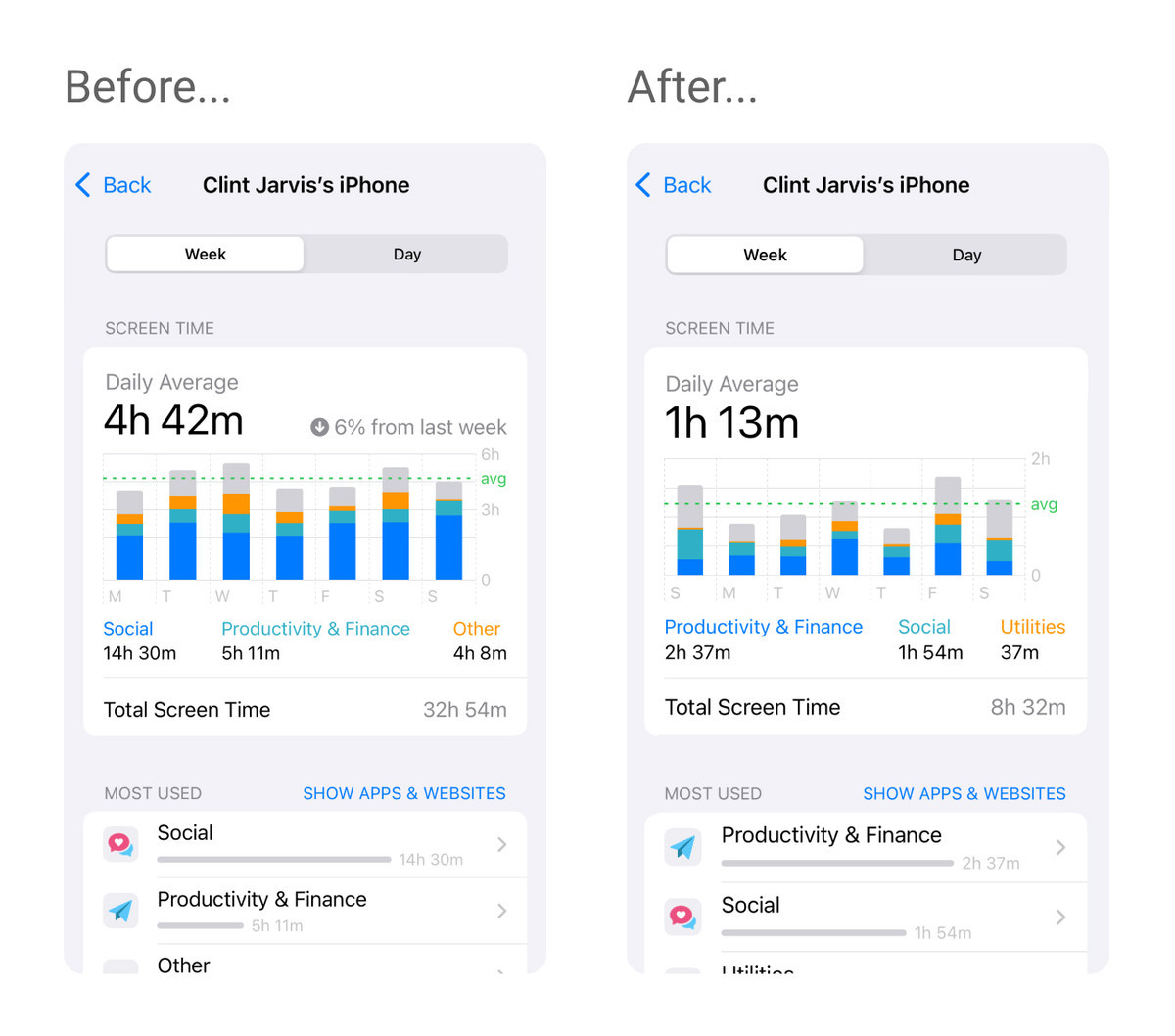
With small changes, my phone usage has dropped from 4 hours to around 1 daily.
Pickups from 150 to 50 daily.
My mind feels clearer, calmer, more focused.
Pickups from 150 to 50 daily.
My mind feels clearer, calmer, more focused.
Setting boundaries with social media is key.
Focus is your most valuable asset in today's distracted world.
Here's a link to the screen time app I mentioned:
getroots.link/aNqv9fK
Focus is your most valuable asset in today's distracted world.
Here's a link to the screen time app I mentioned:
getroots.link/aNqv9fK
Video Credits:
- Angela Duckworth at Bates: Push those cell phones away |
Bates College
- 30 Days Without Social Media | My Transformation | Niklas Christl
- Angela Duckworth at Bates: Push those cell phones away |
Bates College
- 30 Days Without Social Media | My Transformation | Niklas Christl
• • •
Missing some Tweet in this thread? You can try to
force a refresh